
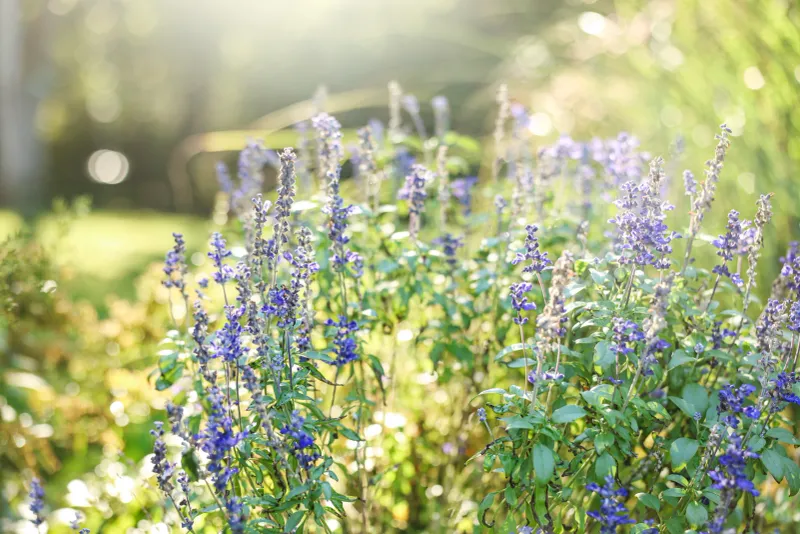
Blue flowers are hard to keep looking good through a Texas summer. When an agapanthus sulks, many gardeners assume the heat is to blame and start shopping for a replacement.
Before you pull anything, it helps to know why the plant is struggling and what a native option like mealy blue sage can and cannot do. Here is how to sort it out, one step at a time.
Agapanthus may not be the thirsty plant in this story
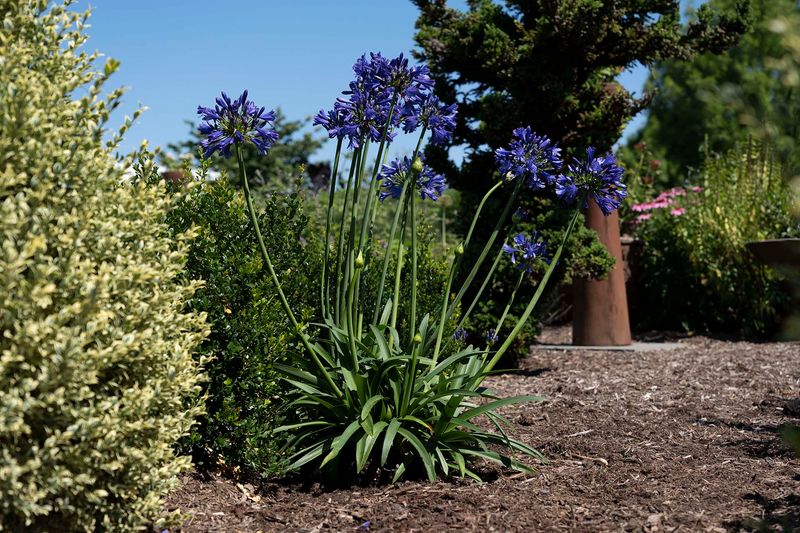
Gardeners often hear that agapanthus is a water hog that cannot survive a Texas summer. That story is too simple.
According to the Royal Horticultural Society, established agapanthus generally needs little watering, which surprises many people who have been soaking theirs every week.
Local guidance points the same way. A Travis County Master Gardener guide says agapanthus can manage with minimal supplemental water during drought.
So a plant that looks tired during a dry July is not automatically proof that drought is the problem.
That does not mean every agapanthus will thrive in every Texas yard. Soil, exposure, and how long the plant has been in the ground all play a part.
A bulb in a hot, reflected-heat corner can have a very different summer than one on the east side of a house.
There is one common exception. Agapanthus grown in containers can suffer if the pot dries out completely in summer, and that can interfere with next year’s flower buds.
If yours lives in a pot, watering habits deserve a close look.
The takeaway is simple: investigate before you blame drought. A few minutes of detective work could save a plant you already own, or at least point you toward a better replacement.
Check why your agapanthus is struggling
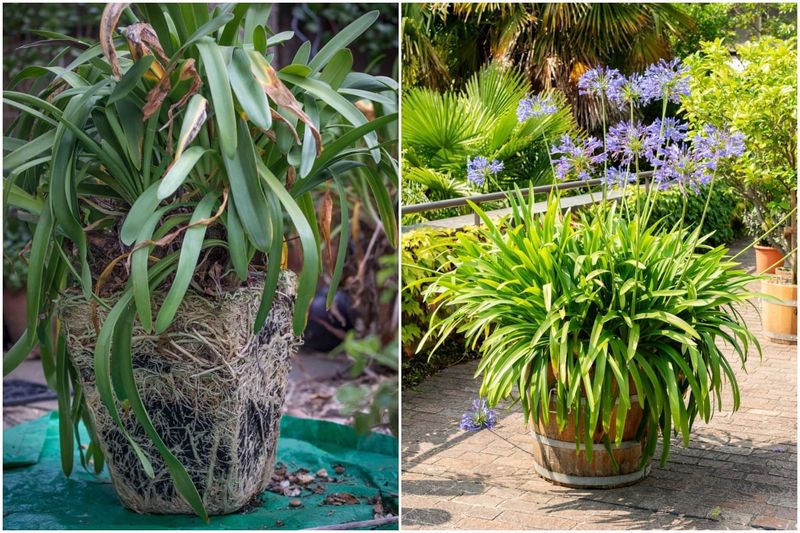
Poor flowering is the most common complaint, and thirst is only one possible cause. The Royal Horticultural Society lists shade, cold, and inadequate winter protection as typical reasons agapanthus fails to bloom.
Each one leaves different clues.
Start with light. Travis County guidance recommends full sun to part shade, and notes that some afternoon shade can help in its local conditions.
Count the hours of direct sun your plant gets. A clump that has slowly been swallowed by a growing tree may have plenty of leaves but few flower stalks.
Next, think back to winter. Did a hard freeze hit while the plant had no mulch or cover?
Cold damage often shows up as mushy or browned leaves and a missing bloom season, not crispy, wilted foliage in August.
Then compare symptoms. Drought stress usually looks like drooping, dry leaf tips, or yellowing during a hot, rainless stretch.
Lack of flowers alone, with healthy green leaves, points more toward light or cold.
No single cause is certain until you look at your own site. Change one thing at a time, such as adding mulch or moving a pot, and give the plant a season to respond before deciding it has to go.
Mealy blue sage offers blue blooms in a different form
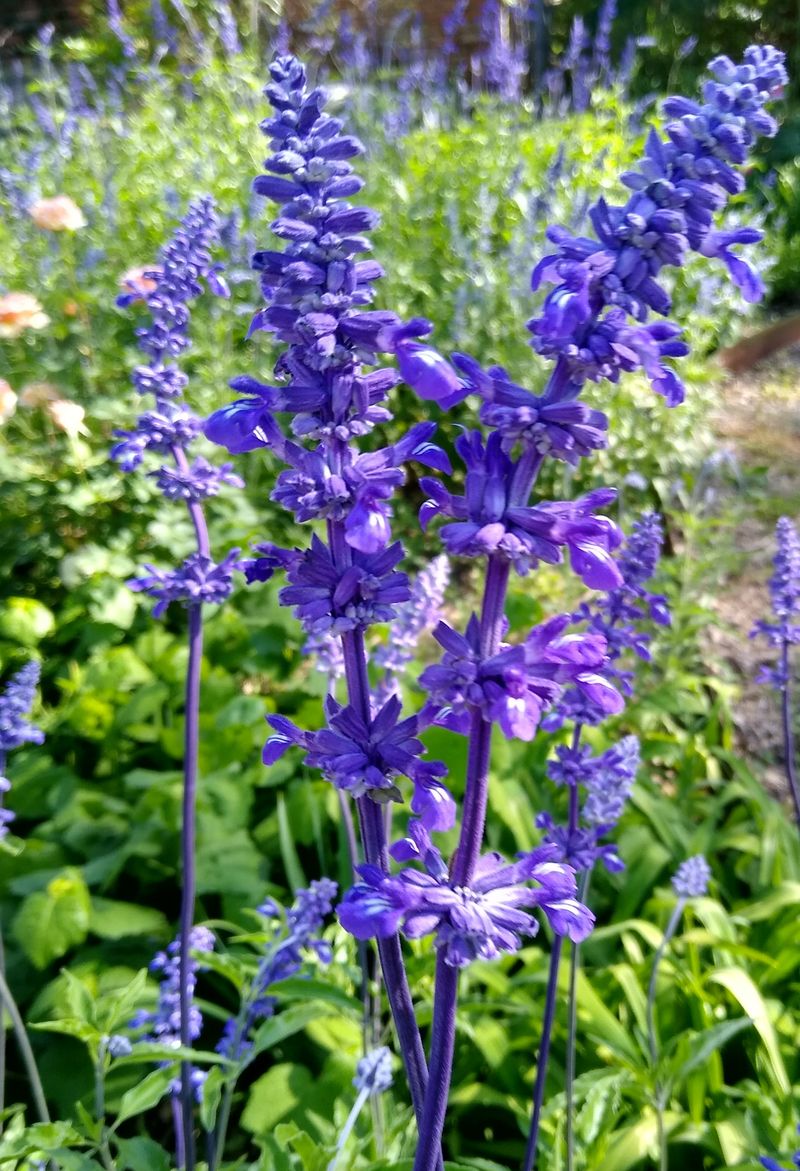
If you still want blue and your bed gets strong sun, mealy blue sage (Salvia farinacea) is worth a look. The Native Plant Society of Texas describes it as very drought tolerant, with blue flower spikes blooming from spring into fall.
It is a Texas native, and it works well planted in groups for a wash of color.
Here is the catch: it does not look like agapanthus. Agapanthus carries big, rounded flower clusters on tall stalks.
Mealy blue sage sends up slim, upright spikes covered in small blooms, so the effect is more like a field of blue candles than a set of globes.
That difference can be a plus or a minus. If you loved the ball-shaped look, sage will feel like a change of style.
If you mainly want blue color and a plant suited to hot sites, it may fit nicely.
Watering matters too. Too much water can make the stems leggy and floppy, so a spot with good drainage and a light touch with the hose usually serves it better than a lush, daily soak.
Think of it as one possible choice for color and resilience, not a drop-in swap for every bed. Sunny, well-drained spots are the best starting point for trying it.
Match a Texas native to your particular site
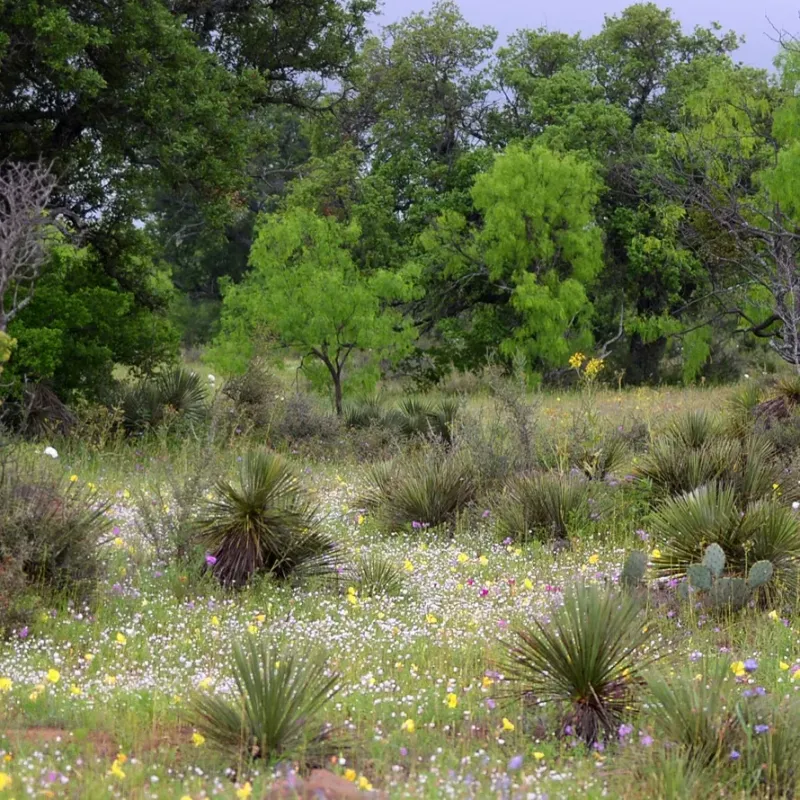
The word native can be misleading. Texas stretches from piney woods to desert edges, with very different soils, rainfall, and temperatures.
Texas A&M notes that how well a native plant suits a spot depends on location, and that natives can use as much water as non-natives if they are poorly matched or managed.
The Earth-Kind plant selector from Texas A&M’s Earth-Kind program rates plants by region and by traits such as heat and drought tolerance. Use it to see whether mealy blue sage is a good fit for your part of the state.
The Native Plant Society of Texas also offers plant lists organized by area. Check whether the plant appears for your ecoregion, then look at companions that share its needs.
Next, walk your bed. Does it get at least six hours of sun?
Does water drain away within a few hours after rain, or does it pool? Heavy clay that stays wet can be a problem for a plant that prefers to dry out between drinks.
If the answers lean sunny and well-drained, mealy blue sage could suit the spot. If the bed is shady or soggy, a different plant, or fixing the agapanthus conditions, may be the smarter move.
Plan for establishment time and care
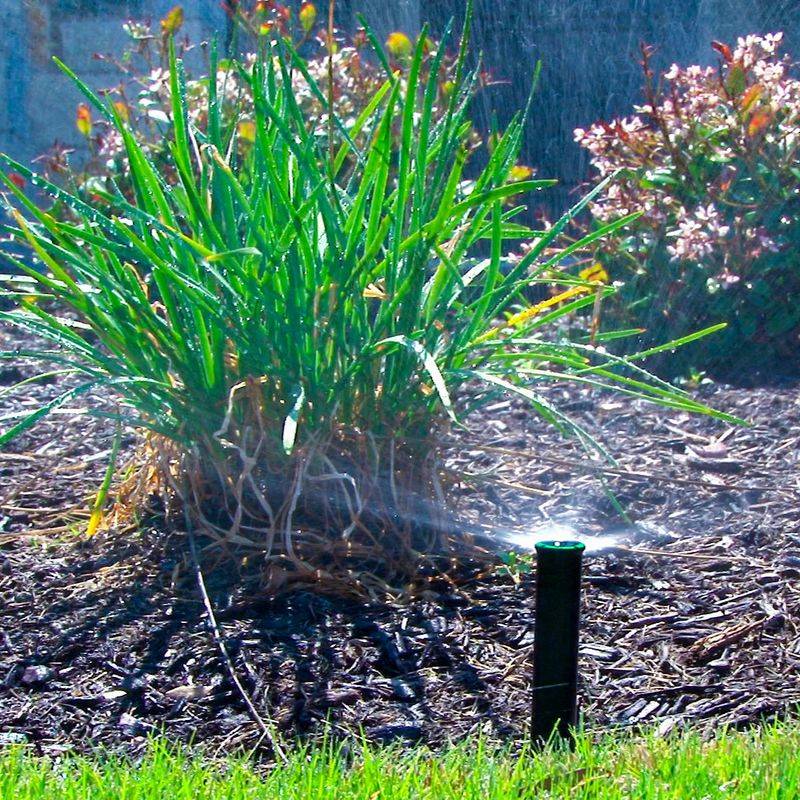
Any new plant, native or not, needs help while its roots settle in. Mealy blue sage is no exception, so expect to water it regularly at first and then taper off as it grows.
How long that takes depends on weather, soil, and the size of the plant you bought.
Timing matters as well. Texas A&M’s landscape survival guide for water restrictions advises against making landscape changes during drought, and suggests planting in fall, winter, or early spring when possible.
That gives roots time to grow before the brutal heat arrives.
Be careful about expecting instant savings. Pulling out an established agapanthus that needs little water and replacing it with young plants that need regular watering can actually add to your water use for a while.
Any benefit comes later, if the new plants are well matched to the site.
Always check the rules where you live. Cities and water providers set their own limits on days and methods, and those can change during a dry summer.
In participating areas, WaterMyYard offers localized watering recommendations.
Mulch the bed, water at the base, and keep an eye on the new plants through the first season. Patience here is part of the plan.
Choose for the bed, not the drought headline
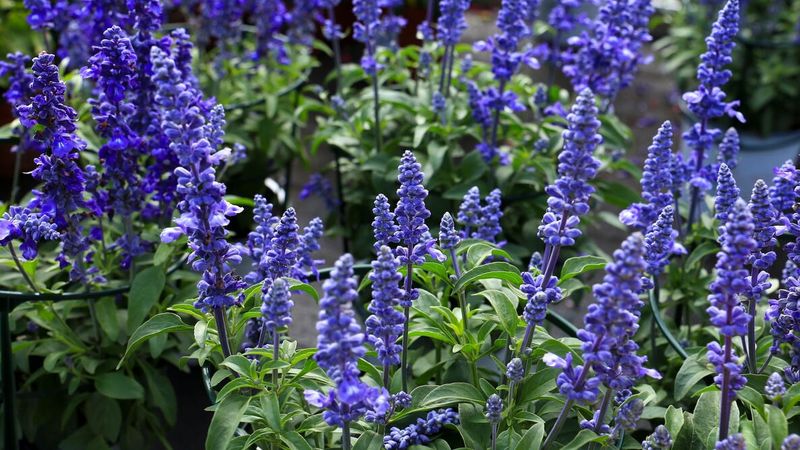
Start by figuring out why the agapanthus is struggling. If your site is sunny, well-drained, and suited to your region, mealy blue sage can bring blue spikes, not globes.
Confirm the fit with the Earth-Kind selector, then plan for establishment care under local rules.
No plant is guaranteed to ride out every heatwave. The best bed is the one matched to its place.