
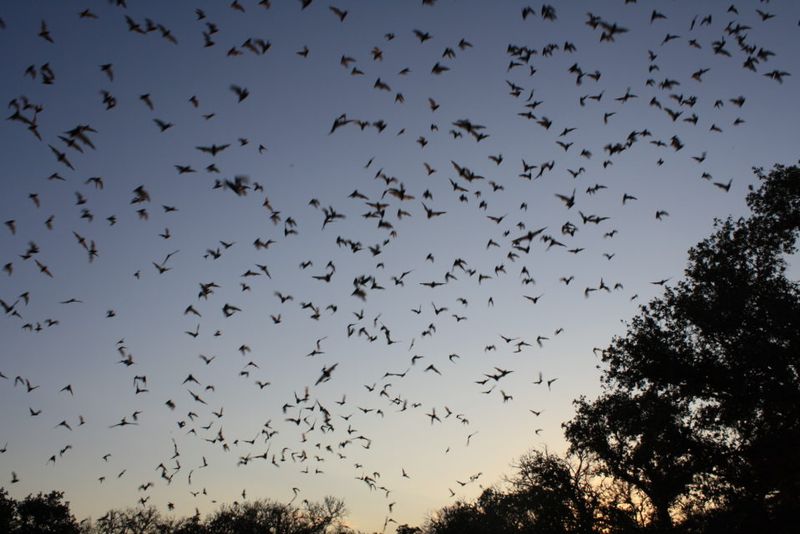
Every summer evening in Central Texas, bats flicker across the darkening sky, snapping up insects on the wing. Mexican free-tailed bats are among the most abundant wild neighbors a Central Texas homeowner can have, and supporting them is genuinely worthwhile.
But if your main goal is fewer mosquito bites on the back porch, there is more to the story than most bat articles let on. This guide covers what these animals actually eat, how to make your yard useful to them, and which mosquito-prevention steps you can count on when the sun goes down.
Meet the Mexican free-tailed bats in Central Texas skies
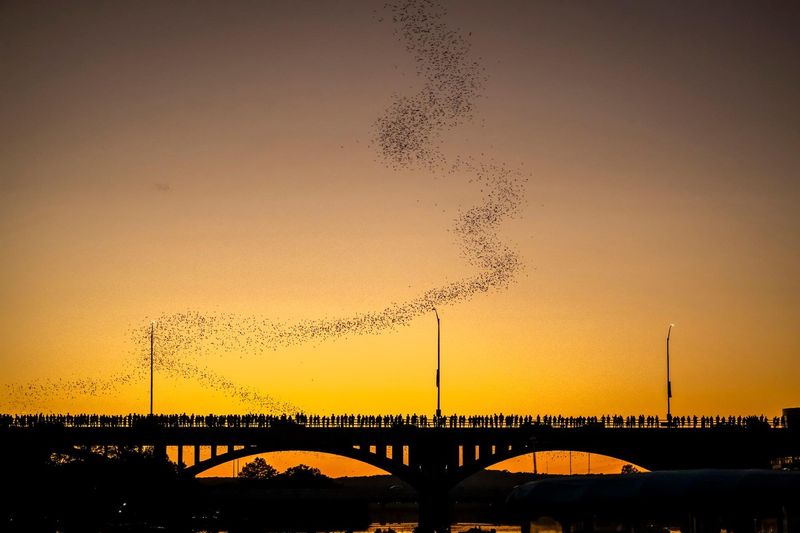
Tadarida brasiliensis, the Mexican free-tailed bat, is the species most likely to appear over a Central Texas yard on a warm summer evening. Millions of them return to the region each spring after wintering in Mexico, filling roosts tucked into limestone caves, highway bridges, and building crevices across the Balcones Escarpment and Edwards Plateau.
Texas Parks and Wildlife Department notes that these bats are among the most abundant mammals in North America, with the famous Bracken Cave colony alone numbering in the tens of millions.
Around dusk each evening, the bats pour out of their roosts and fan across the landscape to forage. A homeowner who spots bats wheeling over the backyard is almost certainly watching animals that roosted somewhere else entirely, perhaps under a bridge a mile away or in a cave on a nearby ranch.
Seeing them overhead does not mean they have taken up residence on the property, and they may be gone by full dark.
Their diet covers a wide range of flying insects. Moths, beetles, flying ants, June bugs, and other soft-bodied species all appear in gut and fecal studies, and mosquitoes do turn up as well.
Framing these bats as a specialized mosquito-removal service, though, misrepresents what they actually do. A more accurate picture is that they are generalist aerial predators that consume whatever flying insects are available and abundant on a given night, which can vary considerably with season, weather, migration timing, and local insect populations.
Their presence over Central Texas is also seasonal. Many individuals move south as cooler weather arrives, so the nightly bat show that peaks in summer can thin out or disappear entirely by late fall.
Supporting these animals means working with that natural rhythm rather than expecting a permanent, year-round service.
Bats eat mosquitoes, but they do not guarantee fewer bites
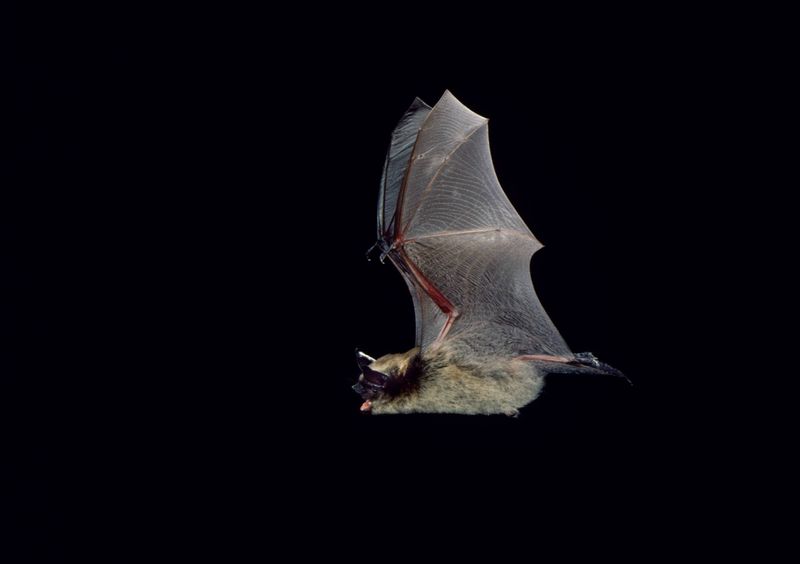
Bats do eat mosquitoes. Diet studies using DNA analysis and microscopy have confirmed that multiple bat species consume multiple mosquito species, including some that carry arboviruses.
That part is settled. What is not settled is whether having more bats nearby actually lowers the number of mosquitoes in your yard or reduces how often they bite you.
University of Wisconsin Extension mosquito researchers state plainly that there is no evidence that increasing bat populations reduces mosquitoes enough to affect human biting rates. The Florida Medical Entomology Laboratory at the University of Florida reaches a similar conclusion, finding that bats are unlikely to control large mosquito populations because most consume relatively small quantities of mosquitoes relative to what is present.
A peer-reviewed dietary study of bats in the southeastern United States confirmed that bats ate 17 mosquito species, including several capable of transmitting disease, but the authors noted that the public-health effect and best habitat strategies remain uncertain. Consumption varied by bat species, mosquito species, habitat type, temperature, time after sunset, and the density of mosquito larvae nearby.
No single bat-house recipe or yard setup can control those variables.
The often-cited figure that one bat eats 600 or more mosquitoes per hour is based on extrapolations from controlled laboratory conditions, not observations of wild bats foraging over residential properties. Peer-reviewed dietary research shows that mosquitoes may represent only a modest share of many insectivorous bats’ diets, with moths, beetles, and other insects often making up a larger portion.
Using that hourly figure as a backyard estimate overstates what any bat is likely to accomplish over your yard on a given summer night.
The practical takeaway is straightforward. Bats contribute to a broader insect-control picture, and that contribution has real ecological value.
Counting on them to make your porch noticeably more comfortable is a different claim, and the current evidence does not support it.
Build habitat that supports the insects bats actually use
Native plants, mature trees, and safe snags do not directly summon bats the way a hummingbird feeder pulls in ruby-throats. Their value is more indirect but still real: a yard planted with native species supports a richer, more diverse insect community, and a richer insect community gives foraging bats more reason to pass through.
Bat Conservation International’s garden guidance describes this as creating habitat that supports the prey bats depend on, rather than attracting bats directly.
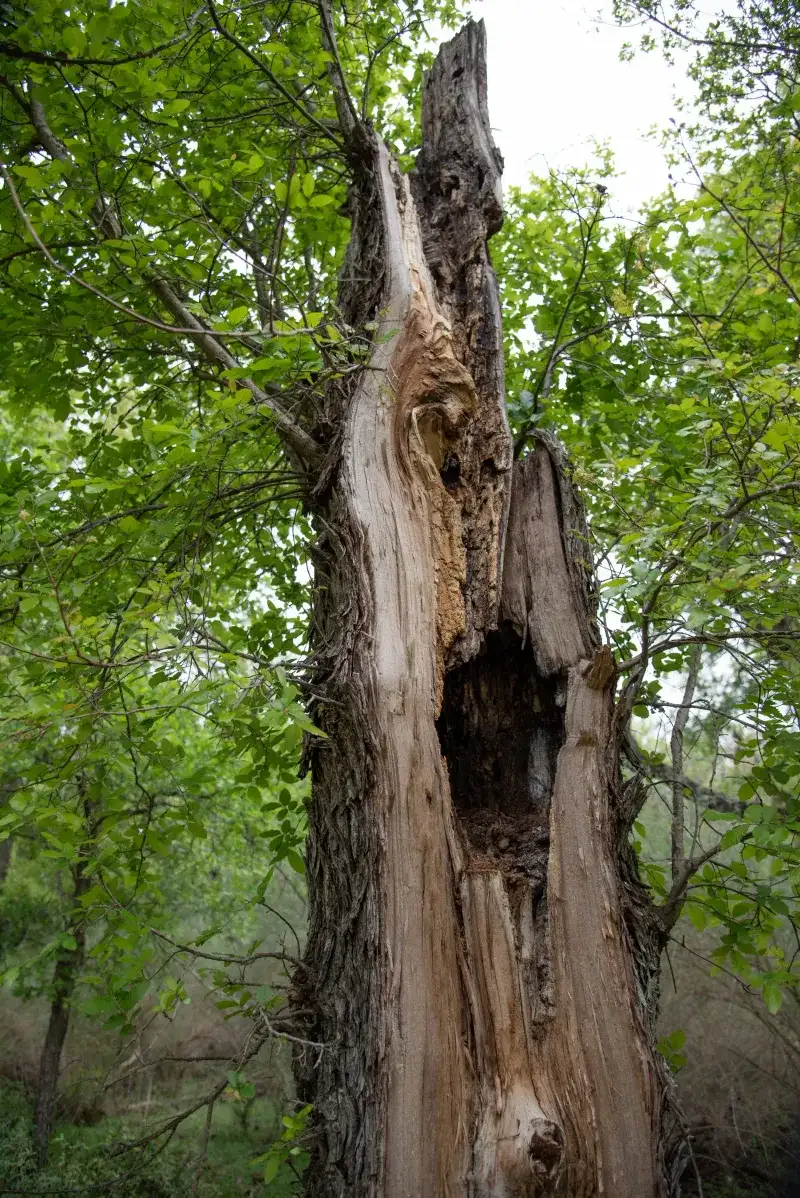
Dead or dying trees, called snags, deserve special mention. A snag with loose bark or natural cavities can offer bats a spot to roost during the day, separate from any bat house you might install.
Leave a dead tree standing only when it is far enough from structures, walkways, and play areas that a falling limb or trunk poses no real risk to people or property. A hazardous tree should come down regardless of its wildlife value.
One honest tradeoff is worth naming. A yard designed to support diverse insect life will support many insect species, not just the ones bats eat and you admire.
Some of those species may be ones you would rather not encourage near the house. Accepting that tradeoff is part of treating a yard as a functioning habitat rather than a curated outdoor room.
Pesticide and herbicide use deserves careful thought in any bat-friendly project. Bat Conservation International warns that broad-spectrum chemicals can strip the insect prey bats depend on and can reach the bats themselves through contaminated insects they consume.
Spot treatments targeted at specific problem pests cause less collateral damage than blanket applications across a lawn or garden bed.
Understand what a bat house can—and cannot—do
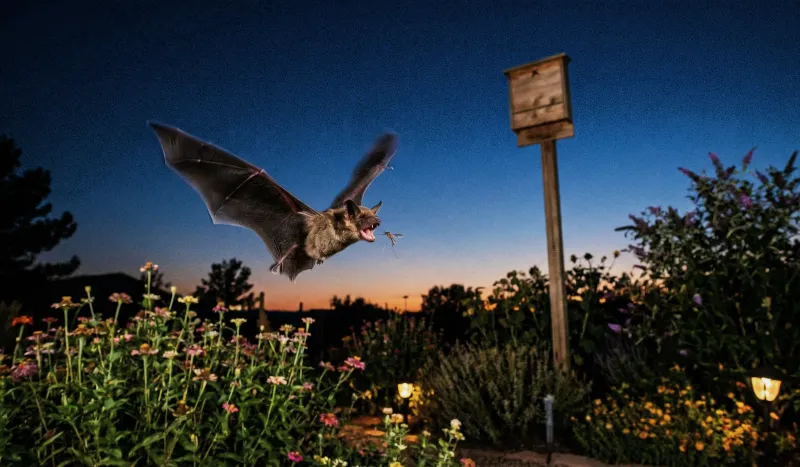
A bat house gives bats a place to roost if they choose to use it. That is the full, honest scope of what it offers.
Occupancy is not guaranteed; many bat houses sit empty for a year or more, and some are never used at all. A bat house will not pull bats away from an active roost in your attic or wall void, and it is not a mosquito-control device regardless of whether bats eventually move in.
Bat Conservation International’s bat-house guidelines outline the design features that give a house the best chance of attracting occupants. Use untreated wood with a roughened interior surface so bats can grip the walls.
Provide narrow roosting spaces, typically three-quarters of an inch or less, that mimic the tight crevices bats naturally select. Avoid smooth plastic or metal interiors, which offer poor grip and can become dangerously hot.
Follow a tested plan rather than improvising dimensions, because small errors in chamber width or depth can make a house unsuitable.
Bats flying over your yard at dusk are foraging animals, not house-hunters inspecting your installation. They may never investigate a bat house on your property even if the design is perfect and the placement is ideal.
According to Bat Conservation International’s FAQ, patience is required; it can take two or more years before a house sees its first occupant.
Skip any technique that promises to speed up the process through artificial means. Do not attempt to catch bats and place them inside a house.
Do not add guano, synthetic scents, recorded bat calls, or bait in hopes of drawing residents. Bat Conservation International is direct on this point: those methods do not work and some carry safety risks.
The best approach is a well-built, well-sited house and time.
Site a bat house for Central Texas heat and flight paths

Getting the location right matters as much as getting the design right, and in Central Texas the stakes are higher than in cooler climates. Summer temperatures that regularly exceed 100 degrees Fahrenheit can turn a poorly sited bat house into a lethal heat trap.
Overheating is one of the most common reasons bat houses fail in the South, and it deserves serious attention before you pick up a drill.
Bat Conservation International’s placement guidance recommends mounting a house with at least 12 feet of open space below the exits so bats can drop into flight without obstruction. Building-mounted houses generally perform better than pole-mounted ones in many situations because masonry and wood structures absorb and retain heat, but pole mounts can work well in hot climates when the exposure and height are right.
Keep the house away from branches, utility lines, and any other structure that gives a cat, raccoon, or snake easy access to the entrance.
Older Bat Conservation International installation guidance recommends roughly 12 to 20 feet above ground, at least six hours of daily sun, and proximity to a substantial water source and open flight corridors when those features are available nearby. Treat those numbers as useful starting points, not as a formula that guarantees occupancy.
In Central Texas specifically, morning sun exposure is preferable to full afternoon sun, which can push interior temperatures to dangerous levels. Lighter exterior colors reflect heat better than dark stains in the hottest months.
Ventilation gaps built into the design allow hot air to escape. Installing two or more houses with slightly different exposures gives bats the option to move between cooler and warmer chambers as temperatures shift through the day and season.
No single placement decision will make or break success on its own, but getting several of these factors right together improves the odds considerably.
Protect bats, people, and occupied buildings
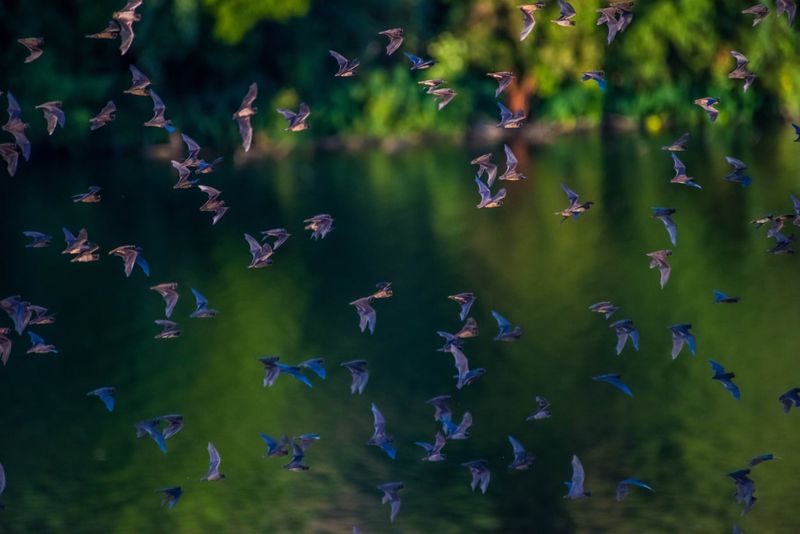
Bat-friendly yard work comes with a few firm safety boundaries that apply to every homeowner, regardless of how committed they are to supporting wildlife. Starting with the simplest one: keep outdoor cats inside during the hours around dusk and throughout the night.
Bat Conservation International identifies cats as a documented hazard to bats emerging from roosts, and a cat that has learned to wait near a bat house entrance can cause serious harm to a colony over time.
Never touch a bat, even one that appears healthy or is found on the ground. Bat bites can be extremely small, sometimes too small to notice without careful inspection, and a bite that goes unrecognized can be a serious public-health concern.
The CDC’s rabies prevention guidance for bats is clear: if you wake up to find a bat in a room where someone was sleeping, or if a bat has had contact with a child or a person who cannot reliably report a bite, treat it as a possible exposure. Contact your local animal control office or public-health department immediately.
The Texas Department of State Health Services provides scenario-specific guidance for evaluating bat contact situations.
A bat house installation is a separate matter from a bat colony already living in your attic, wall void, or chimney. Do not attempt to capture, relocate, or seal out bats on your own.
Poorly timed exclusion is especially dangerous during maternity season, roughly May through August in Texas, when nonflying young are present. Sealing an occupied roost during that window can trap pups inside, where they will die.
Even outside maternity season, exclusion requires one-way devices and careful technique to be effective and humane.
Texas law restricts hunting, selling, purchasing, and possessing bats, with statutory exceptions that apply in specific circumstances involving bats inside or on buildings occupied by people. If you have bats in an occupied structure, direct your questions to a qualified wildlife control professional or your local public-health authority rather than attempting to resolve it yourself.
Use dependable mosquito defenses alongside habitat work
Supporting bats and preventing mosquito bites are related goals in the sense that both involve your yard, but they call for different actions and different measures of success. Even if bats forage over your property every evening, that activity alone is not a reliable substitute for the mosquito-control steps that public-health agencies consistently recommend.
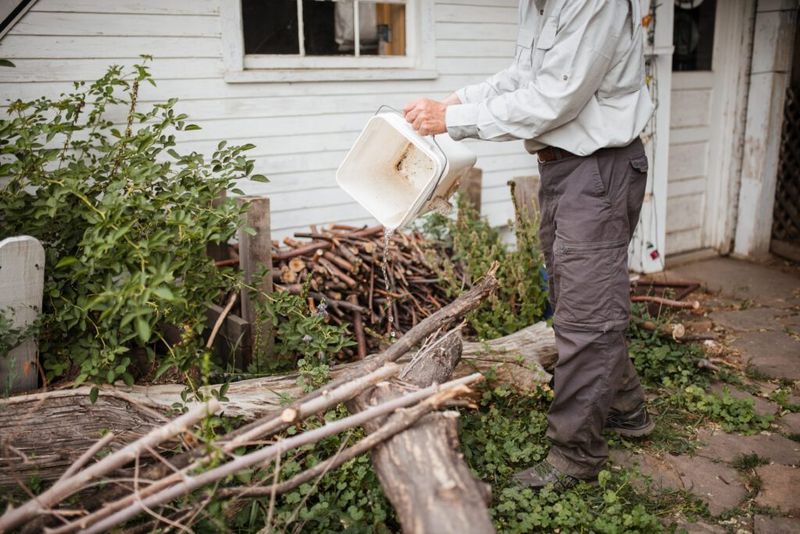
Source reduction is the single most effective thing a homeowner can do. CDC guidance on mosquito control at home recommends emptying, scrubbing, covering, turning over, or discarding any container that holds water at least once a week.
That list includes flowerpot saucers, bird baths, buckets, tarps, clogged gutters, and toys left in the yard. Mosquitoes need only a small amount of standing water and about a week to complete their aquatic life stages, so consistent weekly checks matter more than occasional big cleanups.
Ponds and decorative water features deserve a specific note. An unmanaged pond or birdbath does not reduce mosquitoes; it can actively produce them.
If you want to keep a water feature, aerate it, stock it with mosquito-eating fish where appropriate, or treat it with a product labeled for that use. A birdbath that sits stagnant between visits becomes a breeding site, not a garden asset.
Intact window and door screens keep mosquitoes out of living spaces regardless of what is happening outside. Check frames and mesh for tears, gaps around edges, and screens that no longer fit snugly.
Personal protection during peak mosquito hours, meaning EPA-registered repellents applied according to label directions and clothing that covers exposed skin, remains effective and practical even when bats are active overhead. Those measures work whether or not a bat house is occupied.
Measure success as a healthier yard, not a mosquito-free summer
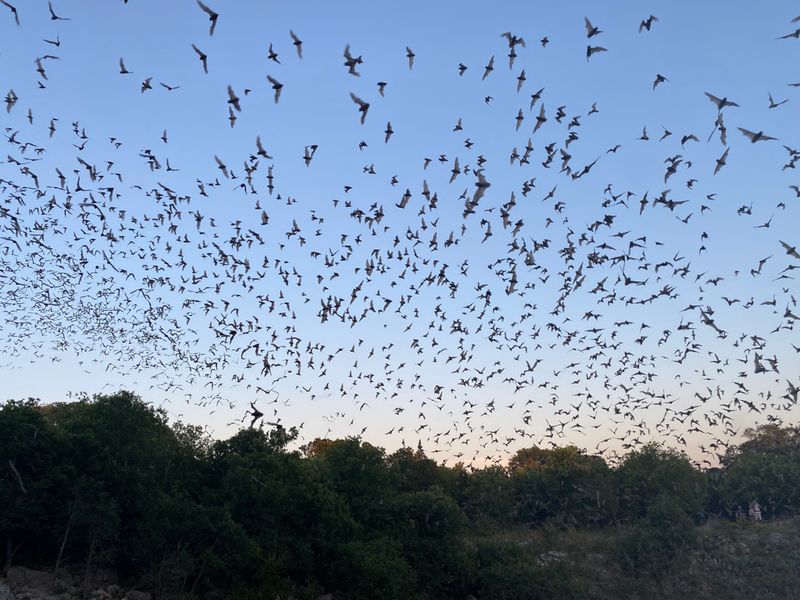
Mexican free-tailed bats are remarkable seasonal neighbors. Watching a column of them pour out of a roost at dusk, or catching a few banking over the yard in the last light, is one of the genuinely singular experiences Central Texas offers homeowners willing to pay attention to what lives nearby.
That experience has real value on its own terms, separate from any mosquito math.
Habitat improvements, a thoughtfully sited bat house, and dusk sightings are wildlife-support outcomes. Texas Parks and Wildlife recognizes these bats as an ecologically significant part of the state’s native fauna, and the steps that make a yard more welcoming to them, native plantings, reduced pesticide use, snag retention, contribute to a broader and healthier local ecosystem.
Measuring success by those outcomes keeps expectations realistic and the work rewarding.
For reducing mosquito bites specifically, the combination of weekly water-source elimination, intact screens, and appropriate personal protection remains the dependable approach. Bat habitat and bite prevention work best when you pursue both with clear eyes about what each one actually delivers.
A yard full of native plants, a well-built bat house, and a weekly habit of dumping standing water gets you closer to both goals than any single fix ever could. The bats sweeping overhead at dusk are worth having around regardless of what the mosquito count turns out to be.