
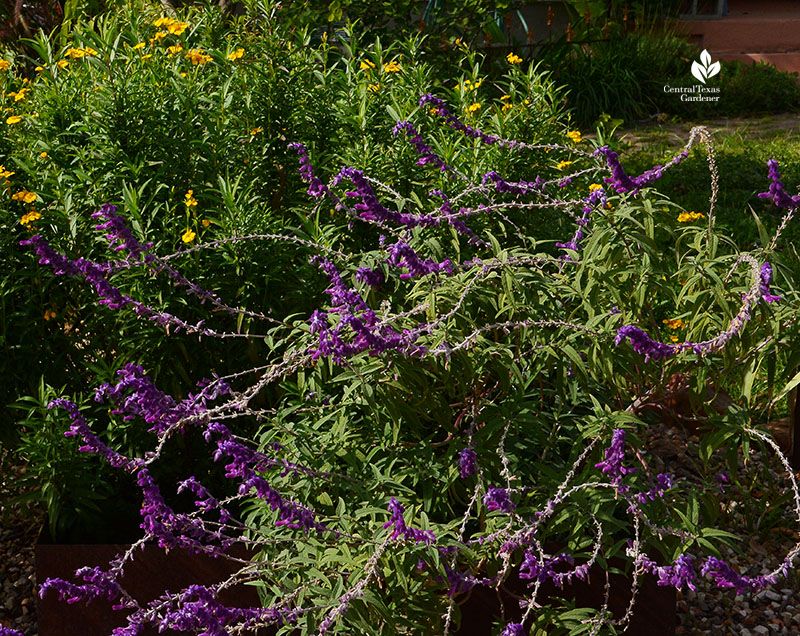
Mexican mint marigold, also sold as Texas tarragon, is one of the most talked-about aromatic plants for warm Southern gardens, and some gardeners swear it keeps wasps at bay. The truth is a bit more complicated than that, and getting it right can save you a frustrating summer.
This article covers what the plant actually offers, what the wasp research really says, and what steps genuinely reduce porch wasp problems.
Mexican mint marigold is a Texas-suitable porch plant
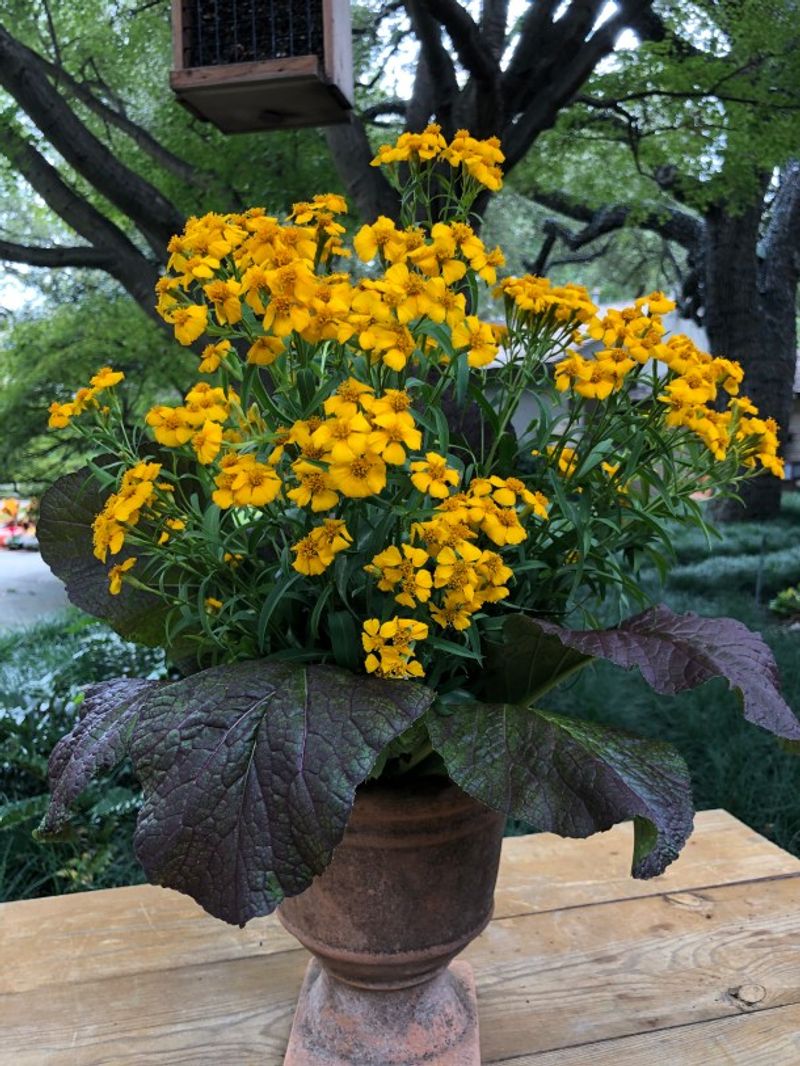
Few plants earn a spot on a hot Texas porch as naturally as Mexican mint marigold, known botanically as Tagetes lucida and sold under names like Texas tarragon and sweet mace. Rub a leaf and the scent hits immediately, a warm, anise-like fragrance that makes it a pleasure to grow near any outdoor seating area.
The NC State Extension plant profile describes it as a perennial in warm climates with bright yellow flowers and aromatic foliage that performs well in full sun or light shade.
In Texas, the plant’s heat tolerance is a genuine selling point. Summers that wilt most ornamentals barely slow this one down, and it handles dry spells better than many porch-container favorites.
Texas A&M AgriLife’s Earth-Kind program lists it among reasonably drought-tolerant plants suited to Texas landscapes, which matters when water restrictions tighten in July and August.
Growth habit is worth knowing before you plant. Mexican mint marigold spreads over time and can get leggy if left alone, so Austin gardeners often shear it back in early summer to keep it compact and tidy in a container or bed.
A pot near the porch edge or a raised bed beside the steps gives you easy access to enjoy the foliage and flowers without committing to a large in-ground spread.
One thing to be clear about from the start: placing this plant near your porch is a gardening choice, not a pest-control strategy. No source establishes a required number of plants, a correct spacing, or a distance at which it reliably pushes wasps back.
Grow it because the foliage smells good, the yellow flowers are cheerful through the warm season, and it asks very little of a Texas gardener in return.
The plant is not native to Texas

The article’s original title called Mexican mint marigold a native Texas plant, and that label needs correcting before anything else. Kew’s Plants of the World Online documents Tagetes lucida‘s native range as Mexico through Honduras.
Texas is not part of that range.
Texas gardening sources typically describe the plant as adapted or suitable for Texas conditions rather than native. Those two categories carry different meanings in horticulture and ecology.
A native plant evolved within a specific region over thousands of years and tends to support local food webs, specialist pollinators, and soil communities in ways that adapted ornamentals generally do not. An adapted plant performs well in a region’s climate without being part of its original plant community.
That distinction matters for honest plant selection, but it does not make Mexican mint marigold a poor choice. A nonnative plant can thrive in Texas heat, look great on a porch, and hold up through drought.
What it cannot do is carry the ecological credentials of a true Texas native, and those credentials are sometimes relevant when gardeners are trying to support local wildlife or meet landscaping requirements tied to native-plant programs.
The practical takeaway is simple. If your goal is a heat-tolerant, aromatic ornamental that performs through a Texas summer, Mexican mint marigold fits that description well.
If your goal is to add a Texas-native plant to a habitat garden, look toward species whose native range actually includes the state. Calling a plant native when it is not does a disservice to both the gardener and the plant.
Essential-oil studies do not prove that a live plant repels wasps
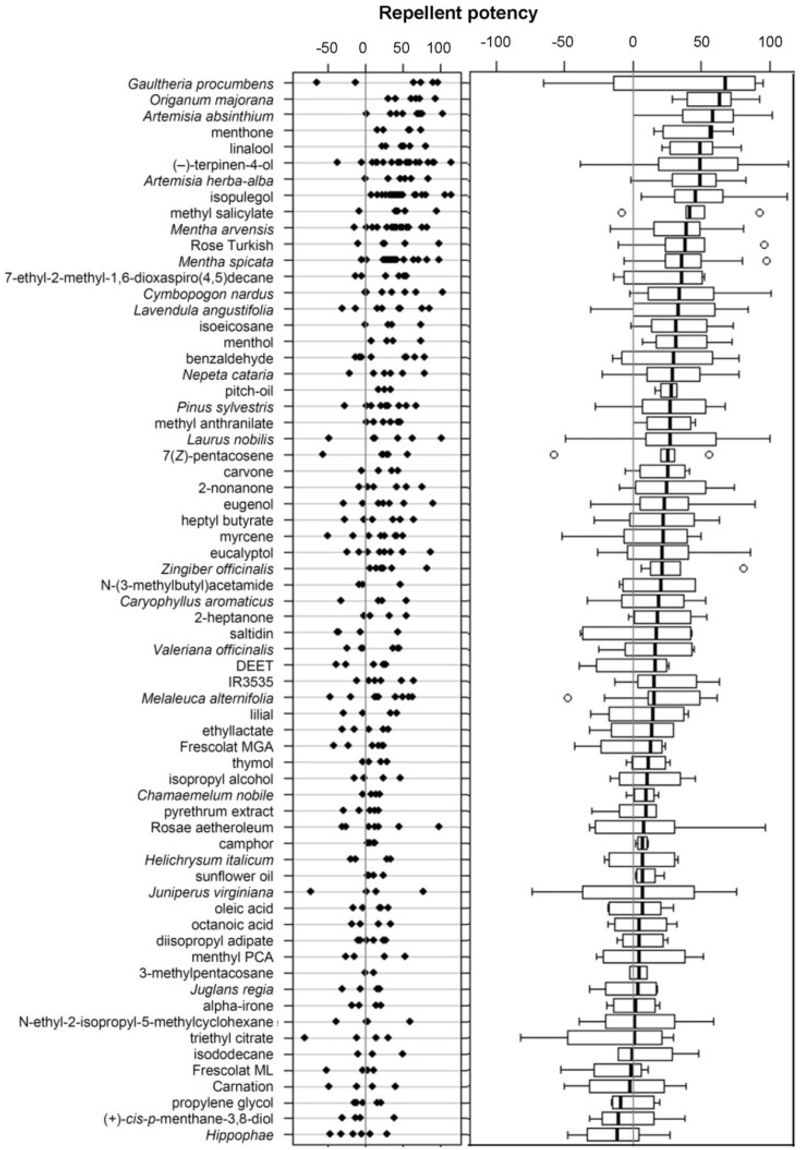
Some essential oils have shown genuine repellent activity against certain social wasps under controlled conditions. A peer-reviewed study on essential oils as spatial repellents for pestiferous social wasps found that several plant-derived oils, including clove, geranium, lemongrass, and others, reduced wasp activity in laboratory or bait-trap settings.
Results varied by the specific chemical tested, its concentration, the wasp species involved, and the conditions of the experiment.
What those studies did not test is whether potting a fragrant plant beside a porch chair produces the same effect. A concentrated essential oil applied at a measured dose in a controlled setting is a fundamentally different situation from a living plant releasing volatiles into open outdoor air.
The concentration of aromatic compounds drifting off a leaf on a breezy Texas afternoon is uncontrolled, far lower on average, and highly variable depending on temperature, wind, and how recently the plant was disturbed.
A separate screening study on repellents against vespid wasps reinforced that repellency depends heavily on the specific compound, the concentration used, and the wasp species in question. No single aromatic plant or oil worked uniformly across all wasp types tested.
There is also a complication that often goes unmentioned: aromatic plants and their flowers can attract insects rather than push them away. Wasps visit flowers for nectar and may patrol plants that harbor caterpillars or other prey.
The same volatile chemistry that repels one insect at one concentration can attract a different species or a different behavior at another. No cited study demonstrates that Mexican mint marigold creates a wasp-free zone around a porch, and making that claim would go well beyond what the research supports.
Plant it for appearance and performance, not pest control
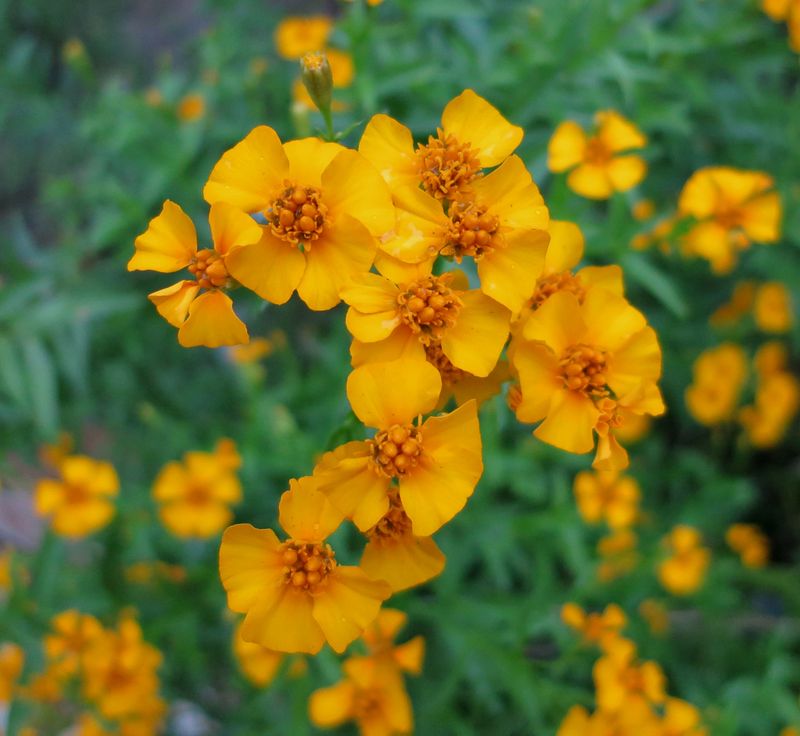
Approached as a horticultural choice rather than a pest barrier, Mexican mint marigold earns its place on a Texas porch on its own merits. NC State’s plant profile confirms it grows as a perennial in warm climates, tolerates full sun or light shade, and produces yellow flowers through the warm season.
Those are genuinely useful traits for a Texas gardener who wants something that does not need constant replacement or heavy watering.
A container works well for most porches. A medium to large pot near the steps or porch edge gives the plant enough room to fill out without letting it spread into walkways.
Shearing the plant back in early summer keeps it compact and encourages fresh, aromatic growth rather than a leggy, open habit. Drought tolerance means it can handle a missed watering or two, which matters during the stretches of July heat when daily attention to containers is not always realistic.
Some gardeners prefer to keep flowering plants a step or two away from the immediate seating area during peak bloom. That is a reasonable personal preference, since flowering plants attract a range of insects, including bees, beneficial wasps, and other flower visitors.
Texas Parks and Wildlife notes that wasps and other insects visit flowers regularly as part of normal foraging behavior. Keeping blooms a few feet from a chair or doorway is a comfort-based precaution, not a validated method for reducing wasp presence.
The honest framing is this: grow Mexican mint marigold where you will enjoy the fragrance and the cheerful yellow flowers, give it the sun and occasional shearing it needs, and let the plant’s actual garden performance be the measure of its value on your porch.
Identify the wasp before choosing a response
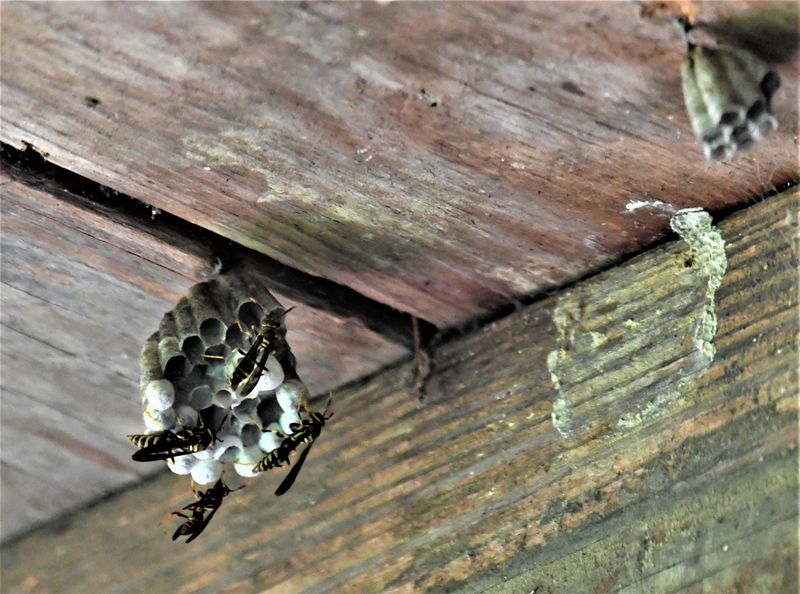
Before reaching for any solution, the single most useful step is figuring out which wasp you are actually dealing with. The word wasp covers a wide range of insects with very different nesting habits, food preferences, and levels of defensiveness, and a response that makes sense for one species can be useless or counterproductive for another.
Utah State University Extension’s paper wasp guide describes paper wasps as the species most commonly found under eaves, overhangs, and porch ceilings. Their nests are open and umbrella-shaped, with visible hexagonal cells.
Paper wasps are generally less aggressive than yellowjackets and will not typically sting unless the nest is directly disturbed or a person moves too close to it.
Yellowjackets behave differently. They often nest in the ground, inside wall voids, or in enclosed cavities, and they are strongly attracted to garbage, meat scraps, sugary drinks, fallen fruit, and food waste left outdoors.
A wasp repeatedly circling a trash can or dive-bombing a soda cup is more likely a yellowjacket than a paper wasp. Yellowjackets are generally more defensive and more likely to sting without obvious provocation near their nest.
Beyond those two, solitary wasps, including mud daubers and various ground-nesting species, are common in Texas and rarely aggressive. They do not defend large colonies the way social wasps do.
Texas Parks and Wildlife points out that many wasp species are predators of other insects or contributors to pollination, and treating every wasp as a threat misses that ecological context entirely.
Knowing the species, nest location, and the nature of the activity on your porch shapes every decision that follows, from whether to act at all to which specific approach makes sense.
Reduce porch attractants before reaching for a treatment
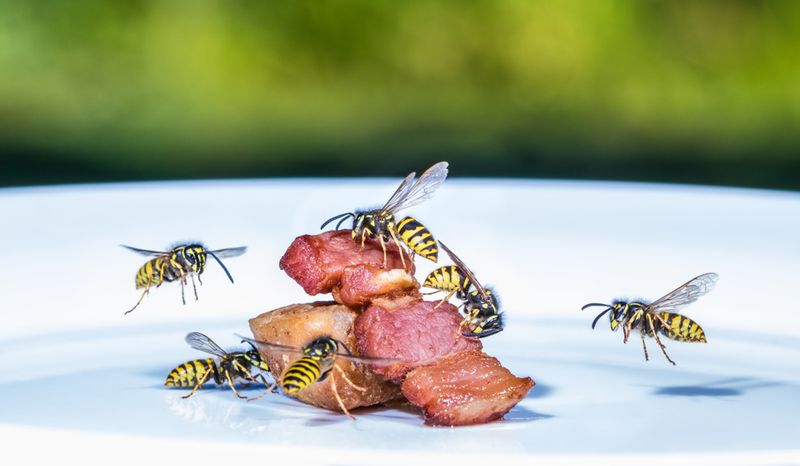
Cutting off what draws wasps to your porch in the first place is the most consistently useful step most homeowners can take. USU Extension’s wasp management guidance points to food and drink as primary attractants for yellowjackets in particular: uncovered trash, meat scraps, fallen fruit, sugary beverages, and food spills left on outdoor tables all signal to foraging wasps that your porch is worth visiting.
Keeping trash containers tightly sealed is one of the highest-return actions on that list. A lid that closes firmly, rather than sitting loosely on top of a full bin, removes a major food signal.
Fallen fruit from nearby trees should be collected regularly rather than left to ferment on the ground, since overripe fruit is especially attractive to yellowjackets late in the summer season. After any outdoor meal, wiping down tables and removing plates, cups, and wrappers promptly reduces the window during which wasps can find and learn to associate your space with food.
Leaking faucets and standing water near the porch are worth addressing too, since wasps, like most insects, need water. Fixing a dripping spigot or emptying a saucer that collects rainwater removes one more reason for wasps to spend time in the immediate area.
Traps are sometimes suggested as a complement to attractant reduction, but they come with important limits. USU Extension notes that heptyl-butyrate traps target some ground-nesting yellowjackets but generally do not attract paper wasps or aerial yellowjackets.
Placing traps beside the door or seating area can actually draw more wasps to exactly the wrong spot. When traps are used, they belong at the porch perimeter or away from the areas people use most, and they should be matched to the species present.
None of these steps guarantee a wasp-free porch, but they address the conditions that make your space attractive in the first place.
Handle active nests with caution
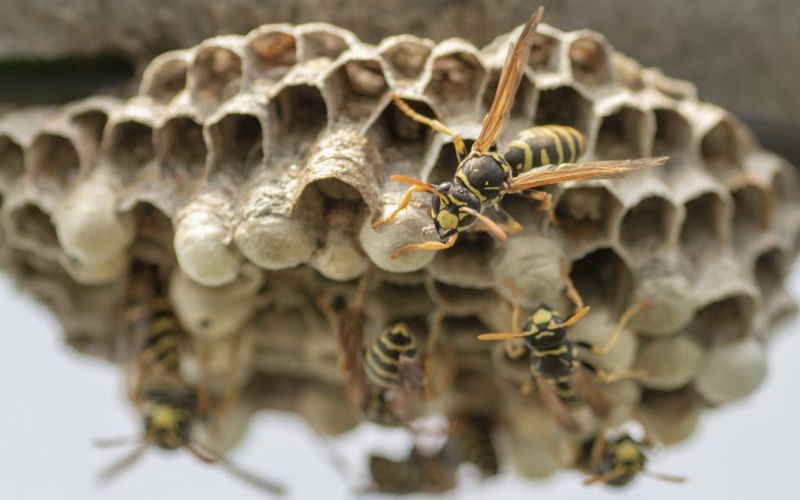
An active wasp nest near a frequently used door, above a play area, or inside a wall or roof void calls for a measured response rather than a quick reaction. Social wasps are most defensive at and near their nests, and disturbing one without a plan can result in multiple stings in a short time.
Paper wasps and yellowjackets can both sting repeatedly, unlike honeybees, so the risk from an agitated colony is not trivial.
USU Extension recommends early-season monitoring as the most practical prevention. A paper wasp queen starting a nest in early spring produces a small structure that is far easier to address than a mid-summer colony with dozens of workers.
If you spot a small, early-stage nest in a low-traffic location, you may choose to leave it alone entirely. Many wasps are effective predators of caterpillars, flies, and other insects, and Texas Parks and Wildlife recommends conserving wasp colonies unless their nesting creates a direct hazard to people or pets.
When a nest is in a high-traffic location, inside a wall void, or too large to safely address yourself, professional removal is the appropriate next step. A pest management professional can identify the species, choose the right approach, and treat the nest at the right time of day with proper protective equipment.
Attempting to knock down, seal, or spray an active nest without knowing the species, the nest location, or the correct product for the situation adds risk without guaranteeing success.
Sting reactions range from local pain and swelling to life-threatening anaphylaxis. The American College of Allergy, Asthma and Immunology identifies the warning signs of a severe allergic reaction: hives appearing away from the sting site, difficulty breathing, swelling of the throat or tongue, dizziness, vomiting, or fainting.
Anyone experiencing those symptoms needs emergency medical care immediately. People with a known severe sting allergy should carry prescribed epinephrine and seek emergency care after using it, even if symptoms appear to improve.
Build a calmer porch strategy around realistic expectations
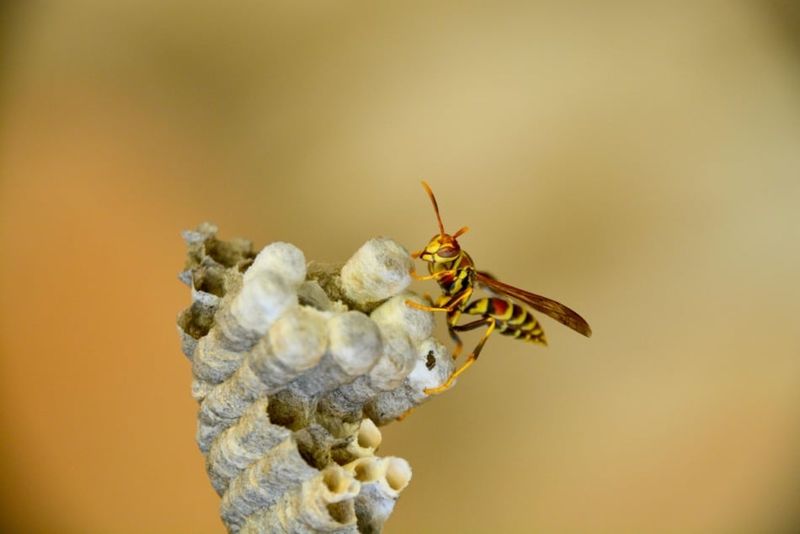
Mexican mint marigold earns a spot on a Texas porch for real reasons: aromatic foliage, cheerful yellow blooms, heat tolerance, and low water demands. Its ornamental performance in warm climates is well documented.
What research has not shown is that planting it reduces wasp activity, and building a summer porch strategy around that unproven idea sets up disappointment.
A more grounded approach runs in a clear sequence. Grow the plant if it suits your space and you enjoy it.
Treat its placement as a gardening decision rather than a wasp barrier. Remove food and water attractants consistently, since those are the conditions that bring wasps to a porch in the first place.
When wasp activity increases, identify the species and nest situation before deciding whether to act, and seek professional help when a colony poses a genuine hazard.
A plant that smells good and survives a Texas summer is already doing its job. Asking it to also police the porch for wasps is a different assignment entirely, and one no aromatic herb has earned yet.