
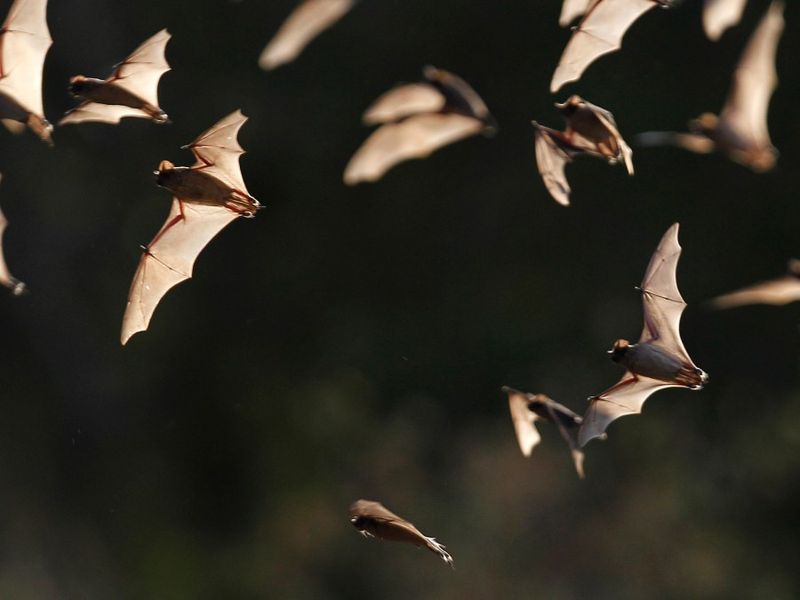
Walk outside on a Central Texas evening and you might catch the quick, zigzagging silhouette of a bat cutting through the last light above your yard. Plenty of homeowners assume those bats are clearing out the mosquitoes, and the idea is appealing enough that bat houses have become a popular backyard addition.
The truth is more interesting than the myth, and knowing what bats actually do, and what they do not do, helps you make smarter choices for both wildlife and your own summer comfort.
Bats eat mosquitoes, but they do not guarantee a mosquito-free patio
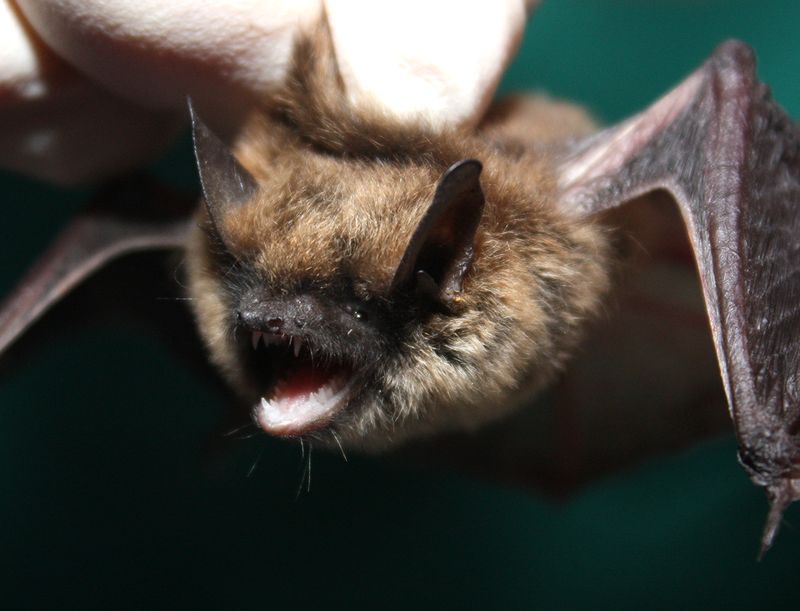
Researchers have confirmed that bats do eat mosquitoes, including species capable of carrying arboviruses. A 2022 southeastern U.S. dietary study detected 17 mosquito species in the guano of three common bat species, and six of those mosquitoes were known disease vectors.
A separate North American study of little brown and big brown bats found similarly broad mosquito diversity in their diets. That is genuinely useful ecological news, and it is worth celebrating.
What those studies did not show, and what the authors themselves flagged, is whether bat predation actually reduces mosquito numbers, biting rates, or public-health risk around homes. Detecting mosquito DNA in guano proves consumption.
It does not prove that your patio has fewer mosquitoes because a bat flew over it. A review of bat mosquito consumption research makes clear that the causal chain connecting bat activity to residential mosquito reduction has not been established, and more investigation is needed before that claim can be made responsibly.
The honest, evidence-backed promise is narrower but still worthwhile. Supporting bats may add natural insect predation to a Central Texas yard, and a properly placed bat house can provide useful roosting habitat.
For dependable mosquito control on and around your patio, though, you need direct action: removing standing water, using appropriate larvicides, keeping screens intact, and applying EPA-registered repellents when you need them. Bats are one ecological benefit among several, not a replacement for those measures.
What Central Texas bats hunt at dusk
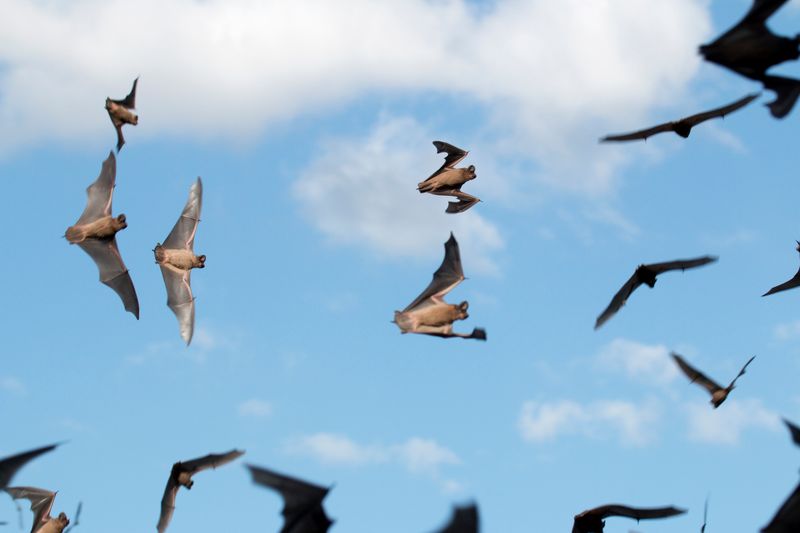
Mexican free-tailed bats are among the most abundant mammals in Texas, and they are genuinely impressive hunters. Texas Parks and Wildlife notes that their primary documented prey includes moths, beetles, flying ants, and June bugs, making them broad-spectrum insect predators rather than mosquito specialists.
Mosquitoes show up in their diets, but the insects that dominate their foraging are generally larger, more calorie-dense flying prey.
Speed matters here. The Brazilian free-tailed bat is one of the fastest flying mammals on earth, capable of reaching speeds above 100 miles per hour in level flight.
These bats often forage high above the landscape, intercepting moths and beetles over open country, agricultural fields, and riparian corridors rather than hovering low over a suburban patio. A bat you see darting above your yard at dusk may well be passing through rather than hunting the mosquitoes off your chair.
The U.S. Geological Survey notes that a little brown bat may consume roughly 4 to 8 grams of insects per night, a useful general measure of their appetite, but that figure applies to insects broadly and should not be converted into a mosquito count.
Knowing what bats actually prefer helps homeowners appreciate the full ecological role these animals play, while keeping expectations grounded about how much mosquito relief any bat activity can deliver over a specific seating area.
A bat house provides a possible roost, not a patio reservation
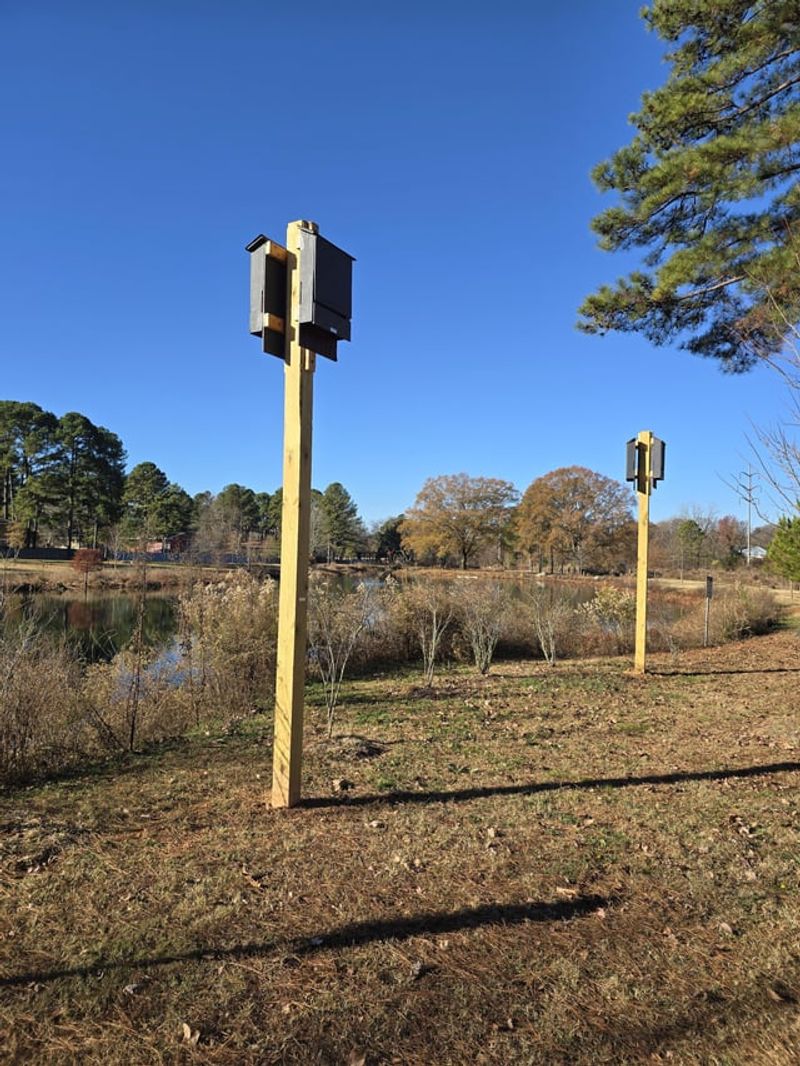
A bat house is best understood as an offer, not a guarantee. Bat Conservation International is direct on this point: bats may never use a particular house, and habitat preservation matters more than simply nailing up a box.
Artificial-roost studies show widely variable occupancy rates depending on design, placement, surrounding habitat, and the presence of established local bat populations. Putting up a house is a reasonable contribution to bat conservation, but it is not a switch you flip to bring bats to your yard.
BCI’s backyard guidance also makes clear that where a bat roosts has no direct relationship to where it hunts. A colony using your bat house might forage over the creek a quarter mile away, over a farm field, or along a tree line, following insect concentrations rather than property lines.
Patience is essential: occupancy can take a full season or longer to develop, and some houses simply stay empty.
One approach that will not help is trying to seed the house yourself. Conservation research on artificial roost structures confirms that catching bats and placing them inside a house is ineffective and potentially harmful.
Guano scents marketed as attractants and sonic lures have not shown reliable results either. The most productive strategy is to build a quality house, install it correctly, and let local bats discover it on their own schedule.
Choose a house that can handle Central Texas heat
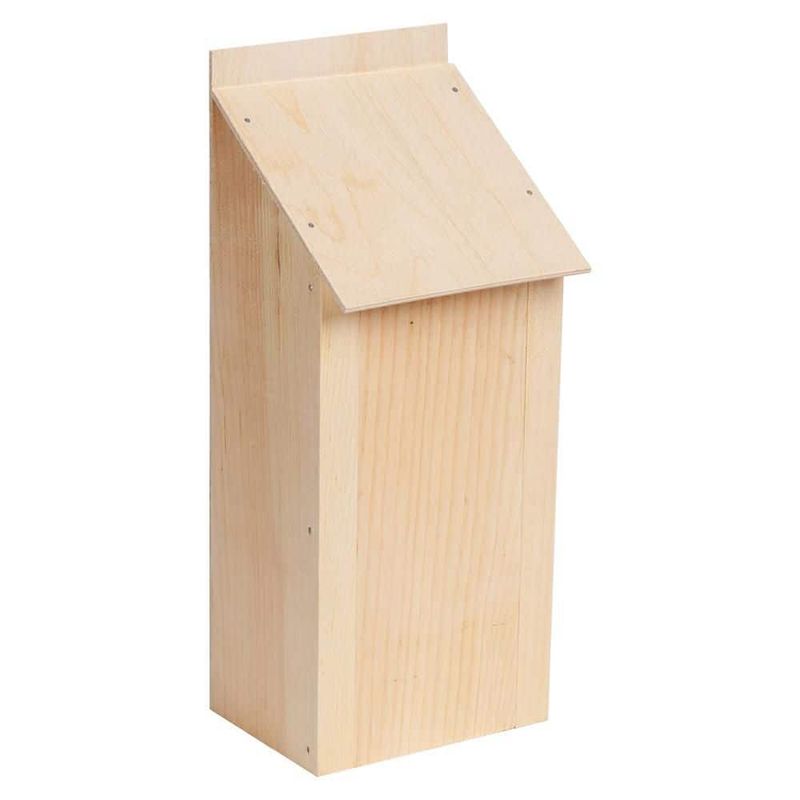
Hot Central Texas conditions create overheating concerns that homeowners in cooler climates rarely face. A bat house that works well in Tennessee or Missouri can become dangerously warm in a Texas summer, and bats will abandon or avoid a roost that regularly reaches lethal temperatures.
Bat Conservation International’s design guidelines address this directly, recommending climate-appropriate modifications rather than a single universal configuration.
Material and construction matter most. The house should be made from untreated, rough-sawn wood, never smooth plastic or metal-lined panels.
Bats cling to and move within the roost by gripping textured surfaces, so roughened or grooved interior walls are essential. Narrow roosting chambers, typically three-quarters of an inch to one inch wide, help bats regulate their body temperature by choosing the right depth within the chamber.
Seams should be sealed against drafts and leaks, but ventilation slots positioned toward the lower portion of the house allow hot air to escape without exposing roosting bats to predators.
Research on bat box thermodynamics shows that exterior color, orientation, and shading structures all influence internal temperatures significantly. In Central Texas, a lighter exterior color, a partial-shade position during the hottest afternoon hours, or a shade structure above the house can prevent overheating without sacrificing the warmth bats need for roosting in cooler months.
Installing two or more houses with different sun exposures gives a colony the option to move between roosts as temperatures shift across the season, which is one of the most effective thermal-management strategies available to a homeowner.
Place the house high, open, and near useful habitat
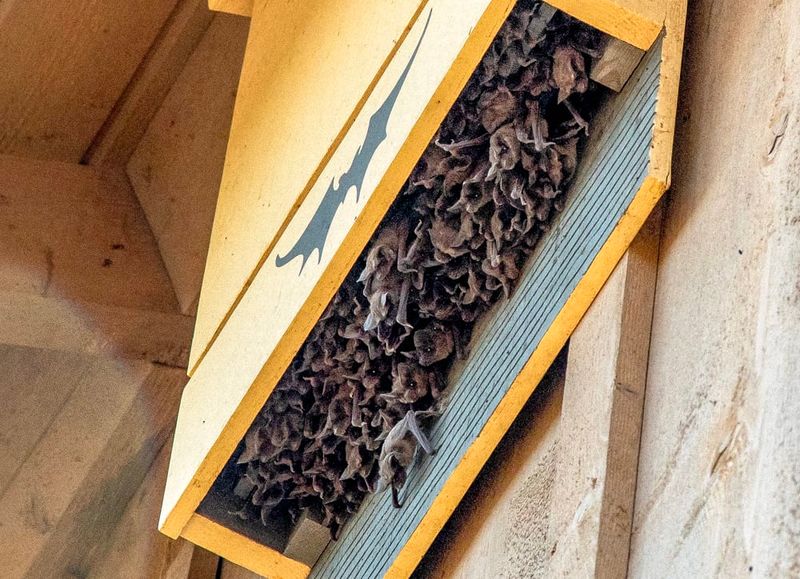
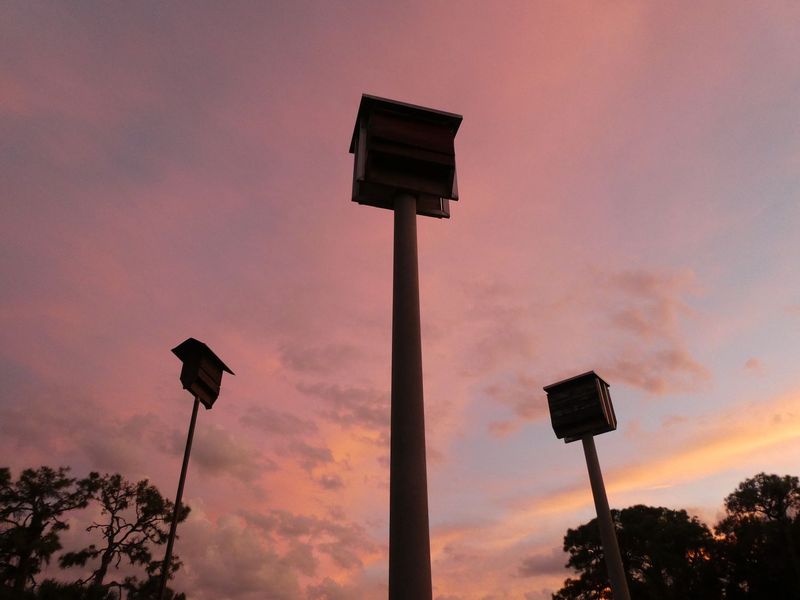
Height and open air are the two factors that matter most in bat house placement. BCI’s installation guidelines recommend mounting a house roughly 12 to 20 feet above the ground, with at least 12 feet of clear, unobstructed space below the exit slots.
Bats drop into flight when they leave a roost, so anything that interrupts that drop, including low branches, fence tops, or dense shrubs, makes the location less attractive and more dangerous.
BCI’s building-mount guidance favors attaching a house to a building or a freestanding pole rather than a tree whenever practical. Trees look like a natural choice, but their branches give cats, raccoons, and rat snakes a route to the roost, and the canopy can block the flight path bats need to exit cleanly.
A south- or southeast-facing wall of a barn, garage, or house often provides the right combination of sun exposure, height, and open approach.
Sun exposure guidelines need to be adjusted for Central Texas conditions. BCI’s general recommendation of six or more hours of daily sun works well in many climates, but in a region where afternoon temperatures are extreme, some afternoon shade may actually improve occupancy by preventing overheating.
Placing a house near a pond, creek, or other open water source adds foraging habitat value, since bats regularly drink and hunt over water. BCI’s habitat tips note that proximity to good foraging areas helps, while also being clear that you cannot control where a colony will hunt once it takes up residence.
Make the surrounding yard useful to bats and insects
Bats drink on the wing, skimming low over open water to scoop a sip mid-flight. Penn State Extension’s bat gardening guidance notes that bats generally prefer a relatively large, open water surface for drinking, making a wide, shallow pond or stock tank more useful than a standard perched-bird birdbath.
If a small birdbath is all you have, it may still attract some bat activity, but a larger open surface gives them a more reliable resource.
The insect community around your yard matters as much as the water. Native trees, shrubs, and flowering plants support a broader range of flying insects, which in turn support more diverse bat foraging.
BCI’s backyard habitat advice includes planting night-blooming species that attract moths and other nocturnal insects. Those insects are legitimate prey for bats, but night-blooming plants should be understood as habitat support rather than mosquito repellents or guaranteed bat attractants.
Two yard practices can undermine your bat house project significantly. BCI identifies outdoor cats as a serious danger to bats, particularly during the low, slow drop from a roost at the start of an evening flight.
Keeping cats indoors around dusk is a straightforward conservation step. Broad-spectrum insecticides and herbicides are also worth avoiding near a bat house: they reduce the insect populations bats depend on and can expose bats to chemical residues.
That is a conservation consideration, not a claim that every spray application will poison every bat in the area, but the cumulative effect on prey availability is real.
Pair bat habitat with mosquito controls that work
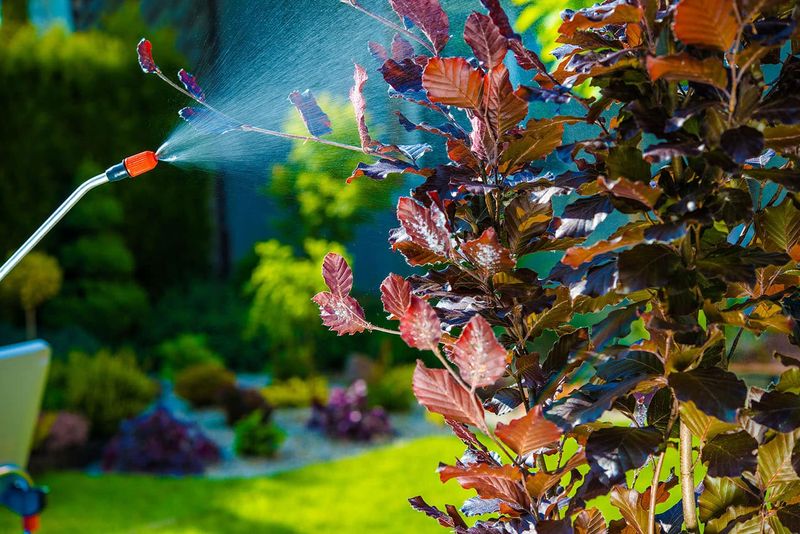
No bat house should carry the entire burden of mosquito management. The single most effective step any Central Texas homeowner can take is removing the water where mosquitoes breed, and CDC guidance on home mosquito control recommends doing it on a weekly schedule.
Flowerpot saucers, buckets, children’s toys, old tires, clogged gutters, birdbaths, and uncovered trash containers all hold enough water to produce mosquitoes. Texas DSHS reinforces this point by noting that mosquitoes can breed in surprisingly small amounts of standing water, which means even a bottle cap left in the yard after a rain can become a nursery.
For water that cannot be dumped, drained, or covered, a Bti product is the appropriate next step. The EPA’s Bti guidance describes these products, sold as mosquito dunks or bits, as larvicides that target mosquito larvae specifically without harming bats, birds, or other wildlife when used according to label directions.
They work in rain barrels, ornamental ponds, and other permanent water features where draining is not practical. Label instructions govern dosing and reapplication schedules, so reading them carefully is part of using the product correctly.
Personal protection operates on its own track, independent of what bats are doing overhead. Intact window and door screens keep adult mosquitoes outside.
EPA-registered repellents applied to exposed skin provide reliable bite prevention during evening time outdoors. These are not outcomes of bat activity; they are tools you control directly.
Combining source reduction, Bti where appropriate, screens, and repellents gives you a layered defense that works whether or not a bat house ever gets occupied.
Support bats outdoors while protecting people and bats
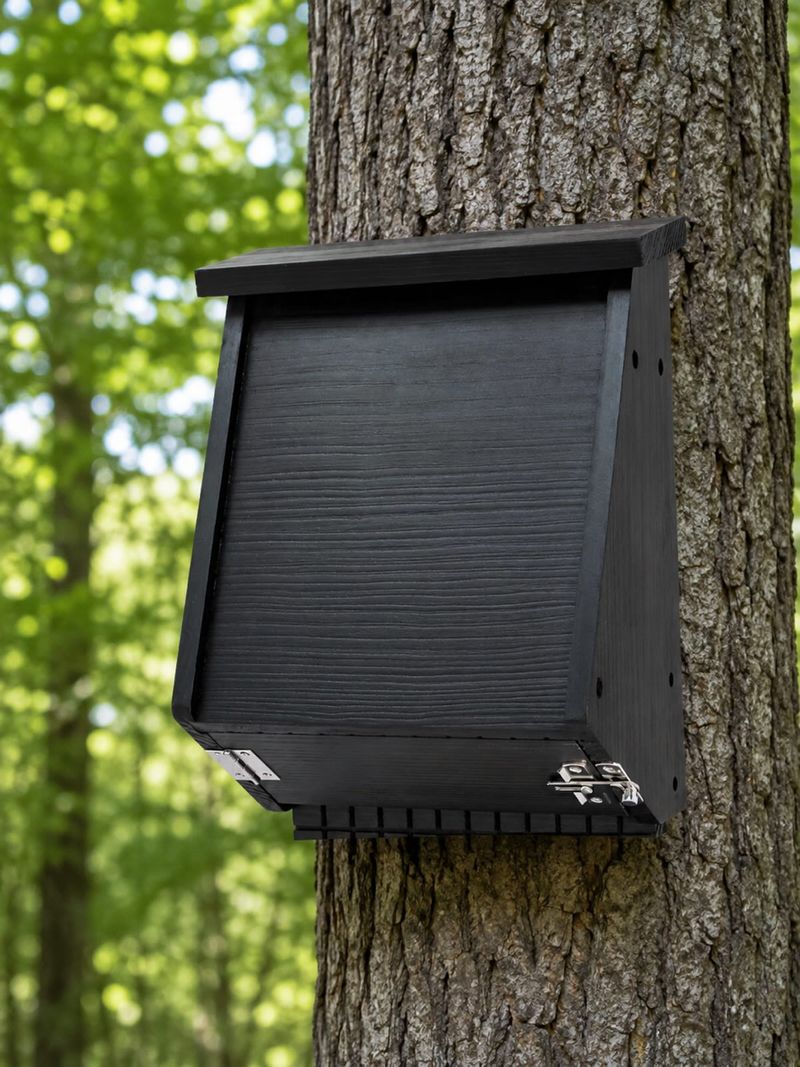
Bat houses work best when the humans around them understand a few firm boundaries. The most important rule is simple: never handle a bat with bare hands.
CDC guidance on bat rabies prevention explains that while most bats do not carry rabies, bats are the most frequently reported rabid wildlife species in the United States, and a bite from a bat can be so small it goes unnoticed. Any direct contact with a bat, or discovering a bat in a room with a sleeping person, an unattended child, or someone who cannot reliably report whether contact occurred, warrants prompt medical or public-health consultation.
Seeing a bat flying outdoors at dusk is not an exposure and is not cause for alarm. A bat seen active in daylight warrants cautious attention, especially if it is grounded, approachable, or unable to fly, but unusual behavior alone is not a rabies diagnosis.
CDC’s clinical rabies screening guidance makes clear that rabies transmission concerns center on bites, scratches, or infectious material contacting mucous membranes or broken skin. Simply watching a bat from your patio is not a risk.
Home exclusion is a separate matter from outdoor habitat support, and the two should never be confused. BCI specifically cautions that bat-proofing a structure during the maternity season, roughly May through August in Texas, can trap flightless pups inside walls or attics, causing serious harm.
If bats have found their way into your living space, contact a qualified wildlife professional or your local public-health office for guidance timed to the local bat calendar. Encouraging bats outdoors and excluding them from bedrooms and attics are compatible goals when handled carefully and in the right order.
Measure success by habitat support, not mosquito promises
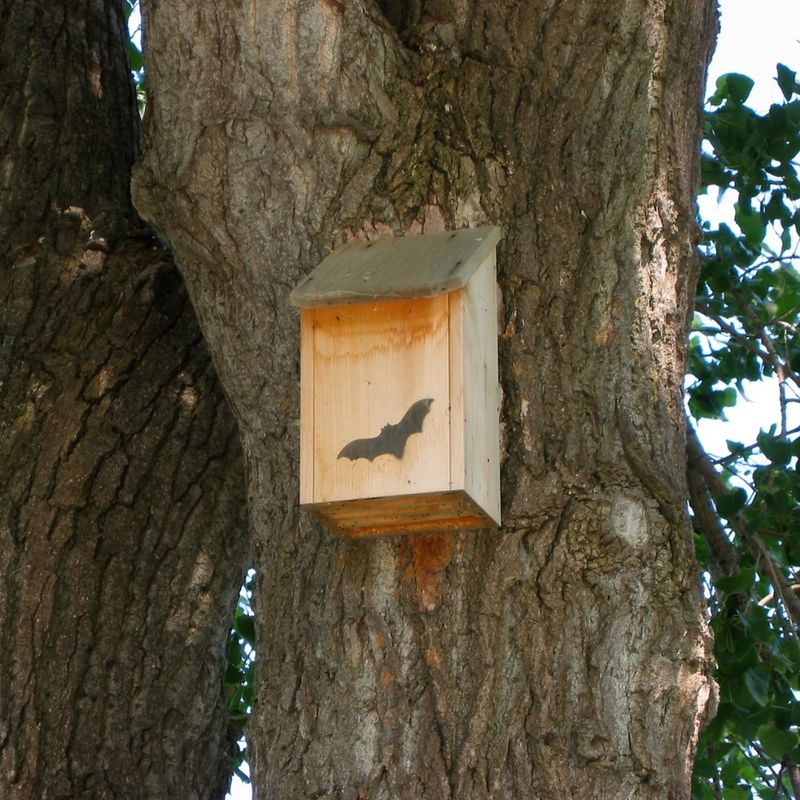
A correctly designed and well-placed bat house gives Central Texas bats one more roosting option in a landscape where natural roost sites can be scarce. That is a meaningful contribution on its own.
Bat Conservation International frames artificial roosts as one piece of a larger habitat-support picture, not a standalone solution, and that framing fits the evidence well.
If bats do take up residence, they will add insect predation to the evening ecosystem around your property. The 2022 southeastern dietary study confirms that mosquitoes, including vector species, are part of what bats eat.
Whether that predation measurably reduces mosquito numbers or bites around a specific patio remains an open research question. Expecting occupancy within one season, or expecting a noticeable drop in mosquito pressure once bats arrive, sets you up for disappointment.
The combination that actually delivers a more comfortable summer evening is straightforward: provide habitat support through a quality bat house and an insect-friendly yard, then rely on CDC-recommended mosquito controls, weekly water removal, Bti where needed, intact screens, and repellents, for dependable personal protection. Bats are worth supporting for their own sake as native wildlife and capable insect predators.
Watching them work the sky above your yard on a warm Texas evening is its own reward, separate from whatever the mosquito count happens to be.