
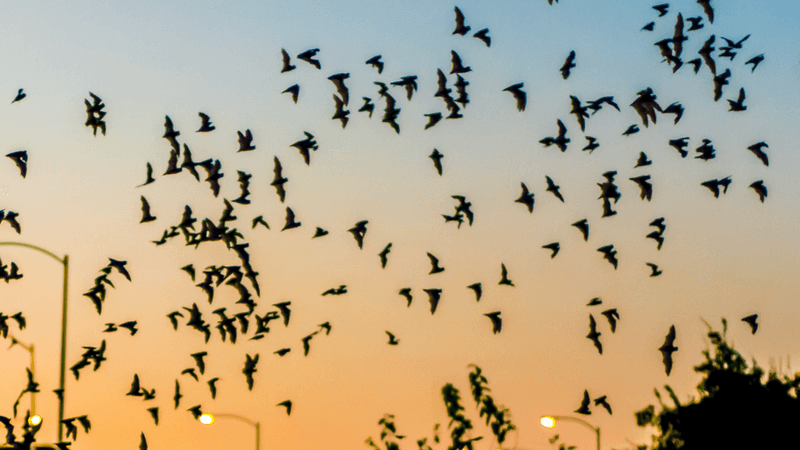
Watching bats streak across a warm Texas evening sky is one of summer’s small pleasures, and plenty of homeowners hope those silhouettes are quietly solving the mosquito problem on their patio. That idea is appealing, but the full picture is more complicated than a simple trade-off between bats and bites.
Bats are genuinely valuable neighbors in a Central Texas yard, and understanding what they actually do, and what they cannot reliably do, helps you make smarter choices for both wildlife and your own comfort outdoors.
More bats do not guarantee fewer mosquitoes
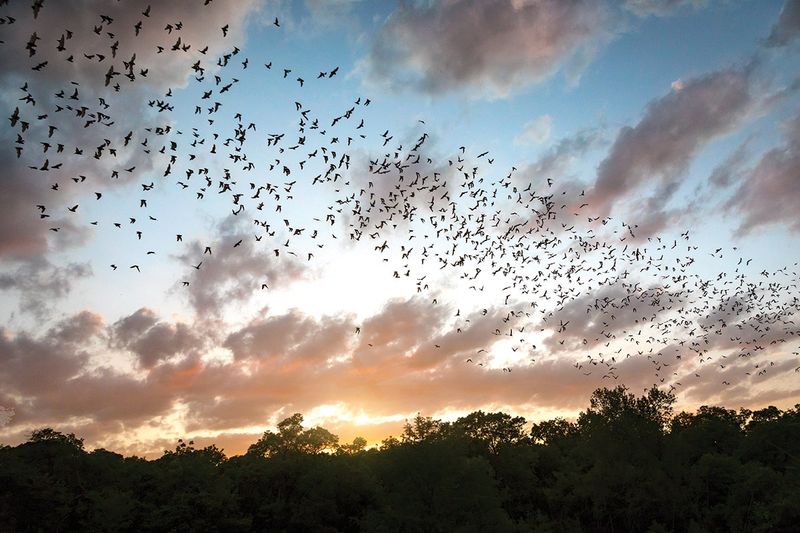
Spotting bats looping through the evening sky above your yard feels like free pest control at work. The catch is that no reviewed evidence shows a clear, dependable link between bat activity over a Central Texas property and fewer mosquito bites on the patio below.
Bats are real and meaningful insect predators. Insectivorous species consume large quantities of flying insects on every foraging run, and their presence supports a healthier backyard food web.
Texas A&M AgriLife Extension bat guidance acknowledges that bats eat some mosquitoes, but it also notes that the diet of Texas’s most common urban bat consists mainly of moths and beetles, not mosquitoes. Studies of free-tailed bat guano rarely turn up evidence of significant mosquito consumption.
A yard can have bats flying overhead and a full complement of buzzing, biting mosquitoes at the same time. Mosquito pressure depends on standing water, air temperature, local vegetation, humidity, and nearby breeding sources, none of which bats directly control.
Bats foraging at height may never come close enough to the patio surface where mosquitoes are hunting for a blood meal.
The practical takeaway is straightforward. Welcome bats as supplemental allies that contribute to insect control and ecosystem balance, but do not count on them to clear your patio of mosquitoes every summer night.
Treating bats as one part of a broader outdoor management plan, rather than the whole plan, sets realistic expectations and leaves room for steps that work more directly on mosquito numbers.
The familiar Texas bat is usually chasing other prey
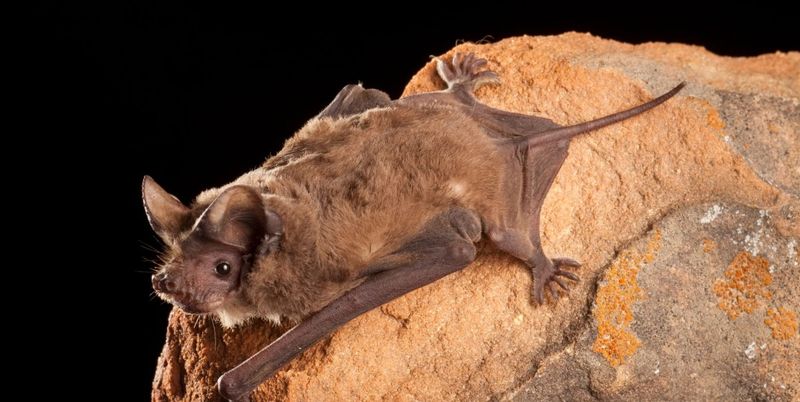
Texas is home to roughly 33 bat species, and the one most Central Texas residents recognize is the Mexican free-tailed bat. Enormous colonies roost under the Congress Avenue Bridge in Austin and at many other urban and rural sites across the state, making this species a familiar fixture of summer evenings.
What those bats are hunting, however, is often not what homeowners assume. Texas A&M AgriLife Extension identifies moths, beetles, corn earworm moths, and armyworm moths as characteristic prey for Mexican free-tailed bats, not mosquitoes.
Their agricultural pest-control contribution is substantial, and researchers have documented significant economic value from the insect suppression these bats provide to Texas cotton and corn growers.
Foraging height and range matter here. Mexican free-tailed bats are built for speed and altitude.
They can fly at elevations approaching 10,000 feet and travel many miles from their roost on a single night’s hunt. A bat you see crossing your yard at dusk may be climbing toward an insect swarm hundreds of feet overhead, or heading toward agricultural fields several miles away, rather than working through the mosquitoes hovering at chair height on your back porch.
That distinction is worth keeping in mind before attributing mosquito relief to the bats you see. Overhead bat activity is a sign of a healthy local ecosystem and a functioning insect food web.
Assuming those bats are specifically targeting your patio-level mosquitoes, though, goes further than the evidence supports.
Why “bats eat mosquitoes” needs species-level evidence
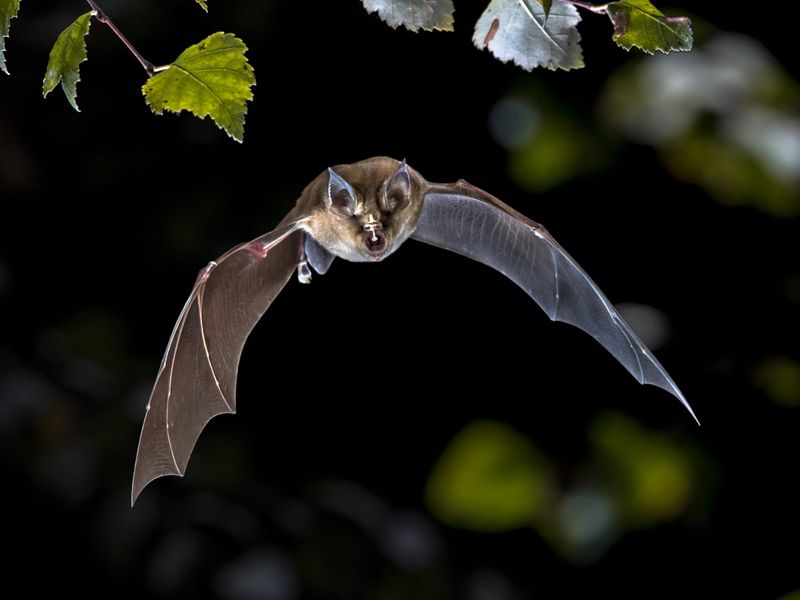
“Bats eat mosquitoes” is a true statement for some bat species in some settings. Treating it as a universal rule that applies to all Texas bats, in every yard, on every summer night, is where the claim runs into trouble.
Bat diets shift considerably depending on species, geographic location, season, and reproductive condition. Research on spatial and temporal variation in bat diets in New Hampshire found meaningful differences in prey selection across seasons and between individual bats within the same population.
Prey availability, foraging habitat, and bat life stage all push diets in different directions. A nursing female bat, for example, may prioritize high-energy prey very differently from a non-reproductive male foraging in the same area.
A separate study on female pond bats during pregnancy found that reproductive condition directly shaped prey selection, with pregnant females targeting lighter prey than males in the same habitat. That kind of variability makes it impossible to draw a straight line from “some bats eat mosquitoes” to “bats will reduce mosquito pressure in my Central Texas yard.”
The practical implication is that claims about bat mosquito consumption need a species name, a study location, a study design, and a clear definition of what counts as prey before they carry real weight. General statements that a bat eats a fixed number of mosquitoes per night, without those qualifiers, are especially prone to overgeneralization.
Central Texas has dozens of bat species with distinct foraging habits, and collapsing them all into one mosquito-eating category misrepresents both the science and the realistic benefit to your yard.
A bat house supports habitat, not a mosquito-free yard
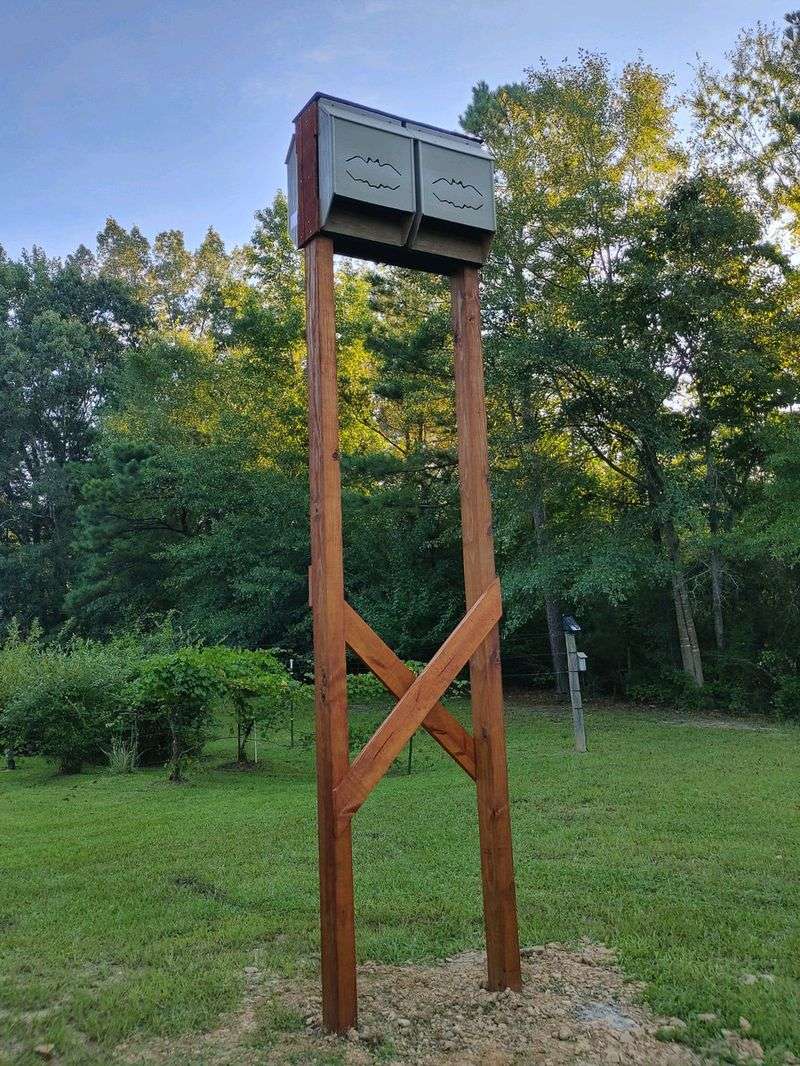
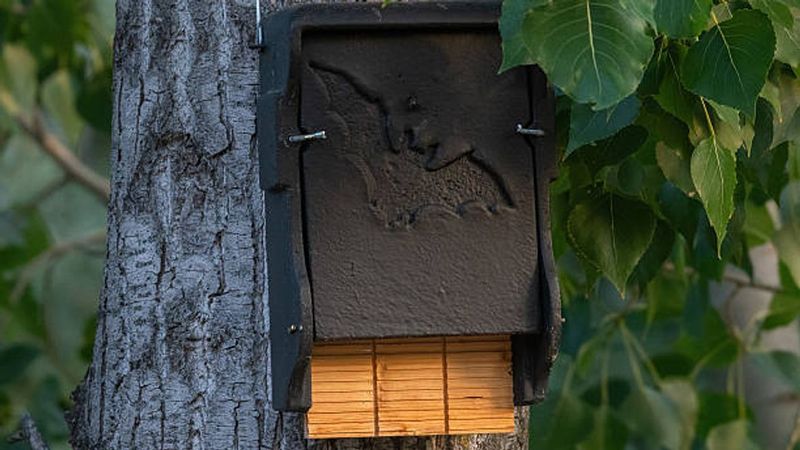
A bat house is a roosting structure, not a pest-control appliance. Framing it correctly from the start saves a lot of frustration when the mosquitoes are still biting in August.
Occupancy is never guaranteed. Whether bats move into a bat house depends on the local bat population, nearby foraging habitat, ambient temperature inside the house, available sunlight, access to water, and the quality of construction.
Bat Conservation International’s bat house installation guidance recommends testing local conditions before installing more than three to six houses, and notes that success is associated with appropriate sun exposure, suitable habitat, and proximity to water. Even a perfectly built and perfectly placed house may sit empty for a season or more before bats discover it.
The Texas Parks and Wildlife small bat house plan offers a Texas-adapted starting point based on Bat Conservation International recommendations. For Central Texas homeowners, it is a reasonable first step: a locally designed structure suited to Texas temperatures and bat species.
Building or buying a house that meets those specifications improves the odds of eventual occupancy, but it does not make occupancy certain.
Adding more houses does not multiply the benefit in a predictable way. Bat Conservation International cautions that installation decisions should be based on local conditions rather than the assumption that more structures equal more bats or fewer insects.
Think of a bat house the way you would think of a native-plant garden or a brush pile: it creates conditions that wildlife may use, and that contribution has real ecological value even if it never shows up as a measurable drop in your mosquito count.
Where should a Central Texas bat house go?
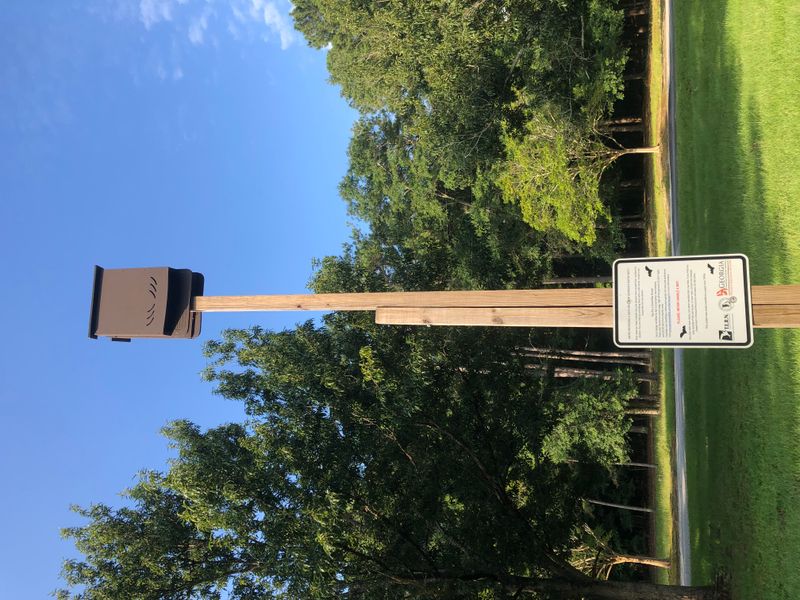
Placement decisions matter more than most homeowners expect. A bat house mounted in the wrong spot will stay empty no matter how well it is built, and a poorly chosen location can also create nuisance problems for the people living nearby.
Height is the first variable. Bat Conservation International recommends mounting a bat house at least 10 feet above ground, with 12 to 20 feet being the preferred range for houses attached to buildings.
Higher mounting gives bats a clear drop zone for takeoff and makes it harder for ground predators to interfere.
Sunlight is the second critical factor. The house should receive six to eight hours of direct sun each day.
In Central Texas, where summer temperatures are already high, a house that heats up adequately is more attractive to roosting bats, particularly nursing females that need warmth for their young. Avoid shaded spots under large oaks or cedar elms, even if those trees seem like natural bat habitat.
Keep the structure away from bright artificial lights, which can disturb roosting bats and attract predators. Maintain at least 20 to 25 feet of clearance from tree branches, utility wires, and any surface a raccoon, hawk, or climbing predator could use as a launch point.
Locations near a forest edge or a pond, creek, or stock tank tend to attract bats more readily because foraging habitat and water are close by.
Avoid mounting a bat house directly above doors, windows, patios, or other heavily used outdoor areas. Guano accumulation is a real consideration, and placing the house over a spot where people gather regularly creates an avoidable sanitation problem.
A side wall, a detached pole, or a fence post away from foot traffic keeps the benefits of a bat house from becoming a backyard complaint.
Remove mosquito breeding sites before you count on wildlife
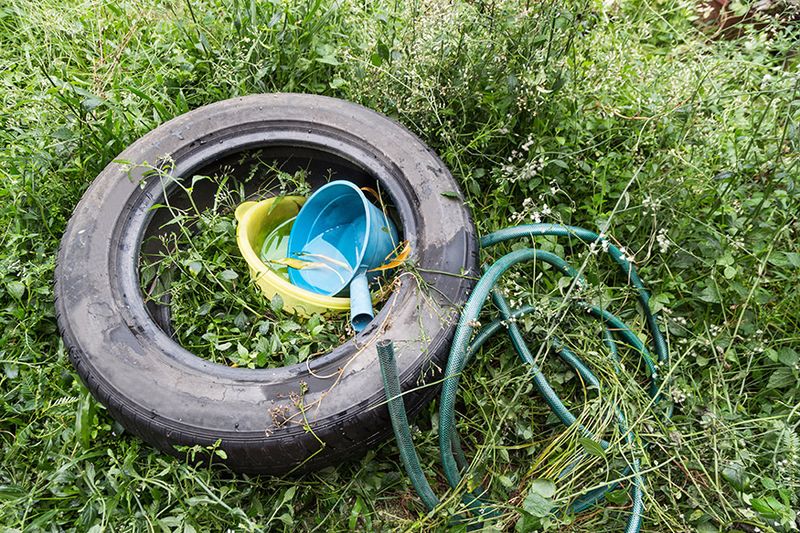
Bats, purple martins, dragonflies, and other insect predators all contribute to a yard’s ecological balance, but none of them addresses the root cause of a mosquito problem: standing water where eggs hatch and larvae develop. Removing that water is the most direct action a homeowner can take.
CDC guidance on reducing mosquitoes at home is clear on the basics: dump standing water from flower pot saucers, bird baths, buckets, tarps, and any container that holds water for more than a few days. Cover trash cans and rain barrels so mosquitoes cannot lay eggs on the water surface.
Check gutters for clogs that hold water after rain, and look for low spots in the yard where puddles sit for more than a week.
Window and door screens are the indoor complement to outdoor water control. Keeping screens intact and properly fitted stops mosquitoes from following you inside when you open a door or window in the evening.
A single torn screen above a kitchen sink can let in more mosquitoes than a bat house keeps out of the yard.
These steps work on mosquito biology directly, regardless of what wildlife is or is not active overhead. For anyone who wants both a bat-friendly yard and more comfortable summer evenings on the porch, water removal and intact screens are the practical foundation.
Bat support and mosquito management are not competing goals; they are complementary parts of a yard that works better for wildlife and for the people living in it.
Keep bat support outside the living space
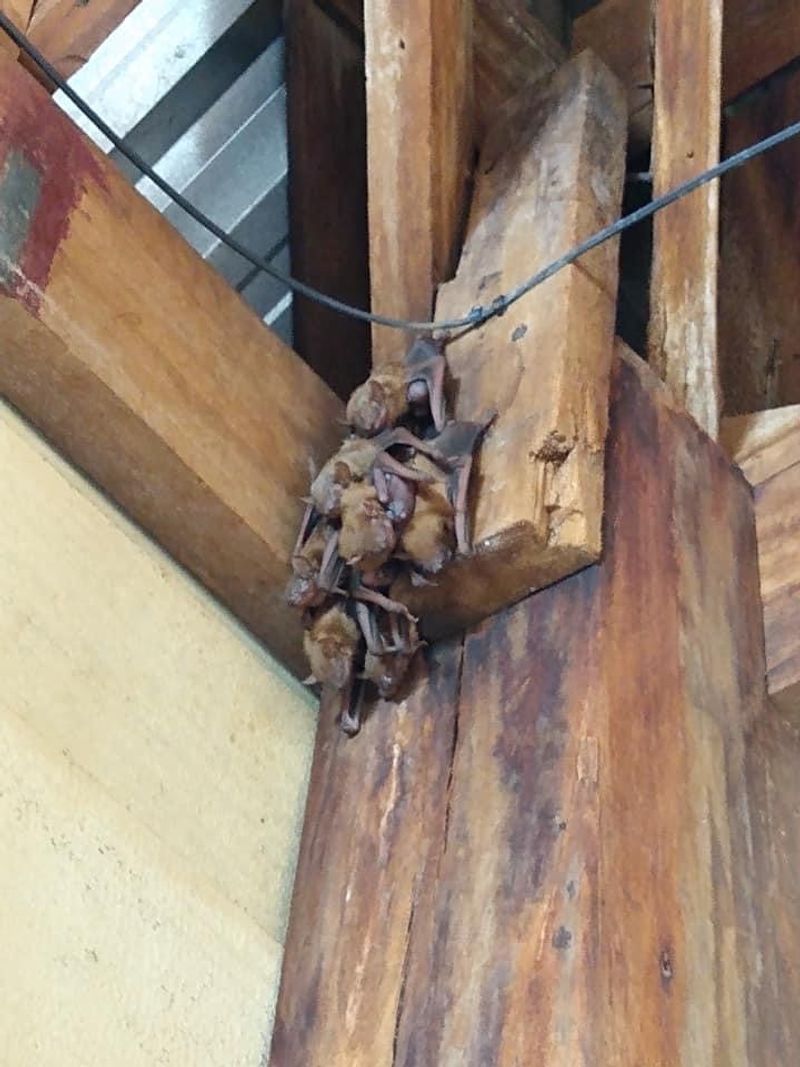
Providing outdoor roosting habitat for bats and allowing bats to roost inside your attic, walls, or chimney are two very different things. Outdoor bat houses are a welcome addition to a Central Texas yard.
An indoor colony is a separate problem that requires professional attention, not encouragement.
Handling bats is never advisable for homeowners. CDC guidance on preventing rabies from bats notes that bat bites can be extremely small and may go unnoticed, which means a person can have had meaningful contact without feeling it.
Anyone who may have had contact with a bat, including waking up in a room where a bat was present, should contact a health professional or their local health department promptly. Pet owners whose animals may have contacted a bat should reach out to a veterinarian and local animal or public-health authorities right away.
Bats found on the ground, active during daylight hours, unable to fly, or unusually easy to approach should be treated as potentially sick or injured. Keep people and pets away from the animal and contact your local animal control or public-health office for guidance.
Do not attempt to pick up, move, or release the bat yourself.
Exclusion timing also requires care. The CDC identifies May through August as a cautionary window during which sealing entry points can trap flightless young bats inside a structure, creating a welfare and sanitation problem.
That window is a starting reference point, not a universal rule. Local laws, bat species, and site-specific conditions all affect when exclusion is safe, and a qualified wildlife control professional or your local wildlife authority can help you determine the right timing for your situation.
Bats present in a yard or flying overhead at night do not indicate a health risk; the concern is direct physical contact and abnormal behavior, not the simple presence of bats nearby.
Welcome the bats—and manage mosquitoes directly
Central Texas bats are worth supporting. They consume large numbers of flying insects, contribute to agricultural pest control across the region, and reflect a functioning outdoor ecosystem.
A yard that provides roosting habitat and foraging space is a better yard for wildlife, and Texas A&M AgriLife Extension bat guidance affirms their genuine ecological value even while clarifying the limits of mosquito control.
Measuring bat value by whether your patio becomes bite-free, though, sets up an expectation the evidence cannot meet. A properly sited bat house, combined with CDC-recommended standing-water removal and intact window and door screens, gives you both a wildlife-friendly yard and a more direct line of defense against mosquito pressure.
For any bat that ends up inside your home, or any contact between a bat and a person or pet, follow CDC guidance and connect with a health professional, veterinarian, or local wildlife authority before taking any action on your own. Bats belong in Central Texas skies, and the most useful thing a homeowner can do is make space for them out there while keeping the mosquito problem grounded with practical, proven steps.