
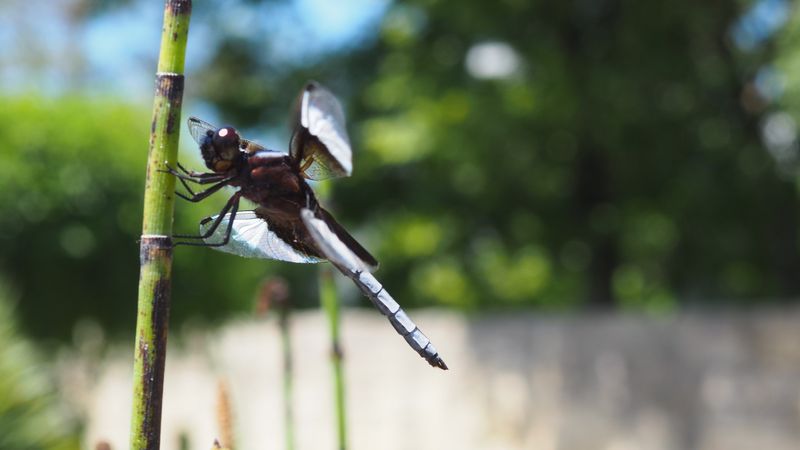
Few backyard visitors are as fun to watch as a dragonfly zipping over a Texas patio at dusk. Many people assume every one of those flyers is busy clearing out mosquitoes.
The real story is more interesting, and it changes what you can do in your yard. Here is what dragonflies actually do, what science has and has not shown, and how to keep your patio comfortable.
Dragonflies hunt mosquitoes at two different life stages
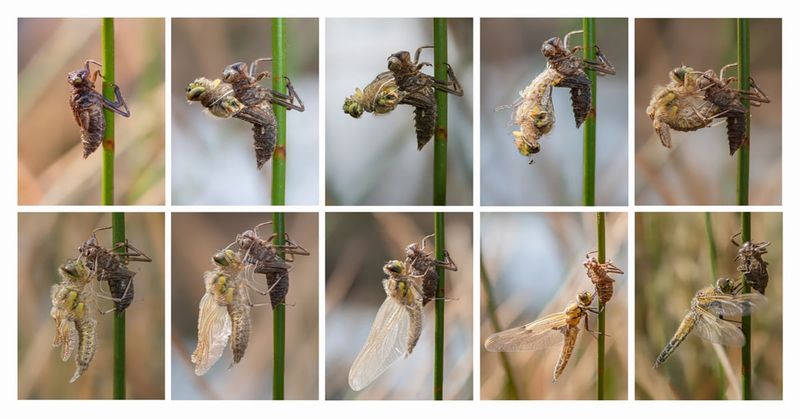
A dragonfly over your yard is a possible mosquito predator, but the story splits into two very different jobs. Dragonflies spend their early life underwater, and only later do they take to the air.
According to a Texas Parks and Wildlife Department teacher guide, dragonfly nymphs live in water and prey on mosquito larvae, along with other small aquatic animals. Those larvae are the wriggling young mosquitoes that hatch from eggs laid on still water.
A nymph lurking in a pond or a wet corner of a garden can snap them up as they swim by.
Adults have a different lifestyle. They patrol the air and catch flying insects, and those insects can include mosquitoes.
Think of adults as fast, generalist hunters that take whatever small bug crosses their path.
Here is the catch. Knowing that nymphs eat larvae and adults sometimes catch flying insects does not prove that your patio will have fewer bites.
Those are two separate behaviors, and neither one has been shown to cut down the mosquitoes that land on your arms at a backyard dinner.
So it makes sense to welcome dragonflies as part of a healthy yard ecosystem. Just keep the label honest: they are possible contributors to mosquito predation, not a guaranteed fix.
The rest of this article sorts out what the research shows and what to do about your patio.
The strongest evidence comes from experiments with larvae

When scientists want to know how well dragonflies eat mosquitoes, the clearest answers come from controlled tests. A 2023 meta-analysis in the Journal of Animal Ecology pulled together 31 studies and found that dragonfly and damselfly nymphs eat a lot of mosquito larvae in experimental containers.
The analysis estimated an average of about 40 larvae per nymph per day. Keep the setting in mind, though.
That number comes from experimental conditions, where nymphs and larvae shared a small container with few other choices.
A backyard is far messier. Nymphs there have plenty of other prey, larvae hide in plants and debris, and water conditions change with every heat wave.
So the figure is not a prediction for your pond, and it is not a count of adult mosquitoes eaten.
What the finding does tell you is that nymphs have real potential as biological control of larvae. That is a meaningful result, and it explains why researchers take dragonflies seriously as mosquito predators.
It does not tell you that a yard with dragonfly nymphs will have fewer mosquitoes flying around the patio, or fewer bites. Those questions need different studies.
Treat the larval research as a promising piece of the puzzle rather than a promise about your evenings outdoors.
Adult sightings do not prove fewer patio bites
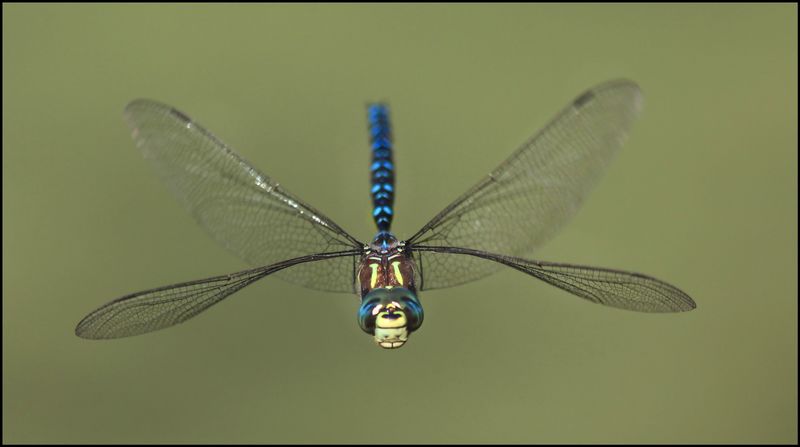
Watching a dragonfly swoop over the lawn feels like proof that it is working for you. It is not, at least not in a way anyone has measured.
Seeing adults overhead does not establish that mosquitoes are under control at your home.
One reason is diet. Adult dragonflies are generalist predators, meaning they eat many kinds of small flying insects.
A review of dragonfly ecology reports that mosquitoes are seldom found in adult gut-content studies in numbers that would suggest they cut down mosquito populations.
One example is a study of adult diets, listed in a 2015 PubMed record, which looked at the role of mosquitoes in what adult dragonflies and damselflies eat. The review notes that mosquito remains turned up in only four of 41 dragonflies and damselflies examined.
Those results do not mean adults never eat mosquitoes. They do mean that claims about adults wiping out biting mosquitoes are weak.
They also do not cancel the larval research. Nymphs eating larvae in water is a separate line of evidence, and it still stands.
A practical clue: if you see plenty of dragonflies and still get bitten at dusk, that is normal. Many biting mosquitoes are active at times and in shady spots where dragonflies may not be hunting.
Plan on protecting yourself directly.
A well-planned pond can offer useful habitat

If you have room for a small pond and want to encourage dragonflies, Texas Parks and Wildlife Department guidance gives a starting point. In its dragonfly and damselfly watching guide, a sunny pond with emergent plants and nearby perches is recommended, along with keeping varied vegetation around the pond edge.
Emergent plants are the ones that root underwater and poke up through the surface. Nymphs can climb them, and adults can rest on them.
Perches such as reeds, stakes, or tall stems give adults a place to watch for prey and claim territory.
Treat these as suggestions, not a recipe. They may help support dragonflies, but they do not guarantee that any will settle in, and they do not guarantee fewer mosquitoes.
A flower border on its own will not do the job either. The habitat that matters most is the water and the vegetation around it.
Skip the goldfish. The same guide says fish reduce dragonfly density and diversity, so stocking a pond is not a universal way to attract dragonflies or manage mosquitoes.
Finally, remember that a pond needs care. Watch it through the hot months, keep it tidy, and remove anything that turns into a stagnant pool.
Do not trade mosquito control for standing water

Here is the flip side of a dragonfly-friendly yard: still water can also grow mosquitoes. A neglected birdbath, a forgotten bucket, or a fountain that sits unused can turn into a breeding site within days in warm Texas weather.
That is why CDC guidance on mosquito control at home matters more than any habitat plan. It recommends that you empty and scrub, cover, turn over, or discard water-holding containers every week.
It also says to cover water storage so mosquitoes cannot get in.
Walk your yard once a week with that list in hand. Check plant saucers, buckets, wheelbarrows, kids’ toys, tarps, clogged gutters, and old tires.
Scrubbing matters because eggs can stick to container walls.
Rain barrels and other water storage need tight covers or screens. If a container has no use, discard it.
Do not add or neglect a water feature hoping dragonflies will show up and handle the problem. Unmanaged standing water is a mosquito risk, not a mosquito-control tactic.
Any pond you build should be planned and checked regularly. Keep your routine container checks going, since they cut off breeding sites right at the source.
Some dragonflies migrate through fall, but yard visits vary
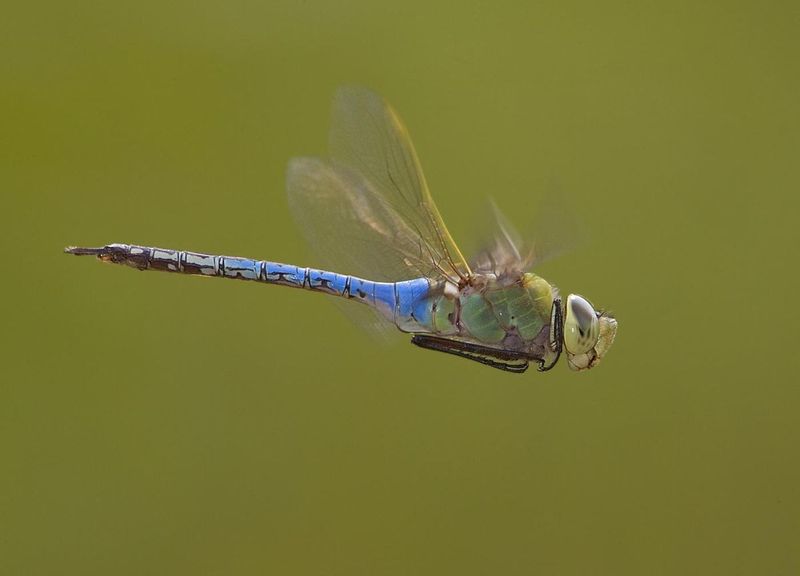
Fall in Central Texas often stays warm well into the season, and some readers notice more dragonflies then. There is a real reason that could happen.
Common green darners are migratory, and their annual movement includes a fall migration, as shown in a 2018 stable isotope study that tracked the annual cycle of this long-distance migratory insect.
Texas Parks and Wildlife Department also covers this species in its species fact sheet set, which includes common green darner migration information.
What that means for you is simple. Seeing some dragonflies in fall is possible.
What it does not mean is that dragonflies will settle over your particular yard or patrol it all through autumn. Migrating insects are passing through, and where they stop depends on weather, food, and nearby habitat.
A practical example: you might see a flurry of darners after a cool front, then none for a week. That is normal movement, not a sign that your yard has failed.
Enjoy the sightings when they come. But since mosquitoes can stay active through a warm fall, keep your bite protection and weekly container checks going as long as the weather stays mild.
Use established steps to protect yourself on the patio
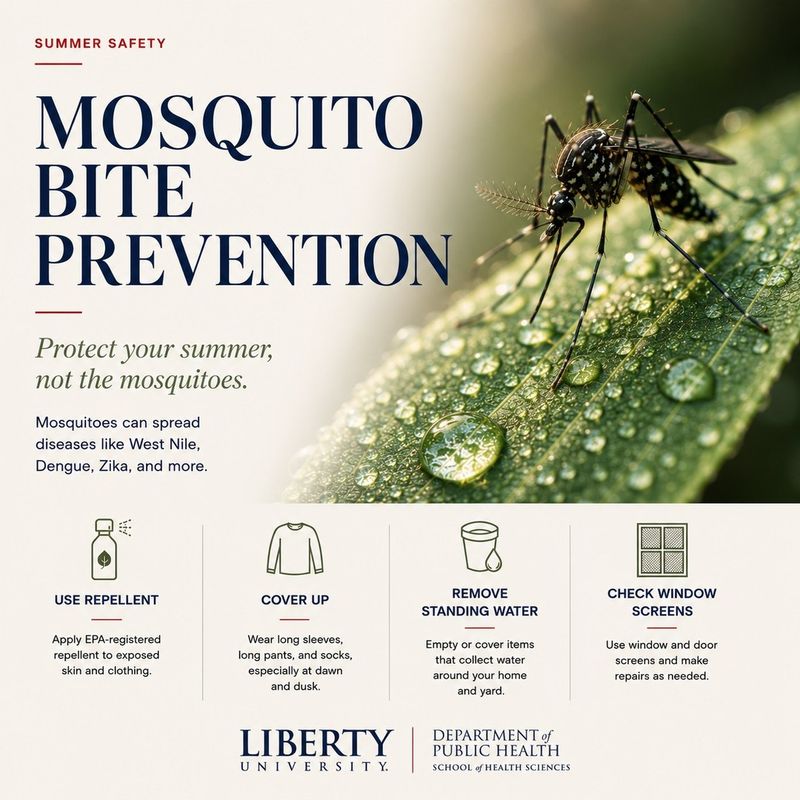
When you want fewer bites tonight, rely on measures that work directly. CDC guidance on preventing mosquito bites points to three basics: EPA-registered repellents used as labeled, protective clothing, and intact window and door screens.
Start with repellent. Check that the product is EPA-registered, then follow the label for how much to use and how often to reapply.
Reading the label matters, especially when children are involved.
Next, cover up. Long sleeves and long pants, in lightweight fabrics that suit Texas heat, give mosquitoes less bare skin to target when you sit out in the evening.
Then check your screens. Look for small tears, gaps at the corners, and doors that do not close tightly.
Patching a hole is far cheaper than dealing with mosquitoes inside your house.
These are your direct bite-prevention tools. Dragonflies are not a substitute for any of them.
Think of the dragonflies as possible ecosystem allies that add life to your yard, while repellent, clothing, and screens do the actual work of keeping bites down on the patio.
Welcome dragonflies, but keep expectations grounded
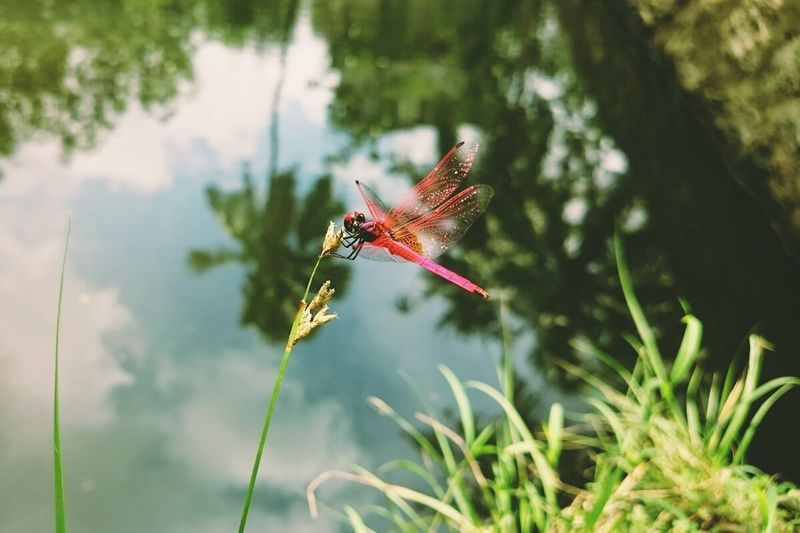
Dragonflies deserve a spot in a wildlife-friendly Texas yard. Where it suits your space, offer suitable aquatic habitat, keep water-holding containers emptied and scrubbed every week, and use repellent, clothing, and screens for real bite protection.
Enjoy the show overhead without expecting it to settle the mosquito question. A dragonfly is a fine reason to linger on the patio, just not the reason the bites stop.