
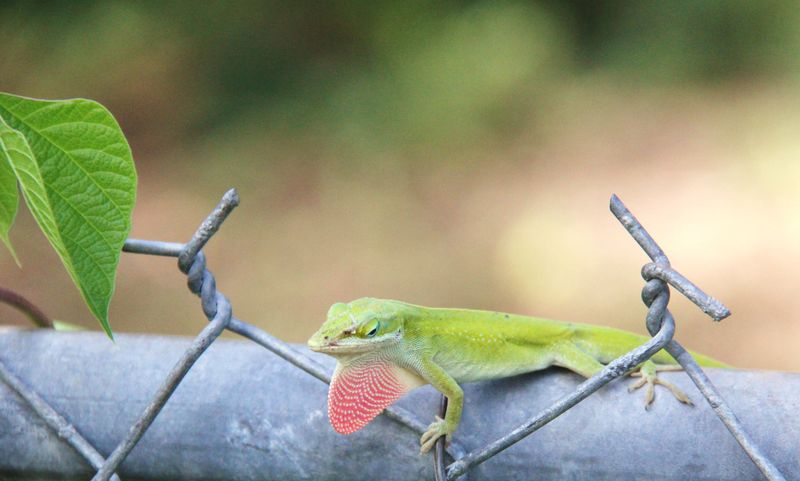
Spot a small, pale lizard clinging to your fence or skittering across the porch wall after dark, and you might assume it’s doing your roach problem a favor. That’s a reasonable hope, but the reality is a bit more complicated than a simple trade-off.
Understanding what these little nighttime hunters actually do, and what they can’t do, helps Central Texas homeowners make smarter decisions about both backyard wildlife and pest control.
A Central Texas fence-line gecko may be a Mediterranean house gecko
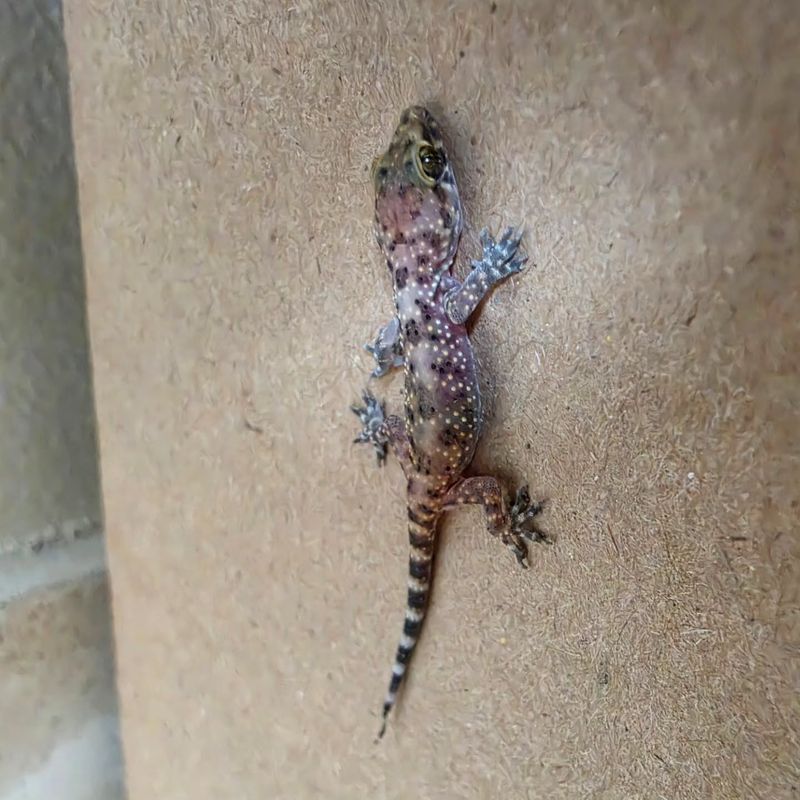
Plenty of Central Texas homeowners have caught a glimpse of a small, translucent-looking lizard pressed flat against a fence board or stucco wall after sundown. The most likely candidate is the Mediterranean house gecko (Hemidactylus turcicus), a small nocturnal species that has established itself widely around buildings, fences, and exterior walls across the region.
However, a casual sighting from a few feet away isn’t enough to make a confident identification, and rushing to label every fence-line gecko as a Mediterranean house gecko can lead to misunderstanding what you’re actually sharing your yard with.
According to the University of Texas Biodiversity Center’s profile of the Mediterranean gecko, this species is introduced rather than native to Texas, having arrived and spread through human commerce and travel. A second introduced species, the common or Asian house gecko (Hemidactylus frenatus), also turns up around Texas buildings and looks similar enough to create confusion.
Both are small, both are nocturnal, and both favor the kinds of sheltered spots, cracks, and exterior walls that come standard with most Central Texas homes.
Distinguishing between the two typically requires a close look at scale patterns, toe pads, and other fine details that aren’t easy to assess when a gecko is moving fast or sitting six feet up a wall. If you want a confident species ID, a good photograph submitted to a local naturalist group or an identification resource such as the Texas A&M AgriLife Extension house gecko factsheet can help narrow things down.
For the purposes of coexisting with these animals around your home, knowing that you’re likely looking at one of two introduced house-gecko species is the most useful starting point.
Geckos may eat roaches, but they are not a proven control program
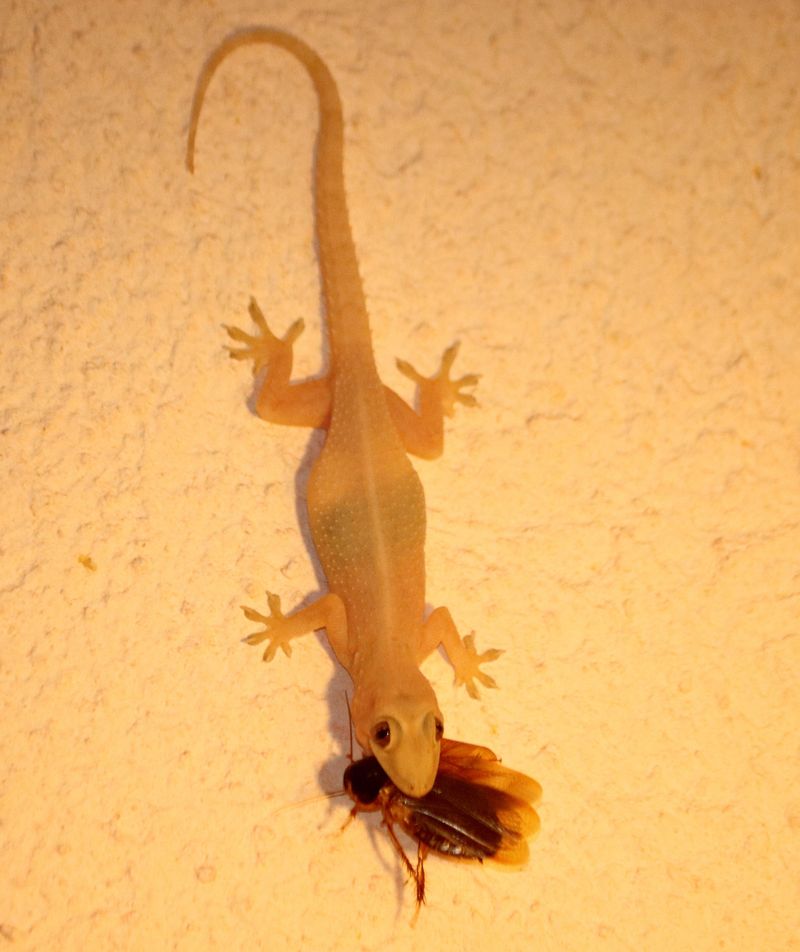
Watching a gecko patrol your porch wall on a warm Texas night, you might picture it systematically clearing out every roach in the yard. The reality is more modest.
House geckos are opportunistic, broad-diet hunters that eat whatever small invertebrates are available, including moths, crickets, spiders, and yes, cockroaches. That makes them genuinely useful neighbors in a casual sense, but it doesn’t make them exterminators.
Both the University of Texas Biodiversity Center and Texas A&M AgriLife Extension describe house geckos as potentially beneficial insect predators around buildings. What those sources do not show is any measured reduction in cockroach populations that can be credited to gecko activity.
Cockroaches reproduce quickly, hide in large numbers, and exploit food and moisture sources that geckos have no access to. A gecko may eat an outdoor roach on any given night, but that single predation event doesn’t ripple through the population in a way that translates to fewer roaches around your home over time.
Geckos are not specialists. A gecko that just ate a moth isn’t hunting for a cockroach next.
It’s hunting for whatever moves within reach, and on a given night that might be a spider, a small cricket, or nothing at all. Treating them as a roach-control strategy sets up an expectation the evidence doesn’t support.
The practical takeaway is this: if geckos are already present around your home, they may consume some outdoor roaches along the way, and that’s a reasonable small benefit to acknowledge. But Texas A&M’s cockroach management guidance makes clear that reliable roach control requires direct action, not passive predation from a lizard that eats whatever happens to cross its path.
Geckos can share the yard without being asked to solve a pest problem they’re not equipped to handle.
Make the yard more wildlife-friendly without promising more geckos

Creating a yard that could support geckos doesn’t require a major renovation. Broad Texas backyard-habitat guidance points to a few simple features that help reptiles and other small wildlife feel at home: sunny rocks where animals can warm up in the morning, shaded vegetation or leaf layers that provide cover during the heat of the day, and logs, stumps, or stones placed in shadier corners where small creatures can shelter.
These aren’t gecko-specific formulas, but they do reflect the kinds of microhabitats that make a yard more hospitable to a range of small wildlife.
The USDA Natural Resources Conservation Service’s Texas backyard wildlife management guide and the Texas Parks and Wildlife Wildscapes program both encourage varied cover, native plants, and layered vegetation as part of a broader wildlife-friendly approach. Native plants can support a wider range of insects, which in turn supports small predators like geckos.
That said, no source reviewed here establishes a specific plant as a proven gecko attractant, and the connection between adding native plantings and increasing house-gecko numbers in a Central Texas yard is an inference, not a tested result.
A few practical caveats apply. Any cover you add should be positioned near but not directly against the house, such as beside a shaded rock edge, a planter, or a wall section away from door and window gaps.
Leaf litter and dense low cover can also harbor the pests you’re trying to reduce, so balance habitat value against fire safety, drainage, and sanitation. The TPWD Wildscapes program offers a sensible framework: these features may make the yard more suitable for geckos and other small wildlife, but there’s no supplied evidence that any single yard change will reliably increase gecko numbers.
Make changes because they improve the yard for multiple reasons, not because you’re counting on a specific gecko outcome.
Porch lights show where prey gathers
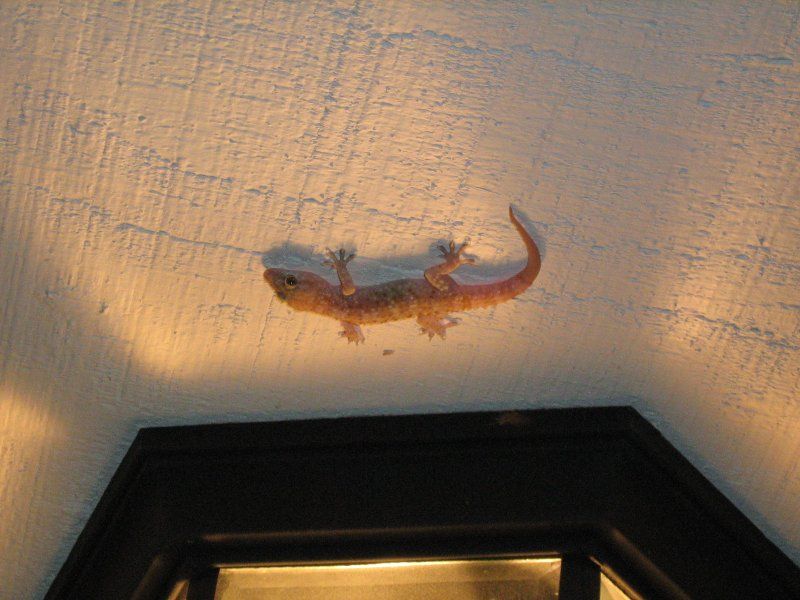
Geckos turn up near porch lights for a straightforward reason: the light does the hunting work for them. Exterior bulbs attract moths, gnats, small beetles, and other flying insects, and a gecko positioned near that concentrated food source has an efficient feeding setup.
If you already see geckos near your porch or exterior wall lights, that’s a sign the habitat is already working in their favor, and leaving them undisturbed is the simplest thing you can do.
According to Texas A&M AgriLife Extension’s house gecko factsheet, this association between exterior lights and gecko activity is well established. What it doesn’t mean is that adding more lights or leaving bright lights burning all night will reduce roaches around your home.
Lighting attracts insects broadly, including cockroaches that are themselves drawn to warmth and activity near structures. The Natural History Museum of Los Angeles County’s gecko observation guidance notes that lights concentrate prey and create visible feeding opportunities, but that observation doesn’t translate into a pest-control recommendation.
Turning your porch into a floodlit insect trap in hopes of attracting enough geckos to eat enough roaches to matter is a chain of assumptions with no supporting evidence at any link. Treat existing porch-light gecko activity as something worth observing and, if you like having them around, worth leaving alone.
Swap standard bulbs for warm-spectrum or yellow bug lights if you want to reduce overall insect attraction without changing the structure of the space.
That’s a sensible adjustment for its own reasons, and it doesn’t require framing your lighting choices as a roach-control strategy.
Keep outdoor geckos outside the house
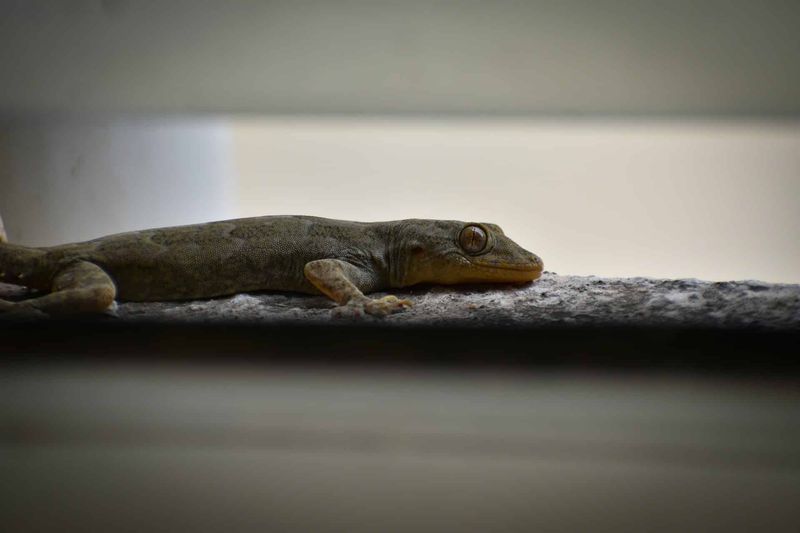
Geckos around a porch or fence are easy company. Geckos inside the house are a different matter.
These animals can slip through surprisingly small gaps, and once inside they leave droppings that stain fabrics and surfaces and can be difficult to clean from walls, curtains, and upholstered furniture. Tolerating them outdoors and keeping them outdoors are two goals that go together, but they require some attention to the exterior of the home.
The main entry points to address are gaps around doors and windows, open soffits, spaces around plumbing and electrical penetrations, and any crack in exterior trim or siding wide enough to admit a small lizard. Texas A&M AgriLife Extension’s house gecko factsheet recommends sealing these openings when homeowners want to prevent indoor access, using weatherstripping, caulk, or appropriate mesh depending on the gap type.
Door sweeps are worth checking too, since even a small gap at the base of a door is an easy entry point on a warm evening.
At the same time, sealing every exterior crack and crevice in an effort to eliminate outdoor gecko habitat isn’t necessary if your goal is simply coexistence. Geckos use sheltered spots around structures for daytime cover, and removing all of those refuges won’t necessarily drive them away so much as make the yard less suitable for any small wildlife.
The goal is a clear boundary, not a sterile exterior.
If a gecko does make it inside, the right response is simple: place a container over it, slide a piece of cardboard underneath, and carry it back outside. Then find and seal the gap it used.
Glue traps are not a good option here. Texas A&M’s guidance is explicit that glue boards kill geckos and don’t allow humane release.
A gecko in the house is a minor inconvenience with a straightforward fix, not a situation that calls for a trap.
Avoid pesticides that undermine the backyard food web
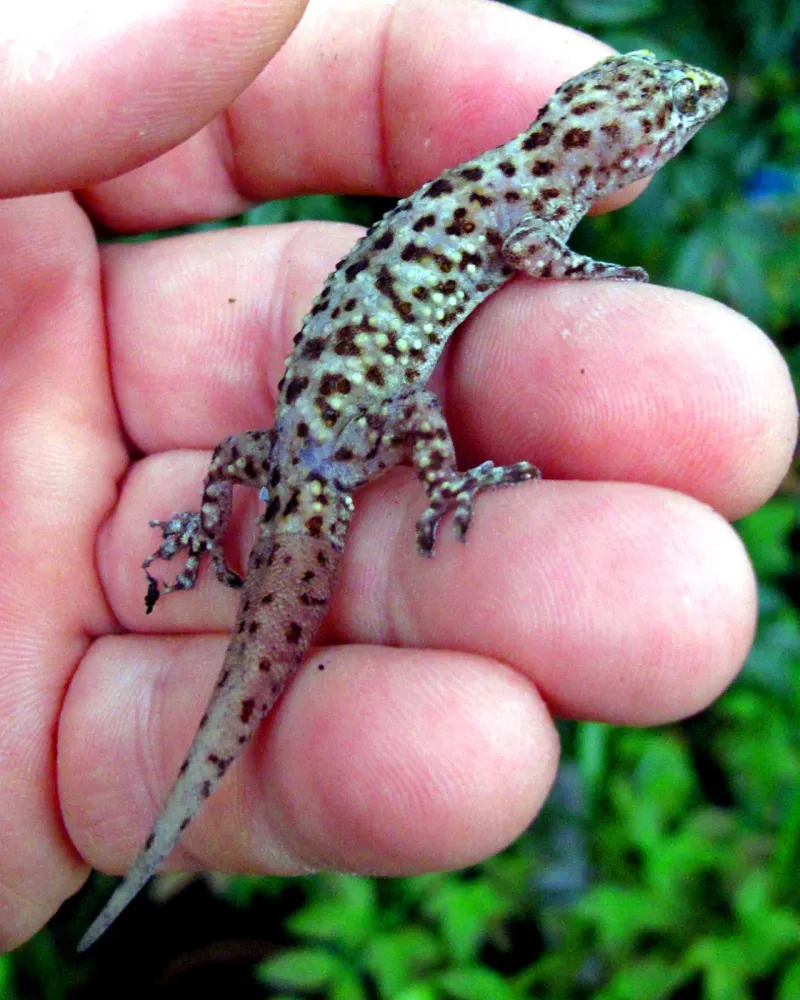
Broad insecticide spraying around the perimeter of a home is one of the more common responses to outdoor pest pressure, but it creates a problem for any geckos you’re hoping to keep around. Geckos eat insects, and a yard with fewer insects is a yard that supports fewer geckos.
Spraying a general perimeter treatment doesn’t distinguish between cockroaches and the moths, crickets, and other invertebrates that make up the bulk of a gecko’s diet.
The exposure risk goes beyond food reduction. The EPA evaluates reptile exposure to pesticides through multiple pathways, including contaminated prey, spray drift, soil contact, and residue on foliage.
The EPA’s T-HERPS reptile and amphibian risk model and the agency’s ecological risk assessment framework for pesticides both acknowledge that reptiles can accumulate pesticide exposure through what they eat, where they rest, and what surfaces they contact. Routine perimeter spraying in gecko-active areas creates that exposure without necessarily solving the pest problem it was meant to address.
None of this means pesticides are off the table when a real pest problem needs direct treatment. The practical guidance is to use targeted, label-compliant applications when treatment is actually warranted, rather than spraying broadly as a preemptive measure or as a supposed complement to gecko activity.
Texas A&M AgriLife Extension favors integrated pest management approaches that reduce chemical use through inspection, sanitation, and targeted application, which also happen to be less disruptive to backyard food webs.
Keeping pesticide use proportional to the actual pest pressure protects geckos, supports the insects they depend on, and produces better long-term results than routine broad spraying.
Manage the cockroaches directly when they become a household problem
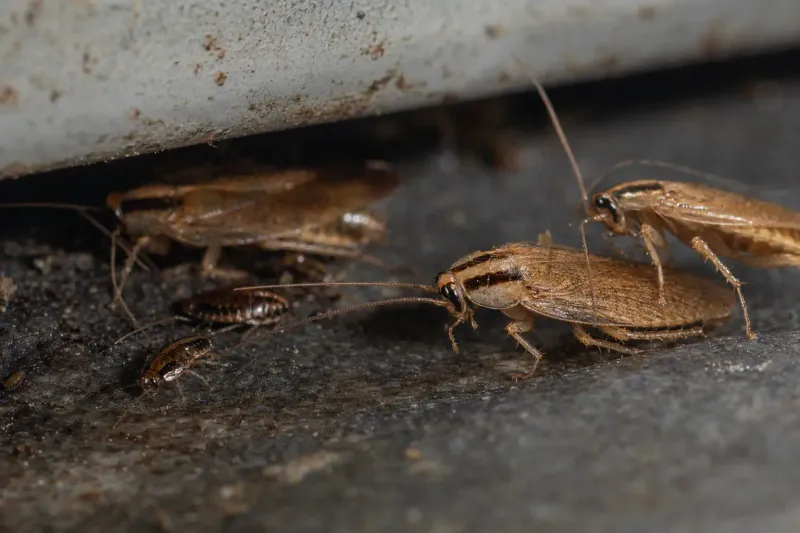
Outdoor roaches spotted near a porch light or fence line and indoor German cockroaches hiding in a kitchen wall void are two different problems, and geckos have nothing useful to offer for the second one. German cockroaches (Blattella germanica) live and breed in concealed indoor spaces, including wall voids, cabinet interiors, the areas behind appliances, and plumbing chases.
They reproduce quickly, they protect egg cases in locations geckos can’t reach, and they’re not going to wander out to the fence line where a gecko might intercept them.
For any cockroach problem that moves beyond occasional outdoor sightings, Texas A&M’s cockroach biology and management guide outlines an integrated pest management sequence that actually works. Start with a thorough inspection to locate activity, entry points, and harborage areas.
Remove food and water sources by fixing leaks, storing food in sealed containers, and eliminating standing moisture. Reduce clutter that gives roaches places to hide.
Seal cracks, gaps around plumbing, and spaces under doors and around windows. Monitor with sticky traps to track where activity is concentrated, and apply targeted bait or treatment in those specific locations rather than spraying broadly.
The Texas A&M School IPM action plan for German cockroaches reinforces that sanitation and exclusion are the foundation of any effective response. Bait placement, monitoring, and follow-up inspection fill in the gaps that sanitation alone can’t address.
When a problem persists despite those steps, a licensed pest management professional can assess conditions that are hard to evaluate without training and equipment.
Geckos may occasionally pick off an outdoor roach, and that’s worth noting as a minor incidental benefit. But a cockroach infestation inside the home requires direct, structured action.
Waiting for lizards to solve it isn’t a strategy.
Treat geckos as optional neighbors, not evidence of fewer roaches
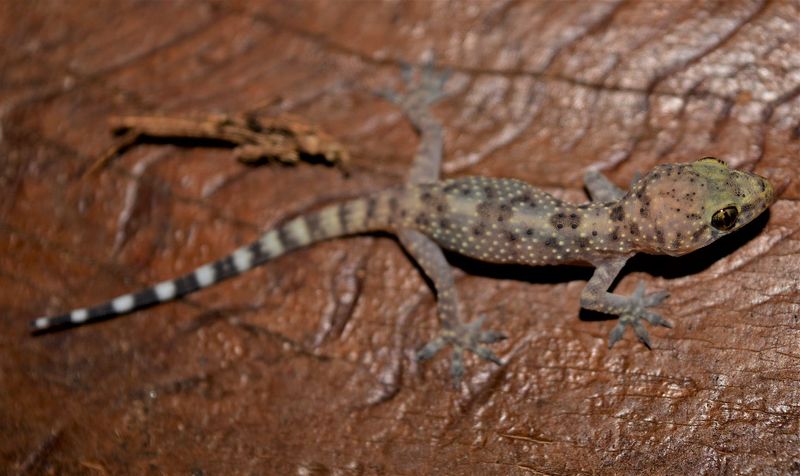
A gecko on your fence is not a roach forecast. Its presence tells you that the yard has enough insects, enough shelter, and enough warmth to support a small nocturnal predator.
That’s a reasonable thing to appreciate without reading more into it than the evidence supports.
Homeowners who want geckos around can preserve safe outdoor cover, tolerate the ones already near porch lights, and seal the home to keep indoor visits from becoming a habit. Those are sensible steps with benefits beyond gecko coexistence.
What they won’t do, based on the reviewed sources from the University of Texas Biodiversity Center, Texas A&M AgriLife Extension, and Texas A&M’s cockroach management program, is guarantee more geckos or measurably reduce a cockroach population.
These are introduced animals, not native Texas wildlife, and their household value is real but limited. They eat some insects, they stay out of the way, and most people who encounter them outdoors find them more interesting than alarming.
When cockroaches become an actual problem, the gecko on the fence is a bystander.
A gecko hunting near your porch light is doing exactly what it’s built to do, and that’s enough of a reason to leave it alone.