
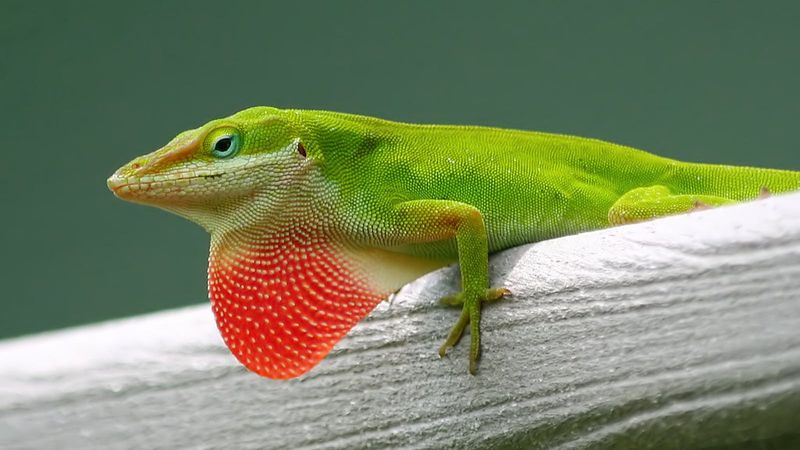
A small green lizard darting through your garden shrubs might be doing more work than you think. Green anoles are native Texas insect hunters that eat a surprising variety of small arthropods, and a few habitat changes may make your yard more welcoming to them.
That said, counting on lizards alone to handle your mosquito problem would be a mistake, and understanding why makes all the difference for a yard that works smarter.
Green anoles occur in some Central Texas habitats—not everywhere
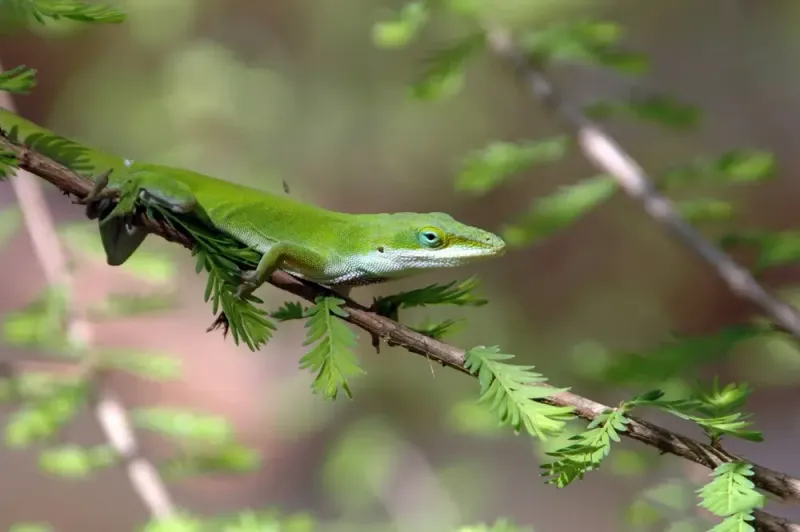
Anolis carolinensis, the green anole, is a native lizard of the southeastern United States with a Texas range that stretches through the eastern third of the state. Texas Parks and Wildlife notes that these lizards favor areas with adequate moisture, leafy vegetation, and occasional shade, which means habitat quality varies considerably across Central Texas and drops off further west or in drier, more exposed settings.
Readers in the more humid, vegetated parts of Central Texas may encounter them regularly, while gardeners in drier or more exposed locations may rarely see one at all.
In suitable spots, green anoles use a range of vertical structures: shrubs, small trees, fences, garden walls, and dense herbaceous plantings all serve as perches and hunting grounds. They need cover for hiding from predators, shade for regulating body temperature during hot Texas afternoons, and enough moisture to stay active through dry spells.
Animal Diversity Web describes them as common in suburban settings where suitable greenery is available, but that suburban comfort depends entirely on what the yard actually offers.
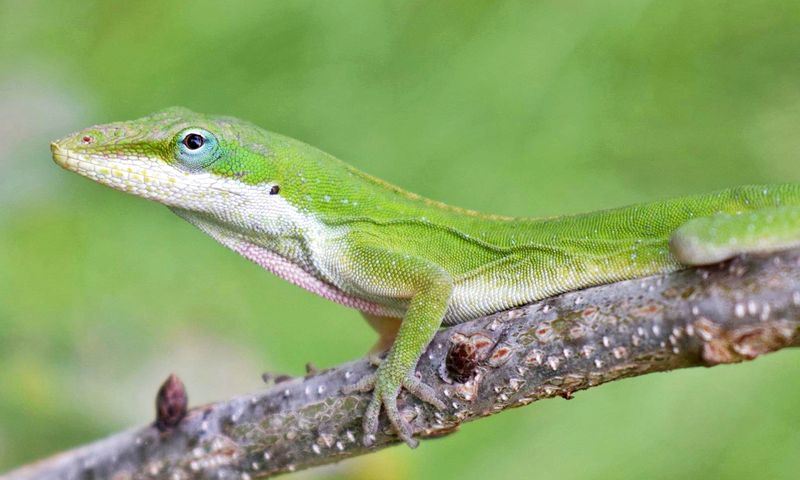
One practical identification note worth keeping in mind: green anoles can shift from bright green to brown depending on temperature, stress, and activity. That means a brown lizard on your fence is not automatically an introduced brown anole.
UF/IFAS Extension explains that introduced Cuban brown anoles tend to stay patterned brown or gray and have a distinctly different dewlap, making side-by-side comparison helpful when trying to tell the two apart. The focus of this article is on naturally occurring wildlife.
Buying, relocating, or releasing lizards into your yard is not a recommended or ecologically sound approach to supporting local anole populations.
Their real diet is broad, not a mosquito-control menu
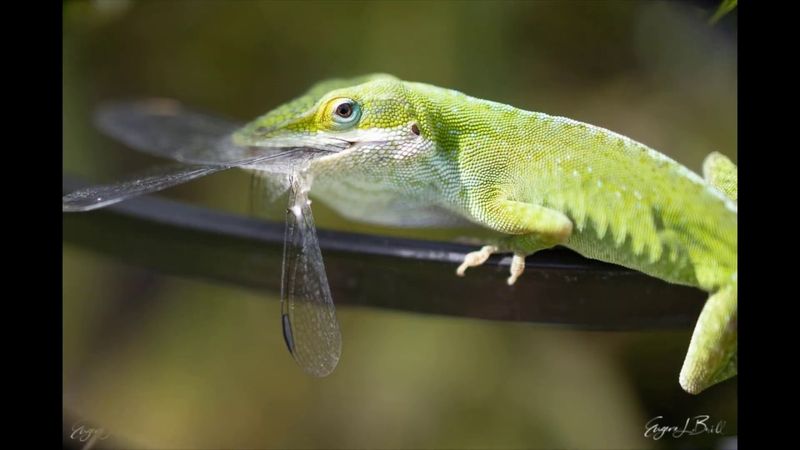
Green anoles are active hunters, and their menu is genuinely varied. Animal Diversity Web and the Savannah River Ecology Laboratory both document a diet built around insects and other terrestrial arthropods, with flies, beetles, spiders, roaches, and other small invertebrates among the confirmed prey.
An individual anole working through your garden beds is eating whatever small creature it can catch and subdue, which covers a wide range of the arthropod community living in your plants.
Mosquitoes fall into that broad arthropod category, so an anole could conceivably snap one up during a hunting run. What the available evidence does not support is the idea that mosquitoes form a major or preferred part of the green anole diet, or that gnats are a confirmed prey category.
UF/IFAS Extension describes them eating flies and other small invertebrates without singling out mosquitoes as a staple food, and no controlled feeding study reviewed for this article establishes mosquitoes as a meaningful dietary component.
The honest garden value of a green anole is participation in the local food web as a small-arthropod predator. A lizard that eats spiders, beetles, and the occasional fly is doing real ecological work, even if that work does not translate into a measurable drop in the mosquito population buzzing around your patio.
Framing anoles as a mosquito-control system overstates what the diet evidence actually shows, and it sets up an expectation the lizard simply cannot meet on its own.
One Texas observation raises a question, not a control result
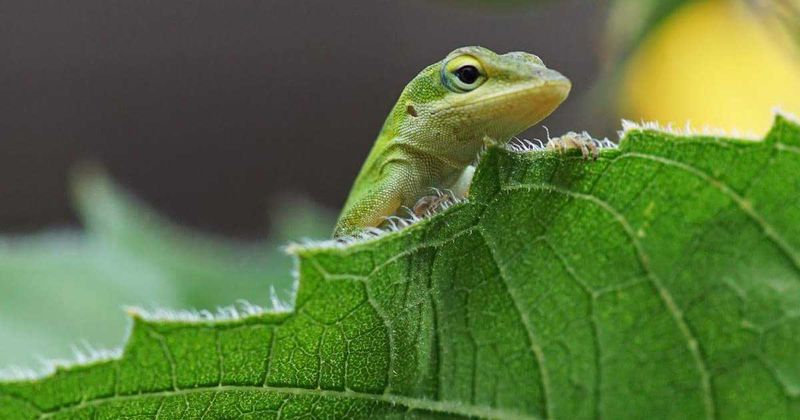
The most direct piece of evidence connecting green anoles to mosquitoes comes from a 2025 field observation in Montgomery County, Texas. That published observation documented green anoles on gravid mosquito traps, which are devices that use stagnant water and carbon dioxide to attract egg-laying female mosquitoes.
The researchers noted the behavior and flagged it as possible indirect evidence of opportunistic foraging near a concentrated mosquito source.
What the study did not do is equally important to understand. The researchers explicitly stated that they did not observe the lizards actually feeding on mosquitoes.
They did not measure mosquito abundance before and after anole presence, run a controlled experiment comparing plots with and without anoles, or claim any reduction in mosquito numbers. Their conclusion was that the behavior warrants further study, not that anoles provide mosquito control.
Treating this observation as proof of a mosquito-reduction benefit would go well beyond what the data support.
A second complication makes the relationship even less straightforward. The same paper cites research showing that Culex mosquitoes in Florida take blood meals from green anoles and other lizards.
Anoles are not simply predators in this story. They can also serve as mosquito hosts, meaning the interaction runs in both directions.
A lizard perched near a mosquito trap may be hunting, or it may simply be resting near a structure that is attracting insects for reasons unrelated to predation.
No reliable field threshold exists for how many anoles, if any, would need to be present to reduce mosquito numbers or disease risk in a residential garden. Diet variation, weather, hunting location, prey availability, and mosquito species all interact in ways that one observational paper cannot resolve.
The 2025 finding is a useful starting point for future research, not a finished answer.
Layered vegetation can make a yard more suitable
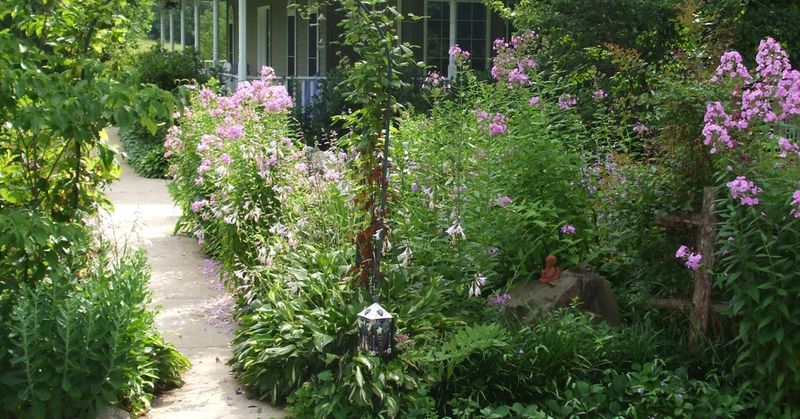
Yards that support naturally occurring green anoles tend to share a few structural features, and most of them come down to three-dimensional planting. Texas Parks and Wildlife describes anoles as relying on trees and shrubs alongside occasional shade and moist conditions, which points toward a yard with vertical variety rather than a flat, open lawn.
Dense shrubs, leafy perennials, small ornamental trees, garden fences, and lightly managed edges all contribute to the kind of layered structure where anoles can hunt, hide, and regulate their temperature through the day.
UF/IFAS Extension guidance emphasizes tall shrubs and trees because they allow native green anoles to move higher in the canopy when competition from introduced species is present. Beyond competition, vertical structure provides perching spots at different heights, shaded retreats during the hottest part of a Texas afternoon, and a richer invertebrate community for anoles to hunt through.
A garden that offers multiple layers is simply more usable than one that offers only a single ground-level plane.
One distinction matters here: the moisture that benefits anoles comes from shaded soil under dense plantings, not from containers or depressions holding standing water. UF/IFAS Gardening Solutions connects habitat suitability to living-landscape features, not to water accumulation.
Standing water is a mosquito breeding site, not an anole amenity, and the two goals should never be confused. A yard can be moist, shaded, and richly planted without a single stagnant puddle.
Adding or preserving these features may make a yard more usable for anoles that already live in the surrounding area. That is a meaningful benefit, but it is not the same as a guaranteed formula for attracting more lizards or boosting a measurable population.
No specific plant species has been validated as a reliable anole attractant, and the evidence supports general habitat quality rather than a precise prescription.
Improve habitat without trying to manufacture a lizard population
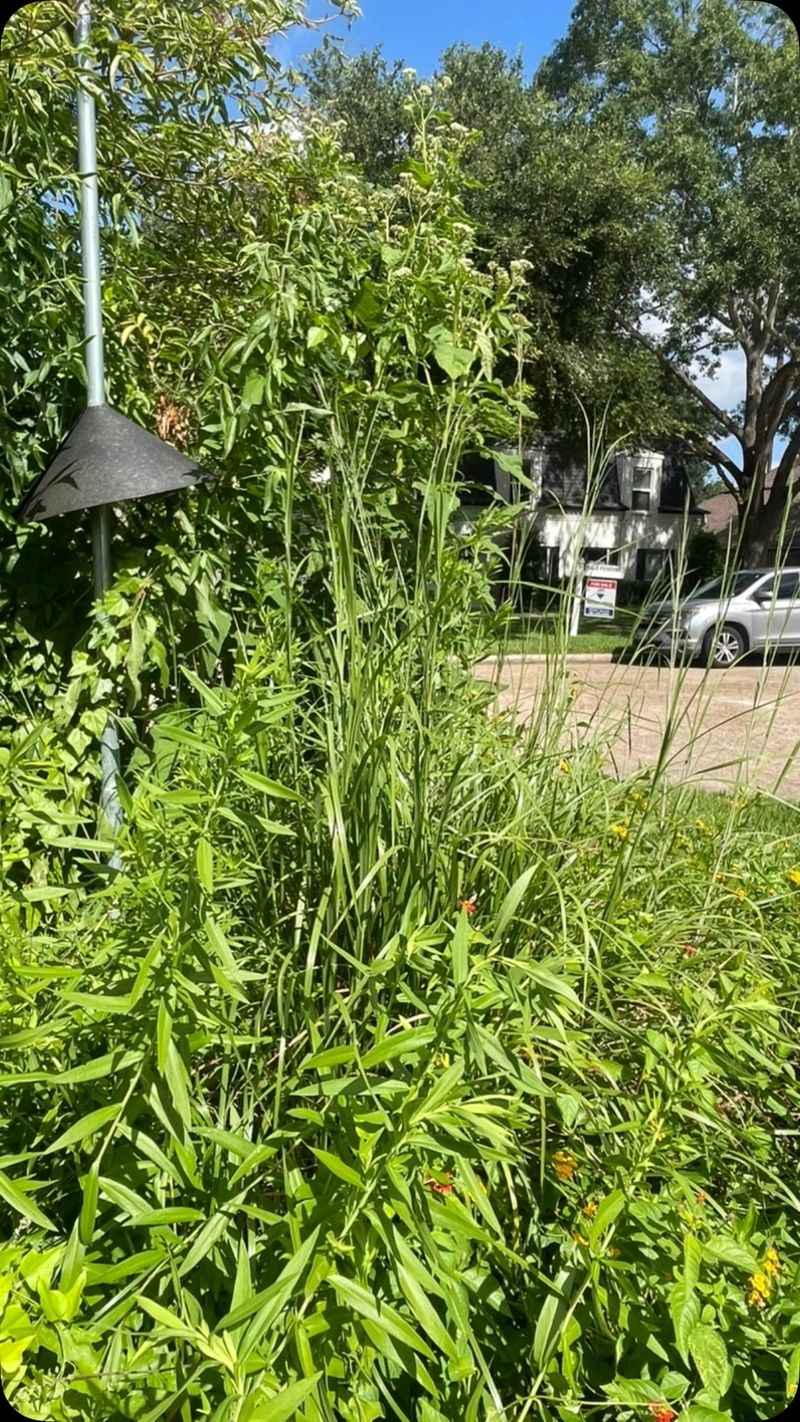
Practical habitat support for green anoles is mostly about restraint rather than elaborate installation. Texas Parks and Wildlife points toward retaining leafy cover, trees, and shrubs as the foundation, which means the most useful first step is often stopping the removal of vegetation that is already doing habitat work.
Lightly managed garden edges, a few unpruned shrubs, and a small ornamental tree left to develop its canopy provide more structural value than a freshly cleared bed waiting for new plants.
Preserving some of the insect and spider community in your garden also matters. UF/IFAS Extension notes that dense vegetation provides food sources alongside cover, which means a garden that supports a functioning invertebrate community is more likely to support foraging anoles than one scrubbed clean of every arthropod.
Avoiding unnecessary pesticide applications protects that prey base and reduces exposure to non-target wildlife at the same time.
A field study at Palmetto State Park in Gonzales County found that the relationship between land use, prey abundance, and anole condition was complex, which is a good reason to treat any increase in anole sightings as an observation rather than proof that your landscaping caused a population increase or reduced mosquitoes. Watch where anoles already perch and move, and let that guide where you add structure or shade.
One boundary worth drawing clearly: purchasing lizards from a pet or reptile supplier, relocating anoles from one property to another, or releasing animals into your garden is not a recommended strategy. UC IPM guidance on lizards frames habitat support around naturally occurring wildlife, not introduced animals.
Moving reptiles can spread disease, disrupt local populations, and create welfare problems for the animals involved.
Actual mosquito prevention starts with water and barriers
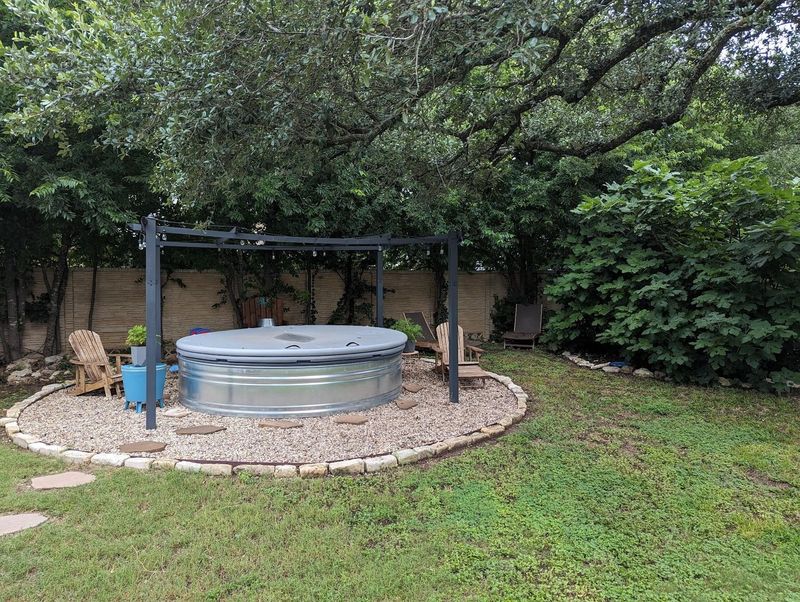
Wildlife habitat and mosquito control are separate projects, and treating them as interchangeable creates real risk. CDC guidance on home mosquito control centers on source reduction: empty and scrub, turn over, cover, or discard any container that holds water at least once a week.
Flower pot saucers, birdbaths, clogged gutters, tarps, and any other surface that collects rainwater can all produce mosquitoes if left unchecked for even a few days during warm Texas weather.
Rain barrels and other storage containers need tight-fitting covers or screened openings to prevent egg-laying. Window and door screens should be maintained without gaps or tears, since a single unscreened opening can allow dozens of mosquitoes indoors on a summer evening.
Where water cannot be removed or covered, such as ornamental ponds or drainage features, labeled larvicides applied according to the product label offer an additional layer of control.
CDC larval management guidance reinforces that eliminating breeding habitat is the most reliable way to reduce mosquito populations at the household level. Personal repellents registered with the EPA provide protection during outdoor activities when mosquitoes are active, and they remain one of the few tools with strong evidence behind them for reducing bites.
Green anoles cannot replace any of these measures. A lizard that occasionally catches a mosquito is a welcome garden resident, not a substitute for weekly water checks or a functioning screen door.
A wildlife-friendly yard does not lower mosquito-borne disease risk on its own, and no amount of habitat improvement changes the math on standing water as a breeding site. The two strategies work best when they run in parallel, not when one is expected to cover for the other.
Protect anoles and other non-target wildlife
Pesticide choices affect more than the target pest. EPA guidance on reducing pesticide impacts on wildlife warns that broad applications can harm non-target organisms and recommends following the product label carefully, applying pesticides only when necessary, and using practices that reduce contact with wildlife.
For a garden trying to support anoles, that guidance has a direct consequence: routine insecticide spraying across shrubs and ground cover can deplete the arthropod community that anoles depend on for food.
Green anoles are generally considered beneficial and non-aggressive toward people, but that does not mean they are completely without risk or should be handled freely. UC IPM notes that lizards can bite defensively when roughly handled, and any wild animal picked up under stress may respond accordingly.
Watching anoles from a distance is better for both the observer and the lizard. Animal Diversity Web documents their life history in detail without suggesting that handling is necessary or advisable for backyard observation.
Even with ideal habitat in place, anoles may not stay permanently or appear every season. The Gonzales County field study found that land use, prey abundance, and lizard condition interacted in complex ways across nearby plots, which reflects how many variables are outside a gardener’s control.
Cats are a significant predator of small lizards, as are birds, larger snakes, and other wildlife. Severe drought, unexpected freezes, extended heat events, and competition from introduced anole species can all affect whether naturally occurring green anoles use a yard in a given year.
Habitat work improves conditions, but it does not guarantee a resident population.
Welcome the wildlife benefit, not an unsupported mosquito promise
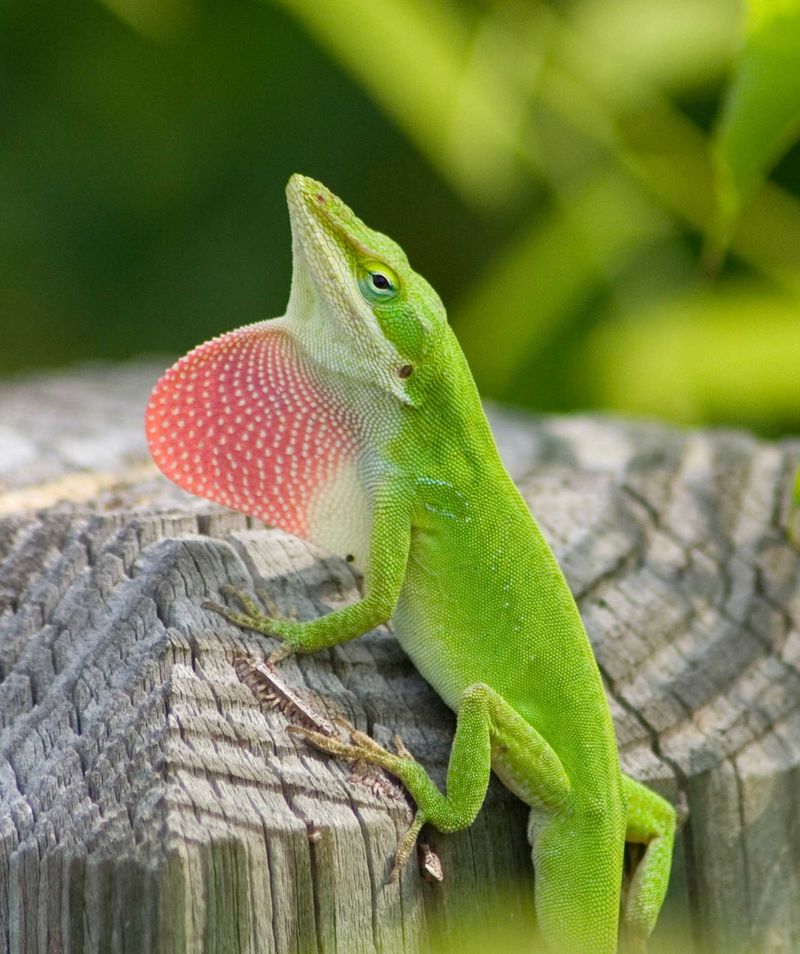
Layered greenery, shaded vertical structure, and a functioning insect community may support naturally occurring green anoles in suitable, more humid parts of Central Texas. That is a real benefit worth working toward, and it fits naturally alongside other goals like supporting pollinators, improving soil health, and reducing the visual monotony of a flat lawn.
Texas Parks and Wildlife recognizes green anoles as a native species worth supporting through habitat, and a yard that works for anoles tends to work better for a broad range of native wildlife.
What the evidence supports is possible opportunistic insect predation, not a measured mosquito-control system, a guaranteed permanent garden service, or a disease-prevention method. The 2025 Texas observation raises an interesting question about anole behavior near mosquito concentrations, but it stops well short of demonstrating control.
Treating anoles as one small and potentially valuable part of a wildlife-friendly yard is the honest position the evidence supports.
The practical priority remains the same regardless of how many lizards visit your garden. Keep up weekly water checks, maintain your screens, use registered repellents when you are outdoors during peak mosquito hours, and follow CDC home mosquito-control guidance.
A green anole watching from your fence post is a sign of a yard worth inhabiting, and that turns out to be its own reward.