
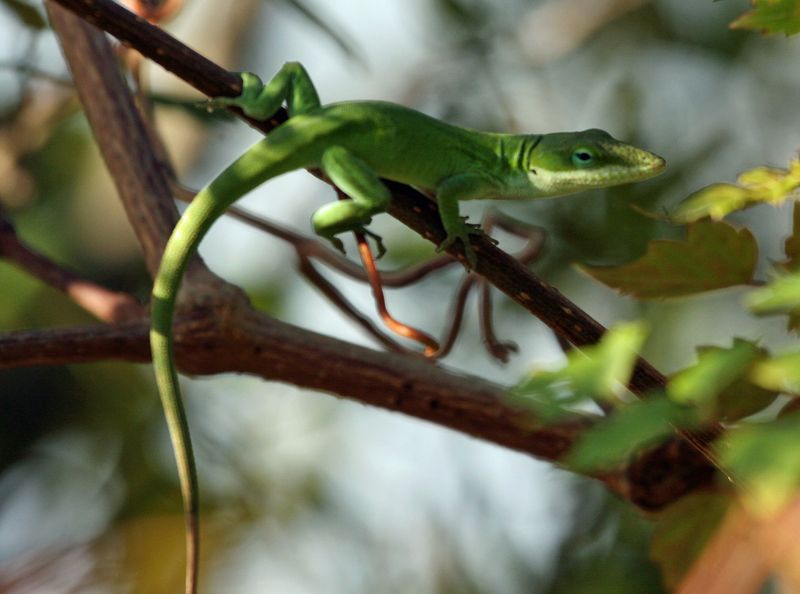
That bright green lizard darting along your back fence is more than a cool summer sighting. Green anoles are native Texas insect-eaters, and it is tempting to think a yard full of them means your roses are safe from aphids. The truth is a little more complicated, and understanding what anoles actually do in your garden can help you build a smarter, more balanced approach to keeping your roses healthy all summer long.
Green anoles may help, but they are not aphid control
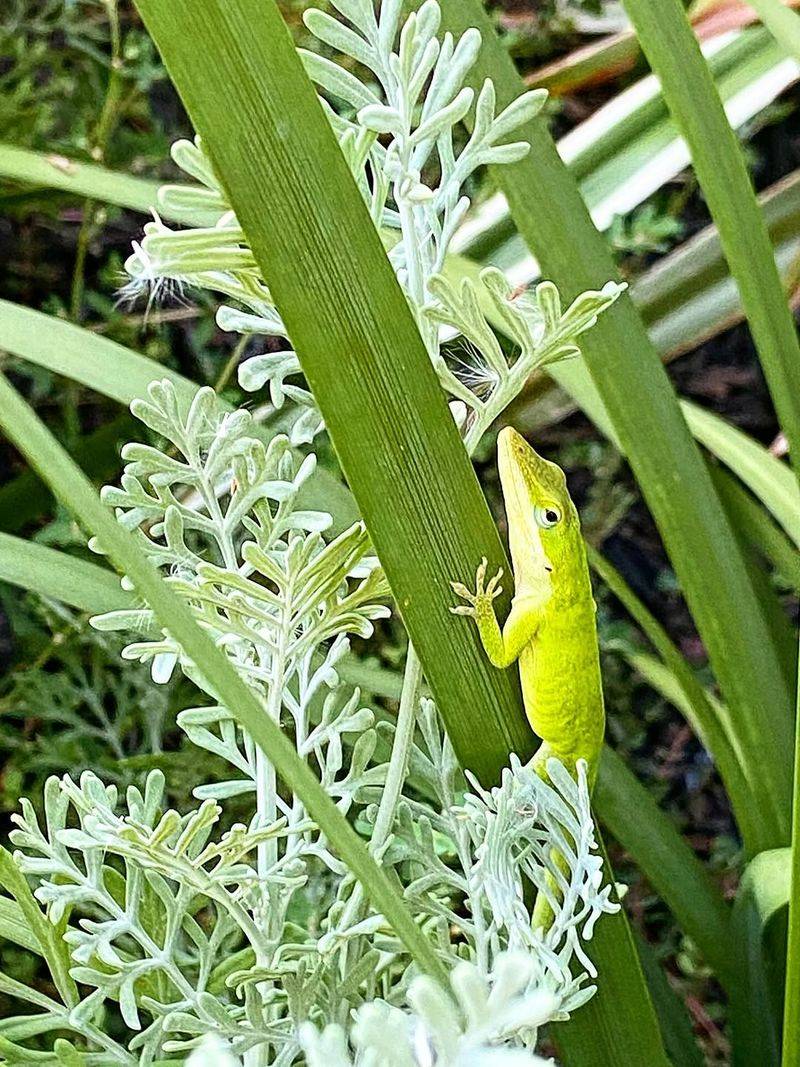
Spotted on your fence, a green anole looks like a tiny, self-appointed security guard patrolling the perimeter of your rose bed. That image is appealing, but it only goes so far. Texas Parks and Wildlife confirms that green anoles (Anolis carolinensis) are native insect-eaters that hunt across shrubs, trees, fences, and walls. Because aphids are insects, an anole moving through your rose bushes may well snap one up when it crosses the lizard’s path.
What the evidence does not show is that having more anoles on your fence reliably brings down aphid numbers on your roses. Anoles are generalist hunters. They eat what is available and catchable, which could mean a grasshopper, a beetle, a moth, or, yes, an occasional aphid cluster. But they are not locking onto your rose bushes to systematically clear every sap-sucker from every stem.
The National Park Service describes green anoles as opportunistic predators of small invertebrates, reinforcing the point that they are broad-diet hunters rather than specialists on any one pest. Think of them as one useful participant in a larger backyard food web, not a stand-alone pest-control program.
Aphids, meanwhile, can reproduce fast enough to overwhelm a garden even when natural predators are present. Texas A&M AgriLife notes that aphid populations are shaped by temperature, plant health, moisture, and the presence or absence of a whole community of natural enemies, not by any single predator alone. An anole on your fence is a welcome guest, but your roses still need you to stay involved and watch for trouble.
Which fence lizard are you seeing?
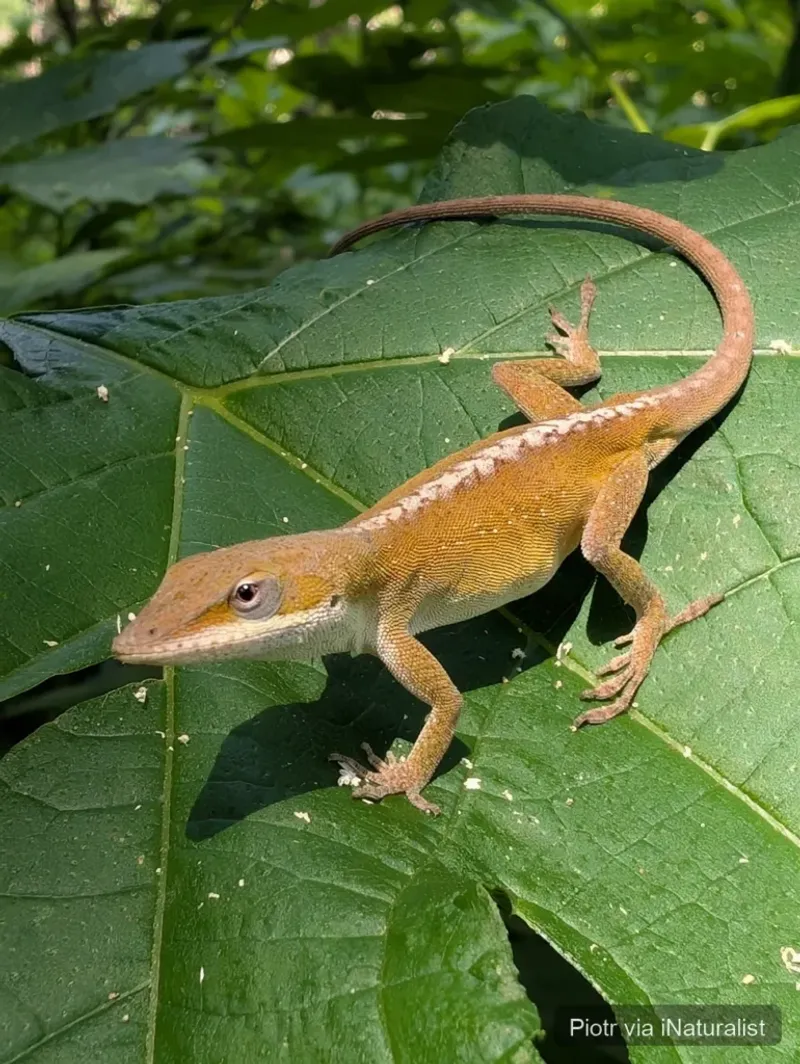
Before you rearrange your garden for a lizard’s benefit, it helps to know which lizard you are actually looking at. Many Central Texas gardeners assume any small brown lizard on the fence is a brown anole, an introduced species from Cuba and the Bahamas. That assumption is easy to make but often wrong.
Green anoles can shift their color from vivid green to dull brown depending on temperature, stress, and surroundings. A lizard that looks brown right now may be a native green anole in its muted phase, not a different species at all. The National Park Service cautions that color alone is not a reliable way to tell these two species apart. Trying to identify either species based on a quick glance at color is a common mistake.
Better clues involve body shape and behavior. Green anoles generally have a more pointed snout and feel at home higher up in vegetation, moving through shrubs, vines, and fence boards well above ground level. Brown anoles tend to display more distinct body patterning, including a pale stripe or diamond pattern along the back, and they typically stay closer to the ground. University of Florida IFAS Extension notes that both species eat small invertebrates, so even a confirmed brown anole is not a purely negative presence in the yard.
Texas Parks and Wildlife documents green anoles throughout the eastern third of Texas, not across the entire state. If you are gardening in the Hill Country or farther west, a large stable population of green anoles in your yard is less certain than it would be in Austin’s eastern neighborhoods or closer to the Piney Woods. Knowing your region keeps your expectations realistic from the start.
A layered yard gives anoles places to hunt
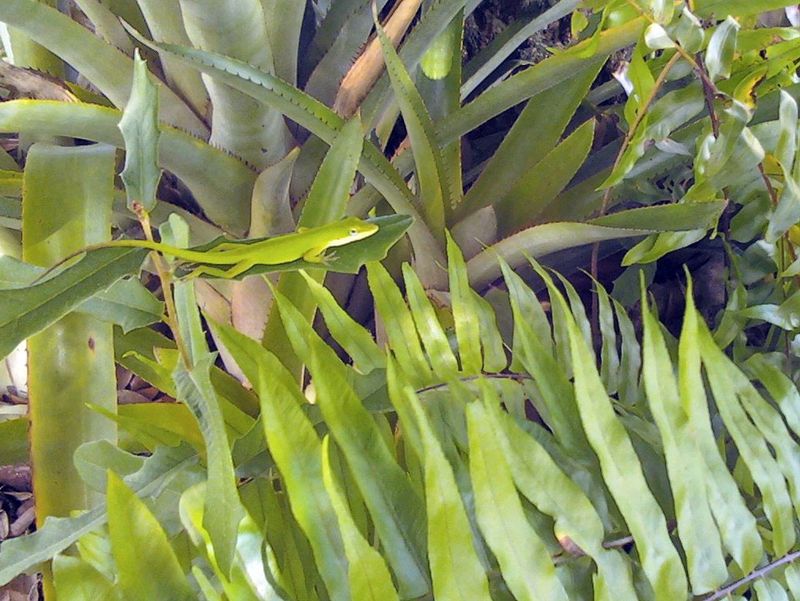
Bare fencing and open lawn do not give anoles much to work with. These lizards use greenery for cover, hunting, and temperature regulation, moving between shaded spots and sunny perches throughout the day. Yards that offer a mix of dense shrubs, small trees, and climbing vines give anoles the structure they need to feel at home.
Research from eastern Texas supports this idea in a meaningful way. A USDA Forest Service habitat study conducted in open pine forest in eastern Texas estimated green anole abundance at roughly 16 times higher in a plot with greater shrub density compared with a plot that had less shrub cover. Anoles in that study most often perched on live shrubs, and the shrubs they preferred were substantially larger than average. That finding is from a forest setting, not a suburban rose garden, so applying it directly to your backyard is a practical inference rather than a measured result.
Still, the direction of the evidence is clear: more layered, shrubby vegetation tends to support more anoles.
Planting or retaining dense shrubs and vines near your fence line and rose beds gives anoles more territory to cover. Keep some open areas too, such as a fence cap, a flat stone, or a bare patch of soil in full sun, because anoles need to bask and raise their body temperature before they can hunt effectively. A yard with both shade and sun patches is more useful to them than one that is entirely dense or entirely open.
Texas Parks and Wildlife notes that green anoles prefer moist conditions and greenery, so healthy, well-watered plantings near the fence naturally create better habitat than dry, sparse areas. Two strategies to skip entirely: adding standing water features specifically for anoles (which creates mosquito risk and is not supported by the strongest habitat evidence) and releasing or relocating captive lizards (which is not a safe or supported practice). Wild anoles that find your yard hospitable will move in on their own.
Aphid scouting still starts with the rose
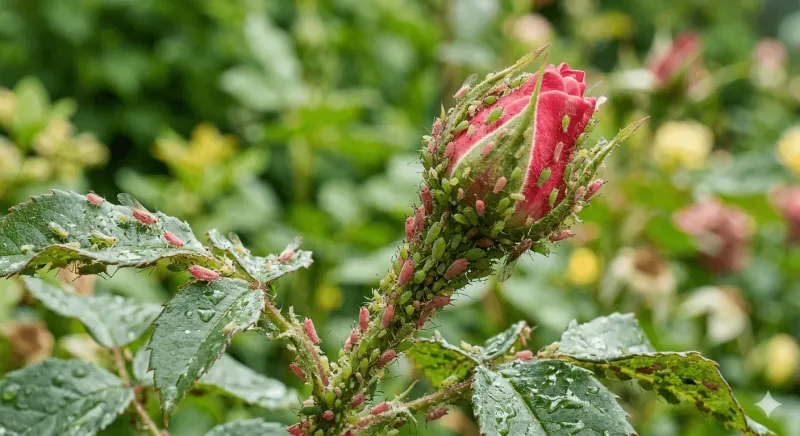
Anoles hunt when they are hungry and when prey is within reach, which means your rose bushes are not under continuous surveillance. Aphids can build a damaging colony in just a few days under warm Texas summer conditions, so waiting for lizards to notice the problem is not a reliable plan. Regular inspection by you is the dependable first step.
Texas A&M AgriLife recommends inspecting rose bushes once or twice a week, with close attention to tender new growth and the undersides of leaves. Both locations are where aphids tend to cluster first and where populations can swell before damage becomes visible from a distance. A quick weekly walk-through takes only a few minutes and gives you an early warning before a small infestation turns into a significant one.
Aphid numbers are not just about predators. Temperature, plant health, moisture levels, and the overall condition of the host plant all influence how fast a population grows. A rose bush stressed by drought, poor nutrition, or recent pruning may be more attractive to aphids and less able to tolerate feeding pressure. UC IPM’s rose pest guidance points to plant vigor as a factor in how well roses hold up against insect pressure.
Judge the situation by what you see on the plant, not by whether an anole was visible on the fence that morning. Distorted new growth, sticky honeydew residue on leaves, or a sudden population spike are the signals that matter. Tracking aphid activity over two or three inspection visits tells you whether numbers are rising, holding steady, or declining on their own, and that trend is what should guide your next move.
Use water for light infestations, and let ants prompt a closer look
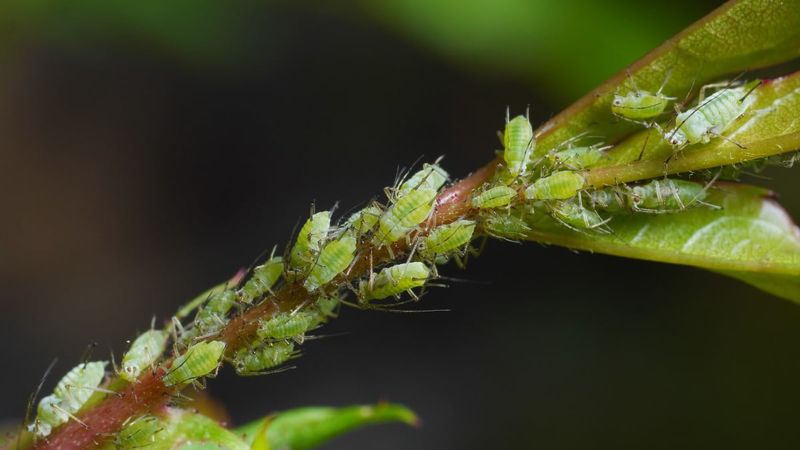
When your weekly inspection turns up a small aphid colony on a few stems, a strong blast of water is often the right first move. Holding a hose nozzle close and using a forceful stream can knock aphids off the plant effectively. Texas A&M AgriLife describes water sprays as an appropriate low-impact first step for light infestations, and UC IPM’s rose pest guidance supports the same approach for small plantings. Focus the spray on the undersides of leaves and the growing tips, where aphids concentrate.
One water treatment rarely ends the issue entirely. Aphids that land on the soil may not survive, but any that remain on the plant or drift back from nearby stems can restart a colony within days. Plan to re-inspect within two or three days and repeat the water spray if needed. Think of it as an ongoing response rather than a single fix.
While you are checking the plant, look at the stems for ant traffic. Ants and aphids often have a working arrangement: certain ant species collect the sticky honeydew that aphids produce, and in exchange they guard aphid colonies from predators and even carry aphids to new feeding sites. Texas A&M notes that ant activity can interfere with the natural enemies, such as parasitic wasps and lady beetles, that would otherwise help keep aphid numbers down. Ant presence on your rose stems is a useful diagnostic clue, a sign that the aphid population may have extra protection from the ants that are tending it.
Checking for ants is not a treatment in itself, and reducing ant traffic alone will not clear an aphid infestation. What it tells you is whether your natural enemies have a clear path to do their work. If ants are actively farming the colony, that context helps you understand why the infestation is persisting even when predators appear to be around.
Protect the whole predator team
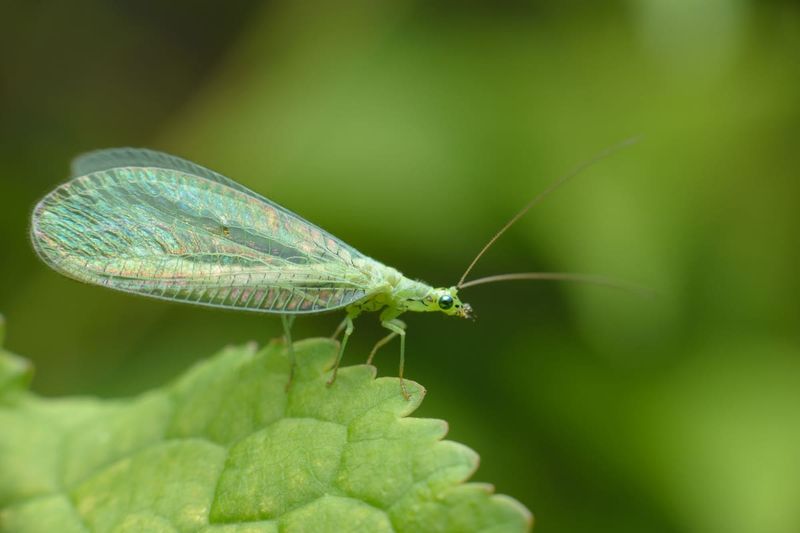
Green anoles are the most visible hunters in a rose garden, but they share the job with a crowd of smaller, less obvious allies. Parasitic wasps lay eggs inside living aphids, killing them from the inside out. Lady beetles and their larvae consume aphids steadily. Lacewings, both adults and larvae, are aggressive aphid predators.
UC IPM’s aphid management guidance identifies these natural enemies as significant contributors to aphid suppression in garden settings, often more reliably effective than a single vertebrate predator like a lizard.
The biggest threat to this predator team is broad-spectrum insecticide use. Products that kill aphids on contact frequently kill parasitic wasps, lady beetles, and lacewings at the same time, leaving the plant without its natural defenses once the spray breaks down. A yard that gets treated heavily and repeatedly may see aphid populations rebound faster because the beneficial insects that would otherwise suppress them are gone.
Reducing unnecessary pesticide exposure benefits both the insect predator team and the anoles that share the yard. EPA guidance on reducing pesticide impacts on wildlife recommends using pesticides only when necessary, treating only the affected areas, and minimizing exposure to non-target organisms. That approach protects the food web you are trying to support.
When treatment becomes unavoidable, the goal is to use the option least likely to harm the rest of the predator community. Targeted applications on affected stems, rather than whole-plant or whole-yard sprays, limit collateral damage. Texas A&M AgriLife’s aphid guidance supports choosing the least disruptive suitable product and always following the label directions, which exist to protect both the plant and the surrounding environment. A pesticide applied carelessly can undo weeks of habitat work in a single afternoon.
Let anoles add resilience—not certainty—to summer rose care
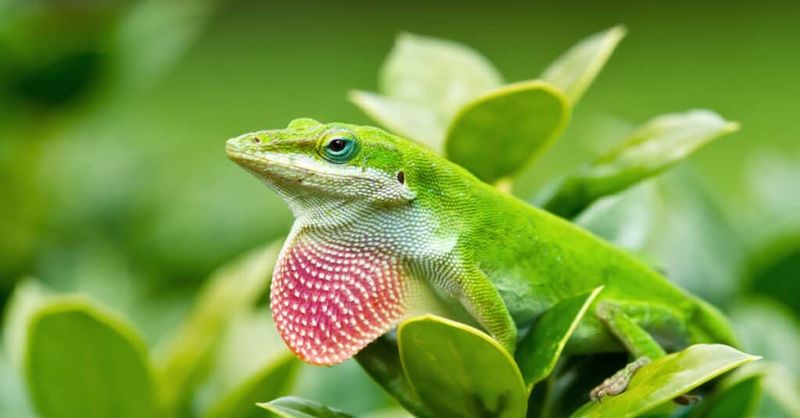
Putting this all together looks like a short, repeatable routine rather than a single dramatic fix. Identify the lizard on your fence carefully before assuming it is a green anole. Add layered shrubs, vines, and a basking spot near your rose bed to make the yard more suitable for native lizards. Cut back on broad-spectrum sprays to give both anoles and beneficial insects a safer environment to operate in.
From there, inspect your roses weekly, paying attention to new growth and leaf undersides. When you spot ant traffic on a stem, treat it as a signal to look more closely at the aphid situation and assess whether natural enemies have a clear path to the colony. For light infestations, start with a forceful water spray and check back in a few days. Texas A&M AgriLife’s aphid guidance and UC IPM’s natural-enemy research both support this kind of layered, low-disruption approach as the foundation of sustainable aphid management.
If treatment becomes necessary, follow EPA guidance and treat only affected areas with the least disruptive suitable option, protecting the predator community you have worked to build. The eastern Texas habitat study reminds us that a yard with more structure and less disturbance tends to support more anoles, and a yard with more anoles, more lady beetles, and more parasitic wasps is simply a more resilient place for roses to grow. A livelier fence is a sign that something is going right out there, even if it cannot promise a pest-free summer.