
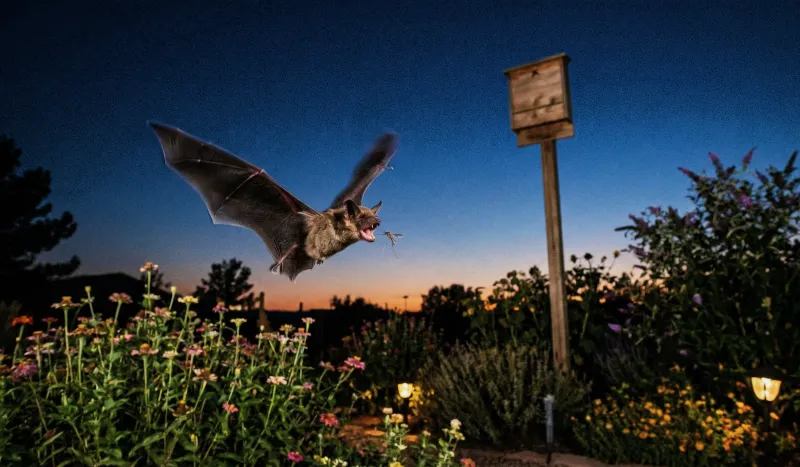
Watching bats swoop across a summer evening sky is one of the quieter pleasures of a Central Texas backyard, and the idea that those same bats are gobbling up every mosquito in sight sounds almost too good to be true. Spoiler: it mostly is.
The real story involves misidentified species, dietary studies that do not translate to fewer bites on your patio, and a bat house that may sit empty for years. Getting the facts straight still leads somewhere useful, because native bats deserve support and your mosquito problem deserves a plan that actually works.
What the mosquito promise gets wrong
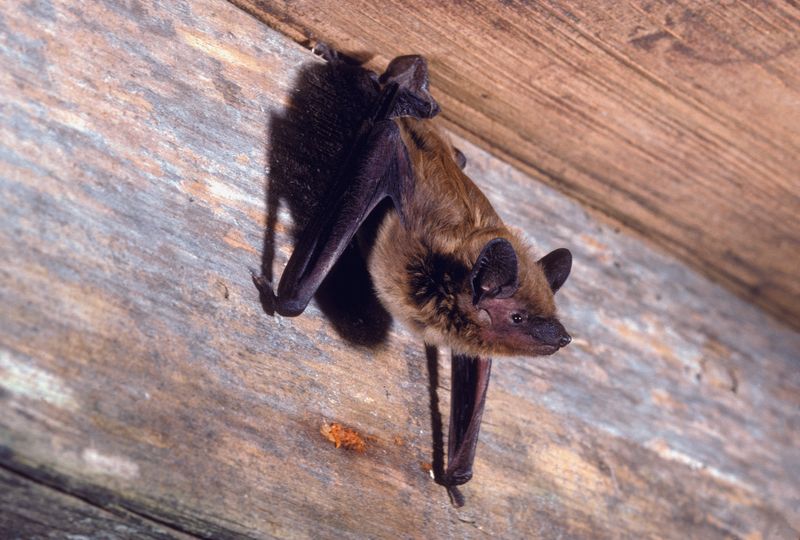
Picture a warm July evening in Austin or San Marcos: bats carving low arcs over the yard while mosquitoes supposedly vanish in their wake. That image has powered countless bat-house sales and backyard wildlife projects, but the causal chain it implies does not hold up when you look at what researchers have actually measured.
Dietary studies do confirm that bats eat mosquitoes. A USDA Forest Service study using DNA metabarcoding detected mosquito prey in 71.9 percent of little brown bat samples examined, which is a genuinely striking finding.
What it does not show is that a bat or a small colony living in a backyard bat house will lower the number of mosquitoes you encounter on your patio on any given evening.
The gap between “bats eat mosquitoes” and “bats reduce mosquito bites in my yard” is the gap between a dietary observation and a population-control result. University of Florida IFAS Extension cautions that bats are unlikely to control large mosquito populations because mosquitoes make up only a small portion of most bats’ diets overall.
A bat can consume mosquitoes during a night’s foraging without making a dent in the local population large enough for people to feel.
UC Integrated Pest Management guidance goes further, stating there is no clear evidence that installing a bat house significantly reduces garden insect problems. That is not a reason to skip the bat house entirely, but it does change what the project is for.
A properly built and placed bat house can support native wildlife and add real ecological interest to your yard. Reliable mosquito control, though, requires direct measures aimed at mosquitoes themselves, and those are covered later in this article.
Bats eat many night-flying insects
Bats are generalist predators of the night sky, not mosquito-targeting missiles. On any given evening, a foraging bat may catch moths, beetles, flies, midges, leafhoppers, and other winged insects in addition to the occasional mosquito.
The mix depends on which insects are flying, at what altitude, and in what density at that moment.
The same USDA Forest Service metabarcoding research that detected mosquitoes in little brown bat diets also found a wide taxonomic range of other insect prey, underscoring that mosquitoes are one item on a varied menu rather than the featured entree. UF/IFAS Extension reinforces this point, noting that mosquitoes generally represent a small fraction of most bats’ total diet.
That dietary breadth is actually good news for a wildlife-friendly yard. Bats that eat moths may reduce pressure on garden plants.
Bats that take beetles and midges contribute to a more balanced nighttime insect community. The ecological value is real even when the mosquito-control effect is uncertain.
The important distinction is scale. One bat consuming a few mosquitoes per night, or even several dozen, does not meaningfully shrink a local mosquito population that can number in the thousands and replenish itself from standing water every week.
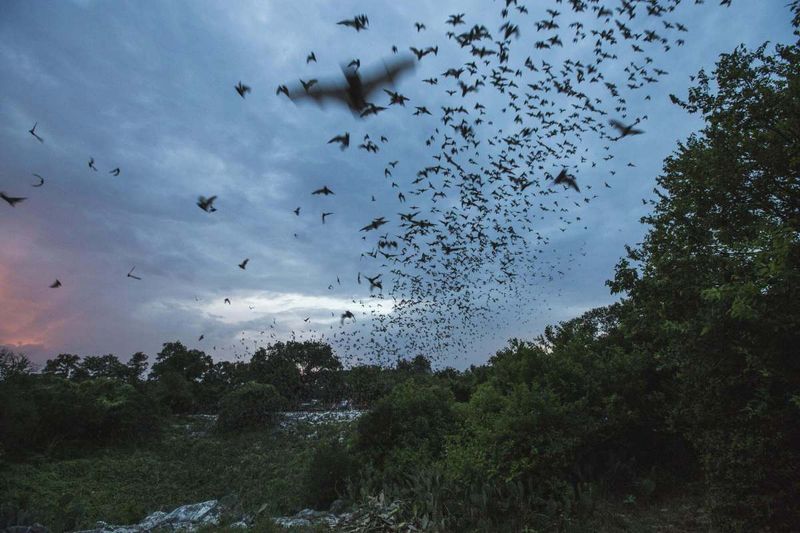
Residential bat houses typically attract small numbers of roosting bats, not the massive colonies that congregate under bridges in Austin. Framing a bat house as a contribution to native wildlife habitat, rather than a mosquito trap, sets expectations that the evidence can actually support and still gives you a genuinely worthwhile backyard project.
Why little brown bats do not fit a Central Texas yard
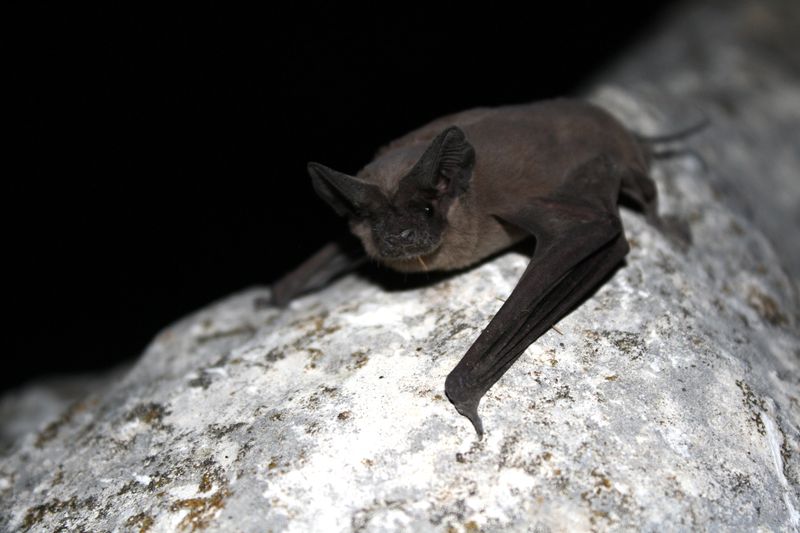
The common name “little brown bat” does a lot of work in popular wildlife writing, and almost none of it applies to a Central Texas yard. The North American little brown bat, Myotis lucifugus, is the species most often cited in mosquito-diet studies and bat-house marketing, but Texas Tech’s Mammals of Texas documents the species from a single eastern-Texas specimen.
That is not a small colony waiting to be attracted with the right house; it is essentially absent from the state.
A related species, the southwestern little brown myotis (Myotis occultus), sounds like it might be a better fit for the region, but Texas Tech’s species account for Myotis occultus records it from only one Texas specimen, collected in far West Texas. Treating these two species as interchangeable because they share a casual common name leads to bat-house advice that simply does not match the bats actually living in or passing through Central Texas.
The species with genuine Central Texas relevance are the Mexican free-tailed bat (Tadarida brasiliensis) and the cave myotis (Myotis velifer). Texas Parks and Wildlife lists both among Texas bat species and notes that the massive free-tailed colonies under the Congress Avenue Bridge in Austin are among the most famous bat-watching spectacles in North America.
Cave myotis hibernate in central and north-central Texas and use both natural caves and man-made structures as roosts.
Mentioning these species is not a promise that your bat house will host either one. Occupancy depends on local habitat, available natural roosts, temperature, and factors that no homeowner fully controls.
The point is that any bat-house project in Central Texas should be planned around the bats that actually live here, not around a species that barely has a documented Texas record.
A bat house provides roosting habitat, not mosquito control
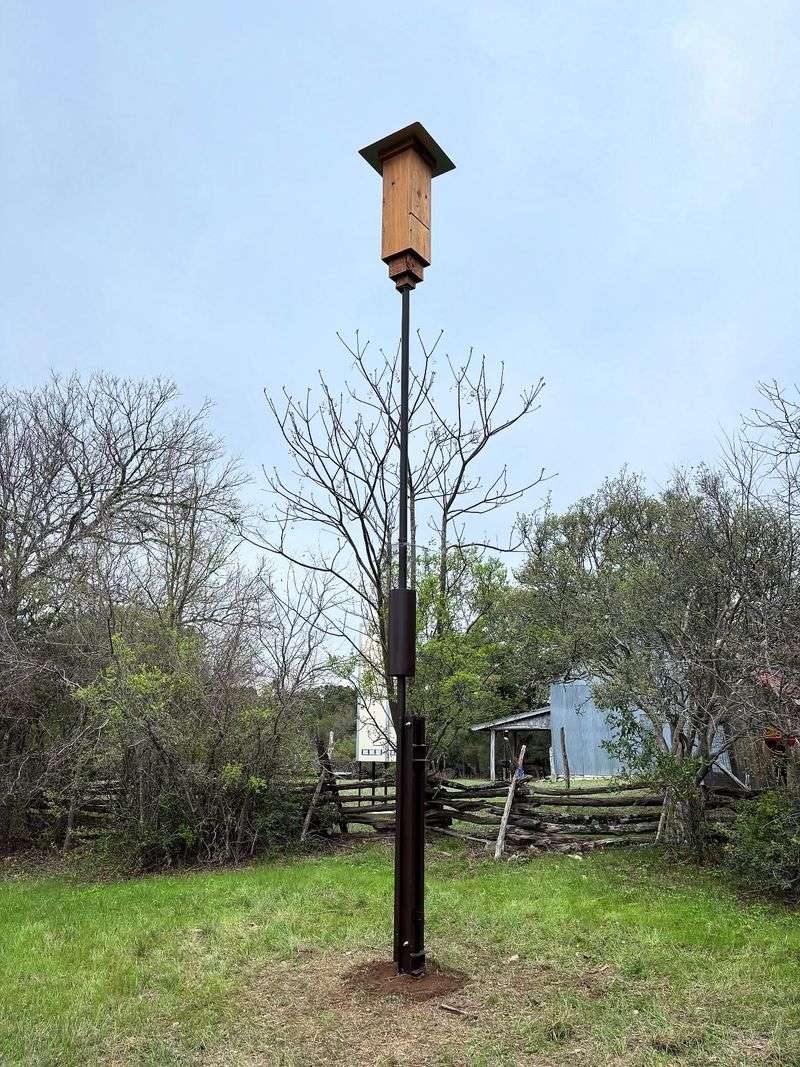
A bat house is a roosting structure, not a mosquito trap. The distinction matters because the two functions operate on completely different logic.
A roosting box gives bats a warm, protected cavity to rest in during daylight hours. Whether the bats using that box then reduce the number of mosquitoes you encounter while grilling on the porch is a separate question, and the answer is almost certainly not in any measurable way.
UC IPM’s bat guidance states plainly that there is no clear evidence bat houses significantly reduce garden insect problems, and also notes that a bat house is not likely to discourage bats from roosting in a nearby building. That second point is worth keeping in mind if your motivation for installing a bat house is partly to redirect bats away from your attic or eaves.
Occupancy itself is far from guaranteed. Bat Conservation International’s bat house guidelines acknowledge that a house may remain empty for two years or longer before bats discover and adopt it, and some houses are never used at all.
The variables include local bat species and their existing roost preferences, ambient temperature inside the house, proximity to water and foraging habitat, and whether natural roosts nearby are already meeting local bat needs.
A bat house that sits empty for three summers is not a failed project in any meaningful ecological sense. It represents available habitat, and habitat availability is part of what supports wildlife populations over time.
Going in with that framing, rather than expecting a mosquito dividend by August, keeps the project honest and keeps readers from abandoning the house prematurely or skipping the mosquito-control steps they actually need.
Build for a Texas summer’s heat
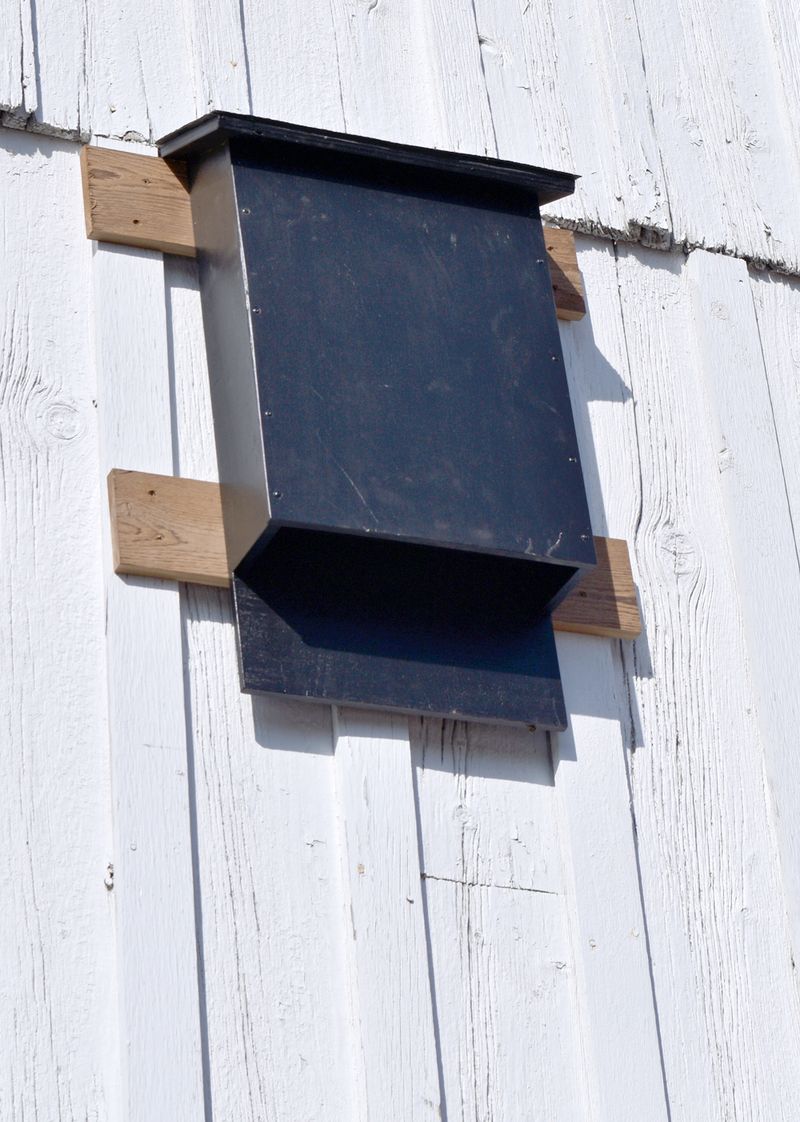
Central Texas summers are not forgiving to poorly designed bat houses. Interior temperatures inside a dark box mounted in full sun can spike well above what roosting bats will tolerate, which is one of the main reasons bat houses fail to attract occupants in hot Southern climates.
Construction choices that work in Missouri or Michigan can turn a Texas bat house into an oven.
Bat Conservation International’s construction guidelines specify untreated, rough-surfaced wood for interior surfaces so bats can grip and climb without slipping. Smooth plastic sheeting and interior screening are not appropriate substitutes.
Exterior seams should be caulked to prevent drafts and moisture infiltration, but the house also needs appropriately sized ventilation gaps, typically a horizontal slot or gap near the bottom of the roosting chamber, to allow some airflow without creating a cold draft that discourages use.
Color choice carries real consequences in Texas. A dark exterior absorbs more solar heat, which can be helpful in cooler climates but dangerous in July in the Hill Country.
Lighter exterior colors, a shade structure positioned to block afternoon sun, or additional ventilation openings can help keep interior temperatures within a range bats will actually use. These are improvements to suitability, not guarantees of occupancy.
One practical strategy for a hot climate is to install two houses with different sun exposures: one that receives more direct morning light and one that stays shadier through the afternoon. Bats can then select the chamber that best matches their thermoregulatory needs on a given day, which increases the odds that at least one house falls within a usable temperature range across the long Central Texas summer.
Plan the project around the heat first, and worry about aesthetics second.
Choose a site with open flight paths
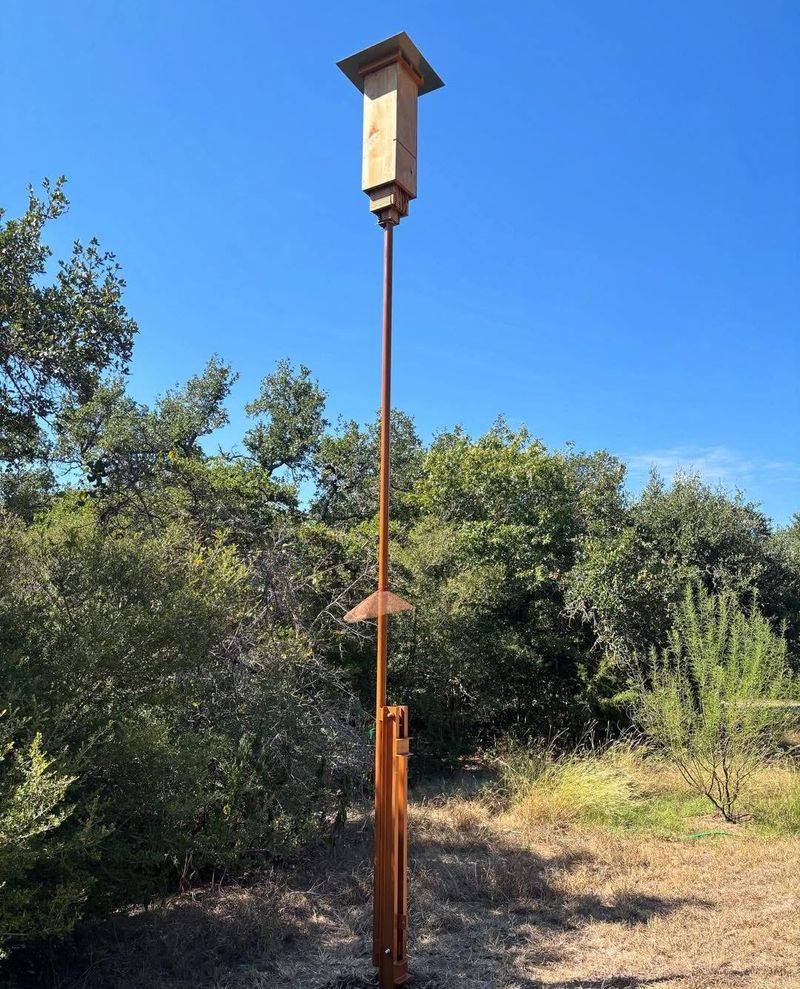
Even a well-built bat house will go unused if bats cannot get in and out of it easily. Bats emerging from a roost at dusk need clear, unobstructed airspace directly below the exit.
A house mounted on a tree branch or tucked under a canopy may look natural, but branches create collision hazards and give predators, including raccoons and rat snakes, convenient climbing access to the roost.
Bat Conservation International recommends mounting a bat house with at least roughly 12 feet of clear space below the exit point, and favors a pole or building wall over a tree whenever site conditions allow. A pole mount eliminates most predator-climbing routes and keeps the flight path clean.
A south- or southeast-facing wall of a building can also work well because it absorbs morning warmth that helps regulate roost temperature, particularly during spring when bats first return to a site.
Water proximity matters too. Bat Conservation International’s siting tips recommend locating bat houses near a major water source when possible, ideally within about a mile, because bats need to drink regularly and often forage over open water where insect concentrations are high.
A pond, creek, or even a large rain garden within range of the house may improve the likelihood that bats investigate and adopt the site.
Favorable placement improves suitability in ways that no amount of interior construction can compensate for after the fact. Choosing the right pole location, mounting height, and orientation before the first screw goes in is the single most consequential decision in the whole project, and it costs nothing extra to get right from the start.
Make the surrounding yard useful to bats
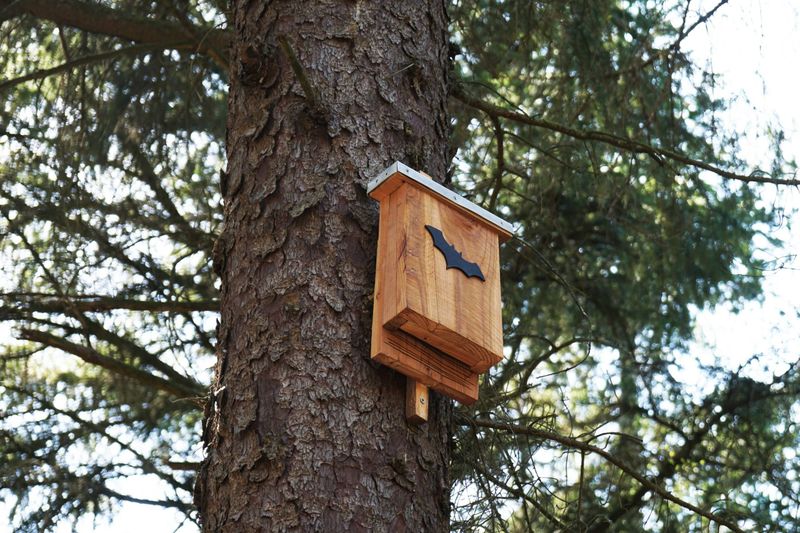
A bat house sitting in a chemically managed, brightly lit, water-free yard is working against itself. The structure provides potential shelter, but the surrounding habitat determines whether foraging bats have any reason to stay in the area long enough to discover it.
A few habitat adjustments can make the yard more welcoming without requiring a full landscape overhaul.
Bat Conservation International’s attraction guidance suggests keeping areas of the yard darker at night, since bats generally avoid brightly lit open spaces and forage more comfortably in lower light. Replacing broad floodlights with motion-activated or directional fixtures that illuminate only what you need preserves darker zones where insects congregate and where bats feel safe foraging.
Bat Conservation International’s gardening guide also recommends minimizing broad-spectrum insecticide use, because sprays that kill mosquitoes also remove the moths, beetles, and other insects that make up the bulk of a bat’s diet. A yard that has been heavily treated may simply not offer enough food to keep bats foraging in the area.
Native plants that support nighttime insect activity, including night-blooming flowers that attract moths, add foraging value without extra maintenance.
None of these steps come with a guarantee that the bat house will be occupied or that mosquito pressure will drop. Habitat improvements create conditions that are more compatible with bat activity; they do not override species distribution, roost competition, or the basic biology that determines where bats settle.
Treat the landscaping work as a worthwhile conservation investment in its own right, and let any bat activity that follows be a welcome bonus rather than a promised outcome.
Standing-water control is the most reliable first step

Mosquitoes breed in water, not in open air, and that fact gives homeowners more direct leverage over local mosquito populations than any bat house ever could. Texas A&M AgriLife Extension recommends eliminating breeding sites before reaching for sprays, foggers, or other control measures, because removing the water removes the next generation of mosquitoes before it hatches.
A thorough inspection of a typical Central Texas yard usually turns up more water-holding containers than expected. Upturned lids, clogged gutters, tarps with low spots, flower pot saucers, old tires, birdbaths that go unchanged for weeks, and even bottle caps can hold enough water for mosquitoes to complete their larval development.
Most mosquito species need only about a week of standing water, though timing varies by species and by temperature. In a Texas summer, that window can be shorter than homeowners assume.
Texas A&M’s detailed mosquito-control guidance covers what to do with water that cannot simply be emptied: ornamental ponds, rain barrels, and drainage features can be treated with a labeled biological larvicide such as Bacillus thuringiensis israelensis (Bti), which kills mosquito larvae without harming most other aquatic life. Larvicide dunks and bits are widely available at hardware and garden stores across Texas.
Source reduction alone does not eliminate all mosquito exposure, because adult mosquitoes can fly in from neighboring properties or undrained areas nearby. Personal protection fills that gap.
EPA-registered repellents containing DEET, picaridin, or oil of lemon eucalyptus are effective when applied as directed. Well-fitted window and door screens keep mosquitoes out of living spaces.
Wearing long sleeves and pants during peak mosquito activity, typically dawn and dusk, reduces exposure further. A bat house is a fine addition to a wildlife-friendly yard, but none of these practical measures should be skipped while waiting to see whether bats move in.
Coexist with bats without handling or trapping them
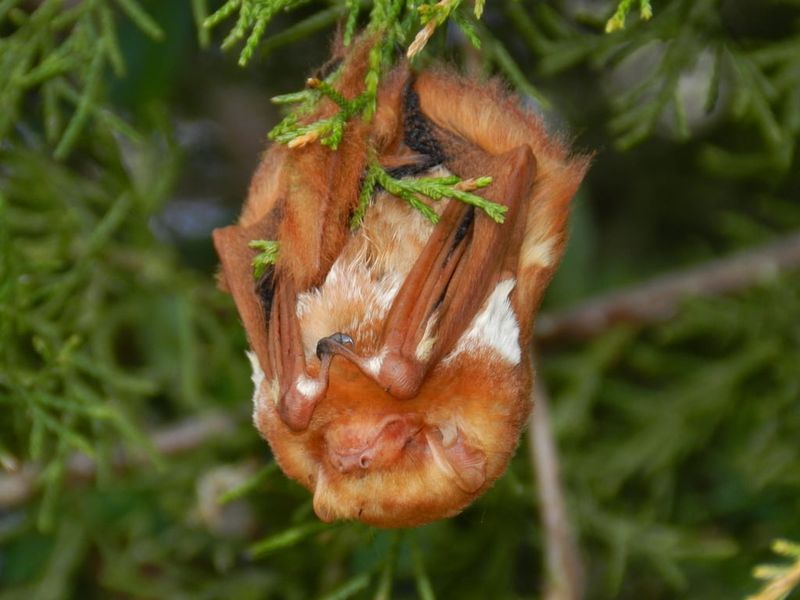
Bats foraging over a yard or roosting in a bat house are a welcome sight. A bat found on the ground, acting sluggish, or approachable by hand is a different situation entirely, and the response should be different too.
CDC guidance on bat-related rabies prevention is direct: never pick up a bat with bare hands. Bat bites can be small enough to go unnoticed, which means a person can have been exposed without realizing it.
Anyone who has had direct contact with a bat, or who woke up to find a bat in a room where they were sleeping, should contact a doctor or local public-health authority promptly.
Most bats do not carry rabies, and bats as a group are not dangerous simply because they are bats. The caution around handling applies specifically because the consequences of an undetected bite are serious, not because bats are inherently aggressive or diseased.
Bats observed flying normally outdoors pose no meaningful risk to people who leave them alone.
A bat house will not reliably redirect bats away from a nearby building. UC IPM notes that bat houses are not likely to discourage bats from roosting in building structures, so if bats are entering an attic or eave space, exclusion work by a qualified wildlife professional is the appropriate response, not adding a bat house and hoping they move.
Timing matters for exclusion. Sealing a bat entry point during the period when young bats, called pups, are present but not yet able to fly can trap them inside.
In Texas, that period generally falls between roughly May and August, though it varies by species. Local wildlife authorities or a licensed bat exclusion specialist can advise on timing and legal requirements before any sealing work begins.
For questions about guano cleanup or unusual bat activity near living spaces, the same local resources apply.
Give the bat project two honest goals
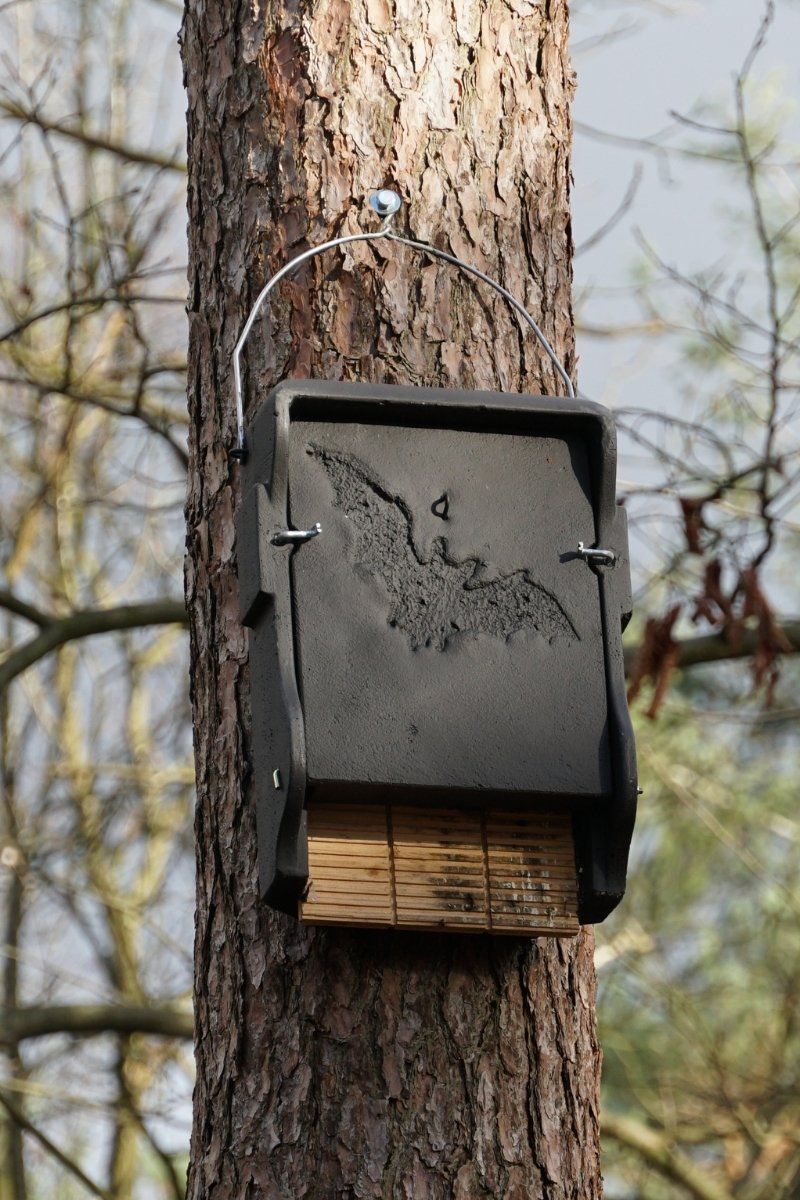
A bat house built for Central Texas heat, mounted high on a pole with clear flight access, and placed near water and native plantings is a genuinely worthwhile project. It may eventually attract roosting bats, contribute to local wildlife habitat, and give you something remarkable to watch on summer evenings.
Those are honest, achievable goals.
What the project cannot reliably deliver is measurable mosquito reduction on your patio. UC IPM finds no clear evidence that bat houses significantly reduce garden insect problems, and Texas A&M AgriLife Extension consistently points homeowners toward source reduction and personal protection as the actions that actually move the needle on mosquito exposure.
Those steps work whether or not a bat ever touches your bat house.
Bat Conservation International frames bat houses as a contribution to habitat, and that framing holds up. A house that sits empty for two years and then hosts a small colony of cave myotis has done its job.
A homeowner who empties standing water every week, wears repellent at dusk, and keeps screens in good repair has also done their job. The two projects belong in the same yard without one being asked to carry the other’s weight.
Bats are worth supporting on their own terms, and mosquitoes are worth managing with tools designed for the task.