
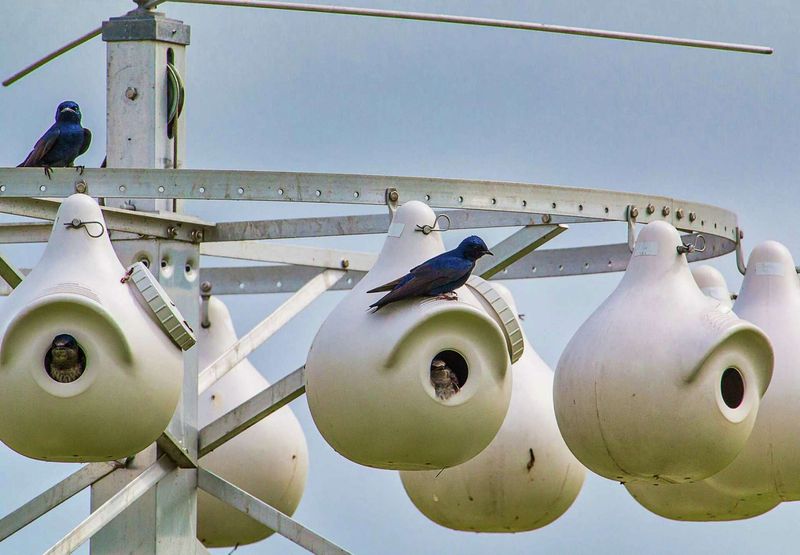
Purple Martins are one of the most celebrated summer birds in Texas, swooping and chattering over neighborhoods from South Texas to the Panhandle. Many homeowners put up martin houses hoping the birds will wipe out backyard mosquitoes, but the real story is more nuanced and still worth knowing. Attracting a martin colony is a genuinely rewarding wildlife project, and understanding what these birds actually do, and do not do, will help you set up housing that works and keep your family protected from mosquito bites all season long.
Purple Martins Are Not a Mosquito-Control System
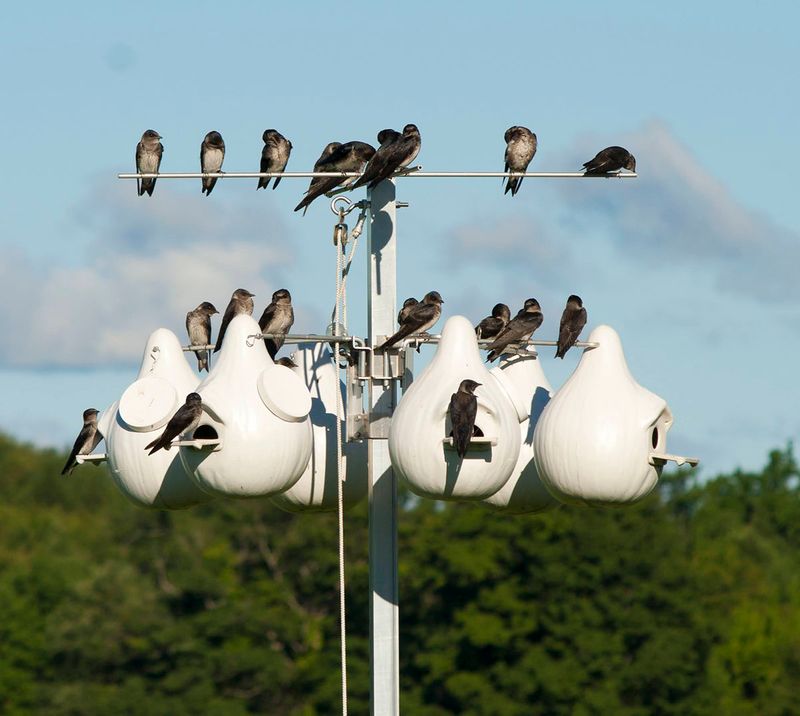
Purple Martins are spectacular aerial hunters, and watching a colony wheel and dive over a Texas yard is one of the genuine pleasures of summer. What they are not, according to every authoritative source available, is a dependable mosquito-control system. The Audubon Society’s field guide documents a broad diet of beetles, flies, dragonflies, wasps, winged ants, moths, butterflies, true bugs, and spiders, while specifically noting that the oft-repeated claim about mosquitoes has no solid factual backing.
The mismatch comes down to timing and altitude. Mosquitoes around Texas homes are typically low-flying and most active at dawn and dusk. Purple Martins hunt higher in the air during daylight hours, so the two rarely overlap in ways that would translate into measurable backyard mosquito reduction. Penn State Extension makes this point plainly, explaining that swallows such as Purple Martins rarely feed on mosquitoes because of these differences in flight height and active period.
Seasonal limits matter too. Purple Martins are migratory birds that use Texas housing during the breeding season and then depart. The Purple Martin Conservation Association notes that most birds are gone well before fall, meaning any insect-eating benefit ends with the season, not with the last warm evening you spend outdoors.
None of this diminishes the joy of hosting these birds. A martin colony is living, vocal wildlife habitat right in your yard. The point is simply that mosquito management requires its own set of tools. CDC guidance on mosquito control at home focuses on standing-water removal, screens, and EPA-registered repellents, and those measures remain necessary whether or not martins are nesting overhead.
Their Diet Includes Many Flying Insects
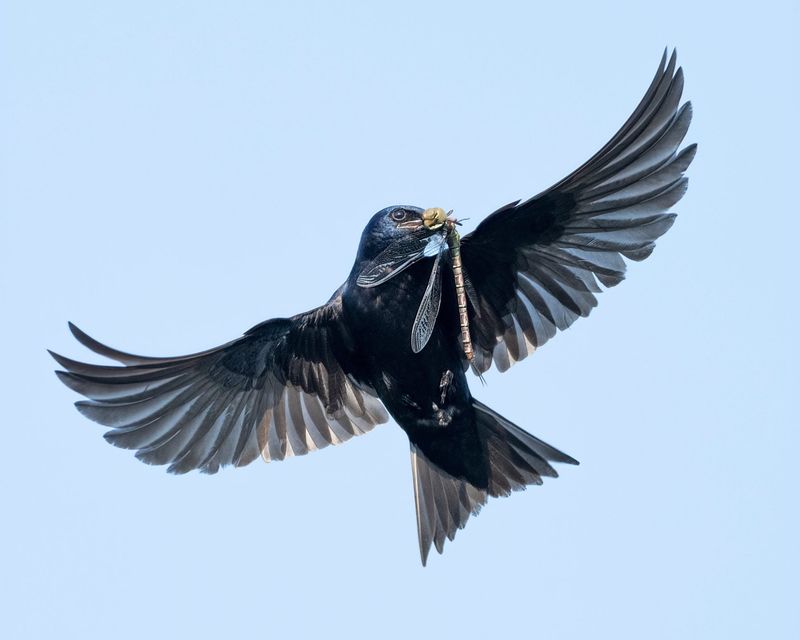
Few birds cover as much sky as a foraging Purple Martin. Cornell Lab of Ornithology describes them as catching flying insects entirely in the air, generally working higher altitudes than other swallows, though they may drop lower near nesting sites during afternoon and evening hours.
The menu is impressively wide. Documented prey includes beetles, flies, dragonflies, leafhoppers, grasshoppers, crickets, butterflies, moths, wasps, bees, caddisflies, spiders, cicadas, termites, and mayflies. Mosquitoes do not appear as a principal or reliable food source in the scientific record. Audubon’s field guide lists this broad prey range and makes no claim that mosquitoes form a meaningful share of the diet.
The altitude gap explains a lot. When a martin is working 50 or 100 feet up, chasing a dragonfly or a winged ant, the mosquitoes hovering around your ankles or lurking in dense shrubbery are simply not in the same hunting zone. Mosquitoes around residential areas tend to fly close to the ground, hide in vegetation, and peak in activity at times when martins have already settled for the evening.
Appreciating what martins actually eat reframes the whole project. These birds are genuinely impressive insect predators across a wide range of prey, and supporting them adds real ecological value to a Texas yard. Dragonflies, which martins do pursue, are themselves mosquito predators, so there may be indirect benefits that ripple through the local insect community. That is a far cry from a guarantee, but it is a good reason to welcome martins on their own terms rather than measuring their worth by a mosquito count that the evidence does not support.
Texas Offers Martins a Housing Opportunity
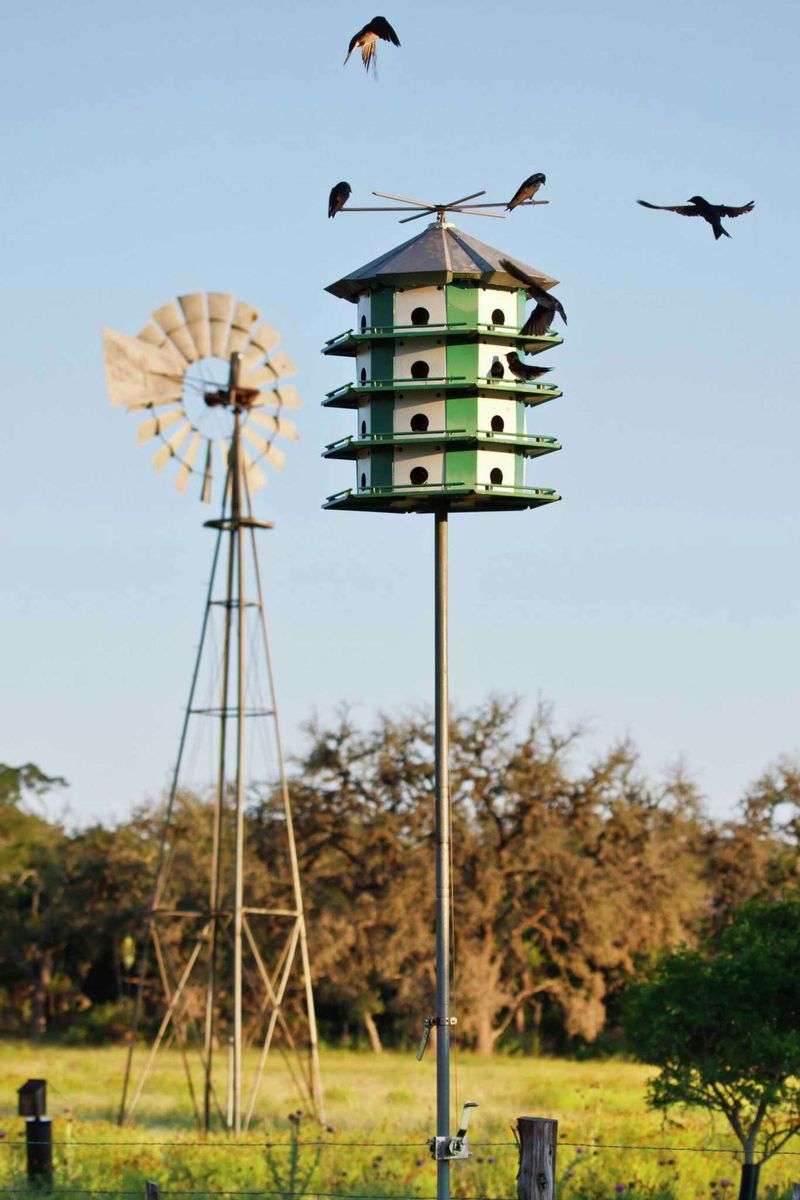
Texas is genuinely good martin country. The Texas Breeding Bird Atlas reports that Purple Martins breed across most of the state, with the notable exceptions of the Trans-Pecos region and parts of the western Panhandle and South Plains. Across the rest of Texas, they nest almost exclusively in human-provided housing placed in conspicuously open locations, which means a well-placed martin house is one of the most direct things a homeowner can do to invite these birds.
That opportunity, though real, comes with honest uncertainty. Cornell Lab of Ornithology explains that Purple Martins in eastern North America have become almost entirely dependent on artificial housing, making human stewardship essential to their populations. Texas sits squarely in that eastern tradition, but the state is not uniform. South Texas, the Gulf Coast, East Texas, North Texas, and the Panhandle differ in arrival dates, heat exposure, storm patterns, and local martin populations, all of which shape whether a new house will attract birds.
Established colonies are easier to keep than to build from scratch. The Purple Martin Conservation Association is straightforward on this point: site fidelity is strong, and adult birds tend to return to places where they have previously nested. A brand-new house in a neighborhood with no nearby colony may sit empty for a full season or longer while younger birds scout for available sites. Region, open space, local martin populations, and prior site use all factor into whether housing will succeed, so patience and realistic expectations are part of the plan from the start.
Build an Open, Cool, Predator-Protected House
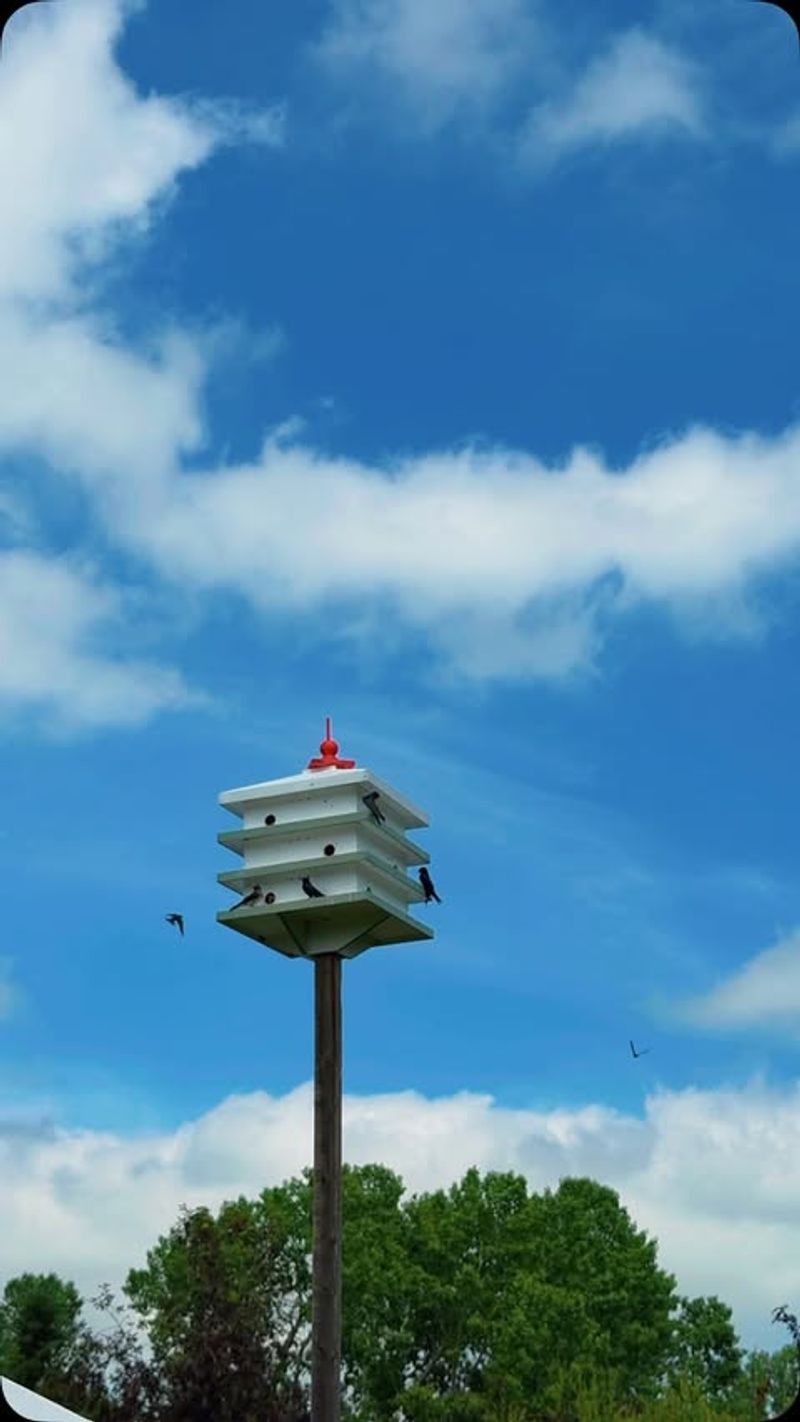
Location comes before everything else. The Purple Martin Conservation Association recommends placing housing in the largest open area available, with clear flight paths in multiple directions. The target distance is roughly 30 to 120 feet from your home and at least 40 to 60 feet from trees. Trees close to the housing obstruct the open-air approach martins prefer and can give climbing predators a route to the structure.
More openness is almost always better.
Height and cavity count matter too. PMCA’s FAQ recommends mounting housing at approximately 10 to 20 feet, using a system that can be raised and lowered easily so you can reach the compartments for nest checks. Starting with at least four cavities is workable, but six or more is generally more attractive because martins are colonial nesters that tend to settle where other martins are already present or where the setup signals room for a group.
Texas heat demands careful design choices. Texas Parks and Wildlife specifically recommends light-colored housing, preferably white or a light pastel, to reflect the intense summer sun. Good ventilation, drainage holes, insulation between floors, and storm-resistant construction protect nestlings from the heat, wind, rain, and hail that Texas routinely delivers. Transparent or dark materials can trap heat and create dangerous conditions for eggs and chicks.
Predator protection is non-negotiable. PMCA’s housing standards call for pole guards or baffles against climbing predators such as snakes and raccoons, plus external owl guards or equivalent barriers against aerial hunters. Deeper compartments keep nestlings farther from the entrance and out of reach of a predator’s grasp. Never improvise modifications that block entrances, reduce ventilation, trap moisture, or make nest checks unsafe, no matter how well-intentioned the idea.
Active Stewardship Gives a Colony Its Best Chance
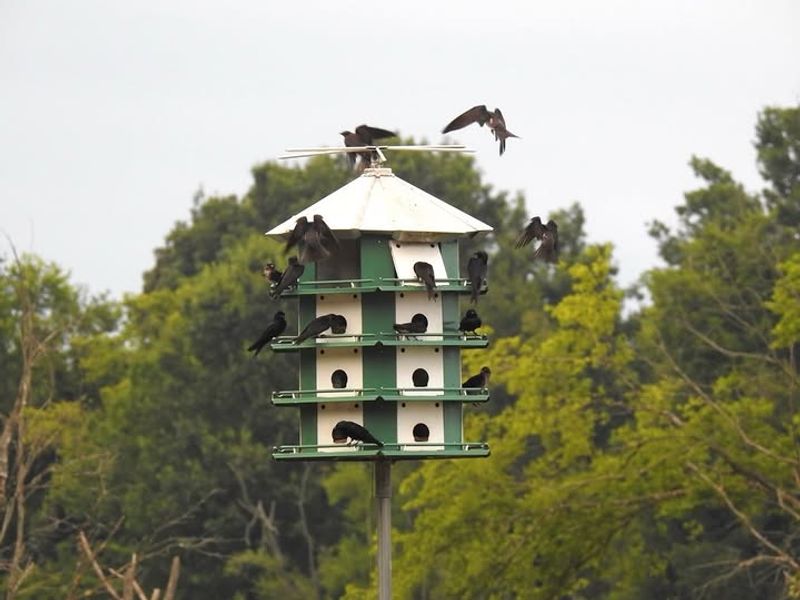
Putting up a martin house is only the beginning. Timing access to match local arrivals is one of the most important and most commonly mishandled steps. The Texas Breeding Bird Atlas records arrival ranging from mid-January to early February in South Texas to as late as late March in northern Panhandle areas, with nesting activity documented as late as August 5 in some parts of the state. Texas is simply too large and too climatically varied for a single statewide open-up date to apply.
Checking local martin arrival reports, regional birding groups, or Texas Parks and Wildlife migration timing resources will give you a far more accurate window for your specific area. Keep entrances closed until birds are actually showing up locally, because open housing left unattended invites European Starlings and House Sparrows to claim compartments before any martin ever lands. Both species are aggressive competitors that will prevent martins from settling, so checking housing regularly and evicting invasive nesters is an ongoing task throughout the season.
A new site may take a full season to attract its first birds. PMCA’s Scout-Arrival Study clarifies that early-arriving adults are generally older birds returning to places where they previously nested, not advance agents coordinating a future flock. Younger birds, often the ones that establish new colonies, tend to arrive later in the season, which is why patience through multiple seasons may be necessary at a brand-new site.
Season-long stewardship includes weekly or bi-weekly nest checks, predator guard inspections after storms, drainage and ventilation checks during heat waves, and keeping housing accessible until fledglings have fully departed. PMCA advises leaving housing open until late August or into September in many areas because young birds may still be exploring sites. Closing too early can cut off late fledglings. Providing alternative cavity housing nearby for native competitors such as Tree Swallows or Eastern Bluebirds is a better approach than simply evicting them.
Use Water Control to Reduce Mosquitoes
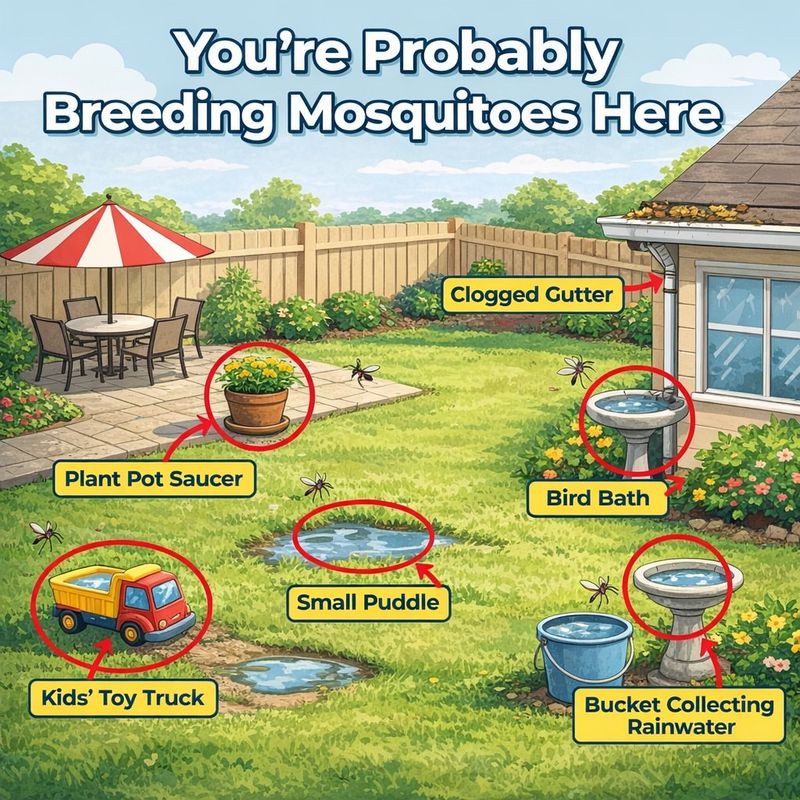
Mosquito management starts on the ground, not in the sky. CDC guidance on mosquito control at home is direct: empty and scrub water-holding containers at least once a week, because mosquitoes can complete their larval development in surprisingly small amounts of standing water. Buckets, flowerpot saucers, tarps, toys, clogged gutters, and even bottle caps left in the yard can all become breeding sites during a Texas summer.
Rain barrels and stored water should be tightly covered or screened. Gutters need to be cleared so water drains freely rather than pooling. If you keep a birdbath, which martins and many other birds genuinely appreciate, change and scrub the water several times a week. A neglected birdbath can produce mosquitoes just as readily as any other container, so the same weekly discipline applies.
Texas DSHS mosquito-borne disease guidance reinforces that even a very small amount of standing water is enough for mosquitoes to breed, and that weekly removal is the most effective community-level prevention. For water that genuinely cannot be drained or covered, a larvicide registered with the EPA and used strictly according to its label directions is an appropriate next step. Never apply pesticides around martin housing or use chemicals to try to increase insect availability near nesting birds; any pesticide use near wildlife should follow product labels, EPA registration, Texas DSHS guidance, and local authority recommendations.
Intact window and door screens keep mosquitoes out of living spaces, and EPA-registered repellents applied according to label directions protect skin when you are outdoors. These measures work regardless of whether a martin colony is overhead, which is exactly why they belong in every Texas homeowner’s seasonal routine rather than being treated as a backup plan.
Welcome the Birds Without Expecting a Pest-Free Yard
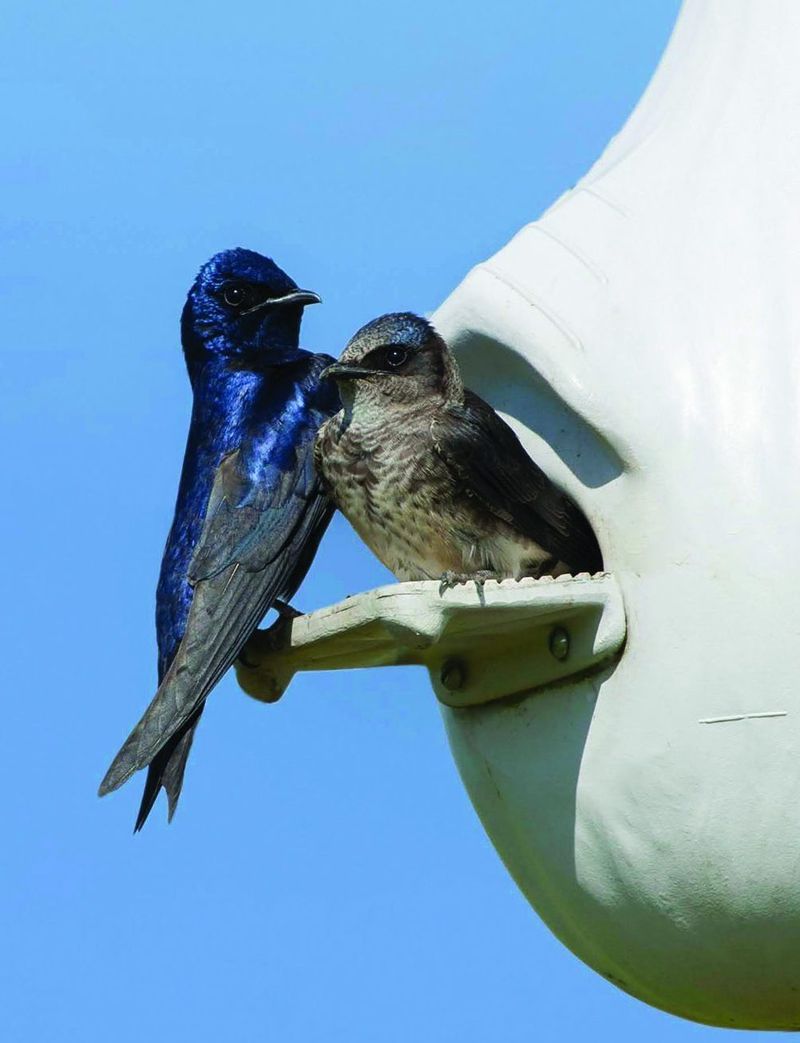
A well-placed, actively managed martin house can become one of the most rewarding wildlife features in a Texas yard. The birds are vocal, social, and visually striking, and watching a colony establish itself over a season or two is a genuine payoff for the effort. PMCA frames martin landlording as a conservation partnership, and that framing fits: you are providing habitat for a species that depends almost entirely on human-provided housing across eastern North America.
Measuring success by mosquito reduction, though, sets up a disappointment that the birds cannot avoid. Occupancy, colony size, arrival timing, and any effect on local insect populations are all genuinely uncertain, varying by region, year, habitat, and factors outside any homeowner’s control. Audubon’s profile of the species celebrates Purple Martins as aerial insect predators without making promises about residential pest control, and that honest framing is the right one to carry into your own yard.
The two goals, attracting martins and reducing mosquito bites, are worth pursuing in parallel rather than treating one as a substitute for the other. Standing-water removal, screens, and EPA-registered repellents are the dependable mosquito-management tools; the martin house is an invitation to some of summer’s most entertaining neighbors. When a colony finally settles in and fills your evenings with their rolling, liquid calls, you will probably find that is more than enough reason to have put the house up in the first place.