
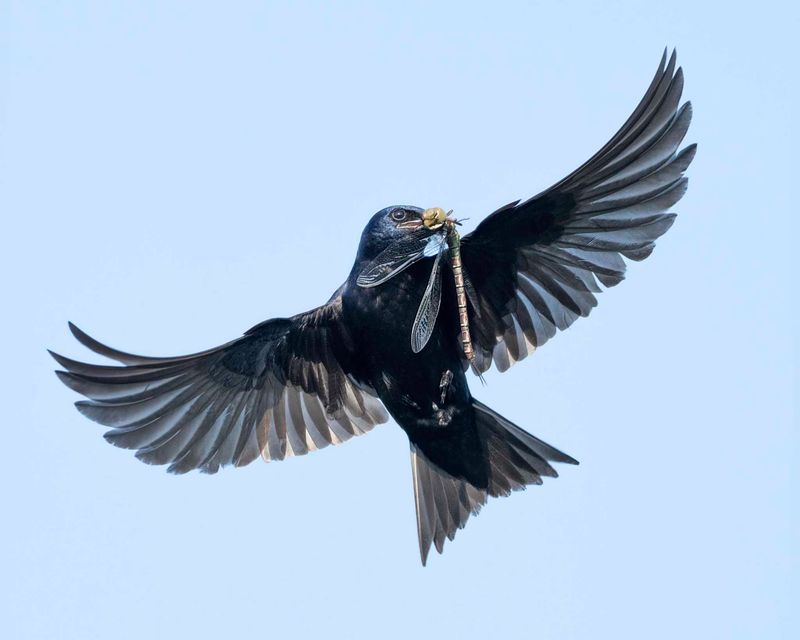
Purple Martins are some of the most exciting aerial birds you can attract to a Central Texas yard, and plenty of people put up a martin house hoping those swooping birds will also clear the mosquitoes off the back patio. That idea sounds appealing, but the science behind it tells a different story. This article explains what Purple Martins actually eat, what it really takes to bring them to your yard, and which mosquito-control steps actually work.
Purple Martins belong in the yard—but not in the mosquito-control toolbox
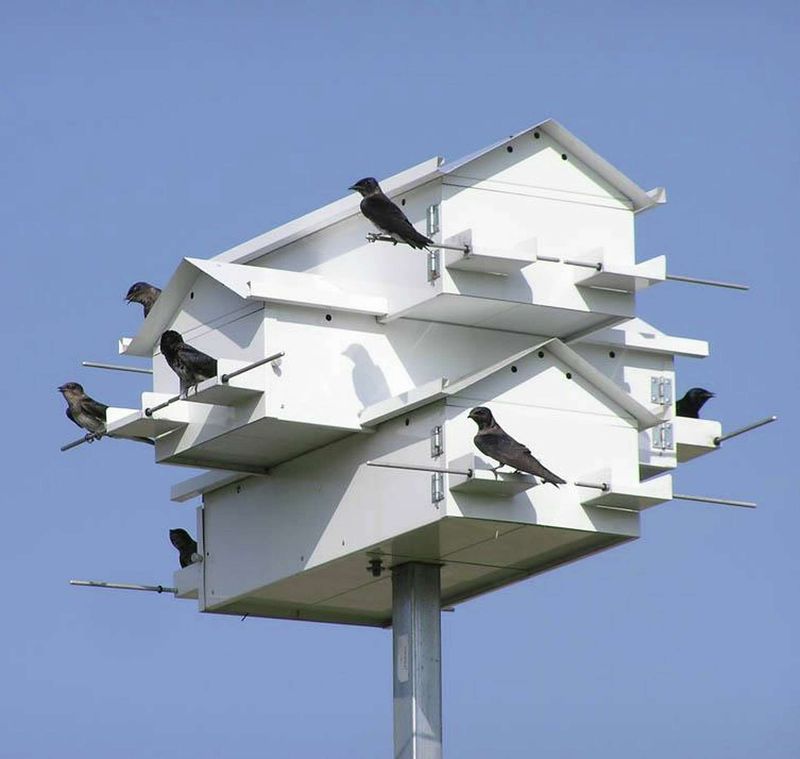
Purple Martins are genuine Texas success stories. Texas Parks and Wildlife recognizes them among the migratory birds that breed and nest in Texas during spring, summer, and early fall, and a well-placed martin house can give a colony a real home base for the season. Watching a group of martins wheel and chatter above the yard is one of the livelier wildlife experiences a Central Texas homeowner can have.
The catch is the mosquito promise attached to them. A martin house can provide nesting habitat and bring aerial insect-eating birds closer to home, but no reliable evidence shows that installing one clears a patio or lowers mosquito pressure in a measurable way. Framing martin houses as mosquito control sets up an expectation the birds simply cannot meet, and it can leave homeowners frustrated when the biting continues through August.
The better approach treats these two goals separately. Attract Purple Martins because they are fascinating, native, and worth supporting as a wildlife-stewardship project. Then handle mosquitoes with methods built specifically for mosquitoes. Penn State Extension’s guidance on pollinator-friendly mosquito control makes the same distinction: broad insect-eating birds contribute to a yard ecosystem, but targeted mosquito management requires targeted tools.
Both goals are worth pursuing in Central Texas, and the rest of this article covers how to do each one well.
What Purple Martins actually eat
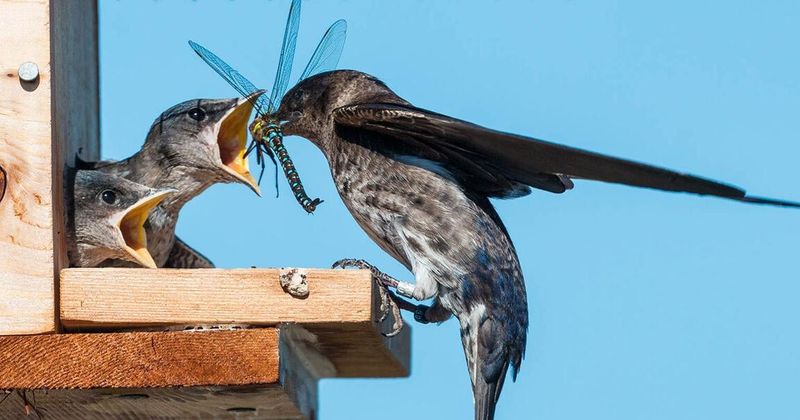
Purple Martins are aerial insectivores, meaning they catch flying insects on the wing throughout the day. Audubon’s field guide documents their diet as a wide mix of flying insects: beetles, dragonflies, wasps, flying ants, moths, and various flies. That breadth makes them genuinely useful to a yard ecosystem. It also means mosquitoes are just one small category in a very long list, and not a favored one.
The data on mosquitoes specifically is striking. A seven-year diet study cited by the University of Georgia Cooperative Extension found no mosquitoes at all in sampled martin stomach contents. Earlier research found only trace amounts. That pattern matters because it is not a single flawed study; multiple independent reviews arrive at the same conclusion.
The famous claim that one Purple Martin eats 2,000 mosquitoes per day should be dropped from any honest conversation about these birds. The Smithsonian’s National Zoo calls that figure false, and Audubon states it has no basis in ornithological research. The number circulated for decades as a marketing hook for martin houses, but it was never grounded in field data.
University of Missouri Extension draws a useful line between two different things: a bird that occasionally eats a mosquito and a bird that demonstrably reduces mosquito populations around a home. Purple Martins may land on the right side of the first description on some days. They do not clear the second bar. Eating insects broadly is not the same as suppressing a specific mosquito population, and no study reviewed for this article found that martin presence translated into fewer bites on a patio or a measurable drop in local mosquito numbers.
Why a martin house will not clear the air above your patio
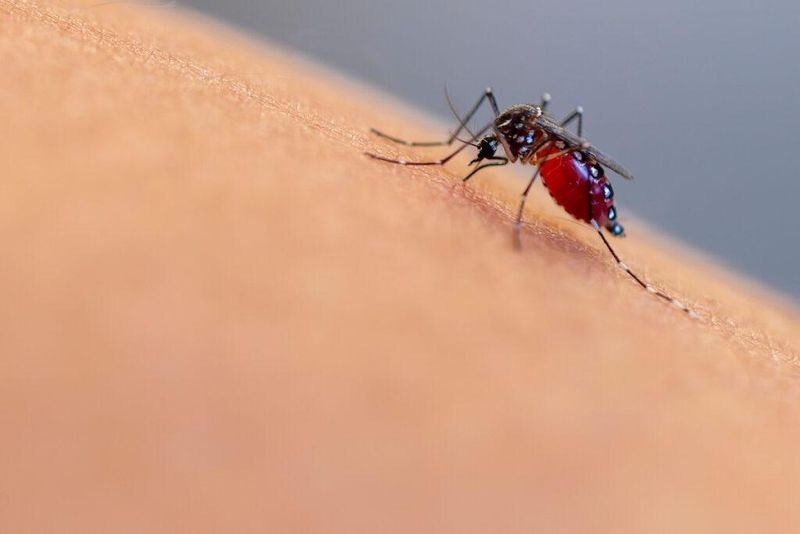
Even accepting that martins eat some mosquitoes on some days, the geography of where martins fly and where mosquitoes bite people are two different places. The Smithsonian’s National Zoo notes that Purple Martins forage in open air, typically during daylight hours, and often at elevations well above the vegetation line. They are hunting beetles and dragonflies in the sky above a field or neighborhood, not skimming the shaded corners of a patio at dusk.
Nuisance mosquitoes in Central Texas tend to concentrate in a completely different zone. They rest in vegetation, breed in standing water, and become most active near ground level around dawn and dusk, which is when people are most likely to be sitting outside. Audubon’s profile of the Purple Martin reinforces that the bird’s foraging range spans a broad landscape, not a single backyard seating area. A martin nesting in your yard may spend its hunting hours over a nearby field, a pond, or a stretch of open sky a quarter mile away.
That behavioral contrast is a reasonable explanation for why the mosquito-reduction claim falls apart in practice. It is worth being clear that this is an inference from documented foraging behavior, not a controlled Central Texas patio experiment. No study reviewed here tracked martin movements over a specific yard and measured whether mosquito biting dropped as a result. Penn State Extension’s mosquito-control guidance makes the same point: wildlife that eat insects broadly do not constitute a mosquito-management strategy.
A martin house is a bird habitat project, and the mosquito problem needs its own plan.
Is your Central Texas yard open enough for martins?
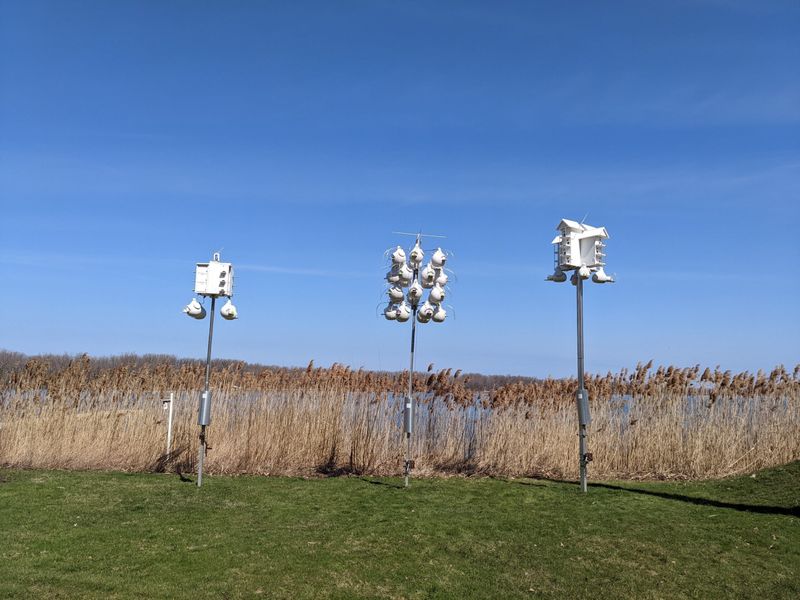
Before buying any housing, spend a few minutes looking at your property honestly. Purple Martins need clear, unobstructed flight paths, and they consistently favor open settings over wooded or cluttered yards. The Purple Martin Conservation Association recommends placing housing roughly 30 to 120 feet from human structures and at least 40 to 60 feet from trees wherever possible. Southern colonies may tolerate slightly closer tree lines, but the general rule is that more openness is better.
A suburban Central Texas lot surrounded by mature live oaks or cedar elms may simply not offer the flight space martins prefer, even if birds are common in the region. That is not a failure of effort; it is a site-suitability issue. A nearby field, pasture, lake edge, or athletic complex may be a far better fit than a shaded backyard, and some homeowners find that a martin house at the edge of a property, facing the most open exposure, works better than one centered in a landscaped yard.
Proximity to an existing colony also matters. PMCA’s FAQ explains that Purple Martins are colonial nesters and that scout birds searching for new sites tend to follow established colony locations. A yard with no nearby colony may wait several seasons before attracting a scout, regardless of how good the housing is. Texas Parks and Wildlife’s habitat guidance confirms that site conditions, not just housing quality, determine whether a martin colony takes hold.
Honest site assessment before any purchase saves time, money, and disappointment.
The right house is a managed structure, not a decorative birdhouse
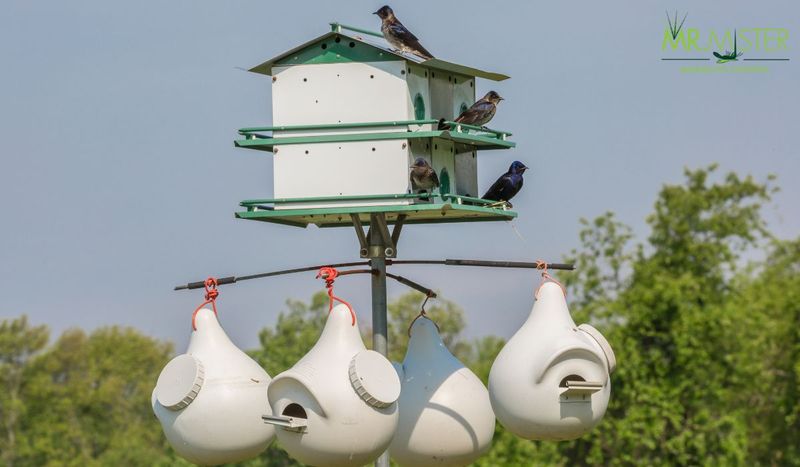
Standard decorative birdhouses will not attract Purple Martins. These birds need multi-cavity housing, and PMCA’s housing guidance recommends starting with at least four cavities, with six to twelve being a practical target for establishing a colony. A single small box with one opening is the wrong tool entirely, regardless of where it is placed.
Height matters too. Housing is generally installed at 12 to 18 feet, and the pole or mounting system must allow the entire structure to be safely raised and lowered for inspection, cleaning, and nest management. A house bolted permanently to a fixed post cannot be properly maintained, and proper maintenance is not optional. Neglected housing quickly becomes a liability rather than an asset.
Texas heat adds specific requirements that many off-the-shelf products ignore. PMCA warns that poorly ventilated or dark-colored housing can reach temperatures that kill nestlings during triple-digit Central Texas summers. The exterior should be white or another shade-reflective color, and the design should include functional ventilation and drainage. PMCA’s attracting guidance reinforces that housing quality directly affects whether birds survive the nesting season, not just whether they arrive.
A martin house is a long-term equipment investment, and choosing a well-built, climate-appropriate design from the start prevents the frustration of replacing an inadequate structure after the first hot summer.
Starling-resistant entrance designs are also worth selecting at the outset. The crescent-shaped or SREH entrance holes recommended by PMCA are sized to allow martins through while excluding European Starlings, which are one of the most aggressive cavity competitors the birds face. Building that feature into the original housing choice is far easier than retrofitting it later.
Spring timing and active management determine whether the colony lasts
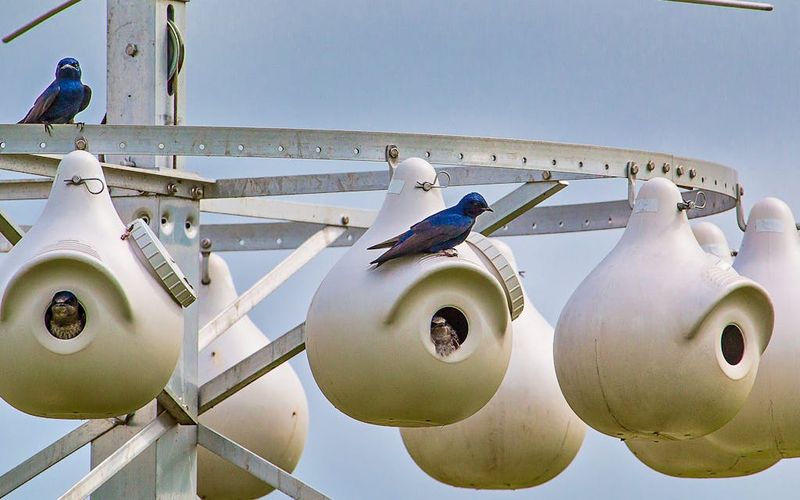
Timing the setup correctly is one of the most overlooked parts of attracting Purple Martins. TPWD’s migration timing guide places Purple Martin spring movement in Central Texas roughly from early March through late April, though exact timing shifts from year to year and varies across different parts of the state. Having the house up and ready before the first scouts arrive is critical; birds that find a site already occupied by competitors or not yet prepared will move on.
Occupancy in the first season is not guaranteed, and waiting it out patiently is part of the process. PMCA’s guide to attracting and managing Purple Martins describes how scout birds, usually older males, arrive first and evaluate potential sites. If conditions look right, they may recruit others. If not, they leave.
Some sites attract a colony in year one; others take two or three seasons. Treating the first year as a trial run rather than a guaranteed outcome keeps expectations realistic.
Active management through the season is not optional. House Sparrows and European Starlings are the two main cavity competitors, and both can drive off or harm martins. TPWD’s Purple Martin management publication recommends checking cavities regularly and removing House Sparrow and Starling nests promptly, as both species are exempt from federal and state nest protections. PMCA’s housing section covers starling-resistant entrance designs that reduce how often starlings can access cavities in the first place.
One firm rule: do not remove nests without knowing what species built them. U.S. Fish and Wildlife Service guidance on bird nests makes clear that most native birds, their nests, eggs, and young are protected under federal law. If there is any doubt about whether a nest belongs to a protected species, leave it alone and contact the appropriate wildlife authority before acting.
Mosquito reduction starts with water, not wildlife
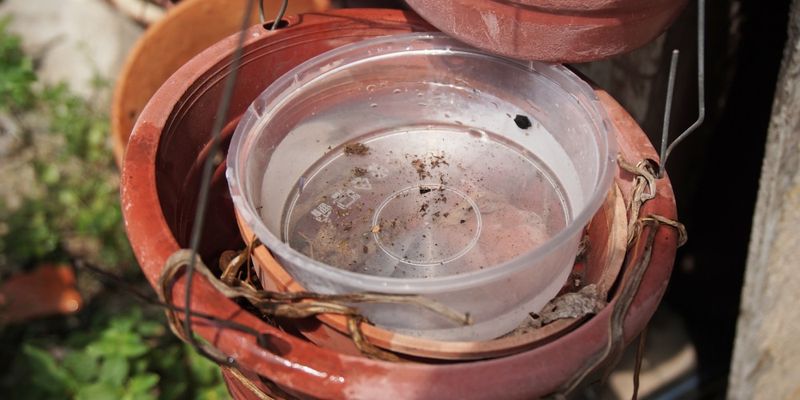
Mosquitoes breed in standing water, and that is where effective control begins. CDC’s mosquito control at home guidance recommends emptying and scrubbing or covering any container that holds water at least once a week. Flower pot saucers, buckets, kids’ toys, tarps with pooled water, and clogged gutters are all common breeding sites in Central Texas yards that can be eliminated with minimal effort.
Pools need consistent maintenance, and rain barrels should be fitted with tight-sealing lids or fine mesh covers that prevent mosquitoes from accessing the water surface. Even a small amount of standing water, enough to cover a bottle cap, can support a mosquito brood in the Texas heat. Weekly checks around the full perimeter of the yard catch breeding sites that are easy to miss.
Birdbaths and ornamental water features deserve specific attention. TPWD’s habitat resources for Bird City Texas advises keeping birdbaths clean, and CDC recommends emptying and scrubbing them weekly. A birdbath that sits undisturbed for ten days in July becomes a mosquito nursery, so either commit to regular cleaning or skip it.
For water that genuinely cannot be drained, covered, or removed, such as an ornamental pond or a large rain collection system, CDC’s larvicide guidance explains that labeled Bti (Bacillus thuringiensis israelensis) products are a practical option. Bti is a naturally occurring bacterium that kills mosquito larvae without harming birds, fish, or pollinators when used according to label directions. Apply it only to water that has no other removal option, and follow the label precisely.
One approach to skip entirely: residential mosquito-misting systems. CDC’s guidance on misting systems identifies concerns about unnecessary insecticide exposure, harm to beneficial insects including pollinators, environmental risks, and a lack of solid effectiveness data. Source reduction and targeted larvicides are the better-supported path.
Attract the martins for what they are—and protect yourself from mosquitoes anyway
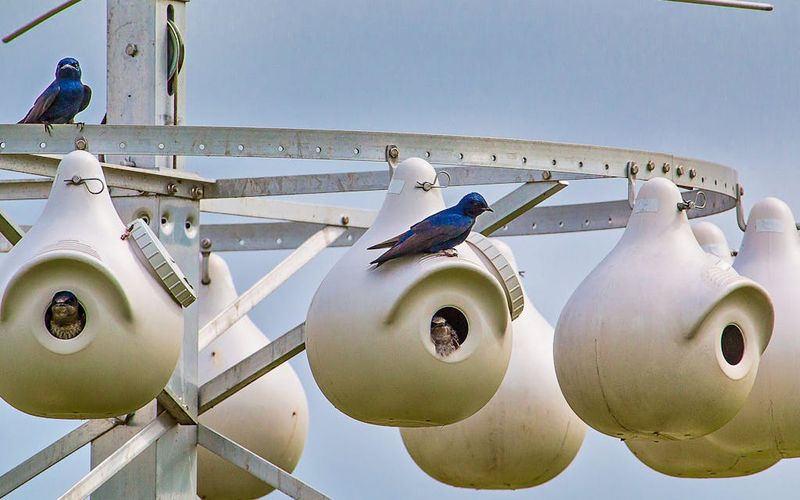
The decision to install a martin house comes down to one honest question: do you want Purple Martins? If your yard has enough open space, you are willing to manage the housing actively through the season, and the idea of a nesting colony appeals to you as a wildlife project, then a properly built and maintained martin house is worth the investment. PMCA’s attracting guidance is the best starting point for getting the details right.
Measure the success of that project by whether martins nest and return, not by whether the patio feels mosquito-free in July. Those are separate outcomes, and linking them sets up a disappointment that has nothing to do with the birds. CDC’s overview of mosquitoes in the United States notes that species like Aedes aegypti and Culex mosquitoes are tied to specific diseases including West Nile virus and dengue. A lively yard ecosystem does not replace the bite-prevention habits, weekly source reduction, and local public-health guidance that actually lower disease exposure risk.
CDC recommends wearing EPA-registered repellent, using protective clothing during peak mosquito hours, and eliminating standing water as the core personal protection strategy. Do those things regardless of what is nesting in the yard. The martins are worth having for their own sake, and that turns out to be reason enough.