
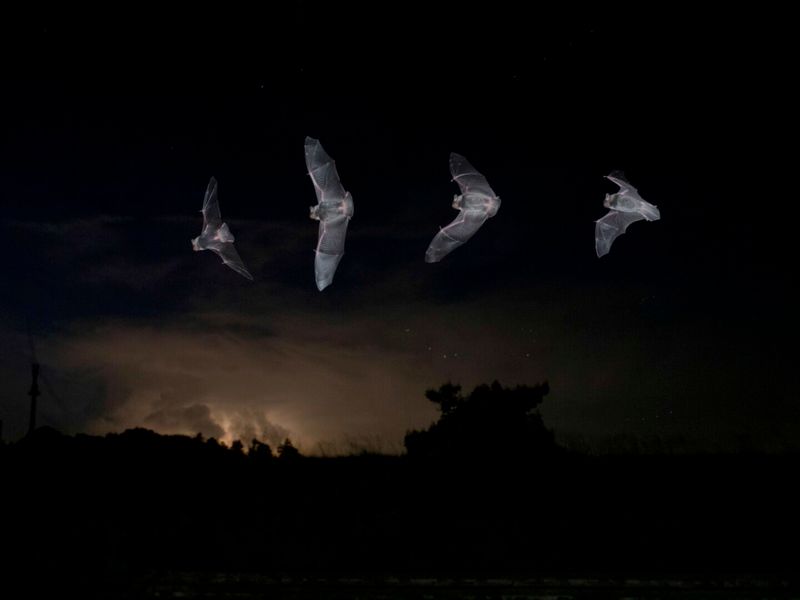
Every night across California, bats slip out of roosts and begin hunting insects in the dark. Many homeowners never see them, and some wonder whether their outdoor lights are quietly pushing these animals away.
The short answer is that unnecessary lighting can make some bat species use a yard less, but the picture is more complicated than a single porch bulb ruining everything. Understanding what the research actually shows can help you make smarter choices about your outdoor lighting without giving up the security or convenience you need.
California evidence shows a lighting concern, not widespread bat loss
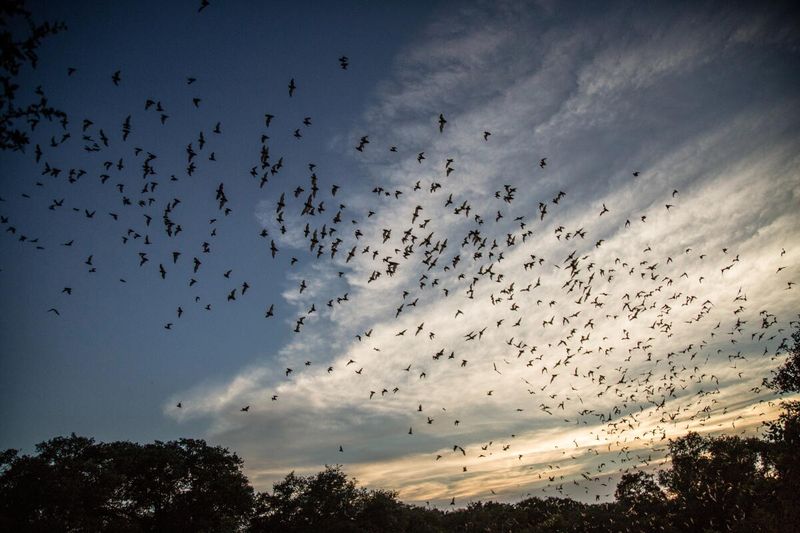
California is home to roughly 25 to 26 recognized bat species, and UC Integrated Pest Management notes that nearly all of them are insectivorous, making them genuinely useful neighbors in any yard that supports night-flying insects. That ecological value is real.
What is harder to pin down is whether your porch light is the reason bats are not showing up after dark.
The strongest California-specific research on this question comes from San Diego County, where a USGS-published study found that artificial lights were associated with lower bat species richness. That same study found a significant association between artificial light presence and the absence of Townsend’s big-eared bats specifically.
Those are meaningful findings, but they describe an association measured across a county landscape, not a controlled experiment proving that one homeowner’s fixture caused bats to leave a specific yard.
The concern is real and worth acting on, but the framing matters. No published source establishes that most California yards have lost bats, or that porch lighting is the primary statewide driver of bat absence.
Bat responses vary by species, light intensity, spectrum, surrounding habitat, and how much other light already exists in the area.
A single property’s fixtures are also just one piece of the light environment. Streetlights, neighboring homes, commercial signage, illuminated roads, and the broader skyglow over a city or suburb can dwarf what any one porch contributes.
Research on urban bat ecology confirms that landscape-scale lighting patterns often matter more than any individual fixture. Reducing your own light still helps locally, but it operates within that larger context.
Why a light can attract some bats while excluding others
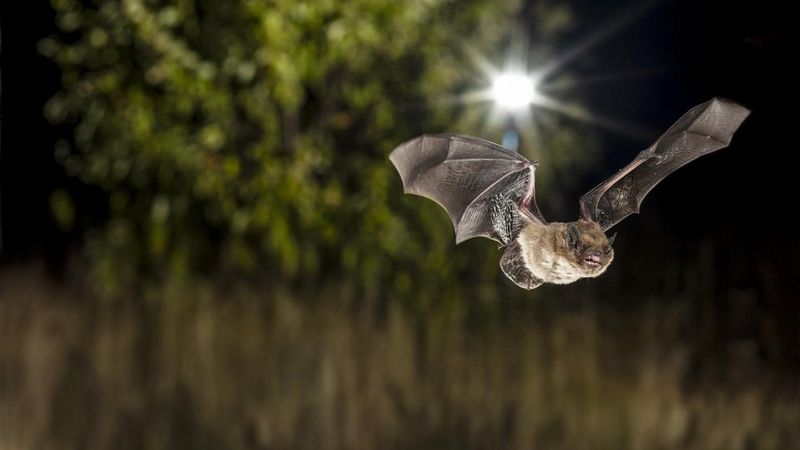
Bat behavior around artificial light is not a simple on-off switch. Some species actively hunt near lights because insects congregate there, creating a reliable, concentrated food source.
Other species, particularly many Myotis bats and the Townsend’s big-eared bat documented in the San Diego County study, tend to avoid illuminated areas entirely. A porch light that appears to be drawing bats in may actually be pulling in a handful of light-tolerant foragers while making the surrounding habitat less accessible for the more light-sensitive species that were there before.
Urban bat ecology studies show that lighting affects bats through several distinct pathways. Avoidance is the most obvious: some bats simply will not cross illuminated zones, which can cut off commuting routes between roosts and foraging areas.
Delayed emergence is another effect, with some bats waiting longer after sunset before leaving the roost when light levels remain elevated, shortening their foraging window. Increased predator exposure matters too, since owls and other hunters can exploit the visibility that lights create.
A broad review of artificial light at night research found that insect communities themselves shift under sustained lighting, with some species drawn in and others suppressed over time. That changes what bats find available to eat, even in areas where bats are still present.
The effect is not simply that lights remove food; lights redistribute and alter the insect community, sometimes concentrating prey locally while depleting it across a wider area.
Species, intensity, spectrum, habitat type, and how long a light runs each night all shape the outcome. Species-level research on bat responses to light makes clear that a single rule cannot cover every situation.
What looks like bat-friendly activity near a fixture may mask a net loss of diversity in the surrounding darkness.
Bats control many night-flying insects, but not reliably mosquitoes
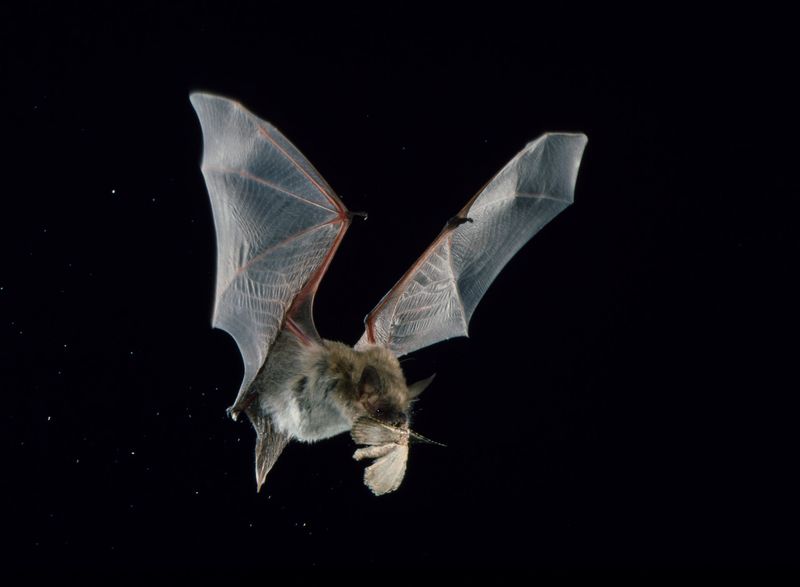
Bats are genuine insect predators, and California Department of Fish and Wildlife recognizes them as providers of natural pest control. Moths, beetles, midges, crane flies, and other night-flying insects make up the bulk of most California bats’ diets.
That broad predation across a range of agricultural and garden pests is where bats deliver real ecological value.
Mosquitoes are a different story. USGS dietary research confirms that while bats can and do eat mosquitoes, those insects are not necessarily a major or preferred part of the diet for most species.
The popular claim that a single bat eats hundreds or even thousands of mosquitoes per hour is based on simplified calculations and older educational materials, not consistent field measurements of natural foraging.
California Department of Public Health guidance specifically states that bats do not preferentially feed on mosquitoes and that no evidence supports the idea that encouraging bats will substantially reduce mosquito populations. UC IPM echoes this, noting that bats should not be treated as a dependable mosquito-control service.
That does not diminish what bats do. Moth larvae damage ornamental plants and crops, and beetles and flies create their own yard headaches.
A bat colony working a suburban lot is consuming real quantities of those pests over the course of a season. The takeaway is to value bats for the broad insect control they actually provide rather than overselling them as a solution to a specific mosquito problem that they cannot reliably solve on their own.
Start by switching off lights you do not need overnight
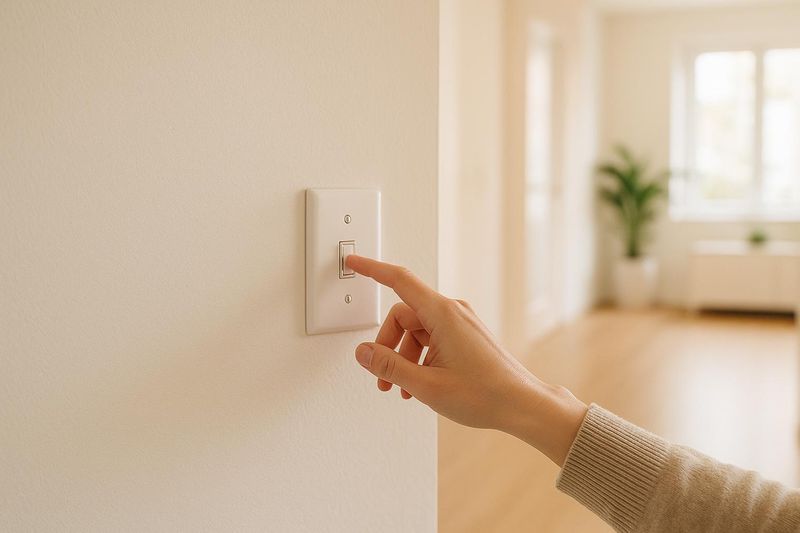
Before buying new fixtures or changing bulb types, the most effective first step is simply identifying which lights are actually doing a job after midnight and which ones are running out of habit. Walk your property after dark and note every light that is on: entry fixtures, pathway markers, decorative string lights, uplighting on trees, security floods, and feature lighting around a water feature or garden bed.
Anything that is not actively serving a safety or security purpose right now is a candidate to turn off.
Dark Sky lighting principles recommend using the lowest brightness that meets the actual task, keeping light on only as long as it is needed, and aiming it precisely at the area that requires illumination. Timers, vacancy controls, and motion sensors are practical tools for meeting those goals without sacrificing convenience.
A motion-activated entry light that comes on when someone approaches and shuts off after two minutes does the security job while leaving the yard dark the rest of the night.
Reducing duration and intensity matters more than swapping one bulb category for another. Debates about LED versus older bulb types can distract from the simpler intervention: if a light does not need to run from dusk to dawn, shortening its operating window is a stronger improvement than changing what kind of bulb is in the socket.
U.S. Fish and Wildlife Service survey guidance for bats consistently prioritizes minimizing light duration and intensity around habitat areas over any particular technology choice.
California Department of Fish and Wildlife encourages homeowners to turn off unnecessary outdoor lighting as one practical step toward supporting bat-friendly conditions. That recommendation costs nothing and takes effect the same night you make the change.
Keep necessary light away from habitat and flight routes
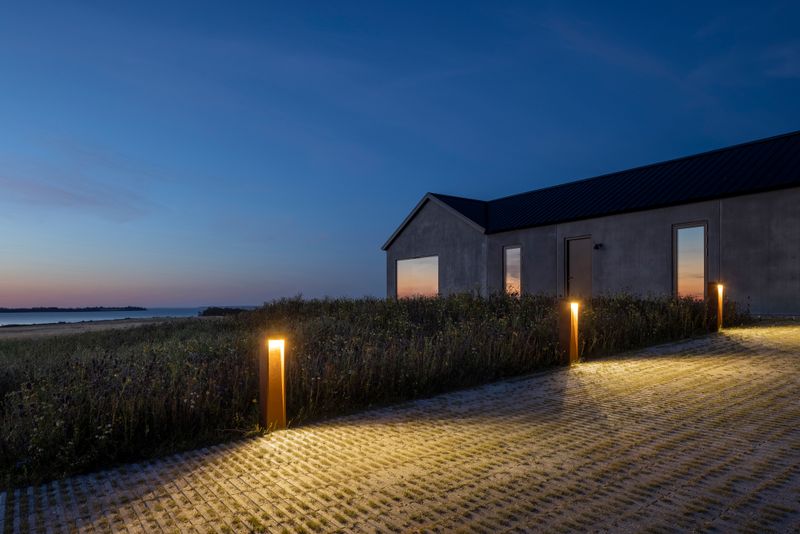
Some outdoor lighting is genuinely necessary, and the goal is not to eliminate it but to stop it from spilling into places where bats travel, forage, and roost. Fixture aim and shielding are the most direct tools for that.
A fully shielded, downward-aimed light puts illumination where it is useful, on a path, a step, or a door, without broadcasting light sideways into trees, shrubs, or the airspace above the yard.
U.S. Fish and Wildlife Service guidance on nighttime lighting emphasizes reducing light trespass and skyglow as key priorities for protecting wildlife that depends on darkness.
The same principles apply to bats: light that spills horizontally or upward into the canopy or across a pond edge is the kind that disrupts commuting routes and discourages light-averse species from using those areas.
Specific spots worth protecting include the edges of any trees or shrubs in the yard, pond or stream margins if present, bat boxes, eaves where bats might roost, and any open corridor between structures that bats might use as a travel lane after dark. Keeping those areas unlit preserves darker routes through the yard even when entry or security lights are on elsewhere.
Light color is sometimes raised as a solution, and research on spectral effects on bats does suggest that warmer light with less short-wavelength content may be preferable for some species in some circumstances. That finding is worth considering when choosing a replacement fixture.
It does not make bright, all-night warm lighting harmless, though. Dark Sky guidance puts reducing brightness, spill, and duration ahead of color temperature as the primary priorities, and that order holds for bat-friendly lighting as well.
A darker porch cannot overcome every condition in a yard
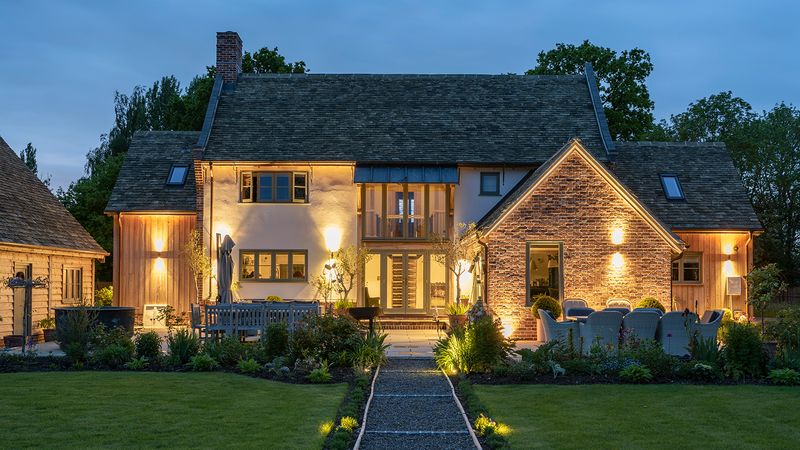
Turning off decorative lights and shielding essential fixtures can genuinely improve local conditions for light-averse bats. Setting realistic expectations about what that change can accomplish is just as useful as making the change itself.
Bat presence in any yard depends on far more than the lighting on that property.
Roosting sites are a foundational requirement. Without a suitable roost within reasonable commuting distance, bats have no reason to appear in a yard regardless of how dark it is.
Vegetation structure, water availability, local prey populations, pesticide use, weather patterns, predator pressure, and nearby development all factor into whether bats use a given area. The San Diego County bat study identified artificial light as one of several localized threats, not the only variable shaping bat community composition.
Lighting beyond the property line is also largely outside a homeowner’s control. Streetlights, a neighbor’s security floods, commercial signs, and the cumulative skyglow over a densely developed area can dominate the light environment in a yard even after every personal fixture is switched off or shielded.
A property-level change helps at the property level; it cannot reverse neighborhood-scale or regional lighting on its own.
For mosquito management specifically, the most dependable action is removing the standing water where mosquitoes breed. UC IPM mosquito guidance recommends draining or treating any container that holds water for more than a few days and changing the water in birdbaths and pet dishes at least once a week.
Those steps directly reduce mosquito populations at the source, making them more reliable than hoping that bats will handle the problem. UC IPM’s bat resources support treating bats as a welcome part of the yard ecosystem rather than a substitute for practical pest management.
Bat houses provide possible roosting habitat, not guaranteed pest control
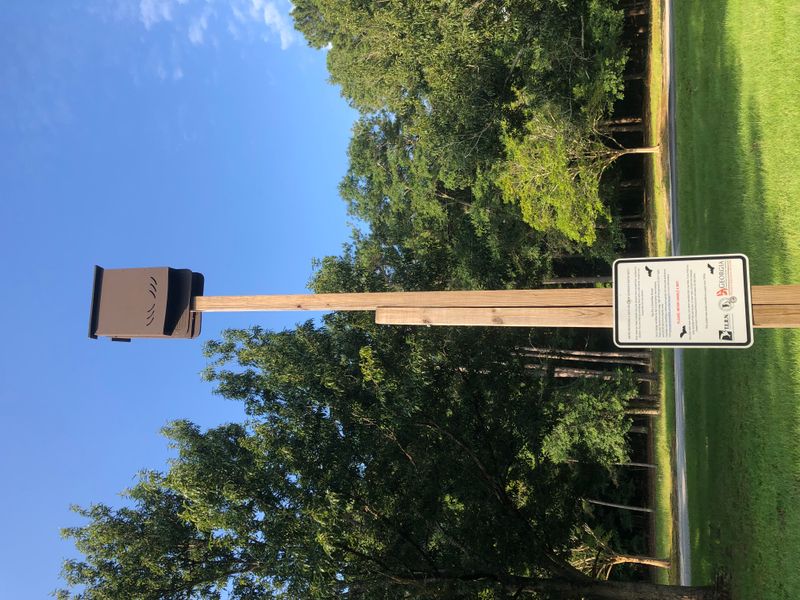
Bat houses come up often when homeowners want to do something active to support local bats, and they can be a worthwhile addition under the right conditions. The expectations around them need to stay grounded, though.
UC IPM states clearly that there is no solid evidence bat houses significantly reduce garden insect problems, and occupancy is never guaranteed even with ideal placement.
If you do install one, placement decisions matter more than the box itself. Bat Conservation International’s bat house guidelines recommend mounting the structure in an open location with an unobstructed flight path, generally at least 10 feet above the ground, and orienting it to receive appropriate sun exposure for the local climate.
In California’s hotter inland valleys and desert regions, overheating is a real risk: a dark box in full summer sun can reach temperatures that are lethal to bats, so lighter-colored construction, ventilation slots, or some afternoon shade management may be necessary depending on your location.
UC Master Gardeners guidance on bat houses reinforces that regional temperature considerations should shape placement decisions, not generic internet instructions written for cooler climates. A house that works well on the California coast may need adjustments before it is suitable for the Central Valley or the Inland Empire.
A bat house is best understood as providing potential roosting habitat in a landscape that already has bats nearby. It does not create a bat population where one does not exist, and it should not be marketed to yourself or your neighbors as a mosquito solution.
Treat it as one small improvement in a yard that supports wildlife broadly.
Protect people and bat colonies when bats use a home
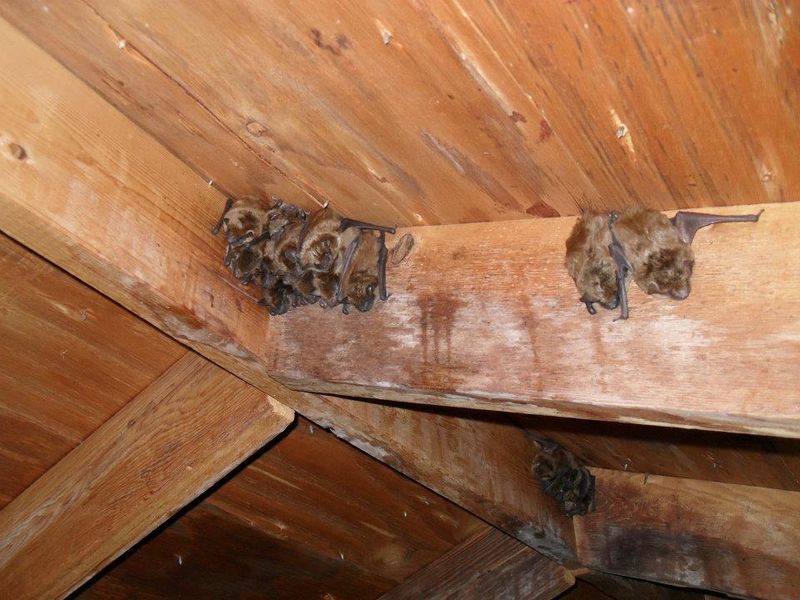
Finding bats roosting in a home changes the situation from wildlife appreciation to a question with real safety dimensions. The first and most important rule is straightforward: never handle a wild bat with bare hands.
Bat bites can be small enough to go unnoticed, and California Department of Public Health rabies guidance is clear that any possible contact between a bat and a person or pet requires prompt medical or public-health consultation, not a wait-and-see approach.
If a bat is found inside a living space and there is any possibility it came into contact with a sleeping person or an unattended child or pet, contact your local health department or animal control right away. Do not release the bat outdoors before authorities have assessed the situation.
California Department of Fish and Wildlife wildlife health resources can also point you toward licensed rehabilitators if a bat is injured and poses no direct contact risk.
For a colony roosting in a wall, attic, or under roof tiles, the instinct to seal gaps immediately can cause serious harm. UC IPM warns against excluding California bat colonies when flightless young may be present, which typically runs from May through September.
Sealing entry points during that window can trap pups inside, causing them to die in the structure. Humane exclusion timed to the appropriate season and carried out by a qualified wildlife professional is the right path.
California Department of Fish and Wildlife’s bat coexistence resources offer guidance on finding qualified help and understanding your options under state wildlife protections.
Make the first change a darker, better-shielded night
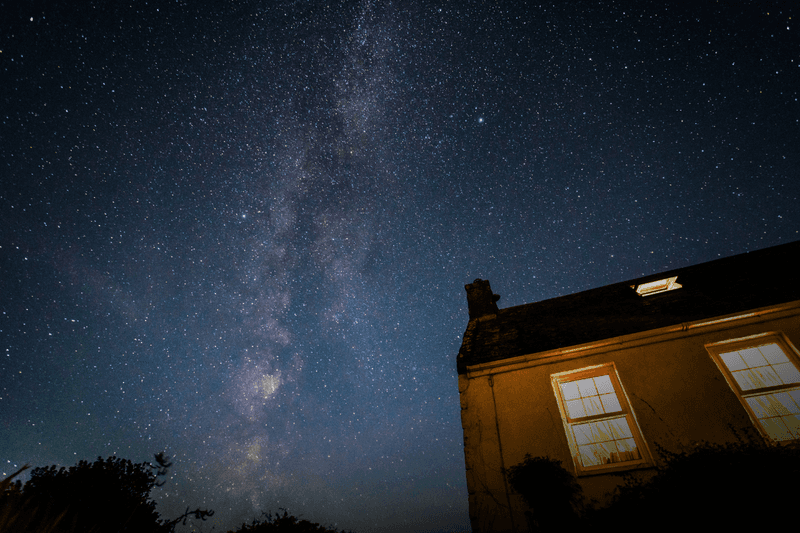
A practical starting sequence does not require a hardware budget or a full yard overhaul. Switch off any decorative or non-essential lights before you go to bed tonight.
For fixtures that need to stay on for safety, set a timer or motion sensor to shorten the operating window. Bring brightness down to the lowest level that still meets the task, and check whether any fixture is throwing light sideways into trees, shrubs, or open airspace above the yard.
Shielding essential lights so they point downward and keeping light away from vegetation, water features, eaves, and any bat box you have installed are the adjustments most likely to preserve darker travel corridors through the yard. Dark Sky’s lighting principles frame this as directing light only where it is needed, only when it is needed, and only as brightly as the task requires.
None of these steps carry a guarantee. A yard with better-shielded, shorter-duration lighting may see more use by light-averse bat species over time, or it may not, depending on roost locations, surrounding development, and conditions well beyond the property line.
California Department of Fish and Wildlife supports reducing unnecessary outdoor lighting as one piece of a broader bat-friendly approach, not as a stand-alone fix. Pairing smarter lighting with weekly standing-water removal, as UC IPM recommends for mosquito management, gives a California yard its best realistic chance at supporting beneficial wildlife while keeping insect pests in check.
The two habits together cost almost nothing and work every night, whether or not a bat ever shows up to take credit.