
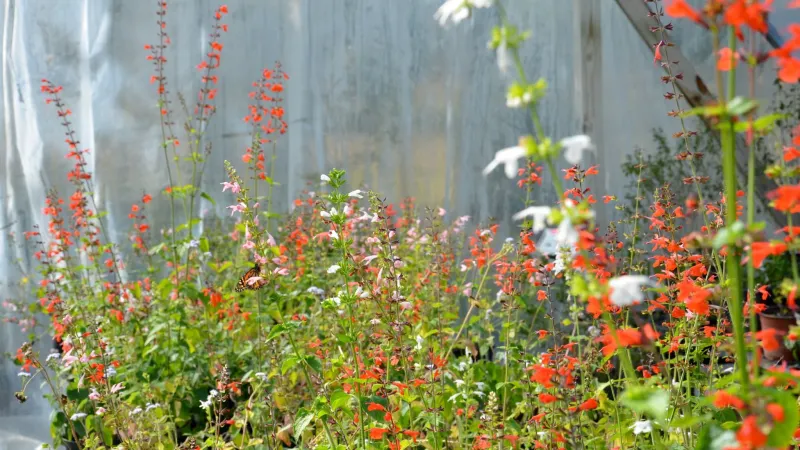
Florida yards can do two things at once: look sharp from the street and bring in hummingbirds and butterflies all season long. Tropical sage, known scientifically as Salvia coccinea, is one native plant that checks both boxes without demanding a lot from the gardener.
If you have a sunny front bed with decent drainage, this plant is worth a serious look before you reach for another ornamental that offers color but nothing else.
The sage Florida gardeners should actually buy
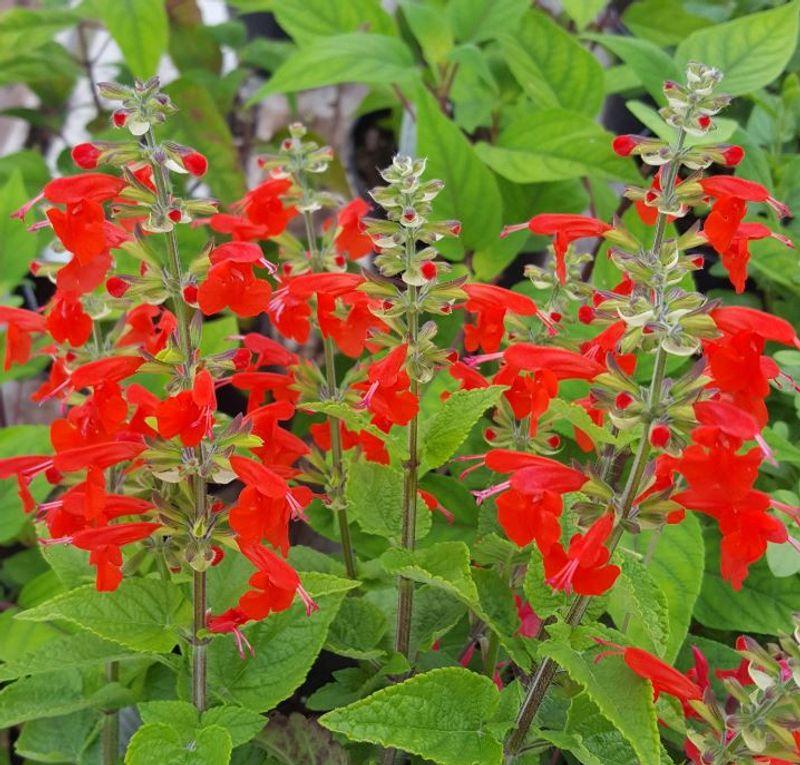
Walk into almost any Florida garden center and you will find shelves of plants simply labeled “sage.” The problem is that label covers dozens of species, and most of them are not native to Florida. The plant worth your attention here is Salvia coccinea, recognized by UF/IFAS as a Florida-native herbaceous perennial that goes by several common names: tropical sage, scarlet sage, scarlet salvia, and blood sage.
None of those names should be confused with culinary sage, Salvia officinalis, which is a Mediterranean herb sold for cooking. That plant is introduced, not native, and it behaves differently in Florida’s climate.
Many ornamental salvias and hybrid salvias sold at big-box stores are also introduced species, bred for showiness rather than wildlife value.
Buying the right plant means checking the label for the full species name, not just the word “sage.”
As UF/IFAS Extension Lake County notes in its Florida salvia overview, native Salvia coccinea is distinct from the many introduced salvias and hybrids available in the trade, and knowing that difference is the first step toward making a smart purchase.
Salvia coccinea is a strong candidate for many Florida front beds, but it is not a universal fit for every yard in every county. Florida’s variation in soils, drainage, frost risk, and coastal exposure means that site matching matters as much as plant selection.
Think of it as a plant that earns its place in the right conditions rather than one that simply belongs everywhere by default.
One plant brings color and wildlife value together
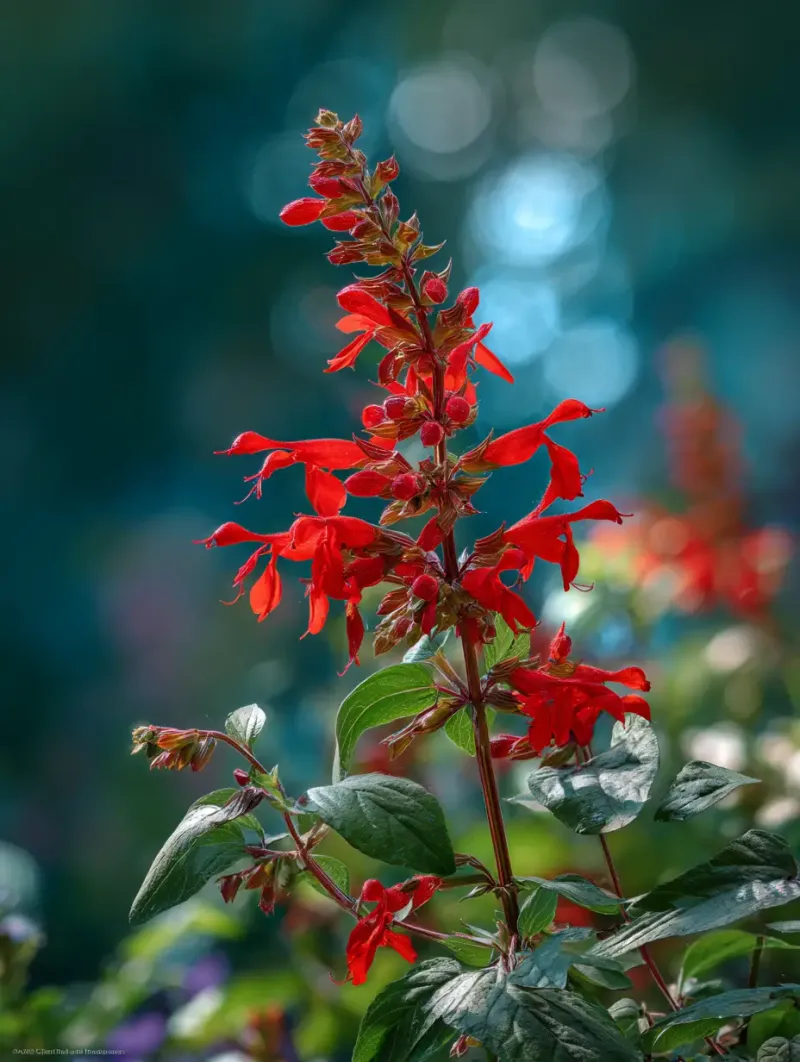
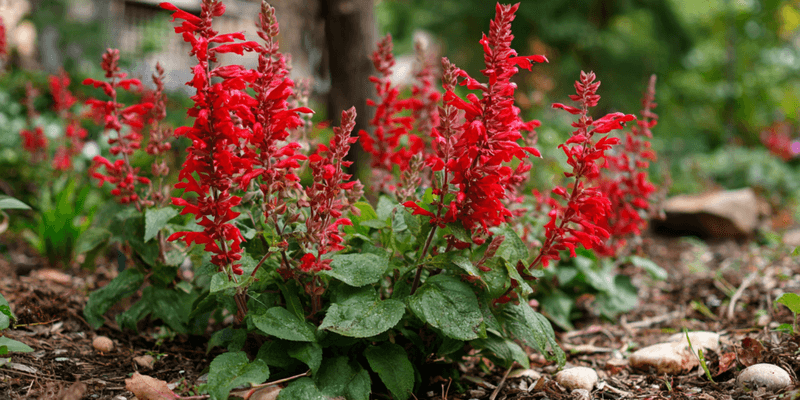
Salvia coccinea grows with an upright or vase-shaped habit, typically reaching 2 to 4 feet tall and 1 to 2 feet wide. That vertical form gives a front bed the kind of mid-height structure that keeps a planting from looking flat, especially when shorter edging plants sit in front and taller shrubs anchor the back.
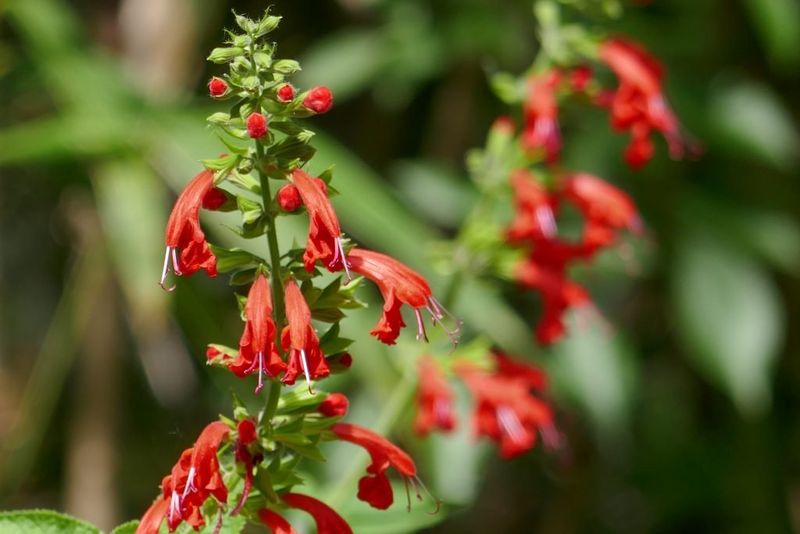
The flowers are tubular and come in red, pink, or white depending on the cultivar. Red is the most commonly seen color and the one most reliably documented for attracting hummingbirds.
According to UF/IFAS, the plant’s tubular flowers attract both hummingbirds and butterflies, and flowering runs from spring through fall, with an even longer season in Zones 9 through 11 across South and Central Florida.
That combination of a long bloom window and reliable hummingbird and butterfly visits makes it genuinely useful in a visible front bed. A plant that blooms for months and brings in wildlife that neighbors actually stop to watch delivers more than just color.
Red flowers are generally less attractive to bees than white, yellow, or blue-purple flowers, so tropical sage should not be described as a bee magnet. It earns its place specifically as a hummingbird and butterfly plant, and that distinction matters when you are designing a pollinator bed rather than just filling a space with something that blooms.
White-flowered cultivars like ‘Snow Nymph’ may draw a slightly broader range of pollinators, giving you one more variable to consider when choosing which form to plant. The curb-appeal payoff comes from repeated use rather than a single specimen, a point that the design section addresses in more detail.
Match tropical sage to light, soil, and Florida timing
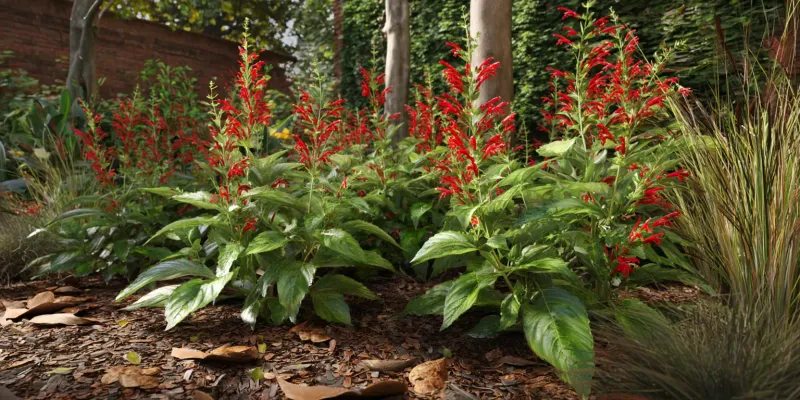
Before buying a flat of tropical sage, take an honest look at the planting spot. Full sun, meaning six or more hours of direct light per day, produces the best flower production.
The plant tolerates partial shade and can even survive in shadier spots, but flowering declines noticeably as light decreases. A bed that gets morning sun and afternoon shade can still work; a bed under a dense canopy is a harder sell.
Soil flexibility is one of Salvia coccinea’s genuine strengths. UF/IFAS documents tolerance for sand, loam, clay, acidic soil, and alkaline soil, along with occasional wet conditions.
That covers a wide range of Florida yard types. The practical target, though, is moist and well-drained soil.
Permanently flooded ground or spots that stay soggy after every rain are not good candidates, even with the plant’s general soil flexibility.
On water, the plant has moderate drought tolerance and handles Florida’s heat well once it is established. That does not mean it thrives on neglect.
Watering during the establishment period, typically the first several weeks after planting, helps roots develop before the plant has to fend for itself. During extended dry spells, supplemental watering improves flowering even in established plants.
Timing varies by Florida region. South Florida gardeners in Zones 10 through 11 can plant from February through December with relatively low frost risk.
Central and North Florida gardeners should target spring through summer and stay aware of frost dates for their specific area. A late-season planting in North Florida that gets caught by an early freeze will not establish the way a spring planting would, so matching the calendar to your zone is worth the extra step.
Use repeated clumps to create a polished front bed
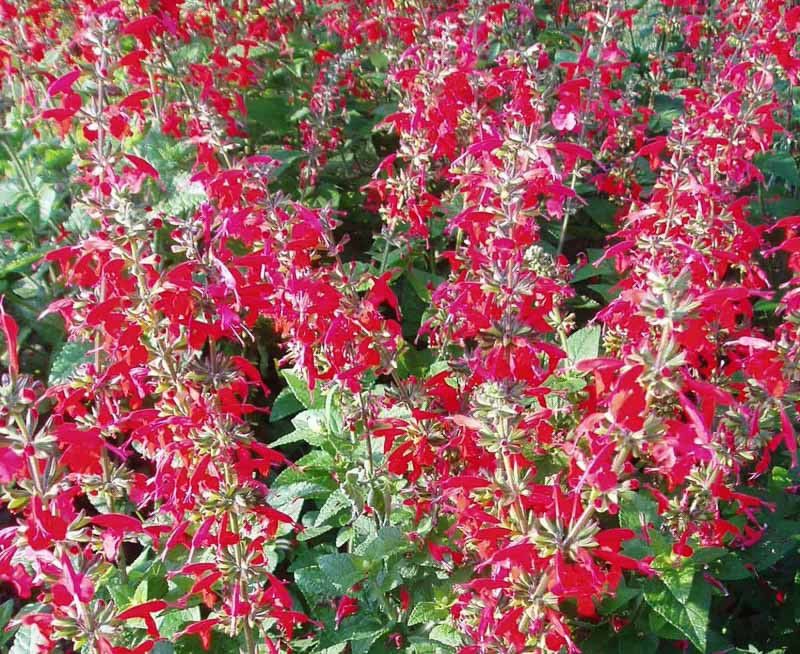
A single tropical sage plant tucked into a corner rarely creates the impression gardeners are hoping for. One leggy stem with a few flower spikes can look accidental rather than intentional, especially in a front bed where neighbors and visitors form quick impressions.
The plant’s visual strength comes from repetition.
UF/IFAS recommends spacing Salvia coccinea at 24 to 36 inches apart, which gives individual plants room to fill out without crowding each other. At that spacing, a group of three to five plants becomes a visible block of color rather than a scattered collection of stems.
Repeated clumps along a walkway, a front foundation bed, or the edge of a driveway create rhythm that reads as designed rather than random.
Mass plantings work well for an informal cottage-style or naturalistic bed where the goal is abundant seasonal color. A more controlled formal border benefits from tighter editing: choose one flower color, maintain consistent spacing, and pair the sage with plants that hold their structure better in Florida’s afternoon thunderstorms.
Heavy rain can snap flower spikes on tall stems, so placing tropical sage among sturdier companion plants or in a grouped mass gives it some physical support and makes the planting look tidier after a storm.
Edging lower plants in front of the sage, such as native gaillardia or pentas, adds a layered look that frames the taller flower spikes. The contrast between the upright sage form and a lower, spreading plant in front creates depth that single-layer plantings lack.
Whichever approach fits your yard, the consistent advice is to use more than one plant and place them where the flower color can be seen from the street.
Expect easy care, not zero care
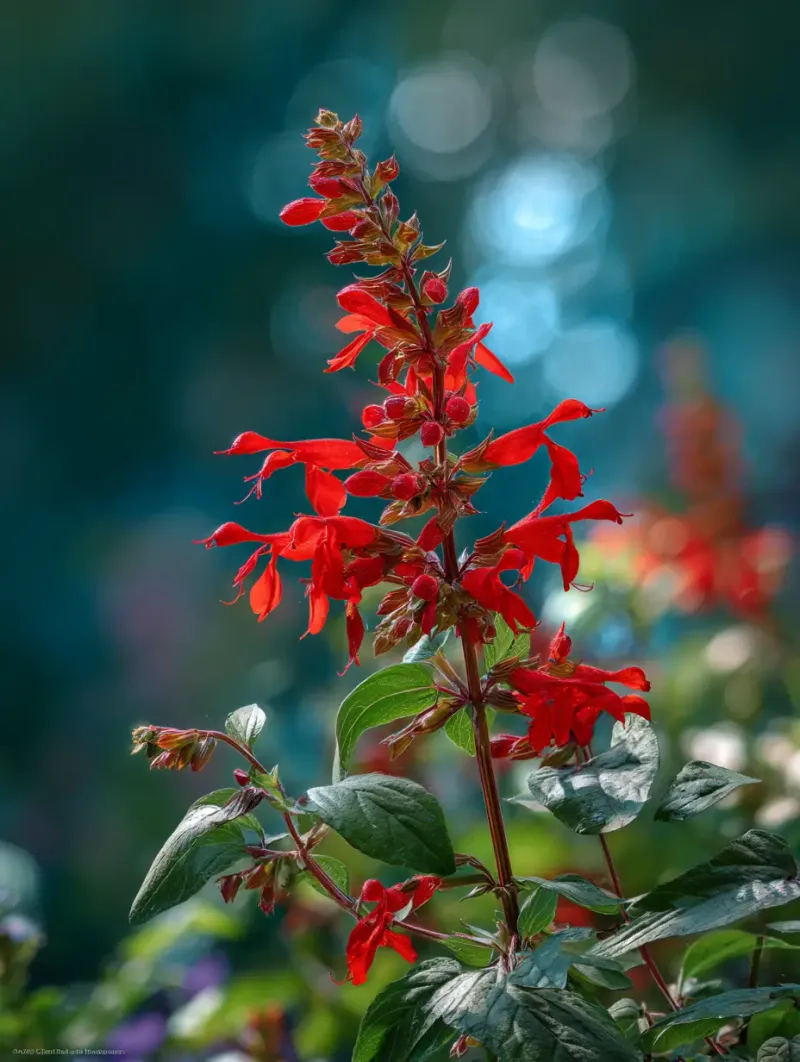
Tropical sage has a well-earned reputation for being low-maintenance, and that reputation is mostly accurate. UF/IFAS reports no major pest or disease problems under normal conditions.
For a Florida gardener who has wrestled with whitefly-covered plants or fungal rot in humid summers, that is genuinely good news.
Routine care still applies, though. Water the plant consistently during the first few weeks after planting, and return to supplemental watering during extended dry periods even after the plant is established.
UF/IFAS notes that cutting the plant back when flowering declines or foliage begins to look tired can keep the planting neater, though pruning is not required for the plant’s survival. Think of it as optional but worth doing if appearance matters to you.
Reseeding is the maintenance factor most gardeners do not anticipate. Salvia coccinea produces seed readily and can show up in nearby areas of the landscape, sometimes several feet from the original planting.
In a relaxed naturalistic bed, that self-spreading behavior fills gaps and extends the planting over time with no extra effort. In a tightly controlled formal border, those volunteer seedlings become a seasonal removal task.
Deadheading spent flower spikes before seeds fully develop reduces but does not eliminate reseeding.
After a heavy rain or tropical weather, flower spikes may snap or lean. Cutting back damaged stems promptly keeps the bed looking orderly and encourages new growth.
That post-storm cleanup takes maybe twenty minutes for a modest planting but makes a visible difference in how the bed looks from the street. None of this tips into difficult territory, but calling the plant maintenance-free sets up an expectation the plant cannot always meet.
Build a pollinator bed around more than one plant
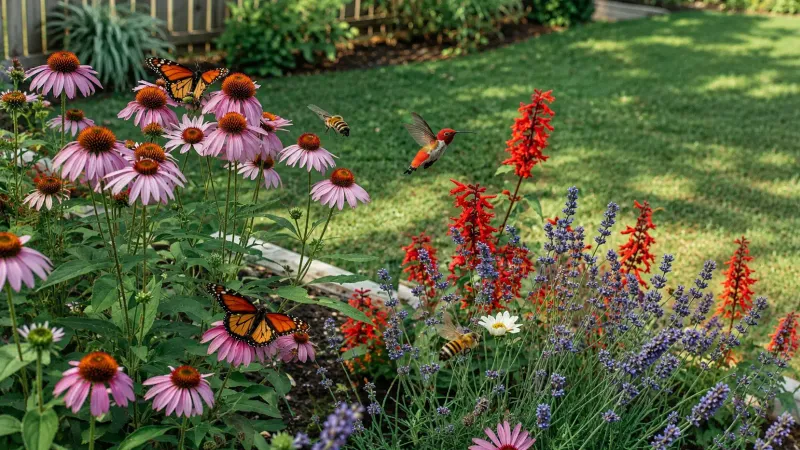
Tropical sage earns a real role in a pollinator garden, but it cannot carry that garden by itself. Hummingbirds and butterflies are well-documented visitors, and those are meaningful wildlife connections.
Bees, however, are drawn more strongly to white, yellow, and blue-purple flowers than to red ones, so a bed planted entirely with red-flowered sage will miss a significant portion of the pollinator community.
UF/IFAS guidance on attracting native bees recommends at least 10 flowering plant species overall, with at least three species blooming at any given time, and planting multiple individuals in clumps because dense floral displays attract more pollinators than scattered single plants. Tropical sage fits into that framework as one species among many, not as the centerpiece that handles everything.
Practical companion choices for a Florida pollinator bed include native coreopsis for yellow color and bee appeal, native pentas or blue porterweed for additional butterfly value, and native wildflowers like gaillardia or blanket flower that extend the season. Varied flower shapes matter too, since some bee species have tongue lengths that match only certain flower forms.
A diverse planting covers more of those needs than any single species can.
Research supports the value of native-based plantings in Florida specifically. A 2026 study on Florida residential landscapes found that native plants attracted more pollinators and a more diverse set of pollinator genera than the nonnative plants tested in the same settings.
That finding supports building a native-dominated bed, but it does not mean every native plant outperforms every nonnative in every interaction. Use it as a reason to favor natives overall, including tropical sage, while still choosing companions based on what each plant actually provides.
Know when tropical sage is the wrong choice
Honest plant recommendations include the situations where a plant does not belong. Tropical sage has real strengths, but several site conditions and yard contexts push it toward the wrong-choice column.
Deep shade is the clearest disqualifier. A bed under a large live oak or in the shadow of a tall fence will not give Salvia coccinea enough light to flower well.
The plant may survive, but sparse flowering defeats the purpose of choosing it for curb appeal or wildlife value. If your front bed gets fewer than four hours of direct sun, a shade-tolerant native like wild coffee or beautyberry will serve you better.
Permanently wet or poorly drained ground is another mismatch. UF/IFAS notes that while Salvia coccinea tolerates occasional wet conditions, the practical target is moist and well-drained soil.
A spot that holds standing water after every summer storm is not the right home for this plant.
Coastal gardeners face a separate uncertainty. The plant’s salt tolerance is listed as unknown, which means it has not been tested and documented for reliable performance near salt spray or tidal areas.
Promising coastal performance in that situation goes beyond what the evidence supports.
For formal, tightly controlled landscapes, the plant’s reseeding habit can become a recurring nuisance. HOA rules that require uniform, manicured beds may not accommodate a plant that spreads into neighboring sections of the yard each season.
Heavy storms can also snap the tall flower spikes, leaving a ragged appearance that needs prompt attention.
One claim that should be set aside entirely: planting sage does not repel mosquitoes. Florida experts have confirmed that mosquito-repelling plants do little when simply growing in the landscape, and rubbing sage leaves or homemade plant oils on skin is not a substitute for EPA-registered repellents or standing-water management.
Make Salvia coccinea a considered Florida choice
The decision to plant tropical sage comes down to a simple site check. If your front bed gets good sun and drains reasonably well, Salvia coccinea offers upright seasonal color and documented value for hummingbirds and butterflies across a long Florida bloom window.
If the site is shady, chronically wet, or exposed to salt spray, a different native will serve you better.
When the conditions fit, the practical steps are straightforward: buy the plant by its species name to avoid getting a hybrid or introduced cultivar, plant it in intentional groups rather than as a single specimen, plan for reseeding and post-storm cleanup, and surround it with diverse flowering companions so the bed supports a wider range of pollinators across the season.
Tropical sage deserves a place in many Florida front beds, but it works best as one well-chosen piece of a larger planting rather than a standalone solution. A yard that gets this plant right tends to look like someone actually thought about it.