
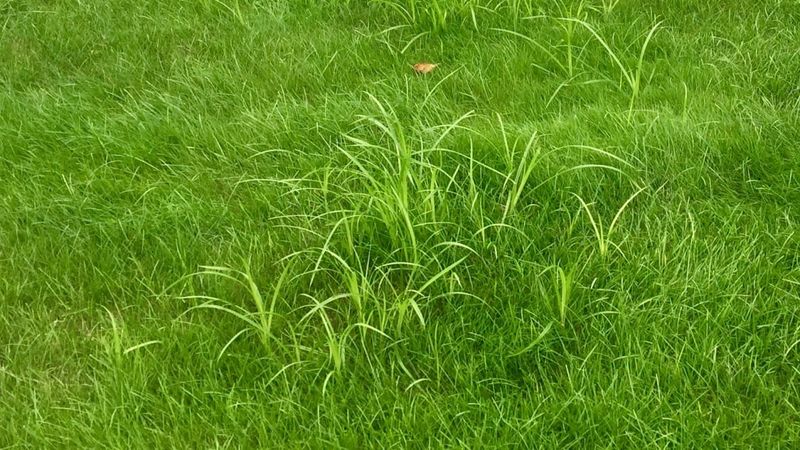
That tall, shiny blade poking up above your St. Augustine or bermudagrass is not just an aggressive grass — it is nutsedge, and pulling it by hand rarely solves the problem for long. The reason it keeps coming back has nothing to do with how hard you pull and everything to do with what stays underground after you do.
Understanding what is happening beneath the soil surface is the first step toward getting real, lasting relief.
Correct the premise before you treat the weed
Plenty of homeowners have spent a summer afternoon yanking nutsedge out of their lawn only to find the same plants — or what looks like the same plants — standing tall again within a week. That experience is real and understandably maddening, but the title’s framing deserves a small correction before any treatment plan begins: pulling does not always fail, and no single method delivers a guaranteed, permanent cure for every established infestation.
What actually happens is this: nutsedge is a warm-season perennial sedge, not a typical annual grass weed. UC IPM’s nutsedge guidance explains that its underground rhizomes and tubers store energy and can produce replacement shoots after visible growth is pulled, mowed, or damaged.
When only the above-ground blade is removed and the underground system stays intact, the plant simply regrows from stored reserves. That is why the lawn seems to grow the same weed back so quickly.
Pulling young plants carefully, with as much of the underground system as possible, can actually help, especially in small infestations. Research published in Weed Technology found that physical removal of young yellow nutsedge can reduce rhizome mass and tuber formation when done thoroughly.
The practical answer for most Southern lawns combines several steps: confirm the plant is nutsedge, correct persistently wet areas, dig isolated young plants, use a selective postemergence sedge herbicide approved for your specific lawn grass and nutsedge species, and plan to monitor and repeat the process. UF/IFAS weed management guidance for Florida lawns consistently emphasizes follow-up rather than a one-and-done fix.
First, make sure the tall blade is nutsedge
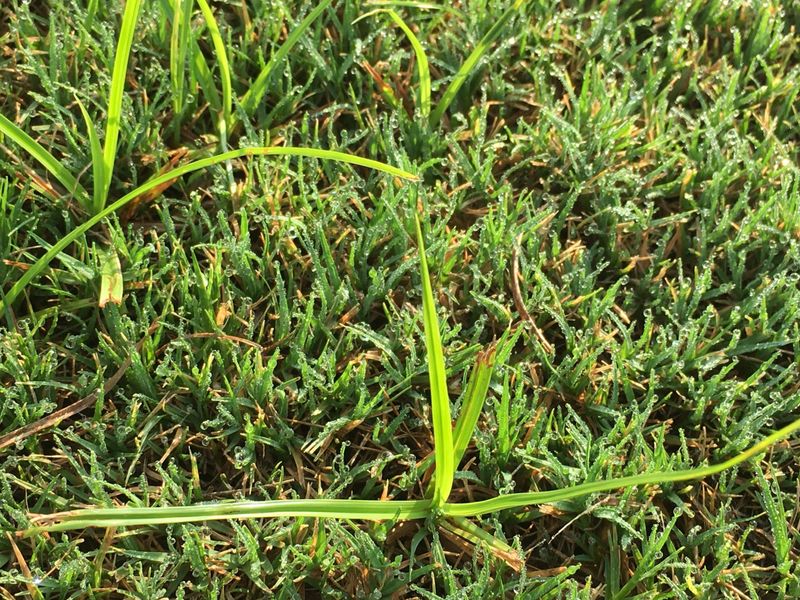
Treating the wrong plant with the wrong product wastes money and can damage your lawn, so a quick ID check before reaching for any herbicide is worth the two minutes it takes. Nutsedge has a few reliable field markers that set it apart from ordinary turf grasses.
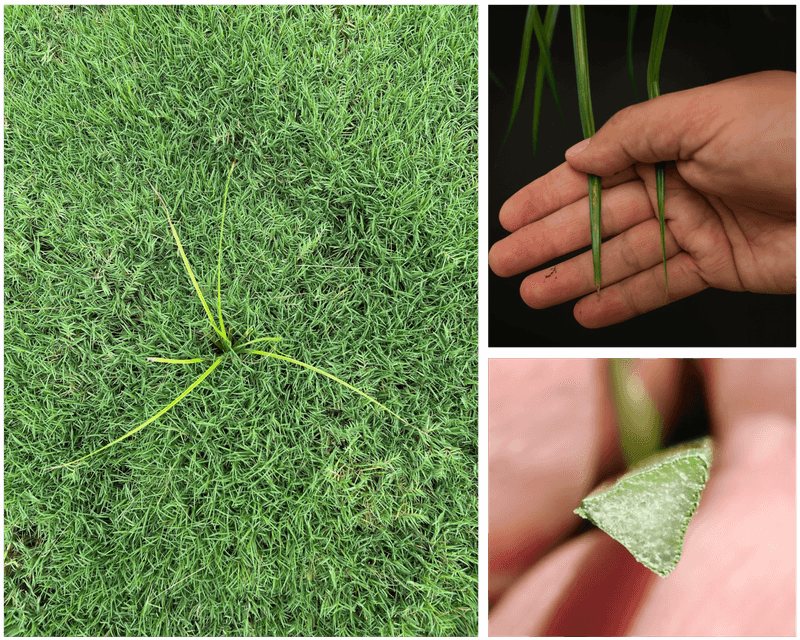
The most useful check is the stem. Grasses typically have round or flattened stems, while sedges generally have solid, angular, three-sided stems — a trait captured in the old saying “sedges have edges.” Penn State Extension’s nutsedge profile also points to the shiny or waxy leaf surface, the distinctly upright and rapid growth habit, and the yellow-green foliage color as reliable visual clues.
When nutsedge shoots up noticeably faster and stands taller than surrounding turf, those combined traits make identification fairly straightforward.
Two species show up most often in Southern lawns, and telling them apart matters because control products can perform differently on each. Yellow nutsedge tends to have lighter, yellow-green foliage with leaf tips that taper gradually to a point.
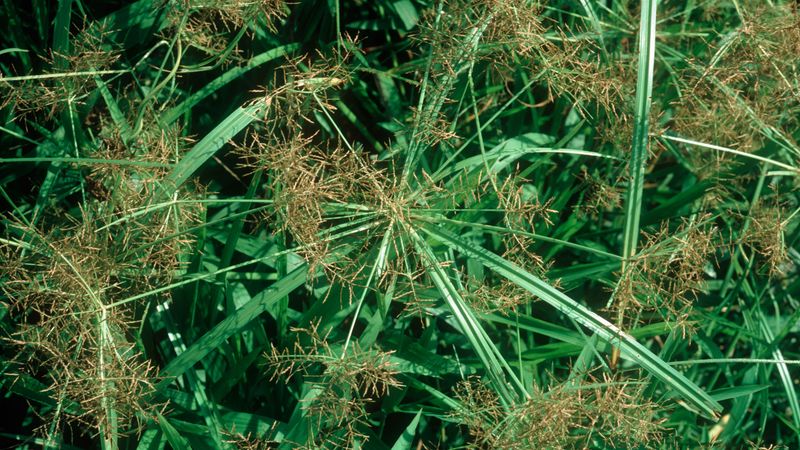
Purple nutsedge typically has darker green leaves, leaf tips that come to a sharper, more abrupt point, and seedheads with a purple or reddish-brown tint. Mississippi State University Extension’s sedge control newsletter notes that purple nutsedge is often more difficult to manage and that some herbicides work better on one species than the other, so getting the species right before selecting a product is a practical necessity, not just a botanical detail.
Underground tubers explain the repeat appearances
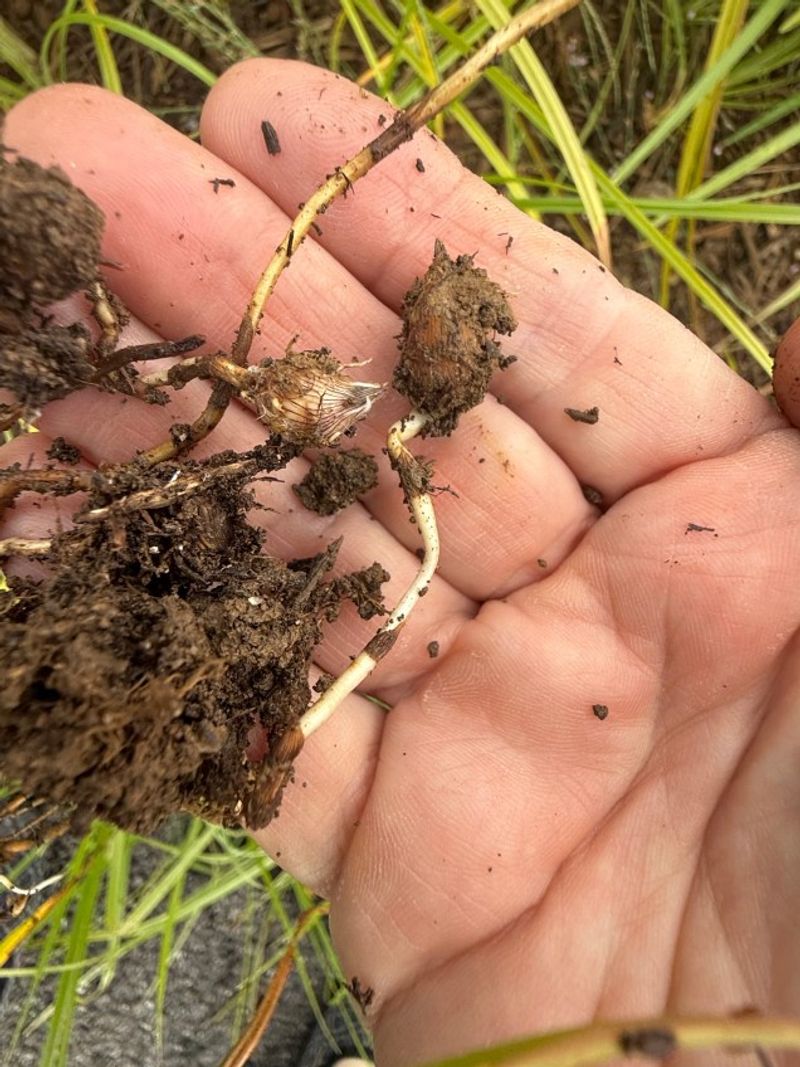
Every time nutsedge seems to reappear out of nowhere, the underground system is the reason. Nutsedge is a warm-season perennial sedge that stores energy in specialized underground structures, including rhizomes (horizontal underground stems) and tubers (small, rounded storage organs attached to those rhizomes).
These structures act like a battery that keeps the plant alive and ready to send up new shoots even after everything visible above the soil has been removed.
UC IPM’s nutsedge resource notes that most tubers are concentrated in the upper several inches of soil, though rhizomes and tubers can extend deeper in established infestations. When a blade snaps at or near the soil surface during pulling, that underground reservoir stays completely intact.
The plant is not starting over from a seed — it is drawing on stored carbohydrates to push up a replacement shoot, often within days.
Purdue Extension’s sedge control publication specifically notes that hand pulling can remove the visible plant without disturbing the tubers, leaving regrowth almost inevitable. It is also worth knowing that new shoots appearing after a pulling session do not always come from tubers that were created by that pulling.
The Weed Technology study on yellow nutsedge control points out that previously dormant tubers or late-germinating ones can emerge after earlier shoots are removed, creating the impression of rapid spread without proving that pulling multiplied the plant. The underground population was already there; removing the top growth just made room for dormant buds to activate.
Fix wet conditions without mistaking them for a cure
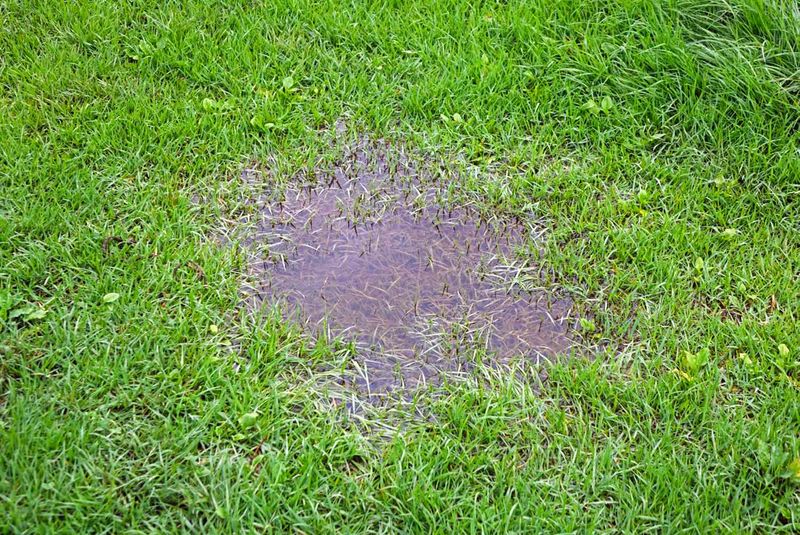
Nutsedge thrives in wet, poorly drained soil, and a yard with consistently soggy patches is essentially an invitation for it to move in and stay. Overwatered lawns, irrigation heads that overlap too heavily, compacted areas where water pools, and low spots that drain slowly after rain are all conditions that favor nutsedge over the surrounding turf.
UF/IFAS weed management guidance for Florida lawns recommends correcting continuously wet sites, adjusting irrigation schedules to avoid overwatering, and improving surface or subsurface drainage where practical. A useful starting inspection: walk the lawn after an irrigation cycle or a moderate rain and note which areas stay wet longest.
Those spots are worth addressing with drainage improvements, adjusted sprinkler coverage, or reduced run times before or alongside any weed treatment.
One important caution: fixing moisture problems removes a condition that favors nutsedge, but it does not remove tubers already sitting in the soil. Drying out a wet spot may slow new establishment and make the area less hospitable going forward, but existing underground structures can survive in drier soil and continue producing shoots.
Moisture correction is a smart supporting step, and it should be paired with direct physical removal or an appropriate postemergence herbicide rather than relied on alone as a complete solution.
Dig isolated young plants instead of simply yanking leaves
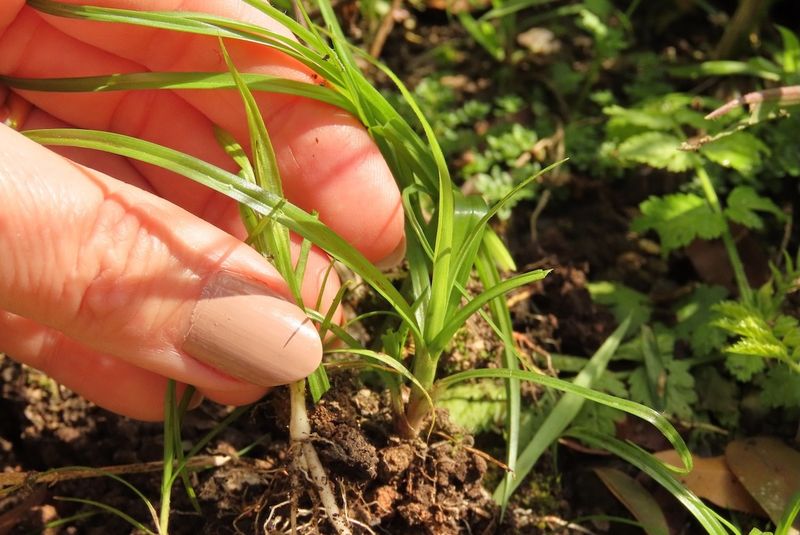
For a handful of nutsedge plants scattered across an otherwise clean lawn, careful hand removal is a reasonable first move — but the technique matters more than the effort. Simply grabbing the leaves and yanking almost always leaves the basal bulb, rhizomes, and attached tubers behind, which means the plant regrows from the same spot within days.
A more effective approach starts with moist soil. Wet ground allows the underground system to come out more cleanly than dry, compacted earth.
Penn State Extension recommends pulling slowly or using a narrow hand trowel to dig around the crown, working deep enough to recover the basal bulb along with as much of the connected rhizome and tuber system as possible. UC IPM suggests digging to a depth that captures underground structures, noting that rhizomes and tubers in some established infestations can reach 8 to 14 inches below the surface.
Bag and discard what you remove rather than leaving it on the soil where tubers can reroot.
Young plants, those that have not yet developed a mature tuber network, offer the best window for physical control. The Weed Technology research on yellow nutsedge found that physical removal of young plants can reduce rhizome mass and slow new tuber formation.
Mature plants with a fully developed underground system are harder to capture completely, so the earlier in the season you catch new growth, the better your odds.
After each removal session, check the area every week or two through the rest of the warm season. New shoots that appear quickly are likely coming from tubers you missed or from dormant ones nearby.
Remove those promptly while they are still small, and repeat as needed. A single session will rarely finish the job in an established patch.
Use a selective sedge herbicide only when the label fits
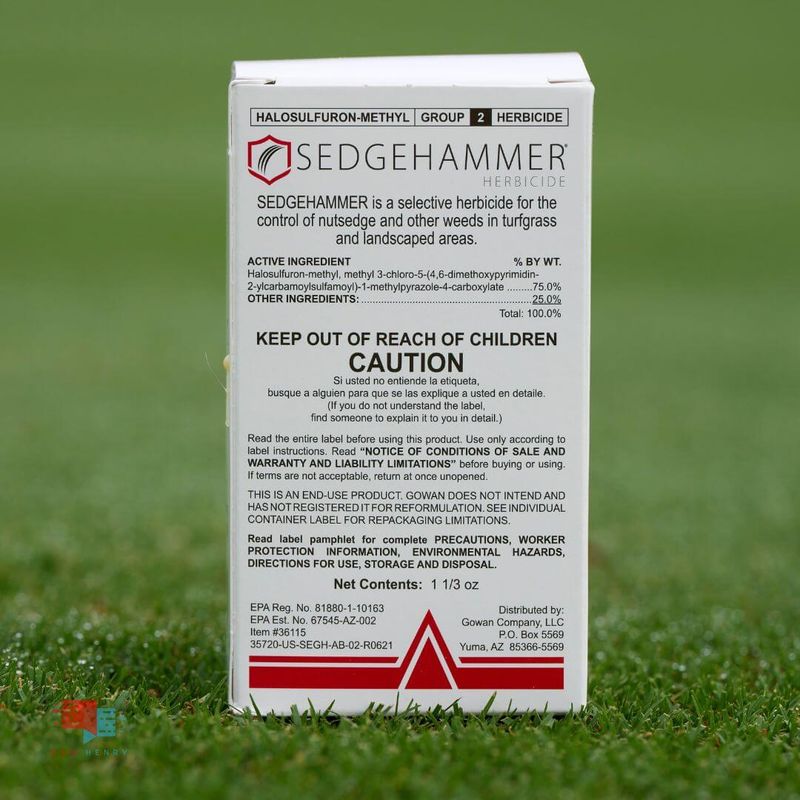
When nutsedge covers a large area or keeps returning despite careful hand removal, a selective postemergence sedge herbicide becomes the practical next step. The critical word here is selective: products formulated for broadleaf weeds, crabgrass, or general grass control do not reliably kill sedges.
Nutsedge is a sedge, not a true grass, and it requires herbicides specifically designed for sedge control.
The UF/IFAS Florida homeowner herbicide guide identifies halosulfuron, imazaquin, sulfentrazone, and bentazon as active ingredients found in homeowner-labeled sedge products. These are examples from published guidance, not a universal recommendation list.
Each product has its own approved turf species, target weeds, use sites, and application requirements, and those details vary enough that what works safely on one lawn can injure another.
Turf species is one of the most important variables. UF/IFAS weed management guidance warns that imazaquin, for example, is labeled only for certain established warm-season grasses in their cited recommendations, and a product safe on bermudagrass may injure St. Augustinegrass, centipedegrass, zoysiagrass, or cool-season turf.
Species of nutsedge also matters. Texas A&M AgriLife Extension’s bermudagrass management guidance notes that sulfentrazone performs better on yellow nutsedge than on purple nutsedge, while halosulfuron-methyl and imazaquin are listed for both species in that context.
Mississippi State’s sedge control newsletter reinforces that purple nutsedge is generally harder to manage and that product performance differs by species.
A product label that says “nutsedge killer” does not guarantee equal performance on both species or safety across every turf type. Match the current product label to your identified nutsedge species, your specific lawn grass, your site, and your intended use before purchasing or applying anything.
Time treatment by active growth and the product label
Timing a sedge herbicide application correctly makes a real difference in how well it works. Young, actively growing nutsedge is more susceptible to postemergence herbicides than mature plants with a well-developed tuber system, so targeting plants while they are small gives the product the best chance to move through the plant and reach underground structures.
You may have seen the “three- to eight-leaf” window mentioned in nutsedge herbicide discussions. That growth-stage timing comes specifically from certain halosulfuron product labels.
The EPA-registered halosulfuron label directs treatment after nutsedge reaches that stage, and heavier infestations may require sequential applications at the interval the label specifies. That window does not automatically apply to every sedge herbicide on the market.
Other products have their own growth-stage directions, so the label for the specific product you choose is the authority, not a general rule.
Penn State Extension recommends treating when nutsedge foliage is visible but before tubers mature later in the season, and commonly advises withholding mowing for roughly two to three days before and after application when the label calls for it. Check your chosen product’s label for mowing intervals, weather restrictions such as temperature limits and rain-free periods, surfactant requirements, re-entry intervals, and any site restrictions involving drains, ornamentals, or vegetables.
UF/IFAS guidance notes that Florida’s long warm season and regional variation across Texas mean that “apply in spring” is too simple a rule. Active growth and young, visible plants are the practical trigger, but the current product label is the final authority on timing for your region and situation.
Visible dieback after treatment does not confirm that the underground system has been eliminated; follow-up monitoring and possible repeat treatment are standard parts of a realistic plan.
Protect desirable turf and nearby plants
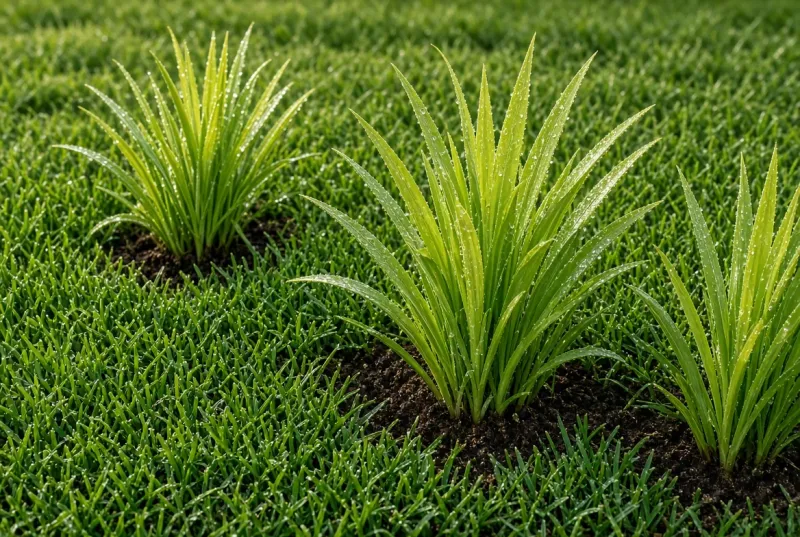
Before applying any herbicide, a quick label check against your turf species is one of the most important steps you can take. A product approved for bermudagrass is not automatically safe on St. Augustinegrass, centipedegrass, zoysiagrass, or any cool-season turf.
The UF/IFAS Florida homeowner herbicide guide makes clear that labeled turf species vary by product, and applying a sedge herbicide to an unlisted grass type risks injury or discoloration that can take weeks to recover.
Nonselective herbicides such as glyphosate deserve a specific caution here. UGA Cooperative Extension’s weed control guide explains that glyphosate and similar nonselective products can injure or kill desirable turf and nearby ornamentals.
They are renovation tools or carefully shielded spot-treatment options in very specific situations, not broadcast treatments for an established lawn. Applying one across a nutsedge-infested lawn to avoid buying a sedge-specific product is a trade that typically costs more turf than it saves.
Also read the label for restrictions involving ornamentals, vegetables, trees, drains, and water features. Many sedge herbicides require a buffer from landscape beds or standing water.
Penn State Extension notes that dense, healthy turf maintained with appropriate mowing height, proper fertilization, and correct irrigation can reduce open spots where nutsedge gets a foothold. Cultural care is a genuinely useful supporting strategy, though it will not reliably suppress an established tuber population on its own.
Use only products whose current label explicitly permits the intended lawn type, site, and application method, and follow all directions for rate, timing, and safety.
Build a repeat-control plan instead of chasing a one-day victory
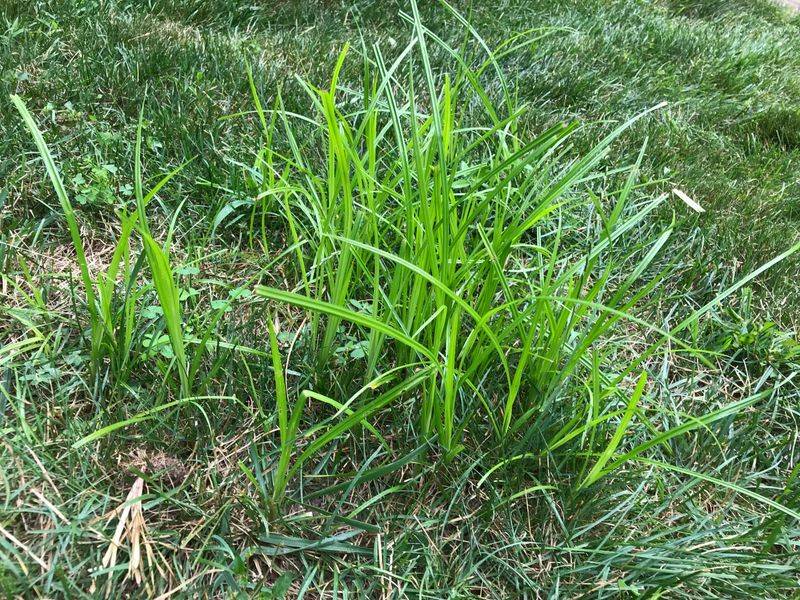
Managing nutsedge in an established lawn is a season-long process, not a single-afternoon project. A practical sequence that homeowners can reuse each warm season looks like this: confirm the plant is nutsedge and identify the species, correct any persistently wet or overirrigated areas, dig isolated young plants thoroughly to capture the basal bulb and as much underground structure as possible, and treat larger or returning infestations with a selective postemergence sedge herbicide that the current label approves for your lawn grass, nutsedge species, and site.
UC IPM’s nutsedge management guidance notes that persistent removal of young shoots can gradually exhaust tuber reserves over time, but this requires repeated attention through the warm season. The Weed Technology yellow nutsedge study found that weekly mowing reduced rhizome mass and new tuber formation, but also made clear that mowing alone should not be treated as a complete cure.
Mowing mainly suppresses visible growth; it does not eliminate the underground reserve.
UF/IFAS guidance is straightforward that regrowth from roots and tubers is normal and that repeat applications or continued removal are expected parts of managing established infestations. Inspect the treated area every week or two and remove new shoots while they are still small.
Nutsedge persistence in a lawn reflects the depth and age of its underground system, not proof that every attempt to pull or treat it made things worse.