
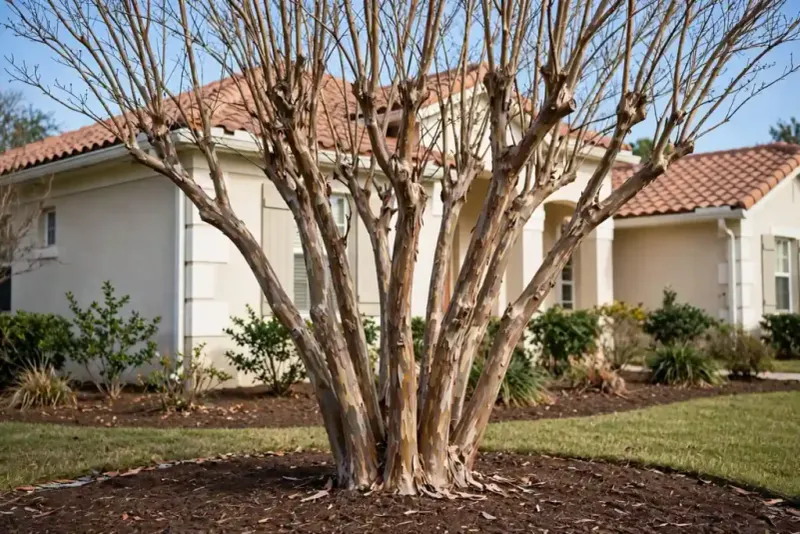
That late-fall urge to grab the pruners and tidy up your crape myrtle is strong, but the plant often does not need it. In Florida, a little patience can save you work and protect the plant.
Knowing when a cut is truly needed, and when to make it, keeps your tree healthy and ready for summer. Here is how to tell the difference.
Will a fall cut really cost you next summer’s flowers?

Here is the short answer: a late-fall cut does not automatically cancel next summer’s blooms. Crape myrtles flower on new growth, so a plant that loses a few branches can still grow fresh shoots and bloom.
The bigger issue is that many of those fall cuts were never needed in the first place.
Plenty of gardeners prune out of habit, because the calendar says it is time to clean up. UF/IFAS pruning guidance points toward a different approach: prune when there is a clear reason, and do it at the right time.
Cold-climate guidance, such as University of Georgia Extension’s crape myrtle notes, also urges caution about fall pruning.
So the useful question is not whether fall is forbidden. It is whether your plant has a specific need.
A branch rubbing against the roof is a reason. A feeling that the tree looks messy is not.
The next sections cover when to cut, which cuts to make, and what to leave alone, so you can skip the busywork and still keep your crape myrtle in good shape.
Dormancy is the useful timing cue—not a blanket fall ban
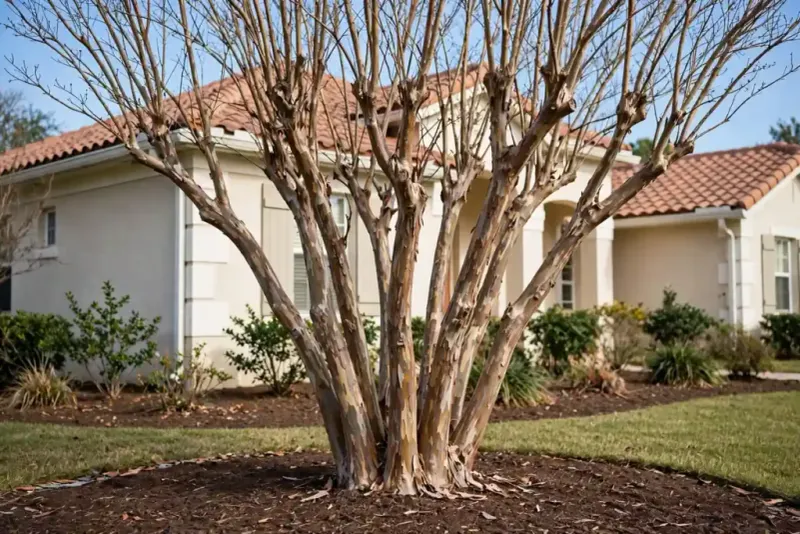
Timing matters more than a strict ban on fall work. Crape myrtles bloom on new growth, which is why shaping is best done when the plant is leafless and dormant.
In UF/IFAS guidance, that window is typically December through February.
Those months are a typical range, not a rigid rule for every spot in the state. A yard in the Panhandle reaches dormancy on a very different schedule than one in Miami or the Keys, so watch the plant itself.
Bare branches are your cue.
Cutting too early can backfire. Pruning can trigger a flush of tender new growth, and UF/IFAS notes that this growth is vulnerable to low temperatures.
How much that matters depends on where you live, since a frost-free coastal yard faces far less risk than a colder inland one. UF/IFAS cold protection advice gives more background on how cold injury happens in landscape plants.
If you do need heavier cuts, save them for late in dormancy. That gives the plant the least time to push out soft growth before the next cold snap.
A practical example: if a branch is crowding your gutter in November, mark it with a ribbon and cut it in January. The ribbon keeps you from making extra cuts you do not need.
Make only the cuts the plant actually needs
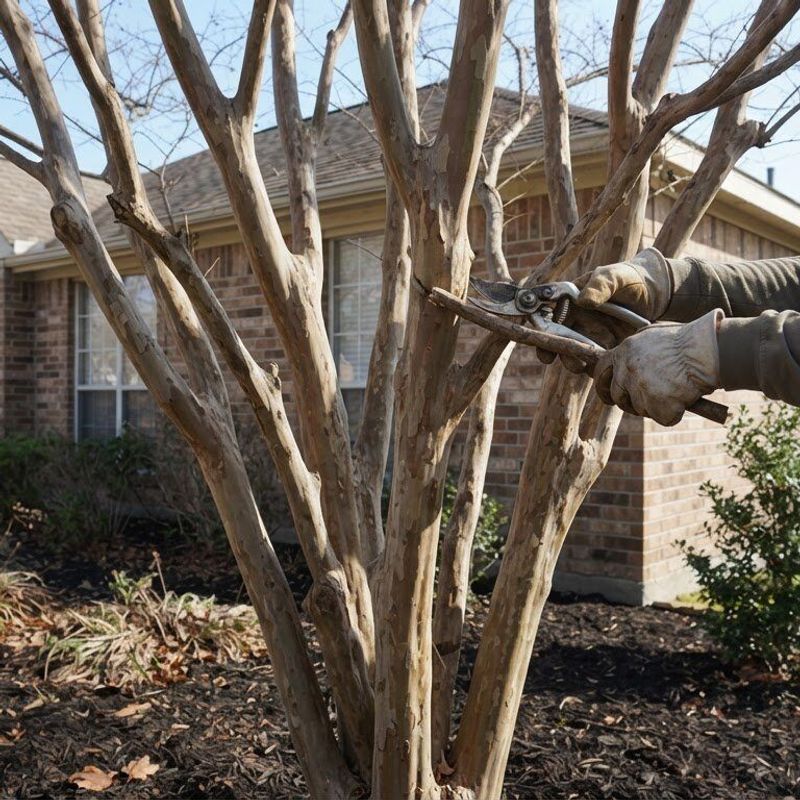
When a cut is justified, start with the lightest option. UF/IFAS recommends removing dead, damaged, or diseased wood first, then branches that cross or rub against each other.
Vigorous shoots growing into the center of the canopy can go too.
Make each cut at the branch collar, the slightly swollen ring where a branch meets its parent. This applies especially to dead, damaged, or diseased branches.
Cutting here helps the wound close cleanly, while leaving a long stub does not.
Safety pruning is a separate matter. A cracked limb hanging over a driveway or a branch loosened by a storm can come off at any time of year.
Routine structural pruning, which is shaping for strong form, is the work that should wait for dormancy.
Think of this as editing rather than a haircut. Step back after each cut and look at the whole tree.
Often three or four well-chosen cuts are all it takes.
A sound structure usually means a few strong main trunks with open space between them. You do not need to shorten every branch or cut back every year to get there.
Topping can mean fewer flowers, not a better summer display
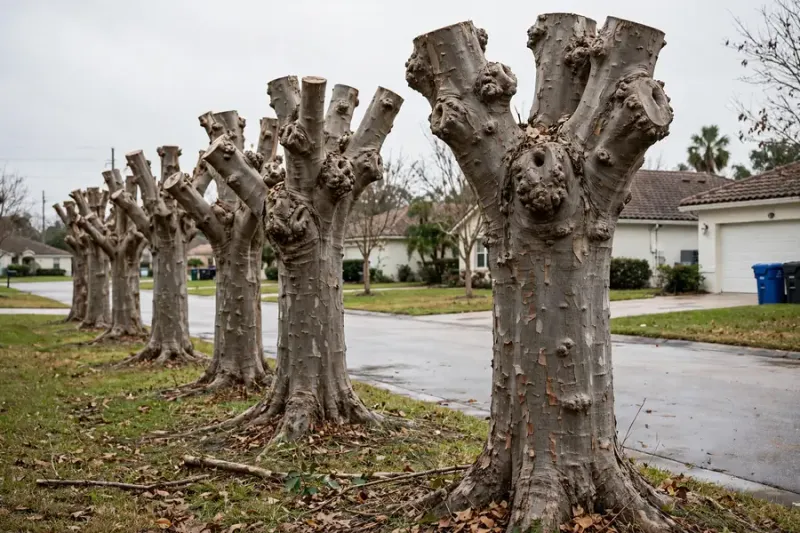
Topping means cutting large branches back to stubs, sometimes called crape murder. It is not the same as snipping a small crossing twig or doing selective structural cuts, and the results are very different.
According to UF/IFAS, flowering generally declines as pruning severity and cut diameter increase. Topping or pollarding can delay flowering by up to a month, and on some cultivars it may shorten the bloom season.
Fewer flowers can also result from severe pruning.
Light tip pruning is another practice altogether. It can encourage flowering in some cases, though newer long-blooming cultivars often do not need it.
Here is the twist: pruned plants may form slightly larger flower clusters. That means skipping all pruning is not a guaranteed route to bigger flowers either.
The honest takeaway is that heavy cuts carry real costs, while leaving a healthy plant alone saves effort without promising a showier display.
If your tree is already topped, you do not need to panic. Let it grow, thin the crowded sprouts over time, and choose a better-fitting plant if you replace it.
Do winter seed capsules need to come off?
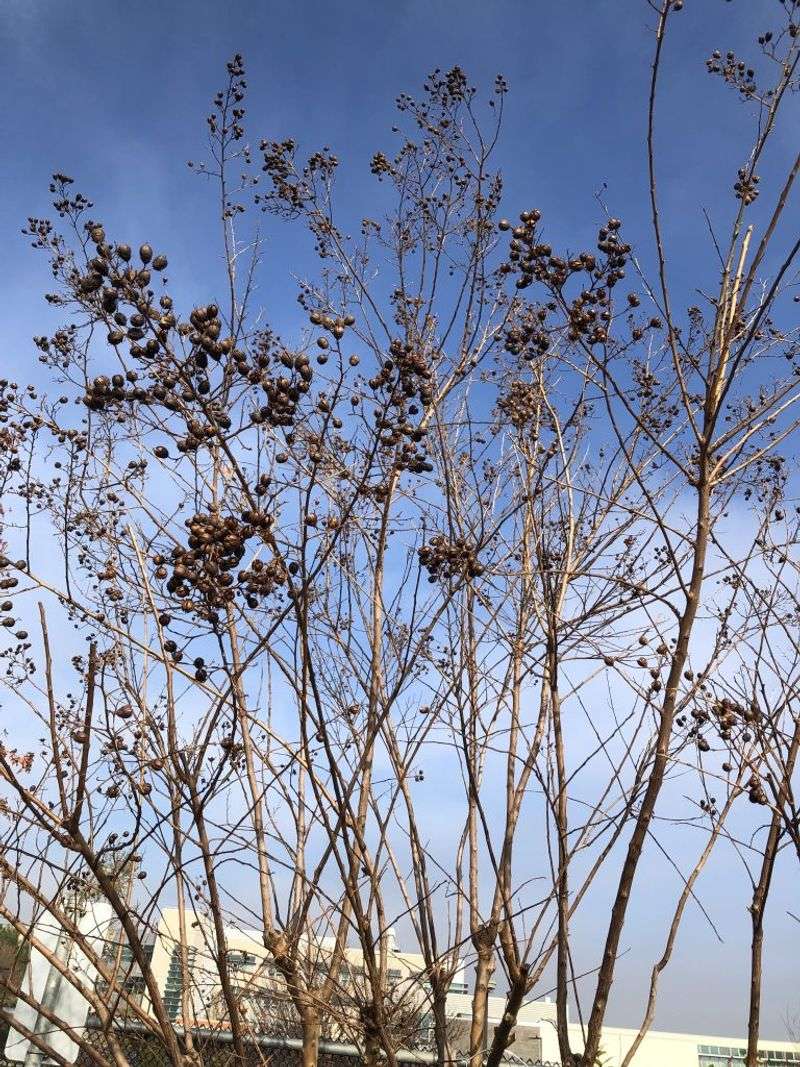
Those brown clusters hanging on in winter are seed capsules, and removing them is optional. Some gardeners like the look, while others prefer a cleaner silhouette.
Either choice is fine.
Leaving the capsules in place does not affect flowering in the following growing season, according to UF/IFAS. So there is no need to climb a ladder on a Saturday to clip them off for the plant’s sake.
If you want a tidier tree, a quick tug or a light trim of the cluster tips is enough. Birds may also pick at the seeds, which adds a little life to a bare winter yard.
Think of it as a matter of taste, not plant health.
A well-placed crape myrtle may need little or no pruning
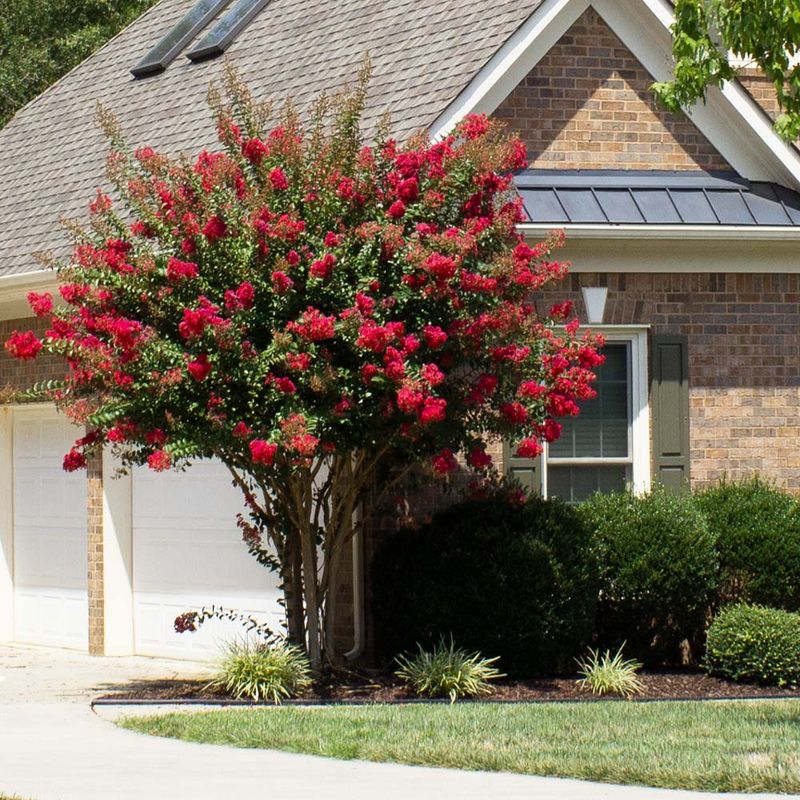
Many Florida crape myrtles need very little pruning when they have room to reach their mature size. UF/IFAS homeowner guidance says plants suited to their site often get by with minimal work.
Repeated cutting is a clue. If you trim the same tree every year to keep it off the walkway, the eaves, or the neighbor’s fence, the real problem is likely a mismatch between plant size and location.
A tall variety squeezed into a small bed will keep outgrowing its space.
In that case, UF/IFAS suggests considering a smaller-maturing cultivar rather than constantly cutting the plant back. Check the tag or nursery listing for mature height and spread before you buy, and measure the space first.
Planning also pays off with hard cutbacks that are not needed for good flowering. A properly placed plant can bloom well with little or no pruning.
If you already have an oversized tree in a tight spot, you have options. Move on to a dwarf variety when it is time to replace it, or give the existing tree more room by shifting beds and edging.
Let the plant’s needs—not a fall chore list—guide your next cut
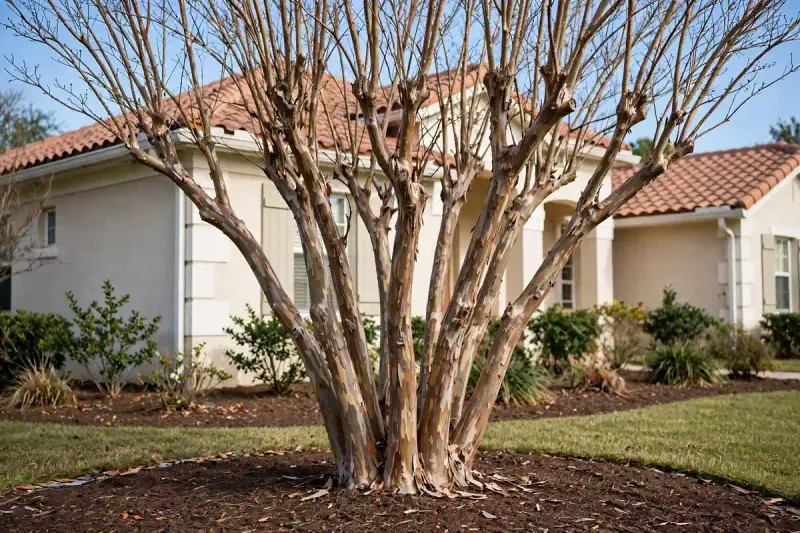
Here is a simple rule: leave the pruners down unless the plant has a specific structural or safety need. Healthy branches and seed capsules can stay as they are.
If a limb is damaged or hazardous, deal with it when it happens.
For shaping work, wait for dormancy and make selective cuts, following UF/IFAS timing advice. Skip topping.
This approach saves effort rather than guaranteeing bigger flowers.
A crape myrtle rarely asks for a fall haircut, so let it tell you when it needs one.