
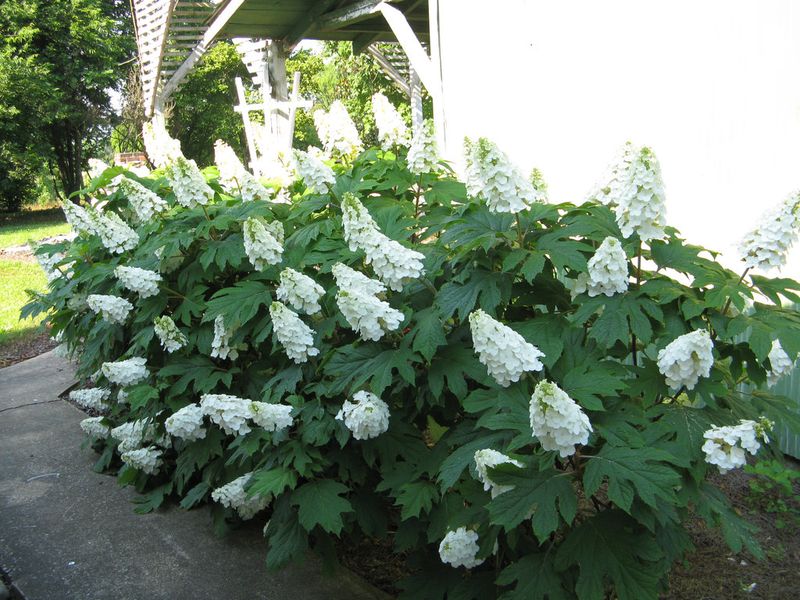
If your shady fence line has been host to struggling boxwoods, you might be wondering whether there is a better option built for that spot. Oakleaf hydrangea is a southeastern native that brings flowers, fiery fall color, and peeling winter bark to the same part-shade conditions where boxwood often feels like a chore.
This guide walks through whether the plant fits your specific fence line, how to get it established, and when boxwood is still the right call.
Oakleaf hydrangea offers a seasonal alternative to a formal boxwood line
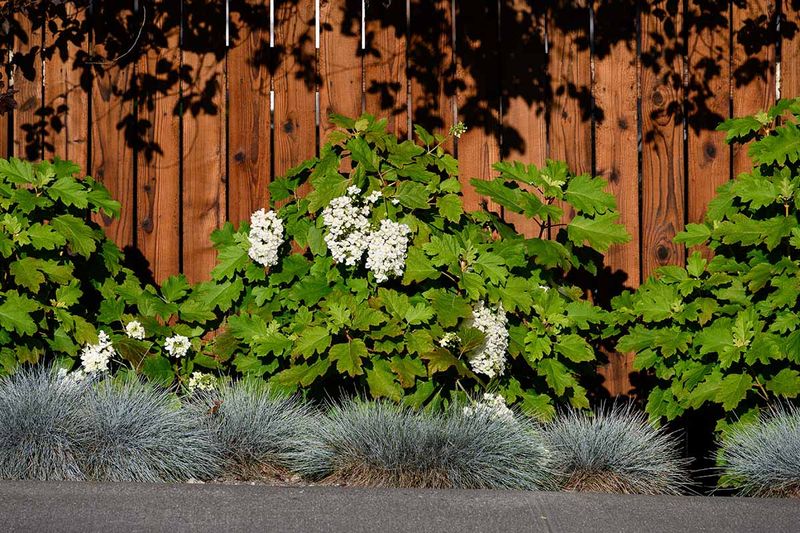
Along a shady North Carolina fence line, the choice between oakleaf hydrangea and boxwood comes down to what you actually want the planting to do. NC State’s plant profile for Hydrangea quercifolia lists it as suitable across the Coastal Plain, Piedmont, and Mountains, with summer flower panicles that open white and gradually fade to dusty pink or parchment tan, bold leaves that can turn red, burgundy, orange, or purple in fall, and mature stems that develop exfoliating bark for winter texture.
That four-season sequence is genuinely hard to match with a standard boxwood hedge, which holds its evergreen foliage year-round but offers little flower color, minimal fall interest, and no dramatic bark.
The trade-off is real, though. Oakleaf hydrangea is deciduous, so it drops its leaves each winter and cannot substitute for boxwood when a solid, year-round visual screen is the goal.
Its growth habit is informal and spreading, which suits a relaxed planting style but looks out of place beside a clipped formal hedge or a symmetrical entry planting where boxwood shines.
Boxwood earns its spot in North Carolina landscapes when the design calls for evergreen privacy, formal edging, topiary, a narrow clipped hedge, or reliable deer resistance. NC State’s profile for Buxus sempervirens confirms its value as a dense, long-lived evergreen.
The comparison is not about one plant being universally better. Oakleaf hydrangea is a stronger fit for a moist, part-shade, informal planting where seasonal interest and wildlife value matter more than an opaque year-round screen.
Evaluate the fence line’s light, moisture, and shade pattern
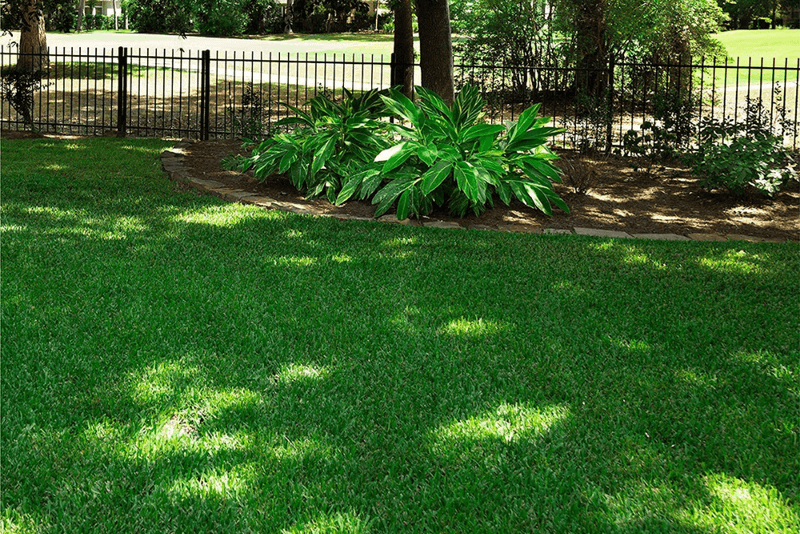
A north-facing fence does not produce a single growing condition, and treating it as one is how plants end up in the wrong spot. The shade on that side of the fence might be dappled light filtering through a canopy, a consistently cool and moist strip beside a brick wall, or a dry dead zone beneath a dense tree where roots have already claimed the soil moisture.
Each of those situations calls for a different approach.
University of Maryland Extension’s guide to native plants for shade draws a useful distinction between part shade, filtered or dappled shade, and deep shade, noting that plant performance can shift significantly across those categories. Oakleaf hydrangea grows in full sun to part shade and can tolerate shadier conditions, but it needs some light to flower reliably.
A fence bed that receives two to four hours of direct sun or consistent bright indirect light will generally support good bloom. A site with very deep shade – under a dense evergreen canopy or completely blocked from any sky exposure – may produce a plant that stays alive but flowers poorly and grows with less vigor.
Beyond light, check drainage and soil moisture carefully before planting. A low spot that stays wet after rain, a bed full of competing tree roots that pull moisture away, or a gravelly strip beside a fence that heats up and dries out quickly can all undermine a plant that otherwise looks like a good candidate on paper.
Walk the bed after a heavy rain and again during a dry week. Notice whether the soil stays consistently damp, drains quickly, or develops standing water.
Also factor in fence access: a planting bed that is difficult to reach for staining, repairs, or painting will become a maintenance problem as the shrub matures and fills in.
Choose a cultivar that fits the mature planting space
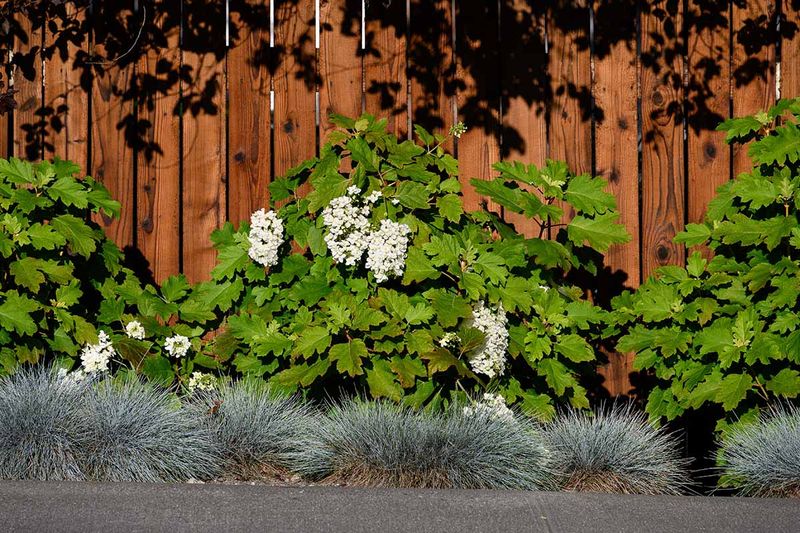
Once you know what the site can support, match the cultivar to the space rather than assuming one size fits all fence lines. The standard species commonly reaches approximately 6 to 8 feet tall and wide at maturity, and NC State’s Hydrangea quercifolia profile lists some forms at 8 to 10 feet wide.
A shrub that wide needs to be planted far enough from the fence to allow airflow behind the canopy, clearance for fence maintenance, and room so that maturing branches do not lean into a walkway or crowd neighboring plants.
Compact cultivars give homeowners with narrower beds or tighter spaces a more manageable option. ‘Pee Wee’ is listed by NC State at approximately 3 to 4 feet tall and 4 to 5 feet wide, making it a practical choice where the standard species would eventually overwhelm the bed. Gatsby Glow Ball® ‘NCHQ1’ is listed at approximately 3 to 4 feet in both height and width, offering a rounder, more contained silhouette.
Both are worth asking about at a local nursery, but cultivar dimensions can vary with soil quality, sun exposure, and regional conditions, so read the nursery label carefully and confirm expected size before buying.
Spacing plants correctly from the start saves significant work later. NC State’s landscaping for wildlife with native plants guide emphasizes planning for mature spread rather than current container size.
Planting too close to the fence compresses the shrub’s natural form, traps humidity against stems, and makes it harder to inspect and maintain the fence itself. Leave at least half the expected mature width as a buffer between the shrub’s center and the fence line, and space multiple plants so their canopies will just touch at maturity rather than overlap.
Plant for steady moisture instead of assuming native means drought-proof
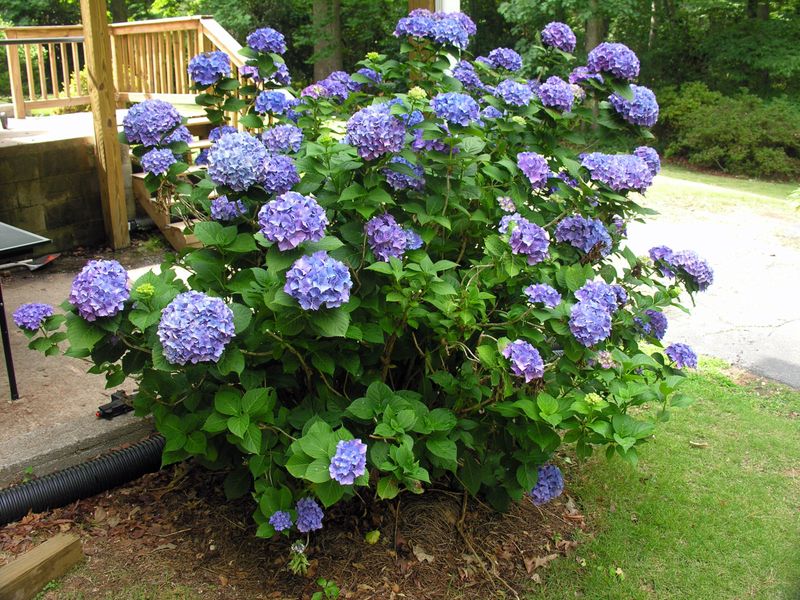
Being native to the Southeast does not make oakleaf hydrangea self-sufficient from day one. UGA Extension’s native plant guide specifically identifies it as a species associated with moist habitats that may perform poorly in dry sites without supplemental irrigation.
Plan for consistent watering during establishment and accept that hot North Carolina summers will require active attention to soil moisture, not a set-it-and-forget approach.
The planting sequence itself sets the foundation for success. Dig a hole roughly two to three times wider than the root ball but no deeper than the container height.
Set the shrub so the top of the root ball sits at or very slightly above the surrounding soil grade, which helps prevent water from pooling around the crown. Backfill with the native soil amended with organic matter if the existing soil is poor, water thoroughly to settle the roots and eliminate air pockets, and then apply two to three inches of mulch across the bed.
Keep mulch a few inches away from the stems to discourage rot and pest pressure. NC State’s species profile recommends organically rich, well-drained soil with medium moisture as the baseline growing condition.
Timing the planting wisely reduces early stress. NC State’s woody ornamentals handbook chapter describes fall as a favorable window for many native shrubs because roots can establish during cooler months before summer heat arrives.
Late fall and early spring are also generally workable windows for woody plants, though spring planting leaves less establishment time before the first hot stretch. Avoid midsummer planting when possible, since newly placed shrubs under heat stress need far more frequent irrigation to survive.
Water newly planted shrubs deeply two to three times per week during the first month, then taper to weekly deep watering through the rest of the first growing season, adjusting for rainfall.
Prune after flowering to preserve flowers, foliage, and winter bark
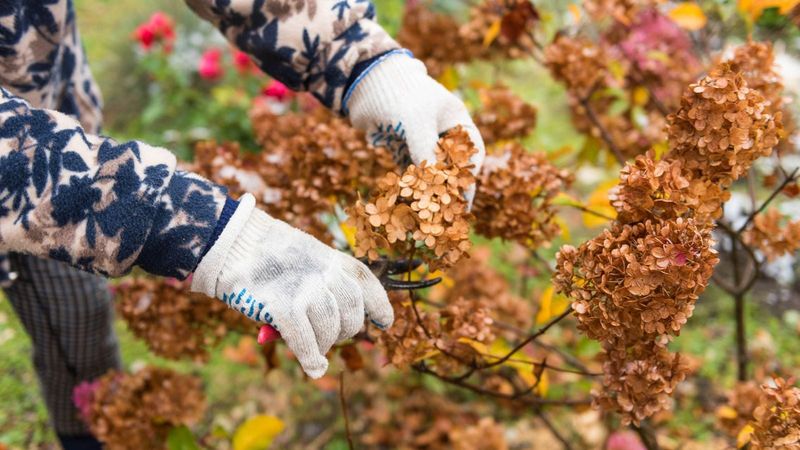
Oakleaf hydrangea moves through a genuine four-season sequence that rewards a homeowner willing to let it do its thing on the right schedule. Summer brings large, cone-shaped panicles that open creamy white and slowly shift toward dusty pink or a warm tan as they age and dry on the stem.
By fall, the large lobed leaves – shaped like oak leaves, as the name suggests – can turn vivid shades of red, burgundy, orange, or deep purple depending on the cultivar and site conditions. Once the leaves drop, the mature stems reveal peeling, cinnamon-colored bark that adds genuine winter texture to a fence line that would otherwise look bare.
Getting that full sequence depends on pruning at the right time. Oakleaf hydrangea flowers on old wood, meaning next season’s flower buds form on the current year’s stems before winter.
UGA Extension’s hydrangea pruning guide explains that pruning in fall or late winter removes those already-set buds, leaving you with a leafy shrub in summer but far fewer flowers. The correct window is immediately after the current season’s blooms have finished, typically in mid to late summer in North Carolina.
At that point, remove spent flower heads if you prefer a tidy look, cut out any dead or damaged stems at their base, and thin overcrowded branches to improve airflow through the interior.
NC State’s design tips for working with native plants note that the dried flower heads and exfoliating bark contribute meaningfully to winter garden structure. That structure is real and attractive, but it is not a substitute for an evergreen screen.
A row of oakleaf hydrangeas in January shows open stems, peeling bark, and dried flower remnants, not a solid visual barrier. If winter privacy is the primary goal, a deciduous shrub, however beautiful, cannot deliver it.
Investigate boxwood decline before blaming blight
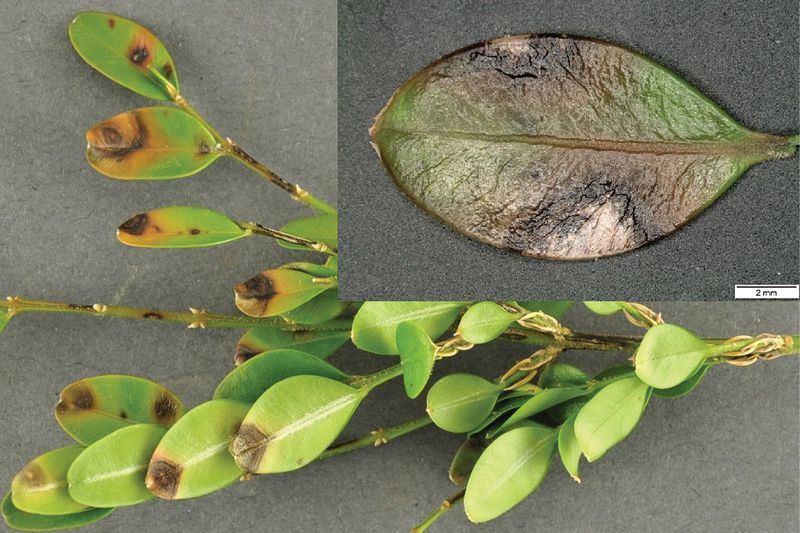
Summer browning in a boxwood hedge is alarming, but it is not a diagnosis. Boxwood blight is a serious, highly contagious fungal disease that can devastate a planting quickly, but several other problems produce similar-looking damage, and treating for the wrong cause wastes time while the actual problem continues.
NC State’s extension gardener handbook on diseases and disorders lists boxwood blight alongside leaf spot, root rot, insects, nematodes, winter injury, and drought stress as causes of boxwood decline. A boxwood that bronzes in winter, loses some interior leaves in dry heat, or develops patchy discoloration after a wet spring may be showing stress rather than blight.
Boxwood blight has specific, recognizable symptoms. Look for dark, roughly circular spots on leaves with a lighter center, dark brown or black streaks and lesions running along green stems (not just on dead wood), and extensive defoliation that tends to start in the lower interior of the plant and move outward.
Penn State Extension’s boxwood disease guide describes white sporulation on the undersides of affected leaves under humid conditions, which is a key distinguishing feature. If those specific symptoms are present, contact your county’s NC Cooperative Extension office or submit a sample to NC State’s Plant Disease and Insect Clinic for confirmation before removing plants or making treatment decisions.
How blight spreads matters as much as how to identify it. The fungal spores travel on contaminated pruning tools, clothing, shoes, pets moving through an infected planting, overhead irrigation that splashes soil and spores onto foliage, and infected plant material brought onto the property.
UGA Extension’s boxwood blight update outlines practical risk-reduction steps: switch to drip irrigation or hand watering at the base, improve air circulation by thinning dense plantings, rake and bag fallen leaves promptly, apply mulch to reduce soil splash, disinfect pruning tools between cuts with a dilute bleach solution or isopropyl alcohol, and always work from healthy plants toward any suspect plants rather than the reverse. Severely infected plants may need removal and disposal – not composting – to prevent the disease from spreading to neighboring boxwoods or to new plantings in the same bed.
Use the shrub’s wildlife value without promising pest control
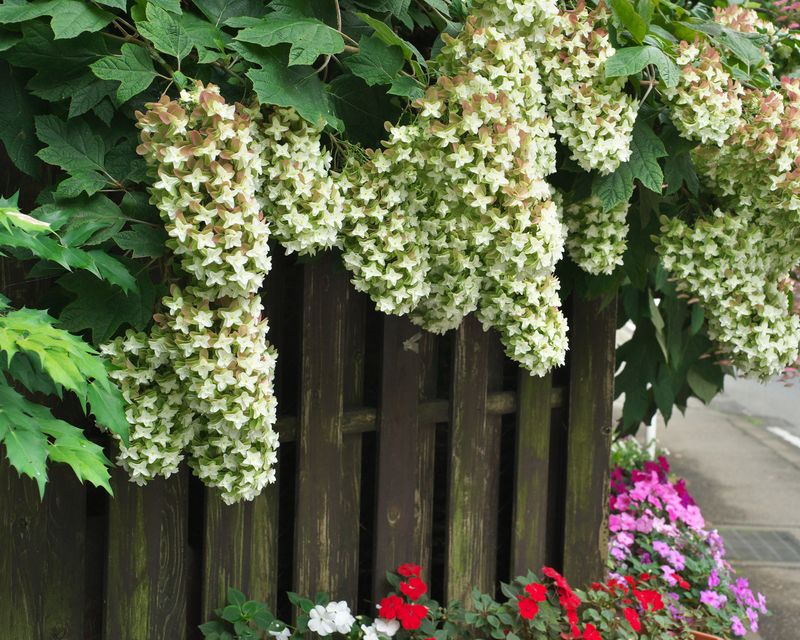
Oakleaf hydrangea pulls its weight in a wildlife-friendly yard, but the benefits are specific and worth stating accurately. NC State’s species profile identifies the flowers as attractive to butterflies and other pollinators and notes that songbirds eat the seeds.
Those are real contributions to a backyard habitat planting, especially along a fence line where a diverse mix of plants supports more insect and bird activity than a monoculture of clipped boxwood.
What one shrub cannot do is meaningfully reduce tick or mosquito pressure around your yard. The wildlife benefits of oakleaf hydrangea relate to its flowers and seeds, not to any demonstrated pest-suppression effect.
If tick and mosquito management is a priority, those concerns call for separate, targeted strategies rather than plant selection alone.
A safety note belongs in any honest account of this plant. NC State lists oakleaf hydrangea as having low-severity poisonous characteristics.
That classification does not mean the plant is harmless if eaten, and households with young children or pets should prevent ingestion of any plant parts. The ASPCA’s hydrangea listing describes gastrointestinal signs associated with hydrangea ingestion, though that entry focuses on Hydrangea arborescens rather than specifically on H. quercifolia, so species-specific toxicity details should not be assumed to transfer directly.
If a child or pet ingests any part of the plant, contact your local poison control center or a veterinarian promptly rather than waiting to see whether symptoms develop.
Match the plant to the site and the job you need it to do
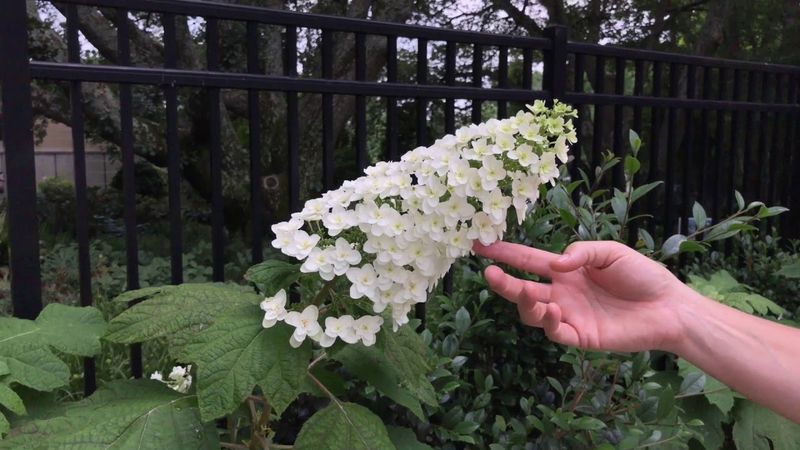
The decision comes down to site conditions and what you need the planting to accomplish. Oakleaf hydrangea is a strong choice for a fence bed with part shade, moderate consistent moisture, organically rich well-drained soil, and enough room for a shrub that can reach 6 to 8 feet or more in spread.
If you want flowers in summer, color in fall, bark interest in winter, and a planting that supports pollinators and songbirds, NC State confirms it performs across all three NC regions in those conditions.
Boxwood remains the better call when the design requires an evergreen visual screen through winter, formal clipped geometry, a narrow hedge, topiary work, or reliable resistance to deer browse. NC State’s boxwood profile supports those specific strengths.
Neither shrub is universally superior. The sound choice matches mature size, microclimate, seasonal behavior, and maintenance requirements to the actual goal for that particular fence line.
Get the site assessment right, pick a cultivar sized for the space, water consistently through establishment, and prune at the correct time. A well-placed oakleaf hydrangea along a North Carolina fence rewards patience with one of the most complete seasonal displays a native shrub can offer.