
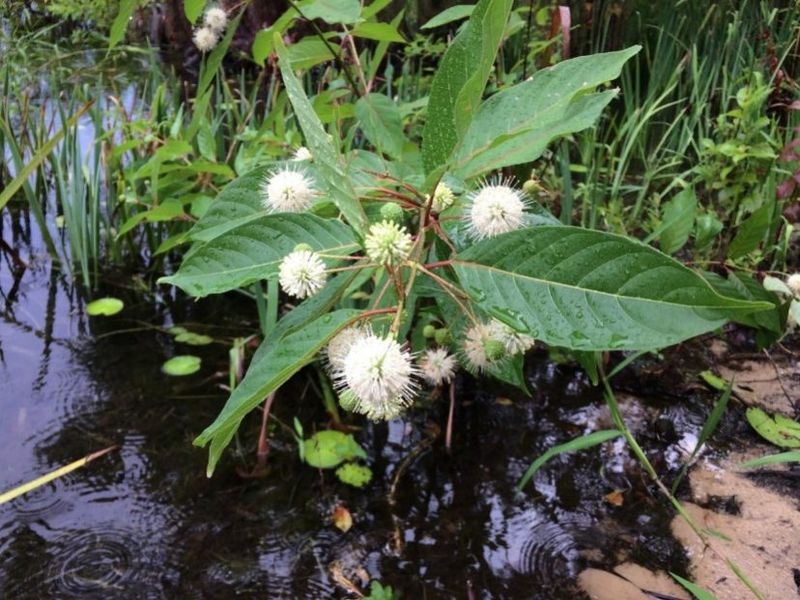
Mosquitoes are a real problem in North Carolina yards, and the idea of planting one native shrub to stop them from breeding sounds almost too good to be true. Honestly, it is.
Buttonbush is a beautiful, wildlife-friendly native shrub that belongs in wet spots across the Piedmont, Coastal Plain, and mountains, but planting it will not make mosquitoes stop multiplying. What actually works is a combination of managing standing water, using the right products when needed, and protecting yourself from bites.
Correct the promise before choosing a plant
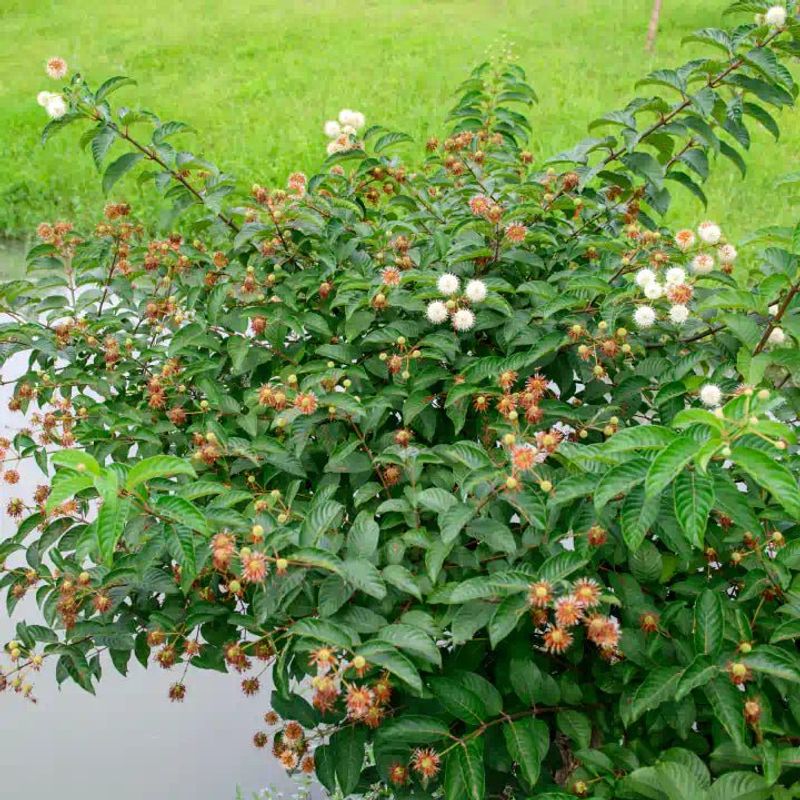
Somewhere between social media and the garden center, a compelling idea took hold: plant the right native shrub in a damp corner of your yard and watch mosquitoes stop reproducing. Buttonbush, Cephalanthus occidentalis, has become the plant most often named in that promise.
Before you dig a hole based on that claim, the evidence does not back it up.
No reliable research found demonstrates that placing buttonbush beside a wet spot stops mosquitoes from multiplying. CDC guidance on mosquito control at home centers on removing, draining, covering, or treating standing water, not on selecting particular plants.
North Carolina health guidance follows the same logic. A shrub growing at the water’s edge does not drain the water, and it does not prevent larvae from developing in it.
That said, this article is not an argument against buttonbush. The NC State Extension profile for buttonbush presents it as a legitimate native for consistently wet soils, ponds, swamps, streambanks, and rain gardens, with real value for pollinators, birds, and other wildlife.
Those are honest, supported reasons to plant it.
Some research on aquatic vegetation and constructed wetlands does show that plant structure can affect where mosquitoes lay eggs, how larvae find shelter, and how easily predators reach them. A study on Myriophyllum aquaticum cover and Anopheles mosquito behavior illustrates how site-specific and species-specific those findings are.
None of that research tests buttonbush in a typical North Carolina yard, and none of it justifies a blanket promise that one shrub will stop mosquitoes from breeding.
Two separate questions deserve separate answers: Does buttonbush belong in your wet landscape? Yes, often.
Will planting it control mosquitoes? No, not on its own.
Keep those questions apart and you will make better decisions on both.
Look for standing water, not damp soil
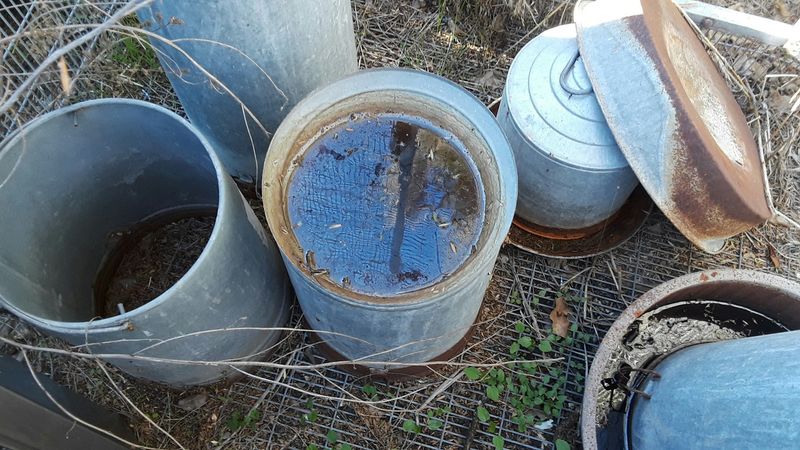
Soggy ground after a heavy rain feels like a mosquito factory, but moist or waterlogged soil alone is not where mosquito larvae actually live. CDC information on where mosquitoes live makes the distinction clear: larvae and pupae require standing water, typically water with little or no movement.
A muddy planting bed is uncomfortable to walk through; a forgotten bucket holding two inches of rainwater is a nursery.
North Carolina homes offer mosquitoes a surprising number of breeding spots that have nothing to do with natural wetlands. Clogged gutters trap water against the roofline for days after a storm.
Flower pots and saucers collect runoff and sit undisturbed. Old tires, pool covers that sag in the middle, tarps over firewood piles, and children’s toys left outside all hold water long enough for a full mosquito generation to develop.
Tree holes in older oaks and pecans are another overlooked source, particularly in wooded Piedmont and mountain yards.
Rain barrels are a popular water-conservation tool, but an uncovered or improperly sealed barrel is a large, reliable breeding container. Birdbaths, pet water bowls, and decorative fountains that stop circulating become productive sites within a week.
CDC guidance on mosquito control at home lists these containers specifically because they are within a homeowner’s direct control, unlike a neighbor’s pond or a roadside ditch.
Natural wetlands, pond margins, and streambanks are a different category. Those habitats often support fish, dragonfly larvae, predatory beetles, and other organisms that consume mosquito larvae.
Draining or disturbing them is not the right response and can make ecological problems worse. The practical target for a homeowner is the artificial, manageable water that sits close to the house and gets ignored between rainstorms.
Walking the yard with fresh eyes once a week, looking for anything that holds water rather than anything that looks wet, is the right starting point. Damp soil under a buttonbush is not the problem.
The half-filled wheelbarrow parked beside it is.
Use buttonbush for the wet landscape it actually suits
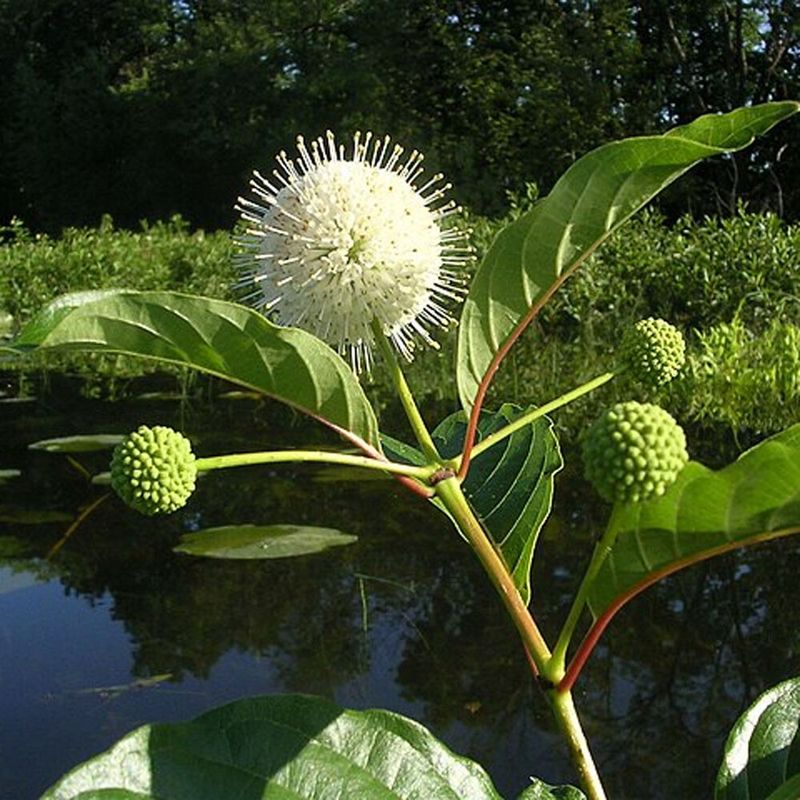
Buttonbush earns its place in a North Carolina yard on its own merits, completely apart from any mosquito story. The NC State Extension Gardener Plant Toolbox profile for Cephalanthus occidentalis describes it as native throughout North Carolina and suited to consistently moist to wet soils, including pond margins, swamps, streambanks, rain gardens, and even shallow standing water up to about three feet deep.
Few native shrubs can handle that range of wet conditions while still performing reliably in the landscape.
At maturity, buttonbush can reach roughly twelve feet tall in natural settings, though smaller cultivated forms are available for tighter spaces. The flowers are distinctive: white, globe-shaped clusters that appear in summer and draw in a wide range of pollinators.
Bees, butterflies, and hummingbirds work the blooms actively. After flowering, the plant produces round seed heads that persist into fall and winter, offering food for waterfowl, songbirds, and small mammals.
Beyond food, buttonbush provides cover and nesting structure for birds that favor wetland edges. Wood ducks are frequently cited visitors where buttonbush grows near open water.
The dense branching gives shelter to species that would otherwise avoid an exposed pond bank. For a North Carolina homeowner trying to support native wildlife in a low spot that stays wet most of the year, buttonbush addresses a real design challenge that few other native shrubs can match.
What the NC State profile does not claim, and what the plant cannot honestly deliver, is mosquito suppression. Planting buttonbush in a puddle does not remove the puddle.
The foliage, branches, and leaf litter may contribute shade and organic material at the water’s surface, but that is a description of the plant’s presence, not evidence that it improves or worsens mosquito control in a residential yard. Choose buttonbush because the site is genuinely and intentionally wet and the goal includes native habitat.
That is a solid, supportable reason to plant it.
Run a weekly water audit
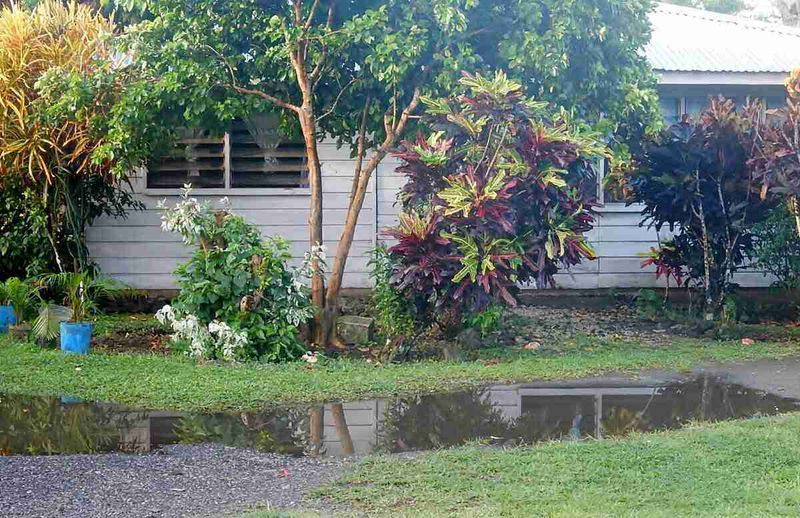
A weekly walk around the yard looking specifically for water-holding objects is the single most effective thing a homeowner can do to reduce mosquito breeding near the house. The routine does not require special equipment or chemicals.
It requires consistency, because female mosquitoes can lay eggs in a bottle cap’s worth of water, and a new generation can develop in as little as a week under warm North Carolina summer conditions.
CDC guidance on mosquito control at home recommends emptying, scrubbing, turning over, covering, or discarding any item that holds water. The scrubbing step matters more than it sounds.
Mosquito eggs can stick to the walls of containers after the water drains away, surviving until the next rain refills the container. Rinsing alone does not remove them.
A quick scrub with a brush before refilling a birdbath or rinsing a planter removes the egg layer that an empty-and-refill approach misses.
North Carolina DHHS guidance on preventing mosquito bites adds several specific household tasks to the list: clean gutters at least once a season and after heavy leaf fall, repair dripping faucets and hose bibs that create puddles near the foundation, change birdbath water and pet water bowls at least twice a week, and cover rain barrels with tight-fitting lids or fine mesh. Each of those tasks addresses a real, recurring water source that homeowners often overlook between storms.
Window and door screens deserve attention in this same audit. CDC information on mosquito control programs notes that functioning screens keep adult mosquitoes out of living spaces, which matters because outdoor breeding control is never complete.
A torn screen in a bathroom window or a gap around a dryer vent undoes a lot of outdoor work. Checking screens during the weekly audit adds only a few minutes and closes an easy entry point.
The goal of the audit is to eliminate the water before larvae develop, not to react after noticing mosquitoes at dusk. A yard that gets checked every seven days has far fewer productive breeding sites than one that gets attention only when bites become annoying.
Buttonbush planted nearby does not change that math.
Treat water that must remain
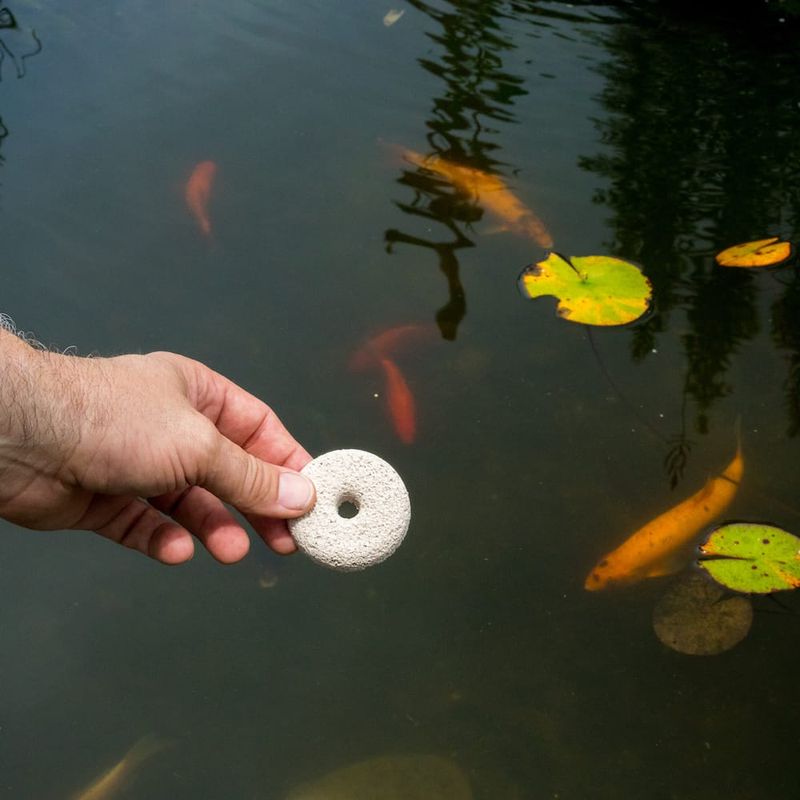
Some water simply cannot be removed. An established ornamental pond, a properly designed rain garden that holds water by intent, a large decorative fountain, or a rain barrel that feeds a drip irrigation system all serve real purposes.
Emptying them every week is not practical, and in some cases defeats the point of having them. For those situations, EPA-registered larvicides applied according to label directions are the evidence-based next step.
CDC guidance on larvicides identifies mosquito dunks and mosquito bits as homeowner-accessible options for appropriate standing water. Both products use Bacillus thuringiensis israelensis, commonly called Bti, as their active ingredient.
Bti is a naturally occurring soil bacterium that produces proteins toxic to the larvae of mosquitoes, black flies, and fungus gnats when they ingest it. It does not harm adult insects, fish, birds, mammals, or most other aquatic organisms when used as directed.
EPA information on Bti for mosquito control describes it as specifically targeted and low-risk when applied correctly, with no reported toxicity to humans and minimal impact on honeybees. Those qualifications matter.
Products differ in concentration, formulation, and labeled uses. A dunk designed for an ornamental pond is not automatically appropriate for every water feature, and no Bti product should be applied to a drinking-water source unless the product label specifically permits that use.
Reading the label before applying is not optional guidance; it is a legal requirement and a practical safety step.
Larvicide treats the water where larvae are already present. It does not prevent new eggs from being laid, and it does not affect adult mosquitoes already flying.
That means larvicide works best as part of a broader routine that also includes the weekly water audit, not as a standalone fix. Placing a mosquito dunk in a pond and then ignoring the birdbath, the gutter, and the saucer under the potted fern leaves most of the problem untouched.
Buttonbush growing beside a treated pond does not make the treatment more or less effective. The larvicide and the shrub are doing entirely different jobs, and only one of them is doing a mosquito-control job.
Design the planting for access and uncertainty
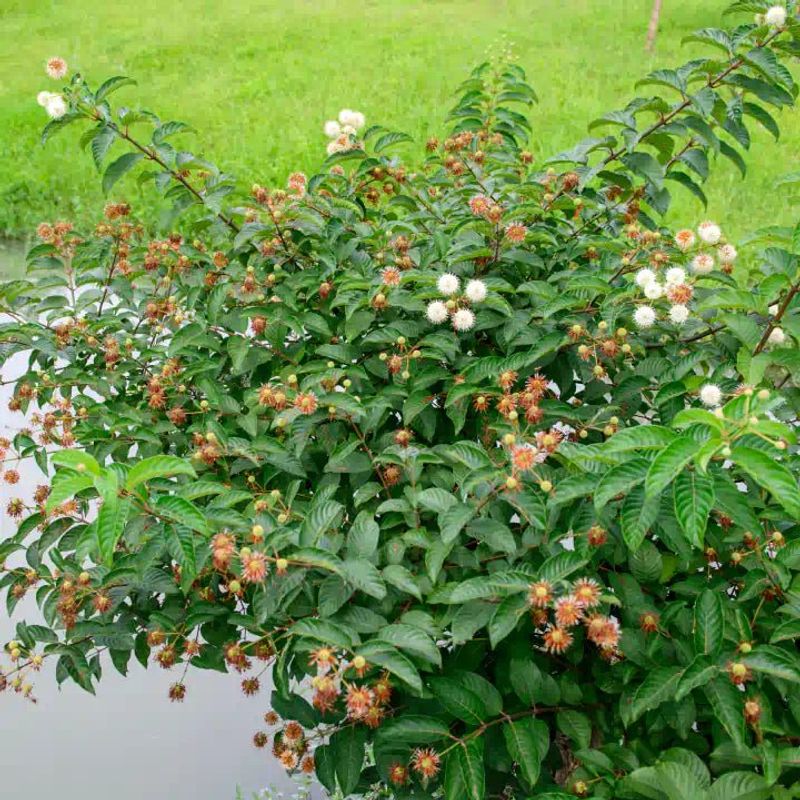
Once the water-management work is underway, buttonbush can be a genuinely useful part of a wet-site design. The key is placing it in a site that is intentionally and permanently wet, such as a planned rain garden, a pond margin, or a maintained wetland edge, rather than dropping it into an unmanaged puddle and hoping the situation improves.
The puddle does not drain because a shrub grows in it.
Research on aquatic vegetation in constructed wetlands shows that plant structure does influence mosquito habitat in complex ways. A study examining Myriophyllum aquaticum cover and Anopheles mosquito oviposition found that plant density, water depth, and the availability of open water all affected where mosquitoes laid eggs and how larvae used the habitat.
A separate California constructed-wetland study on emergent vegetation and mosquito production found that vegetation management affected mosquito output under specific site conditions. Neither study tested buttonbush in a residential North Carolina yard, and neither result can be translated into a reliable prediction for a backyard planting.
What those studies do suggest is that how a planting is managed matters as much as what is planted. Dense, unmanaged vegetation over standing water can shelter larvae from predators and create calm microhabitats where eggs accumulate.
That is not an argument for removing native shrubs wholesale; it is a reason to design with access and maintenance in mind from the start.
Practical design choices make a real difference. Leave enough open space around buttonbush to walk in and inspect the water surface.
Avoid planting so densely that airflow near a patio or seating area is cut off entirely. CDC information on adulticides notes that adult mosquitoes rest in dense brush, tall grasses, and shaded areas during the day, so planting directly adjacent to an outdoor seating area without a buffer is worth reconsidering.
A well-placed buttonbush in a managed rain garden, with open sightlines and room to maintain the surrounding water, gives you the wildlife habitat and wet-site coverage the plant is genuinely suited for, without creating a hidden resting zone for adult mosquitoes right next to where the family spends time outdoors.
Protect people separately from the planting
Even a yard with excellent water management and a well-placed native planting will still see adult mosquitoes. They fly in from neighboring properties, natural wetlands, roadside ditches, and any managed water source that was missed in the last audit.
Controlling breeding on your own property reduces your local mosquito population, but it does not create a barrier against mosquitoes that developed somewhere else.
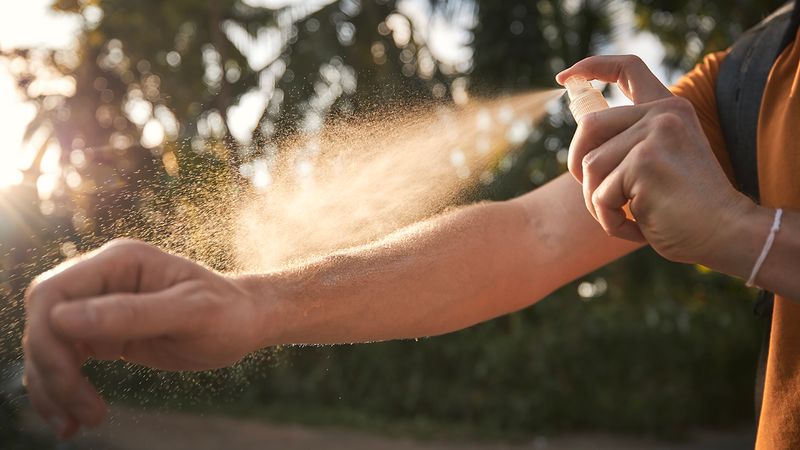
North Carolina DHHS guidance on preventing mosquito bites recommends EPA-registered repellents, protective clothing, and functioning window and door screens as the personal protection layer that covers what water management cannot. Repellents containing DEET, picaridin, IR3535, or oil of lemon eucalyptus are EPA-approved options.
Wearing long sleeves and pants during peak mosquito hours, typically dawn and dusk, reduces exposed skin without requiring any product at all.
Yard spraying is a tempting option when bites feel constant, but routine whole-yard application of adulticides is not the default response that CDC or NC guidance recommends. CDC information on integrated mosquito management favors targeted measures, label compliance, and professional help where the situation warrants it.
If a homeowner does use an outdoor adulticide, CDC guidance on adulticides is explicit that these products should not be applied to blooming plants or plants that pollinators are actively visiting. Buttonbush in bloom is covered in bees.
Spraying it to reduce the mosquitoes resting nearby would harm pollinators the planting was meant to support.
No plant, native or otherwise, creates a mosquito-free zone simply by growing in the yard. A buttonbush that brings in bees, feeds migrating birds, and stabilizes a wet bank is doing its job well.
Protecting the family from bites requires repellents, screens, and managed water, working alongside the planting rather than relying on it.
Make the final decision by separating habitat from control
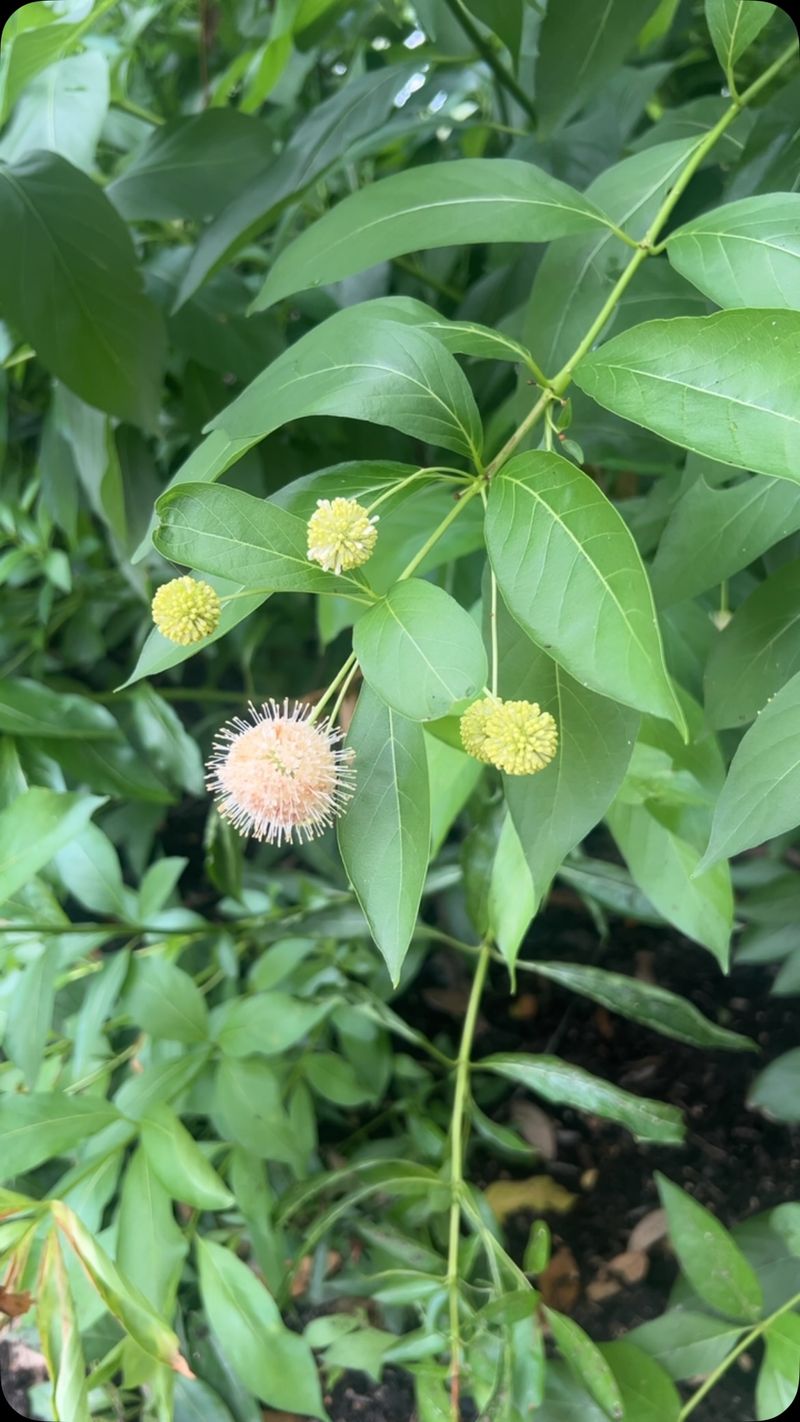
The decision rule is straightforward once the two goals are separated. Choose buttonbush when a site is genuinely and permanently wet, when the goal includes native wildlife habitat, and when the planting fits the space and light conditions.
The NC State Extension profile for buttonbush gives you the honest case for the plant: wet-site tolerance, pollinator value, bird and waterfowl habitat, and native status across North Carolina. Those reasons stand on their own.
Manage standing water when the goal is mosquito control. The sequence is: inspect weekly, remove or drain anything that holds water, scrub containers before refilling, cover what cannot be drained, and treat appropriate remaining water with an EPA-registered larvicide according to its label.
CDC guidance on mosquito control at home and NC DHHS prevention guidance both point to that sequence as the homeowner’s primary tool. Add repellents and functioning screens to protect people from adult mosquitoes that arrive from outside the yard.
Buttonbush beautifies a wet site and supports native wildlife. It does not eliminate mosquito-breeding habitat.
A yard that has both a well-placed buttonbush and a consistent water-management habit is genuinely better than a yard with only one or the other, because the shrub and the water work are solving different problems in the same space.