
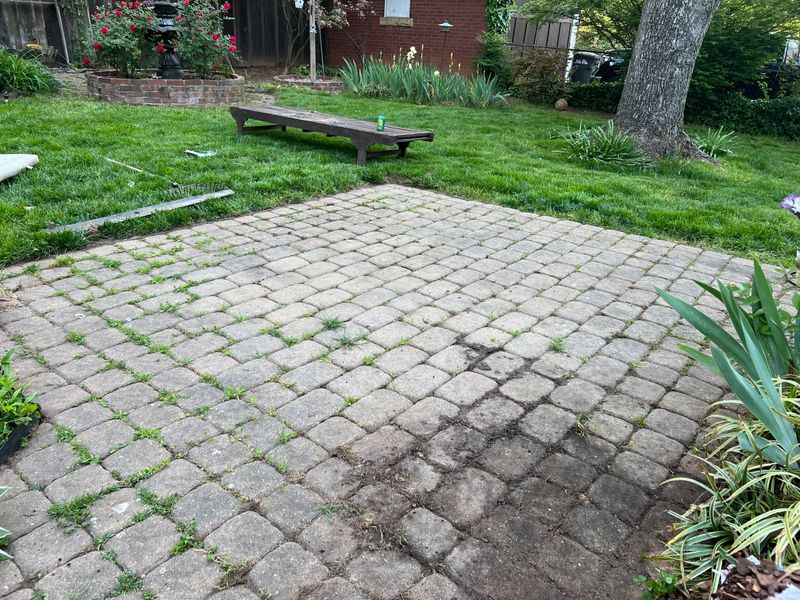
Weeds sprouting in the gaps of a patio can make a clean outdoor space look neglected. Pulling them by hand often feels like a job that never ends.
Refilling the joints with the right material may cut down on how many come back. Here is how to tell if it suits your pavers and how to do it carefully.
Why weeds establish between pavers
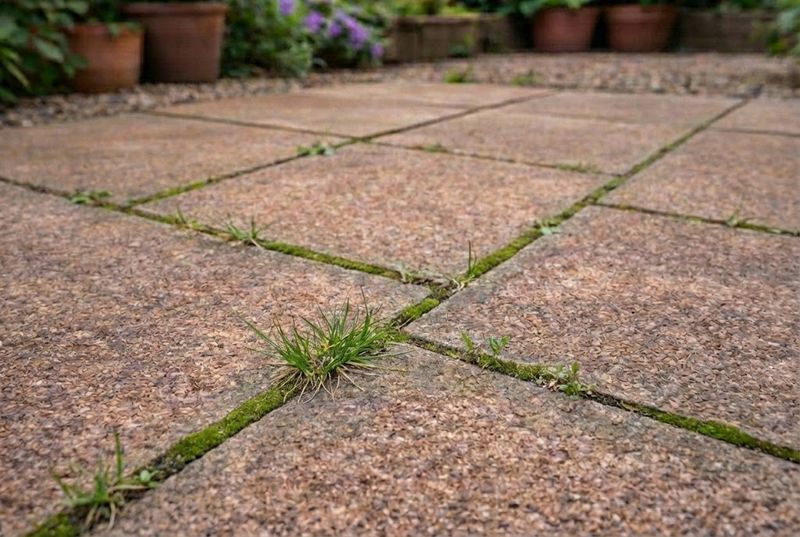
Paver joints are narrow, but they can hold more than you might expect. Weeds can take root in the joint sand itself or in soil, dust, and plant debris that settle into the gaps over time.
The cause can depend on the plant and the site, so it is not safe to assume every weed starts from beneath the patio, or that none do.
Joints that have lost some of their sand are especially open to growth. Rain, foot traffic, and sweeping can wear fill down, and the space left behind collects debris.
Cornell’s turf and landscape weed guidance for hard surfaces recommends filling joints as a preventive step, along with sweeping them regularly and removing weeds before they set seed.
Those habits are worth starting now, whatever you decide about new joint material. A quick pass with a broom after a windy day keeps seeds and dirt from building up.
Pulling a seedling while it is small takes seconds, and it stops that plant from dropping more seeds into your joints.
What polymeric sand can—and cannot—do
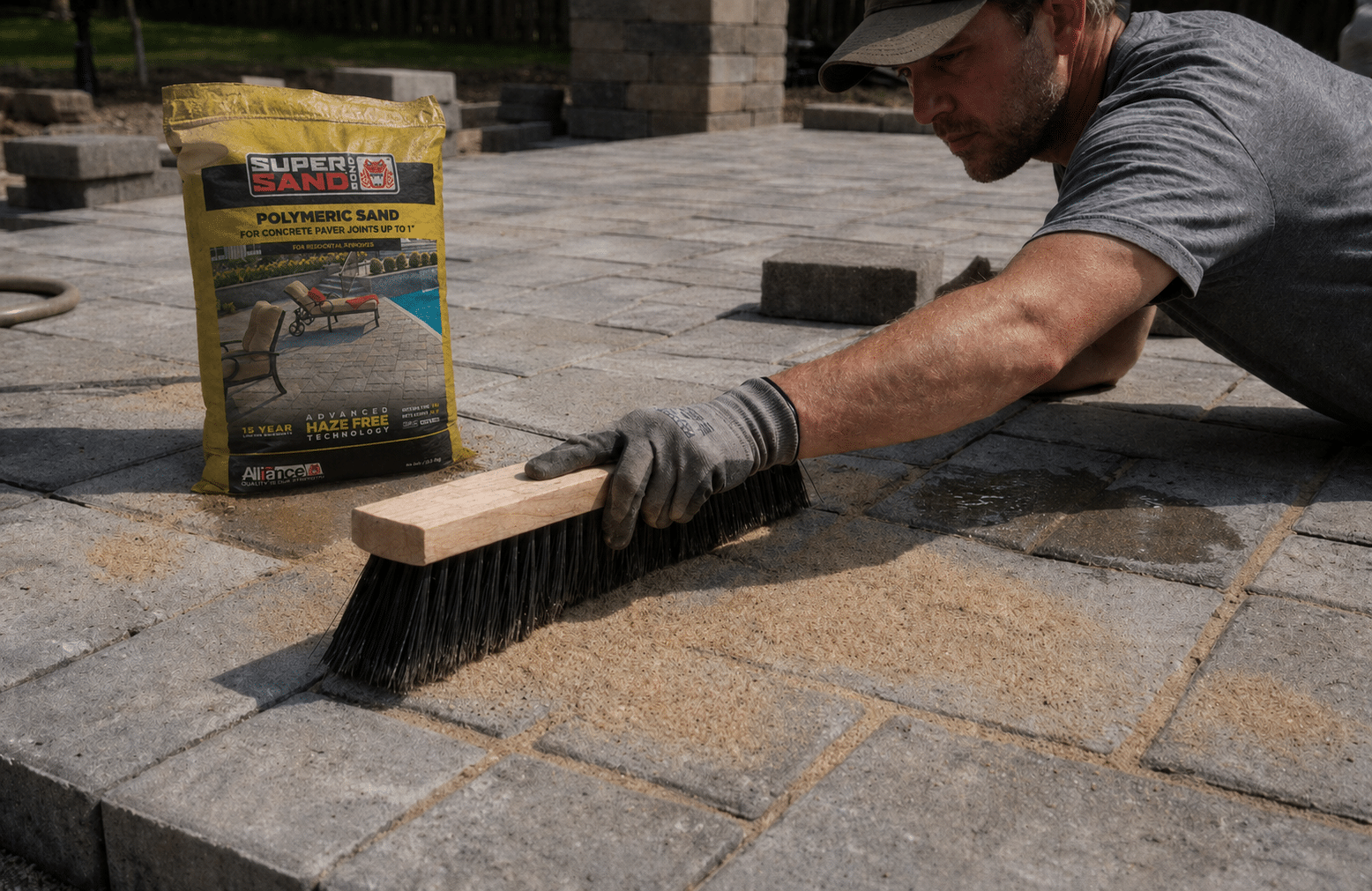
Polymeric sand is a joint-filling option made of fine sand mixed with a binder. When it is activated with water, the binder helps the sand harden and hold together.
That firmer fill resists washing out, which makes it harder for new weeds to find a place to start. A UF/IFAS Extension article on polymeric sand describes it as a hardening joint material.
Now the limits. UC IPM says polymeric sand can reduce weeds but is not a complete fix.
Seeds can still land on top of the hardened sand, and debris that builds up on the surface can give them a foothold.
Think of it as a preventive measure that lowers how often you deal with weeds, not a guarantee of a weed-free patio. It also suits only certain paving systems, which is the next thing to check.
Check whether your pavers need to drain
Before buying anything, find out what kind of paving you have. Conventional pavers sit on a compacted base and shed water off the surface.
Permeable pavers are built to let water soak down through the joints into a stone layer below.
That difference matters because polymeric sand is not porous. UF/IFAS Extension notes that it does not let water through the way a permeable system needs.
Hardening the joints on a drainage-designed surface could defeat its purpose.
Clues can help: wider joints filled with small angular stone often point to a permeable design. Installation paperwork, the contractor who built the patio, or the paver manufacturer can confirm it.
OSU Extension’s porous pavement fact sheet advises maintaining these surfaces with the appropriate joint rock. If you are unsure, get guidance for your specific system before choosing joint material.
Remove weeds and old joint material
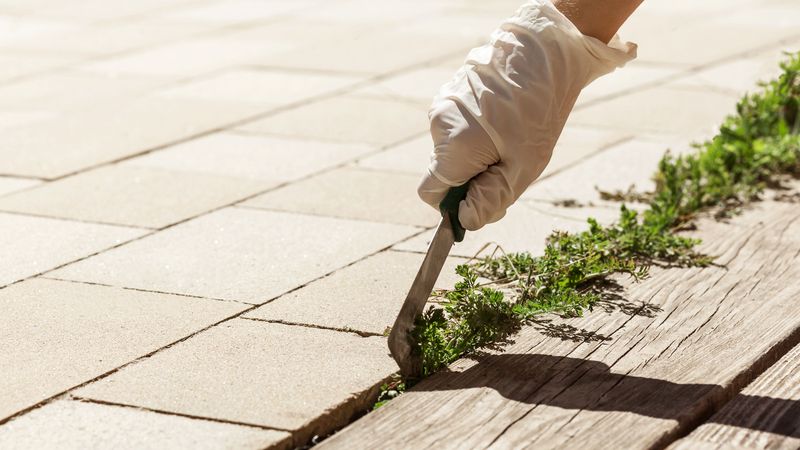
Here is the candid part: the prep is the bulk of the job. For an existing patio, manufacturer directions for replacement projects, such as Techniseal’s guide to removing and replacing old jointing products, call for emptying the old material first.
Do not spread new polymeric sand over what is already there.
Pull out weeds along with their roots as best you can. Established perennial weeds may regrow from roots left behind, so expect to revisit stubborn ones.
Which tool works best depends on your pavers, joint width, and the weeds, so choose a method that will not chip the paver edges.
Power washing can seem like a shortcut, but OSU Extension’s paver guide warns it can dislodge joint sand. If you use it, go carefully and check your product directions, since some require dry pavers afterward.
Apply the new sand by the product instructions
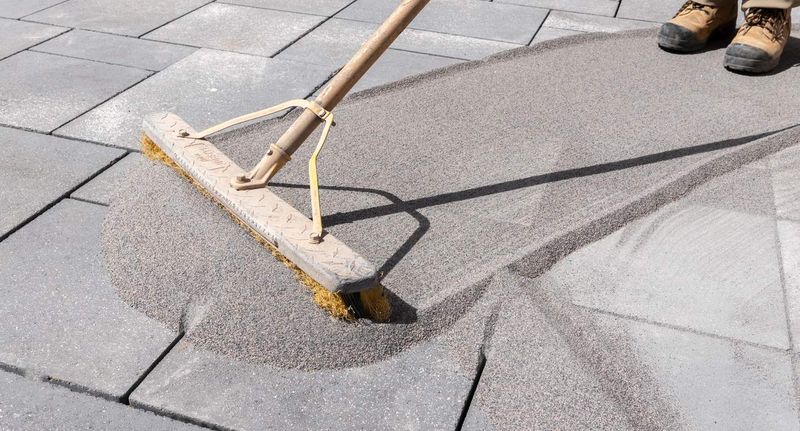
Products differ, so the label on your bag is the final word. Start by choosing a sand that suits your pavers and joint width.
Then read what the directions require for surface dryness, residue removal, and watering, because those steps vary from one manufacturer to the next.
Many directions call for dry pavers and joints. Techniseal’s step-by-step brochure is one example, covering sweeping sand into the joints, compacting, and clearing leftover residue from the surface.
Leftover dust on the pavers can bond when wet and leave a hazy film, so this step deserves patience.
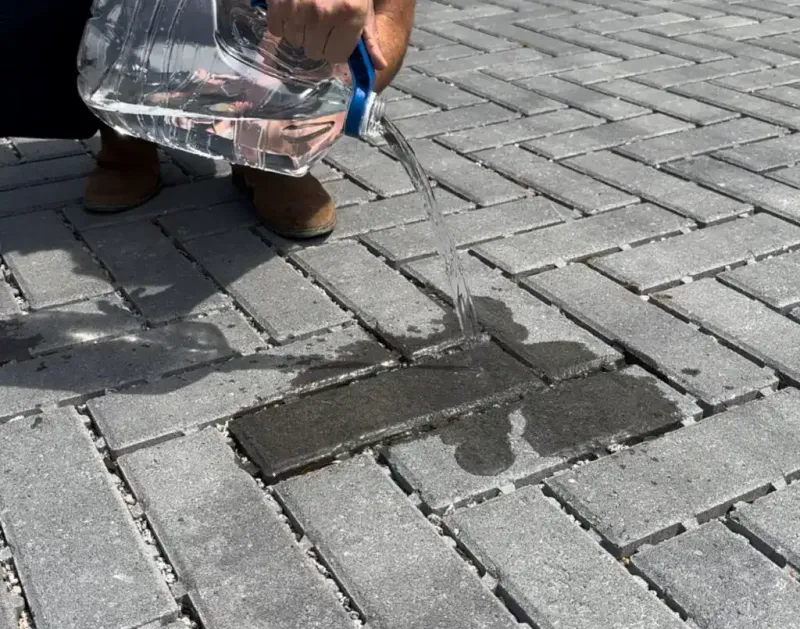
If the product calls for activation, water it in the way the instructions describe, usually a light, controlled mist rather than a heavy spray. Overwatering can wash out the binder.
Check the forecast too, since some products need a dry window afterward. Another brand may list different timing, so treat any single set of directions as an example, not a rule.
Maintain the joints and expect possible regrowth
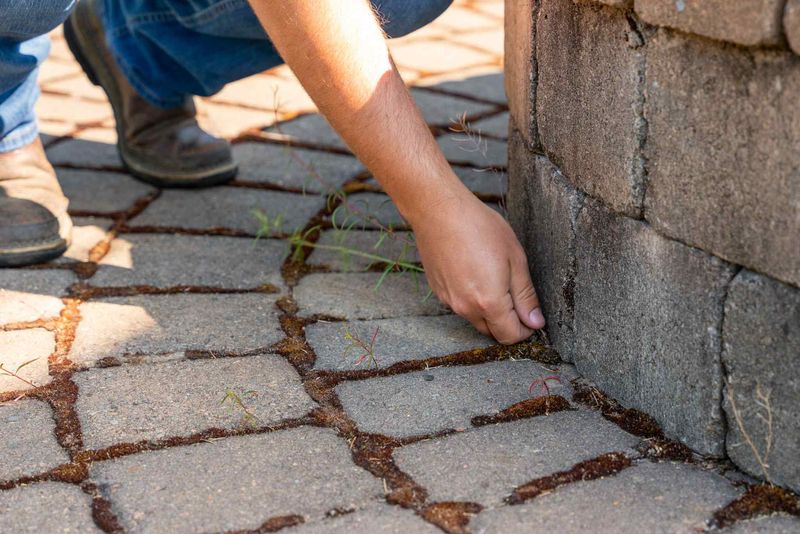
Once the sand has set, a little upkeep protects your work. Sweep the joints regularly and pull any new seedling before it sets seed, as Cornell’s hard-surface guidance suggests.
Watch for spots where fill has eroded and debris is collecting, since those are the likeliest places for weeds to return.
Quick fixes carry risks. UC IPM cautions against flame near dry vegetation or anything that could catch fire.
Penn State Extension says household vinegar may only burn very young seedlings, and salt can harm nearby plants and linger in soil and runoff. If you use any herbicide, EPA guidance on pesticide drift advises keeping it on the intended area and out of storm drains.
A few weeds will likely show up anyway, and that is normal. Fewer and easier to pull is a realistic win.