
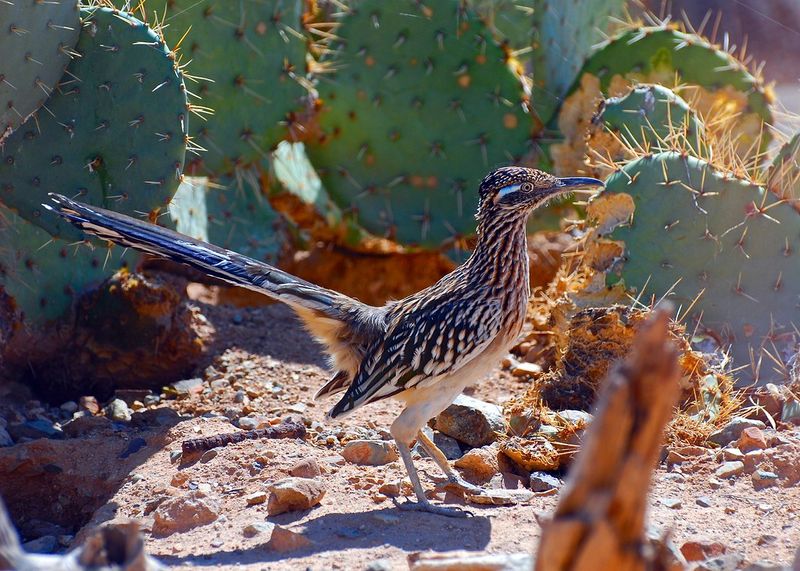
Somewhere in a Texas yard, a Greater Roadrunner is jogging across open ground, head low, eyes sharp, looking for anything that moves. These birds are real, they live across the state, and they eat scorpions along with just about everything else that crosses their path.
Prickly pear cactus is one native plant that can contribute to the kind of habitat roadrunners prefer, but it is not a switch you flip to bring the birds in or push scorpions out. Understanding what the plant actually does, and what it does not do, helps you set up your yard in a way that is genuinely useful for wildlife and safer for your household at the same time.
Prickly pear can provide cover a roadrunner may use
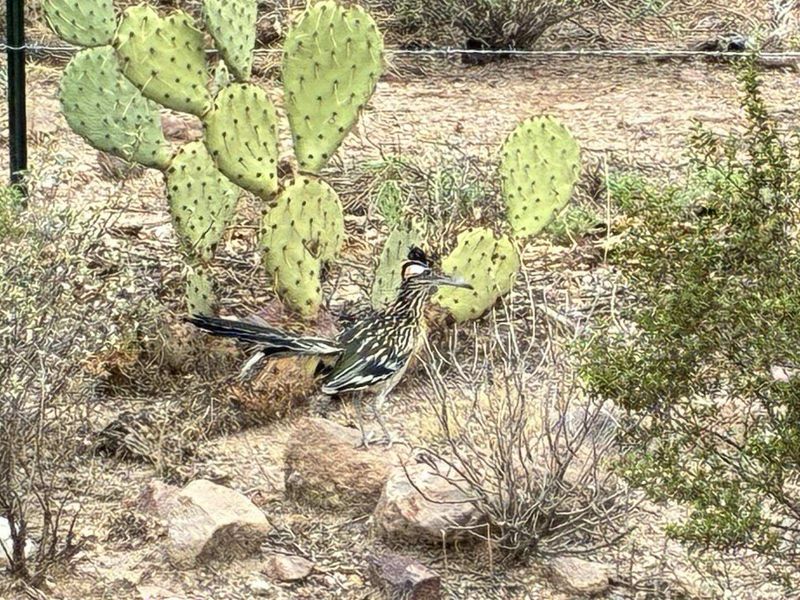
Prickly pear cactus, belonging to the genus Opuntia, shows up across every major ecoregion in Texas, from the brushy South Texas Plains to the rocky slopes of the Trans-Pecos. Its flat, spine-covered pads form low, dense clumps that few animals want to push through, which is exactly the kind of structure that can offer a nesting or resting bird some real protection.
That physical quality is the strongest, most defensible reason to connect prickly pear with roadrunner habitat.
Texas Parks and Wildlife Department materials note that roadrunners commonly nest in cacti, thorny shrubs, low trees, and thickets, so prickly pear fits within a broader category of suitable cover rather than standing alone as a uniquely preferred plant. The TPWD roadrunner profile describes the bird using a range of thorny and sturdy vegetation, and the Texas Breeding Bird Atlas confirms that Greater Roadrunners occupy developed landscapes, including suburban yards, when appropriate habitat conditions are present.
What prickly pear provides is a contribution to habitat suitability, not a guaranteed attraction. A roadrunner does not appear simply because a cactus does.
Territory size, regional prey populations, nearby disturbances, and the overall structure of the surrounding landscape all shape whether a bird settles into a yard or moves on. Planting prickly pear creates one piece of a habitat puzzle, and framing it that way keeps expectations honest and planning practical.
Open hunting space matters as much as thorny cover
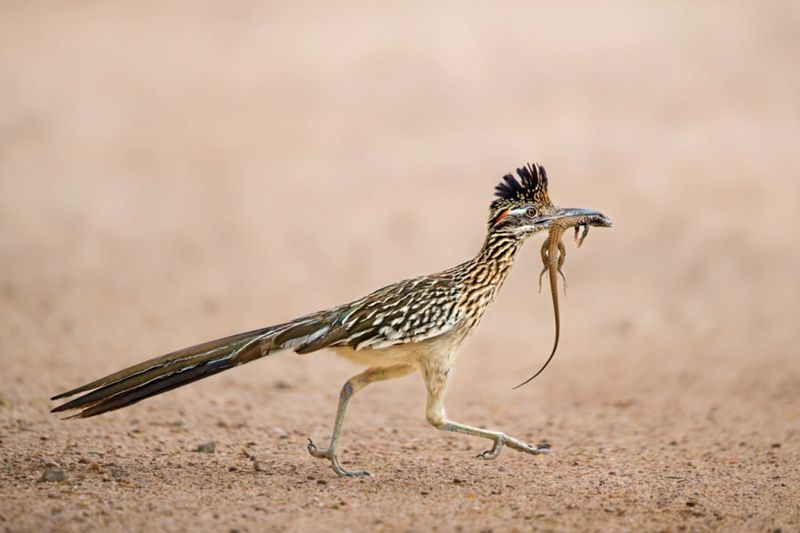
A yard that is wall-to-wall vegetation does not suit a Greater Roadrunner particularly well. These birds hunt by walking fast across open ground, scanning for movement, and chasing prey on foot.
They need room to run, and a densely planted yard removes that room. The most useful yard layout for a roadrunner combines open, walkable ground with patches of low, thorny cover nearby, not a continuous thicket.
According to the Texas Breeding Bird Atlas, Greater Roadrunners use suburban yards, parks, vacant lots, and other developed landscapes across Texas when those spaces offer the right combination of open hunting ground and nearby vegetation for nesting or roosting. The Audubon field guide describes the species as strongly terrestrial, spending most of its time on the ground and relying on speed rather than flight to catch prey.
That behavioral profile means open ground is not optional; it is central to how the bird functions.
Think of the useful yard design as a patchwork. A clump of prickly pear or thorny native shrubs here, an open patch of bare or short-grass ground there, a low water source in a visible spot.
Scorpions, lizards, and large insects tend to concentrate at the edges where cover meets open ground, which is exactly where a roadrunner will work. Dense planting removes those edge zones and reduces hunting opportunities.
Even with ideal structure in place, roadrunner presence is never guaranteed. Territory size for this species can cover many acres, and a bird may range across several properties.
Regional habitat quality, predator pressure, and prey availability all influence whether a roadrunner chooses a particular yard as part of its regular circuit. Designing for the bird’s actual needs is the most sensible approach, with realistic expectations attached.
The cactus supports habitat and a broader food web
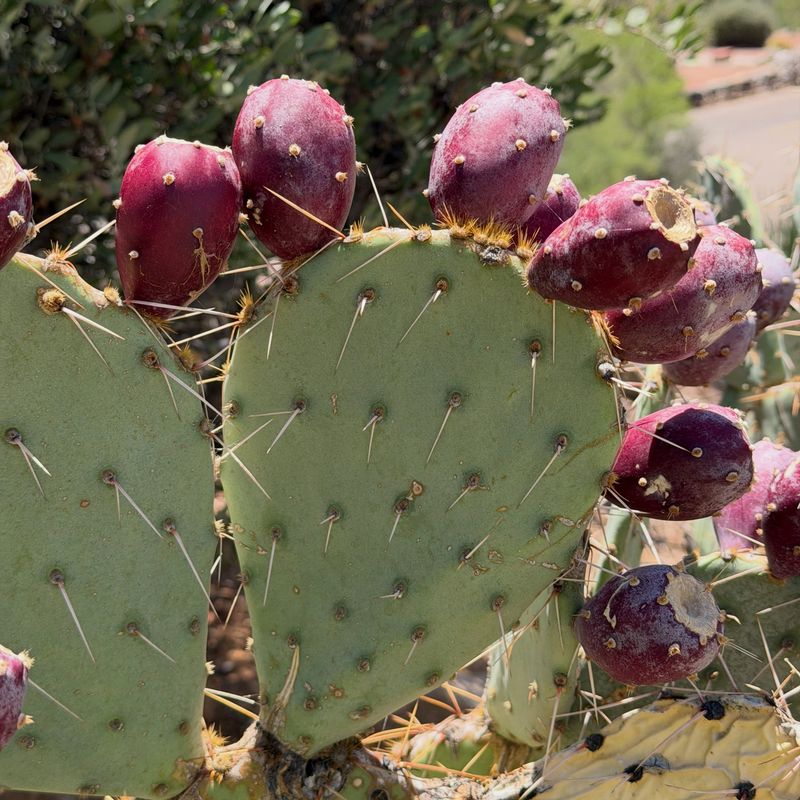
Prickly pear contributes to a yard’s food web in more than one way. The fruit, called tunas, ripens in late summer and fall and is eaten by birds, mammals, and insects alike.
That fruit production draws in the kinds of small animals that roadrunners also hunt, so a prickly pear planting can quietly build the prey base that makes a yard worth visiting. According to Texas A&M AgriLife Rangeland Plants, prickly pear fruit is consumed by a wide variety of Texas wildlife, making it a genuine food-chain contributor rather than just a structural plant.
The thorny pads themselves create microhabitat at ground level. Lizards shelter under the pads, insects move through the leaf litter that accumulates around the base, and small animals find refuge in the gap between the cactus and the soil.
Roadrunners are opportunistic hunters, and the TPWD roadrunner profile lists their diet as broad: large insects, lizards, snakes, rodents, smaller birds, fruit, and seeds. Scorpions appear on that list, but they are one item among many, not the primary reason a roadrunner is present.
That distinction matters for anyone hoping a roadrunner will solve a scorpion problem. The Audubon field guide describes the Greater Roadrunner as a generalist predator that takes whatever prey is available and accessible.
A bird hunting through your yard on a Tuesday morning may eat two lizards, a grasshopper, and a small snake before it ever encounters a scorpion. Building habitat that supports a functioning food web, with insects, reptiles, and varied plant cover, is more useful than targeting one prey species and hoping the bird follows.
Choose the site and companion plants carefully
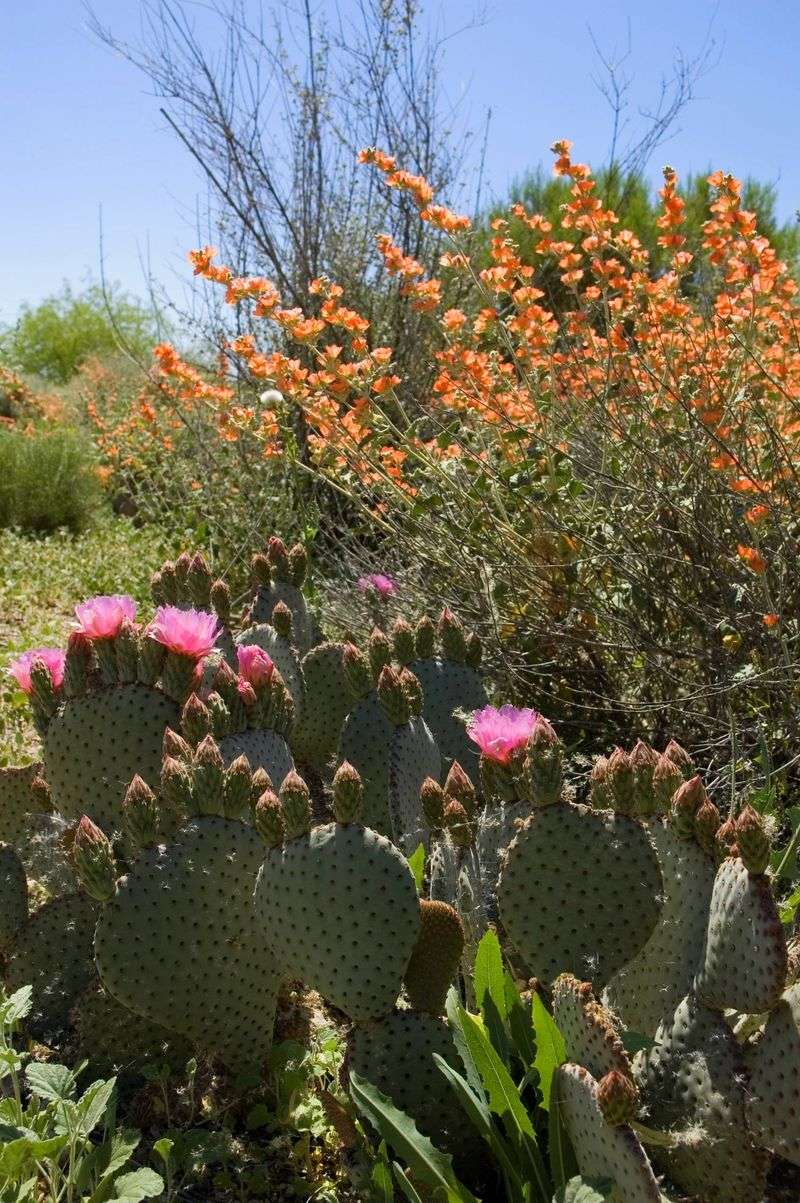
Prickly pear is not a plant you drop anywhere and forget. Mature pads carry clusters of stiff spines and smaller hair-like glochids that embed in skin on contact.
Detached pads can root where they fall, so the plant can spread beyond its original spot if pieces break off during wind, maintenance, or animal activity. Texas A&M AgriLife horticulture guidance lists prickly pear as a full-sun, low-water, drought-hardy landscape plant, but placement requires thought: keep it clear of walkways, play areas, pet runs, and any route where people or animals move through regularly.
Texas has multiple native Opuntia species, and the right choice depends on your region. Some grow compact and low; others reach head height.
Check with your county extension office or a regional native plant nursery to match the species to your ecoregion and yard scale. The Texas A&M Earth-Kind Plant Selector is a practical starting point for finding regionally appropriate, low-maintenance native plants.
One cactus clump alone will not create complete roadrunner habitat. The Texas Wildscapes program emphasizes year-round food, water, and shelter provided by a variety of native plants, and the TPWD habitat resources page reinforces native vegetation as the foundation of any wildlife-friendly yard.
Pair prickly pear with native bunch grasses, low thorny shrubs like agarita or cenizo, and open ground between plantings. A shallow water source, placed in the open where a bird can see approaching predators, adds another habitat element that benefits roadrunners and many other species.
The TPWD wildlife-management plant guide provides species-specific planting detail for Texas landowners and is worth consulting before finalizing plant choices. Think of prickly pear as one node in a larger native plant network, not the single solution.
Roadrunners do not provide dependable scorpion control
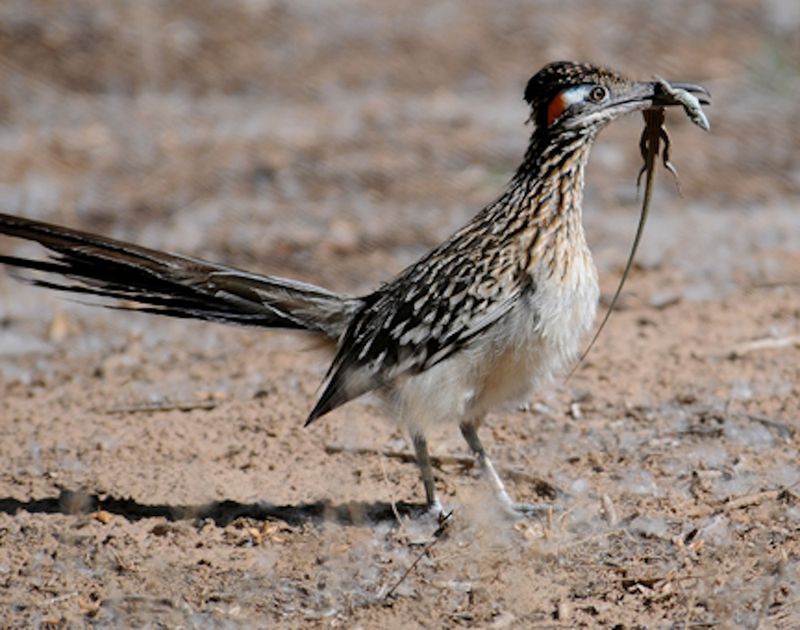
Roadrunners eat scorpions. That part is real, documented, and worth knowing.
What does not follow from that fact is the idea that a roadrunner patrolling your yard will reduce your scorpion population to a manageable level or make the property scorpion-free. The bird’s diet is too broad and too opportunistic for that kind of targeted outcome.
The TPWD roadrunner profile and the Audubon field guide both describe a diet that shifts with season and opportunity. On any given day, a roadrunner may concentrate on lizards, large beetles, or grasshoppers rather than scorpions.
Scorpions are also nocturnal, spending the day hidden under rocks, bark, and debris, and roadrunners are daytime hunters. That schedule mismatch alone limits how many scorpions a single bird is likely to encounter.
No research located for this article demonstrated that roadrunner presence measurably lowers scorpion numbers in residential yards. The relationship is predation, not biological control.
A meaningful distinction exists between a bird that occasionally eats a scorpion it happens to find and a reliable management tool that keeps a pest population in check. Treating the roadrunner as the latter leads to real problems: homeowners may skip exclusion and sanitation steps that actually reduce scorpion access to the house, and that gap in management is where stings happen.
Seeing a roadrunner in the yard is a genuinely good sign for local habitat quality, and it may mean the bird has found hunting worth doing there. Enjoy that for what it is.
Just do not interpret the bird’s presence as proof that your scorpion situation has improved.
Separate wildlife habitat from the house

Native plants, scattered rocks, leaf litter, and low cover can all benefit wildlife, but placed directly against your house, those same features become scorpion real estate. The conflict between wildlife-friendly landscaping and scorpion exclusion is real, and the place where it matters most is the strip of ground immediately surrounding your foundation, doors, and windows.
Keep habitat features away from that zone.
The Texas A&M School IPM action plan for bark scorpions identifies harborage removal as the primary management strategy: clear wood piles, construction debris, excessive mulch, loose rocks, and brush from the building perimeter. The Texas A&M Facilities IPM booklet adds that pesticides are often ineffective against scorpions hiding in cracks, crevices, and debris, making structural exclusion and sanitation the more reliable approach.
Prune any vegetation, including prickly pear, so that no branches or pads touch or lean against the structure. Seal gaps around doors and windows with tight-fitting weatherstripping.
Check where utility lines, pipes, and conduit enter the building and fill gaps with appropriate caulk or expanding foam. Roof lines, vents, and weep holes in brick veneer are also common scorpion entry points worth inspecting.
Personal protective habits matter too. Utah State University Extension scorpion guidance and UC Statewide IPM both recommend wearing footwear any time you move through areas where scorpions may be present, shaking out shoes and clothing left outside before putting them on, and using gloves when moving firewood, rocks, or garden materials.
These steps cost nothing and prevent most stings.
Scorpion risk varies by species and location across Texas. Most stings cause localized pain and swelling, but some species, particularly bark scorpions, can cause more serious symptoms.
Anyone stung should contact a physician or Poison Control, especially if symptoms are severe or a child is involved.
Protect the food chain that supports roadrunners
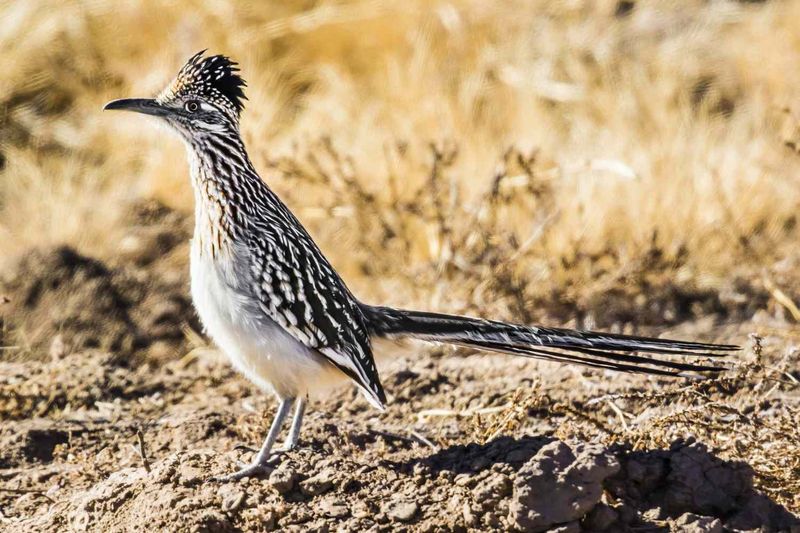
A yard set up for roadrunners only works if the food web inside it stays intact. Two common choices undercut that web faster than almost anything else: broad pesticide application and free-roaming cats.
Insects and lizards form the base of a roadrunner’s diet across most of the year. When you spray broadly to eliminate pests, you reduce that prey base along with the target insects.
Audubon bird guidance notes that pesticides can harm birds directly through ingestion of treated prey or contaminated water, and can also strip out the insect populations that birds depend on. A yard treated routinely with broad-spectrum insecticides is a less productive hunting ground for a roadrunner, not a better one.
If scorpion management is the goal, the structural and sanitation steps described in the previous section are more effective and less disruptive to wildlife than routine spraying.
Free-roaming cats present a separate, serious problem. Texas Parks and Wildlife Department guidance on cats and wildlife is direct: outdoor and feral cats kill billions of birds and small mammals in the United States each year.
Roadrunners are ground-foraging birds, which makes them especially vulnerable. A cat that patrols the same yard where you are trying to establish roadrunner habitat works directly against that goal.
Keeping cats indoors, or using a secure outdoor enclosure if they need outside time, removes that threat without harming the cat.
Supporting a functioning food web means accepting that the yard will have insects, lizards, and some level of natural disorder. That is not a problem to fix; it is the condition that makes the habitat work.
Use prickly pear as a habitat step, not an eviction plan
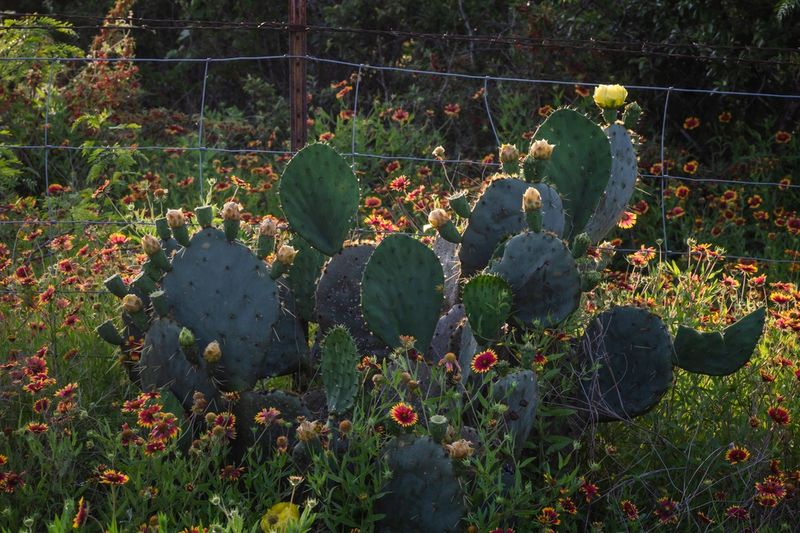
Prickly pear earns a place in a Texas wildlife yard when it fits the household. Before planting, check that its spines will not threaten a path people use daily, a play area, a pet run, or a spot where you do regular maintenance.
Choose a locally appropriate Opuntia species, site it in full sun with good drainage, and give it room to spread without crowding the foundation or any structure.
Arrange open hunting ground beside the cactus and any other native cover you add. A shallow water source in an open, visible spot adds another element that benefits roadrunners and many other species.
The Texas Wildscapes program and the Texas Breeding Bird Atlas both confirm that habitat suitability, not any single plant, determines whether a roadrunner uses a yard as part of its territory. The bird may show up, or it may range through neighboring properties instead.
Either outcome is normal.
For scorpions, rely on the Texas A&M IPM action plan and UC Statewide IPM scorpion guidance: remove harborage, seal entry points, and use footwear and gloves outdoors. Scorpion sting severity varies by species and individual reaction, so contact a physician or Poison Control if symptoms concern you, particularly with children.
Prickly pear can be one honest step toward a more habitat-rich yard; what it cannot do is guarantee a roadrunner’s arrival or a scorpion’s departure. A yard that works well for wildlife is built from many choices over time, and that slow accumulation is what actually pays off.