
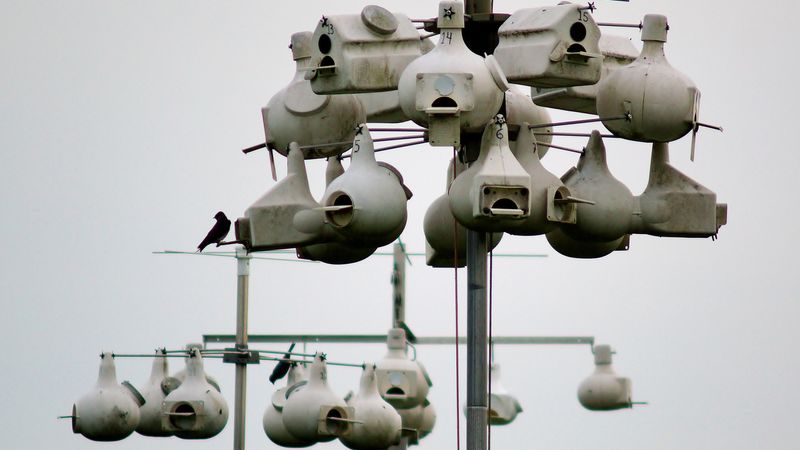
Watching your Purple Martin house go quiet in late summer can feel like something went wrong, but most of the time the birds are following a schedule they have kept for thousands of years. Central Texas martins finish raising their young, gather at large communal roosts, and head south long before most homeowners expect them to leave.
Understanding why the house empties helps you skip the guesswork and spend the off-season making real improvements that matter before scouts arrive next spring.
Why an Empty House Does Not Prove the Site Failed
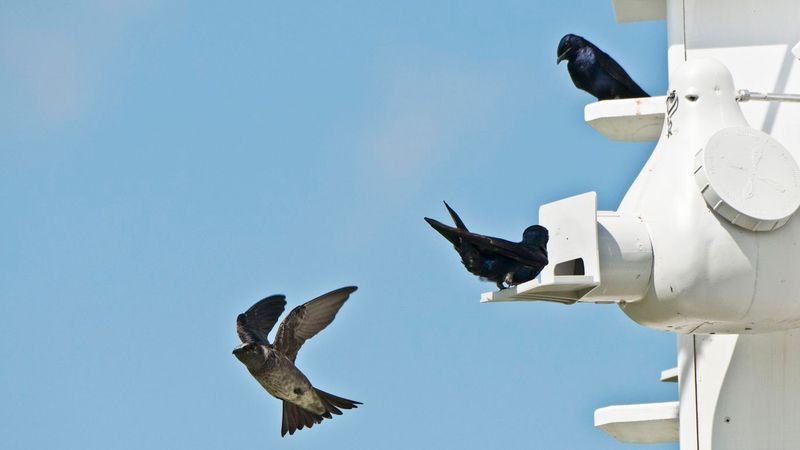
An empty martin house in late July or August does not mean your yard pushed the birds away. Purple Martins leave individual nest sites after their young have fledged, then gather at large communal roosts before heading south to South America.
The timing in Central Texas is earlier than many homeowners expect, and Texas Parks and Wildlife documents Austin-area communal roosting from mid-July to early August, with flocks of up to 10,000 birds concentrating near the city before sunset.
A house that falls silent during that window may simply reflect the end of the local breeding cycle. The birds have not necessarily rejected the site.
They may still be visible overhead, catching insects at altitude, while no longer entering the compartments below.
That distinction matters before you start moving poles or second-guessing your yard layout. The Purple Martin Conservation Association notes that martins may leave individual housing after fledging and that fledglings often shift to migratory roosts rather than returning to the nest site.
A quiet house in late summer fits that pattern almost every time.
None of that means the housing is beyond improvement. An empty house is actually a good prompt to look carefully at the setup while no birds are present and no nests are active.
You can lower the structure safely, check for wear, and evaluate whether the placement gives arriving birds a clear, unobstructed approach. The goal is to use the quiet period productively, not to treat silence as a diagnosis of failure.
Identify What Kind of Disappearance You Saw
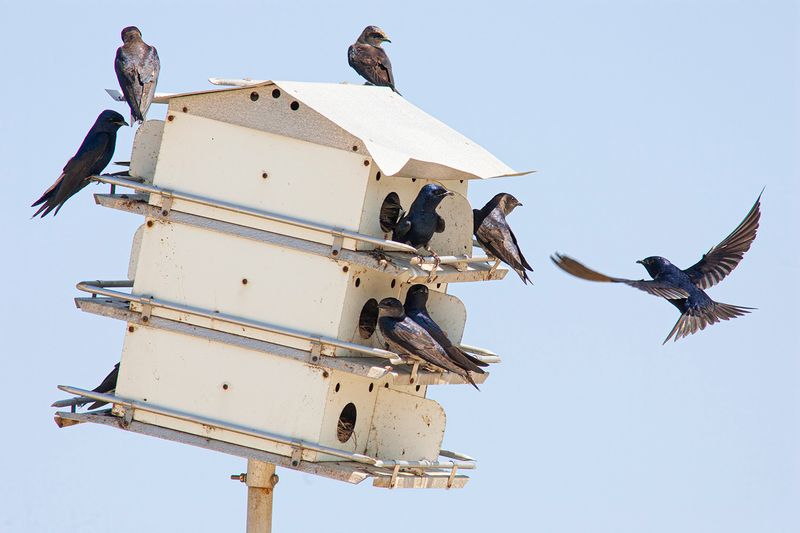
Before changing anything about your housing, take a moment to figure out which kind of departure actually happened. Four situations look similar from a distance but carry very different meanings for what you should do next.
The first and most common scenario is a house that emptied after the young birds fledged. Chicks leave the nest over a period of days, and once they are flying independently, adults stop returning to the compartments.
The house goes quiet, but the season finished successfully. The second scenario involves birds that are still visible in the area, foraging high overhead, but no longer entering the housing.
PMCA’s timing guidance confirms this pattern: martins may remain near a site while already transitioning toward communal roosting behavior.
The third situation is more serious and worth distinguishing clearly. If birds disappeared during active nesting, before eggs hatched or before nestlings were old enough to leave on their own, that is a mid-season abandonment rather than a normal seasonal exit.
PMCA identifies predation as the most likely explanation when martins abandon eggs or nestlings, and physical signs can help confirm it: missing eggs, feathers inside or outside the compartment, blood, damaged door hardware, or young birds gone well before fledging age.
The fourth scenario plays out the following spring, when a colony that used your housing in previous years simply does not return. That is the clearest signal that something at the site needs attention, whether placement, competition, predator pressure, or housing condition.
PMCA’s predation resources describe the physical evidence to look for when you suspect a predator event during nesting. Knowing which of these four situations you experienced tells you whether this fall calls for routine off-season maintenance or a closer investigation into what disrupted an active colony.
Housing Problems Can Affect Colony Performance
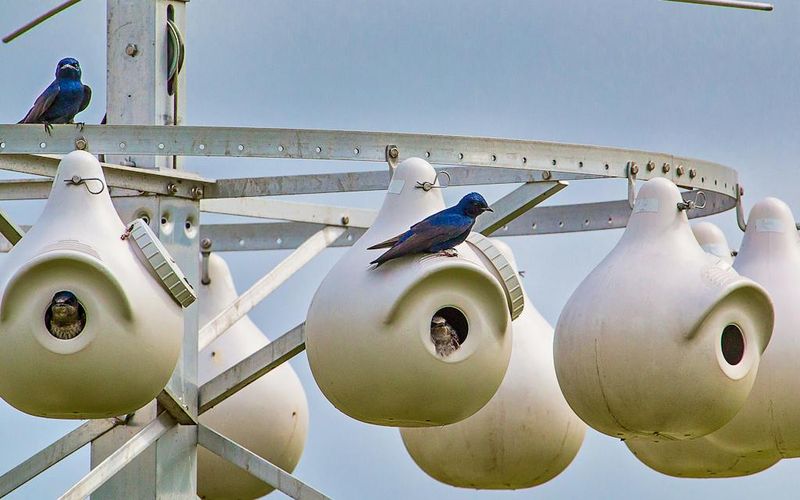
Housing conditions do not cause an on-schedule fall departure, but they can absolutely determine whether a colony nests successfully and whether birds come back the following year. The two concerns are worth keeping separate so you address the right problem at the right time.
East of the Rocky Mountains, Purple Martins depend almost entirely on human-provided housing for nesting. That dependence makes housing quality a genuine conservation issue, not just a backyard preference.
A house placed carelessly or left unmanaged can fail a colony even when the birds arrive eager to nest.
The conditions that most reliably affect nesting success are blocked flight paths, tall trees or buildings crowding the approach, predator access to the pole or compartments, competition from House Sparrows and European Starlings, housing that has deteriorated and no longer provides safe cavities, and a pole system that cannot be lowered for inspection. PMCA’s attracting guidance and its published housing standards treat these as the core management responsibilities for any active colony.
What these factors explain is reduced nesting success or a colony’s failure to return in a future season. They do not explain why a house went quiet in late July when the young had already fledged on schedule.
Connecting the departure date to a placement problem requires specific evidence of a problem, not just the observation that the house is empty.
Texas Parks and Wildlife’s management guide for Purple Martins reinforces this framing: housing management is an active, ongoing responsibility, and a martin house is not a passive structure that works automatically once it is up. The off-season is the right time to check whether any of these conditions exist and to correct them before the next breeding season begins.
Audit the Site for Open Flight Access
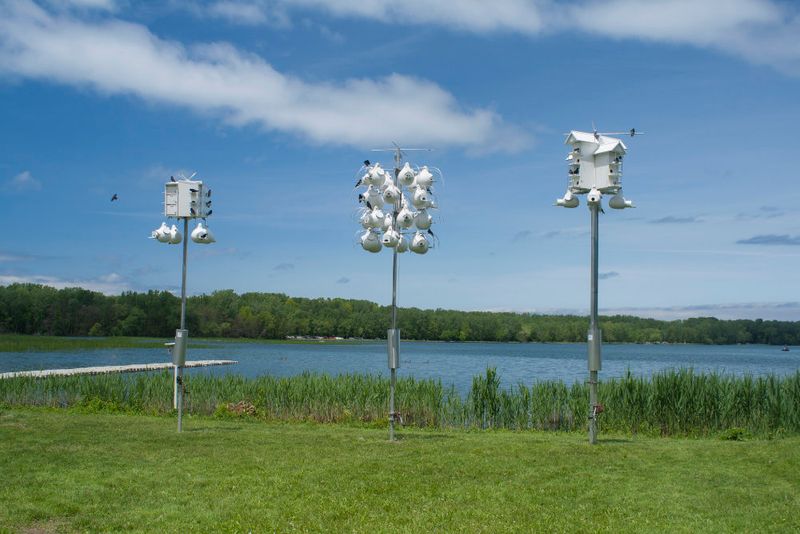
Once the season is over and no birds are using the housing, you have a clean window to evaluate whether the site gives martins what they need most: a clear, unobstructed approach from multiple directions. Start by standing at the pole and looking outward in every direction at rooftop and treetop level.
PMCA recommends placing martin housing at least 40 feet from trees or buildings that rise above the level of the house, with 60 feet preferable where space allows. That clearance gives incoming birds room to approach, brake, and enter compartments without navigating around branches or eaves.
If your housing sits closer than that to a mature oak or a roofline, the off-season is the time to plan a move rather than waiting until birds have already arrived.
Height matters too, though not in the way many people assume. Texas Parks and Wildlife describes a practical height range of roughly 10 to 20 feet for martin housing.
The exact number is less critical than whether the pole can be raised and lowered safely and whether the house clears nearby obstructions at whatever height you choose.
Keep the housing near normal human activity rather than tucking it into a far corner of the property. PMCA housing standards describe a general range of about 30 to 120 feet from human housing as appropriate, reflecting the species’ comfort with human presence and its preference for open, active areas.
Compass orientation is sometimes listed as a fix, but PMCA states clearly that Purple Martins do not show a directional preference for entrance orientation. Pointing entrances away from the direction of prevailing rain or wind is a sensible local adjustment, but no single compass direction guarantees occupancy.
Openness, safe access, ventilation, and drainage are the factors that actually move the needle.
Use the Off-Season to Repair and Protect the Housing
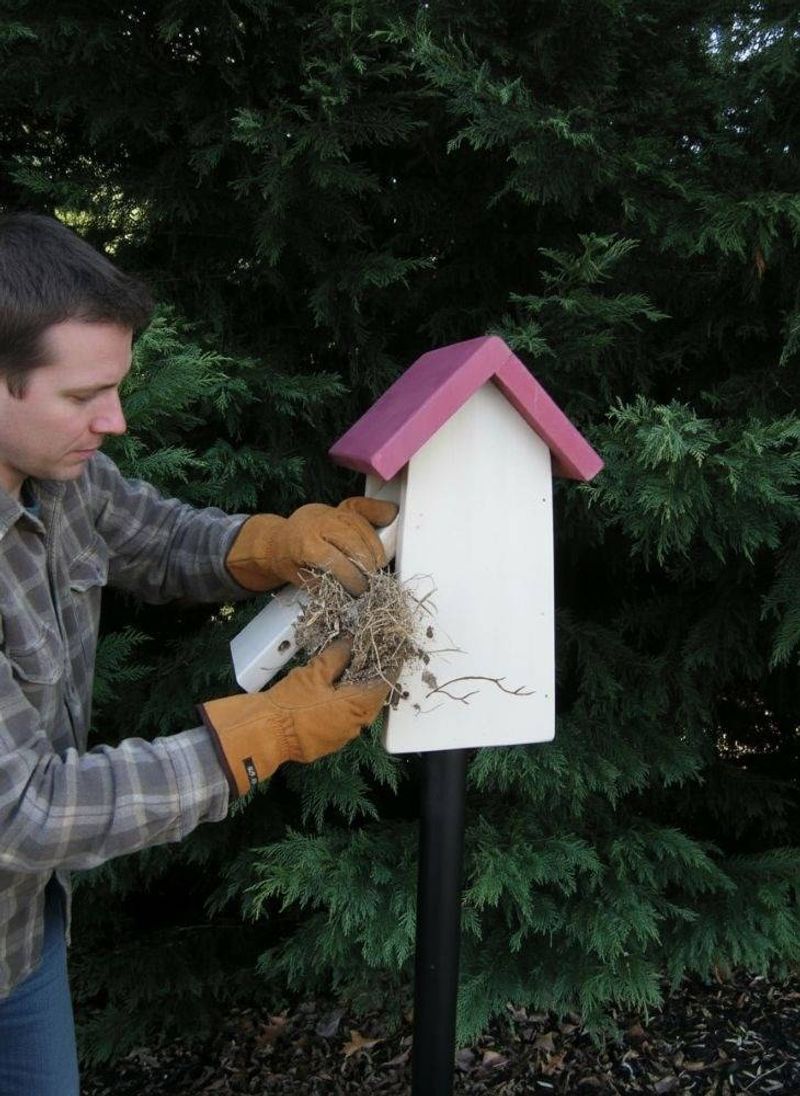
After the last martin has left for the season, the work that will determine next year’s outcome can begin. Cleaning old nests out of every compartment removes parasites, bacteria, and debris that would otherwise greet returning birds in spring.
Check each cavity for cracks, warped floors, damaged doors, and any hardware that has corroded or loosened over the summer.
PMCA’s management booklet recommends cleaning and repairing housing after the active season and storing the structure indoors when practical, particularly for wooden houses that can deteriorate quickly through a Texas winter. Confirm that the pole system raises and lowers smoothly before you need it in a hurry next spring, and replace any winch, rope, or locking collar that shows wear.
Predator protection deserves its own check. Snakes and raccoons can climb unguarded poles with little difficulty, and hawks or owls can reach into shallow compartments from the outside.
PMCA’s predation resources and its equipment catalog cover pole baffles and external guards designed to block access without harming the predators themselves. Hawks and owls are protected native wildlife, so the correct response to a bird-of-prey threat is a properly installed guard, not any attempt to deter or harm the animal.
Housing material and construction also affect how safe the compartments are in Texas heat. PMCA’s housing standards warn that transparent or poorly insulated housing can create a greenhouse effect inside compartments, reaching temperatures that kill nestlings.
Shade from nearby trees is not automatically a solution because excessive tree cover can obstruct flight paths and give predators an easier route to the housing. Ventilation holes, insulated roofs, and light-colored exteriors are the recommended approach for managing heat in a climate like Central Texas.
Manage Competitors and Check Nests Safely
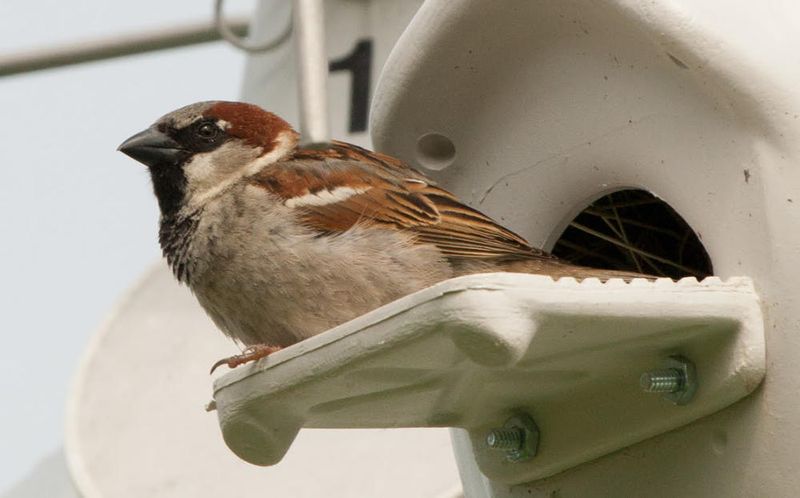
A well-placed, well-maintained martin house can still fail if invasive competitors move in first. House Sparrows and European Starlings are both aggressive cavity nesters that can occupy compartments, destroy eggs, kill nestlings, injure or kill adult martins, and claim a site before the first martin scout arrives in spring.
Neither species is native, and neither is protected under federal migratory bird law, which means active management is both legal and necessary.
PMCA’s non-native competitor guidance describes the primary tools: starling-resistant entrance holes sized to exclude starlings while allowing martins, keeping compartment doors closed until Central Texas scouts are expected, and monitoring the housing regularly once it is open. Texas Parks and Wildlife’s martin management guide reinforces that consistent monitoring is the only reliable way to stay ahead of competitors that can establish quickly.
Native cavity nesters require a completely different response. Tree Swallows, bluebirds, and other native species that might investigate a martin house are protected under the Migratory Bird Treaty Act, and Texas Parks and Wildlife lists protected nongame birds that may not be disturbed while nesting.
The practical solution recommended by PMCA is to provide alternative housing about 30 to 50 feet away, giving native species their own nesting option without displacing them from an active nest containing eggs or young.
During the breeding season, regular nest checks are one of the most effective management tools available. PMCA’s nest-check guidance recommends inspections every five to seven days, conducted during daylight hours under safe weather conditions.
Checks allow you to catch predation evidence early, identify parasites, confirm that nestlings are developing normally, and remove invasive-species nests before they become established.
Leave Fall Housing Available While You Plan Ahead
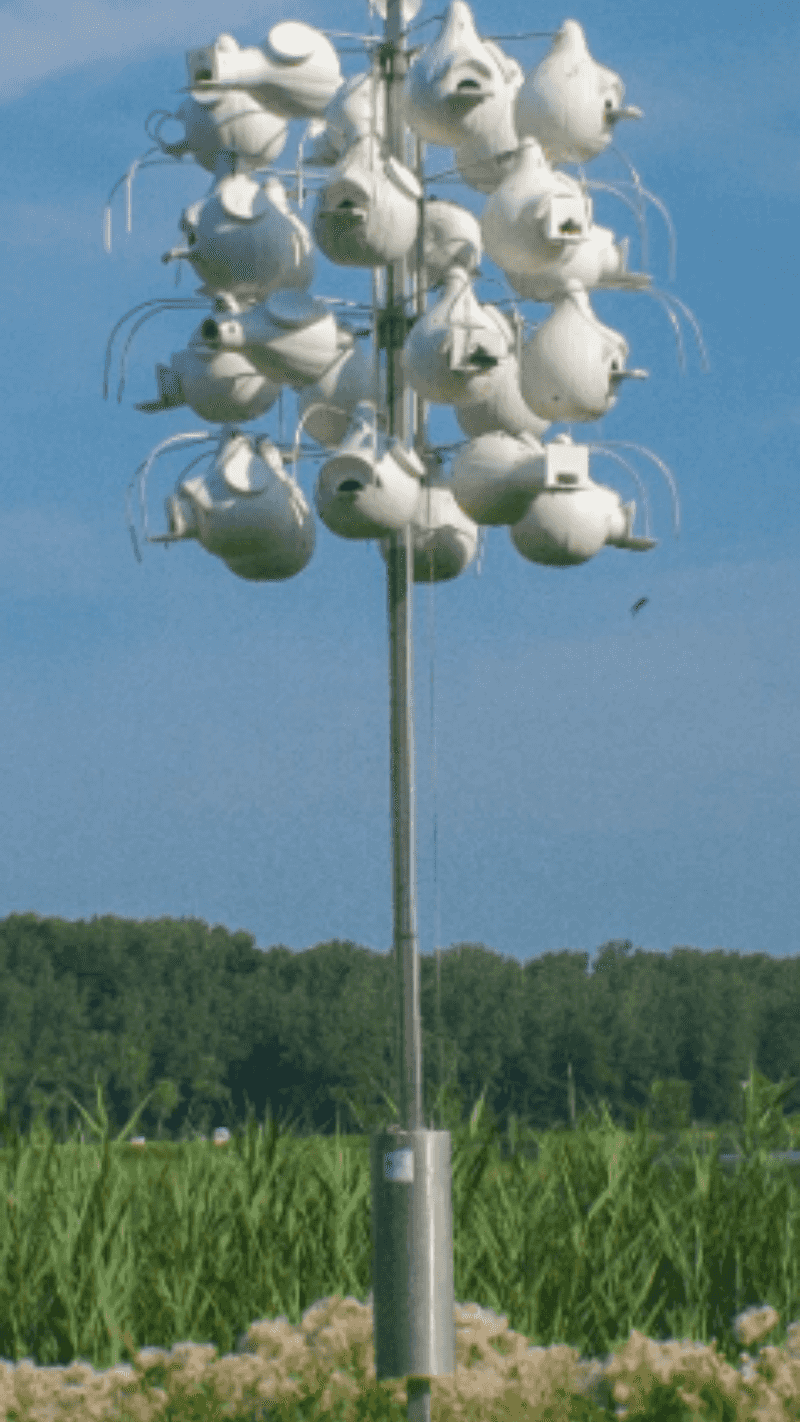
Closing your martin house the moment it goes quiet can cut off birds that are still in the area. Fledglings investigating potential future nest sites may stop by well after the adults have moved to communal roosts, and shutting access too early removes that opportunity.
PMCA advises against closing housing prematurely for exactly this reason.
Texas Parks and Wildlife guidance allows unestablished housing to remain available until late September, provided the owner continues watching for House Sparrows and starlings that might move in during that window. Keep monitoring even when no martins are present, and remove any invasive nests promptly.
Planned improvements to placement or structure belong in the off-season, after the birds have fully departed and before scouts begin returning in late winter or early spring. Chasing birds that have already shifted to roost sites by moving poles or reconfiguring housing in September accomplishes nothing and risks disrupting any late-season activity still happening nearby.
Do the work when the site is completely inactive, confirm everything is secure before the first scout could arrive, and open the housing on the appropriate regional schedule.
An empty house at the end of summer is a prompt to prepare better, not evidence that your yard failed the birds. PMCA notes that successful adults show strong site fidelity and tend to return to established colonies year after year.
Give them a clean, safe, well-positioned house to come back to, and the quiet of fall becomes the foundation for a productive spring.