
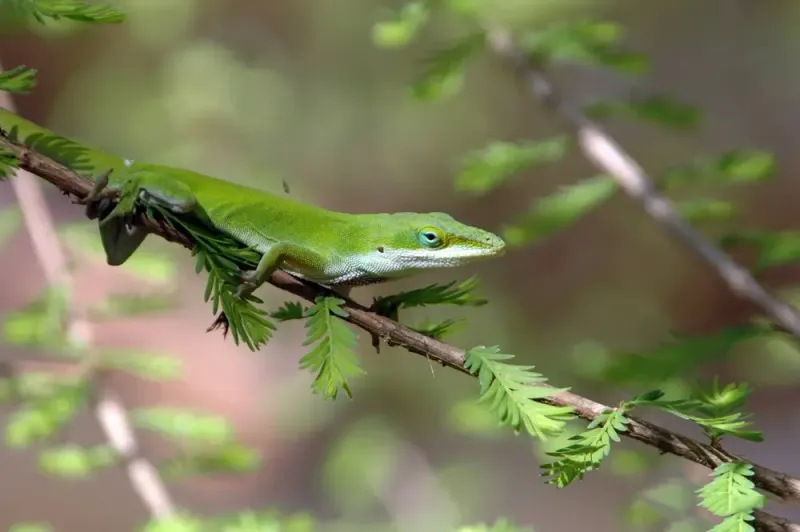
Aphids are one of the most frustrating problems a North Carolina lettuce grower can face, showing up fast and multiplying faster. Green anoles are a common backyard sight across much of the state, and watching one hunt near your garden beds can feel like free pest control.
The reality is a bit more layered than that, but in a good way: these lizards can play a useful supporting role in a low-spray garden strategy when you give them the right conditions. This article explains what anoles actually contribute, what they cannot do on their own, and how to pair wildlife conservation with practical steps that protect your spring and fall lettuce crop.
Aphids make North Carolina lettuce worth checking
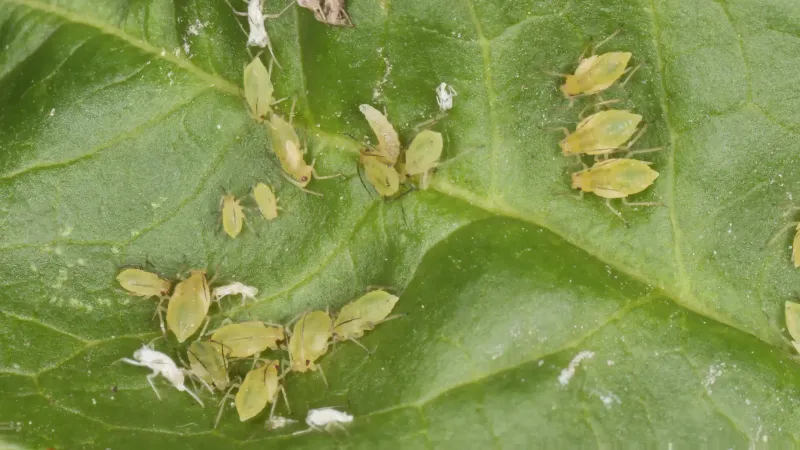
North Carolina gardeners grow lettuce as a cool-season crop, typically in spring and fall when temperatures stay mild enough for the plant to thrive without bolting. That same cool, humid weather creates favorable conditions for aphid populations, which can build up quickly on tender leaf tissue.
NC State Extension’s guide to pests of lettuce identifies several aphid species as recognized threats, noting that they feed on plant sap, weaken growth, and can transmit viruses including lettuce mosaic.
The food-quality problem is just as real as the plant-health problem. Even a modest aphid colony can contaminate harvestable leaves, making your lettuce unpleasant to eat and harder to wash clean.
University of Arizona Vegetable IPM guidance on aphid management in lettuce points out that contamination of edible tissue is a key reason why aphid pressure on greens deserves prompt attention, even when outright plant damage looks minor.
Green anoles are a welcome presence near any garden bed, and their generalist appetite for small arthropods means they may occasionally reduce the overall insect load around your lettuce. Spotting one nearby, though, is not a reliable sign that your aphid problem is under control.
Regular inspection remains the only way to know what is actually happening on and under the leaves.
What a green anole may contribute
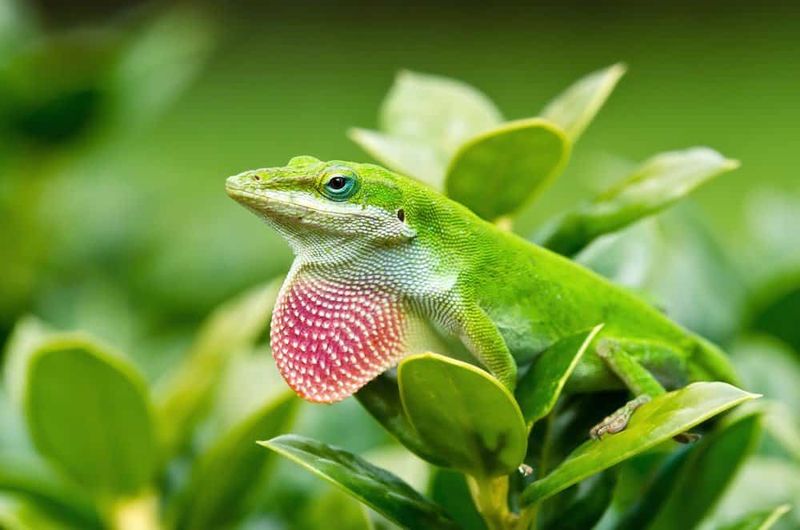
Green anoles (Anolis carolinensis) are active hunters that patrol fences, shrubs, vines, and garden structures in search of whatever small arthropods cross their path. NC Wildlife Resources Commission’s profile of the green anole lists flies, moths, beetles, ants, and termites among their common prey, painting a picture of a genuinely opportunistic predator rather than a specialist.
Hemiptera, the insect order that includes aphids, have turned up in stomach-content analyses. A Global Invasive Species Database summary of Anolis carolinensis diet records reports that Hemiptera were among the prey items most frequently found in green anoles from one studied population.
That is meaningful context, but it stops well short of proof that green anoles specifically seek out or significantly reduce aphid colonies on lettuce beds in North Carolina.
The honest framing is that a green anole near your garden is a generalist ally, not a specialized lettuce-aphid controller. North Carolina’s reptile species account for the green anole reinforces how broad their prey range is, which means their attention on any given day could just as easily go toward a moth larva or a beetle as toward an aphid colony sheltering under a lettuce leaf.
Their value to the garden is real but probabilistic. Protecting naturally occurring anoles and the habitat they use is a sensible low-spray choice, as long as you continue scouting and acting directly when aphid numbers climb.
Broader research supports an ally, not a guarantee
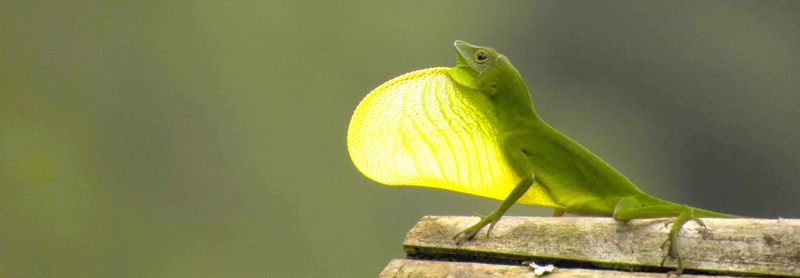
Studies on anoles as biological control agents offer encouraging results, but they come with important caveats about what they actually prove. Research by Monagan and colleagues on anoles in agroecosystems found that anoles reduced coffee berry borer infestations in laboratory trials and that diversified farms supported greater anole abundance than intensively managed ones.
That is a genuine finding, but coffee berry borers are not aphids, and coffee farms in Latin America are not North Carolina lettuce beds.
The full text of that biocontrol study also notes that anole effectiveness varied with habitat complexity and agrochemical exposure, which matters when translating findings to a backyard garden setting. More diverse, less-sprayed environments supported more lizards and, by extension, more consistent predation pressure on arthropods generally.
Exclusion experiments from the Caribbean add another layer. Work by Pacala and Roughgarden on arthropod abundance in plots where anoles were removed found that some arthropod populations increased when lizards were absent, although the effect on plant herbivory was not consistent across all conditions.
Different anole species, different pests, and different ecosystems were involved, so these results support the idea that anoles can contribute to overall arthropod suppression, not that green anoles will reliably cut aphid numbers on your lettuce.
The practical takeaway is straightforward: protecting anoles fits well within an integrated pest-management approach, and the research gives you good reason to value their presence. What it does not give you is a substitute for checking your lettuce regularly or acting directly when a colony starts to grow.
Create habitat around the lettuce bed
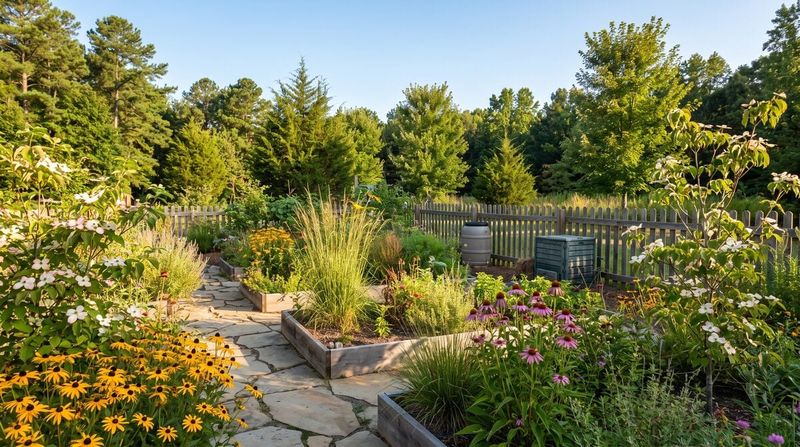
Green anoles spend most of their time well above ground level. NatureServe Explorer’s species account for Anolis carolinensis describes the species as largely arboreal, commonly using shrubs, vines, tree trunks, fences, and walls as perches and hunting grounds.
Expecting lizards to remain continuously among low lettuce foliage misreads how they actually use a landscape.
What that means practically is that the habitat around your bed matters more than what is inside it. NC Wildlife’s guidance on suburban backyard habitat recommends layered plantings, native vegetation, natural edges, cover, and varied perch structures as the foundation for supporting backyard wildlife.
Planting native shrubs near the garden, leaving a fence or trellis in place, and allowing a border of leaf litter or naturalistic ground cover gives anoles the structure they prefer.
A habitat-selection study from eastern Texas found green anole numbers were considerably higher in plots with greater shrub density, and the lizards consistently used larger live shrubs as primary perches. Adding even a few native shrubs at the garden’s edge could meaningfully improve usable habitat.
Regional differences matter here. North Carolina’s reptile checklist shows that green anoles are more consistently present in the Coastal Plain and southern Piedmont than in the Mountains, so gardeners in cooler, higher-elevation areas should not expect the same level of anole activity.
Reduce unnecessary pesticide use around the garden perimeter, since agrochemical exposure can lower anole abundance regardless of how good the surrounding habitat looks.
Do not capture, move, purchase, or deliberately release green anoles into your garden. The evidence supports conserving wild lizards in suitable habitat, not treating them as a relocatable pest-control product.
Scout the places aphids hide
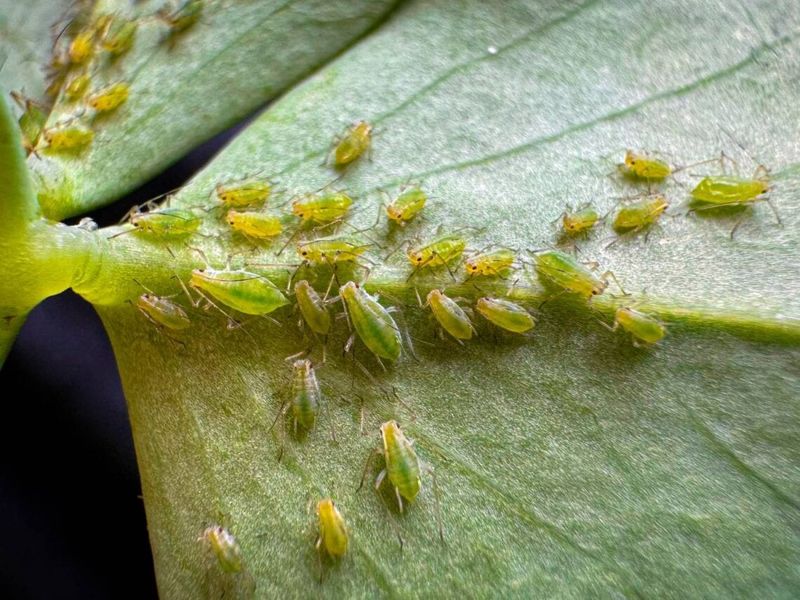
Aphids are skilled at finding protected spots on a lettuce plant, which makes a quick glance at the top of the bed an unreliable way to assess the situation. The leaf underside is where colonies most often begin, and new growth at the center of the plant and along the youngest leaves is consistently attractive to feeding aphids.
UC IPM’s guide to green peach and potato aphids in lettuce notes that infestations often start on lower leaves and move upward as colonies expand, so checking from the bottom of the plant outward gives you the earliest possible warning.
For heading varieties, the interior of the forming head deserves specific attention. Aphids that work their way inside sheltered leaf tissue become harder to dislodge and easier to miss during a casual inspection.
The Arizona Vegetable IPM resource on aphid management in lettuce highlights interior contamination as a particular concern for edible greens, since aphids sheltered inside a head can make the harvest unacceptable even when external damage appears modest.
Scouting two or three times per week during peak aphid season gives you the information you need to make proportionate decisions. NC State Extension’s lettuce pest guidance supports a regular monitoring approach: light infestations on plants that are otherwise growing normally may not call for immediate action, while expanding colonies, visible plant stress, distorted new growth, or honeydew deposits on leaves are signals that closer management is needed.
Keep a simple log of what you find and where. Patterns across multiple inspections help you catch a building problem before it gets ahead of you, and they tell you whether your current strategy, including any anole habitat you have preserved, is keeping overall arthropod pressure at a manageable level.
Use simple controls alongside wildlife
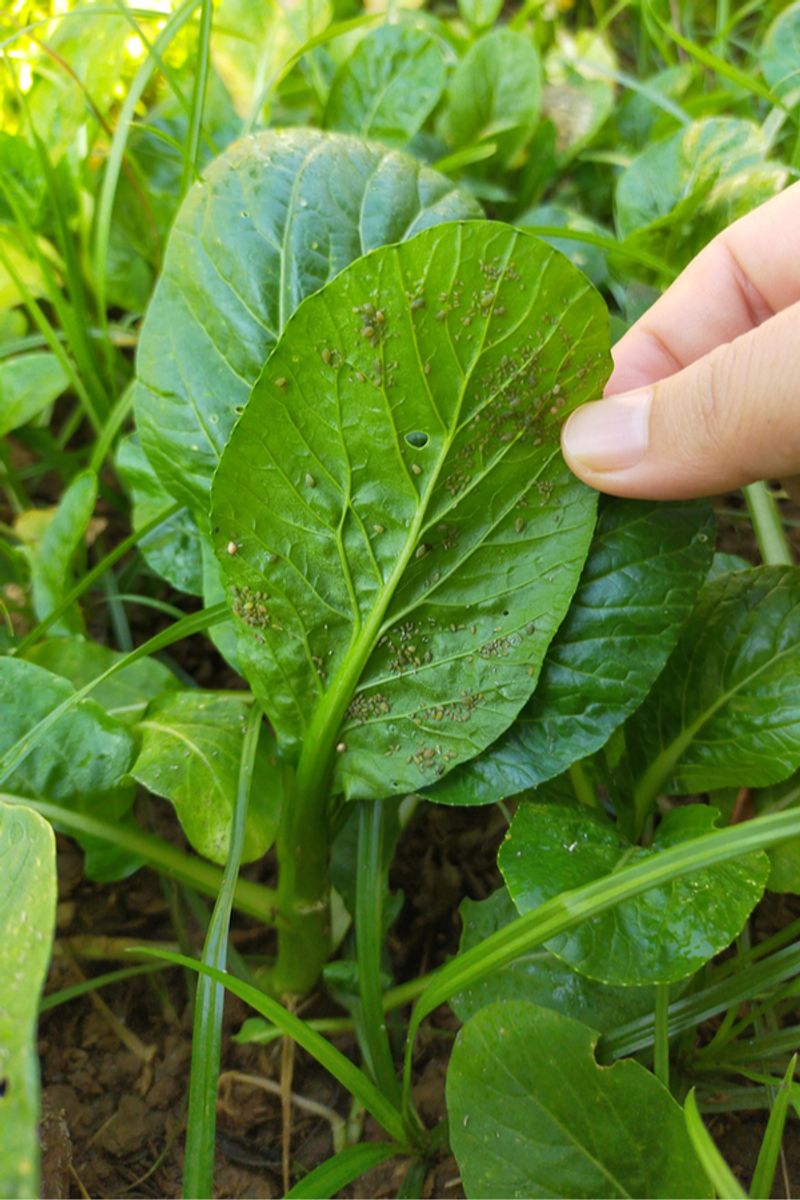
When a scouting session turns up aphids but numbers are still low and the plants look otherwise healthy, several direct controls can reduce pressure without disrupting the natural enemies already working in the garden. A strong stream of water directed at leaf undersides knocks aphids loose and kills many of them on contact.
NC State Extension’s home garden aphid management advice recommends this approach as an effective first response for manageable infestations, noting that dislodged aphids rarely make it back onto the plant.
For isolated colonies on individual leaves or stems, rubbing aphids off by hand or removing heavily infested plant material entirely can stop a localized problem from spreading. Cutting away a badly infested outer leaf and disposing of it away from the bed removes both the aphids and the tissue they have already contaminated, which matters for harvest quality as much as plant health.
Fertilizer choices also play a role. UC IPM’s aphid management guidance for home gardens explains that excess nitrogen promotes the soft, fast-growing leaf tissue that aphids prefer, so avoiding high-nitrogen fertilizers during lettuce production can make your plants less attractive to colonizing aphids from the start.
Ants are worth watching too. Certain ant species tend aphid colonies in exchange for the honeydew aphids excrete, actively driving off predators like lady beetles and lacewing larvae.
If you spot ants moving up and down your lettuce plants, managing their access with a physical barrier around bed legs or a sticky trap on a container can give natural enemies a better chance to work. These direct steps complement anole conservation rather than replacing it: they reduce or discourage aphid colonies without depending on any predator’s feeding choices on a given day.
Use pesticides only when the problem warrants them

A low-spray approach to lettuce aphids is sensible and well-supported, but it has a real limit: aphid colonies can grow fast, make harvested leaves unacceptable, and transmit viruses even when beneficial predators are present. If scouting shows that colonies are expanding despite water treatments and physical removal, or if you are finding contaminated interior leaves, a targeted pesticide application may be the proportionate next step.
EPA guidance on reducing pesticide impacts on wildlife recommends treating only the areas that actually need treatment, choosing the least disruptive labeled product for the pest and situation, and preventing drift, runoff, and contamination of food or water sources that wildlife may use. Spot-treating a specific section of the bed rather than applying a broadcast spray across the whole garden is a practical way to follow that guidance.
Every pesticide product must be used according to its label, and for edible crops that means paying close attention to crop restrictions and the preharvest interval, which is the minimum number of days between application and harvest. The 2026 Southeastern U.S.
Vegetable Crop Handbook insect control chapter provides specific product and timing guidance for vegetable crops in North Carolina and neighboring states.
Not every pesticide carries the same ecological risk. EPA’s factsheet on ecological risk assessment for pesticides explains how products are evaluated for nontarget effects, and EPA pesticide safety guidance reinforces that unnecessary, broad-spectrum, or misapplied treatments create the greatest risk to nontarget wildlife, including the anoles and beneficial insects you want to keep working in your garden.
Targeted, label-compliant use, applied only when genuinely needed, is the standard that protects both the crop and the surrounding wildlife.
Protect the anoles and keep checking the crop
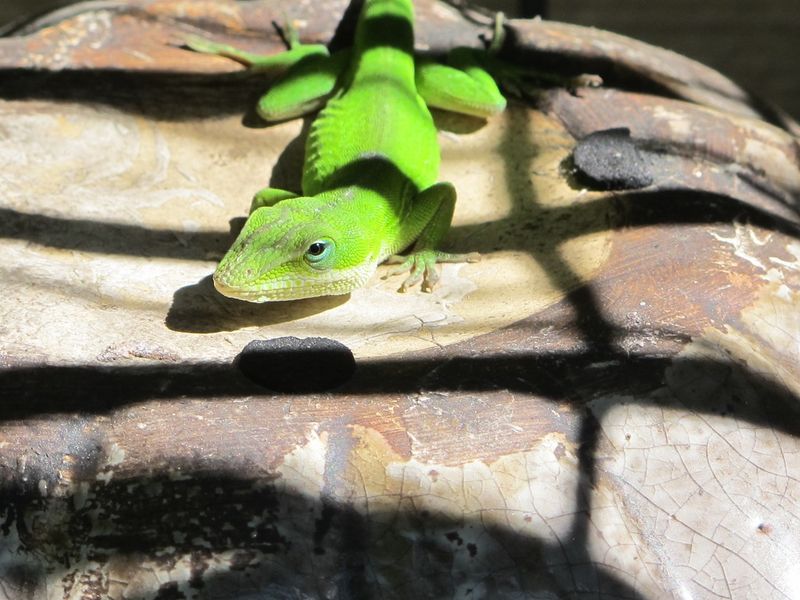
The most useful thing a North Carolina gardener can do for naturally occurring green anoles is leave their habitat intact. Preserve shrubs, vines, fences, and leaf litter near the garden, reduce unnecessary pesticide use in the surrounding area, and let the lizards hunt on their own schedule.
NC Wildlife’s green anole profile and NC State Extension’s lettuce pest guidance together describe the kind of layered, low-disturbance garden environment where both wildlife and edible crops can do well.
That environment still requires your attention. NC State Extension’s aphid management guidance is clear that regular scouting, direct physical controls, and proportionate treatment when needed are what actually protect your harvest.
Anoles may help reduce overall arthropod pressure around the bed, but dependable lettuce protection comes from combining wildlife conservation with consistent observation and a willingness to act when aphid numbers climb.
A garden that supports native wildlife and produces clean lettuce is not a contradiction. The anole on your fence post and the weekly inspection of your leaf undersides are working toward the same outcome.