

Black-eyed Susans are one of the most cheerful native wildflowers in North Carolina gardens, pushing out golden-yellow blooms from midsummer well into fall. September is a good time to take a closer look at your plants and pull off any flowers that have clearly finished, because doing so can give the plant more chances to send up fresh blooms before cold weather settles in.
That said, skipping this step will not automatically doom your plants, and no single September chore guarantees flowers through the first frost. What follows is a practical, region-specific guide to selective deadheading, so you can keep your garden looking its best while still supporting the birds and wildlife that depend on it.
September Signals an Inspection, Not a Statewide Frost Deadline
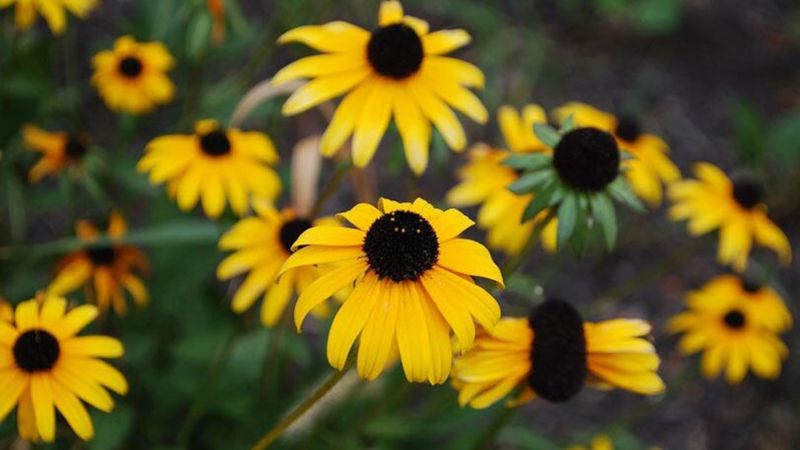
Walking out to your Black-eyed Susans in September and checking each flower head is genuinely useful, but the timing is more flexible than a hard deadline. North Carolina stretches from the Atlantic coast up to the high Blue Ridge, and first-frost dates shift considerably across that distance.
NC State research on regional climate variation shows average first-frost ranges of roughly late September to late October on the Blue Ridge plateau, mid-October to mid-November in the western Piedmont, and late October to mid-December along the Coastal Plain. A gardener in Boone and a gardener in Wilmington are working with very different windows.
That regional spread means September is a reasonable inspection window, not a universal statewide deadline. Removing visibly faded flower heads now can create more opportunities for late-season blooms and tidy up the planting before cold weather arrives.
The value of doing it this month is simply that there is still enough warm growing time left for some plants to respond with additional flowers before conditions shut them down.
One more distinction worth making: frost and freeze are not the same thing. NC State Extension guidance on freeze and frost probabilities explains that frost risk rises when temperatures fall below about 36 degrees Fahrenheit, while a freeze is associated with temperatures at or below 32 degrees.
A frost event can damage open flowers even when a hard freeze has not occurred, and deadheading cannot protect blooms from cold damage. The goal of removing spent flowers is to encourage the plant, not to armor it against weather.
Deadheading Can Create More Late-Season Blooming Opportunities
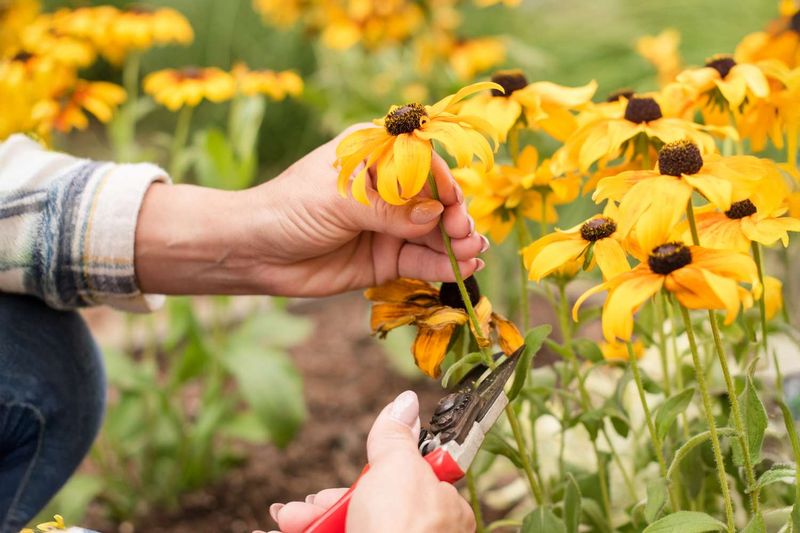
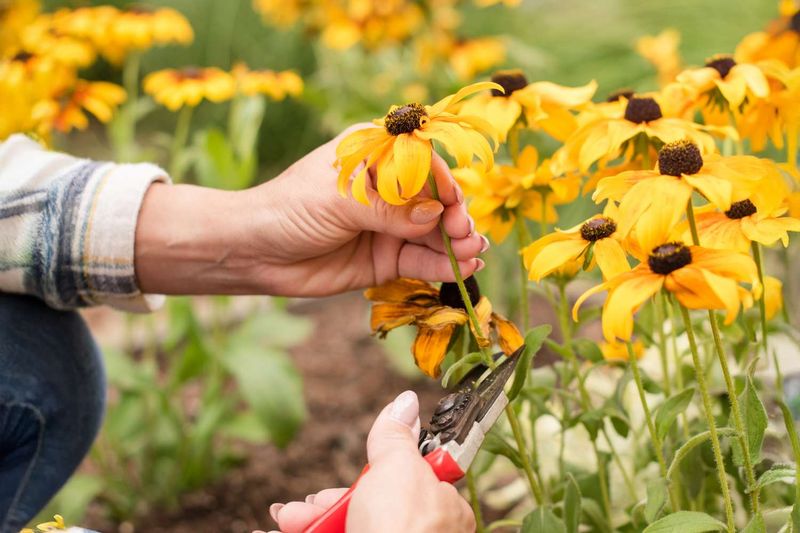
When a Black-eyed Susan flower finishes, the plant shifts its energy toward ripening seeds in that spent head. Removing the faded flower before seeds fully mature can redirect that energy, and the result is sometimes a new round of flower buds on the same plant.
The NC State Extension Gardener Handbook lists deadheading as good practice for Black-eyed Susan and notes that, for Rudbeckia hirta specifically, it can keep flowers coming into the middle of fall.
Keep the payoff measured, though. University of Illinois Extension guidance on deadheading makes clear that the response to deadheading varies widely depending on species, cultivar, plant vigor, weather, available moisture, and overall growing conditions.
Some plants push out a noticeable second flush; others produce only a few additional blooms or none at all.
Deadheading may extend the floral display and improve the plant’s appearance, but it cannot guarantee continuous flowers through the first frost. Local weather, the specific variety you are growing, and how healthy the plant is going into fall all play a role in what happens next.
Think of September deadheading as removing a barrier to further flowering rather than as a promise that more blooms will definitely arrive. The practical upside is real, the outcome just depends on factors that vary from yard to yard and season to season.
Remove Each Faded Flower Head Above Strong Growth
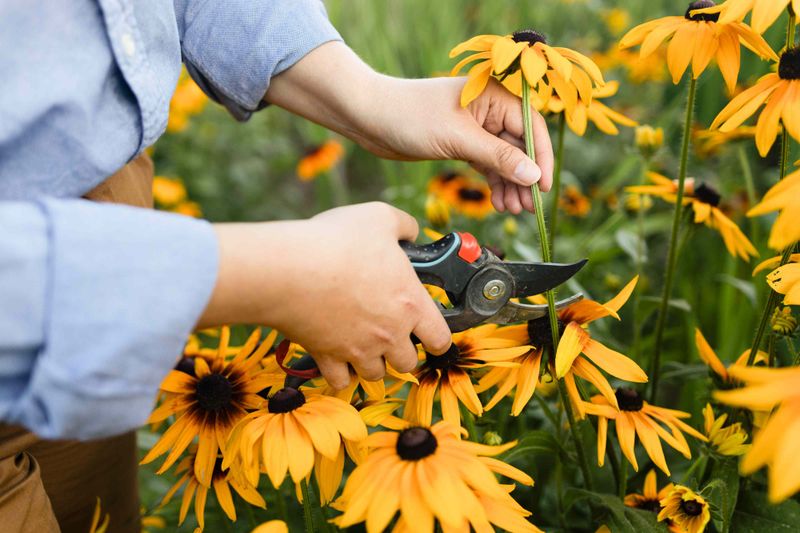
Good deadheading technique starts with reading the plant rather than cutting everything to a uniform height. Find a flower head that has clearly finished: the petals have dropped or gone limp, the central cone has darkened and hardened, and the stem below it looks spent.
Follow that stem downward until you reach a point where the plant still looks healthy, whether that is a set of green leaves, a branching point, or a side shoot that appears strong.
Make a clean cut just above that healthy growth point. NC State Extension’s herbaceous ornamentals guidance supports this approach: remove faded flower heads and seed pods rather than cutting the entire plant to the ground, and make each cut above healthy foliage or the next strong growth point when one is available.
Not every stem will have a side shoot or lateral bud waiting below the spent flower, so the instruction is to cut above healthy foliage when that is what you find.
Work flower by flower rather than running the shears across all stems at one height. Removing only the finished portions preserves any stems that still carry buds or fresh flowers.
Wipe your cutting blade with a clean cloth between plants if you notice any signs of disease, since this reduces the chance of spreading problems through the bed. Check plants regularly during the flowering season rather than committing to one fixed cleanup date, because flowers finish at different times across the same plant, and a head that looked fine last week may be ready to remove today.
Remove Spent Flowers Instead of the Whole Plant
Selective deadheading and cutting a plant to the ground are two very different actions, and September is a common time for gardeners to mix them up. The goal here is targeted: remove the flower heads that have visibly finished while leaving everything else in place.
That is quite different from shearing all stems back to soil level.
Cutting the plant to the ground removes healthy stems, any growth that has not yet opened, seed heads that birds may use, and stems that can shelter overwintering beneficial insects. NC State Extension’s guidance on herbaceous ornamentals advises against simply mowing perennials to the ground during fall cleanup, and the reasoning applies directly here.
Full shearing is unnecessary when the actual goal is to remove only the spent portions and encourage fresh growth.
Selective deadheading, by contrast, tidies the plant and creates openings for new blooms without stripping away what is still productive. You can walk through the bed, clip each faded head, and leave every green stem, unopened bud, and ripening seed head right where it is.
The plant keeps its structure, wildlife resources stay intact, and you have not done anything that requires the plant to spend energy recovering from a hard cut. If tidiness is the goal, targeted removal achieves it.
If encouraging more flowers is the goal, targeted removal achieves that too, without the unnecessary side effects of a full shearing.
Identify Which Black-eyed Susan You Grow
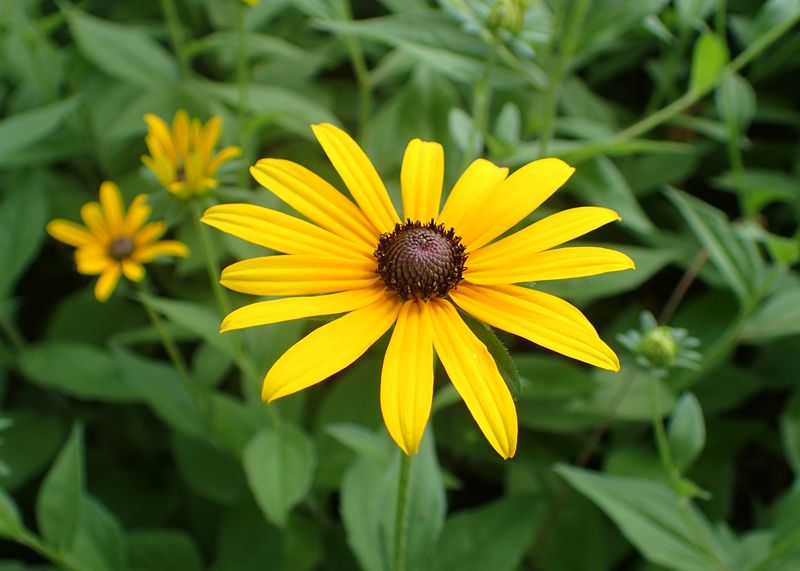
Not every plant sold as a Black-eyed Susan behaves the same way, and that difference affects how much the response to deadheading will vary. The two species most commonly grown in North Carolina are Rudbeckia hirta and Rudbeckia fulgida, and they are not interchangeable in terms of how long they live or how they return each year.
NC State’s plant profile for Rudbeckia hirta describes it as a biennial or short-lived perennial that often behaves as an annual in cultivation. An individual R. hirta plant may complete its life cycle and not return as the same root system, but it typically reseeds readily, so new plants appear the following season.
If your Black-eyed Susans tend to shift position in the bed from year to year, or if the clump does not persist in the same spot, you are probably growing R. hirta.
Rudbeckia fulgida, on the other hand, is a true herbaceous perennial that generally survives as a persistent clump. It is native in North Carolina, tolerates the hot and humid summers well, and typically blooms from approximately August through October.
A clump that reliably comes back in the same spot and spreads slowly outward is a strong sign you have R. fulgida.
Cultivar matters too. NC State Extension notes that some modern cultivars may be self-cleaning or sterile.
A self-cleaning cultivar drops its own spent petals without help, making routine deadheading less critical for appearance. A sterile cultivar produces no viable seeds, so leaving seed heads in place will not result in new seedlings, and the plant’s response to deadheading may be less pronounced.
Check the tag or the grower’s description if you are unsure what you have, because the advice that follows will serve some plants more than others.
Leave Selected Seed Heads for Birds and Reseeding
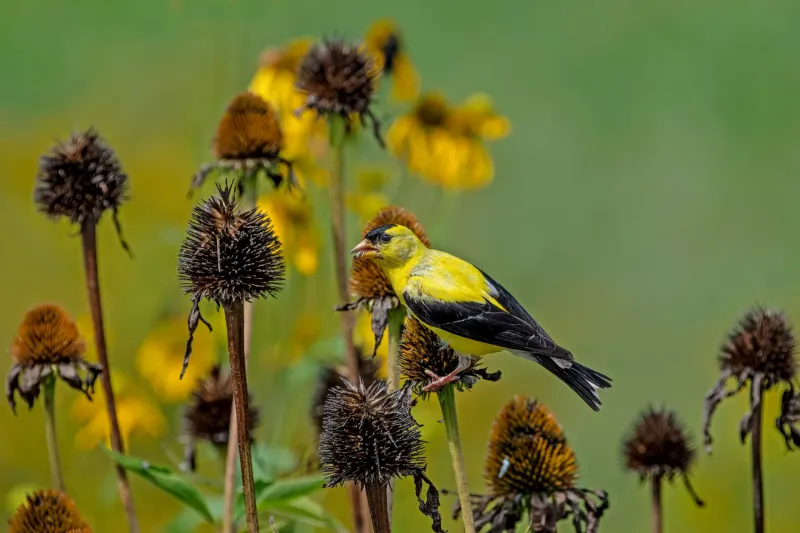
Deadheading every spent flower head on every plant is not automatically the best choice for a wildlife-friendly yard. Mature Rudbeckia seed heads are a meaningful food source for birds heading into fall and winter, and goldfinches in particular are drawn to them.
NC State’s profile for Rudbeckia fulgida identifies it as a bird-friendly plant and notes that aggressive fall cleanup can remove wildlife food and shelter that the garden would otherwise provide through the cold months.
Reseeding is the other side of this tradeoff. Rudbeckia hirta, which often behaves as a biennial, depends heavily on self-seeding to maintain its presence in the garden from year to year.
Removing every seed head before seeds mature can reduce the number of new plants that come up next spring. If you want to keep that species cycling through the bed naturally, leaving at least some seed heads to ripen fully is worth the minor reduction in late-season bloom.
A practical middle path works well for most North Carolina gardeners. Deadhead the front or most heavily viewed portion of the planting, where tidiness and fresh flowers matter most to the overall display.
Leave some of the seed heads toward the back or along the edges of the bed, where birds can find them and where reseeding can happen without disrupting the visual front of the planting. NC State Extension’s herbaceous ornamentals guidance supports this kind of selective approach over wholesale cleanup.
Neither complete removal nor complete hands-off neglect is universally best; the right balance depends on whether you want more late flowers, more birds, or both.
Give the Plant Conditions That Support Fall Performance

Deadheading works best when the plant underneath it is already in reasonable shape. Black-eyed Susans generally prefer full sun, and plants growing in too much shade tend to produce fewer flowers and are more susceptible to disease.
NC State’s Rudbeckia hirta plant profile confirms that full sun and moist-to-well-drained soil are the preferred conditions, and that the species tolerates drought once established but performs poorly in soggy or waterlogged ground.
Powdery mildew is a common late-season problem for Black-eyed Susans in North Carolina, particularly during stretches of humid weather with cool nights. Plants affected by mildew may not respond as well to deadheading, since the underlying foliage is already stressed.
Slugs and snails can also damage plants during wet periods. If you notice these issues, address the source of the problem rather than expecting deadheading alone to improve the display.
Fertilizer is another factor worth mentioning. NC State Extension notes that excess nitrogen can reduce the quality of the flower show, so heavy feeding in September is counterproductive.
Moderate fertility and good drainage will do more for fall performance than any fertilizer push. Keep the soil from staying wet after rain, give the plants as much direct sun as your site allows, and deal with any pest or disease pressure you observe.
Those basic conditions give deadheading its best chance of producing a noticeable result before cold weather ends the season.
Make a Selective Pass and Recheck During Flowering
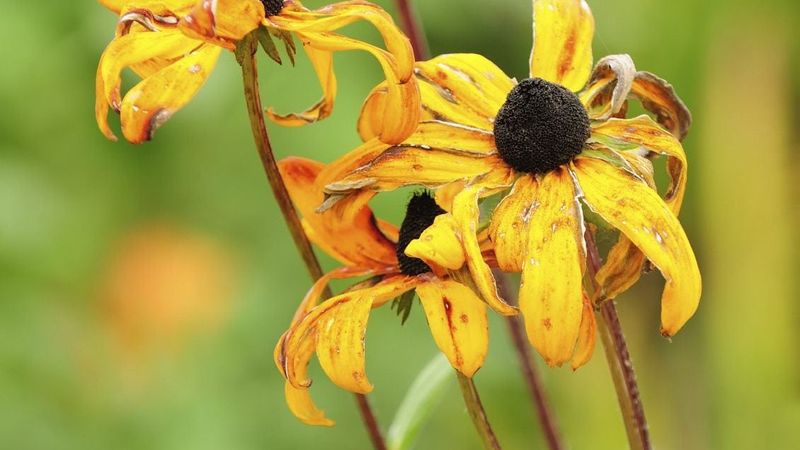
The action plan is straightforward. Check your Black-eyed Susans regularly while they are still flowering, looking for heads where petals have dropped and the central cone has hardened and darkened.
Remove those spent heads by cutting each stem above healthy foliage or the next strong growth point you can find. Leave any stems that still carry buds or open flowers, and set aside some seed heads if you want goldfinches or natural reseeding in the bed.
NC State Extension and University of Illinois Extension both support this kind of selective, ongoing removal rather than a single hard cutback. Flowers on the same plant finish at different times, so one visit will not catch everything.
Come back every week or two as long as the plant is actively blooming.
Selective deadheading can improve the plant’s appearance and create more opportunities for late-season flowers, but local frost timing, weather, cultivar, and plant condition determine how long the display actually lasts. Rudbeckia fulgida in particular may continue blooming well into October in the Piedmont and Coastal Plain if conditions stay mild.
The plants that tend to look best at the end of fall are the ones that received consistent, targeted attention rather than a single dramatic cutback, and perhaps a few strategically placed seed heads that kept the goldfinches coming back all season.