
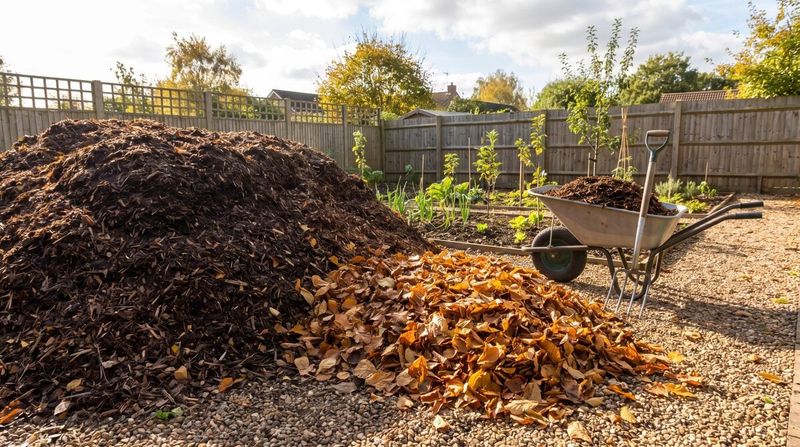
Every fall, North Carolina yards fill up with free mulch that many people send to the curb. Shredded leaves can stand in for some store-bought mulch, but only in the right beds and at the right thickness.
Used well, they cover bare soil and feed it over time. Used badly, they can hold back water or crowd small plants, so it pays to know the difference.
What shredded leaves can—and cannot—do
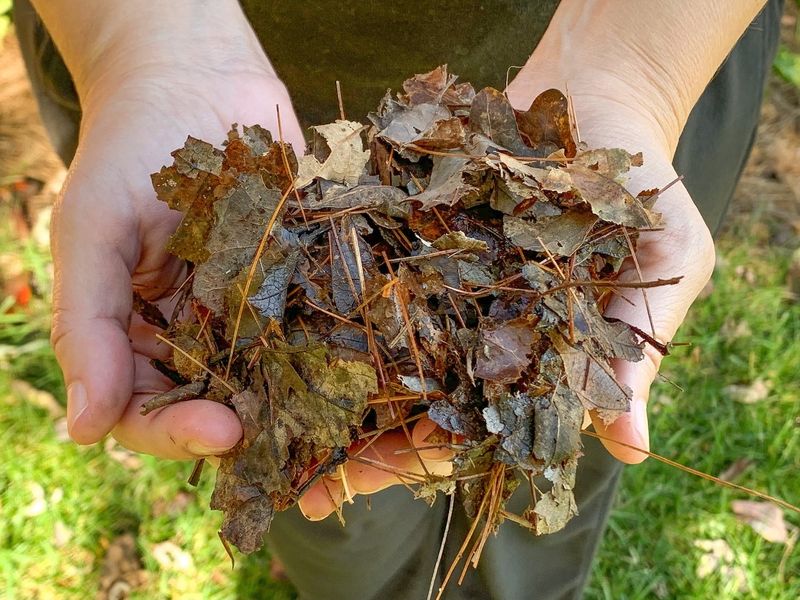
Shredded leaves can do many of the jobs people expect from mulch. They cover bare soil, block some light so fewer weeds sprout, slow moisture loss, and soften swings in soil temperature.
As they break down, they add organic matter to the bed.
Shredding helps with handling. Whole leaves tend to form a flat, slick mat and blow around the yard, while chopped leaves settle in more loosely and stay put better, as Penn State Extension notes.
NC State lists leaves among the organic mulches gardeners can use in herbaceous ornamental beds.
There are limits. Weed control is partial, since mulch only reduces weeds and some will still push through or sprout in the decomposing layer, a point NC State makes in its planning guidance.
Shredding also does not make leaves a drop-in swap for every job. A thick or packed layer of fine material can still slow water and air.
So the real question is not leaves versus bark. Four things decide it: the texture of the material, how deep you spread it, where it sits in the bed, and how big the plants are.
Bagged mulch is still the better fit in some spots, such as a formal front bed where you want a uniform look that lasts all season.
Landscape beds that can use leaf mulch
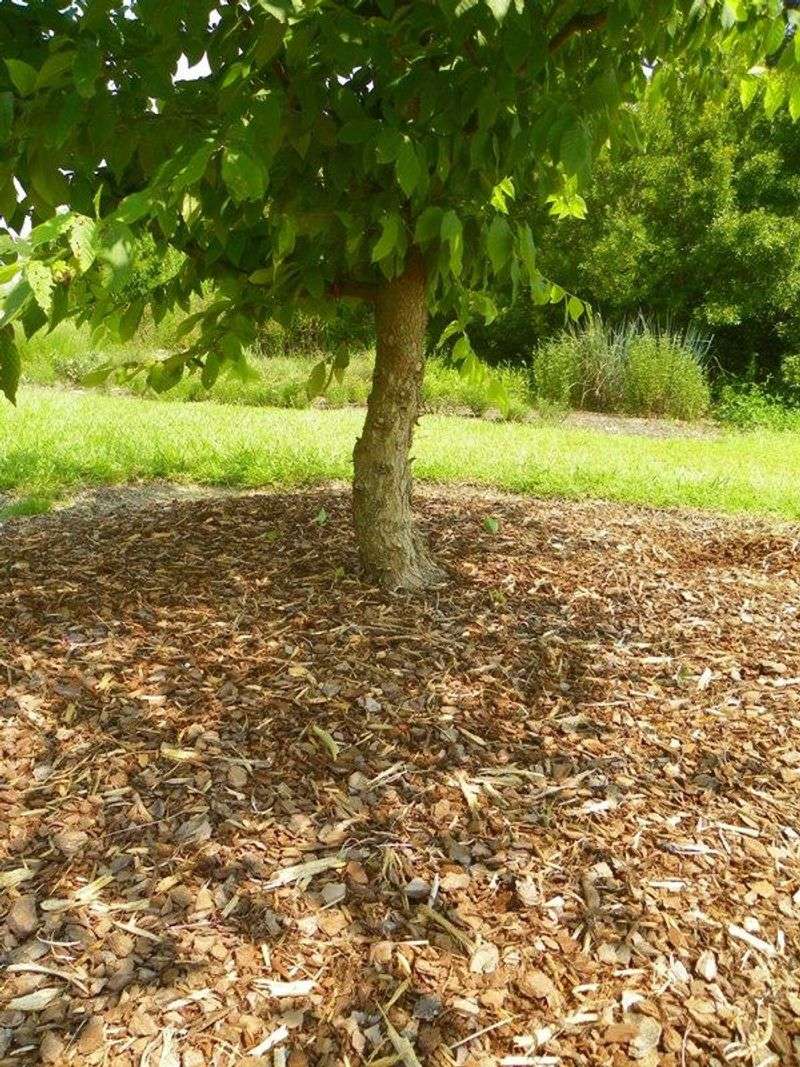
Established trees, shrubs, and perennial beds are the most natural places to try a surface layer of shredded leaves. These plants have woody stems or sturdy crowns, so they handle a light blanket better than seedlings do.
Roots in the top few inches of soil benefit from the steadier moisture and cooler temperatures.
Placement matters as much as the material. Keep leaves back from trunks, shrub stems, and the crowns of perennials, because mulch piled against them can hold moisture and contribute to problems.
NC State advises mulching herbaceous beds except at plant crowns and stems.
For woody plants, a University of Minnesota guide suggests a 3-inch layer starting 12 to 18 inches from trunks or stems. That is general guidance, not a North Carolina rule, so treat it as a starting point and adjust for your plants.
Bed conditions still count. A heavy clay bed in the Piedmont that stays wet needs a thinner, looser layer than a sandy coastal bed that dries fast.
Slopes may need the leaves watered in so they do not slide, and plants that like sharp drainage often want less mulch near their crowns.
Use a lighter touch in vegetable beds
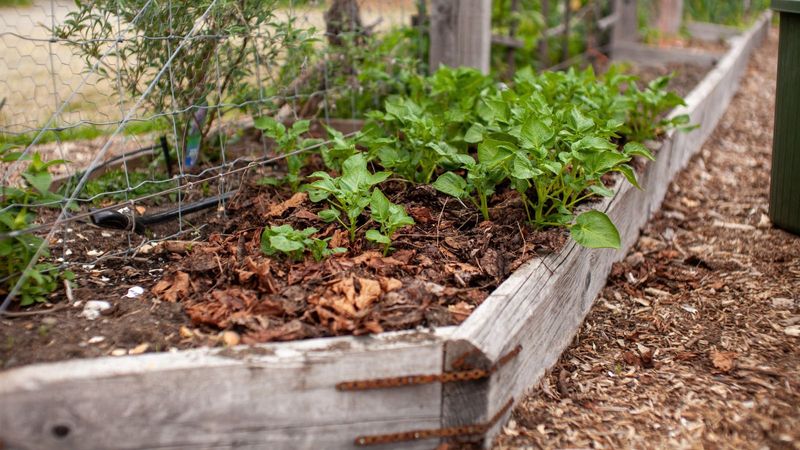
Vegetable gardeners have used leaves as mulch for a long time, and NC State’s community food gardening handbook includes leaves among the materials that can mulch garden beds. Around established tomatoes, peppers, collards, and squash, a loose layer helps hold moisture through a hot Carolina summer.
Timing and plant size are the catch. Tiny seedlings and newly emerging sprouts can be buried by even a modest layer, so wait until plants are sturdy, then tuck leaves in around them.
Keep the mulch off stems, in line with NC State’s caution that excess mulch can harm plants.
Surface mulch and soil amendment are two different jobs. Oregon State notes that fresh, noncomposted material worked in shortly before planting may compete with plants for nutrients as it breaks down.
That caution applies to digging it in, not to laying shredded leaves on top.
If you want to dig leaves in, let them break down first or compost them. For direct seeding, keep the seed row clear and mulch the paths and the spaces between rows.
Depth and placement matter
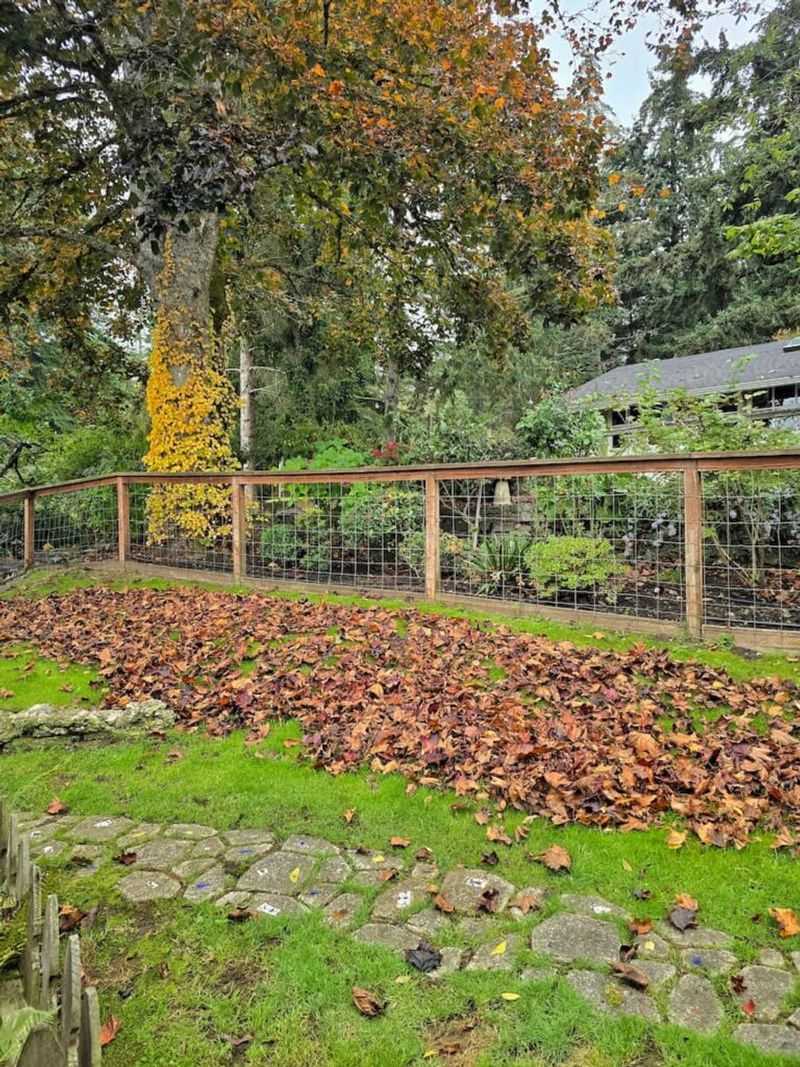
No single depth fits every bed. NC State’s guidance varies by situation: 1 to 2 inches of finer organic mulch for annual color beds, 2 to 3 inches of leaf mold under plants, and generally 3 to 4 inches of organic mulch in perennial beds, with a warning not to go past 4 inches in that last case.
Those are bed-specific references, not one prescription for shredded leaves everywhere.
For a home bed, start shallow and keep the layer loose. You should be able to see and feel air in it, not a dense pad.
Pull leaves back from trunks, stems, crowns, and emerging seedlings so those spots stay open.
Fine material is the risk. NC State warns that fine mulch applied too heavily can form a water-impermeable layer, and thick mulch can encourage problems such as crown rot.
A simple check is to water the bed and see whether it soaks in or runs off the surface.
To prepare the leaves, shred them when dry with a mower or leaf shredder. Chopped leaves mat less than whole ones, and watering the mulch can help it stay in place.
If the layer packs down after a few rains, fluff it with a rake.
Check the leaf source and the plants nearby
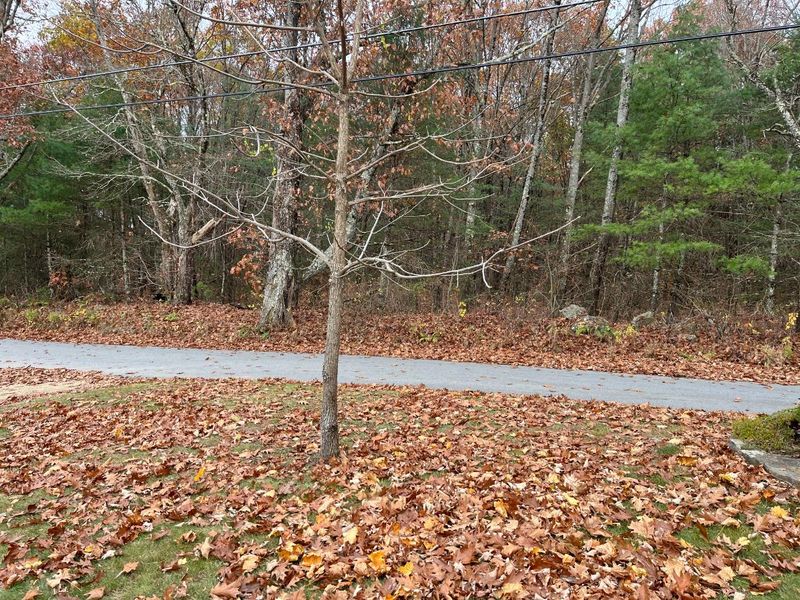
Where your leaves come from deserves a quick look. If a tree had a serious leaf disease this year, some pathogens can survive winter in the fallen debris.
University of Minnesota Extension explains that infected leaves can carry disease through the winter.
That does not mean every fallen leaf spreads disease. Ordinary spotting late in the season is common.
But if leaves are clearly diseased, skip using them in healthy beds and follow your county’s disposal guidance instead.
Black walnut is a special case. Penn State reports that walnut leaves and other parts contain juglone, and that sensitive plants are most at risk where debris builds up in poorly aerated, wet soil.
Tomatoes and some other plants are among those called sensitive, so think twice before piling walnut leaves around them.
You may hear that oak leaves or pine needles sour the soil. NC State says they have little effect on soil pH in most circumstances.
If you suspect a pH problem, a soil test is the better guide than any mulch rumor.
Use leaves for mulch and leave some for wildlife
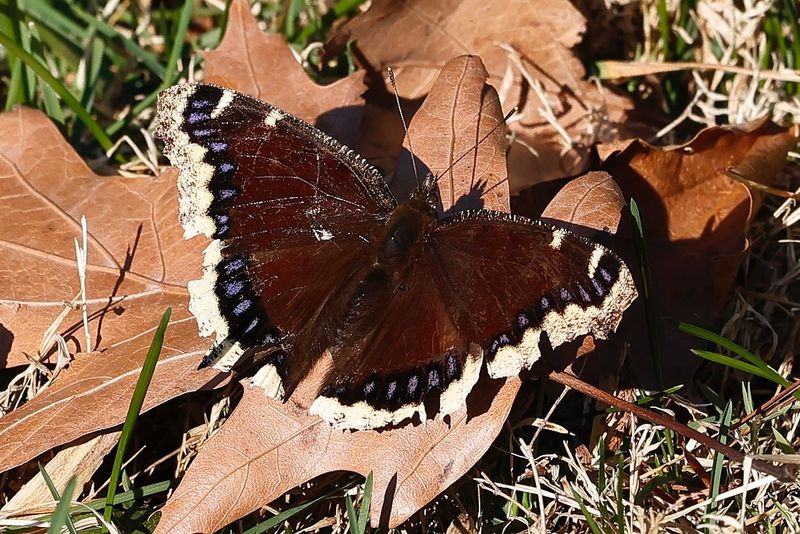
You do not have to choose between a mulched bed and a wildlife-friendly yard. Illinois Extension points out that leaf litter shelters overwintering insects and other wildlife.
Shredding or removing every leaf takes that shelter away.
A practical compromise is to split the harvest. Shred what you need for beds that benefit from mulch, and leave the rest whole in a set-aside spot, such as under shrubs, along a back fence, or in a corner of the woodland edge.
Whole leaves also work in that spot, since they are not packed over low plants. NC State materials also note that undisturbed ground cover supports soil life.
Do not expect leaves to do pest control for you. They are shelter and soil cover, not a tick or mosquito remedy, so keep that in mind when deciding how much to leave and where.
Leaves left in a corner far from paths and play areas are a sensible choice.
Penn State describes leaves as a resource worth keeping on site, and NC State’s planning advice asks you to match mulch to the bed. Weigh bed conditions, plant size, appearance, disease history, and wildlife goals, and buy bagged mulch where it does the job better.
Leaves are one more tool, and the best yards use a few.