
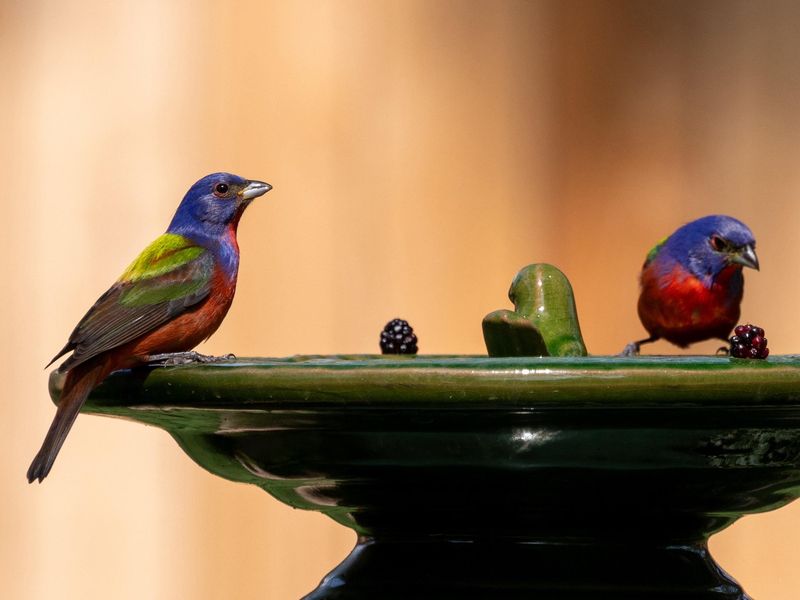
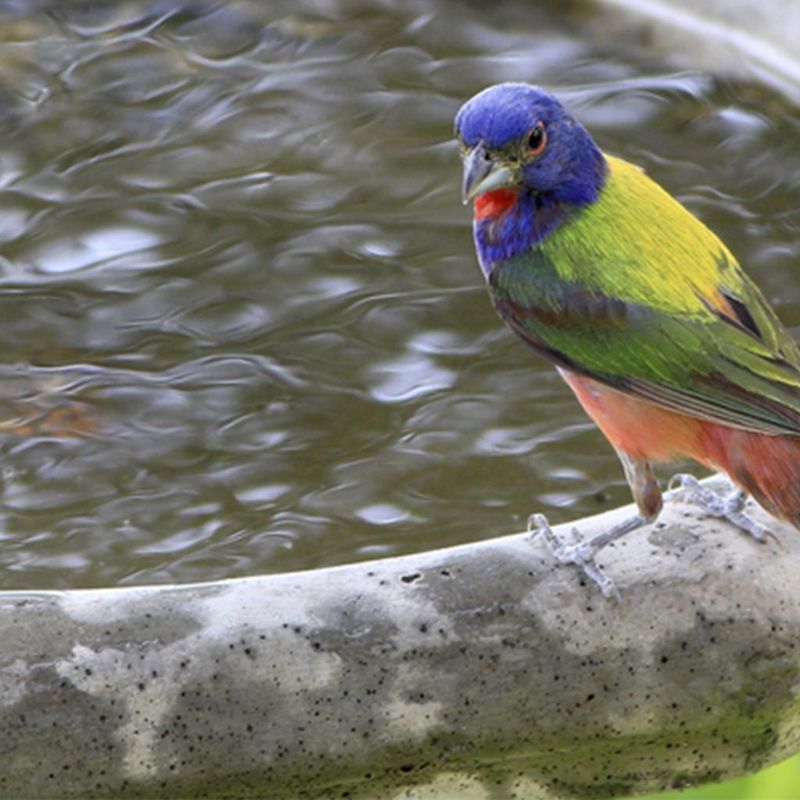
Few birds stop a Texas gardener cold like a male Painted Bunting, with his electric blue head, red chest, and lime-green back glowing in the summer light. These small, jewel-colored songbirds spend warm months across much of Texas, and Central Texas yards can be genuinely useful to them when the habitat is right.
The good news is that a handful of manageable yard habits can improve your chances of seeing them again, even if no single trick can promise they will show up every year.
Make the Yard More Suitable—Not Guaranteed to Bring Birds Back
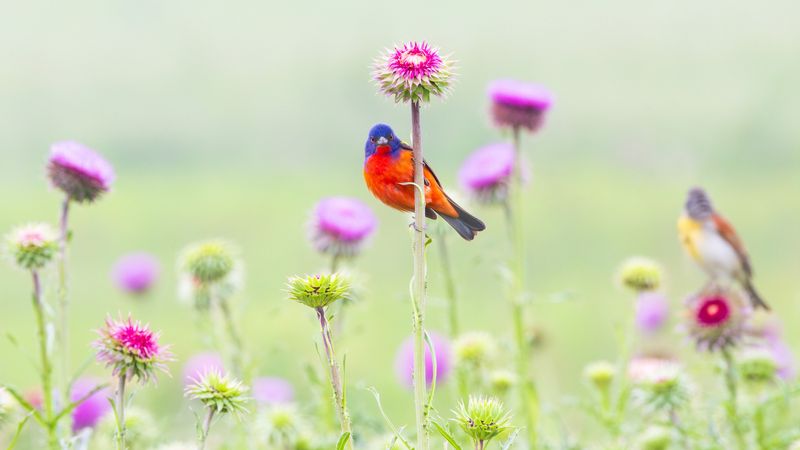
Painted Buntings are summer residents across a wide swath of Texas, arriving in late spring and departing by early fall. Texas Parks and Wildlife describes their preferred habitat as semi-open areas with dense, low vegetation, brushy edges, streamsides, fields, and thickets.
That description matters because it tells you exactly what a Central Texas yard needs to offer if you want to make it worth a visit.
Yards that combine protective cover, natural food sources, and low pesticide use are simply more useful to these birds than closely mowed, open lawns with little structure. The habitat changes outlined in this article can make your property more suitable.
What they cannot do is override migration timing, weather patterns, regional food availability, predation pressure, or the unpredictable nature of individual bird survival.
One encouraging piece of context: a long-term USGS study of the eastern coastal Painted Bunting population found that most adult resightings occurred at the same study site where birds were originally banded. That supports the idea that suitable habitat can be used repeatedly.
However, that research focused on a southeastern coastal population, not Central Texas, and it cannot tell a homeowner whether an unbanded bird seen in June is the same individual from the previous summer.
Cornell Lab’s Painted Bunting life history also notes the species’ generally common status while acknowledging a documented long-term decline reported by the North American Breeding Bird Survey. Your yard will not reverse that trend on its own, but a well-structured Central Texas habitat can be a small, real contribution to a landscape that increasingly matters for this species.
Build Dense, Low Cover Beside Open Feeding Space
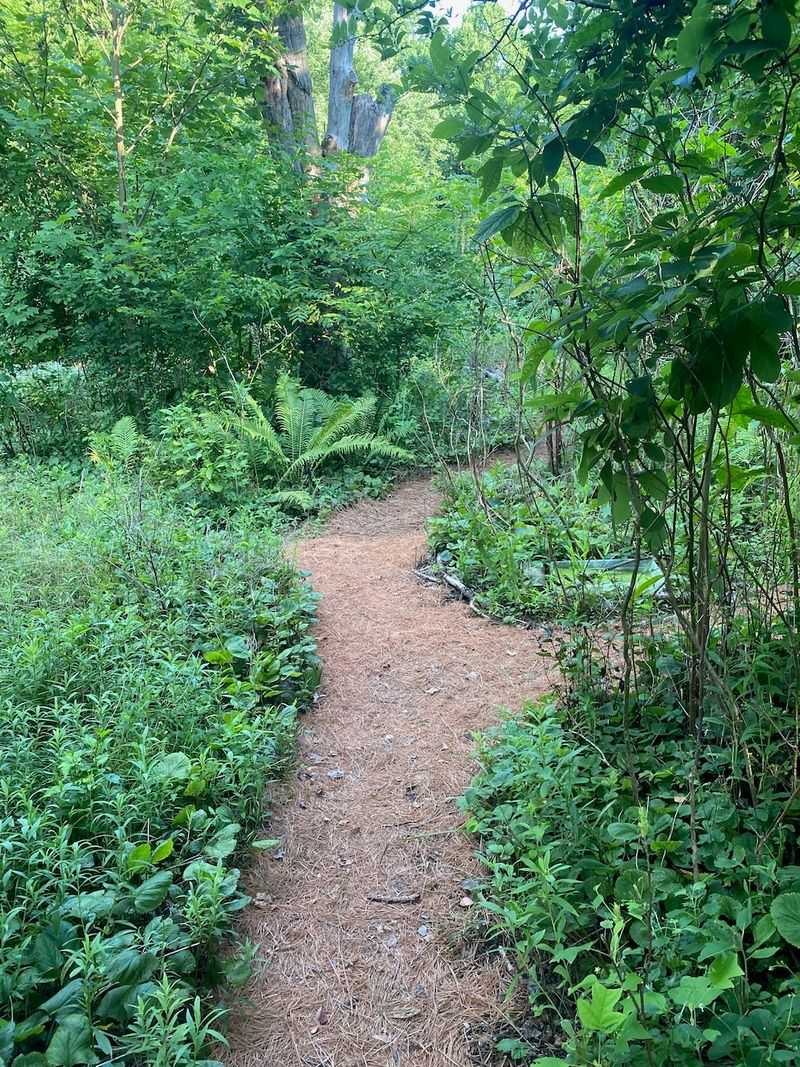
Most people picture a feeder when they think about attracting birds, but for Painted Buntings the layout of your yard matters far more than any single food source. Cornell Lab’s life history account describes the species as a ground forager that stays close to protective cover, often remaining hidden inside thick understory vegetation rather than moving through open space.
The practical goal is to create a brushy edge alongside an open patch, not a feeder sitting alone in the middle of a bare lawn. Think of it as two zones working together: a dense section of native shrubs, vines, and grasses where a bird can drop into cover quickly, paired with an adjacent open area of seeding grasses or low forbs where it can forage.
USDA Forest Service habitat research supports this edge-adjacent design as consistently useful to birds that split their time between cover and open foraging ground.
If your yard is currently all lawn, you do not need to tear everything out at once. Start by letting one corner or fence line go natural.
Allow a few native shrubs to grow without heavy trimming, let ornamental grasses reach their full height, and resist the urge to edge every border into a clean line. Even a modest brushy strip along a fence can give a foraging bird the escape route it needs to feel safe.
Texas Parks and Wildlife notes that Painted Buntings rarely use feeders placed far from cover, which reinforces why spatial design matters more than the specific food offered. Get the structure right first, and the rest of the habitat improvements will have a better foundation to build on.
Let Regional Native Plants Produce Seeds and Shelter
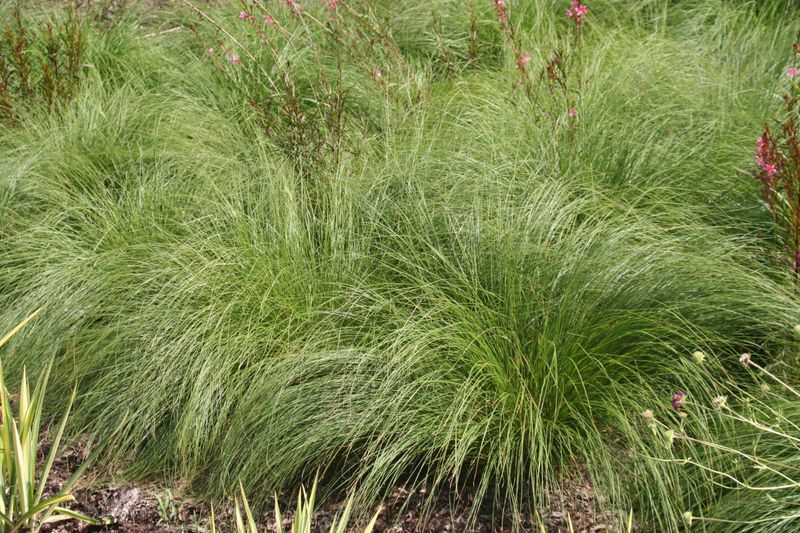
Frequent mowing removes the seedheads that ground-foraging birds depend on. Cornell Lab’s account of Painted Bunting diet lists grasses, panic grass, sedges, pigweed, dock, and other seed-bearing plants as documented food sources.
Letting at least some of these plants mature and hold their seeds through late summer gives foraging birds something to actually find.
The key word in that list is “regional.” A plant native somewhere in Texas may be poorly suited to your specific soil, rainfall pattern, or local climate. TPWD’s Wildscapes program provides ecoregion-specific plant guidance, and their Central Texas and San Antonio Wildscapes page is a good starting point for Hill Country and Blackland Prairie gardeners.
Consulting a local nursery that specializes in regionally adapted plants will get you closer to choices that actually thrive without extra irrigation.
When selecting plants, separate the jobs they do. Some natives are documented Painted Bunting food plants because they produce seeds the birds eat directly.
Others support wildlife indirectly by hosting insects, providing shelter, or connecting habitat patches. Both types have value, but they are not interchangeable.
TPWD’s Wildscapes habitat tips recommend native vegetation as the primary food and cover resource, with artificial feeders treated as supplemental only.
A practical start: leave a section of existing native grasses uncut through fall, allow annual wildflowers to go to seed before pulling them, and add one or two locally adapted shrubs that offer both shelter and food structure. The Texas A&M AgriLife Central Texas Native Seed Project offers regionally tested seed sourcing guidance that can help you choose plants with a proven track record in your specific part of Central Texas.
Protect Insects During the Breeding Season
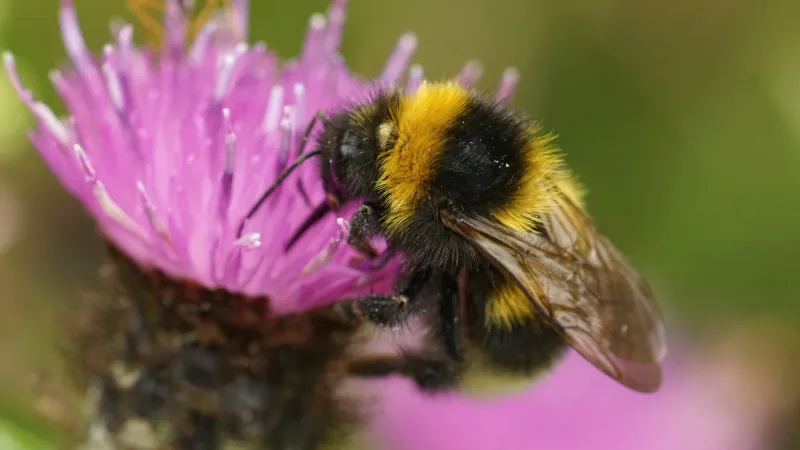
Seeds get most of the attention in Painted Bunting discussions, but protein is just as important during the breeding season. Cornell Lab documents that breeding Painted Buntings eat considerably more insects than at other times of year, including grasshoppers, beetles, caterpillars, true bugs, spiders, snails, wasps, and flies.
That shift in diet is significant, because it means a yard that kills off its insect population with broad-spectrum pesticides is removing part of what these birds need most when they are nesting and feeding young.
Reducing or eliminating broad-spectrum insecticide use during late spring and summer is the most direct way to protect that food web. Tolerating some leaf damage from caterpillars, leaving patches of leaf litter where beetles and spiders overwinter, and avoiding the urge to “clean up” every corner of the yard can all help maintain the invertebrate community that breeding birds rely on.
U.S. Fish and Wildlife Service guidance on protecting insects for birds makes the connection clear: a yard with fewer insects is a yard with less food for insectivorous and omnivorous birds alike.
The goal here is a functioning food web, not a promise that skipping pesticides will bring Painted Buntings into view. Other birds, pollinators, and beneficial predators also benefit from a less chemically managed yard, so the payoff extends well beyond any single species.
If pest pressure in specific beds is unavoidable, targeted treatments applied away from foraging areas are far less disruptive than blanket spraying across the whole yard.
Offer Clean, Shallow Water as a Supplemental Resource
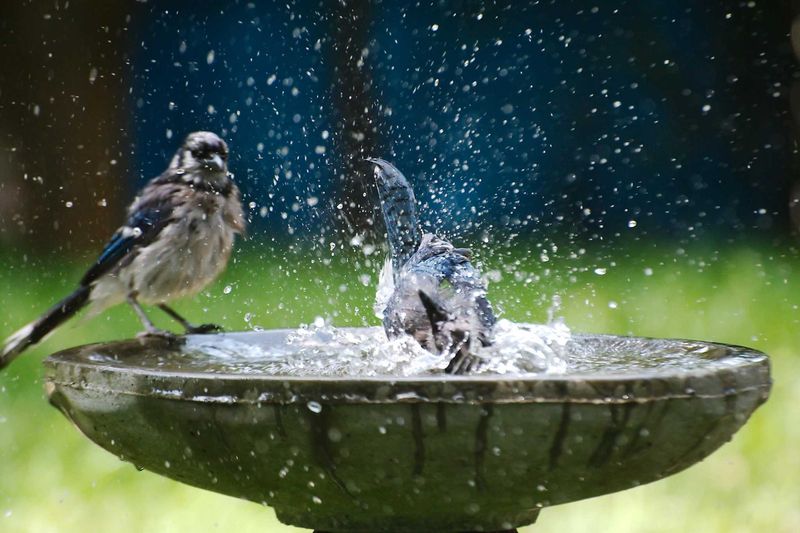
A reliable source of clean water is useful to many backyard birds in Central Texas, especially during the long, dry stretches of summer heat. Audubon’s birdbath guidance recommends a basin roughly one to two inches deep, with a flat rock or a few stones inside to give birds secure footing.
Shallower is better: most songbirds are cautious about deep water, and a gradual slope or textured bottom encourages both drinking and bathing.
Placement matters almost as much as depth. Setting the bath near a shrub or dense planting gives visiting birds a quick escape route if a predator appears, which makes them more likely to linger.
At the same time, avoid positioning it directly under dense overhanging branches or right next to a seed feeder, where debris and droppings accumulate quickly and foul the water. Audubon’s birdbath cleaning guidance recommends changing the water every two to three days and scrubbing the basin regularly to prevent algae, mold, and bacterial buildup.
Stagnant water does not just look bad; it can spread disease among the birds that use it.
What a birdbath will not do is serve as a stand-alone attractant for Painted Buntings specifically, or guarantee that any bird returns to the same yard year after year. U.S.
Fish and Wildlife Service backyard bird guidance frames water as one component of a broader habitat, not a substitute for cover, native plants, and insect food. Think of the bath as a bonus resource that makes your yard more comfortable for any bird passing through, while the habitat structure does the heavier work of making the space genuinely worth a visit.
Use Feeders Carefully, Without Treating Them as Habitat
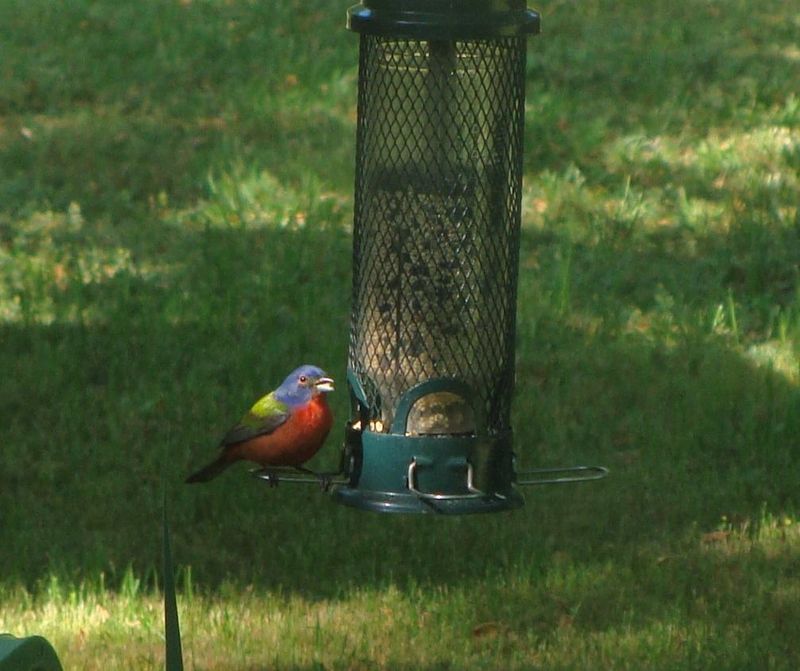
Feeders can produce exciting sightings, but they work best when they complement habitat rather than replace it. Texas Parks and Wildlife notes that Painted Buntings rarely use backyard feeders placed far from cover.
Because the species forages primarily on the ground and relies on nearby vegetation for a fast retreat, an exposed feeder mounted high on a pole in the middle of an open lawn is a poor fit for how these birds actually behave.
If you choose to offer supplemental seed, a low tray or ground-level feeder positioned near a brushy edge is more consistent with the species’ habits than a traditional hanging feeder. White millet has been used successfully as bait in Painted Bunting demographic research, but that research context does not mean millet will draw birds to every Central Texas yard.
Treat it as one option, not a guaranteed formula.
Feeder hygiene is not optional. Remove spoiled or wet seed promptly, clean the feeder itself on a regular schedule, and rake or clear the ground beneath it where hulls and droppings accumulate.
Audubon’s feeder disease prevention guidance recommends temporarily removing feeders entirely if visibly sick birds appear, since crowding at a feeding station accelerates disease transmission. TPWD birding habitat resources reinforce that clean, well-maintained feeding stations are far safer for birds than neglected ones.
Two additional hazards deserve attention alongside feeder placement. Cornell Lab’s guidance on outdoor cats is direct: free-roaming cats are among the leading sources of bird mortality, and keeping cats indoors or physically preventing their access to feeding areas significantly reduces that risk.
Window strikes are the other concern. Cornell Lab recommends placing feeders either within three feet of a window or well beyond thirty feet away, because the intermediate zone is where birds build enough speed to cause fatal collisions with glass.
Maintain the Habitat and Judge Success Realistically
Keeping these habits going through the season does not require a major time commitment. A practical routine looks like this: check the dense cover edge a few times each season and resist over-trimming, allow seed plants to mature and hold their heads through late summer, avoid broad-spectrum pesticides from late spring through fall, refresh birdbath water every few days and scrub the basin weekly, and treat any feeder as a supplement that needs regular cleaning rather than a set-it-and-forget-it installation.
Measuring success honestly is just as important as the work itself. A Painted Bunting appearing in your yard in June is a real and rewarding outcome.
Whether that bird is the same individual from a previous summer is something you genuinely cannot know without banding data. Cornell Lab’s life history account and TPWD’s Wildscapes habitat tips both frame native habitat as the foundation, with feeders and water as optional support, and that hierarchy is the right one to hold onto.
Migration timing, weather, and factors well outside your fence line all shape whether birds appear in any given year.
What a layered, locally adapted habitat does is put your yard on the right side of that equation. A single millet feeder, one native plant, or a birdbath alone cannot replicate the combination of cover, seed production, insect food, and spatial structure that makes a yard genuinely useful to a ground-foraging, cover-dependent songbird.
Stack those pieces together and you have something worth coming back to, whether or not the same bird ever does.