
Every spring, millions of North Carolina gardeners fill their shady beds with annual impatiens, then do it all over again the following year. That cycle of buying, planting, and replacing adds up fast, and a serious disease called downy mildew has made it even less reliable.
Cardinal flower, a native perennial, can fill a similar role in the right moist, shady spot while drawing hummingbirds and reducing how often you reach for your wallet at the garden center.
Why gardeners look beyond annual impatiens
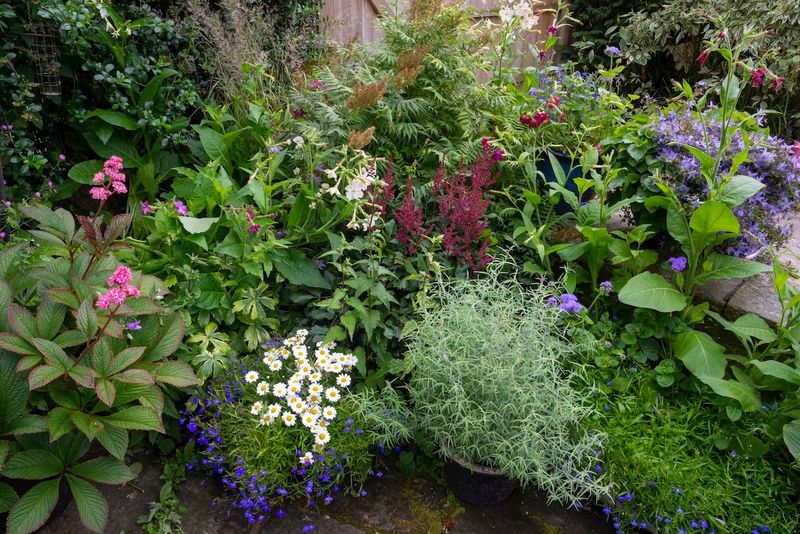
Common garden impatiens, Impatiens walleriana, earned their popularity honestly. NC State Extension notes that they are native to East Africa and technically perennial in tropical climates, but U.S. gardeners grow them as annuals because they cannot survive frost.
They flower generously in part shade to full shade, fill beds quickly, and come in colors that range from white to deep coral, which is exactly why they became a go-to for shady spots across the Piedmont, Coastal Plain, and Mountains.
The problem is not that impatiens are a bad plant. The problem is that buying flats every single spring gets expensive and repetitive, and one disease has made that routine even riskier.
Impatiens downy mildew, caused by Plasmopara obducens, has produced severe losses in commercial and landscape plantings, with symptoms that include yellowing leaves, downward curling, rapid defoliation, and plant collapse. Disease-resistant cultivars exist, and not every planting will fail, but gardeners who have watched a bed go from lush to bare in a matter of weeks have good reason to think about diversifying.
The goal here is not to declare impatiens unsuitable for every North Carolina yard. Plenty of gardeners use them successfully each season.
The case for a change is simpler: if you are tired of replacing annuals every year, and especially if your beds have suffered downy mildew losses before, a native perennial that fits the same shady niche can reduce how often you start from scratch. That is the practical reason to keep reading.
Meet cardinal flower, the native candidate for a moist shade bed
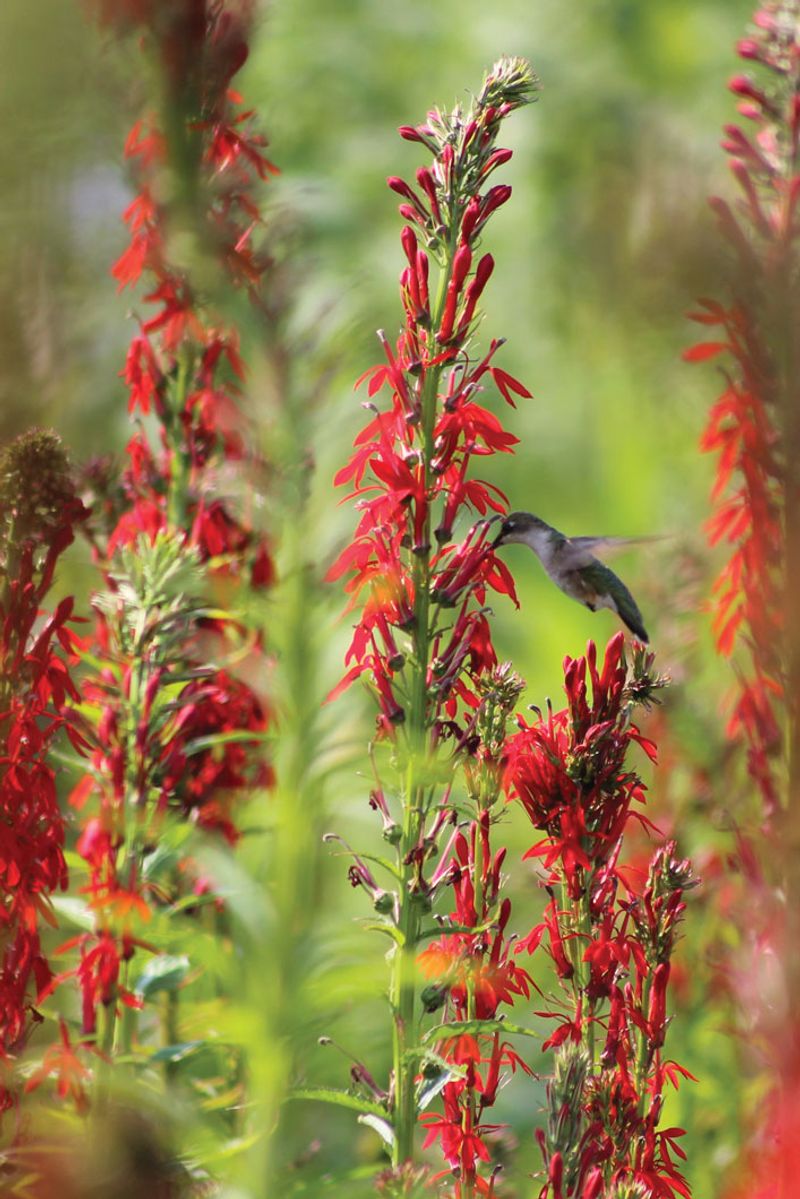
Cardinal flower, Lobelia cardinalis, is the native perennial that can step into the role impatiens has been filling, at least in beds that stay consistently moist. NC State Extension lists it as native across North Carolina’s Coastal Plain, Piedmont, and Mountains, and recommends it for woodland shade, wet meadows, stream edges, pond margins, rain gardens, and pollinator gardens.
That broad regional presence means you are not importing something exotic or untested. This plant already belongs here.
The flowers are hard to miss. Each bloom is a narrow, bright red tube arranged on an upright terminal spike that rises from mid-summer through early fall, generally from about July through October.
White and rose-flowered forms exist, but the classic red is what most nurseries carry and what hummingbirds seek out most aggressively. The plant is a true perennial, meaning the root system survives winter and can send up new growth the following season when conditions are right.
Knowing the plant is native to North Carolina is a useful starting point, but it does not settle the question of whether it will thrive in a specific bed. Cardinal flower replaces the function of seasonal color in a shade bed, not the exact visual form or low-maintenance behavior of impatiens in every situation.
A bed that stays evenly moist, has organically rich soil, and receives part shade is a genuine candidate for this swap. A dry, compacted spot under a dense canopy of thirsty maples is a different conversation entirely, and that distinction matters more than any regional nativity claim.
Think of cardinal flower as a native alternative that earns its place when the site matches its needs, rather than a universal upgrade that works wherever impatiens happened to survive.
Test the bed’s moisture and drainage before planting

Moisture is the single most important factor in deciding whether cardinal flower belongs in a particular bed. The plant performs best in rich, medium-to-wet soil and should not be allowed to dry out between waterings.
Shade alone does not qualify a bed. A dry spot beneath a large oak or magnolia, where tree roots compete for every drop of rain, is unlikely to give cardinal flower what it needs without significant irrigation or soil improvement.
Good candidates include naturally damp low spots in the yard, beds adjacent to downspouts where runoff collects, pond or stream margins, and established rain gardens that hold moisture after a storm. NC State Extension confirms that cardinal flower can tolerate brief flooding, which makes it genuinely useful in spots that collect water occasionally.
That tolerance does not mean any poorly drained location will work equally well. A bed that stays waterlogged for days at a time, especially in heavy clay with no outlet, can stress or rot the crown just as surely as drought can.
UF/IFAS research on cardinal flower in wet habitats confirms that the species is associated with naturally moist environments, not just any shaded area. The practical test is simple: after a normal rain, does the bed stay damp for a day or two, or does it drain completely within an hour?
If it drains fast and dries out between rains, plan on regular supplemental watering or reconsider the site.
Light requirements are flexible within a range. Part shade is the sweet spot, and afternoon shade is especially helpful during hot North Carolina summers when direct sun combined with heat stress can push even moisture-loving plants to their limit.
Full sun is possible if soil moisture is consistently maintained, but most gardeners will find part shade easier to manage. The key takeaway: evaluate moisture first, then shade, and let drainage quality make the final call on whether the site is actually suitable.
Design around tall flower spikes instead of low impatiens mounds
One of the most common mistakes gardeners make when switching from impatiens to cardinal flower is expecting the same visual result. Impatiens grow as compact, rounded mounds, typically under a foot or two tall, with flowers distributed across the entire plant from late spring through frost.
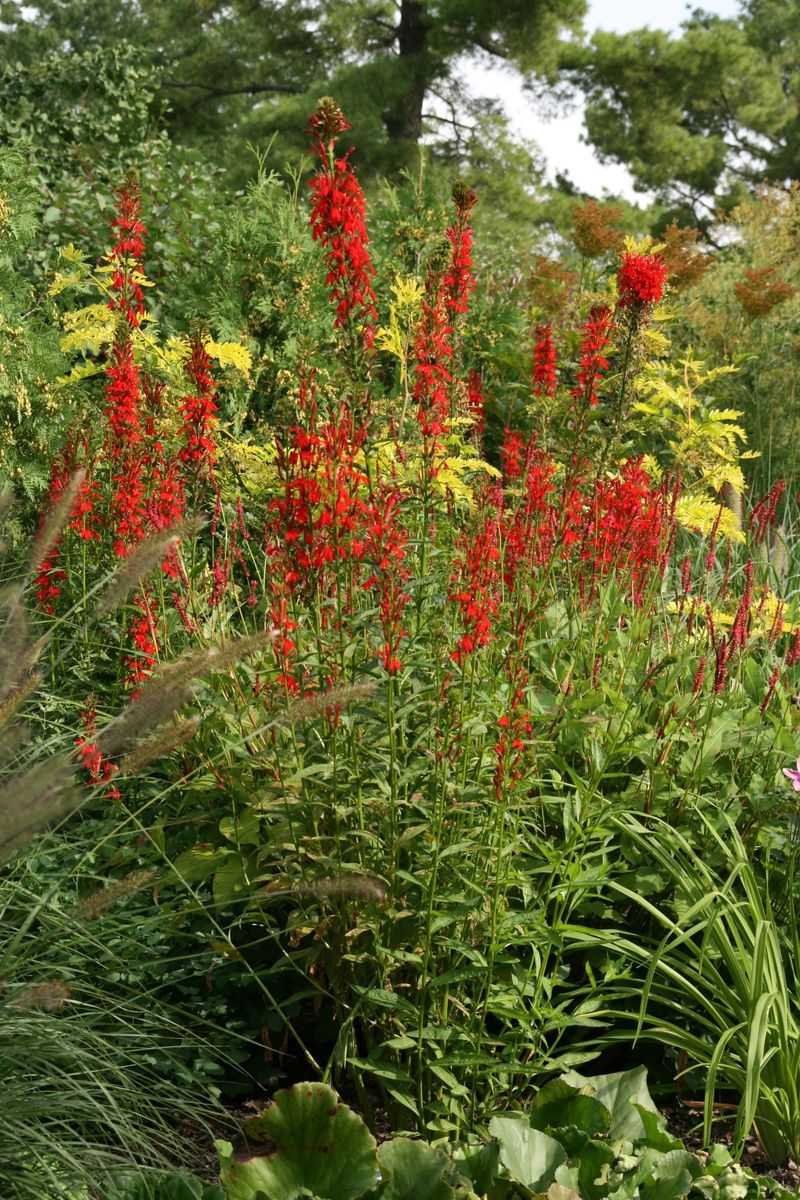
Cardinal flower does something completely different. NC State Extension documents a mature size of roughly 4 to 5 feet tall and 1 to 2 feet wide, with flowers concentrated on upright terminal spikes rather than spread across a bushy form.
That is a fundamentally different plant shape, and the design approach needs to match it.
Because of that height, cardinal flower belongs toward the middle or back of a border, not along the front edge where you would normally place low bedding plants. Pairing it with broad-leaved ferns, hostas, or other shade-tolerant foliage plants at the front of the bed creates a layered composition that makes the tall red spikes look intentional rather than out of place.
Missouri Botanical Garden guidance on perennial placement reinforces the principle of allowing for documented mature height and width when positioning plants in a border, rather than spacing based on the small nursery container size.
Garden impatiens create a continuous low carpet of color that fills a bed edge to edge. Cardinal flower creates vertical punctuation, a few bold stems rising above surrounding foliage with seasonal color concentrated in a defined bloom window.
Gardeners who want that kind of architectural statement in a shady, moist bed will find the swap satisfying. Gardeners who want the same low, continuous flowering mound will need to adjust their expectations or combine cardinal flower with lower-growing companions that cover the ground while the spikes do the vertical work.
Plant for establishment, not just the first flush of flowers
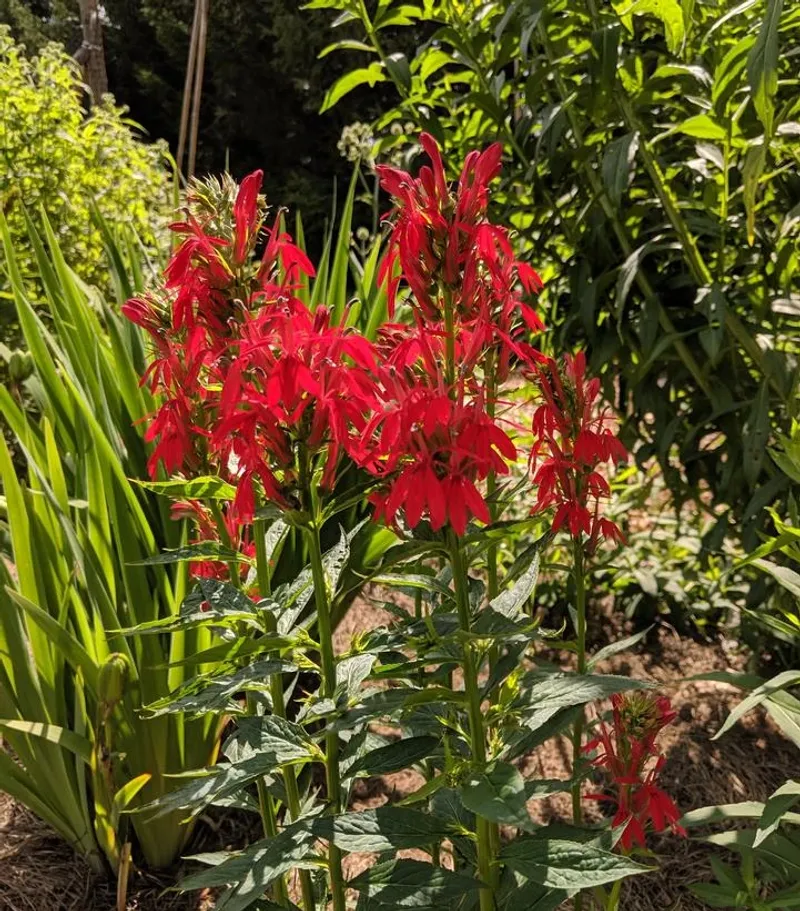
Getting cardinal flower through its first season is the most important thing you can do for long-term success. Spring and fall are the easiest times to plant in North Carolina because cooler temperatures and more reliable rainfall reduce how much supplemental irrigation you need to supply.
NC State’s Landscape Management Calendar supports spring and fall as the preferred windows for installing perennials in the state. Summer planting is possible, but it requires you to water promptly and consistently from the moment the plant goes in the ground, because heat and dry spells will stress a newly installed plant before its roots have spread.
Soil preparation matters as much as timing. Cardinal flower wants rich, moisture-retentive soil, so if your bed drains quickly or is low in organic matter, work in compost before planting.
Water the plant thoroughly at installation, not just a quick sprinkle, and then maintain even soil moisture while roots establish over the first several weeks. Letting the soil dry out completely during this window can set the plant back significantly, even if conditions seem mild.
Mulch is a useful tool here. A 2 to 3 inch layer of organic mulch over the root zone helps hold moisture and moderates soil temperature during summer heat spikes.
NC State Extension guidance on landscape plant establishment recommends keeping mulch pulled back from the crown and basal rosette rather than piled directly against the stem. Mulch against the crown traps moisture in the wrong place and can encourage rot at the base of the plant.
Allow room for the documented mature height and spread when spacing plants. A plant that reaches 4 to 5 feet tall and 1 to 2 feet wide needs space to perform well and to allow air circulation around the stems.
Crowding reduces airflow, which can increase disease risk and limit flowering. Plant with the final size in mind, even if the nursery container makes the plant look small at planting time.
Build a renewing colony instead of promising permanent performance
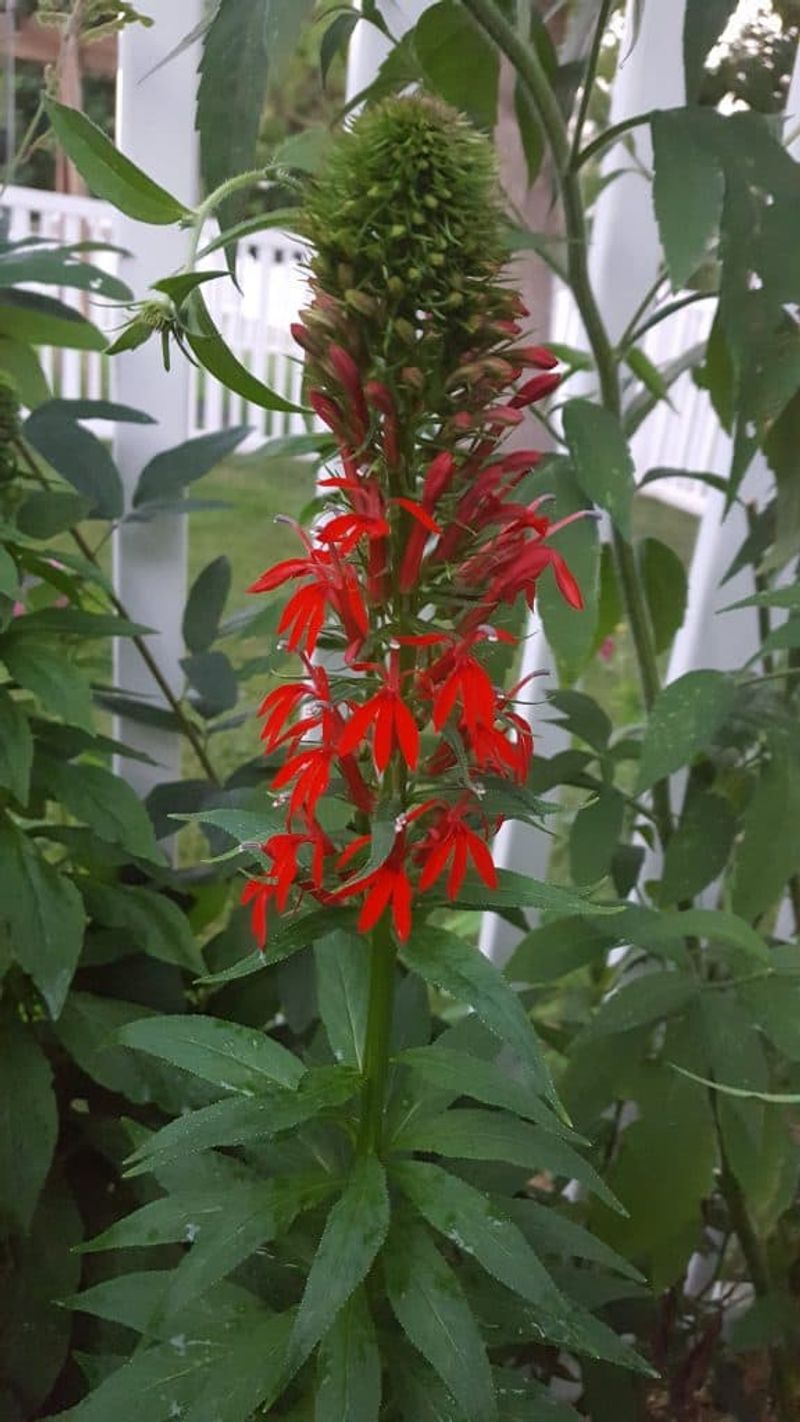
The headline promise that cardinal flower comes back stronger every year deserves a closer look before you count on it. Extension guidance on cardinal flower care describes the species as short-lived, which means a single original plant may not persist indefinitely.
What actually continues a planting is a combination of new basal rosettes that form around the base of the parent plant, self-sown seedlings that sprout nearby, and division of those rosettes in spring. The result can look like a colony that grows and fills in over time, but it is not one immortal plant getting bigger.
It is a population of related plants renewing itself when conditions allow.
Allowing some seed production at the end of the bloom season supports this renewal. Resist the urge to deadhead every spent spike.
Let a few mature and scatter seed, then watch for small rosettes near the base of the original plants the following season. Those rosettes can be divided in spring and moved to expand the planting or fill gaps where a parent plant has declined.
NC State Extension confirms that seed and rosette division are the primary propagation methods for the species.
The realistic benefit of this habit, compared to annual impatiens, is that a well-sited cardinal flower colony may reduce how often you need to purchase and replant. It is not a guarantee of zero intervention.
University of Georgia Extension cautions that native plants in residential landscapes still require watering, soil improvement, weed control, and other care, especially during establishment. Native status reduces recurring replacement costs when the site fits the plant.
It does not eliminate the need to manage the bed, divide rosettes, or occasionally replace plants that fail to return.
Think of a cardinal flower planting as a renewing colony that you tend rather than a set-it-and-forget-it fixture. That framing is both accurate and genuinely useful: it tells you what to watch for, what to save, and when to act.
Pair hummingbird appeal with a clear toxicity warning
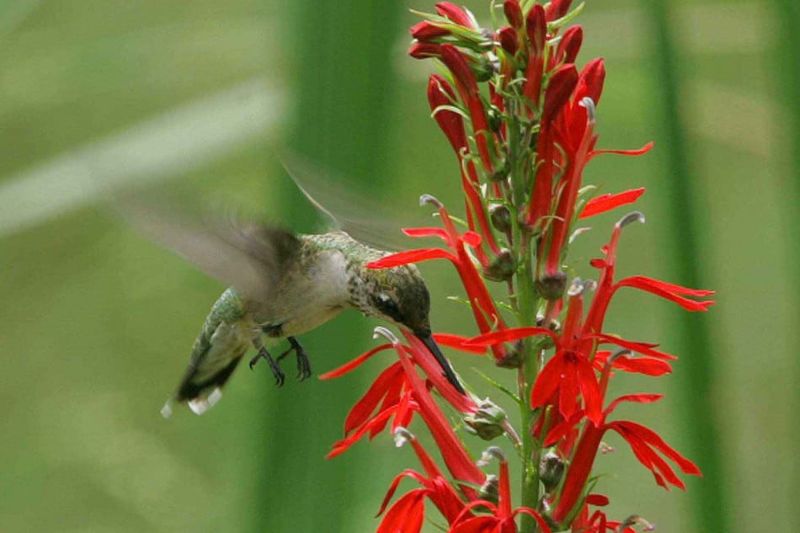
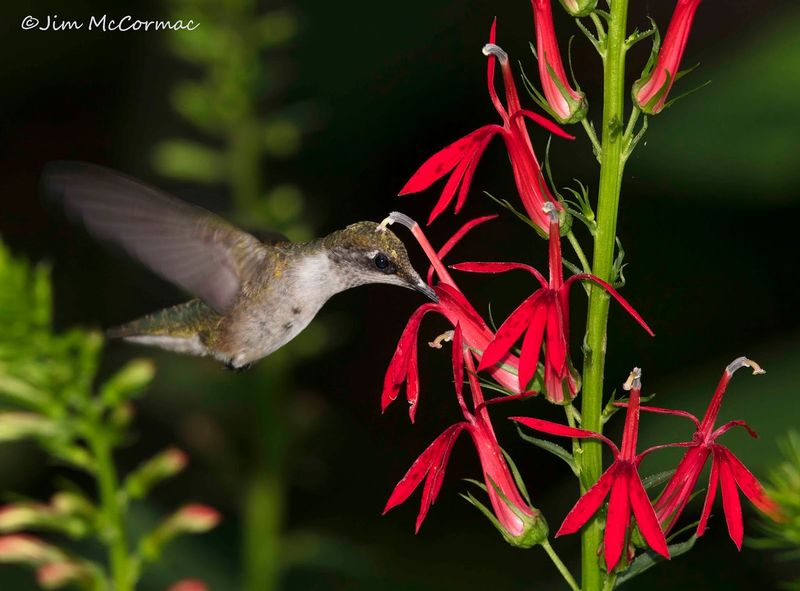
Cardinal flower’s most celebrated quality is its relationship with hummingbirds. The narrow red tubular flowers are shaped almost perfectly for hummingbird feeding, and NC State Extension identifies it as a native nectar plant that attracts both hummingbirds and butterflies.
Ruby-throated hummingbirds, the species most commonly seen in North Carolina during summer, are drawn to red tubular flowers, and a blooming cardinal flower in a moist shade bed can bring them in reliably during the July through October window. Butterflies also visit, though the flower shape favors the long-tongued hummingbird more than most butterfly species.
That wildlife value is real and worth celebrating, but keep the claim proportional. One plant species does not provide complete or year-round food for hummingbirds or butterflies.
Cardinal flower contributes to a broader habitat palette, and pairing it with other native nectar plants that bloom at different times extends the benefit across the season.
Now for the part that matters if you have pets or livestock. ASPCA lists Lobelia cardinalis as toxic to dogs, cats, and horses, with possible gastrointestinal and cardiac symptoms following ingestion.
NC State also identifies the plant as having medium-severity poison characteristics. If you have dogs that chew vegetation, cats that roam garden beds, or horses with access to the planting area, you need to factor that into your decision.
Restricting access through fencing, reconsidering bed placement, or choosing a different plant entirely are all reasonable responses.
Do not use cardinal flower as a food source or attempt any medicinal use. The toxicity concern applies to humans as well, and children who might handle or mouth plant material should not have unsupervised access to the planting area.
The wildlife benefit is genuine and worth pursuing, but it belongs in a yard where access by vulnerable animals and children can be managed responsibly.
Use cardinal flower where its conditions and character fit
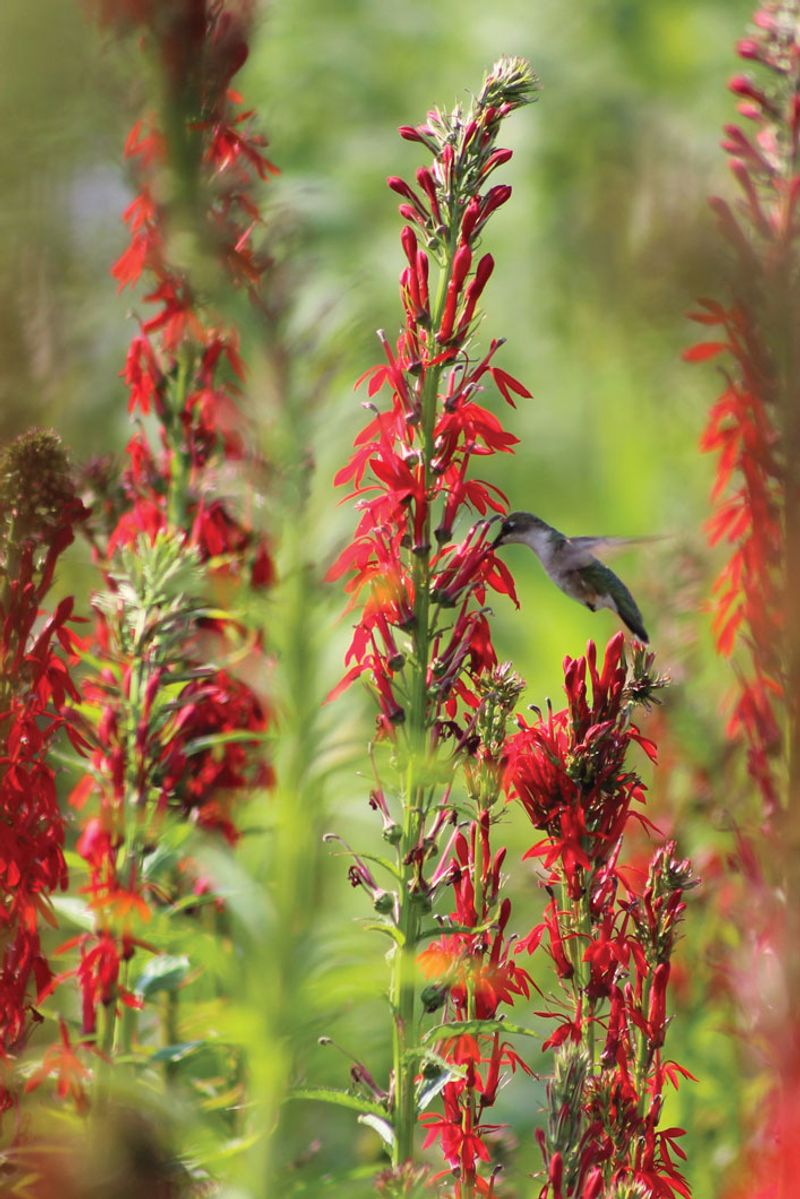
Cardinal flower earns its place in a North Carolina shade bed when the site delivers consistent moisture, suitable drainage, and part shade, and when tall red spikes and a potentially renewing native colony match what you want from that space. NC State Extension’s full profile and Extension guidance on its care both point to the same conclusion: this is a plant for a specific kind of site, not a blanket upgrade for every bed that once held impatiens.
Dry shade, unsuitable drainage, impatiens-style visual expectations, short-lived persistence, establishment watering demands, and pet or livestock access can all change the recommendation. If any of those factors apply to your situation, either address them directly or acknowledge that a different plant may serve the bed better.
The ASPCA toxicity listing is a firm consideration for households with chewing pets, not a minor footnote.
When the conditions do fit, cardinal flower can meaningfully reduce annual replanting without becoming a guaranteed, maintenance-free substitute for impatiens. A well-sited colony that renews through rosettes and seedlings is a practical upgrade, one that adds native nectar value, vertical structure, and a connection to the North Carolina landscape that a flat of annuals simply cannot offer.