
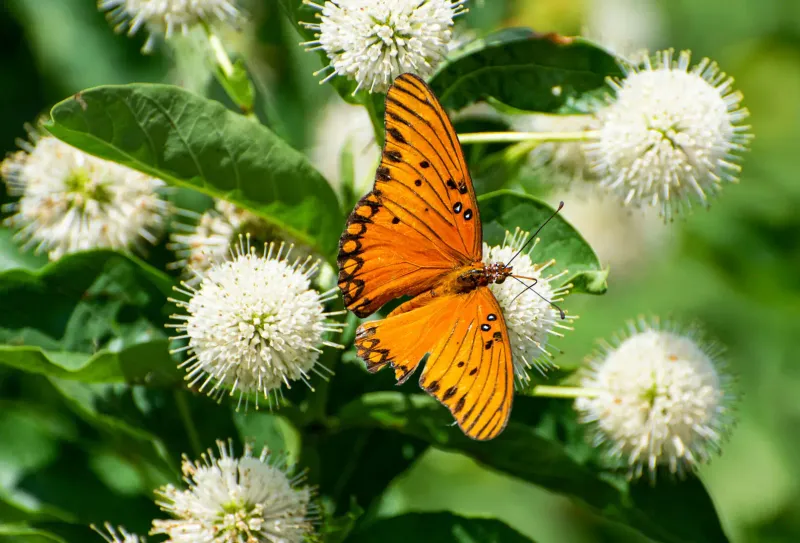
Many North Carolina gardeners plant butterfly bush expecting a pollinator paradise, but the picture is more complicated than the name suggests. Common butterfly bush feeds adult butterflies, yet it skips an important part of the job: supporting caterpillars and the rest of the food web.
For gardeners near streams, wet spots, or rain gardens, a native shrub called buttonbush can do a lot more for local wildlife. Knowing which plant fits your yard makes the difference between a bed that looks busy with wings and one that actually builds habitat.
Butterfly bush attracts adult butterflies, but it is not a complete habitat
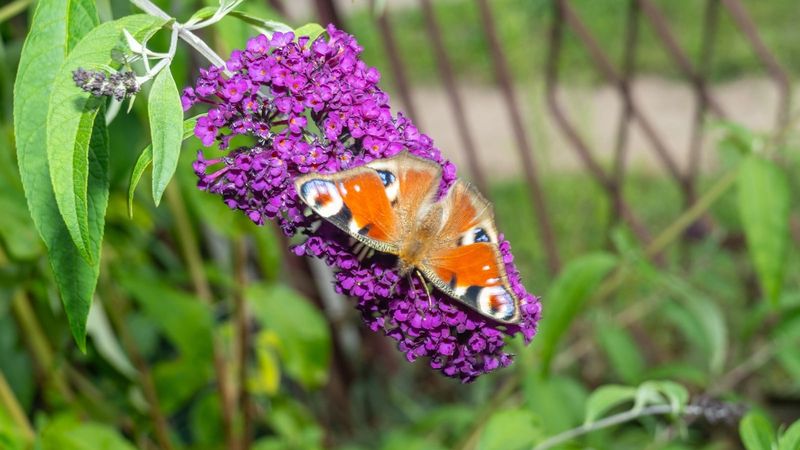
Common butterfly bush earns its name honestly. The nectar-rich flower spikes of Buddleja davidii pull in adult butterflies reliably, and on a warm summer afternoon a well-placed shrub can look like a landing strip for swallowtails and skippers.
NC State Extension’s plant profile confirms that it produces nectar and attracts adult butterflies, so dismissing it as useless to pollinators is simply not accurate.
The gap shows up when you look past the adults. Butterflies need more than a nectar stop: caterpillars depend on specific larval host plants, and many species can feed on only one or a handful of plant families.
Penn State Extension’s butterfly gardening guidance explains that combining flowering nectar plants with native larval hosts is what actually supports butterfly populations across their full life cycle. Butterfly bush provides the nectar side of that equation but nothing for caterpillars.
There is also a practical reseeding concern worth taking seriously. NC State reports that common Buddleja davidii self-seeds and naturalizes easily, with lightweight seeds that travel by wind or water and can remain viable in soil for several years.
NC Cooperative Extension’s Clay County office describes the plant as invasive or ecologically concerning in the Mountains and Piedmont. The North Carolina Native Plant Society’s invasive species list includes it as well.
The picture is not uniform statewide, though. A 2018 NC State weed-risk assessment summarized Buddleja davidii as noninvasive in North Carolina, and a 2024 Wake County Extension response noted no statewide planting restrictions.
Legal status, risk assessment, and regional ecological concern are not the same thing, and butterfly bush is not banned across North Carolina.
What that means practically: replacement makes the most sense when a plant is near streams, woodland edges, or roadsides where seeds can move into natural areas. Gardeners with established plants in contained beds can manage spread by removing spent flower heads before seed sets.
Treating the decision as a site-based stewardship choice, rather than a blanket rule, gives the clearest guidance.
Buttonbush fits sunny, moist North Carolina sites
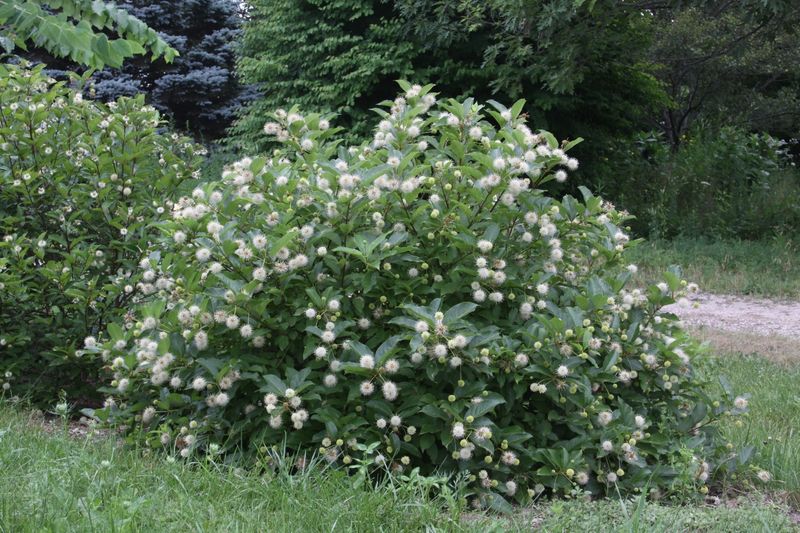
Buttonbush (Cephalanthus occidentalis) is native to North Carolina’s Coastal Plain, Piedmont, and Mountains, which means it evolved alongside the insects, birds, and other wildlife that share those landscapes. Its flowers are white, spherical, and fragrant, appearing in clusters that bloom from roughly June through September.
NC State Extension’s buttonbush profile lists bees, butterflies, hummingbirds, songbirds, waterfowl, and small mammals among the wildlife it supports, which goes well beyond the adult-nectar audience that butterfly bush reaches.
The conditions where buttonbush performs best are specific: full sun to partial sun and consistently moist to wet soil. Rain gardens, pond margins, stream edges, swales, boggy ground, and beds with poor drainage are where this shrub genuinely thrives.
Gardeners who have a wet corner that drowns most plants, or a low spot that stays soggy after heavy rain, have a site that buttonbush was built for.
That site-matching is exactly why the recommendation comes with a condition attached. Buttonbush is not a universal drop-in for every butterfly-bush planting.
Flowering is poor in dry soil or significant shade, and the plant’s size and open, multistemmed form mean it needs room to grow naturally. For a sunny, wet or moist North Carolina site, though, it offers a combination of native status, long bloom season, and broad wildlife value that is genuinely hard to match with a single shrub.
Choosing buttonbush for the right spot also sidesteps the reseeding concern that comes with common Buddleja davidii. It belongs in the local food web rather than arriving from outside it, which matters most when the planting is near water or natural areas where seeds could move.
Build a fuller pollinator planting around the shrub
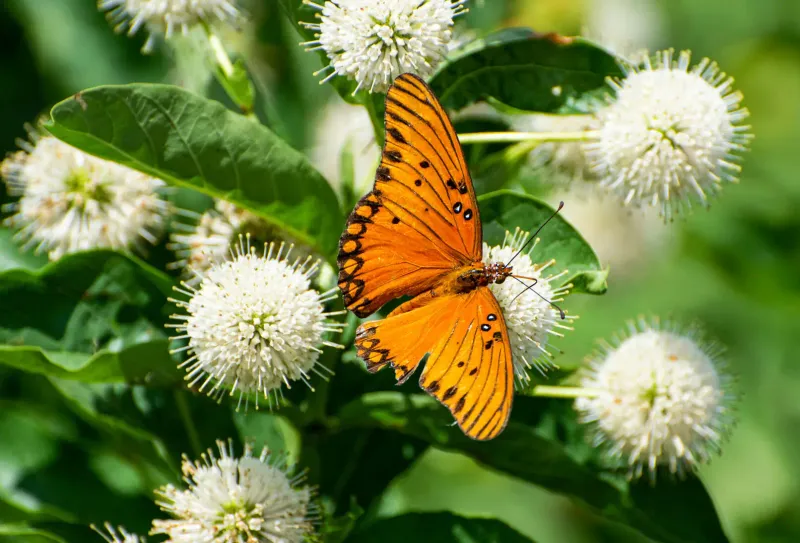
Buttonbush earns its place in a pollinator bed, but no single shrub carries the whole job. A yard that depends on one plant for pollinator activity will always have gaps in bloom timing, missing larval hosts, and limited shelter options.
The goal is a planting where buttonbush is a strong contributor rather than the entire story.
Penn State Extension’s butterfly gardening resource makes the case clearly: adult butterflies need nectar sources, but caterpillars need native larval host plants, and many species can feed on only one or a few plant families. Buttonbush provides nectar and wildlife habitat, but it is not a documented larval host for the majority of North Carolina’s native butterfly species.
Pairing it with plants like native milkweeds for monarchs, passionvine for fritillaries, or spicebush for spicebush swallowtails fills that gap.
Extending the bloom season around buttonbush’s June-through-September window strengthens the bed further. Early-season plants like wild columbine or native violets support spring pollinators before buttonbush opens.
Late-season additions like native asters and goldenrods carry the bed through fall when many insects are building reserves for winter or migration. NC State’s landscaping for wildlife guide recommends using a diversity of native plants with different flowering and fruiting periods rather than relying on a single pollinator magnet.
Shelter and reduced pesticide exposure round out the habitat value. Dense native shrubs, brush piles, and leaf litter give insects overwintering sites and protection from predators.
Cutting back on insecticides, even targeted ones, protects the caterpillars and beneficial insects that make the rest of the food web work. NC State’s top pollinator plants list offers practical native options suited to North Carolina conditions that pair well with buttonbush across multiple seasons.
Buttonbush contributes nectar, fruit for birds, and cover near water. Treat it as the anchor of a moist-site native planting rather than a standalone solution, and the pollinator payoff grows considerably.
Check the site before buying buttonbush
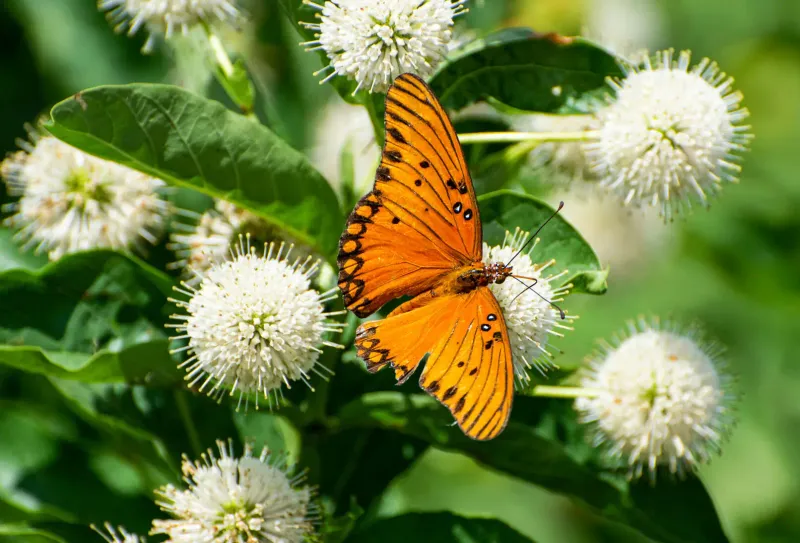
Before adding buttonbush to a shopping list, run through a quick site check. The plant has real preferences, and buying one for the wrong spot produces a struggling shrub rather than the wildlife-friendly anchor you planned for.
Light is the first variable. Buttonbush performs best in full sun to partial sun.
A bed that gets fewer than four hours of direct sunlight daily will produce noticeably weaker flowering. If the area is heavily shaded by a house, fence, or tree canopy for most of the day, buttonbush is not the right fit.
Soil moisture matters even more. NC State’s buttonbush profile is specific: consistently moist to wet soil is where this shrub does its best work.
Rain gardens, pond margins, stream banks, swales, and beds that stay soggy after a heavy rain are ideal placements. Dry, well-drained soil leads to poor flowering and a plant that never reaches its potential, even if it survives.
Size is the third factor most gardeners underestimate. Buttonbush commonly reaches approximately 5 to 12 feet tall and can spread about 8 feet, with an open, irregular, multistemmed form.
That is a substantial footprint. A cramped foundation bed next to a walkway or a narrow border between a fence and a patio is not a good match.
Rain gardens with open edges, spacious wet borders, pond margins, and low-lying corners of larger yards give the plant room to grow naturally without constant cutting back.
A dwarf cultivar is available for gardeners who need a smaller footprint, but it carries the same moisture and light requirements as the standard form. Choosing the compact version does not make buttonbush appropriate for a dry, shaded, or tight space.
Match the site first, then select the size that fits the available room.
Keep care simple while managing safety
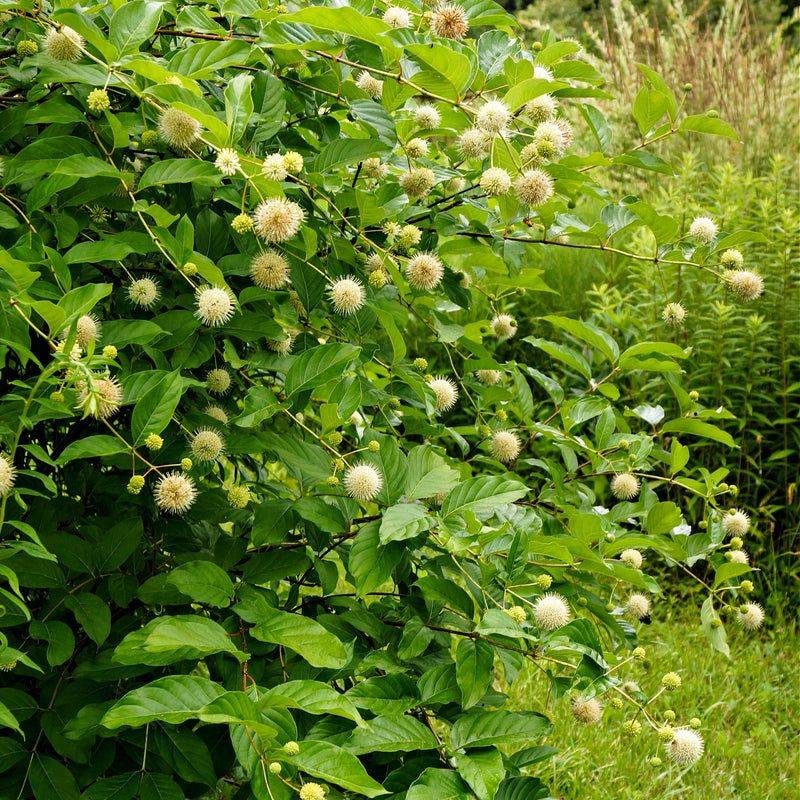
Buttonbush has a reputation for being low-maintenance once it is established in the right spot, and that reputation holds up. NC State’s buttonbush profile describes it as tolerant of heat, wet soil, erosion, and soil compaction, and notes that it generally needs little pruning.
For a rain garden or wet-area planting, that means less seasonal work than most shrubs in a conventional bed.
Respecting the plant’s natural form is the most practical care approach. Buttonbush grows with an open, irregular, multistemmed structure, and repeated heavy shearing disrupts that form without improving flowering.
Light shaping to remove dead or crossing branches in late winter is usually all that is needed. Resist the urge to cut it back to a tight mound every spring.
One safety note deserves straightforward attention. NC State identifies toxic compounds concentrated in the bark and lists buttonbush as a problem plant for horses.
Human poisoning severity is listed as low, but accessible bark and prunings should be kept away from children, pets, and any grazing animals that could reach the shrub. When you prune, bag or compost clippings away from areas where animals browse.
For gardeners who are managing an existing common butterfly bush rather than replacing it, the most effective step is removing spent flower heads before seeds mature and disperse. Pulling seedlings as they appear, especially near streams, woodland edges, or roadsides, limits spread.
NC State’s butterfly bush profile notes that seeds are lightweight and can travel by wind or water, and even cut stems may resprout, so consistent follow-up matters more than a single pruning session.
Good maintenance habits for either shrub come down to the same principle: understand what the plant does naturally and work with that behavior rather than against it.
Choose summersweet when buttonbush does not fit
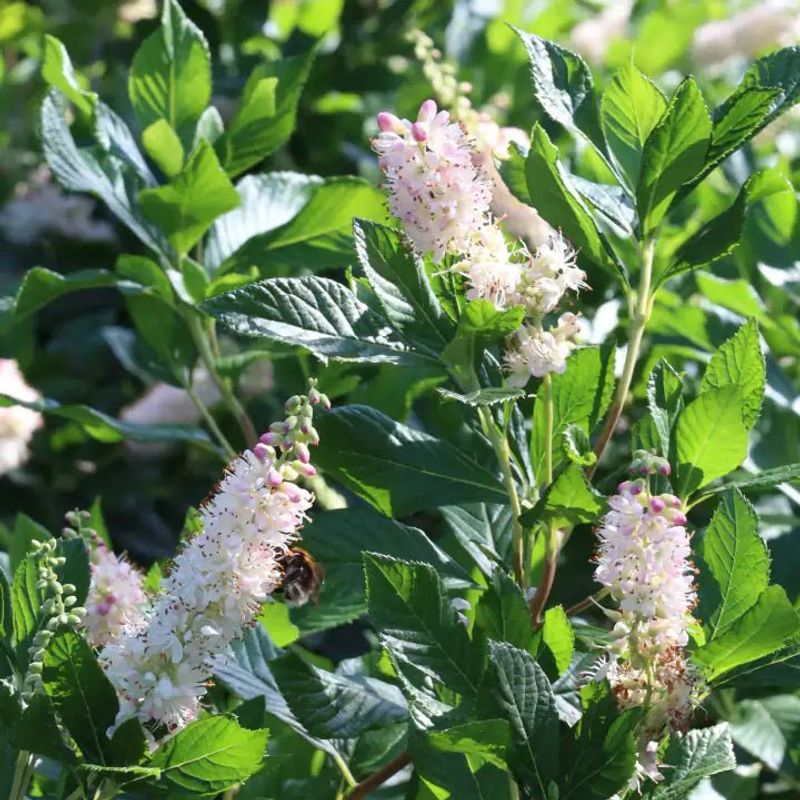
Not every North Carolina yard has a wet corner or a rain garden waiting for a large native shrub. Gardeners with average, well-drained soil, a bed that gets afternoon shade, or a smaller residential border need a different option, and buttonbush is a poor choice in those conditions.
Flowering is weak in dry soil or shade, and the mature size alone rules it out for many foundation plantings.
Summersweet (Clethra alnifolia) is a credible native alternative for those situations. NC State’s summersweet profile describes it as native from Maine to Florida and west to Texas, tolerant of moist soils, fragrant, pollinator-friendly, and well-suited to part-shade conditions.
It typically tops out at a more manageable 3 to 8 feet, which fits a conventional residential border more comfortably than buttonbush’s potential 12-foot spread.
The comparison here is about site matching, not declaring one plant superior to the other. USDA Forest Service research on native shrub ecology reinforces that native status is a meaningful selection criterion, but wildlife value also depends on site conditions, plant diversity, and bloom timing.
Summersweet in the right bed will outperform buttonbush in the wrong one every time.
For a shaded, drier bed, other site-matched natives such as native viburnums, beautyberry, or native azaleas may be worth exploring depending on the specific conditions. Buttonbush’s NC State profile is clear that moist to wet soil is a genuine requirement, not a preference.
When the site cannot meet that requirement, choosing a plant that can is the more practical path to a functioning pollinator bed.
Make the decision by matching plant, place, and purpose
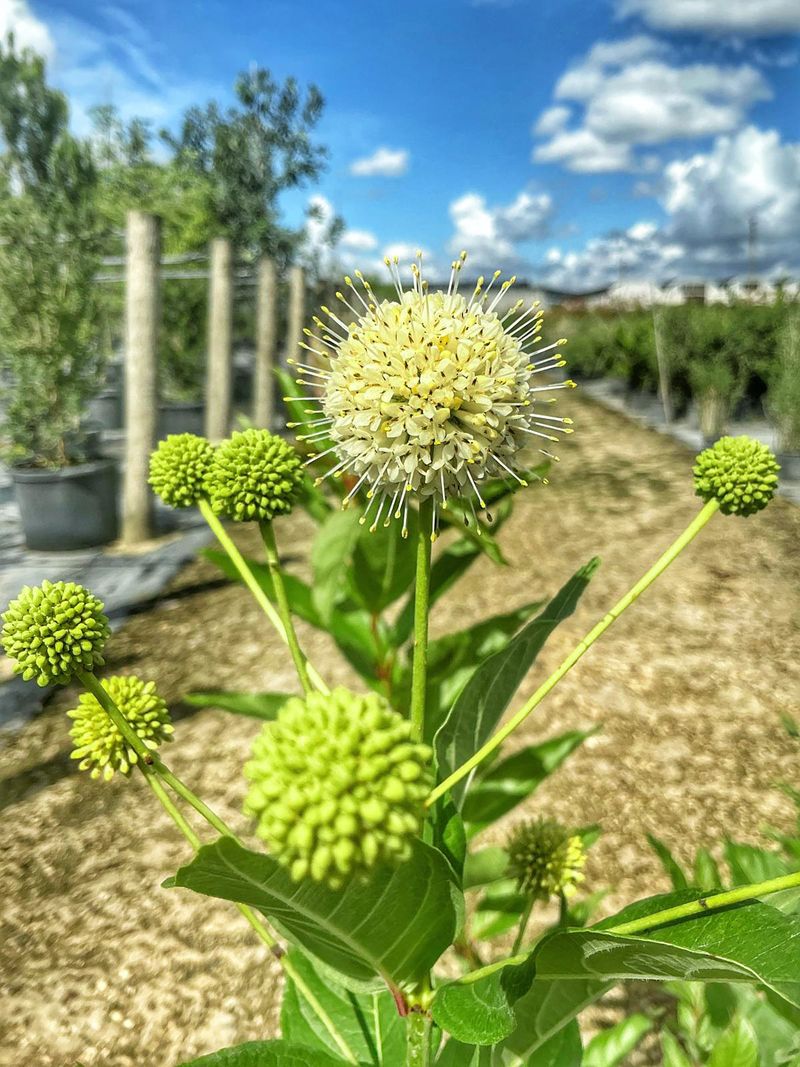
Matching the plant to the place is the clearest way to frame this decision. Buttonbush belongs on a sunny, consistently moist or wet North Carolina site where it has room to reach its mature size.
Rain gardens, pond margins, stream-adjacent beds, and low-lying corners with poor drainage are where its long bloom season and broad wildlife value show up reliably. For those sites, it is a strong native choice that avoids the reseeding concern documented for common Buddleja davidii.
When the bed is dry, shaded, better drained, or too small for a shrub approaching 12 feet, summersweet or another site-matched native is the more practical path. NC State’s landscaping for wildlife guide consistently points toward plant diversity matched to site conditions rather than a single-shrub solution, and that principle applies here regardless of which native you choose.
A single shrub, however well-placed, cannot create complete pollinator habitat on its own. Penn State Extension’s butterfly gardening guidance makes the case for combining native nectar plants with larval hosts, staggered bloom times, shelter, and reduced pesticide use.
Buttonbush handles the nectar and wildlife-habitat side of that equation well. It needs native companions to cover larval host duties and extend the season into spring and fall.
Gardeners with an existing common butterfly bush do not need to remove it immediately. Managing it by deadheading before seed set and pulling seedlings near natural areas is a reasonable approach, especially in a contained bed away from streams or woodland edges.
If regional spread concerns and site goals make replacement practical, NC State’s butterfly bush profile notes that cultivar identity matters: Lo and Behold hybrids are described as effectively sterile or very low-seeding, though they remain nonnative and do not replace the habitat value of a diverse native planting.
The strongest pollinator beds are built from a mix of plants chosen for the specific yard, not from swapping one shrub for another and calling it done. Get the site right, add native diversity, and let the wildlife sort out the rest.