
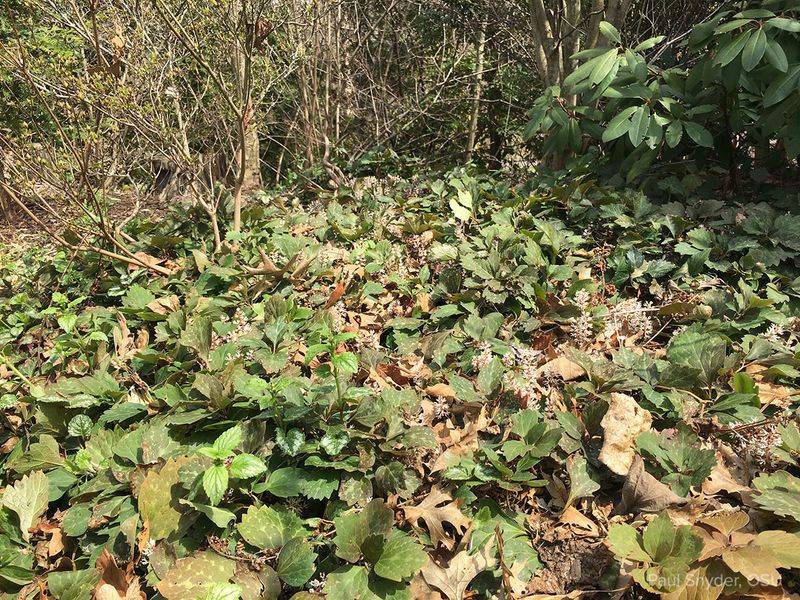
If you have a shady bed under shrubs or trees and you’re tired of the same imported groundcover everyone else seems to use, there’s a southeastern native worth knowing about. Allegheny spurge (Pachysandra procumbens) is a low, spreading plant that can hold its leaves through winter in many North Carolina locations, and it comes from this part of the country rather than from overseas.
Before you plant anything, though, it helps to understand what you already have, what the native alternative actually delivers, and where it works best.
Identify Japanese pachysandra before choosing a replacement
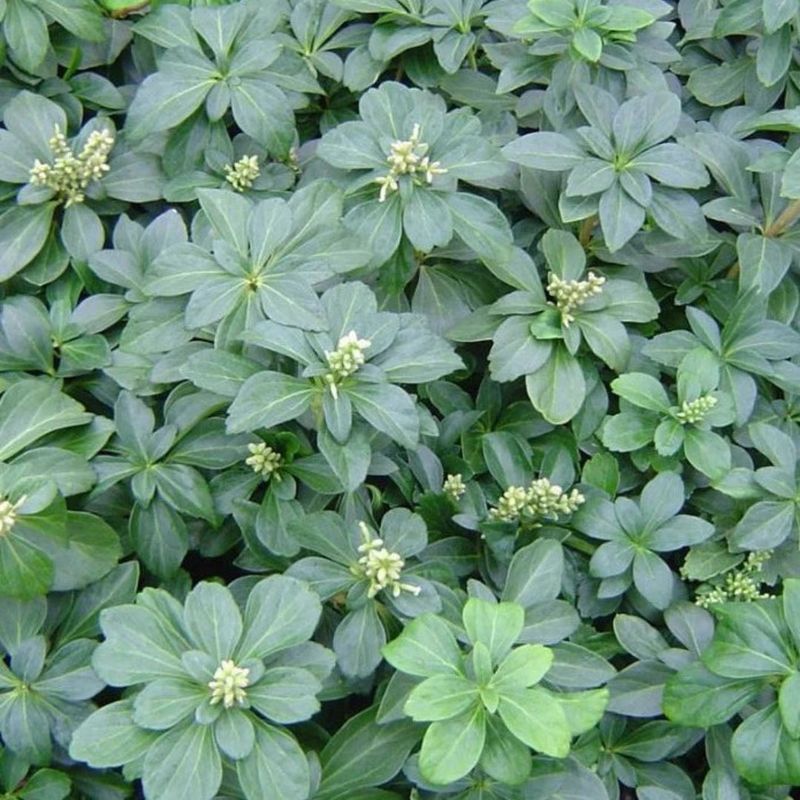
The plant this article is asking you to reconsider is Japanese pachysandra, also sold as Japanese spurge and botanically named Pachysandra terminalis. That botanical name matters because a nursery tag that reads only “pachysandra” does not tell you which species you are buying or already growing.
Both the native and the imported plant share the genus name, so always look for the full two-part name before assuming you have one or the other.
Pachysandra terminalis is native to Japan and China. It spreads by underground stems called rhizomes, and over time those rhizomes allow it to knit together a dense, low blanket that can crowd out other plants in the bed.
Clemson Cooperative Extension notes that Japanese pachysandra’s rhizomatous habit is a key part of its identity as a groundcover, and that same spreading tendency is what allows it to push into spaces you may not have intended it to reach.
From an ecological standpoint, the Invasive Plant Atlas of the United States documents Pachysandra terminalis as a nonnative invasive plant in North America, with records showing it spreading from cultivated settings into natural areas. That does not mean it is legally banned or listed as a regulated invasive species statewide in North Carolina.
The legal status of any plant varies by jurisdiction, and you should check current local ordinances if that question matters to your decision.
What the ecological record does tell you is that the plant’s dense, spreading growth can smother adjacent desirable plants and, in some situations, move beyond the garden bed. If you are growing it under established shrubs and the mat has started creeping where you do not want it, that behavior is consistent with what extension sources describe.
Checking the botanical name on your existing plants is the right first step before you decide whether to replace them or simply manage what is already there.
Meet the slower-growing native alternative
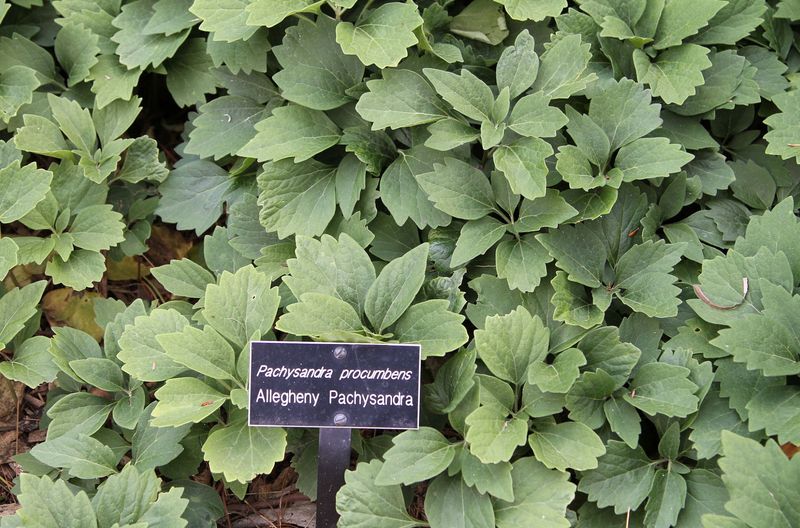
Allegheny spurge carries two common names you may see at the nursery: Allegheny spurge and mountain pachysandra. Its botanical name is Pachysandra procumbens, and using that full name when you shop is the only reliable way to make sure you are getting the southeastern native rather than its imported look-alike.
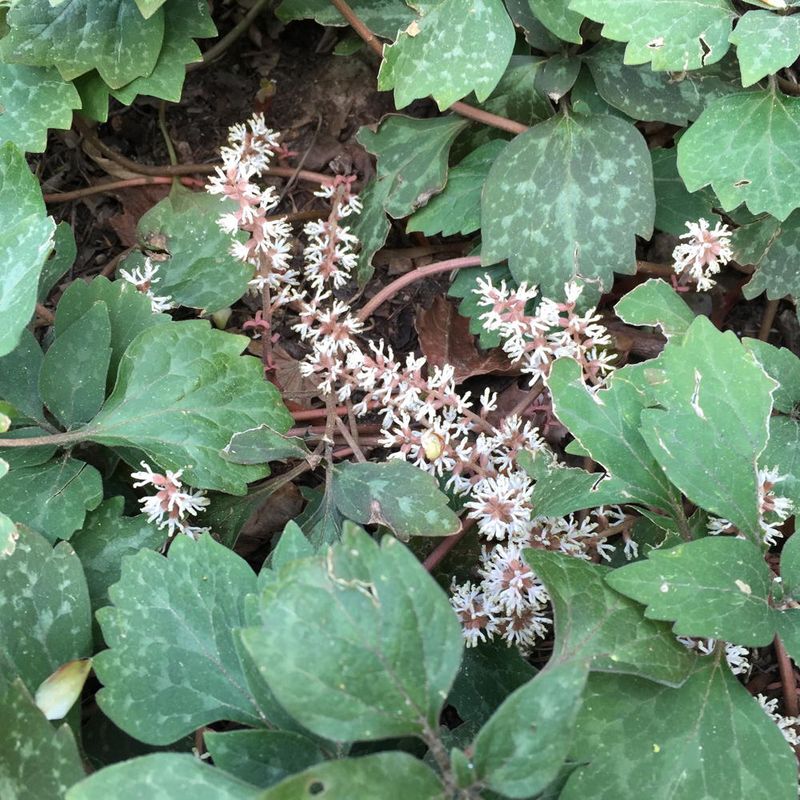
The plant grows low to the ground, typically reaching about 6 to 12 inches in height. Its foliage is one of its most recognizable features: broad, softly textured leaves with mottled silver-green markings that give the planting a subtle, layered look even before it flowers.
In late winter to early spring, NC State Extension describes fragrant, pale flower spikes emerging at or near ground level, which add quiet seasonal interest to an otherwise shady corner.
One honest difference between this native and its imported relative is growth speed. Virginia Cooperative Extension characterizes Pachysandra procumbens as relatively slow-growing and clump-forming compared with the denser, faster-spreading habit of Japanese pachysandra.
In practical terms, that means a new planting of Allegheny spurge will take longer to cover a bed. Patience is part of the deal, and gardeners who want fast, full coverage right away may find that gap frustrating.
On the question of where this plant comes from naturally, the answer requires careful wording. North Carolina’s Vascular Plants database identifies a very limited natural occurrence in the state, with documented wild populations confined to a single county.
A safer description is that Pachysandra procumbens is a southeastern native that can be cultivated successfully across North Carolina, not a plant that grows wild throughout the state. That distinction matters both ecologically and practically, as you will see in the sourcing section later.
Expect winter color to vary by site and weather
The title of this article promises a plant that stays green all winter, and that promise deserves a closer look before you commit to a planting. Allegheny spurge is best described as evergreen to semi-evergreen, and how green it actually looks in January or February depends heavily on where in North Carolina you garden and what kind of winter you get.
Virginia Cooperative Extension notes that in USDA Zones 7 through 9, Allegheny spurge is generally described as evergreen, but in colder Zones 5 and 6 it can behave as semi-deciduous or fully deciduous. Even in warmer zones, a stretch of unusually hard cold can leave foliage looking worn, bleached, or damaged by late winter.
The plant typically recovers as temperatures rise, but the visual effect during the coldest months is not guaranteed to be pristine.
North Carolina spans a wide range of conditions. Much of the Piedmont and Coastal Plain falls in Zones 7 through 8, where NC State Extension describes the plant as evergreen to semi-evergreen, making reasonable winter foliage a realistic expectation for many gardeners in those regions.
Mountain sites are a different story. Elevations in western North Carolina can drop into Zone 6 or colder depending on location, and the combination of colder temperatures and wind exposure can push the plant toward semi-deciduous behavior or cause visible leaf damage.
That does not mean every mountain gardener should rule it out. Microclimates matter: a sheltered, south-facing slope at moderate elevation may perform noticeably better than an exposed north-facing ridge at the same altitude.
The practical advice is to check the current USDA Plant Hardiness Zone for your specific address, consider your site’s elevation and exposure, and set your expectations accordingly rather than assuming the worst or the best for your area.
Match the plant to a shaded, well-drained bed
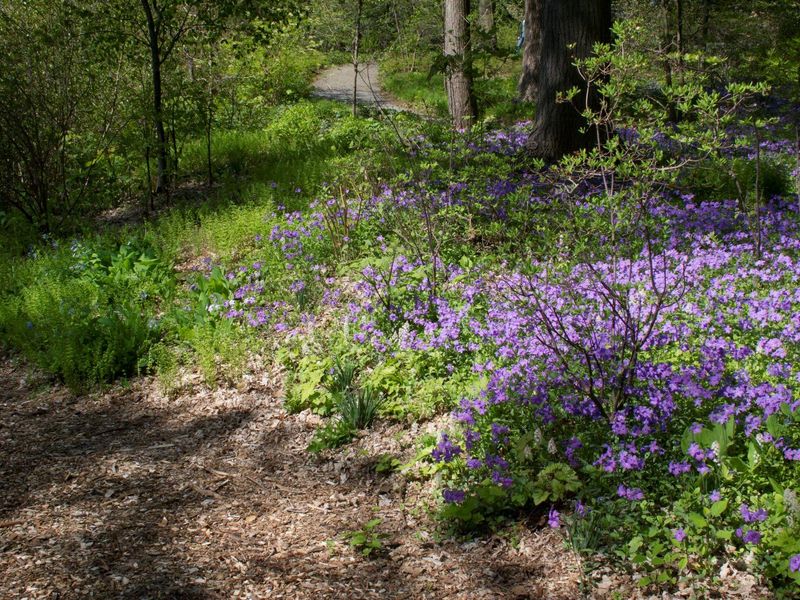
Before purchasing a single plant, walk your bed and take an honest look at what the site actually offers. Allegheny spurge performs best in deep, dappled, or partial shade, the kind of light you find beneath an established tree canopy or under the spread of large deciduous shrubs.
A spot that gets several hours of direct afternoon sun, especially in summer, is likely to stress the plant rather than let it settle in.
NC State Extension specifies that Pachysandra procumbens performs best in moist, organically rich, well-drained soil. Each of those three conditions carries weight. “Moist” means the soil holds some moisture between rain events but does not stay wet. “Organically rich” means the kind of dark, crumbly soil that builds up naturally under deciduous trees over many years, or soil you have amended with compost. “Well-drained” means water moves through after rain rather than pooling and sitting around the roots.
Constantly saturated soil is one of the more reliable ways to undermine this planting. Beds with heavy clay that stays wet for days after rain, low spots that collect runoff, or areas with a hardpan layer beneath the surface are likely to cause root problems over time.
If your shady bed has drainage issues, address those before planting rather than hoping the groundcover will adapt.
Intense competition from large, shallow tree roots can also reduce performance. Mature oaks, maples, and similar trees with aggressive surface roots can make it difficult for any groundcover to establish, and Allegheny spurge is not immune to that challenge.
A bed where tree roots dominate the top few inches of soil may need supplemental irrigation during dry spells, or it may simply be better suited to a different plant. Reflected heat from nearby walls or pavement, excessive sun exposure, and prolonged drought are additional factors that can push a site beyond what this native handles well.
Match the plant to conditions it can actually use, and it will reward you; force it into a difficult spot, and results will disappoint.
Space and water plants for gradual coverage
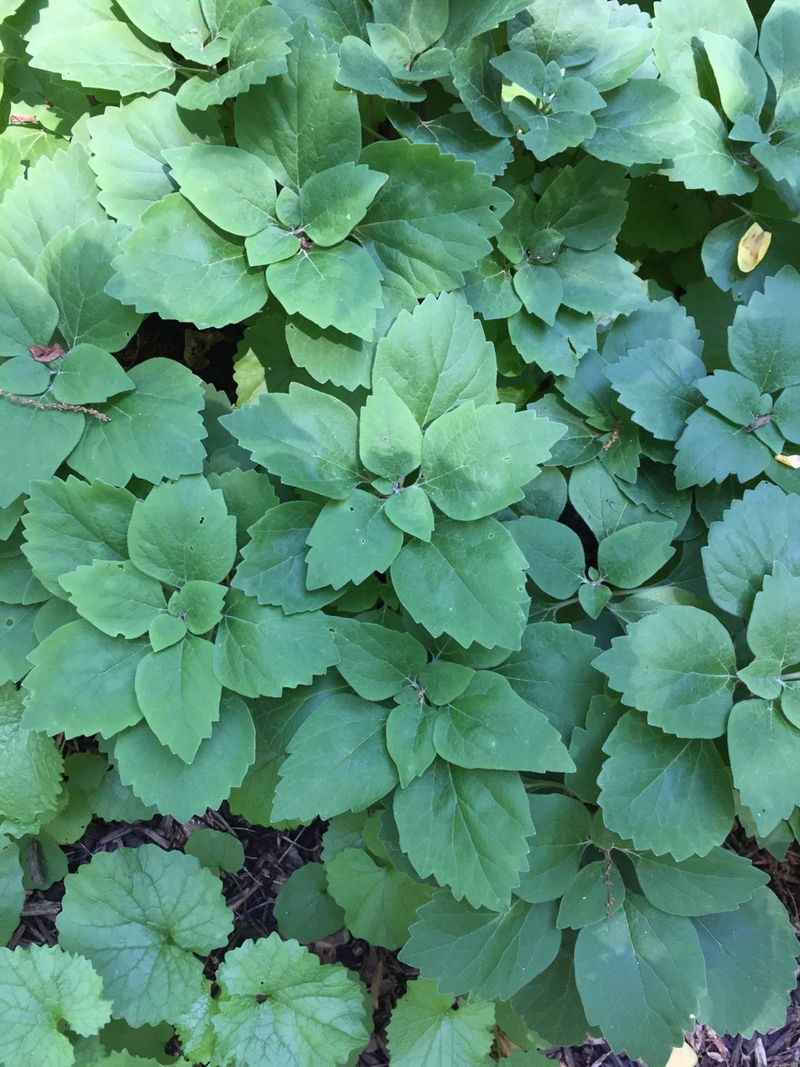
Getting Allegheny spurge established well comes down to two decisions made at the start: how far apart you place the plants, and how consistently you water them during the first growing season. Both choices affect how quickly the bed fills in and how well the planting survives its first summer.
NC State Extension recommends spacing plants 6 to 12 inches apart. Tighter spacing at 6 inches means more plants per square foot, a higher upfront cost, and faster initial coverage.
Wider spacing at 12 inches reduces what you spend at the nursery but extends the time before the bed looks full. Given that this native grows more slowly than Japanese pachysandra, a 12-inch spacing in a large bed could mean living with visible gaps and bare soil for two or more growing seasons.
If the bed is a prominent spot in your yard, that tradeoff is worth thinking through before you buy.
During establishment, the plant needs consistent moisture without becoming waterlogged. NC State Extension recommends soaking new plantings approximately every 8 to 15 days, adjusting that interval based on rainfall and local conditions.
A week of heavy rain may mean skipping a watering cycle entirely; a stretch of hot, dry weather may mean watering more frequently than the baseline suggests. The goal is soil that stays evenly moist in the root zone, not soil that cycles between bone-dry and saturated.
Once the plants are in the ground, apply a layer of organic mulch around them to help retain moisture and moderate soil temperature. Keep the mulch pulled back slightly from the base of each plant so it does not sit against the stems.
As the groundcover fills in over subsequent seasons, it will shade the soil on its own, reducing both moisture loss and weed pressure. That coverage takes time, and gardeners who are accustomed to the faster spread of Japanese pachysandra should plan for a longer establishment window rather than treating slow growth as a sign that something is wrong.
Plan for light maintenance and responsible sourcing
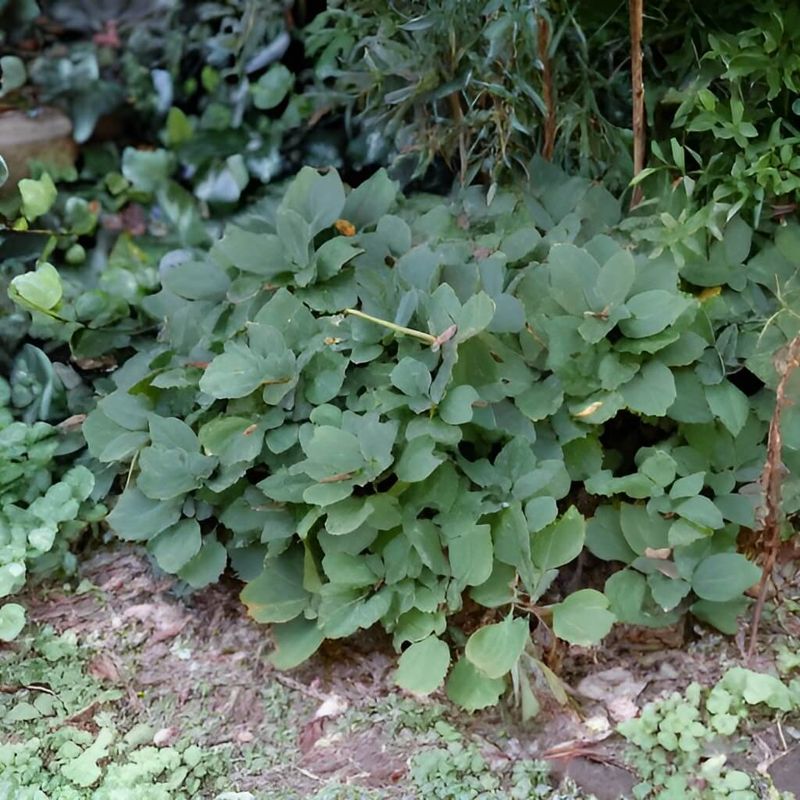
After the plants are in and established, ongoing care for Allegheny spurge is straightforward. NC State Extension describes it as generally low-maintenance, and that holds true once the bed is settled.
The main task is removing yellow or dead growth as you notice it, which keeps the planting looking tidy without requiring a scheduled cleanup on a set calendar.
Avoid aggressive shearing. Unlike some groundcovers that respond well to a hard trim, Allegheny spurge’s slower, clump-forming growth means shearing can set the planting back noticeably and leave it looking ragged for an extended period.
Light, selective removal of damaged or off-color leaves is a better approach than cutting everything back at once.
Because the native grows more slowly than its imported counterpart, it will not eliminate weeds on its own right away. During the first season or two, hand-pulling weeds between plants is part of the routine.
As coverage thickens, weed pressure typically eases, but it does not disappear entirely. Expect some ongoing attention, especially at the edges of the bed where weed seeds blow in from adjacent areas.
If you are transitioning a bed that currently has Japanese pachysandra, removal requires care. Clemson Extension notes the rhizomatous habit of Pachysandra terminalis, which means the underground stems can regrow if you do not remove them thoroughly.
Work carefully around established shrub roots and nearby plants rather than applying herbicide broadly across the bed. A blanket herbicide treatment in a shrub bed risks damaging roots and desirable plants nearby.
For complex situations, consulting your local NC State Extension office is a reasonable next step.
On sourcing: always buy legally nursery-propagated stock from a reputable seller. North Carolina’s Vascular Plants database lists Pachysandra procumbens as endangered in the state, with naturally occurring populations documented in only one county.
Digging plants from wild populations is not an option. North Carolina requires permits for collecting protected plants from land the collector does not own, and nursery-propagated stock sold through reputable channels is both the legal and the ecologically sound way to obtain this plant.
Ask your nursery directly whether their stock is nursery-propagated; a seller who cannot answer that question clearly is worth skipping.
Choose the native swap when your conditions fit
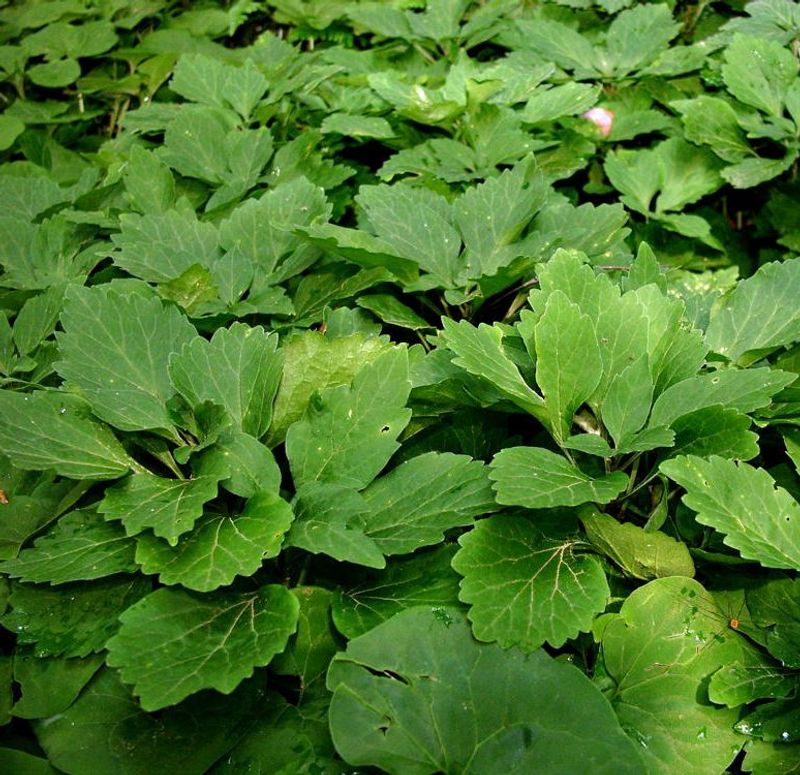
Nursery-propagated Pachysandra procumbens is a reasonable swap for Japanese pachysandra when the site gives it what it needs: reasonable shade, moist and organically rich soil with good drainage, and enough time for gradual coverage to develop. For those conditions, it brings a southeastern regional origin and a less aggressive growth habit that is easier to keep where you put it.
Reconsider it when the bed is dry, exposed to reflected heat, poorly drained, or heavily trafficked. NC State Extension cautions that native plants are not automatically superior to traditional nursery plants in every landscape situation, and that guidance applies here.
A dry-shade bed under a large shallow-rooted tree may need supplemental irrigation or a different plant entirely. A spot where people regularly walk through needs stepping stones or a mulch path, not a groundcover that cannot handle foot traffic.
For colder or higher-elevation sites, Virginia Cooperative Extension’s guidance on zone performance is worth reviewing alongside the USDA Plant Hardiness Zone Map for your specific address. Foliage loss is possible in colder zones, though not guaranteed at every mountain location.
The practical sequence is straightforward: confirm what species you currently have, evaluate the site honestly, buy legally propagated stock, and measure success by healthy seasonal coverage rather than by a promise of flawless green through every month of the year.