
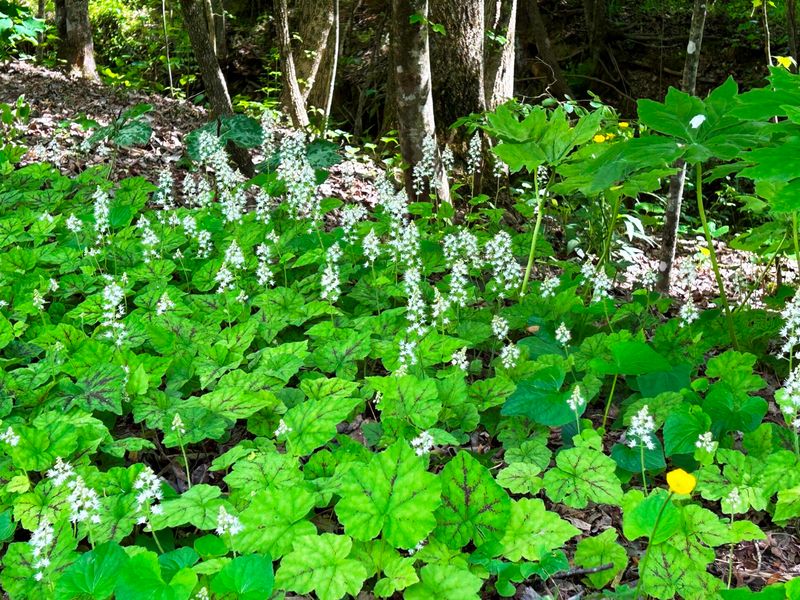
Landscape fabric sounds like a smart shortcut, but in North Carolina beds it usually breaks down, traps weeds on top, and starves the soil underneath. There is a better way that costs less and looks alive instead of plastic.
Native ground covers spread thick enough to choke out weeds while feeding bees, sheltering fireflies, and cutting down on the mowing and spraying your family has to breathe near. Here are eight tough NC natives that do the job the right way.
1. Green and Gold (Chrysogonum virginianum)
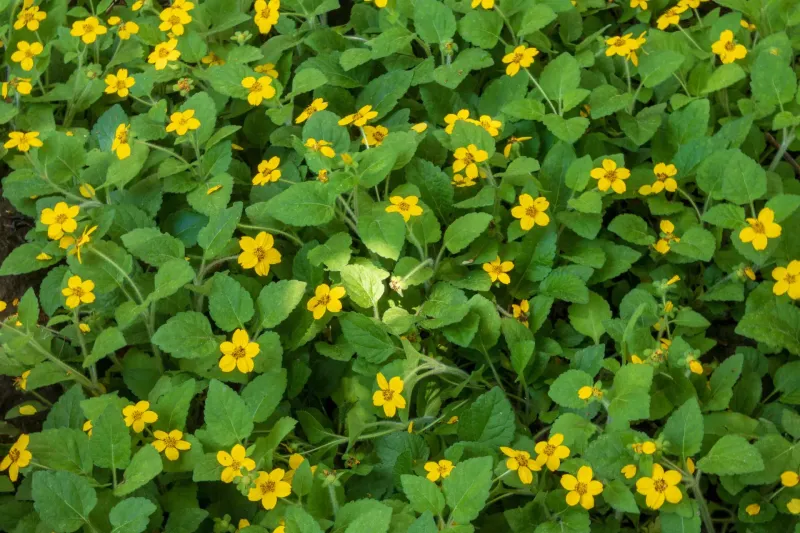
Bright little yellow stars scattered over a low green carpet make green and gold one of the friendliest natives you can plant in a shady NC bed. It hugs the ground and knits together fast, leaving weeds almost nowhere to sneak in.
Piedmont gardeners love it because it handles the dappled shade under oaks and dogwoods where grass refuses to grow. Blooms show up in spring and often keep popping into fall, so pollinators get a long buffet.
It stays under six inches tall, which means no mowing and no fabric to fuss with. Once the roots settle in, this plant does the weeding for you while supporting the small native bees your yard depends on.
2. Creeping Phlox (Phlox stolonifera)
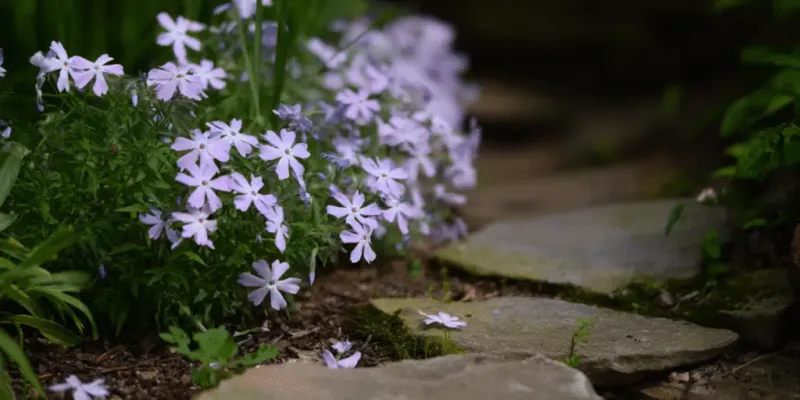
When early spring hits and you want a wave of color that also does real work, creeping phlox delivers. Its stems root as they crawl, weaving a dense mat that blocks light from reaching weed seeds below.
Unlike the moss phlox you see baking on sunny slopes, this woodland species thrives in the shadier, richer beds common across the Piedmont and mountains. The lavender and pink blooms pull in early butterflies when little else is flowering.
After the show fades, the leaves stay green and low, holding the ground all season. No plastic, no bare mulch gaps, just a living cover that gets thicker every year.
3. Wild Ginger (Asarum canadense)
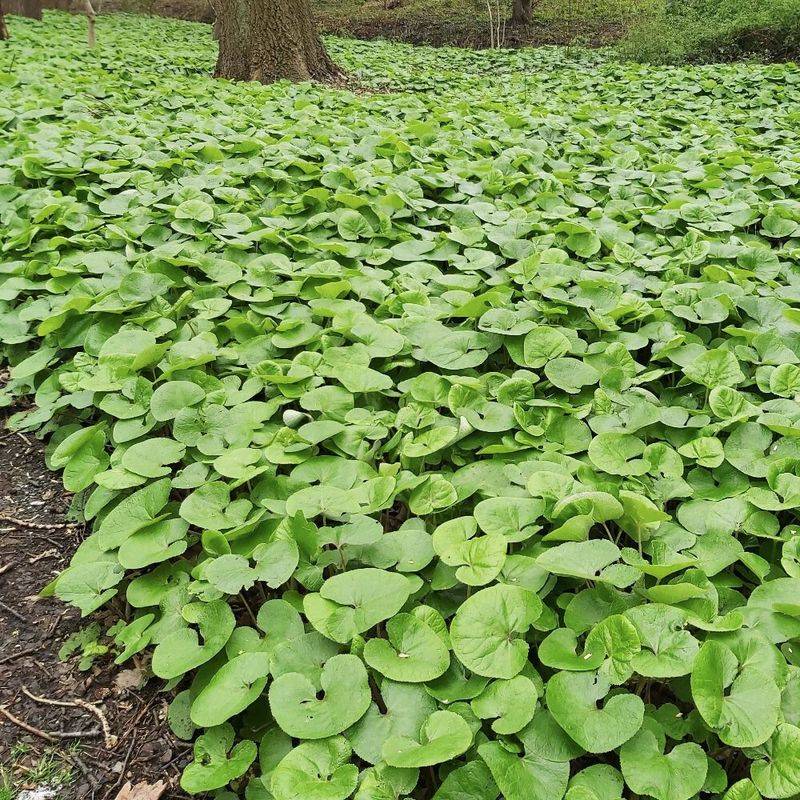
Heart-shaped leaves overlapping like shingles give wild ginger a lush, almost tropical look in the deepest shade of your yard. Where most plants sulk under heavy tree canopy, this one spreads happily and shades out weeds in the process.
Fun fact: the roots carry a spicy scent similar to culinary ginger, though the two plants are not related at all. Early settlers reportedly used it as a seasoning substitute.
For those damp, dark corners along the north side of the house where fabric just rots, wild ginger is the answer. It forms a solid green blanket that keeps soil cool and moist, exactly the habitat that supports salamanders and other quiet backyard helpers.
4. Golden Ragwort (Packera aurea)
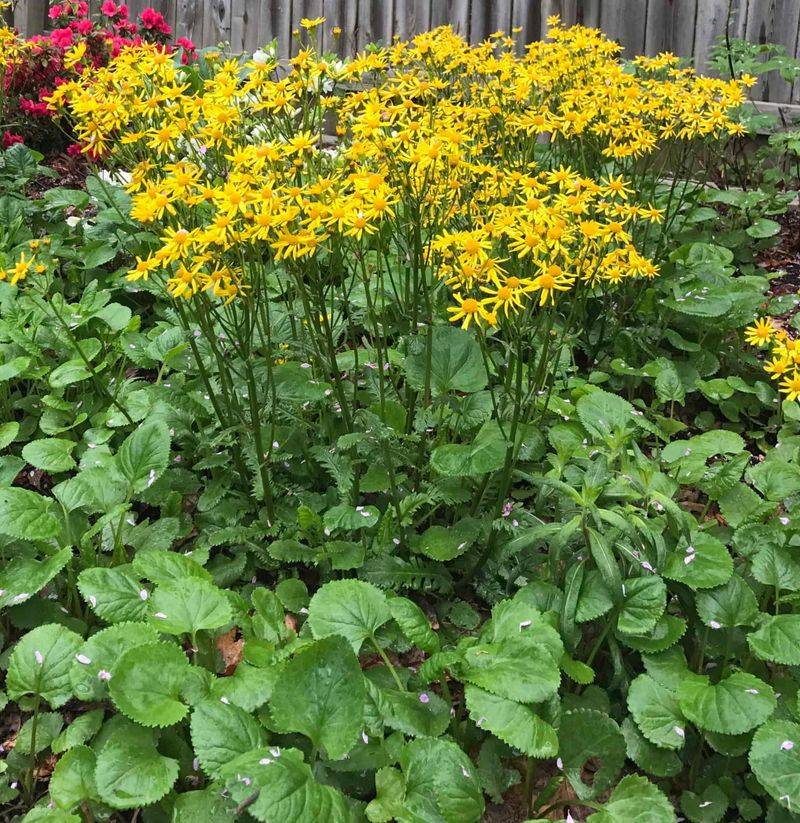
Got a soggy low spot where nothing seems to stick? Golden ragwort actually likes wet feet, filling in damp beds and rain gardens with a thick rosette of rounded leaves that stays green through winter.
Come spring it throws up cheerful yellow flower clusters that hover over the foliage and feed early bees and small butterflies. The evergreen base is the real weed fighter, covering ground twelve months a year.
It spreads by both seed and runners, so a few plants become a colony fast. For coastal plain gardeners fighting moisture and weeds at the same time, this native pulls double duty without a scrap of landscape fabric.
5. Allegheny Spurge (Pachysandra procumbens)
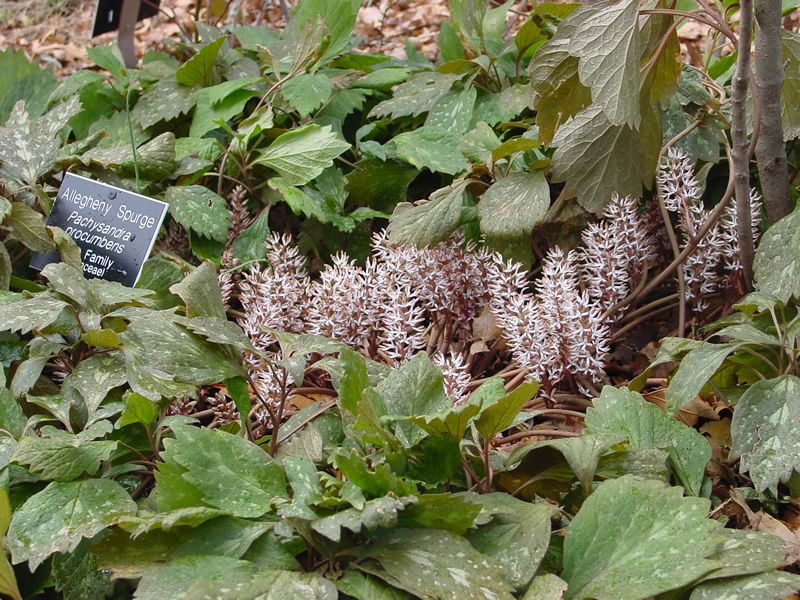
Most people know the imported Japanese pachysandra that shows up in every big-box parking lot, but our native Allegheny spurge is the version that belongs here. Its mottled, silvery-green leaves have a richer texture, and it behaves itself instead of escaping into the woods.
Swapping the imported kind for this southeastern native is one of those easy weekend upgrades that pays off for years. The clumps knit together into a handsome, weed-blocking mat under trees and along shaded walkways.
Small fragrant flowers appear at the base in early spring, a subtle bonus. Plant it once, mulch lightly between the young clumps, and let it close the gaps that weeds would otherwise claim.
6. Woodland Stonecrop (Sedum ternatum)
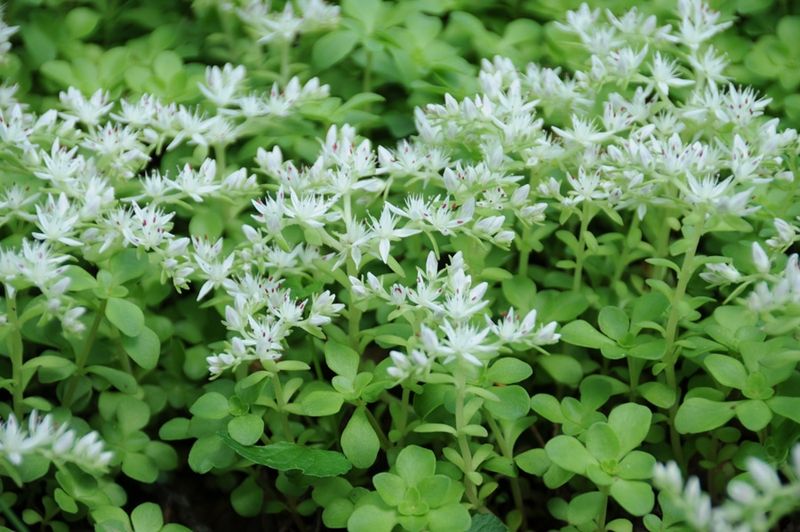
Here is a native sedum that breaks the rules, because instead of demanding blazing sun like most stonecrops, it thrives in part shade and rocky, root-filled ground. That makes it perfect for the tricky spots where soil is thin and mulch keeps washing away.
The fleshy little leaves store water, so once established it shrugs off dry summer stretches without complaint. Star-shaped white flowers cover the mat in spring and draw in tiny native pollinators.
It creeps low and tight, tucking into crevices between stones and tree roots where weeds love to hide. For mountain and Piedmont gardeners with slopes or rocky beds, woodland stonecrop stitches the whole area together with almost no upkeep.
7. Robin’s Plantain (Erigeron pulchellus)
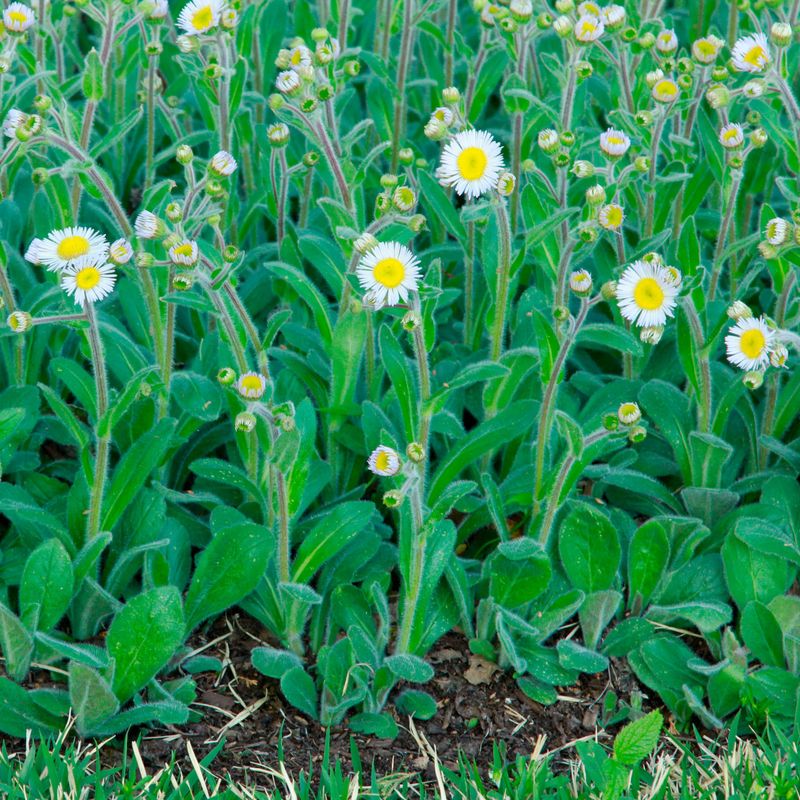
Soft, fuzzy rosettes that spread by runners make robin’s plantain a gentle giant among ground covers, filling sunnier to partly shaded beds where you want cover plus a burst of bloom. In late spring it sends up daisy-like lavender flowers that bees and small butterflies flock to.
The gray-green basal leaves stay put through the seasons, forming an overlapping layer that keeps weed seeds from reaching light. It is more sun-tolerant than most of the shade lovers on this list, so it fills a different niche in your yard.
Give it a spot along a walkway border or the edge of a meadow patch and it will slowly weave outward. Low, tough, and pollinator-friendly, it earns its keep without any fabric underneath.
8. Partridgeberry (Mitchella repens)
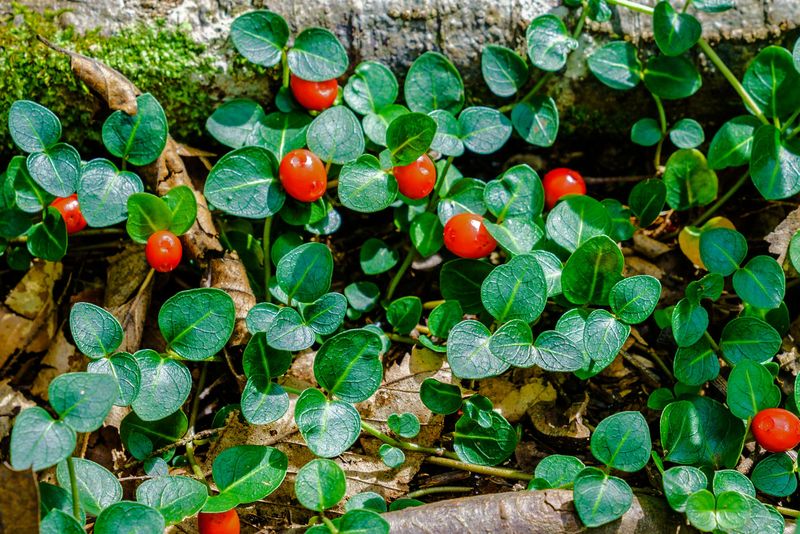
Tiny paired leaves and cheerful red berries make partridgeberry look like a woodland fairy planted it. This trailing evergreen hugs the forest floor so tightly that weeds simply cannot find a foothold beneath it.
It thrives in the acidic, shady soil under pines and hardwoods that covers so much of North Carolina, from the mountains to the coastal plain. The bright berries hang on through winter and feed ground-feeding birds and other wildlife when food is scarce.
Because it grows only an inch or two tall, there is nothing to trim and nothing to replace each year. Tuck it into deep shade where grass and fabric both fail, and let this delicate native quietly own the ground.