
Every spring, neighborhoods across North Carolina light up with clouds of white blossoms from Bradford pear trees, but that pretty picture comes with some serious problems. Bradford pear is a cultivar of Callery pear, an invasive species that stinks, splits, and spreads into the wild.
Downy serviceberry, a native North Carolina tree, can give you a similar early-spring white-flower effect without those headaches, though it is not a perfect copy. Understanding what serviceberry can and cannot do helps you make a smarter choice for your yard.
Why Bradford pear became popular—and why it aged poorly
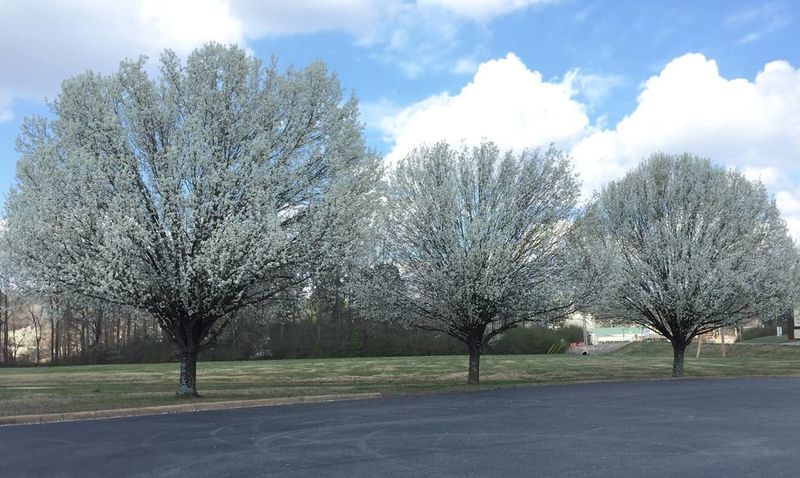
For decades, Bradford pear checked every box on a landscape planner’s wish list. Fast-growing, symmetrically shaped, and covered in white flowers each spring before most other trees had leafed out, it also tolerated compacted soil, pollution, and the hard conditions of urban lots.
Municipalities planted it along roadsides. Developers tucked it into new subdivisions.
Homeowners added it to front yards across the Southeast because it delivered immediate curb appeal with very little fuss at planting time.
Bradford pear is a cultivar of Callery pear, scientifically known as Pyrus calleryana, which is native to East Asia and is classified as invasive in North Carolina by NC State Extension. That backstory matters more now than it did when the tree was first widely planted across the region in the 1950s through the 1990s.
Three specific problems have made it a poor long-term choice for North Carolina landscapes.
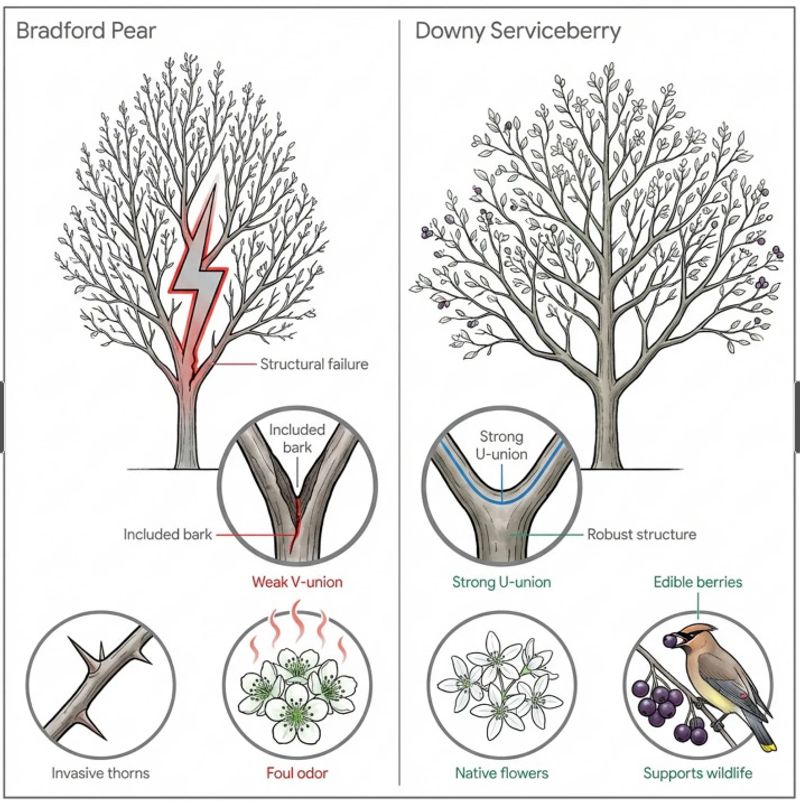
The first problem is the smell. Bradford pear flowers are creamy white and genuinely showy, but many people describe the odor as offensive, with some comparing it to rotting fish.
Not everyone reacts the same way, but the complaints are common enough that the fragrance is a real drawback for yards where people spend time outdoors in early spring.
The second problem is structural. Bradford’s branches grow at tight, narrow angles from the main trunk, and those weak unions are prone to splitting under wind, rain, snow, or ice.
This is a built-in flaw in the tree’s architecture, not simply the result of poor pruning. As the tree ages and the canopy fills in, the splitting risk rises, and large limbs can come down without much warning.
The third problem is ecological. NC State Extension explains that when different Callery pear cultivars cross-pollinate, they can produce viable fruit.
Birds eat that fruit and scatter seeds into roadsides, fields, and forest edges, where the resulting seedlings can form dense, thorny thickets that crowd out native plants. The ‘Bradford’ cultivar alone may not produce much fruit, but it is not reliably sterile when other cultivars are nearby, which is common in most neighborhoods.
What serviceberry can—and cannot—replace
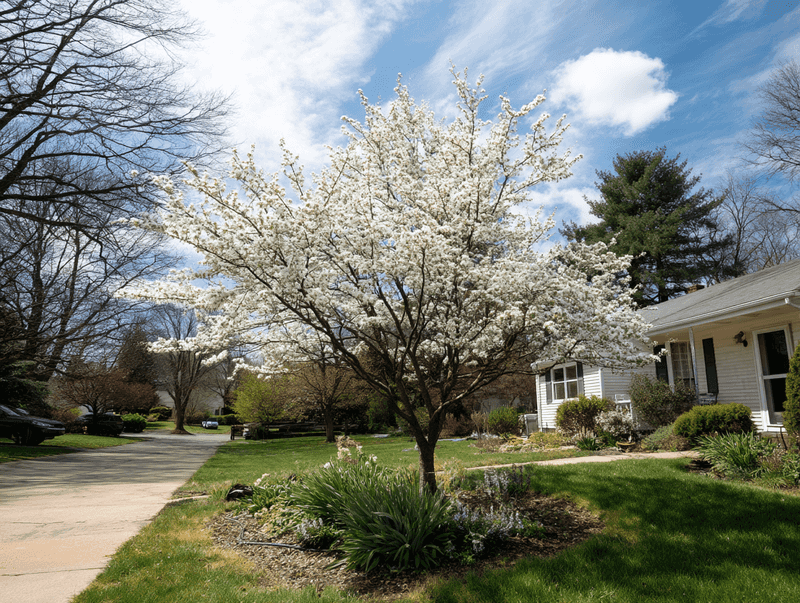
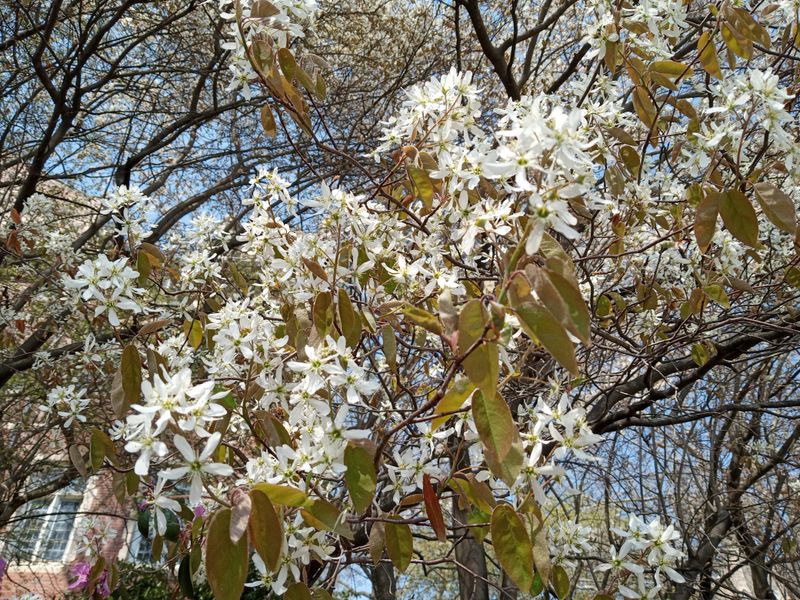
Downy serviceberry, Amelanchier arborea, earns its place as the leading native recommendation for homeowners who want that early white-flower moment without the invasive baggage of Callery pear. NC State Extension identifies serviceberry as a native alternative to Callery pear, noting that its lightly fragrant white flowers appear before the leaves in early spring, creating a showy display at roughly the same point in the calendar when Bradford pear would be blooming.
That timing overlap is the heart of the comparison.
The resemblance is real, but it is not identical. Serviceberry flowers are white and genuinely eye-catching, especially against bare branches, but the individual blooms are smaller than the dense clusters Bradford pear produces.
The overall canopy is also smaller, and the tree tends to grow in a multistemmed, open form rather than the tight upright silhouette Bradford pear was bred to project. If you are looking for something that mimics the bold, cloud-like mass of a mature Bradford pear from across the street, serviceberry will give you a similar color and timing, not the same scale or density.
Bloom duration is another honest difference. Serviceberry flowers last roughly 10 days, which means the window for enjoying the display is brief.
Weather can shorten that window further; a warm spell or a late frost can cut the show even faster. Bradford pear blooms are also short-lived, but the tree’s larger canopy means there is simply more flower mass to take in during that period.
Serviceberry avoids Bradford pear’s notorious narrow-crotch branch problem, but that does not mean it is immune to storm damage. NC State notes that it does not tolerate wind well, so exposed or very open sites can be challenging.
Matching the tree to a sheltered or partially protected location makes a meaningful difference in how well it performs over time.
The native tree adds value after the flowers fade
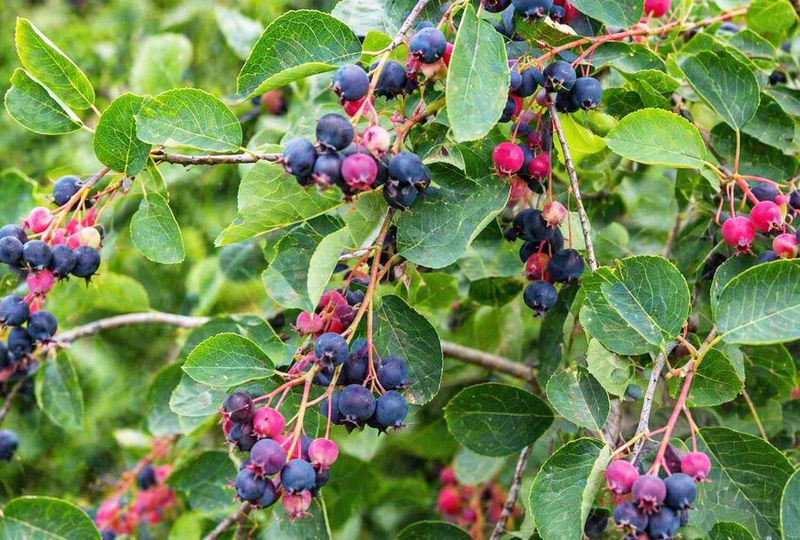
Spring flowers are the headline, but serviceberry keeps giving long after the petals drop. By early summer, the tree produces small, round fruit that ripens to a deep blue-black color.
NC State Extension notes that the fruit is edible and used by wildlife, with birds being the most enthusiastic takers. If you want to harvest some for yourself, the berries work well in jams and jellies, with a mild, slightly sweet flavor that resembles a blueberry crossed with a mild cherry.
The wildlife value here is genuine and specific. Birds that eat the fruit include thrushes, waxwings, and other fruit-eating species that pass through North Carolina during migration or breed locally.
Serviceberry fruit ripens earlier in the season than many other native fruiting trees, which makes it a particularly useful food source at a time when options are still limited. That timing advantage is worth naming because it directly supports the homeowner goal of creating a yard that does more than look good.
Fall brings another layer of interest. Serviceberry foliage turns yellow, orange, or red depending on the individual tree and site conditions, giving the yard a second seasonal display after the summer fruit is gone.
The color is not always dramatic, and it varies, but it adds enough warmth to the autumn yard that the tree earns attention in three separate seasons rather than just one.
None of this means serviceberry is maintenance-free. The fruit drops when ripe, which can create cleanup on patios or walkways if the tree is sited too close to those surfaces.
The tree can also develop fire blight or fungal leaf spot under certain conditions. Thinking of serviceberry as a low-maintenance native with real seasonal payoffs is accurate; thinking of it as a plant you never have to consider again after planting is not.
Choose a site that suits serviceberry’s natural form
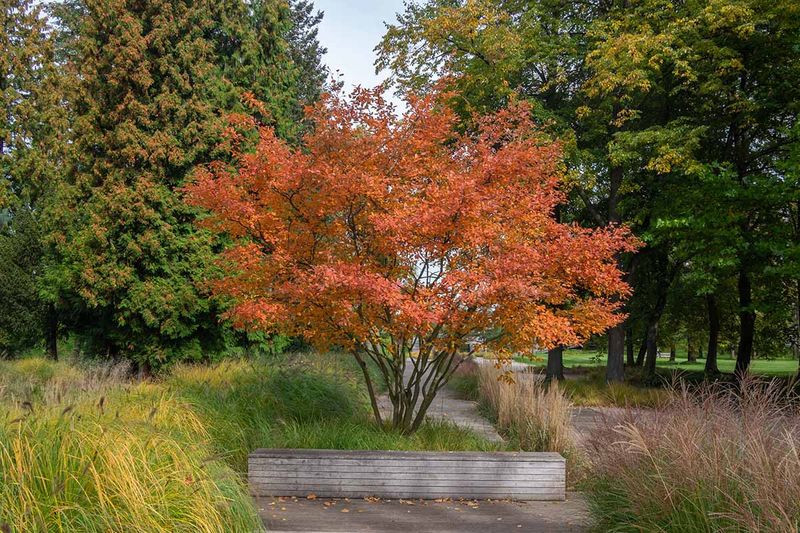
Picking the right spot matters more with serviceberry than with a lot of common ornamentals, because this tree has a natural form that does not fit every landscape situation equally well. NC State Extension describes serviceberry as a small tree or large multistemmed shrub, generally reaching about 15 feet, with a preference for full sun to partial shade and tolerance of a broad range of soils and pH conditions.
That soil flexibility is a genuine strength, especially for North Carolina homeowners dealing with the red clay or sandy soils common across the Piedmont and coastal plain.
The multistemmed habit is the detail that catches some buyers off guard. A young serviceberry from a nursery may look like a tidy, single-trunk tree, but as it matures it often sends up additional stems from the base, creating a more open, layered canopy.
That form looks natural and graceful in a woodland edge planting, a rain garden border, or a naturalized corner of the yard. It is less suited to a formal street-tree spot where a single clean trunk and a tight upright crown are expected.
Knowing that before you plant saves frustration later.
Suckers are part of the package. The tree can produce new shoots from the root zone, particularly after pruning or any disturbance to the roots.
If you want a more tree-like silhouette, you can remove those suckers as they appear, cutting them flush with the soil. NC State recommends pruning serviceberry in the fall to minimize excessive sap loss, so save any significant shaping work for that window rather than tackling it in spring or midsummer.
Wind sensitivity is the other site factor worth planning around. Serviceberry does not perform as well in exposed, open positions where strong or persistent wind is common.
A spot with some protection from nearby structures, fences, or larger trees helps the tree develop better and reduces the chance of branch damage during storms. Fruit and flower drop are normal parts of the seasonal cycle, so avoid placing the tree directly above a patio, deck, or light-colored driveway where the staining could become a regular annoyance.
Remove Bradford pear safely before planting its replacement
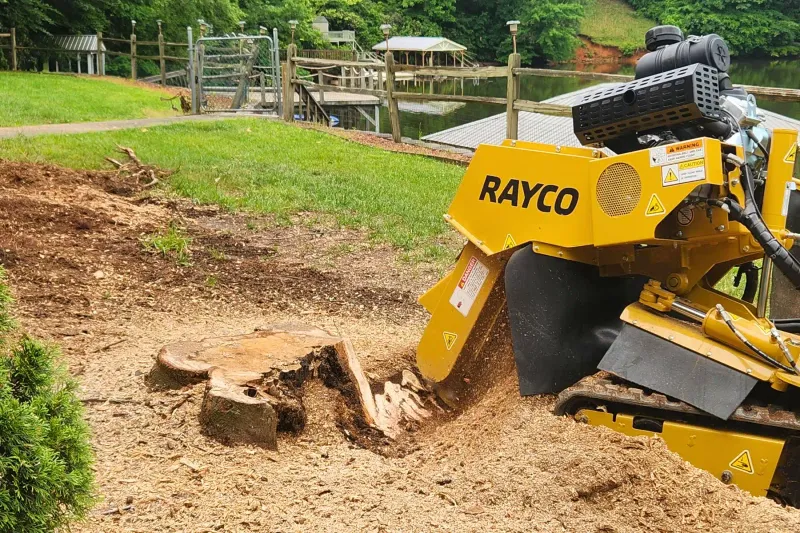
Cutting down a Bradford pear is not the end of the job. Callery pear can resprout aggressively from the stump and root system after the trunk is removed, and those sprouts can grow quickly if left unmanaged.
NC State Extension advises that stump grinding and targeted follow-up treatment are often needed because simply cutting the tree at ground level is rarely enough to stop regrowth for good.
For large trees near a house, garage, driveway, utility lines, or the road, hire a qualified arborist. This is not a job to approach casually with a chainsaw if the tree is mature, leaning, or positioned where a falling limb could cause real damage.
A certified arborist has the training and equipment to drop the canopy in sections, handle the stump, and advise you on follow-up treatment for the root system. The cost is worth it compared to a roof repair or a utility outage.
If herbicide treatment is part of the plan for managing regrowth, follow the product label exactly and pay attention to local requirements for application near waterways or in residential areas. Penn State Extension also flags the resprouting problem and recommends targeted treatment rather than broadcast application.
No specific mix or recipe is universally appropriate, and label instructions exist for safety and legal compliance reasons, not just as suggestions.
Once the stump is ground and the site is stable, measure the open area carefully before ordering a serviceberry. The mature footprint of a multistemmed serviceberry at 15 feet tall is wider at the base than many homeowners expect, and you want enough room for the natural form to develop without crowding a foundation, fence, or sidewalk.
Giving the replacement tree the right amount of space from the start is one of the most practical things you can do to set it up for a long, healthy life.
North Carolina has run replacement initiatives, including the NC Bradford Pear Bounty, which has offered native trees in exchange for removed Callery pears at participating events. Check NC State Forestry’s program page for current availability, eligibility requirements, and event timing before counting on a free replacement, since program details can change from year to year.
Compare other native options only when the site demands it
Serviceberry is the strongest all-around recommendation for homeowners who want a native early-white-flowering tree, but a few other North Carolina natives are worth knowing about when the site or the homeowner’s priorities point in a different direction. These are not alternatives that compete with serviceberry on every front; each one has a specific situation where it fits better, and each carries its own trade-offs.
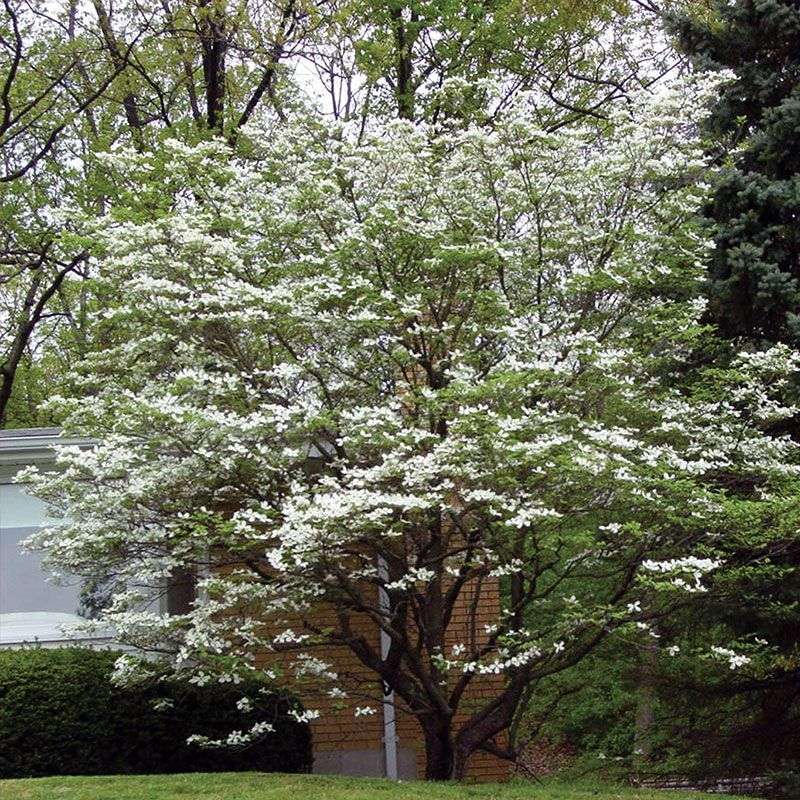
Flowering dogwood, Cornus florida, is the native species most strongly associated with North Carolina, and for good reason. NC State Extension notes that it is native across the state, reaches roughly 15 to 25 feet, and blooms before or as the leaves emerge, with showy white or pink bracts that are larger and more visually dramatic than serviceberry’s flowers.
It also supports pollinators and fruit-eating wildlife and is the state flower. The catch is that flowering dogwood can be demanding in landscape settings.
It generally performs better with afternoon shade in the Piedmont and coastal plain, prefers well-drained, organic soil, and is susceptible to several diseases. If your yard is hot and exposed with average soil, dogwood can disappoint.
It is worth noting that kousa dogwood, sometimes sold alongside native options at nurseries, is an Asian relative, not a North Carolina native.
Eastern redbud, Cercis canadensis, offers something neither serviceberry nor dogwood provides: striking pink-to-purple flowers that cover the bare branches before any leaves appear. NC State Extension points out that redbud supports bees, butterflies, and some butterfly larvae, making it a strong wildlife choice.
The downside is that redbud is sensitive to heat, drought, and wet soil, and its branches can break, so NC State recommends a sheltered site. If your yard is exposed or has drainage issues, redbud is a riskier bet than serviceberry.
American plum, Prunus americana, is a native option that delivers early white flowers and edible fruit, similar to serviceberry in those respects. NC State Extension describes it as a suckering plant that can form colonies or thorny thickets, which makes it better suited to a naturalized back corner, a wildlife buffer, or an informal edge planting than to a typical front yard.
Serviceberry’s more contained habit and cleaner landscape presence give it an edge for most residential settings.
Make the swap with realistic expectations
Downy serviceberry gives North Carolina homeowners a native early-white-flowering tree with edible fruit, fall color, and genuine wildlife value. What it does not give you is a Bradford pear replica.
The flowers are smaller, the bloom lasts roughly 10 days, the mature form is naturally multistemmed, and the tree needs a site that shelters it from persistent wind. Those are real limitations, and going in with clear expectations makes the planting far more satisfying than expecting a drop-in replacement.
NC State Extension’s serviceberry profile gives you the practical detail you need to match the tree to the right spot in your yard. Pair that with NC State’s guidance on removing Callery pear responsibly, and you have a complete plan: remove the problem tree properly, choose a site where serviceberry’s natural form fits, and plant a tree that contributes to the yard across three seasons instead of one.
Neither tree is flawless, but only one of them belongs here.