
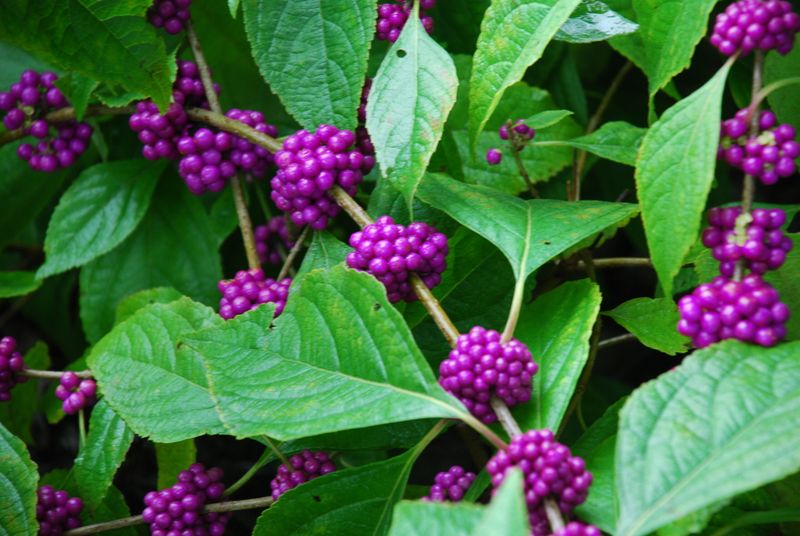
That glossy shrub lining your North Carolina foundation might look tidy, but if it is a fruiting nandina, it is worth a second look before the birds find the berries first. Nandina can spread through underground stems and bird-carried seed, and a published study linked large quantities of its berries to Cedar Waxwing deaths in Georgia.
American beautyberry, a native shrub that grows across the Piedmont, Coastal Plain, and mountains, produces showy purple fruit that Cedar Waxwings and many other birds actually use. Making the swap is not complicated, but it helps to know what you are trading and what you are gaining before you dig anything up.
When nandina becomes a problem in a North Carolina foundation
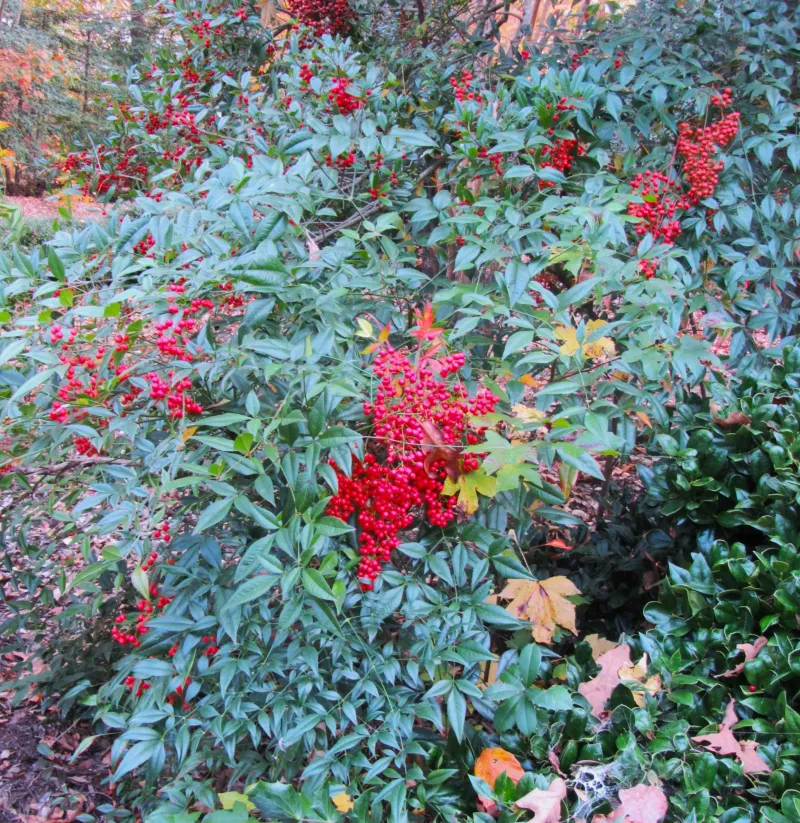
Nandina earns its place on a lot of foundation beds because it is tough, tidy-looking, and holds its leaves through winter. The problem shows up when the plant starts doing more than you planned for.
NC State Extension identifies nandina as invasive in North Carolina, noting that it can spread through underground stems and bird-dispersed seed, which means one well-established clump can quietly expand into surrounding soil or naturalize beyond your yard.
Not every foundation bed turns into an overgrown thicket. Whether nandina becomes a real problem depends on the size of the planting, how long it has been there, and how much fruit the specific cultivar produces.
Some older, standard varieties fruit heavily and push out new shoots from underground stems season after season. Others, particularly low-fruiting or sterile cultivars, behave more quietly.
The concern is real but not universal.
The bigger issue for North Carolina homeowners with fruiting nandina is what happens to the berries. Birds, including Cedar Waxwings, visit fruiting shrubs in the fall and winter when other food sources get thin.
When nandina is the most available berry in the yard, those birds can consume it in large quantities. UF/IFAS flags nandina as a plant that spreads readily through bird-dispersed seed, which means wildlife feeding on its berries also helps carry the plant further into natural areas.
If your nandina is fruiting heavily, spreading at the base, or sitting close to natural areas where birds could carry seed, that is a reasonable moment to reconsider the planting and look for a native alternative that fits the same space.
What the Cedar Waxwing evidence actually shows
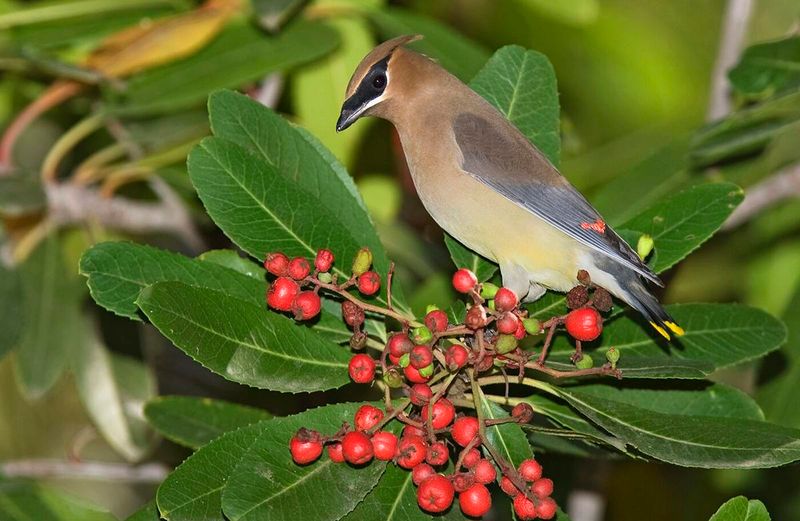
Cedar Waxwings are striking birds that travel in flocks and feed heavily on fruit. Their feeding style is part of what puts them at risk: when a flock finds a concentrated berry source, the birds can consume large quantities in a short period.
That behavior is exactly what made a Georgia incident in 2009 so significant for anyone growing fruiting nandina.
A peer-reviewed investigation published in the Journal of Veterinary Diagnostic Investigation documented dozens of Cedar Waxwings found dead in a Georgia yard in April 2009. Nandina berries were the only material recovered from the digestive tracts of five birds that were examined, and the findings were consistent with cyanide toxicity from the cyanogenic compounds the berries contain.
The full case report available through PMC describes the circumstances in detail, including the heavy fruiting on the nandina plants at the site.
What the study does not do is establish a universal lethal dose or prove that any Cedar Waxwing eating a few nandina berries will die. The risk appears tied to quantity consumed, the availability of other fruit at the time, and the feeding behavior of the flock.
Clemson Extension notes that berries may become less cyanogenic as they age, though that does not make fruiting nandina a recommended wildlife plant.
There is also a broader context worth keeping in mind. University of Maryland Extension points out that Cedar Waxwings can suffer from overindulging in fruit generally, not only from nandina.
The birds are prone to gorging, and fermented or otherwise problematic fruit from other species has also caused problems. Nandina stands out because of the documented cyanogenic compounds, but the underlying vulnerability is the birds’ feeding behavior combined with limited food alternatives.
The practical takeaway is not that every nandina berry is a death sentence, but that a heavily fruiting nandina in a yard where Cedar Waxwings feed is a documented risk worth addressing.
American beautyberry gives birds a native berry source
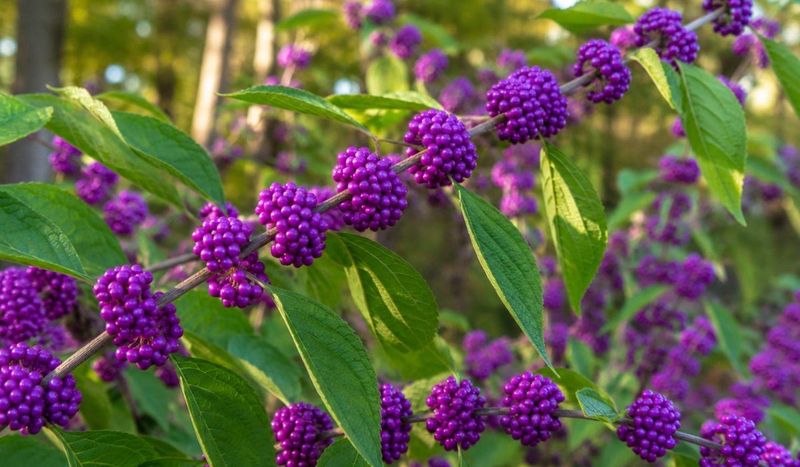
American beautyberry, Callicarpa americana, grows naturally across North Carolina and produces one of the most visually striking fruit displays of any native shrub in the state. From roughly August through October, clusters of purple or bluish berries form in tight rings around the stems, giving the plant a look that stands out clearly against late-summer foliage.
NC State Extension lists it as native to the Piedmont, Coastal Plain, and Mountains, so it fits naturally into almost any North Carolina garden setting.
The wildlife value is well documented. NC Cooperative Extension specifically names Cedar Waxwings among the birds that eat beautyberry fruit, alongside American Robins, Brown Thrashers, Gray Catbirds, Northern Cardinals, Eastern Bluebirds, Northern Mockingbirds, Eastern Towhees, Purple Finches, and small mammals.
That is a long list of yard wildlife that benefits from a single native shrub.
Calling beautyberry universally safe for all species or all quantities goes further than the sources support, so that claim belongs off the table. What the evidence does show is that beautyberry is a documented native food source for a wide range of wildlife that visits North Carolina yards.
Replacing a heavily fruiting nandina with beautyberry removes the specific cyanogenic berry concern from that spot and puts a native, bird-used plant in its place. That is a meaningful shift, even if it falls short of a guaranteed improvement in bird survival rates across the board.
The replacement changes the foundation’s winter look
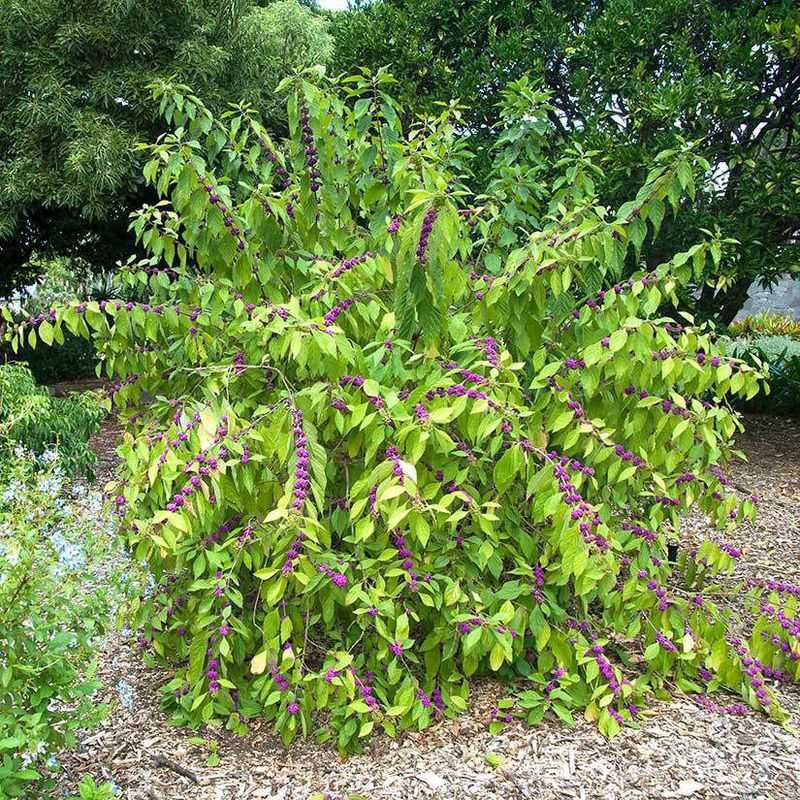
Before pulling out the nandina, it helps to know exactly what the foundation will look like after the swap. Nandina holds its leaves through winter, often taking on reddish or bronze tones in cold weather, and its bright red berry clusters stay visible well into the season.
That combination of evergreen foliage and winter color is part of why it became such a common foundation plant across the South.
American beautyberry does not replicate that winter picture. NC State confirms that beautyberry is deciduous, meaning it drops its leaves after the first frost, leaving arching bare stems through the colder months.
The purple berry clusters, which are the plant’s showiest feature, develop from late summer through fall and may persist into early winter before birds work through them. After that, the shrub goes dormant and offers a more open, structural look rather than the dense evergreen mass that nandina provides.
That is not a flaw, but it is a real design tradeoff that deserves honest attention before any digging starts. Nandina’s semi-evergreen habit gives it year-round visual weight against the house, while beautyberry earns its keep most visibly from August through early winter.
If the foundation bed faces a main entry or a street view that needs structure in January and February, a single beautyberry may not carry that job on its own. Pairing it with other native evergreens, or accepting the seasonal change as part of a more habitat-friendly approach, is a reasonable way to manage the transition without sacrificing the native wildlife benefit.
Give beautyberry room to reach its mature size
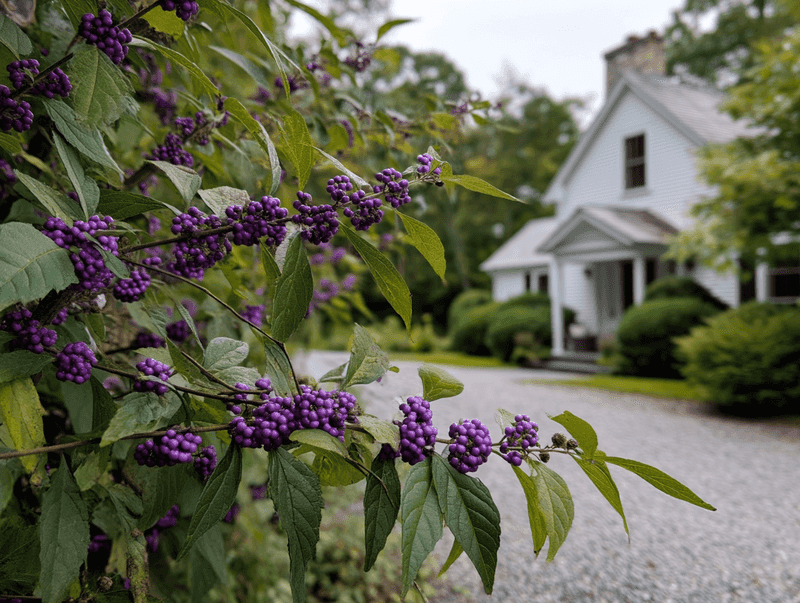
Mature size is the detail that catches most homeowners off guard with beautyberry. The shrub is sometimes sold as a mid-sized ornamental, which is accurate when it is young, but NC State lists its mature dimensions as approximately 3 to 8 feet tall and 3 to 6 feet wide, with long, arching stems that extend outward rather than growing in a tight, upright form.
Planting it too close to the house means those stems will eventually press against siding, crowd window frames, or lean over a walkway.
Proper placement follows a straightforward rule. NC State’s Extension Gardener Handbook on landscape design recommends placing a shrub at least half its mature width plus 1 foot from a structure.
For a beautyberry expected to reach 3 to 6 feet wide, that works out to roughly 2.5 to 4 feet from the foundation, measured to the center of the plant. On a wide foundation bed, that spacing is easy to achieve.
On a narrow strip between the house and a walkway, it may not be practical.
Light and soil conditions also shape how the plant performs. Beautyberry grows in full sun to part shade, with fuller fruiting typically occurring in sunnier spots.
It tolerates clay, loam, and sandy soils and handles both moist conditions and occasional dry spells, though it prefers well-drained ground. Heavy, waterlogged soil at the base of a foundation is a setup for root problems regardless of the plant species, so check drainage before planting.
The arching habit is worth repeating because it affects more than just spacing from the house. Stems can sweep across a path or dip toward a ground-level window without much warning during the growing season.
If the foundation bed runs along a main entry path, plan for that reach by giving the plant a wider buffer or choosing a planting location where the arching form adds to the design rather than creating a maintenance headache every summer.
Remove nandina carefully and manage new growth
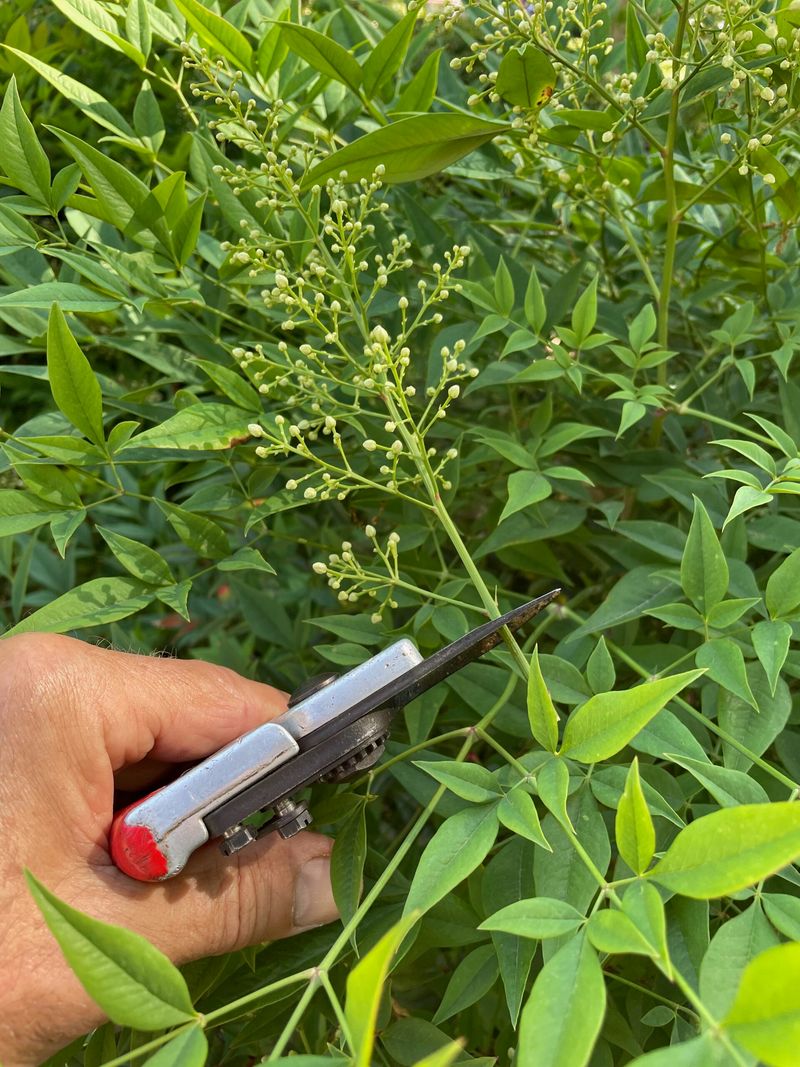
Getting nandina out of a foundation bed takes more effort than cutting it to the ground. The plant can resprout from roots and underground stems left in the soil, so a thorough digging job matters more than a quick chop.
For small or recently established plants, work a spade or fork around the root zone and lift the entire clump, pulling out as much of the underground stem material as you can reach. Bag the plant material and dispose of it rather than composting it, since the stems and berries can still spread.
Older, well-established nandina clumps with deep root systems are harder to remove completely by hand. Repeated digging and removal of new shoots that emerge from remaining roots will weaken the plant over time, but it requires patience and consistent follow-through.
University of Georgia Extension recommends digging out small plants as thoroughly as possible and notes that chemical control should follow product label directions. For larger plantings or persistent regrowth, consulting your local NC Cooperative Extension office or a qualified professional is a better path than improvising with homemade sprays, which can damage surrounding plants and soil.
If removing the nandina right away is not possible, Clemson Extension suggests removing flower and fruit clusters as a temporary step to reduce seed production and limit bird access to the berries. Snipping off berry clusters before birds find them is not a substitute for removing the plant, but it does reduce the risk while you plan the full replacement.
Check the plant through fall and early winter when fruiting is heaviest.
Once the nandina is out and the bed is ready, NC State notes that beautyberry flowers and fruits on new growth, which means pruning does not sacrifice next season’s berries. Cutting the shrub back hard to about 1 foot in late winter encourages a fuller, more compact form and keeps the plant from getting too rangy for the space.
That late-winter pruning window also makes it easy to assess any nandina regrowth nearby and pull new shoots before they get established.
Match the shrub to the bed instead of forcing the swap
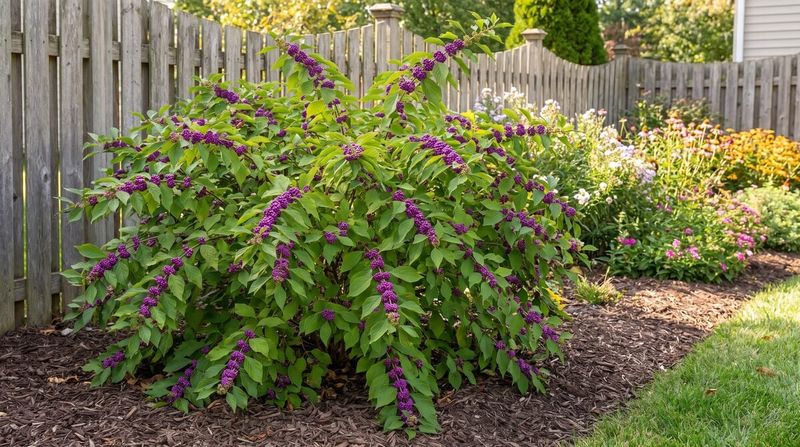
American beautyberry works best when the site actually fits the plant rather than the plant being squeezed into a space that never suited it. One practical consideration that does not always make it into planting guides is fruit production.
NC State notes that beautyberry may produce more fruit when several plants of the same type grow nearby, which means a small group or informal border planting tends to outperform a single tightly managed specimen. If the foundation bed is long enough to accommodate two or three plants spaced for their mature spread, the wildlife value and visual impact both improve.
A narrow strip between the house and a walkway, or a bed that needs year-round evergreen structure for curb appeal reasons, may not suit beautyberry at all. That is worth admitting rather than forcing a swap that creates a new set of problems.
For those situations, NC State and Clemson Extension both identify low-fruiting or sterile nandina cultivars such as ‘Firepower’ as a way to reduce berry and seed production without removing the plant entirely. That approach cuts the documented wildlife risk from heavy fruiting and limits the plant’s ability to spread by seed, though it does not deliver the native habitat value of a true native shrub.
UF/IFAS also notes regional differences in how nandina behaves and how cultivars are classified, so what holds for coastal North Carolina may differ from mountain conditions or from sites further south. Tie the planting decision to local light, drainage, and moisture rather than assuming uniform results across the state.
A beautyberry in a sunny, well-drained Piedmont bed will behave differently from one planted in a shaded, clay-heavy mountain foundation strip. Match the plant to the actual conditions of the bed, not to an idealized version of the site.
Choose beautyberry when the site can support it
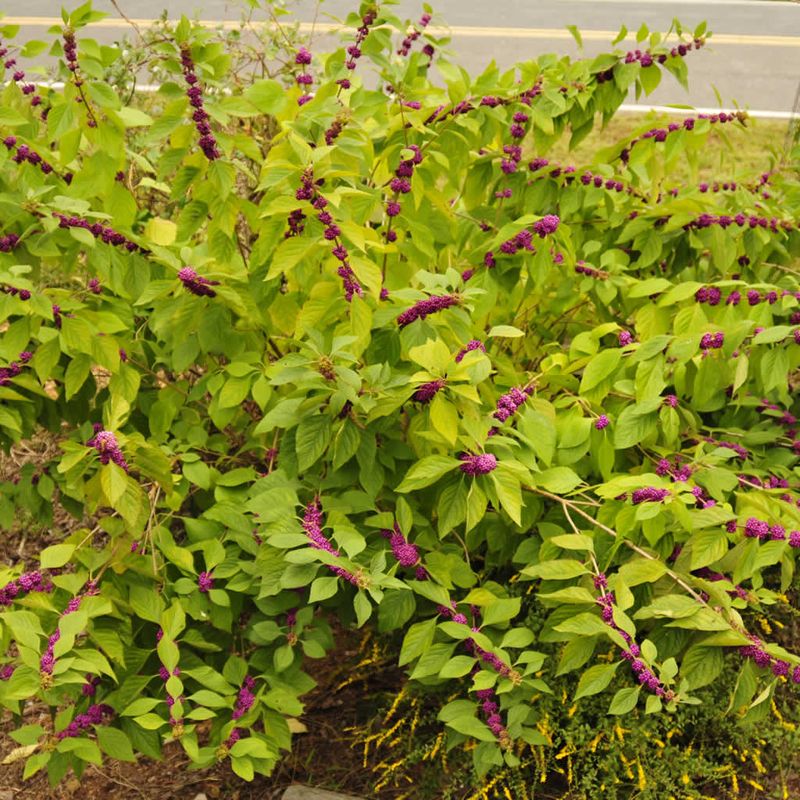
Removing fruiting nandina from a North Carolina foundation bed makes practical sense when the plant is spreading, fruiting heavily, or sitting in a spot where Cedar Waxwings or other birds regularly feed. Replacing it with American beautyberry adds a native shrub whose purple fruit is documented food for Cedar Waxwings, robins, thrashers, catbirds, and a long list of other wildlife that visits North Carolina yards.
The swap is not a perfect one-for-one trade. Beautyberry is deciduous, its berries arrive in late summer rather than winter, and its arching form needs more room than a tightly pruned nandina.
Those are real differences that affect how the foundation looks and functions through the year. What the replacement does deliver is the removal of a planting with a documented link between large-quantity berry consumption and Cedar Waxwing mortality, along with a native shrub that earns its space through genuine ecological contribution.
A yard that feeds the birds actually living in your neighborhood is a more durable kind of curb appeal.