
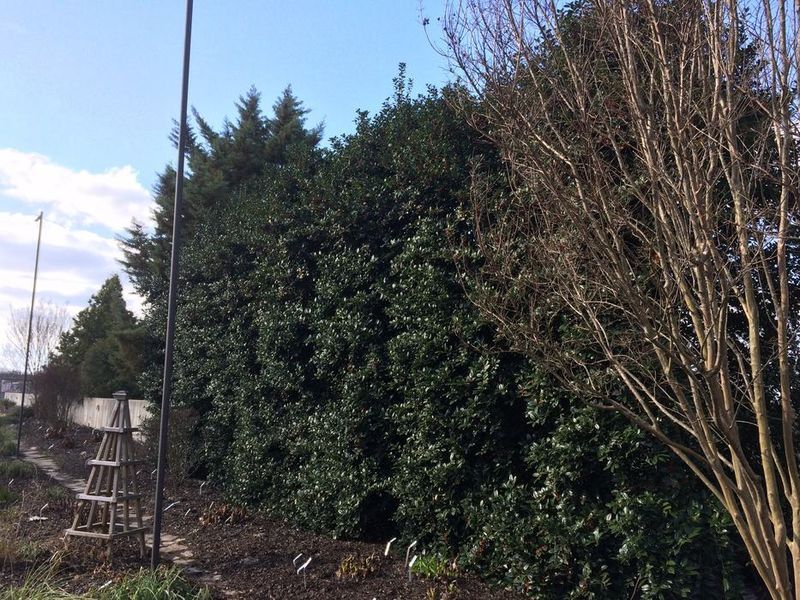
Many North Carolina homeowners plant wax myrtle along their property lines hoping for a thick, fast green wall, only to end up with bare patches, unruly suckers, or a screen that looks rough after a bad storm. Inkberry holly is a native evergreen shrub that fits many eastern Piedmont and Coastal Plain properties and can form a solid privacy screen when matched to the right soil and space.
The decision comes down to site fit, not a simple swap, so knowing what each plant actually needs will save you time, money, and a lot of frustration.
Wax Myrtle Deserves a Fair Comparison
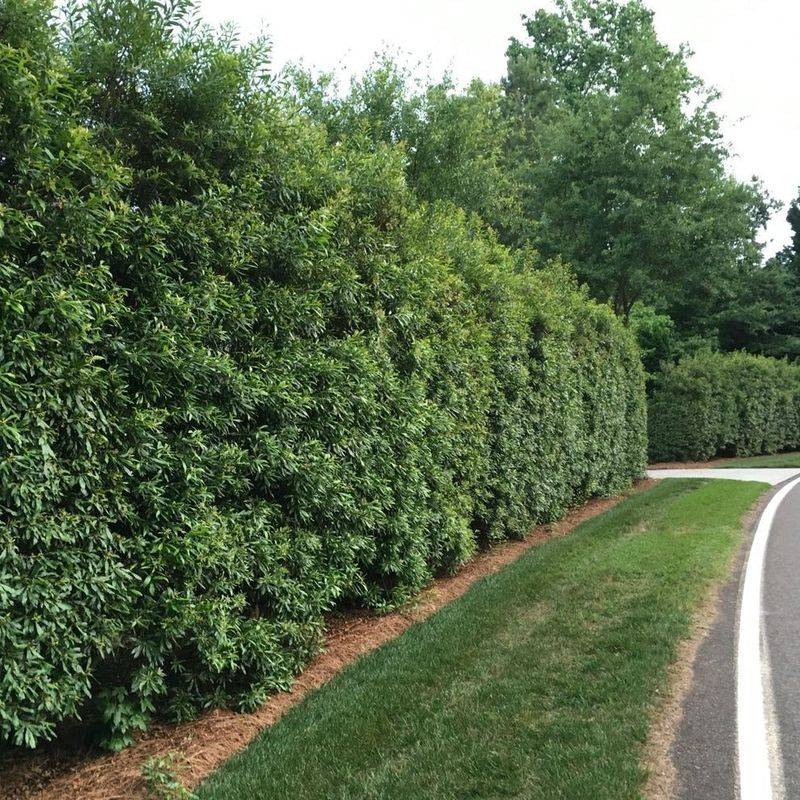
Before writing off wax myrtle entirely, consider what it actually does well. NC State’s plant profile for wax myrtle describes it as dense, rapid-growing, wind-tolerant, and salt-tolerant, making it a legitimate choice for privacy hedges and screens across much of North Carolina.
It can form a thick barrier in a relatively short time, and in the right spot, it performs reliably for years without much intervention.
The problems homeowners run into tend to be site-specific or management-specific rather than proof that the plant is universally flawed. Heavy or poorly timed pruning, shallow soil, poor drainage, or a particularly severe storm can leave any screen with gaps or broken stems.
Wax myrtle also suckers and can spread from the base, which helps it fill a line but can also push into areas you did not intend.
Choosing a different species is a reasonable response when your specific property has produced thinning at the base, difficult maintenance access, or a structure that never recovered after storm damage. That choice, though, should be framed as a site-fit decision rather than a verdict on wax myrtle as a plant.
Inkberry holly is not a proven storm-improvement over wax myrtle; it is a different shrub with different traits that may match certain sites more cleanly. The comparison that matters is between your actual soil, space, moisture, and maintenance situation and what each plant genuinely requires.
Why Inkberry Fits Many Eastern North Carolina Screens
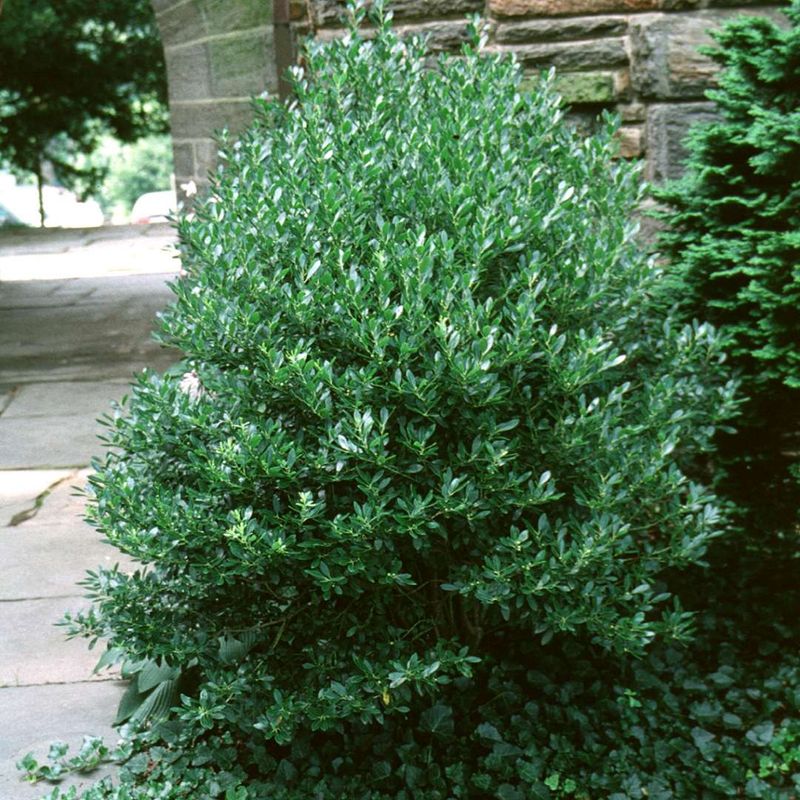
Inkberry holly, known botanically as Ilex glabra, brings a set of practical traits that make it a well-supported choice for many eastern North Carolina property lines. NC State’s profile for inkberry describes it as a broadleaf evergreen with an upright to rounded form and a multi-branching habit that lends itself to use as a hedge, windbreak, or privacy screen.
Those are not aspirational uses; they reflect how the shrub actually grows when given room and appropriate conditions.
At maturity, inkberry typically reaches 5 to 10 feet tall and spreads 5 to 8 feet wide. That size range puts it comfortably in the privacy-screen zone without the overhead utility conflicts or neighbor-relation problems that come with larger trees or aggressive growers.
It handles full sun to partial shade, which covers the range of exposures found along most residential property lines in the eastern Piedmont and Coastal Plain.
The evergreen foliage is glossy and dark green, holding color through winter and providing year-round visual coverage when the shrub is well established. Its multi-branching structure, starting low on the plant, is one of the traits that makes it useful as a screen rather than just an ornamental specimen.
That low branching does require attention during establishment to keep it intact, a point covered in the training section below.
None of these traits promise that inkberry will emerge from a severe ice storm or wind event without any damage. What they do support is a dense, living barrier that functions as a screen under normal conditions and fits a specific regional and soil profile well.
For many eastern Piedmont and Coastal Plain homeowners with the right site, that is a strong practical case.
Test the Site Before You Choose the Plant
Regional fit matters before any other consideration. NC State recognizes inkberry as native to eastern Piedmont and Coastal Plain portions of North Carolina, not as a native default for the mountains or the western part of the state.
The NC State Extension native plants handbook makes clear that native species recommendations vary by region, so mountain gardeners looking for a similar screen should explore other hollies or species suited to their elevation and conditions.
Inkberry prefers acidic soil with good drainage. It will tolerate moist and occasionally wet conditions, which actually makes it more flexible than many shrubs in low spots or areas with seasonal standing water.
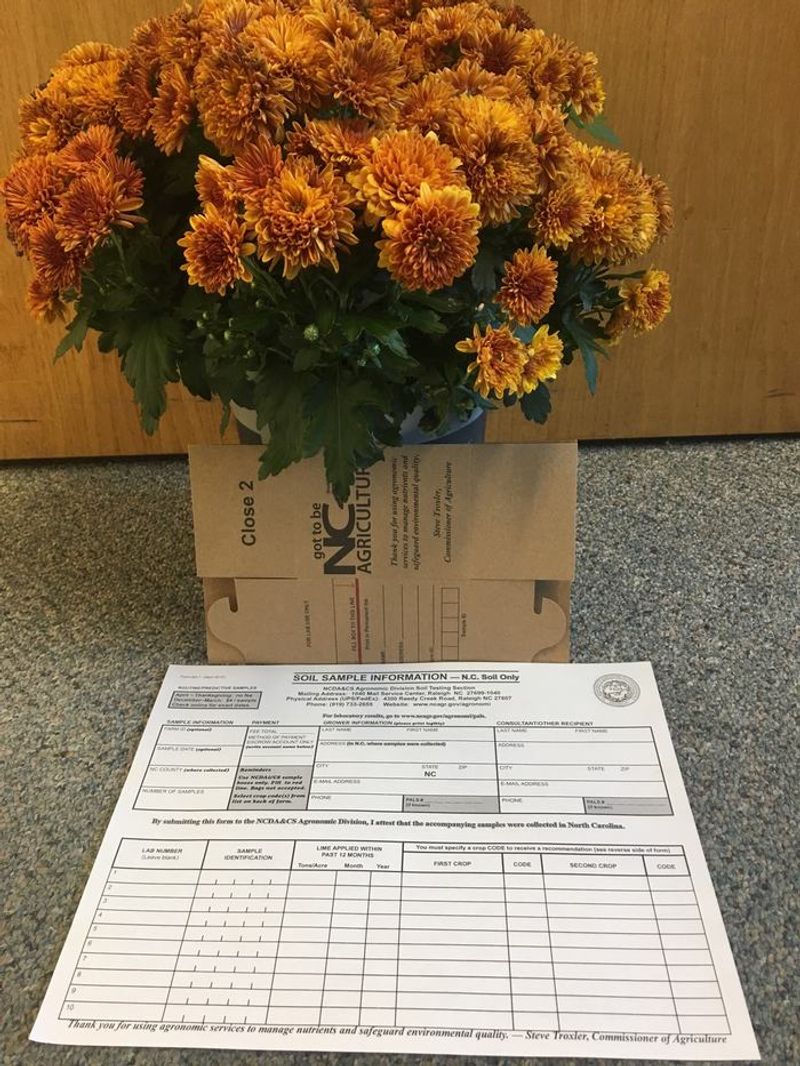
What it does not handle well is alkaline soil, drought-prone fill, or severely exposed dry sites. If your property line runs across compacted fill, imported topsoil of unknown pH, or a south-facing slope with poor moisture retention, get a soil test before ordering plants.
Your local NC Cooperative Extension office can process a basic soil sample for a modest fee.
Beyond soil chemistry, walk the line and account for mature width. NC State’s native plant design guidance recommends choosing plants that fit the available space at full maturity rather than spacing based on how young nursery plants look in a pot.
At 5 to 8 feet wide, each inkberry will eventually need room to spread without pressing against a fence, overhanging a utility easement, or blocking access for trimming on the neighbor’s side.
Fire exposure is another pre-plant check. NC State’s fire-resistant landscaping guide rates inkberry as a high-flammability plant.
Placing a dense evergreen row immediately beside a home, attached structure, or propane tank without a defensible-space buffer is a safety concern regardless of which native species you choose. Plan the location of your screen with that rating in mind, and keep a clear zone near any structure before the planting begins.
Use Mature Spacing and Early Training to Keep the Base Full
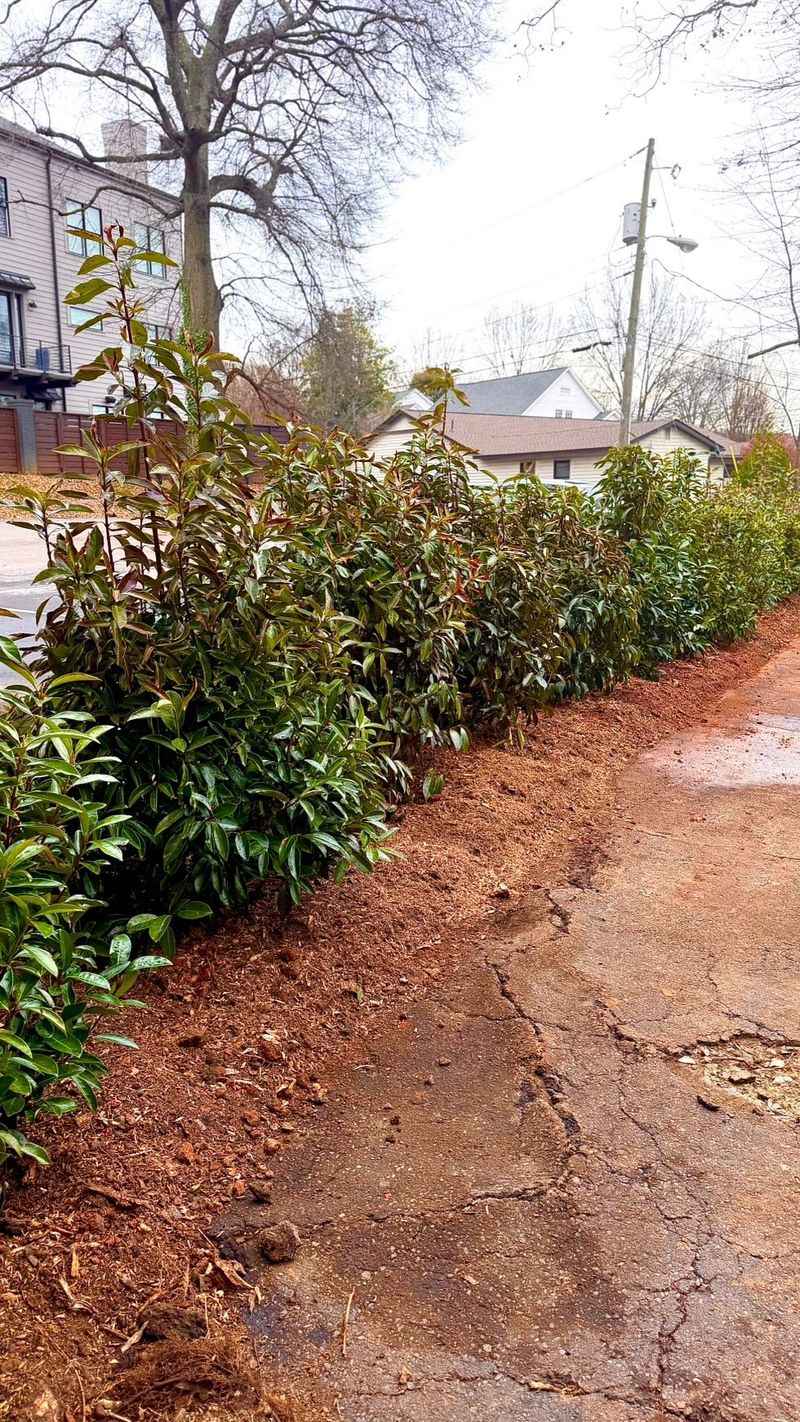
Crowding young plants together is one of the most common reasons a privacy screen ends up thin at the bottom within a few years. When shrubs are planted too close, they compete for light and push growth upward rather than outward, leaving the lower branches shaded out and eventually bare.
NC State’s native plant design guidance advises spacing based on mature dimensions, which for inkberry means planning for 5 to 8 feet of eventual spread per plant even when the nursery container looks small.
Early training shapes the long-term result more than any pruning you do later. The NC State woody ornamentals handbook cautions that forcing a hedge to reach its final height too quickly can leave the base thin and open, a problem that is difficult to correct once the lower branches are gone.
Allowing the shrub to develop at a natural pace while lightly guiding its shape from the beginning, keeping the base slightly wider than the top, helps retain foliage all the way to the ground.
Inkberry generally needs little pruning when grown as a naturalistic screen rather than a formal clipped hedge. NC State’s inkberry profile notes that early spring is the appropriate window if shaping becomes necessary, before new growth flushes out.
Pruning at that time removes the least amount of active growth and gives the shrub the full season to recover and fill in.
Maintenance access on both sides of the boundary is a practical detail worth settling before the first plant goes in the ground. A row planted directly against a fence or property line with no clearance behind it makes routine care difficult and can create neighbor disputes when branches eventually cross.
Leave enough room to walk through, kneel down, and work from both sides comfortably.
Plan for a Slow, Deliberate Screen
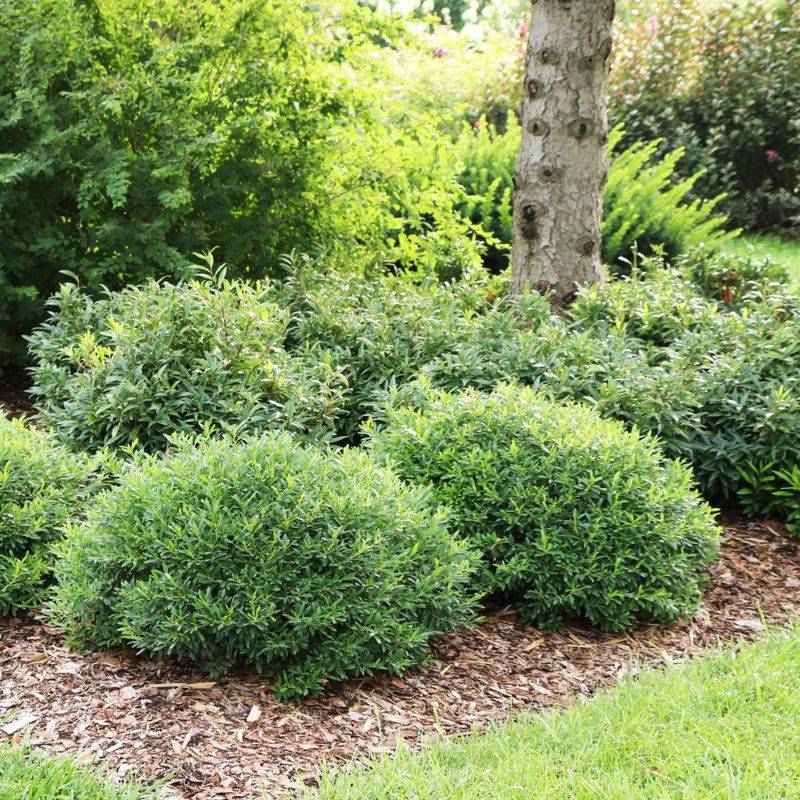
Patience is not optional with inkberry. NC State’s inkberry profile lists its growth rate as slow, which puts it in a different category from wax myrtle, described by the same source as rapid-growing.
Anyone expecting a full visual barrier within one or two growing seasons will likely be disappointed, and trying to compensate by planting more tightly or pruning aggressively will work against the long-term result rather than speed it up.
Timing the planting well gives the shrubs the best start. NC State’s native plant landscaping guide identifies fall as a generally favorable planting window for native plants in North Carolina because cooler temperatures reduce heat stress and allow roots to establish before the following summer’s heat arrives.
Spring planting can also work, but it requires consistent, reliable irrigation through the first warm season to prevent stress on newly installed plants that have not yet developed a deep root system.
Watering during establishment is the single biggest factor in how quickly inkberry settles in and begins putting on meaningful growth. Slow, deep watering two to three times per week for the first growing season, adjusted for rainfall, gives roots the moisture they need to expand outward rather than staying tight around the original root ball.
Mulching to a depth of two to three inches around the base, kept back from the stem, conserves soil moisture and moderates soil temperature through both winter and summer.
The screen will come, but it develops on the plant’s schedule rather than the homeowner’s. Setting that expectation honestly at the start, and resisting the temptation to shortcut the process with crowding or heavy fertilization, produces a healthier, longer-lived planting than any rushed approach.
Treat Ice and Wind as Risks, Not a Test Inkberry Can Guarantee
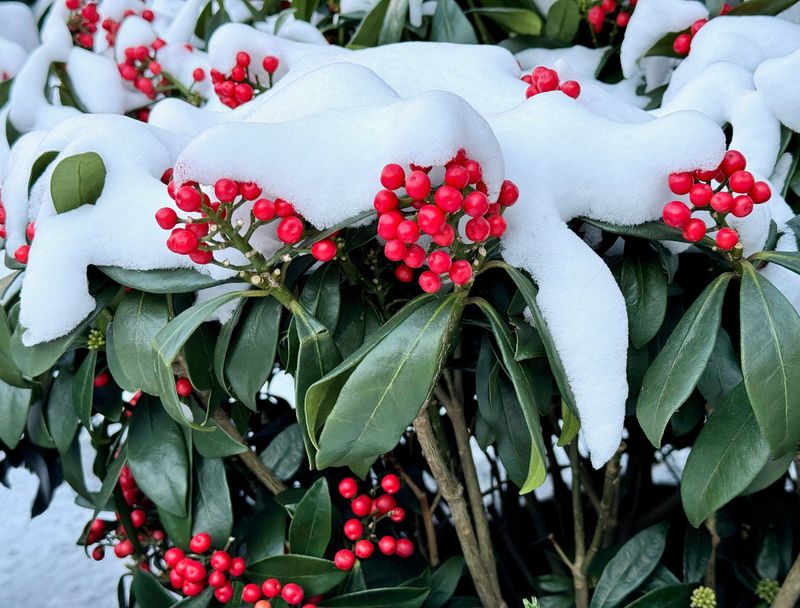
No evergreen shrub is weather-proof, and the original premise of this article title overstates what the research actually shows. UMN Extension’s guide on protecting trees and shrubs in winter explains that ice loading, saturated soil, strong wind, and winter desiccation can damage any shrub regardless of species.
Exposed sites carry more risk than sheltered ones, and a particularly severe event can break or bend branches on plants that have performed well for years.
Inkberry’s value as a screen and windbreak is supported by NC State’s profile, but that profile does not claim the shrub will emerge from equivalent ice or wind events denser or less damaged than wax myrtle. Choosing inkberry for site fit, soil match, and regional appropriateness is well-grounded.
Choosing it because you expect it to survive storms better than your current planting is a promise the evidence does not make.
Two other native hollies are worth comparing when storm tolerance is a priority. Yaupon holly suits some Coastal Plain sites well and handles heat and wind effectively.
NC State’s yaupon profile notes its usefulness as a screen, hedge, windbreak, and barrier, and it can reach 10 to 20 feet tall with a spread of 8 to 12 feet depending on cultivar. However, a University of Georgia extension piece on holly selection specifically describes yaupon as prone to ice and storm damage, so it should not be presented as an ice-proof alternative either.
American holly takes a different approach to the size question entirely. NC State’s American holly profile tags it as storm-damage resistant and wind tolerant, and it is native throughout North Carolina rather than limited to the Coastal Plain and eastern Piedmont.
The tradeoff is that American holly grows slowly and can eventually become tree-sized, which changes the maintenance picture significantly and may not suit every property line or setback requirement.
Account for Suckering, Berries, Fire, and Wildlife
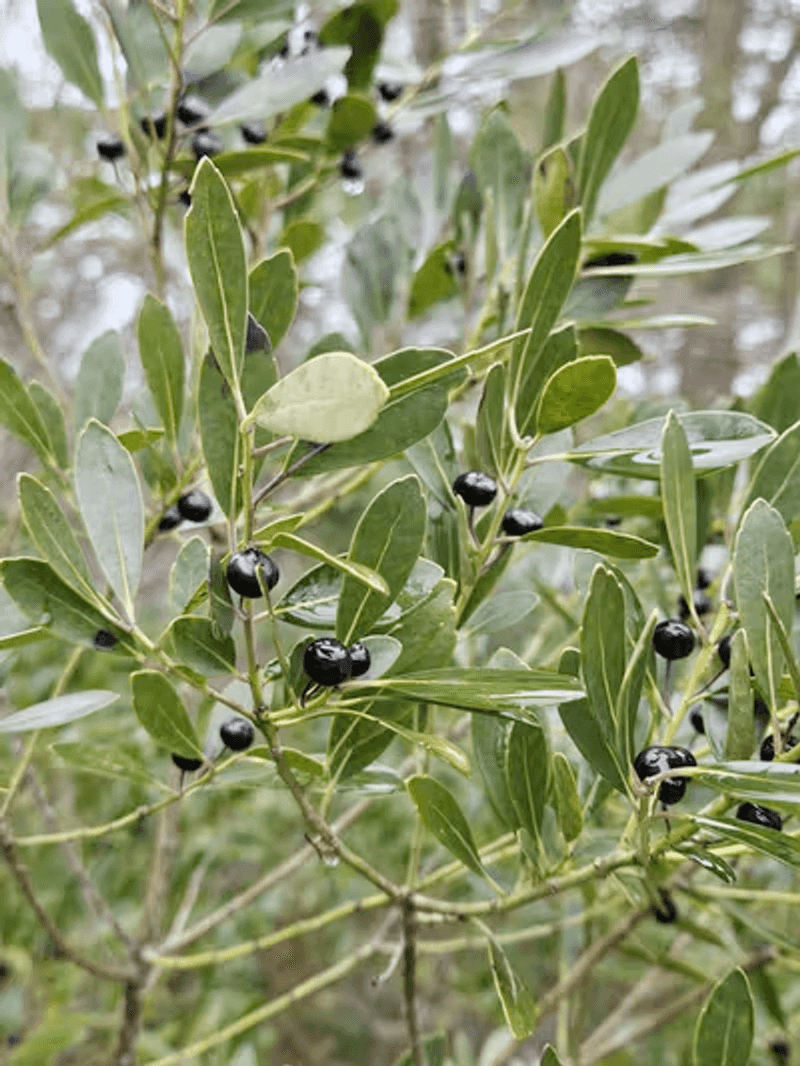
Inkberry can spread from the base through suckering, sending up new stems near the original plant over time. This habit can actually help close gaps in a screen row as the planting matures, but it also means occasional removal of shoots that push beyond the intended boundary.
NC State’s inkberry profile notes this spreading tendency, and homeowners with a tight property line or a neighbor’s lawn directly adjacent should plan for it rather than being caught off guard.
Fruit production requires both male and female plants. A row made entirely of female cultivars or entirely of males will not yield the black berries that birds and small mammals rely on through fall and winter.
The flowers produced in spring attract bees and other pollinators, adding a second layer of wildlife value beyond the berries. If berry production matters to you, ask your nursery supplier specifically about sex and confirm that at least one male plant is included in your order for every few females.
A brief caution for households with children or pets: holly berries can cause gastrointestinal problems if eaten. NC State’s profile lists inkberry as having low-severity poison characteristics, but low severity is not the same as harmless, and the berries should not be treated as edible or left accessible to young children or animals that might sample them.
Fire risk applies to the whole category. NC State’s fire-resistant landscaping guide rates inkberry, yaupon, and wax myrtle as high-flammability plants.
A dense screen of any of these species placed directly against a home or outbuilding without a defensible-space buffer creates a fire hazard. Layering multiple native species in a mixed planting can provide broader habitat value and year-round visual coverage, though that design approach supports ecological diversity rather than serving as a proven fire-safety strategy on its own.
Choose Inkberry for Site Fit, Not a Storm-Proof Promise
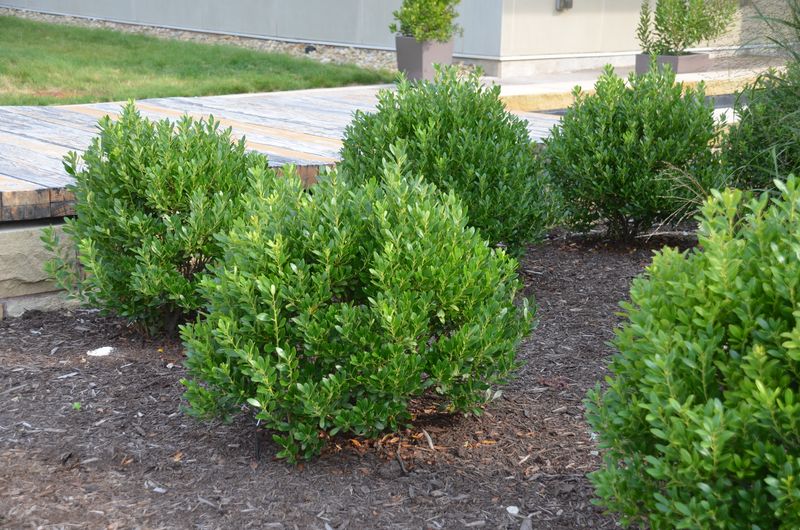
Inkberry holly is a strong native evergreen screen for many eastern Piedmont and Coastal Plain properties with acidic, adequately moist soil and enough room for the plant to reach its mature width without crowding. NC State’s inkberry profile supports its use as a hedge, windbreak, and privacy screen, and that is a well-grounded recommendation for the right site.
Density depends on siting, mature-size spacing, early training, and patient establishment, not on any inherent storm resistance the plant delivers automatically.
Test the soil, measure the space, check the fire exposure, and confirm the regional fit before ordering. NC State’s native plants guidance makes clear that regional appropriateness is a starting point, not an afterthought.
Mountain gardeners, owners of alkaline or drought-prone sites, and anyone with a severely exposed or fire-sensitive placement should look at American holly, a different cultivar, or a mixed planting rather than defaulting to inkberry. The best screen is the one that fits your specific ground, not the one that sounds best in a general recommendation.
A plant chosen for site fit and given proper room to grow will outperform any species forced into the wrong conditions, regardless of what the label promises.