
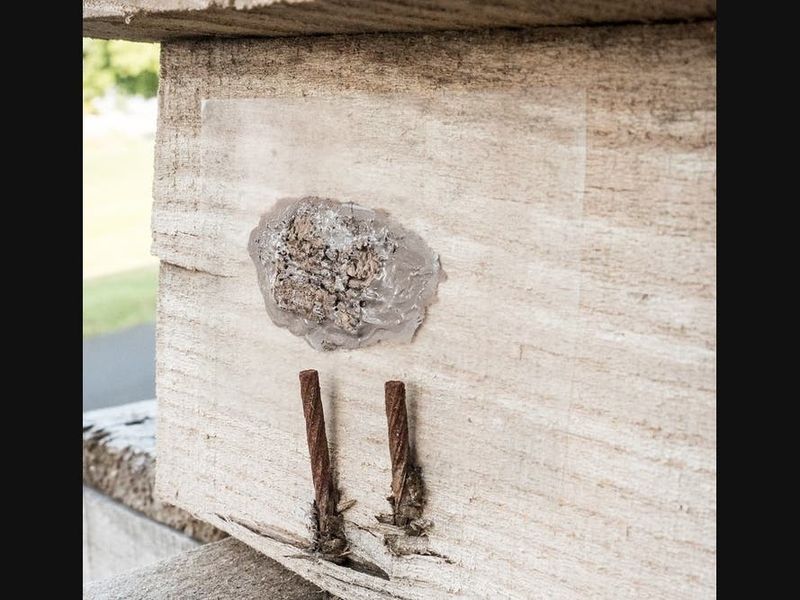
Yes, you can scrape spotted lanternfly egg masses off your trees this winter, and doing it before spring keeps the eggs in that mass from hatching. Look for gray or brown patches that resemble dried mud on trunks, firewood, and patio furniture.
A putty knife and the right way to destroy what you scrape are all you need. Here is how to spot them, remove the ones you can reach safely, and report what you find.
How to recognize a likely egg mass
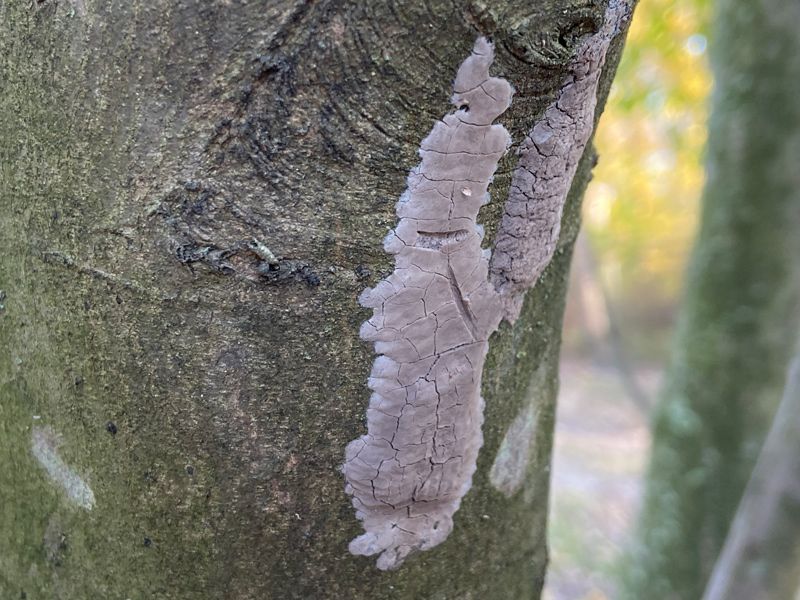
Picture a smear of dried mud stuck to bark. That is how many spotted lanternfly egg masses look, usually gray or brown, and roughly an inch to an inch and a half long.
NCDA&CS spotted lanternfly information describes them this way and notes that they show up from September through May.
Look closely and you may see neat rows of tiny eggs under the coating. Fresh masses often look smooth and slightly shiny or waxy.
Older ones can look cracked, flaky, or worn.
Color and texture alone cannot tell you whether a patch is a viable mass. Appearance varies a lot, and a gray patch could be mud, lichen, sap, or something else entirely.
Think of every patch as a possible egg mass until a closer look says otherwise.
One of the best clues is small emergence holes. Penn State Extension guidance on egg masses explains that old, hatched cases can stay on surfaces long after the insects have left.
If you see tiny holes or a ragged, empty-looking surface, the case is probably old.
Before you scrape anything, take a clear photo with something for scale, such as a coin. A suspected find outside a known infestation area is worth reporting, which a later section covers.
A quick photo costs you nothing and gives experts something to check.
Why winter is a useful time to check
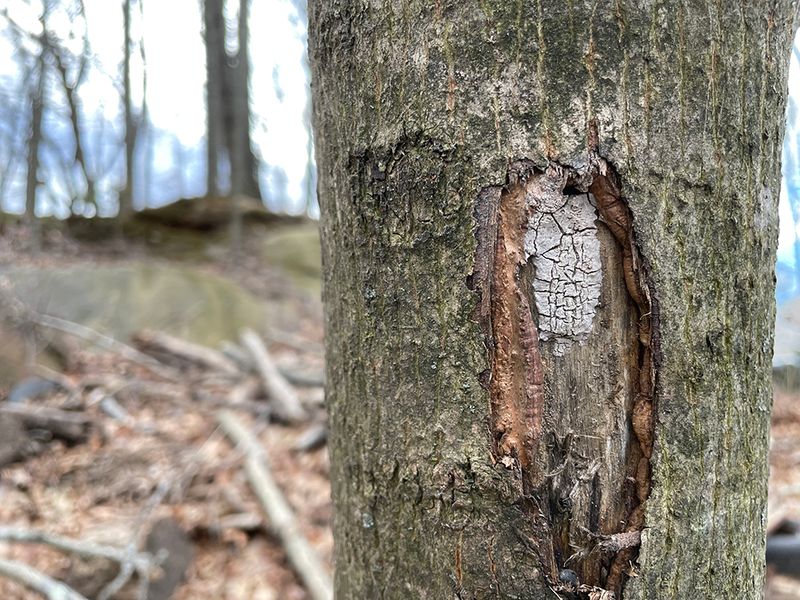
Spotted lanternflies spend the cold months as eggs. The adults lay them in fall, and the eggs sit quietly through winter until warm weather returns.
That makes winter yard cleanup a handy window for a quick look around.
North Carolina reports egg masses from September through May, and nymphs, the wingless young insects, from late March, according to NCDA&CS. Treat late March as a reported pattern, not a promise.
Hatching can shift with the weather, the year, and the place.
Bare branches and fallen leaves also make surfaces easier to see in winter. You are already raking, stacking firewood, and putting away outdoor gear, so a few extra glances cost little time.
Eggs you destroy before spring can no longer hatch.
A sensible plan is to check reachable surfaces on a dry day in January or February, then once more in early March. That second pass catches anything you missed while leaving time before nymphs are reported.
None of this means your property has spotted lanternflies. Many North Carolina yards have never had one.
If you find only mud, bark patches, or old hatched cases, that is a fine result.
Look beyond tree trunks

Trunks get all the attention, but spotted lanternflies are not picky. Females lay eggs on many outdoor surfaces, including furniture, vehicles, stone, fences, and other objects.
A gray patch on a chair leg counts just as much as one on a maple.
Start with what you can reach without stretching. Walk the yard and check trunk bark at chest height, then move on to the places people forget.
Underneath the seat of a patio chair, the frame of a grill cover, a trailer, a wheelbarrow, a stack of firewood, a stored kayak, and the wheel wells of a vehicle all deserve a glance.
Moving things is how eggs travel. USDA APHIS advice on cleaning outdoor items encourages people to check belongings before moving them, since egg masses can hitchhike to new places.
Build a habit around it. Before loading a camper, hauling firewood to a cabin, or lending a trailer to a neighbor, run your eyes and a flashlight over the surfaces.
Shaded, tucked-away spots are worth a look.
As Penn State Extension points out, masses can be hard to detect, so a slow, steady scan beats a quick glance. If you spot something suspicious, leave it in place for the moment and move on to the removal steps.
How to destroy a mass you can reach
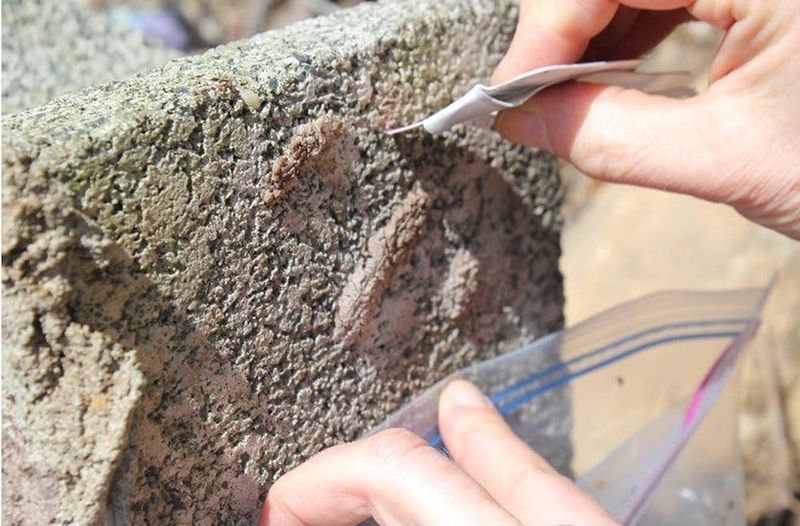
Gather a putty knife or an old plastic card, a small container or resealable bag, and rubbing alcohol or hand sanitizer. Photograph the mass first.
Then hold the container right under the mass so nothing drops.
Press the scraper firmly and push the whole mass off the surface into the container. Penn State Extension recommends scraping the eggs into a bag or container with rubbing alcohol or hand sanitizer and leaving them in the solution.
Make sure the eggs are fully covered by the liquid. A bag on its own does not kill them, so the alcohol or sanitizer is the step that does the work.
Seal the container afterward so it does not spill, and keep it away from children and pets.
If you do not have alcohol handy, crush the entire mass thoroughly with the scraper or a sturdy tool. Check that no eggs are left whole.
Wipe the surface and take a second look for any stragglers.
Do not scrape eggs onto the ground. Eggs that land on bare soil or leaves may still hatch.
USDA APHIS spotted lanternfly information also supports reporting finds in new areas.
Only work on masses within safe reach from the ground. If one sits high on a trunk or branch, leave it alone, and do not climb or use a ladder.
Photograph and report a suspected find

Reporting is a quick job, and it helps experts track where this insect is turning up. Take clear photos before you remove anything: one wide shot showing where it is, and one close-up with a coin for scale.
Note the date and your address or nearest cross street.
This matters most outside areas where spotted lanternflies are already known. NCDA&CS asks residents to submit photos and reports through its online tool, so follow the directions on that page.
Be careful with county lists. In a February 10, 2026 NCDA&CS announcement, the department reported established populations in seven counties: Forsyth, Guilford, Rockingham, Caldwell, Caswell, Davidson, and Rowan.
That is a dated announcement, not a guaranteed picture of today.
The department’s landing page has listed a shorter set of counties, so the two sources do not match. Before you rely on any list, check with NCDA&CS or your local Cooperative Extension office for the current one.
A county not being on a list does not mean a find is harmless, and being on a list does not mean every tree is infested. When in doubt, photograph it, report it, and then destroy the mass if you can reach it safely.
Set a safe, realistic goal
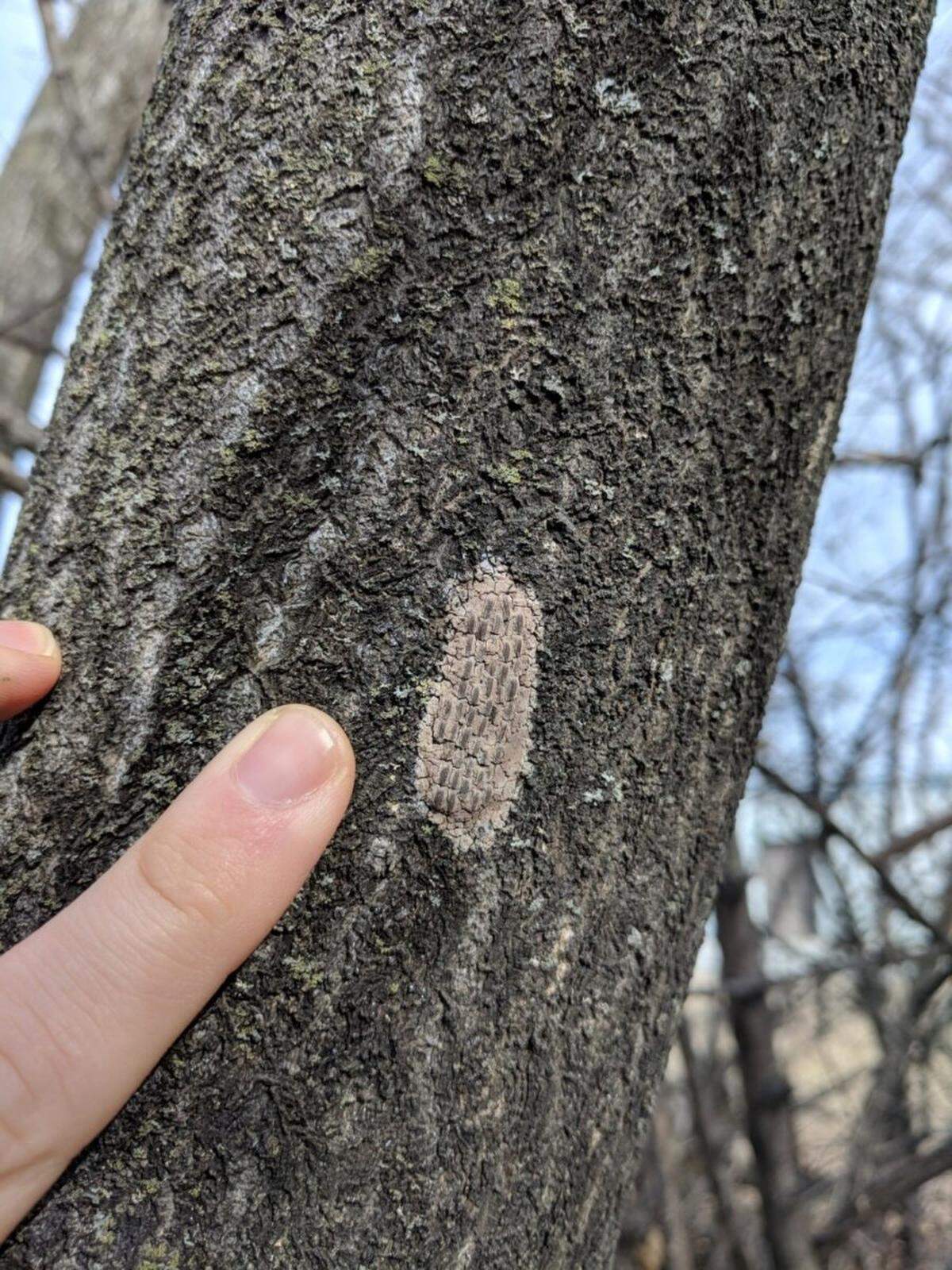
A typical mass holds roughly 30 to 50 eggs, according to Penn State Extension. That is a real number, though not a promise that every egg will hatch.
Destroying one mass means those eggs cannot hatch.
It does not mean the problem is solved. A peer-reviewed study of egg mass placement shows that masses can be scattered and hard to find, and a survey study found many above easy reach.
Hidden or high masses will stay put.
So never climb a tree or use a ladder. Stay on the ground, remove what is safely within reach, and let the rest go.
As for damage, grapevines and certain other plants are the bigger worry. Penn State Extension says healthy, established ornamental trees have not been recorded dying from it, though some decline or branch dieback has been observed.
Vineyard guidance shows why growers take it seriously.
Your goal is simple: destroy viable masses within safe reach, report unfamiliar finds, and check belongings before you move them. Small, steady habits are what count.