
Finding a large, reddish-brown spider with oversized jaws in your California garage can make anyone reach for a shoe. Before you act, though, that spider might actually be earning its keep by hunting pill bugs and sow bugs around your foundation and garden beds at night.
Knowing what you are actually dealing with changes how you should respond, and the answer is more practical than either killing every spider on sight or treating one spider like a full pest-control program.
Identify the spider before deciding what to do
A reddish spider with unusually large jaws turns up in a California garage, and the first instinct is usually to assume the worst. Before reaching any conclusion about whether to leave it, move it, or remove it, the right starting point is figuring out what species you are actually looking at.
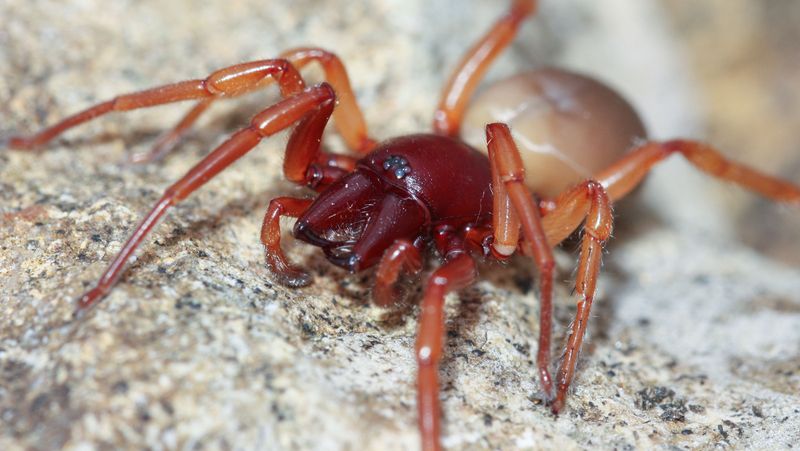
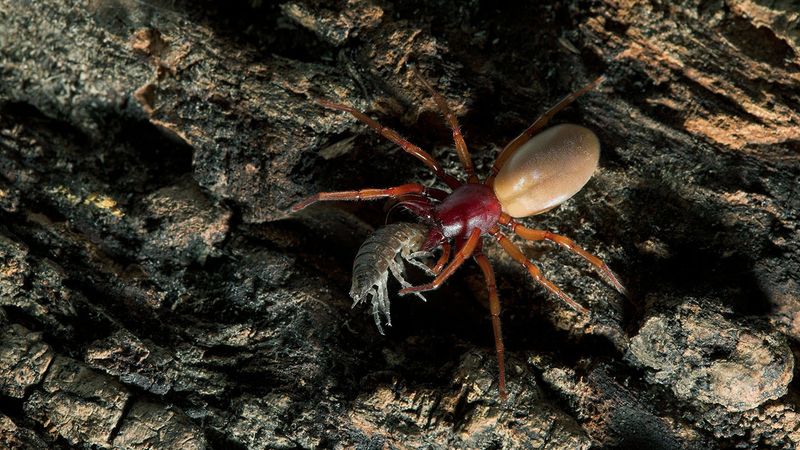
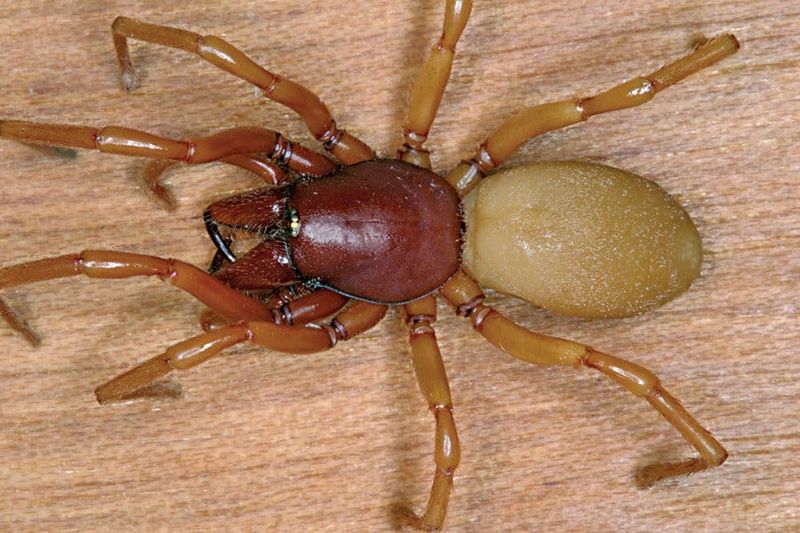
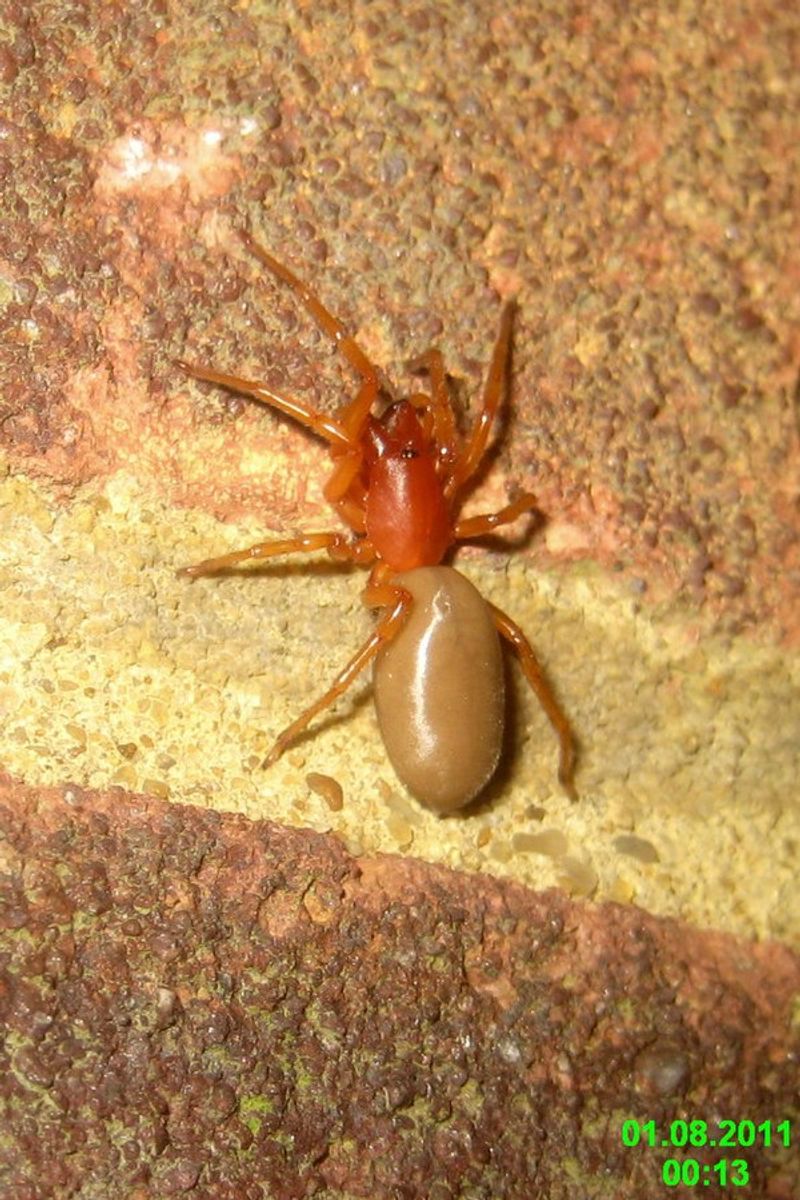
The California woodlouse spider is most often Dysdera crocata, and its appearance is distinctive when you know what to look for. Penn State Extension’s woodlouse hunter profile describes the typical features as a reddish-orange cephalothorax (the front body section) and legs, a pale gray or dirty-white abdomen, and six eyes arranged in two close-set groups of three.
The most striking feature, though, is the pair of large, forward-facing jaws that look almost comically oversized for the spider’s body.
Color alone will not confirm the species. Several California spiders are reddish, brown, or large-bodied, and a casual garage sighting in dim light is not a reliable basis for a species call.
The six-eye arrangement is one useful distinction: brown recluse spiders also have six eyes, but theirs sit in three pairs arranged in a different pattern, and the UC Davis Bohart Museum of Entomology notes that brown recluse spiders are almost certainly not established in California. That does not mean every reddish spider in the state is a harmless woodlouse spider.
Size, general color, and location cannot confirm the species with enough certainty to apply species-specific advice. If you want to know what you have, take a clear, close photograph and submit it to a UC Cooperative Extension office, a local entomology department, or a verified spider identification resource.
Getting the identification right matters because the appropriate response, whether tolerance, relocation, or removal, depends on knowing what spider you are actually dealing with rather than assuming based on a quick look.
Its nighttime hunting explains the garage sighting
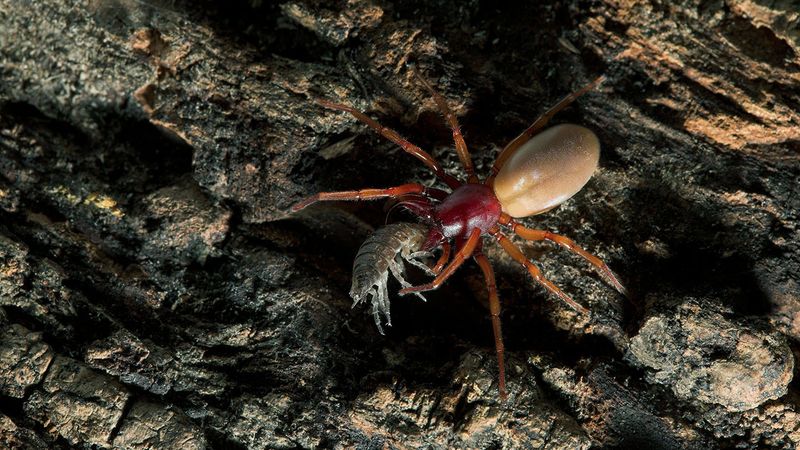
Garages get a lot of spider traffic, and there is a straightforward reason why a woodlouse spider shows up there at night rather than in a sunny window or on a wall. Dysdera crocata is a ground-hunting spider that spends its days hidden in a silken retreat and comes out after dark to search for prey at floor level.
According to the British Arachnological Society’s profile of Dysdera crocata, the spider rests during daylight hours in a small silk tube tucked beneath stones, wood, mulch, debris, or similar cover, then wanders at night looking for prey. That silk is used for shelter, molting, and egg laying, not for building a web to trap insects.
Seeing a web in a corner does not mean this is the spider that built it.
A garage is attractive for several overlapping reasons. Concrete floors stay cool and sometimes damp.
Stored wood, cardboard boxes, old equipment, and piles of debris all offer daytime hiding spots. Utah State University Extension notes that woodlouse spiders are commonly found in damp basements, garages, and foundation areas where moisture and organic material accumulate, and where pill bugs and sow bugs are also likely to be present.
Finding the spider inside does not automatically mean there is a serious underlying pest problem. Its presence more directly reflects the fact that the environment offers suitable shelter and access to prey.
A damp corner with a wood pile near the foundation creates exactly the kind of habitat this spider gravitates toward, whether or not cockroaches or other pests are present.
If a woodlouse spider keeps appearing inside, the most useful question to ask is what conditions are drawing it in, rather than whether the spider itself is a sign of something worse.
The evidence supports limited pill-bug predation
The woodlouse spider’s common name is not random. Its jaws evolved to do a specific job: pierce the armored shell of pill bugs and sow bugs, which are terrestrial crustaceans that most other spiders cannot easily grip or penetrate.
That jaw structure is the clearest physical evidence of a long association between this spider and its primary prey.
Penn State Extension confirms that pill bugs, sow bugs, and other terrestrial isopods are the spider’s best-supported prey group. An individual spider hunting around a damp garage, garden bed, or foundation may reduce some of the local isopod population, particularly where moisture and organic debris have allowed pill bugs to build up in large numbers.
That is a real ecological contribution, even if it is a modest one.
The claim stops there, though. A 1995 prey-preference study published in Ethology Ecology and Evolution found that Dysdera crocata could consume various insect prey in laboratory conditions and did not show a statistically exclusive preference for woodlice over all other prey types.
That finding is worth understanding carefully: it tells us the spider is not a woodlice-only predator, but it does not overturn the well-documented field association with isopods. What it does rule out is any claim that the spider will reliably target and eliminate a specific pest population.
Pill bugs themselves deserve a little context before treating them as pure nuisances. They primarily consume decaying organic matter and play a useful role in breaking down dead plant material in garden beds and soil.
Large concentrations near seedlings or persistently damp wood structures can become a practical problem, and in those situations having a predator in the area is genuinely useful. Eradicating them entirely, though, is not a realistic or evidence-based gardening goal.
One spider hunting at night may reduce some pill bugs near a foundation. That is the honest, practical version of the claim.
Do not mistake the spider for cockroach control
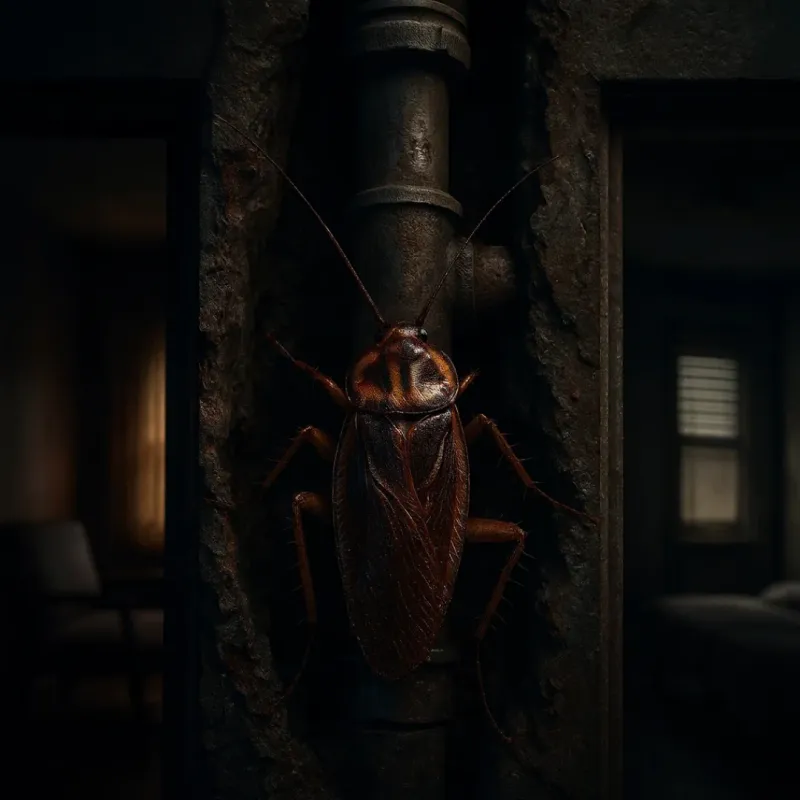
The title’s cockroach claim is the part that needs the clearest correction. Cockroach control is not what this spider does, and treating it as though it were can lead homeowners to skip the steps that actually work.
The strongest evidence connecting Dysdera crocata to a specific prey type involves pill bugs and sow bugs, not cockroaches. The prey-preference research published in Ethology Ecology and Evolution showed that the spider can consume a variety of arthropods in laboratory settings, but laboratory feeding trials do not demonstrate that a single spider will suppress a cockroach population in a home.
Those are two very different things.
Finding a woodlouse spider in a garage also does not mean cockroaches are present. The spider’s appearance is more directly tied to shelter, moisture, and access to isopods.
A damp, cluttered garage can attract the spider without a single cockroach in the building.
If cockroaches are the actual concern, the spider is the wrong solution. UC IPM’s cockroach management guidance is clear that pesticides alone generally do not solve cockroach problems.
The recommended approach centers on removing food and water sources, eliminating hiding places, sealing entry points, and using appropriately placed baits when necessary. Those steps address the conditions that allow cockroach populations to survive and grow.
Preserving one spider will not resolve a cockroach infestation, prevent food contamination, or close the structural gaps that cockroaches use to enter a building. The two problems, a woodlouse spider sighting and a cockroach problem, may share some underlying conditions like moisture and clutter, but they require separate and specific responses.
Treat the spider as what it actually is: a predator with a documented association with pill bugs that may occasionally take other arthropods. Any cockroach management plan needs to stand on its own.
Choose tolerance, relocation, or removal based on the situation
Not every woodlouse spider sighting requires the same response. A correctly identified spider wandering a garage where no children or pets spend time, and where the identification is reasonably confident, may simply be left alone.
A spider found in a space used regularly by kids, or one that cannot be clearly identified from a casual look, is a reasonable candidate for relocation or removal.
The first rule of handling any spider is not to do it bare-handed. Penn State Extension notes that Dysdera crocata is not considered medically dangerous, but its large jaws can deliver a painful defensive bite if the spider is pressed against skin or feels cornered.
That bite may cause localized pain, itching, redness, or swelling, symptoms that are uncomfortable but not associated with systemic reactions like those from widow or recluse spiders.
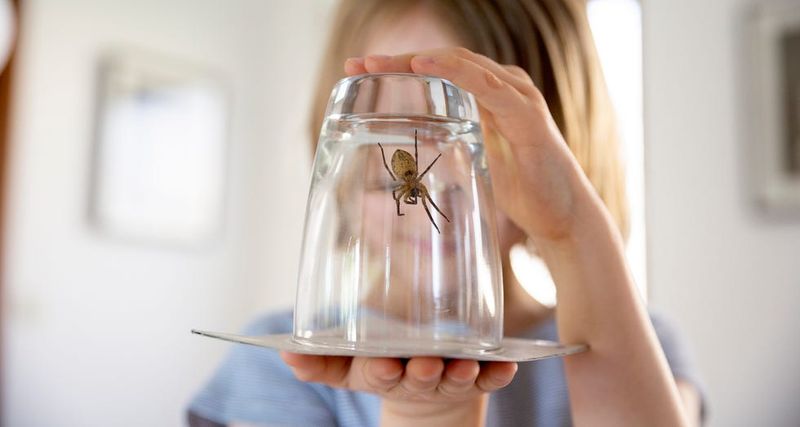
For an individual indoor spider, a jar-and-paper method is the safest and most practical option. Place a jar or cup over the spider, slide a stiff piece of cardboard or paper underneath, and carry it outside to a garden bed, mulch area, or other spot away from the house.
Utah State University Extension supports catch-and-release as a reasonable approach for individual indoor woodlouse spiders, and vacuuming is a workable alternative when relocation is not practical.
Never deliberately provoke the spider, and keep children and pets away during any relocation attempt. The spider’s jaws look alarming, and an animal or child that corners it may get a bite.
If a bite does occur, UC IPM spider guidance recommends washing the area with soap and water and applying a cold compress for ordinary discomfort. If symptoms are unusual or severe, including spreading swelling, difficulty breathing, or any reaction that seems out of proportion to a minor bite, seek medical care or contact Poison Control at 1-800-222-1222.
Tolerance, relocation, and removal are all reasonable choices depending on the situation. The key is making the decision based on actual circumstances rather than an automatic reaction to the spider’s appearance.
Change the conditions that support spiders and pests

A woodlouse spider appearing in a garage is useful information. It tells you that the environment currently offers shelter, moisture, and access to prey.
Addressing those underlying conditions is more dependable than deciding what to do about one spider at a time.
Moisture is the most important factor to address. Garages and foundation areas that stay damp attract pill bugs, which in turn attract woodlouse spiders.
Fix dripping hoses, improve drainage near the foundation, and make sure gutters direct water away from the building. Inside the garage, check for condensation on concrete floors and consider a dehumidifier if dampness persists.
Utah State University Extension identifies moisture reduction and removal of harborage as the most effective long-term steps for reducing woodlouse spider encounters.
Clutter and debris are the next priority. Wood piles, cardboard boxes, old equipment, and accumulated leaf litter near the foundation all serve as daytime retreats for spiders and as habitat for pill bugs.
Move stored wood at least a foot off the ground and away from the wall. Clear organic debris from the foundation perimeter regularly.
Seal cracks, gaps around pipes, and spaces under doors. A well-fitted door sweep on the garage door removes one of the most common entry points for ground-hunting spiders and other crawling pests.
These same exclusion steps directly support cockroach prevention.
For recurring cockroach problems, the approach is more involved. UC IPM’s cockroach guidance recommends removing food and water sources, fixing leaks, keeping surfaces clean, and placing targeted baits in areas where cockroaches travel.
Broad pesticide sprays are not the recommended default: they can kill non-target arthropods like the woodlouse spider itself, may disperse cockroaches rather than eliminating them, and do nothing to correct the moisture, food, or shelter conditions that allowed the infestation to develop.
UC IPM’s spider management page echoes this logic: reducing clutter near homes is one of the most effective ways to minimize encounters with spiders of any kind, including potentially hazardous species. The same habitat fixes work across multiple pest problems at once.
Use a qualified rule instead of the exaggerated headline
A practical rule replaces the headline’s overstatement: do not kill a correctly identified woodlouse spider solely because its large jaws and reddish color look threatening. Where moisture and shelter bring both the spider and its prey together, it may hunt some pill bugs around your foundation or garden bed, and that is a genuinely useful thing.
The rule has firm limits, though. Penn State Extension’s woodlouse hunter profile does not describe this spider as a population-control tool, and nothing in the available research supports the idea that one spider wipes out pill bugs or manages cockroach activity in a home.
Its presence does not substitute for the sanitation, exclusion, moisture reduction, and targeted treatment that UC IPM recommends for cockroach management. Preserving the spider is not an alternative to those steps.
The practical sequence for any California homeowner who finds a large reddish spider in the garage: get a clear photograph and confirm the identification before applying any species-specific advice. Avoid bare-handed contact and do not provoke the spider.
If removal is appropriate for the situation, use a jar and cardboard to relocate it outdoors, or vacuum it up. Then address the moisture, clutter, and entry points that made the garage suitable habitat in the first place.
A spider that earns a little tolerance still needs a correctly identified reason for it. That combination of accurate identification and habitat correction is the most useful thing a California homeowner can take from any garage spider encounter.