
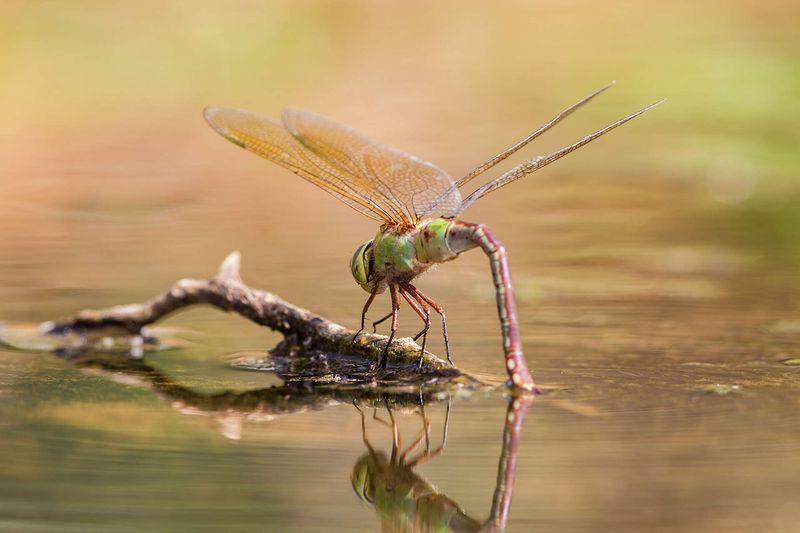
Adding a native grass to the edge of your Central Texas pond sounds like a simple fix for mosquitoes, but the reality is a bit more layered than that. Switchgrass (Panicum virgatum) is genuinely well-suited for a moist pond margin, and a healthy pond can support dragonflies that may eat mosquito larvae and adults.
Still, no single plant will bring dragonflies rushing back or wipe out mosquitoes on its own. What follows is a practical look at what switchgrass can actually do, how to build a pond habitat that gives dragonflies a real foothold, and which steps address mosquitoes most directly.
Switchgrass fits the pond edge—but it is not a mosquito cure
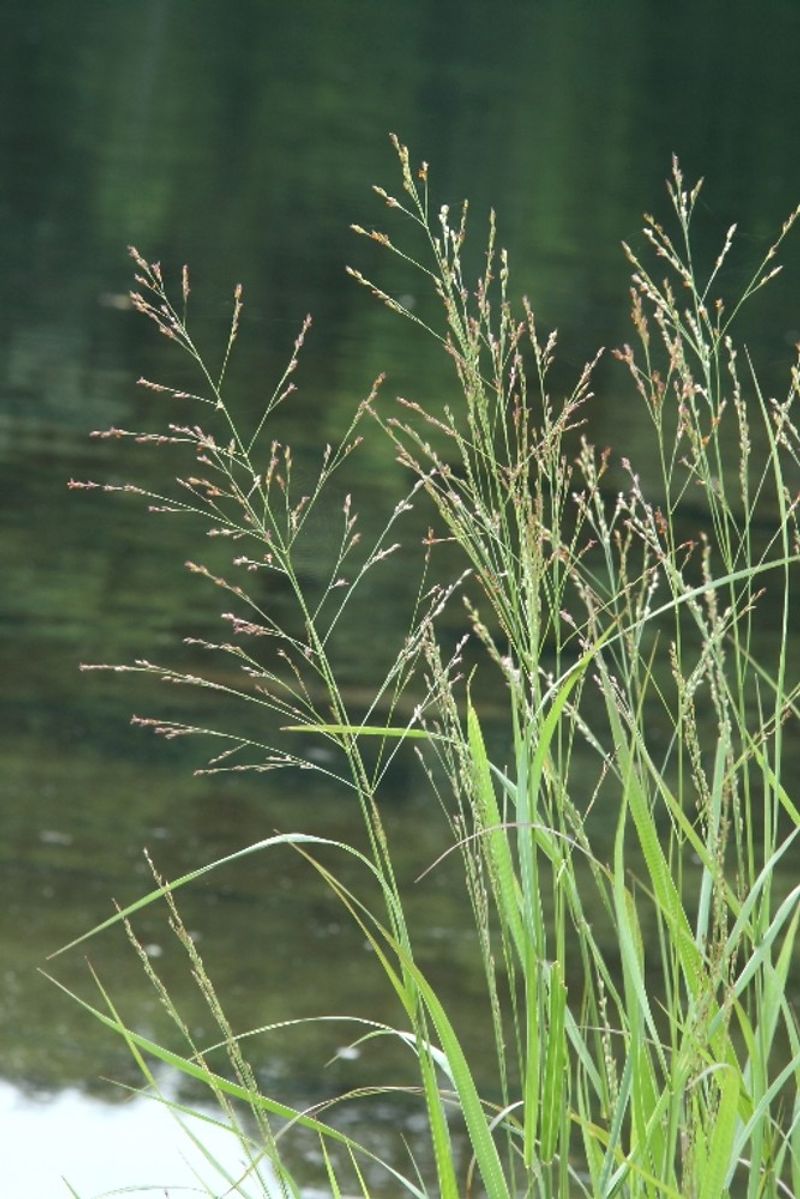
A popular gardening article has been circulating the claim that one Texas native grass will bring dragonflies flooding back to your yard and clear out mosquitoes better than any spray. The grass named is usually Gulf muhly (Muhlenbergia capillaris), a legitimately beautiful native with pink-purple fall seed heads.
The problem is that the claim originates from a marketing-style article, not a university study, a government agency, or a peer-reviewed journal.
No reliable research found demonstrates that Gulf muhly or any single grass reliably attracts dragonflies, establishes a breeding population, or eliminates mosquitoes from a yard. That distinction matters before you spend time and money on a planting plan built around an unverified promise.
For a Central Texas pond, switchgrass has the stronger evidence-based fit as a pond-edge grass. Texas A&M AgriLife Extension describes it as a native perennial associated with creeks, streams, and moist locations throughout Texas, including the Edwards Plateau region.
That site association makes it a reasonable choice for damp soil near a pond or rain garden margin.
Gulf muhly, by contrast, is documented by the Native Plant Society of Texas as preferring well-drained soils in grassland, savanna, and woodland habitats. Placing it in waterlogged conditions near a pond risks poor establishment and root rot.
Switchgrass belongs at the water’s edge; Gulf muhly belongs higher up the bank or in a separate bed where drainage is reliable.
Switchgrass can add real structural value to a pond margin as part of a varied native habitat. Its effect on dragonfly populations and mosquito numbers, though, is indirect and uncertain.
Think of it as one piece of a broader habitat puzzle rather than a standalone solution.
Match switchgrass to a moist, well-drained margin
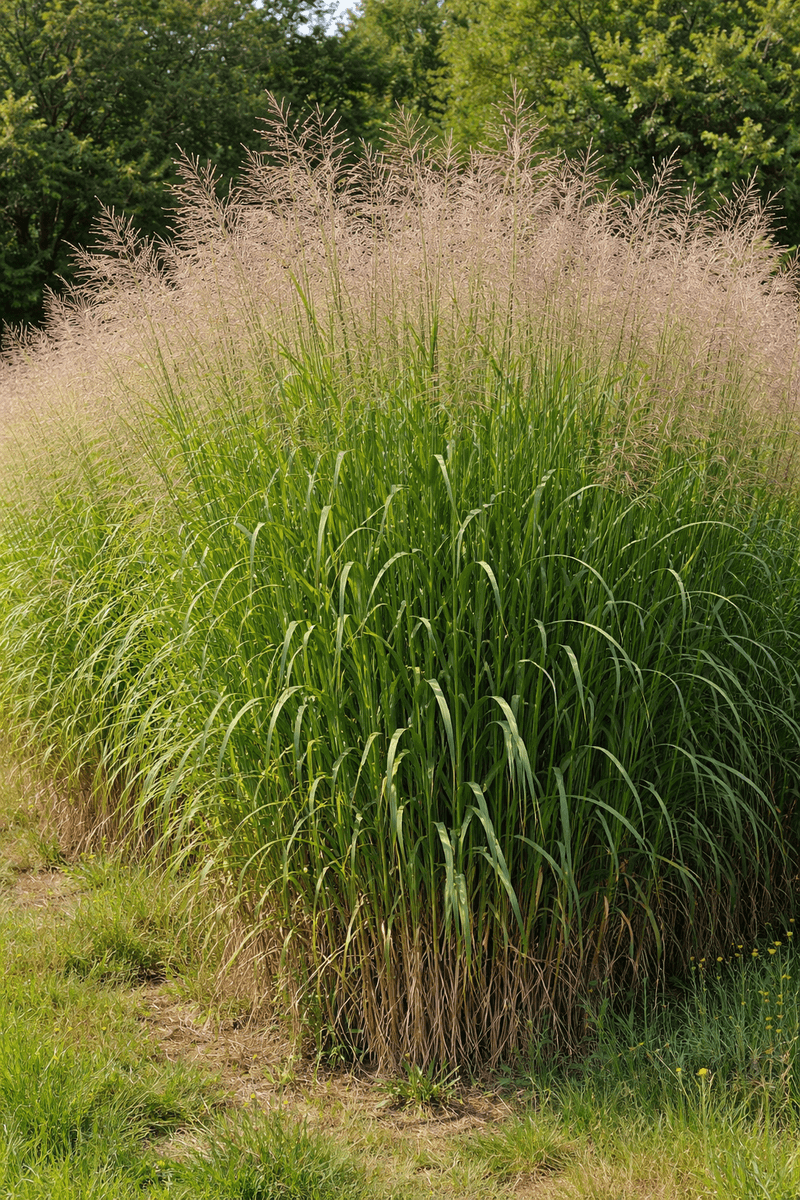
Switchgrass is a warm-season native perennial that typically reaches three to six feet tall, depending on the cultivar and growing conditions. Its stems are upright and clumping, and in late summer it produces airy purplish flower panicles that catch the light and move in a breeze.
According to Texas A&M’s Plants of Texas Rangelands profile, it occurs throughout the state and is commonly found along creeks, streams, and other areas where moisture is available.
That creekside association is what makes switchgrass a reasonable inference for a pond margin planting. A practical starting position is the moist upper edge of the pond, where roots can access damp soil but the crown stays above the waterline during normal conditions.
This is a site-fit inference based on its documented habitat, not a verified crown-submergence depth from a controlled study, so it pays to check how a specific cultivar handles wet feet before committing to a low-lying spot.
The contrast with Gulf muhly is worth spelling out clearly. The Native Plant Society of Texas profile for Gulf muhly lists low-to-medium water needs and well-drained soils as its primary site requirements.
It thrives in sandy, rocky, or clay soils with good drainage and fits beautifully as an upper-bank ornamental or a nearby accent planting where water does not pool.
Treating these two grasses as interchangeable near a pond is a setup for disappointment. Use switchgrass where the soil stays reliably damp, and position Gulf muhly where it can drain freely between rains.
Both plants earn their place in a Central Texas landscape, just not in the same spot.
Dragonflies need water, prey, and places to complete their life cycle
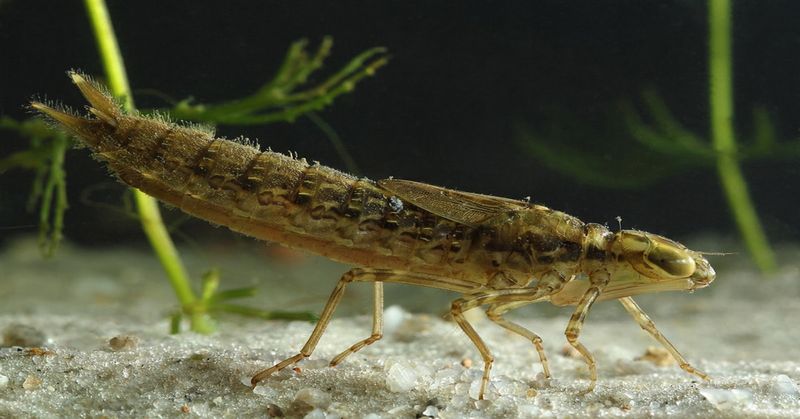
Planting a single grass beside a pond will not conjure dragonflies. These insects have a two-stage life that depends on a functioning aquatic ecosystem, not just attractive shoreline vegetation.
As the Texas A&M Field Guide to Common Texas Insects explains, dragonfly nymphs live underwater, sometimes for months or even years, feeding on aquatic insects. Adults emerge and hunt flying insects such as mosquitoes, midges, and flies.
That split life cycle means a yard needs to support both stages to have any chance of hosting a resident population. A decorative grass clump at the pond edge does not create underwater nymph habitat on its own.
The nymphs need water, prey, submerged and emergent plants to hide among, and stable surfaces for their final molt as they emerge into adults.
Penn State Extension identifies dragonflies and damselflies as indicators of pond water quality and healthy aquatic ecosystems. Their presence reflects conditions across the whole pond, including water clarity, oxygen levels, prey availability, and vegetation structure, not just what is planted at the shoreline.
Adult dragonflies also need sunny, open areas for hunting and territorial behavior. Skimmers, which are among the most common Texas dragonfly families, are primarily daytime hunters.
A heavily shaded or overgrown pond is less likely to attract them than one with a mix of open water and structured vegetation.
Visiting adults and a self-sustaining breeding population are two very different outcomes. A dragonfly may fly through your yard to hunt without ever laying eggs in your pond.
Successful reproduction depends on suitable water depth and quality, adequate prey for nymphs, safe emergence sites, and regional dragonfly populations large enough to find your habitat. Texas Parks and Wildlife recommends building that full habitat mix rather than relying on any single plant to do the work.
Design a varied pond margin instead of planting one hero species
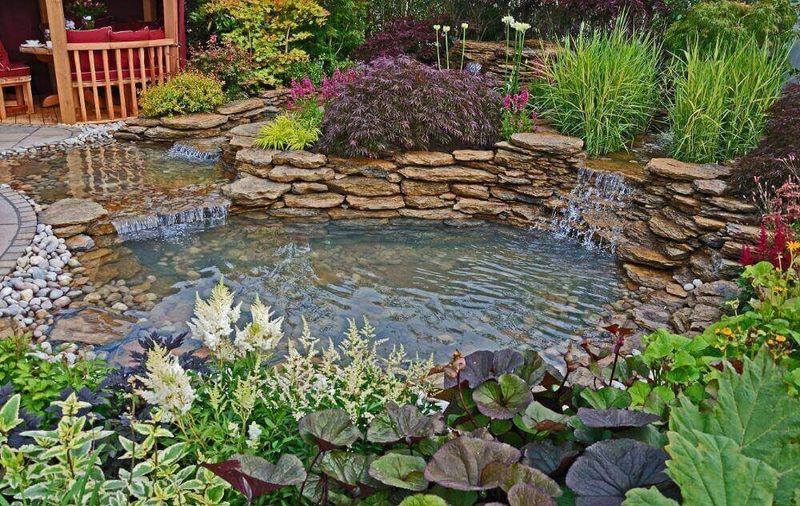
A pond margin that genuinely supports dragonflies is built in layers. Texas Parks and Wildlife recommends a mixture of emergent, submerged, and floating native plants rather than a single species.
Each layer serves a different function: emergent plants give nymphs a surface to climb during their final molt, submerged plants provide hiding places and oxygen, and floating plants offer shade and additional prey habitat for aquatic insects.
Switchgrass fits into this plan as an upper-margin accent. Position it where the soil stays moist but water does not stand permanently over the crown.
From there it provides vertical structure, seasonal seed production for birds, root mass that can slow erosion at the bank edge, and stem cover that small insects and frogs will use. Those insects become prey that supports both the pond food web and visiting dragonflies.
Preserve a meaningful area of open sunny water. Penn State Extension’s pond guide notes that dragonflies and damselflies need open water for hunting, perching, and territorial display.
A pond choked with vegetation from edge to center gives adults little room to work and can reduce the water quality that nymphs depend on.
Research on farm pond dragonfly communities found that managed grass and tree communities around ponds sometimes supported more beneficial dragonfly species than heavily overgrown margins. Dense, uncut vegetation is not automatically better.
Plan for periodic maintenance so that stems, water surface, and open bank stay in balance across seasons.
Avoid aquatic plants on the Texas invasive species list. Water hyacinth, water lettuce, hydrilla, salvinia, alligatorweed, and torpedograss are prohibited or restricted in Texas and can crowd out the native vegetation that makes a pond functional for wildlife.
Stick with native species recommended by Texas Parks and Wildlife or your local extension office to keep the habitat productive and legally compliant.
Treat dragonflies as one possible mosquito-control partner
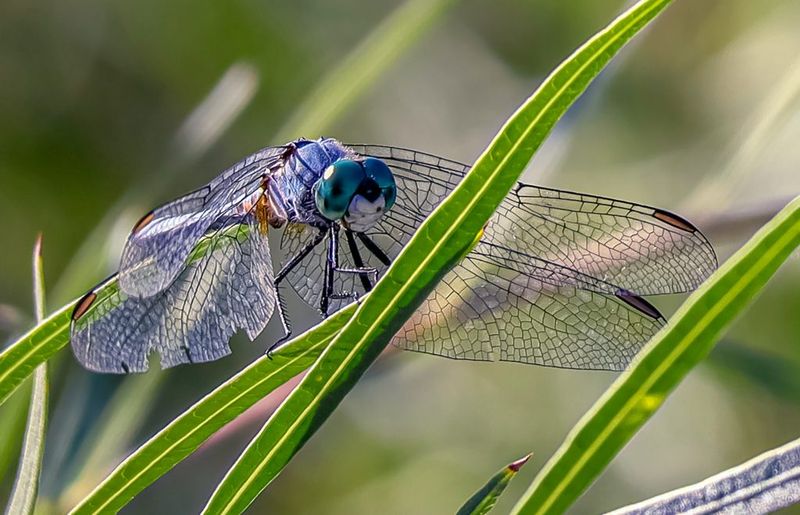
Dragonflies genuinely can eat mosquitoes, and the research behind that potential is more substantial than most people realize. A 2023 peer-reviewed meta-analysis covering 31 studies and 47 dragonfly and damselfly species found strong potential for aquatic nymphs to control mosquito larvae.
That is meaningful evidence, but it describes potential under study conditions, not a guarantee of yard-wide suppression in a suburban Central Texas setting.
Adult dragonflies are generalist predators. They eat whatever flying insects are available, including midges, flies, gnats, and mosquitoes.
Their presence near a pond does not mean mosquito numbers will fall to a noticeable level. A yard can host active, hunting dragonflies while mosquitoes continue arriving from a neighbor’s unmaintained birdbath, a clogged gutter two houses over, or a drainage swale down the street.
The Texas A&M dragonfly field guide describes skimmers as primarily daytime hunters. They are most active when sunlight and warmth drive insect flight, which means their hunting window and the peak mosquito-biting window around dusk and dawn do not fully overlap.
That timing gap is one reason dragonfly activity alone rarely translates into the kind of relief that residents notice while sitting outside in the evening.
University of Maryland research on farm ponds also found that dragonfly abundance alone was not a reliable predictor of pest control outcomes, because the insects respond to a complex set of pond and landscape variables. A pond that supports many dragonflies is a genuinely valuable wildlife habitat.
Treating it as a biological mosquito-control system that operates independently of other pest-management steps, though, sets expectations the evidence cannot support.
Reduce mosquito breeding beyond the pond
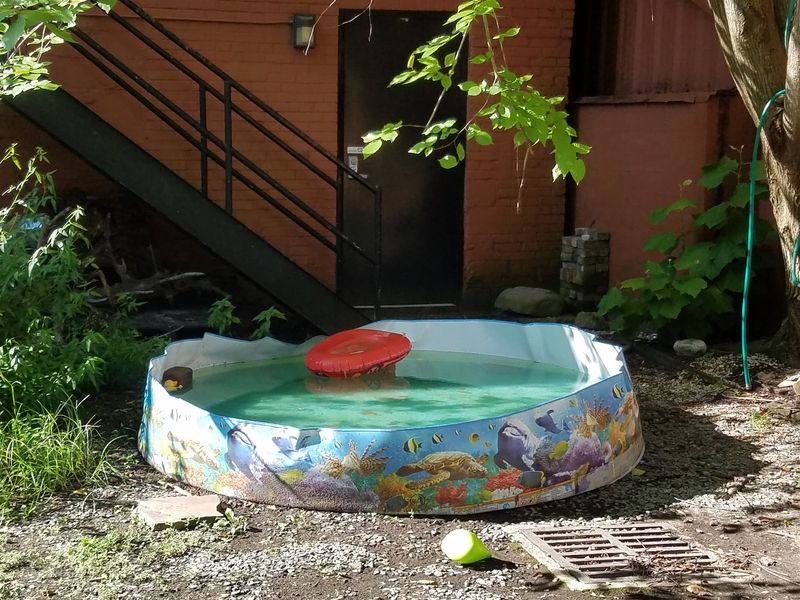
The single most effective mosquito-control step for most Central Texas homeowners has nothing to do with plants. University of Kentucky Entomology guidance for homeowners emphasizes eliminating standing water as the primary measure, because female mosquitoes can complete a breeding cycle in as little as a week in a container as small as a bottle cap.
Walk your property and tip out, cover, or refresh any saucer, bucket, toy, tire, birdbath, or low spot that holds water between rains. Clean gutters so they drain freely.
When mosquito larvae appear in an ornamental pond despite good habitat management, a labeled Bti product is a practical next step. The EPA recognizes Bti (Bacillus thuringiensis israelensis) for use against mosquito larvae in standing water, including ornamental ponds.
Bti is a naturally occurring soil bacterium that targets mosquito, blackfly, and fungus-gnat larvae without harming dragonfly nymphs, fish, or other pond wildlife when used as directed. Always follow the product label for dosage, frequency, and application method.
Personal protection belongs alongside habitat management, not after it. The CDC recommends screens on windows and doors, EPA-registered insect repellents applied according to label directions, and protective clothing such as long sleeves and pants during peak mosquito activity periods.
These measures address the mosquitoes that are already flying and biting, which a pond habitat strategy cannot reliably intercept.
Larvicide options beyond Bti also exist for specific situations. The CDC’s larvicide guidance covers additional registered products for standing-water treatment when source reduction alone is not sufficient.
A well-designed pond with switchgrass, native aquatic plants, and active dragonflies is a worthwhile wildlife feature. Pairing it with consistent container management and appropriate larval control is what actually moves the needle on mosquito numbers.
Avoid pond fixes that create ecological or safety problems
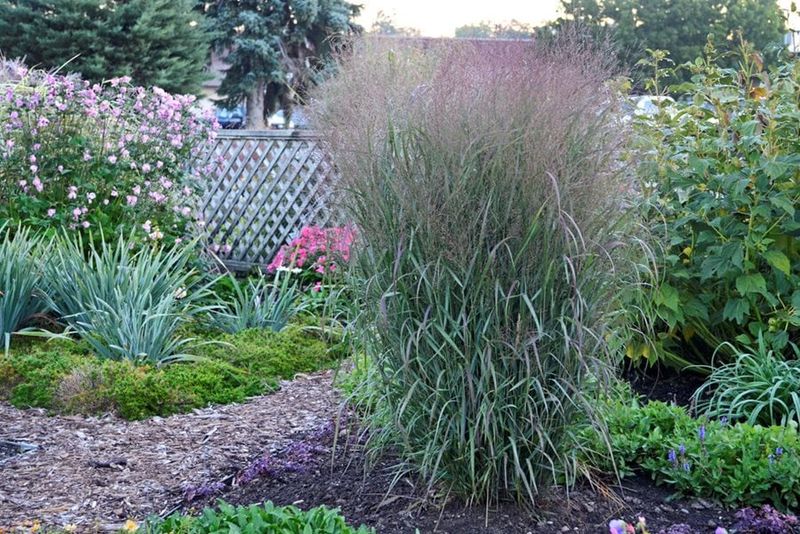
A few common shortcuts can make a pond worse for wildlife and harder to manage. Gulf muhly planted in waterlogged soil at the water’s edge is likely to struggle or die; the Native Plant Society of Texas profile is clear that this grass needs well-drained conditions.
Keep it on the upper bank or in a separate bed where it can perform as intended.
Invasive aquatic plants are a more serious problem. Texas Parks and Wildlife identifies water hyacinth, water lettuce, hydrilla, salvinia, alligatorweed, and torpedograss as prohibited or invasive species that should not be introduced to Texas ponds.
These plants can outcompete native vegetation, crash oxygen levels, and spread to natural waterways from backyard ponds. No wildlife benefit justifies the risk.
Fish can reduce mosquito larvae, but adding random or nonnative species without considering your pond’s size, food web, and local regulations can cause unintended harm. Texas Parks and Wildlife guidance on pond management addresses native predator species such as mosquitofish; any stocking decision should account for existing wildlife, pond depth, and applicable Texas regulations rather than a one-size approach.
A dragonfly perching on a stem near your pond is a welcome sight, but one visiting adult does not confirm reproduction or meaningful mosquito suppression. As the Texas A&M dragonfly field guide makes clear, these are mobile, wide-ranging insects that hunt across large areas.
Successful nymph development in your pond depends on water quality, prey, vegetation structure, and conditions that build over time.
The clearest path forward is a sunny, varied, well-maintained pond margin where switchgrass anchors the upper bank, native aquatic plants fill the emergent and submerged zones, open water stays accessible for hunting adults, and source reduction plus labeled mosquito controls handle the pest problem directly. A pond built that way earns its keep as a wildlife feature whether or not a dragonfly ever lays eggs in it.