
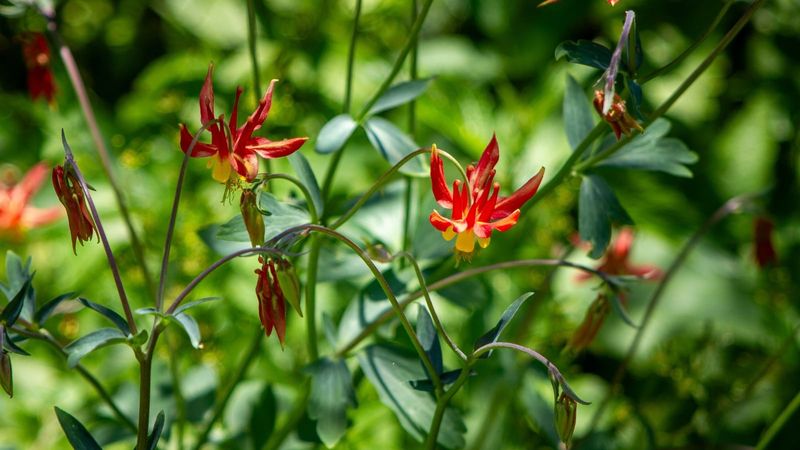
Every Texas gardener knows the frustration of planting something pretty only to watch it swallow the whole flower bed by August. The good news is that plenty of native Texas flowers reseed themselves and fill in empty gaps without bullying their neighbors or crawling past the border. These plants shrug off triple-digit summers and water restrictions while still playing nice with the rest of your garden. Here are eight well-mannered natives that do the hard work for you.
1. Texas Bluebonnet (Lupinus texensis)
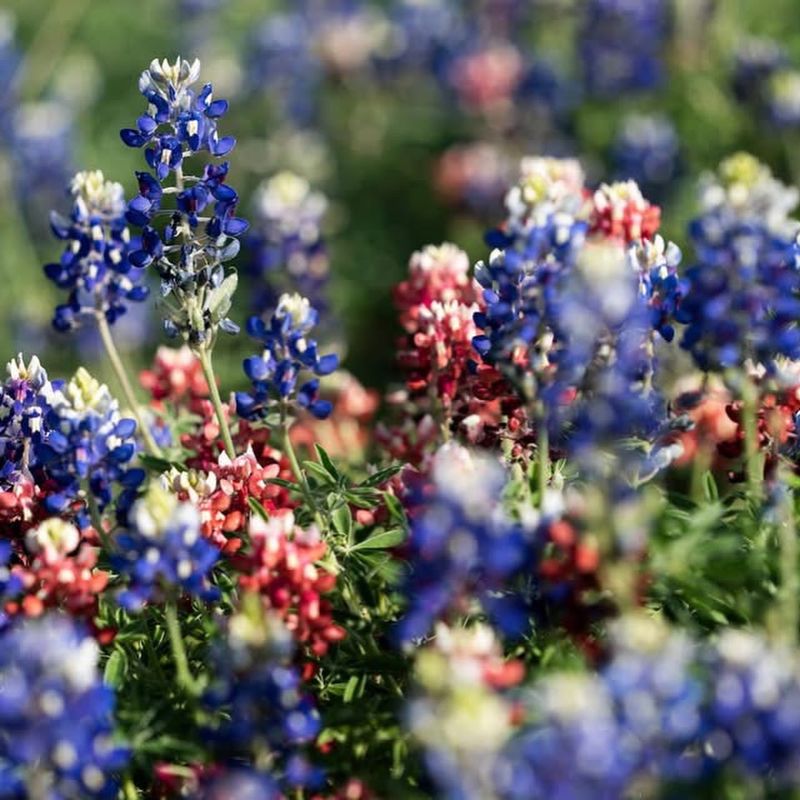
You cannot talk about Texas flowers without tipping your hat to the state flower, and the bluebonnet earns its fame honestly. It seeds itself across a bed each spring, then quietly bows out when the heat arrives, leaving room for summer bloomers to take the stage.
Because it is an annual that reseeds on its own schedule, it never forms a thick mat or elbows out slower plants. The seedlings pop up right where last year’s flowers dropped their pods, giving you a natural drift of blue that stays inside the lines.
Fun bit of history: Texas actually named five different Lupinus species as the official state flower back in 1971, just to keep everyone happy. Bluebonnets also fix nitrogen in the soil, so they quietly feed the ground for whatever grows next. Let a few pods dry and shatter, and you will have volunteers for years without lifting a finger.
2. Drummond Phlox (Phlox drummondii)
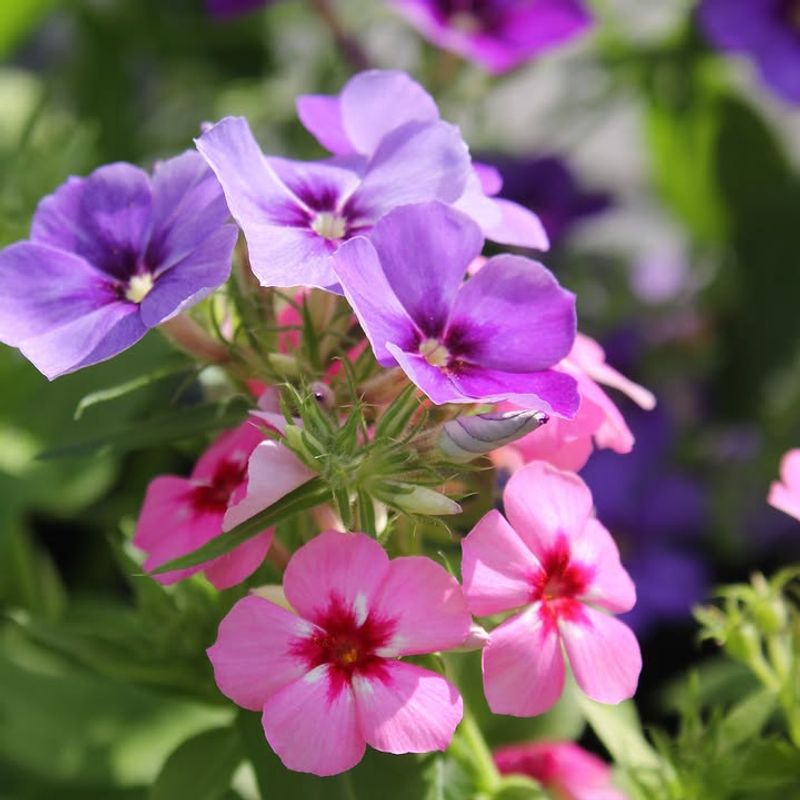
Imagine a carpet of hot pink, red, and lavender that shows up on its own every spring without you buying a single new packet of seeds. Drummond phlox does exactly that, and it does it politely.
Named for Scottish botanist Thomas Drummond, who collected it in Texas in the 1830s, this annual reseeds thickly in the cool months but stays low and tidy. It fills the front of a bed like a living rug, then fades gracefully as the real Texas heat sets in.
What makes it a good roommate is its shallow, short-lived roots. It grabs the open soil that would otherwise grow weeds, yet it never sends runners chasing after your other plants. If you want more color next year, just resist the urge to deadhead everything and let the last flowers set seed. The plant handles the rest, filling gaps you did not even know you had.
3. Texas Lantana (Lantana urticoides)
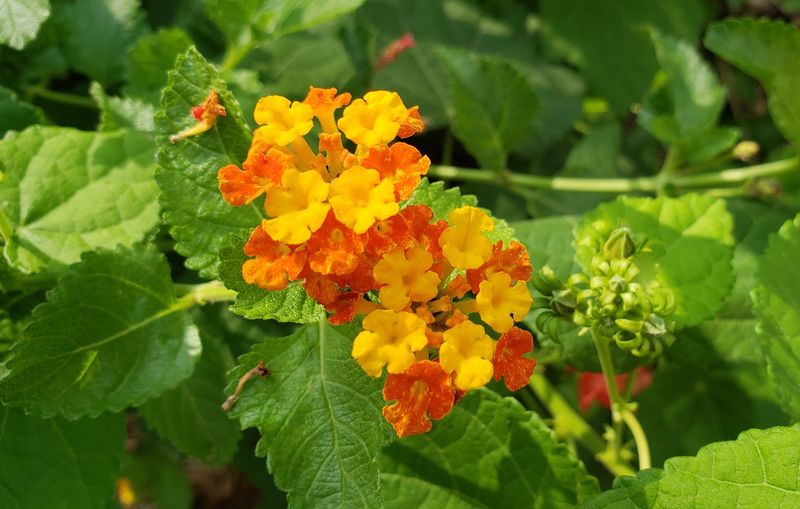
Butterflies vote with their wings, and they line up all summer for the orange-and-yellow clusters of native Texas lantana. Unlike the aggressive imported lantanas that can escape into wild areas, the true Texas native behaves itself in a bed.
Heat and drought barely register with this shrubby perennial. It laughs off triple-digit afternoons and water restrictions, blooming right through the stretch when other flowers give up and go crispy.
The reason it stays put comes down to its growth habit. It expands slowly from the crown and drops occasional seedlings nearby, rather than creeping across the soil or throwing runners into the lawn. A quick trim once or twice a season keeps it rounded and full. One caution worth naming: the unripe berries are toxic, so plant it thoughtfully if small children or curious pets share the yard.
Give it sun and forget about it, and it rewards you with steady color when the Gulf Coast summer is at its meanest.
4. Blackfoot Daisy (Melampodium leucanthum)
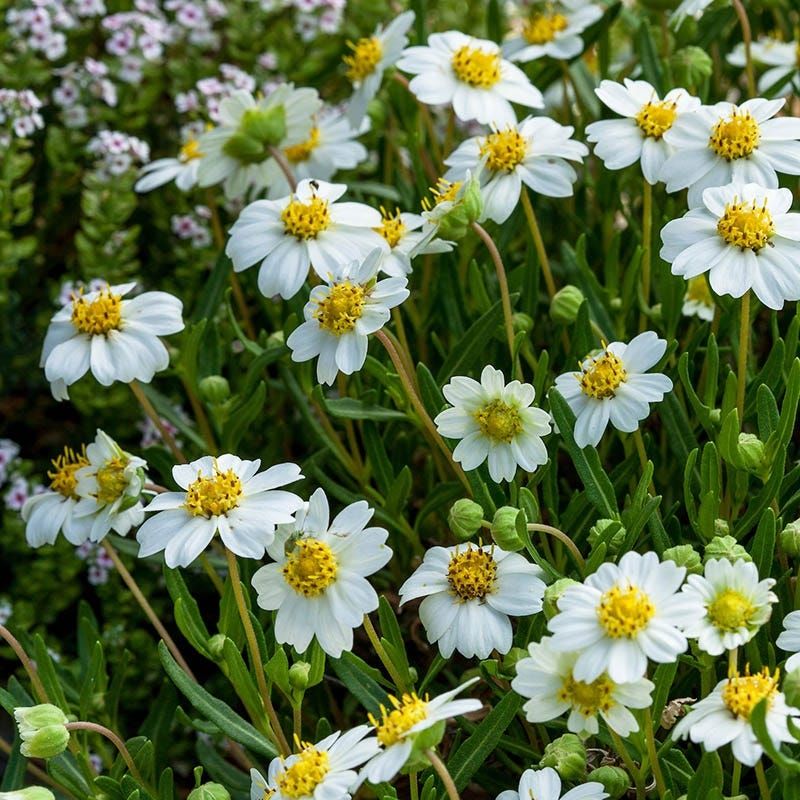
Some plants try too hard, and some just quietly nail the assignment. Blackfoot daisy is the second kind, forming a neat little mound of white daisies with sunny yellow centers that stays about a foot wide and a foot tall.
Native to the rocky, alkaline soils of central and west Texas, it actually prefers the lean, poor ground that makes other flowers sulk. Rich, damp soil is the only thing that can do it in, so it slots perfectly into hot, dry corners.
Its compact shape is the real gift here. Rather than spreading sideways, it stays as a tidy dome that blooms from spring straight through fall, sometimes releasing a faint honey scent on warm days. Occasional volunteer seedlings appear close to the parent, filling small gaps without ever marching toward the border. Bees and small butterflies adore it, and once it settles in, supplemental water becomes almost optional even during a drought.
5. Gulf Coast Penstemon (Penstemon tenuis)
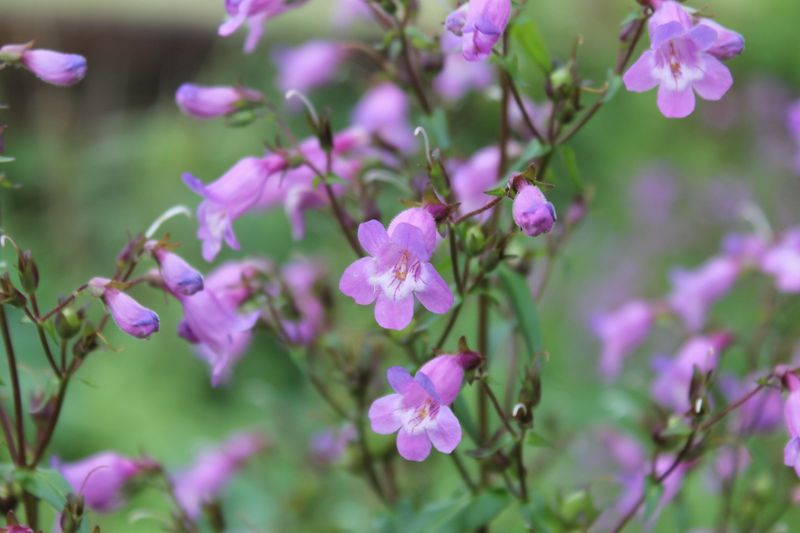
For the shadier, damper spots that leave most drought-lovers grumpy, Gulf Coast penstemon steps in with tall spires of soft lavender-purple bells. It thrives where the wetter, heavier soils of southeast Texas would rot pickier natives.
Hummingbirds treat the tubular flowers like a spring buffet, and the plant blooms right when the garden is waking up. After flowering, it settles into a low rosette of leaves that holds its spot without sprawling.
Reseeding is where it earns its place on this list. It scatters fine seed nearby and fills in bare patches under trees or along a bed edge, yet the clumps stay defined and easy to pull if one lands somewhere unwanted. Because it tolerates both clay and periodic standing water, it is a smart pick for low spots that puddle after Gulf Coast storms. Cut back the spent stalks and you get a clean rosette that quietly waits for its next show.
6. Winecup (Callirhoe involucrata)
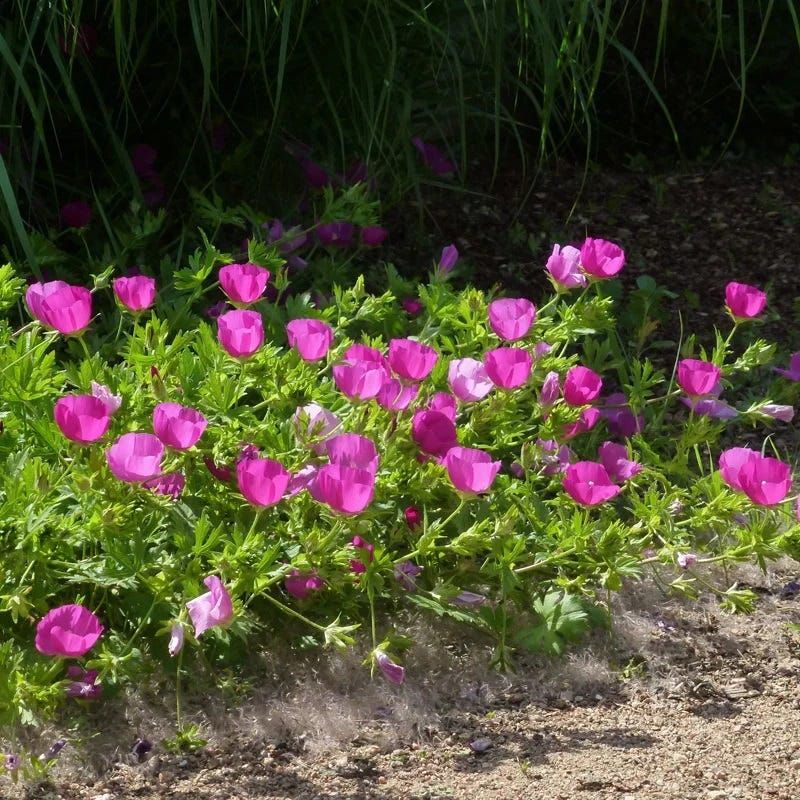
The name says it all: cup-shaped blooms in a rich magenta-wine color that seem to glow in the morning sun. Winecup trails gently along the ground, weaving between other plants like it is filling in a puzzle.
Here is the trick that keeps it honest. It grows from a deep taproot, so even though the stems wander, the plant stays anchored in one spot and does not root down everywhere it touches. Pull the trailing tips back and they simply stay where you tuck them.
That taproot also makes it a champion at surviving Texas droughts and water limits, reaching deep for moisture while the surface bakes. It blooms from spring into early summer, then goes semi-dormant in the worst heat and returns when things cool. Native across much of the state, it self-sows lightly to refresh the patch. Use it as a living mulch that shades the soil and crowds out weeds without ever crowding your keepers.
7. Four-Nerve Daisy (Tetraneuris scaposa)
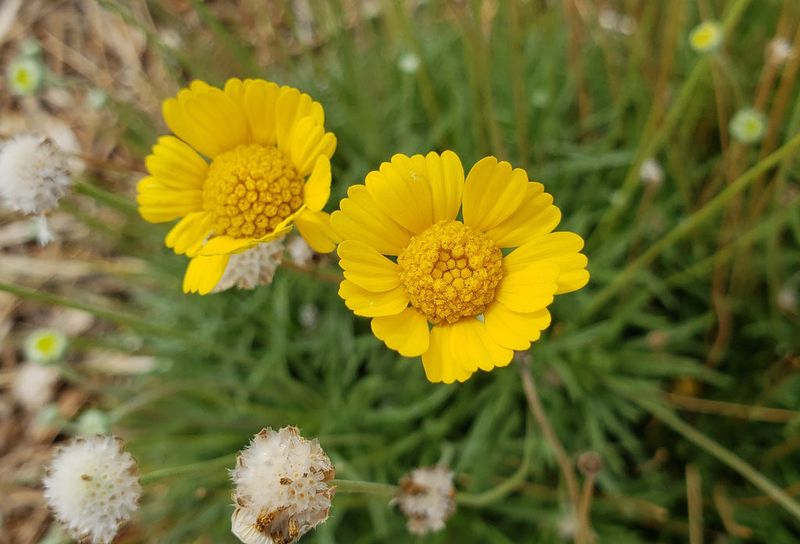
If you need a flower that basically never quits, meet the four-nerve daisy. Gardeners across the Hill Country swear it blooms nearly year-round, sending up bright yellow flowers on slender stems above a tidy tuft of silvery leaves.
It stays small, roughly the size of a dinner plate, and holds that footprint season after season. There is no sprawling, no runners, no drama, just a dependable dot of gold that fits between larger plants.
Drought and rocky, alkaline soil suit it perfectly, which is why it shrugs off the harsh central Texas summers that fry thirstier plants. The occasional seedling turns up nearby to thicken a border, but it will never overrun the space. Snip off the spent blooms if you like tidy, or leave them and let a few reseed. Either way, this cheerful little native gives you low-effort color when almost everything else is on break.
8. Purple Coneflower (Echinacea purpurea)
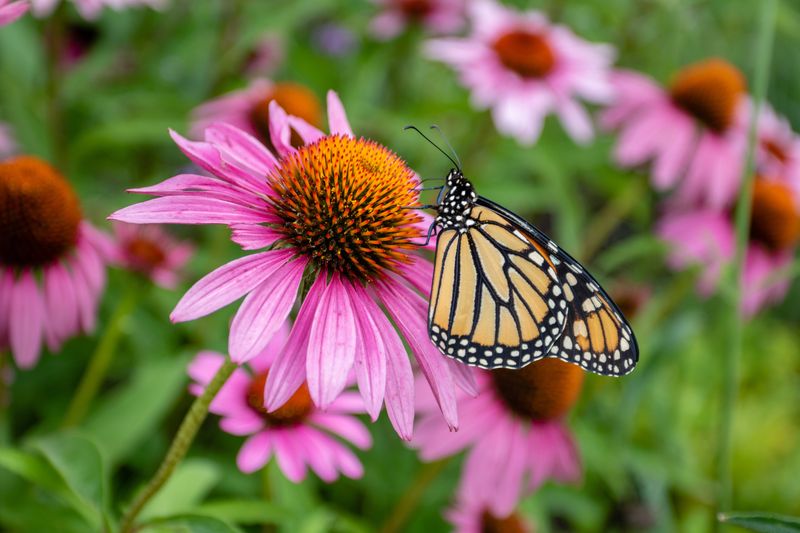
Standing tall with its drooping purple petals and spiky copper center, purple coneflower brings structure and pollinator traffic to any Texas bed. Bees, butterflies, and later goldfinches all show up for it, so the plant feels alive from summer into fall.
It forms upright clumps that widen slowly and predictably, which is exactly why it never bullies the border. You get more flowers each year without the plant creeping into unwanted territory, and dividing a clump every few years is optional rather than urgent.
Long known in herbal traditions, the roots and leaves of coneflower have been used for generations, though we will let the science sort out the details on that front. In the garden, its deep roots help it endure drought and water restrictions once established. Leave the seedheads standing through winter and a few will reseed nearby, filling gaps with sturdy new plants. Birds get a snack, you get a fuller bed, and the border stays right where you drew it.