
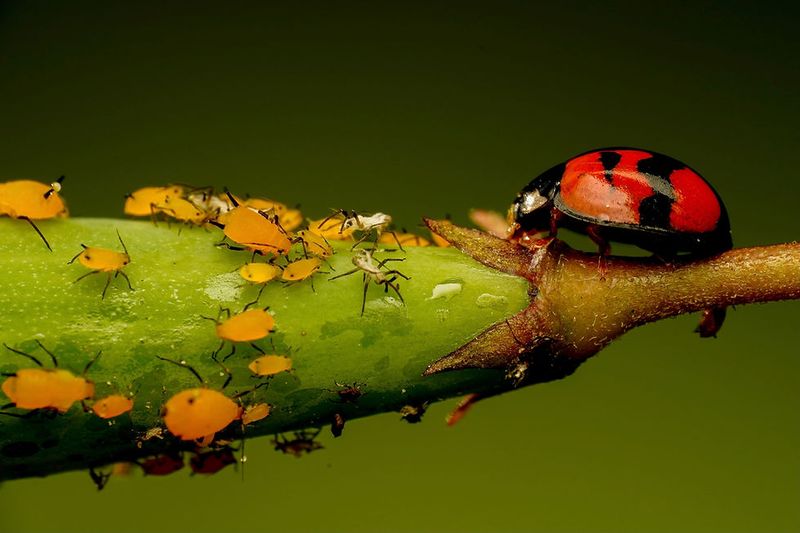
Aphids can show up fast on Texas roses, vegetables, and ornamentals, and the urge to reach for a spray bottle is understandable. What many gardeners do not realize is that a yard with the right mix of native flowering plants may already be pulling in predators, like lady beetles and lacewing larvae, that feed on those pests for free. The catch is that no single Texas native plant has been shown to reliably flood your garden with enough ladybugs to wipe out an aphid problem on its own. Understanding what native plants can realistically offer, and pairing that with a few smart habits, gives you a far better shot at keeping aphid pressure manageable without harming the beneficial insects doing the work.
Texas natives may support aphid predators, but they cannot promise a ladybug takeover
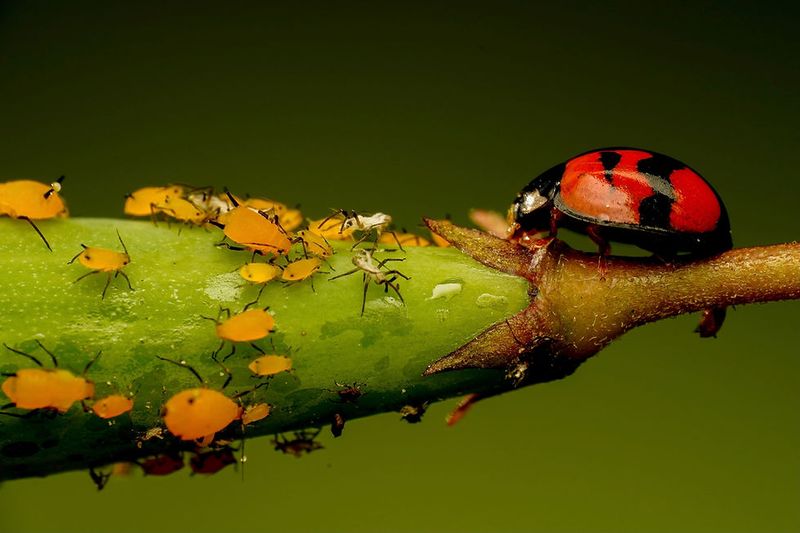
Gardeners across Texas have heard a version of the same promise: plant the right native flowers and ladybugs will move in and clean up your aphid problem. The reality is more complicated, and getting it wrong can lead to disappointment or, worse, a spray decision that kills the very insects you were counting on.
Lady beetles, including their larvae, are genuine aphid predators. UC IPM’s aphid management guidance confirms that lady beetle adults and larvae both consume aphids, with larvae sometimes being the more voracious of the two life stages. Other natural enemies, including lacewing larvae, syrphid-fly larvae, parasitoid wasps, soldier beetles, predatory bugs, and spiders, round out a food web that can meaningfully suppress aphid populations under the right conditions.
What the evidence does not support is the idea that planting a particular Texas native will reliably pull enough lady beetles into your yard to eliminate aphids on roses or vegetables. Results depend on which aphid species you have, which predator species are present, local weather, plant stress, whether ants are guarding the aphids, what the surrounding landscape looks like, and whether pesticides have been used nearby. Research comparing floral resource maps with aphid suppression outcomes found that flowering plants can improve predator presence in some landscapes, but the effects are inconsistent and context-dependent.
Planting native flowers is still a sensible strategy. A diverse planting of regionally appropriate species may provide useful habitat and floral resources for lady beetles and other natural enemies. The important distinction is between what sources actually document, which is native adaptation and general wildlife or pollinator value, and what has not been established: a proven ranking of Texas natives by their ability to attract lady beetles or suppress aphids near your garden beds.
Lady beetles need prey, shelter, and more than flowers
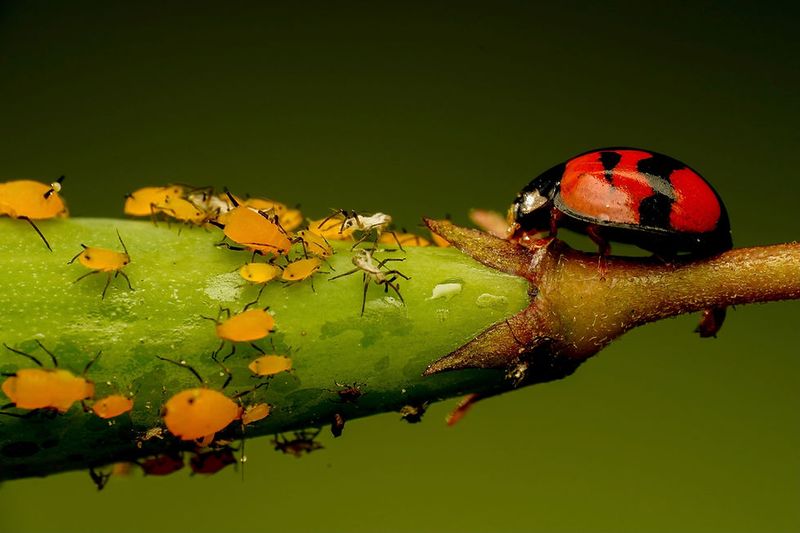
Flowers are not enough on their own. Adult lady beetles can use nectar, pollen, honeydew, and shelter, but their larvae need prey. If aphids or other suitable food are absent, larvae cannot develop, and a flowering plant bed without any prey insects will not sustain a breeding population of lady beetles no matter how many blooms it carries.
According to USDA ARS research on Coccinellidae, the lady beetle family includes many species with different diets and behaviors. Most are beneficial predators, but not every red-and-black beetle is an aphid specialist, and some species feed on fungi, pollen, or other insects entirely. Knowing what you are looking at in your garden matters before you count on a particular beetle to handle your aphid load.
The broader community of natural enemies is worth recognizing too. Lacewing larvae are aggressive predators sometimes called “aphid lions.” Syrphid-fly larvae, which look nothing like the hovering adult flies, consume aphids directly on the plant. Parasitoid wasps lay eggs inside aphids, producing the swollen, papery “aphid mummies” that signal a colony already under biological attack. Spiders take a range of soft-bodied insects.
UC IPM’s biological control overview describes how these different natural enemies form overlapping layers of suppression rather than a single silver bullet.
A peer-reviewed study on aphid natural enemies and flowering service plants found that aphid prey abundance was an important predictor of natural-enemy presence alongside floral resources. In practical terms, that means a garden with some tolerable aphid activity, diverse native flowers, and reduced pesticide pressure gives predators more reason to stay than a perfectly clean garden with only flowers and no prey.
Choose a Texas plant community, not a supposed ladybug magnet
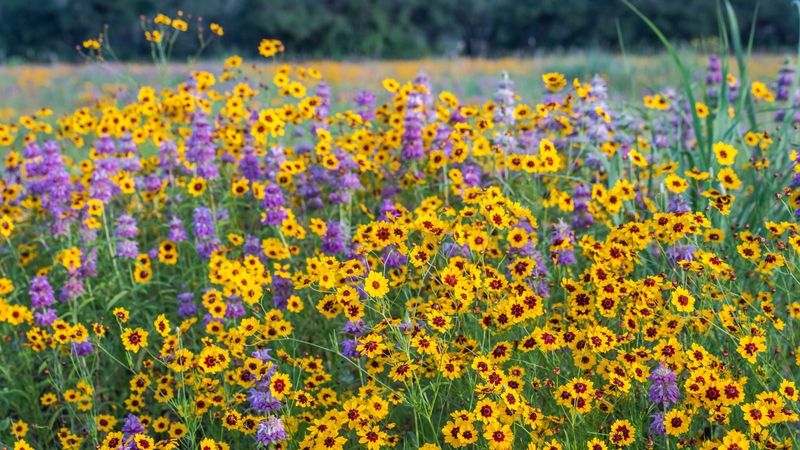
When someone tells you to plant one specific flower to attract ladybugs, the advice sounds appealing but skips over what actually supports beneficial insects in a Texas landscape. No single native plant has been shown to outperform all others for lady beetle attraction or to reliably increase aphid suppression near roses and vegetables. A community of plants matched to your site conditions is a far more defensible starting point.
TxSmartScape’s pollinator planting guide lists Texas lantana, fragrant mistflower, coneflower, Texas sage, and related natives as plants with documented value for pollinators and wildlife in Texas landscapes. These are appropriate habitat plants for many parts of the state, but that documentation covers pollinator and wildlife use, not a proven track record of pulling lady beetles into yards or clearing aphids from adjacent garden beds.
Other candidates worth considering, depending on your ecoregion, include goldenrod, flame acanthus, Turk’s cap, and native salvias such as Salvia greggii and Salvia farinacea. Texas Parks and Wildlife’s resource-augmentation guidance recommends choosing plants suited to your specific region rather than applying a one-size-fits-all list, because a plant thriving on the Gulf Coast may struggle in the Hill Country or fail entirely in the Panhandle.
The TPWD wildlife management plant guide identifies lantana, mistflower, goldenrod, and related species as Texas wildlife-management plants. Use that designation accurately: these are plants adapted to Texas conditions that support a range of wildlife, not laboratory-verified ladybug magnets. Building a palette from several of these species, chosen for your soil type, sun exposure, drainage, and water availability, gives natural enemies more resources and more reasons to stay than any single “best” plant could.
A long-season mix of blooms and refuge gives predators a better chance

Designing for natural enemies is less about picking the right single plant and more about building a garden that offers something useful across multiple seasons. A patch of one species that blooms for three weeks in April and then goes dormant does not give predators much to work with for the rest of the year.
Texas Parks and Wildlife’s native bee and pollinator guidance recommends diverse native flowering plants with blooms extending from spring through fall, rather than relying on a single species or a single flowering period. That principle applies equally well to supporting a broader beneficial-insect community. In practice, it means pairing early-season bloomers like native salvias with mid-season plants like coneflowers and goldenrod, and finishing the season with late-blooming species like mistflower, where your ecoregion allows.
Varied flower shapes matter too. Open, accessible flowers with shallow nectaries, like those found on many native composites, are easier for small wasps, flies, and beetles to use than deep tubular flowers. Mixing plant heights, from low groundcovers to mid-height perennials to taller shrubs, creates structural diversity that supports different predator species and gives beetles and spiders more places to hunt and shelter.
Do not underestimate the value of undisturbed areas. TPWD’s augment-resources page notes that native insects need both food and nesting or refuge habitat. A patch of unmulched ground, a loosely stacked brush pile, or some leaf litter left in place through winter can serve as overwintering sites for lady beetles and other beneficials.
All plant choices should be filtered by your Texas ecoregion. Texas Wildscapes tips from TPWD emphasize matching plants to local conditions including sun, drainage, soil type, and heat load. During establishment, appropriate watering and mulch are standard plant-care practices that help new plants survive and reach their potential as habitat. The drought-stress research linking water deficits to increased aphid vulnerability comes specifically from corn leaf aphid studies on sweet corn, so that connection should not be generalized to every Texas ornamental or rose garden without caution.
Leave manageable aphids while you look for natural enemies
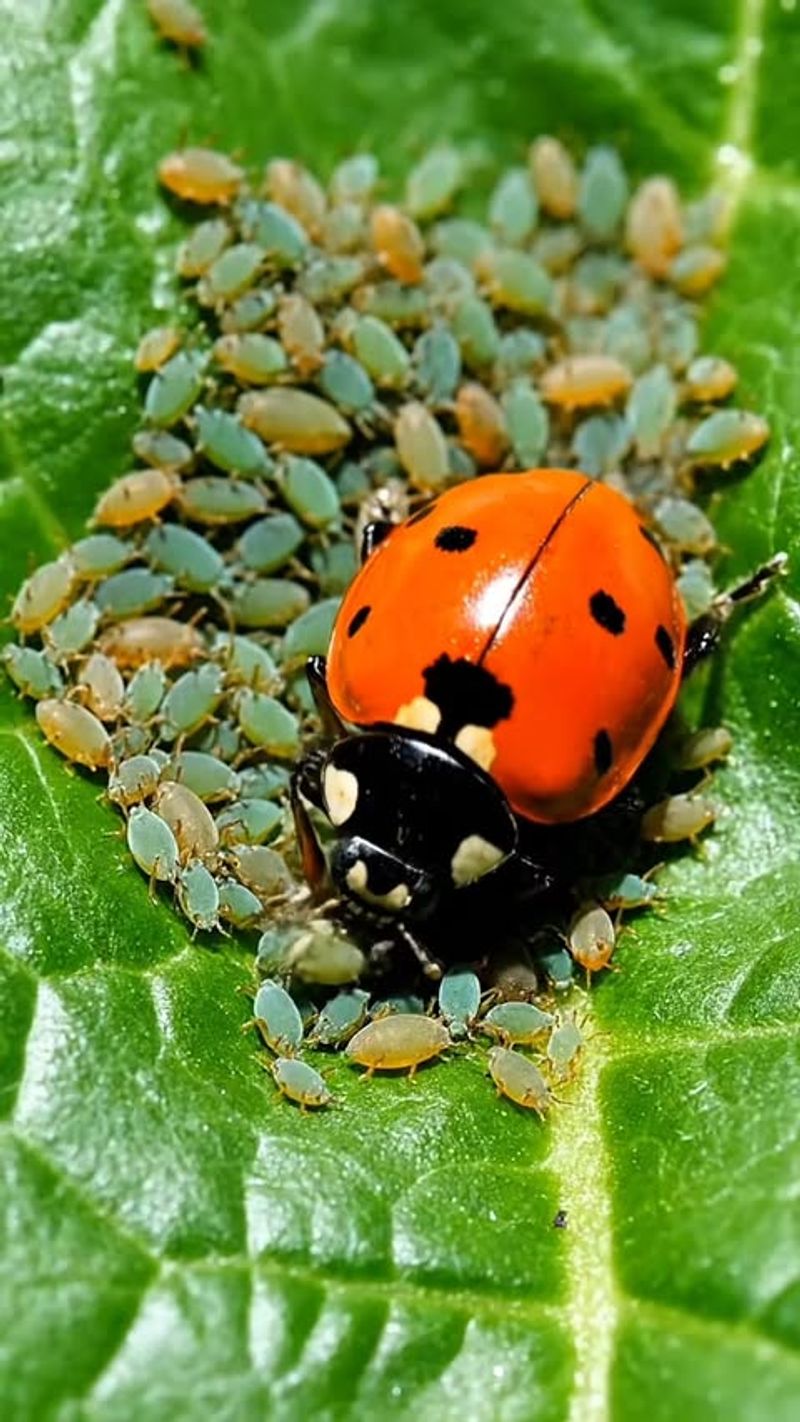
Seeing aphids on a plant and immediately treating is one of the most common mistakes Texas gardeners make, because it can eliminate the very food source that keeps beneficial predators around. A small or moderate aphid colony on a healthy, established plant is often worth watching rather than eliminating on the spot.
UC IPM’s aphid management resource makes this point directly: tolerating modest aphid numbers allows natural-enemy populations to build, and established plants often outgrow limited feeding without lasting harm. The goal of monitoring is not to count aphids but to read the whole situation, including plant health, infestation trends, and whether predators are already present.
Build a quick inspection routine for any plants you are watching. Start at the growing tips, where aphids tend to cluster first, and check the undersides of young leaves, which aphids favor because the tissue is soft and the surface offers some shelter. Look for the following signs before making any treatment decision: lady beetle adults and their orange-yellow egg clusters, alligator-shaped lady beetle larvae with orange or yellow markings, slender green lacewing larvae, pale syrphid-fly larvae moving through aphid colonies, and the tan or brown papery husks of aphid mummies left behind by parasitoid wasps.
If you find any of these predators or parasitoids already working the infestation, hold off. Give them a week and re-inspect. An aphid colony that is already being attacked from multiple sides can collapse faster than one treated with a spray that also kills the predators. Pay attention to whether the colony is growing, holding steady, or shrinking, and whether the plant itself is showing distress like curled leaves, stunted shoots, or honeydew-coated foliage turning black with sooty mold.
Those details tell you far more than a single aphid count on a single day.
Use water, pruning, and ant management before insecticide
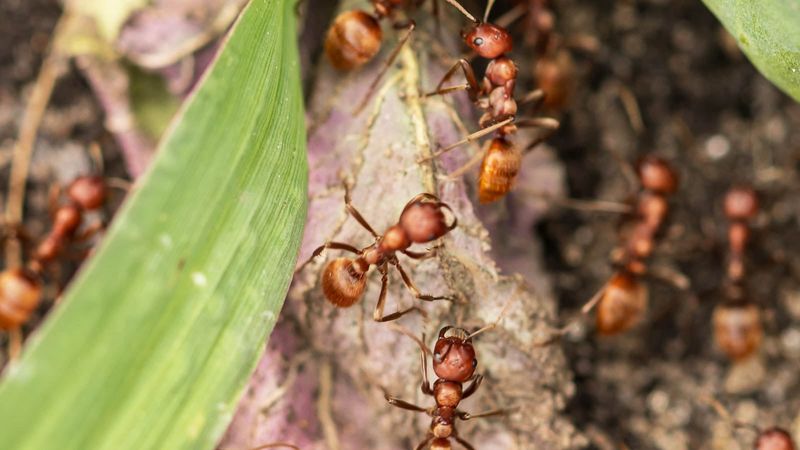
Once you have inspected and confirmed that natural enemies have not yet gained the upper hand, a light infestation still does not automatically call for a pesticide. Several low-risk steps can knock back aphid numbers without harming the beneficial insects doing longer-term work in your garden.
A strong stream of water from a garden hose is the simplest first move. Aim the spray directly at aphid colonies on stems and leaf undersides, and do it in the morning so foliage has time to dry before evening. UC IPM recommends this approach as a physically effective method that dislodges aphids without chemical residue. Aphids that fall to the ground rarely find their way back to the same plant, especially if the plant is otherwise healthy.
Repeat the process every few days for persistent colonies.
For tips that are heavily infested and curled, water alone may not reach the aphids tucked inside. Pruning those tips off and disposing of them in the trash, not the compost, removes a concentrated aphid source quickly and cleanly. This is especially useful on roses, where new growth flushes repeatedly and infested tips can be removed without damaging the overall plant.
Ant management deserves equal attention. Ants actively protect aphid colonies because they harvest the sticky honeydew aphids produce, and they will physically drive away or attack lady beetles and parasitoid wasps that come near. Reducing ant access to infested plants, by applying a sticky barrier product around the base of a stem or pot, or by trimming branches that touch the ground or a fence, can make a measurable difference in how well biological control works. This is not a minor detail: a garden full of predators can still struggle with aphids if ants are running interference.
Drought stress can affect how plants respond to pest pressure. Research on corn leaf aphids and sweet corn specifically links water deficits to increased aphid vulnerability in that crop. While that finding should not be stretched to cover every Texas ornamental, keeping newly established habitat plants appropriately watered during their first season is sound general plant-care practice, not a guaranteed aphid-control measure.
Broad-spectrum sprays and bought ladybugs can undermine the plan
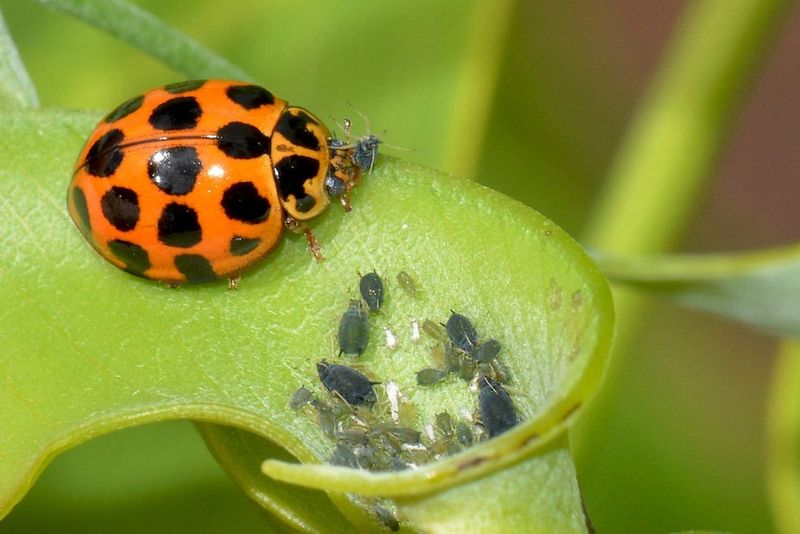
Two shortcuts show up constantly in aphid-management conversations, and both can quietly dismantle the biological control system you have been trying to build. The first is reaching for a broad-spectrum insecticide at the first sign of a problem. The second is buying a bag of lady beetles from a garden center and releasing them as a quick fix.
Routine use of broad-spectrum insecticides is one of the fastest ways to eliminate natural enemies. UC IPM’s biological control guidance explains that these products kill lady beetles, lacewing larvae, parasitoid wasps, and other beneficials alongside the target pest, and the aftermath can leave aphid populations in a worse position than before because the natural checks are gone. Aphid resurgence after a broad-spectrum spray is a documented pattern, not a rare exception.
When treatment genuinely becomes necessary because an infestation is heavy, growing fast, or threatening a high-value plant, use a product that is specifically labeled for the plant and pest you are dealing with. Follow the label completely, including any pollinator-protection directions that restrict application timing. UC IPM’s aphid resource notes that selective, targeted treatments are far less disruptive to natural enemies than broad-spectrum applications.
The commercial ladybug bag is a separate problem. Convergent lady beetles sold in retail quantities are typically collected from overwintering aggregations in the wild. Once released, they have a strong migratory drive and commonly disperse within days, providing little lasting control. UC IPM’s aphid resource notes that temporary suppression from releases may require very large numbers handled under specific conditions, and retail quantities are rarely adequate.
UC IPM’s floriculture and ornamental aphid guidance reinforces that habitat conservation, rather than augmentative releases, is the more reliable foundation for biological control in managed landscapes.
One genuine exception applies to valuable or virus-sensitive plants. Aphids can transmit plant viruses, and predators may not act quickly enough to prevent infection in vegetables or nursery stock that are particularly susceptible. For those situations, timely and targeted integrated pest management is a reasonable response rather than waiting indefinitely for biological control to catch up. The EPA’s pollinator-protection tools and strategies provide guidance on minimizing harm to beneficial insects when pesticide use is unavoidable.
Build conditions for suppression instead of expecting eradication
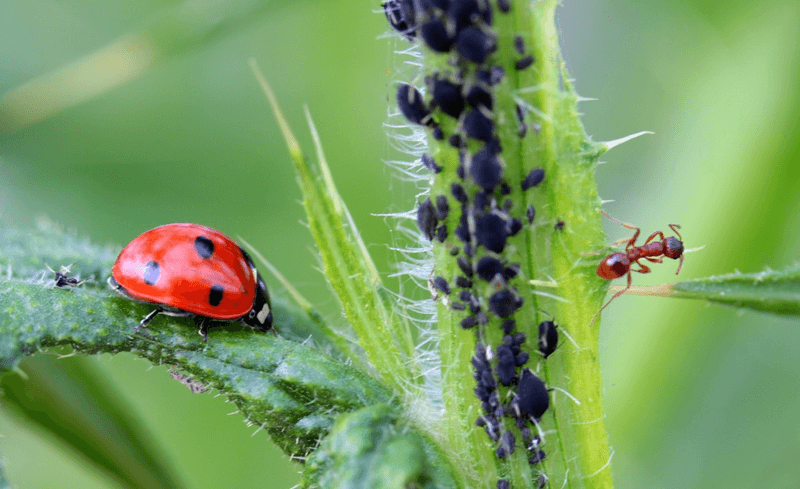
Realistic success in a Texas garden looks like reduced aphid pressure over time, not a single season where every aphid disappears because of one plant choice. Getting there is a matter of stacking conditions that favor natural enemies rather than expecting any one element to carry the whole load.
Start by selecting diverse, ecoregion-appropriate native plants that provide flowers and refuge across your local growing season. Texas Parks and Wildlife’s native pollinator guidance and UC IPM’s aphid management resource both support this foundation. Then preserve tolerable prey: a modest aphid presence gives predators a reason to stay and reproduce. Inspect plants regularly, note whether colonies are growing or shrinking, and check for predators before intervening.
Manage ants to keep them from protecting aphid colonies. Use water sprays or targeted pruning for mild infestations, and reserve any pesticide for situations that genuinely require it, using only a labeled product applied according to its directions.
The goal is a garden that supports a functioning biological control community rather than one that swings between chemical cleanups and aphid rebounds. A garden resilient enough to manage its own pest pressure most of the time is a more honest and achievable target than total eradication, and it tends to get more interesting to spend time in as well.