
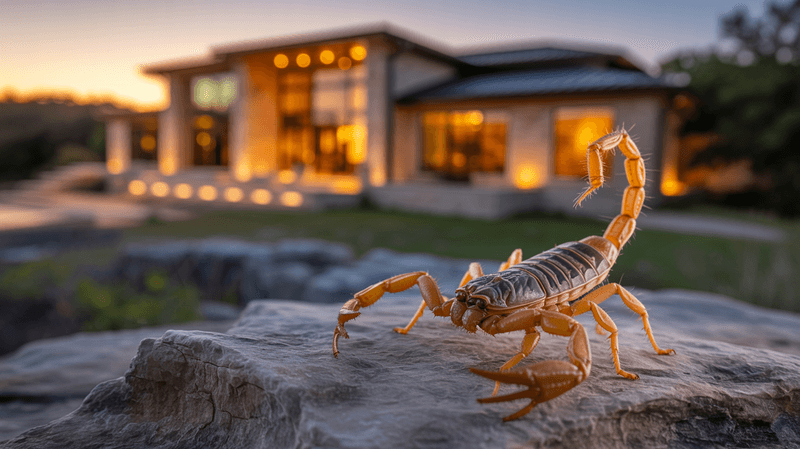
If you live in the Texas Hill Country, you already know that scorpions come with the territory, and so does the search for ways to keep them out of the house. Texas sage, also called cenizo, has earned a reputation as a tough, beautiful native shrub that can handle brutal summer heat and months without rain.
Some gardeners also claim it keeps scorpions away, and that idea has spread through local planting circles and online forums. The truth about that claim is more complicated, and knowing the difference between what cenizo can and cannot do for your yard matters before you head to the nursery.
Texas sage earns its place in a Hill Country yard
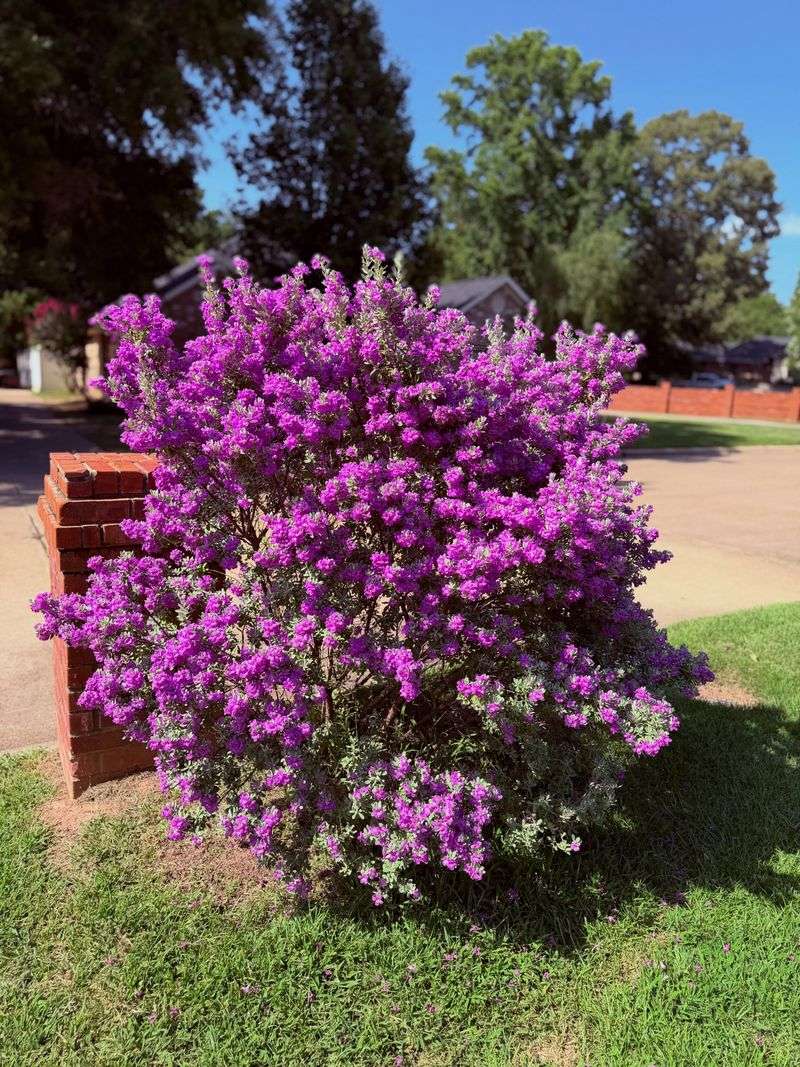
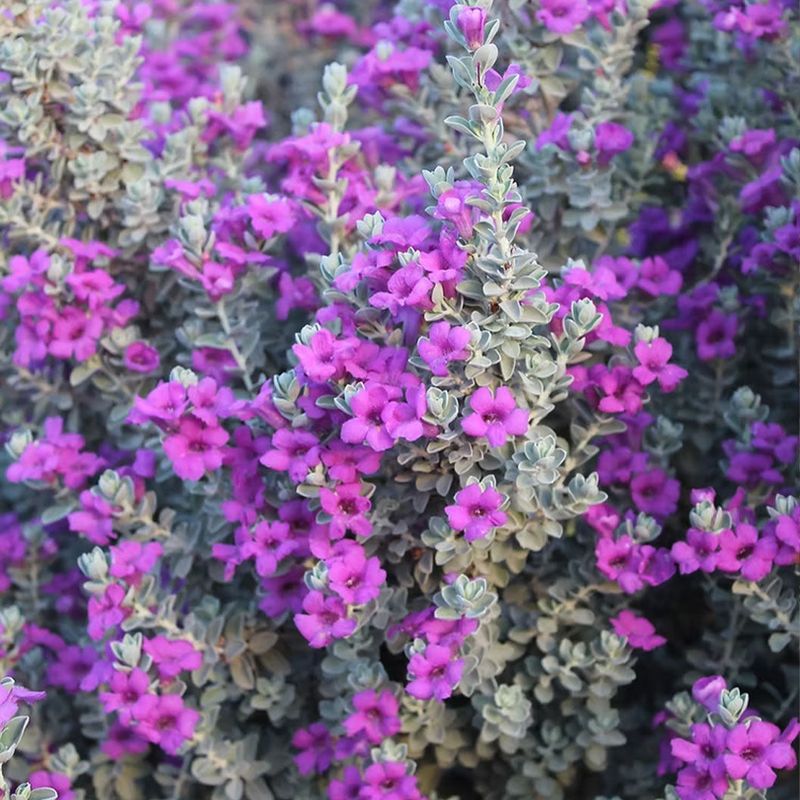
Cenizo, known botanically as Leucophyllum frutescens, is a shrub that looks like it was designed specifically for the Hill Country. Silvery-gray foliage catches afternoon light, and after a good rain the whole plant erupts in lavender-purple blooms that you can see from the road.
Hummingbirds, native bees, and butterflies visit the flowers, which gives the plant a useful role in the yard beyond just filling space.
On the practical side, Texas A&M’s native and adapted plant guidance lists Texas sage as an evergreen shrub that reaches roughly 5 to 8 feet tall and wide at maturity. It thrives in full sun and handles very low-water conditions, which makes it a natural fit for the rocky, well-drained soils common across Kerr, Gillespie, and Blanco counties.
Once established, it rarely needs supplemental irrigation beyond what the sky provides.
The plant stays evergreen year-round, so it provides structure in the landscape even during dry spells when other shrubs look ragged. Unlike some ornamentals that require regular fertilizing and coddling, cenizo prefers lean soil and actually performs worse when over-watered or over-fed.
That low-maintenance profile is a genuine selling point for homeowners who want a good-looking yard without constant intervention.
For a sunny border along a driveway, a low-water planting strip near the road, or a mid-bed anchor plant that can hold its own through August, Texas sage delivers. Its documented strengths are horticultural: drought tolerance, evergreen structure, seasonal color, and wildlife value.
Those qualities alone justify planting it, without any additional claims attached.
Extension guidance focuses on shelter reduction and exclusion
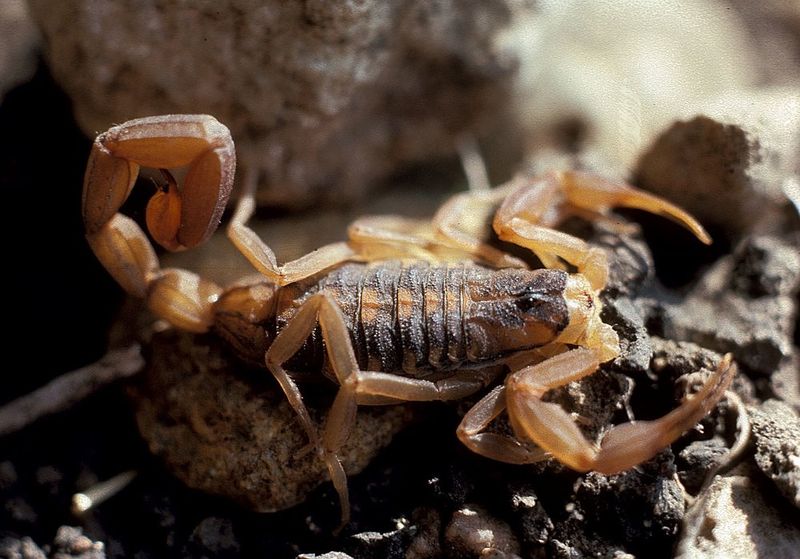
The striped bark scorpion, Centruroides vittatus, is the species most Texans encounter. Texas A&M’s scorpion identification and control resource notes that it is the most widespread scorpion in the state, found in virtually every county and commonly associated with rocks, boards, logs, fallen vegetation, tree bark, walls, and the inside of homes.
Scorpions are primarily nocturnal hunters. They shelter during the day under anything that holds moisture and blocks light, which is why a stack of old lumber beside the back door or a pile of flagstones near the foundation can support a surprising number of them.
At night they move, and that movement brings them into contact with doorways, weep holes, torn screens, gaps around pipes, and cracks in masonry.
Getting into a house is not difficult for a scorpion. Texas A&M AgriLife Extension publication E-362 identifies poorly sealed door thresholds, damaged window screens, open weep holes, roof line gaps, and cracks around utility penetrations as common entry points.
A scorpion does not need much space; a gap wide enough to slide a credit card through can be enough.
The management strategy that extension guidance consistently recommends centers on two things: removing the shelter that scorpions use during the day and blocking the routes they use to enter the home at night. No particular plant is identified as a deterrent in that guidance.
The focus is entirely on physical changes to the property, and that framing is deliberate. Habitat modification and exclusion address the actual behavior of the animal rather than relying on an assumed chemical response.
The evidence does not establish Texas sage as a scorpion repellent
Two separate claims often travel together when Texas sage comes up in pest conversations: that it is a great native plant for dry landscapes, and that its fragrance keeps scorpions away. The first claim is well-supported.
The second one is not.
Texas A&M’s horticultural documentation confirms cenizo’s landscape value clearly. What the authoritative sources reviewed for this article do not contain is any controlled field study, any quantified trial, or any formal extension recommendation stating that planting Texas sage causes scorpions to avoid a yard or reduces encounters around a home.
Local gardening content sometimes recommends fragrant plants as a pest-deterrent strategy. A San Antonio gardening article on plant-based pest control suggests lavender, lemongrass, rosemary, mint, and citronella for this purpose, but it does not cite experimental data or measured outcomes.
That kind of recommendation reflects regional gardening tradition rather than verified pest-control performance.
There is also a meaningful difference between a living shrub, a crushed leaf, and a formulated pesticide product. A concentrated essential oil applied at a tested dose under controlled conditions is not the same thing as an intact plant growing in a sunny border.
Texas A&M’s scorpion publication E-362 treats naturally derived oils such as rosemary, clove, and peppermint as pesticide active ingredients in registered products, not as evidence that growing those plants outdoors produces a comparable effect. The distinction matters because acting on the unsupported claim could lead a homeowner to skip the physical habitat work that actually has a track record.
Place the shrub where it does not create access or cover
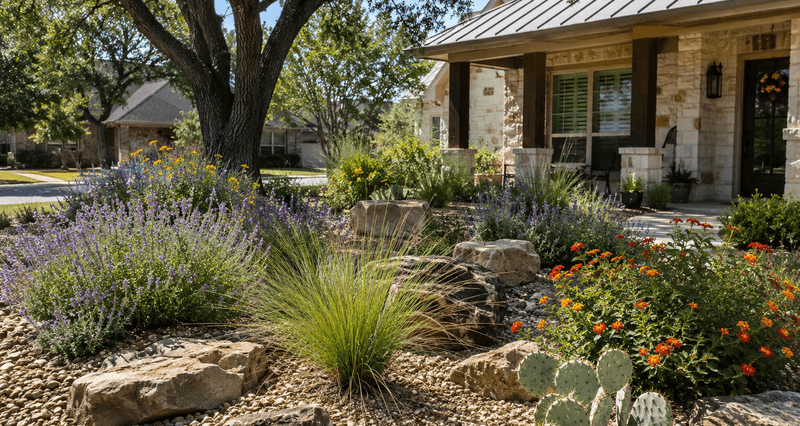
Even a plant with no documented scorpion-attracting properties can create problems if it is positioned poorly. A large evergreen shrub planted directly against a foundation, allowed to grow against a wall, or left with branches touching a roofline gives any passing scorpion a sheltered corridor from the yard to the structure.
The plant itself is not the issue; the cover and contact it provides are.
Texas A&M Extension’s scorpion guidance specifically advises pruning shrubs and overhanging branches away from the home as part of a habitat-reduction strategy. Applied to Texas sage, that means planning for the plant’s mature size before you dig the hole.
A cenizo that reaches 6 to 8 feet wide needs to be set far enough from the house that you can keep a clear gap between the canopy edge and any door, window, eave, or wall surface, even after several years of growth.
Good placement also means staying away from patios and outdoor seating areas where branches touching a wall or fence could provide a route that a scorpion uses without anyone noticing. A border planting along a driveway, a low-water hedge along a property line, or a mid-yard specimen away from the structure takes full advantage of cenizo’s ornamental strengths while keeping it out of the zone where it could work against your pest-reduction efforts.
Before planting anywhere in Texas, it is worth using the Texas A&M Earth-Kind plant selector to confirm that Texas sage suits your specific region, soil type, and site conditions. The plant performs well in Central and West Texas but may not be the right fit everywhere in the state, and the selector accounts for heat tolerance, drought tolerance, pest tolerance, and fertility requirements that vary significantly across Texas counties.
Build the real defense around the home

Reducing scorpion encounters around a Hill Country home is less about what you plant and more about what you remove and seal. The actions that Texas A&M recommends are concrete, repeatable, and do not require any special products to get started.
Start with the ground-level clutter. Texas A&M AgriLife Extension’s scorpion publication identifies boards, stones, bricks, logs, trash, and stored debris near the house as prime daytime shelter.
Moving those materials away from the structure, or eliminating them entirely, takes away the hiding places scorpions depend on. A firewood stack is a particular concern: keep it off the ground on a rack, store it as far from the house as practical, and bring in only what you will place directly on the fire that same evening.
Grass and vegetation management matters too. Keeping turf closely mowed beside the foundation and pruning any shrub or tree branch that contacts the home removes the cover and pathways that nocturnal scorpions use when they move after dark.
This applies to every plant near the structure, not just cenizo.
Sealing the home itself is the other half of the equation. Walk the perimeter and look for gaps around door thresholds, window frames, utility pipes, eave lines, and masonry openings including weep holes.
Weather stripping, caulk, copper mesh, and properly fitted door sweeps can close most of those gaps without major renovation. Damaged window and door screens should be repaired promptly.
Texas sage can absolutely be part of a well-planned Hill Country landscape. Positioned correctly, it adds structure, color, and wildlife value.
But it functions as one component within a broader yard-management program, not as a replacement for the physical work that extension guidance has consistently identified as the primary line of defense against scorpion encounters.
A labeled pesticide is not the same as an aromatic plant
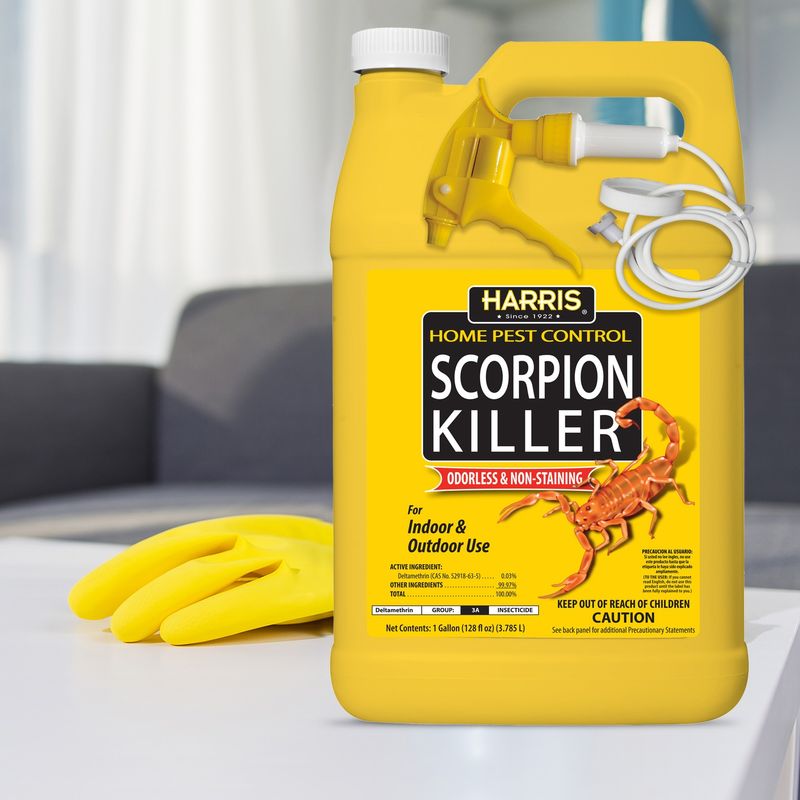
Some of the confusion around fragrant plants and scorpion control comes from a real fact that gets stretched too far. Rosemary oil, cinnamon oil, clove oil, thyme oil, peppermint oil, and pyrethrum are all naturally derived compounds that can appear as active ingredients in pesticide products registered for scorpion management.
Texas A&M’s scorpion publication E-362 discusses these as formulated pesticide active ingredients, not as proof that growing or crushing the source plants outdoors produces a pest-control effect. A product that delivers a measured concentration of rosemary oil to a specific surface is a different thing entirely from a living rosemary hedge or a Texas sage shrub releasing ambient fragrance in a sunny border.
Concentration, delivery method, contact time, and surface coverage are all different, and those differences determine whether a chemical has any effect on an animal’s behavior.
If you decide to use a pesticide product for scorpion management, the guidance from Texas A&M focuses on perimeter applications around foundations, entry points, and known harborage areas rather than broad spraying throughout planting beds. Any product you use must be labeled specifically for scorpion control and applied at the site, dose, and protective-equipment requirements stated on the label.
Naturally derived products also tend to have shorter residual activity than synthetic options, which means more frequent reapplication may be needed.
Homemade essential-oil mixtures are a separate category with their own risks. Undiluted oils can cause skin and eye irritation, and applying them around children, pets, or edible plants without label guidance is not a practice that extension sources endorse.
Stick with registered, labeled products and follow the instructions that come with them.
Choose Texas sage for the landscape, not an unproven promise
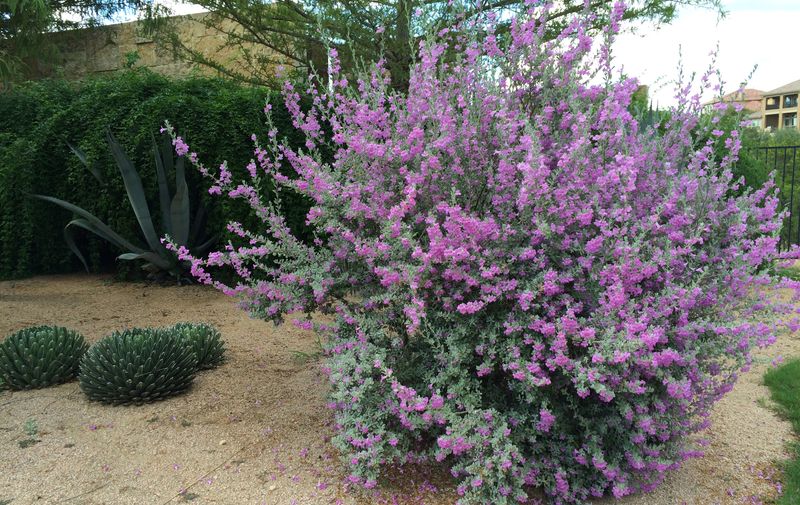
Texas sage is a genuinely good plant for the right Hill Country site: drought-tolerant, evergreen, full-sun adapted, and attractive to pollinators and hummingbirds. Those qualities hold up under scrutiny and make it a worthwhile addition to a sunny, low-water border when the soil, region, and mature-size placement are right.
Use the Texas A&M Earth-Kind plant selector to confirm it fits your specific site before buying.
For scorpion management, the defensible strategy is the physical one: remove ground-level shelter, keep vegetation pruned away from the structure, seal entry points, store firewood properly, and use labeled pesticide products at perimeters when appropriate. Texas A&M’s venomous animals guide notes that Texas has 18 scorpion species, and while none are considered deadly, sting reactions vary from person to person.
Localized pain and swelling are the most common outcomes, but persistent swelling, breathing difficulty, severe neurologic symptoms, or signs of an allergic reaction call for prompt medical attention, not a wait-and-see approach.
Texas A&M Extension’s scorpion guidance treats management as a combination of sanitation, exclusion, and carefully applied products, not a single-plant solution. Plant cenizo because it earns its place in a hot, dry Texas yard.
Keep scorpions out by doing the perimeter work that has a real track record behind it.