
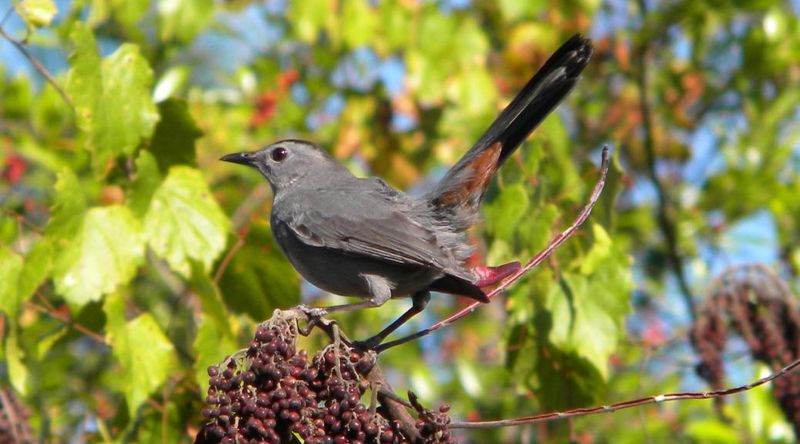
You hear a mew in the hedge, but no cat is anywhere in sight. The sound may come from a gray catbird, a shy bird that sneaks around thick shrubs.
Learning its call and a few field marks can solve the mystery. It can also show you how your plants help birds.
A raspy mew points toward a catbird
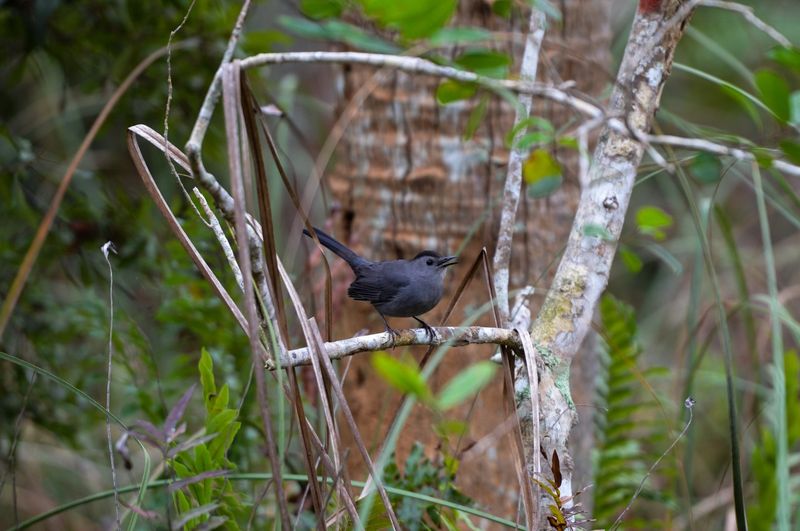
Cornell Lab of Ornithology describes the gray catbird’s common call as a raspy mew that sounds like a cat. That makes the sound a strong clue when something is calling from your hedge.
It is a clue, though, and not a final answer.
Other sounds can fool the ear. A real cat, a young bird, or another mimic could be responsible.
Catbirds also sing long, jumbled songs and can sound very different from one minute to the next, so a single note does not settle things.
The best move is to slow down and listen. Stand a few steps from the hedge and stay quiet.
Note whether the mew repeats, whether it comes from the same spot, and whether it seems to move through the branches. Birds that mew often hold still, then hop to a new perch.
Next, look for the bird itself. Keep your eyes on the lower and middle parts of the shrub, where catbirds like to stay hidden.
A pair of binoculars helps, but patience matters more. A bird calling like a cat from deep cover is a good reason to check for visual proof before you decide what you have.
If you can see it, compare what you notice with the field marks in the next section. A mew plus the right colors makes a likely catbird.
The mew alone leaves room for doubt, and that is fine for a backyard mystery.
Look for the gray body and black cap
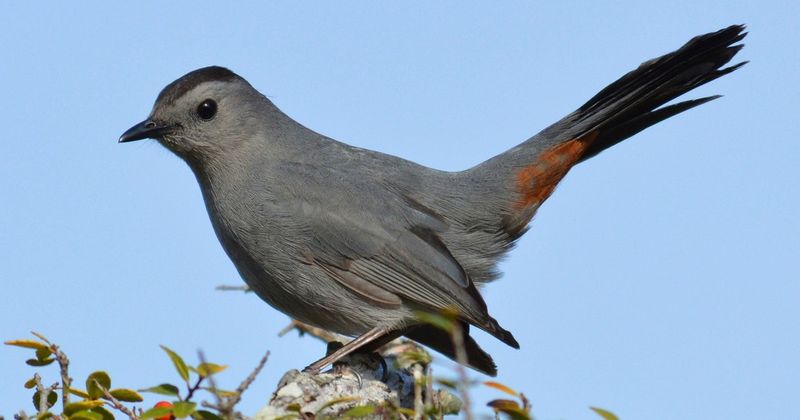
Glimpses of a catbird tend to be short. Audubon’s gray catbird field guide points to a gray body, a black cap, and chestnut-colored undertail coverts.
Those are the marks to hunt for.
The gray is fairly even, from the head down to the tail, so the bird looks sleek and plain at first. The black cap sits on top of the head like a small hat.
The chestnut patch is the easy one to miss, because it sits under the tail and shows mostly when the bird flips its tail or hops sideways.
Catbirds are often concealed in dense vegetation, so expect partial views. You may see only a gray shape slipping between leaves.
Try to catch two of the three marks before you feel confident. Gray plus cap is good.
Gray plus cap plus chestnut under the tail is better.
Here is a simple routine. Wait for the next mew, then scan the spot where it seemed to come from.
Check the head first, then the tail. If the bird flies, note its size and shape, since a catbird is slimmer than a robin.
These visual clues support the call. They do not replace it, and the call does not replace them.
Using both gives you a stronger case than either one alone.
Florida has no single catbird arrival day
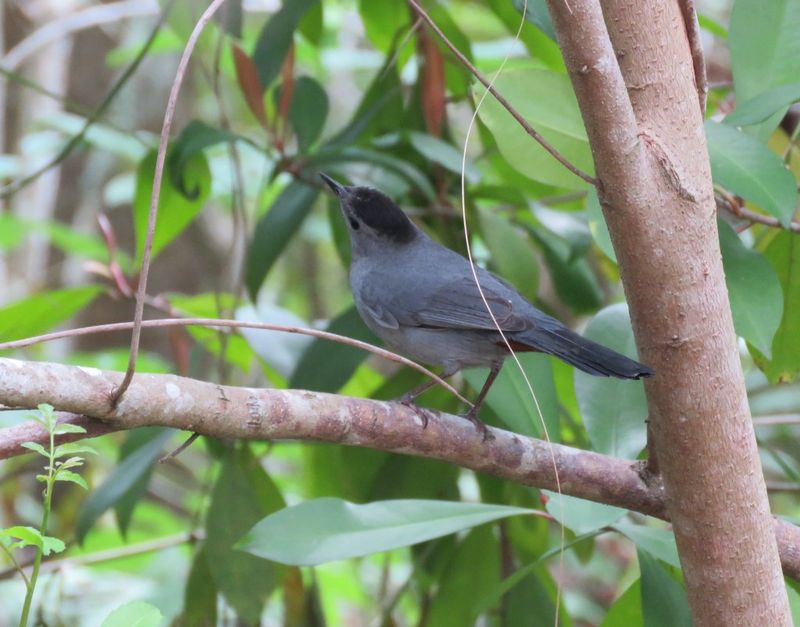
October is a handy reminder that fall migration is underway. It is not a date when every catbird in Florida shows up at once.
Birds move at different times, and some stay put.
According to the Cornell range map, catbirds from across North America winter along the Gulf Coast, including Florida. The same map shows resident areas along the Atlantic Coast.
So a catbird in a Florida hedge could be a recent traveler, a winter visitor that arrived weeks ago, or a bird that lives nearby much of the year.
That means you cannot tell a bird’s story from the date alone. A mew in October is a good prompt to pay attention, but it does not prove a new arrival.
Where you live in the state may matter too, since coastal and inland yards can see different birds at different times.
A practical habit helps here. Keep a simple note on your phone with the date, the place in your yard, and what you heard or saw.
If the mew returns on many days, you may have a bird that is settling in. If it only appears once, it may have been passing through.
Notes like these turn a mystery into a pattern. After a season or two, you will know much more about what your own yard hosts than any broad statement could tell you.
A hedge can provide cover, insects, and fruit
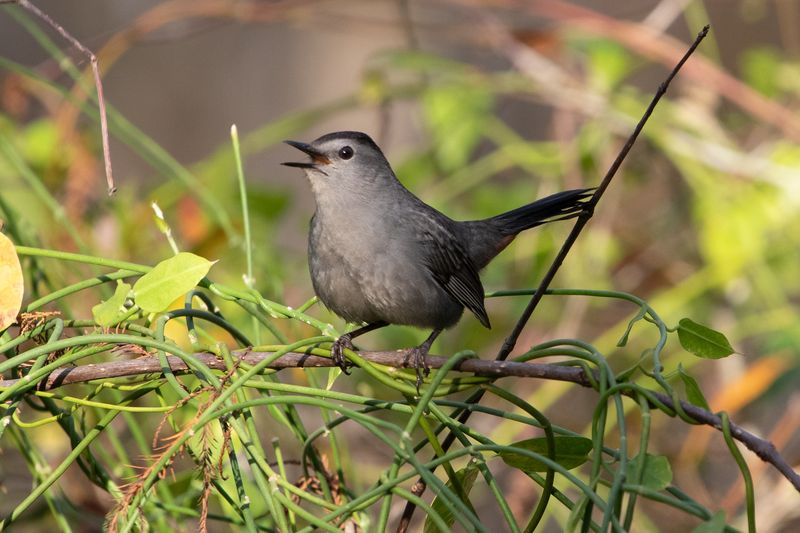
Dense growth is the real draw for many catbirds. Cornell’s life history notes describe them using thickets, shrubs, and vine tangles, and they do so in both summer and winter.
A thick hedge gives a shy bird a place to hide, rest, and move around out of sight.
Food comes into the picture next. Catbirds eat fruit, but they also eat insects and spiders.
The U.S. Forest Service species review says roughly half of the diet is insects, with fleshy shrub fruits making up most of the rest.
Cornell adds that insects dominate the summer menu.
So a catbird in your hedge is not necessarily eating berries. It might be sheltering.
It might be flipping leaves and picking at insects on the lower branches. Unless you watch it pluck fruit, the safest guess is that it is using the shrub for cover or searching for animal food.
Here is a way to check. Watch for a few minutes from a distance.
A bird reaching for fruit will stretch toward a berry cluster and swallow it. A bird hunting insects hops low, probes the leaf litter, or peers under leaves.
Either way, a hedge with thick structure is useful. Berries are one possible food, and dense branches are a second benefit.
Seeing the bird there tells you the space is working for something, even if you cannot say exactly what.
Wax myrtle is a Florida-grounded planting example
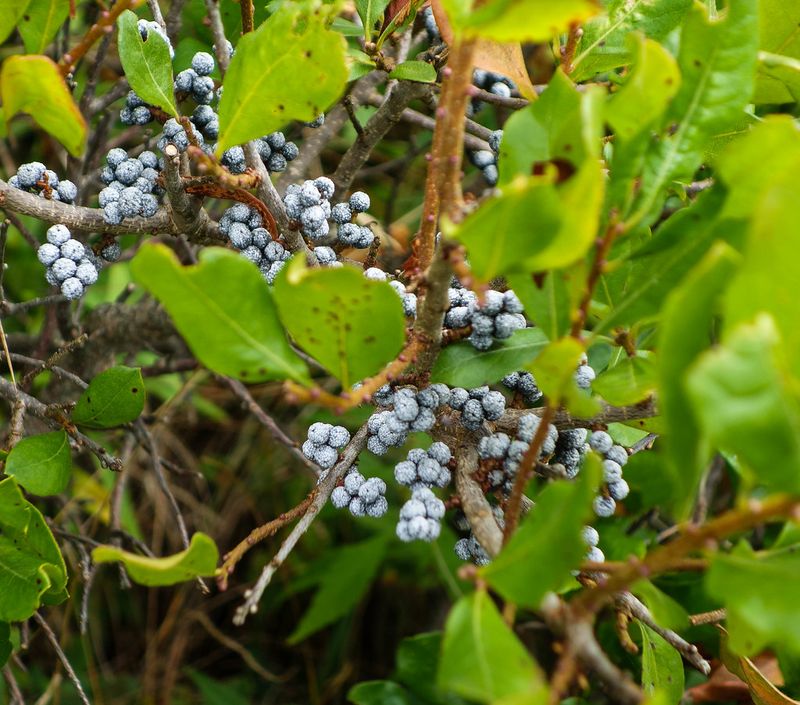
If you want a Florida plant to consider, southern wax myrtle is a solid example. It is a Florida-native shrub, and birds eat its berries.
The Forest Service species review lists bayberries among foods that catbirds eat, so the plant fits the bird’s needs for fruit and its habit of using shrubs for cover.
That is a reason to think about wax myrtle, not a promise. Planting one will not guarantee a catbird visit.
Many things shape which birds appear, including your neighbors’ yards, nearby habitat, and the time of year.
Site matters too. UF/IFAS’s Treasure Coast native plant guidance says wax myrtle can adapt to drier conditions but prefers moist conditions.
That guide is regional, so treat its details as a starting point for the Treasure Coast and check local conditions elsewhere. Sandy, fast-draining spots in the Panhandle, central Florida, or the Keys may not behave the same way.
Before buying, look at your yard. Note how fast the soil drains after rain, how much sun the spot gets, and whether the area floods.
A wet corner may suit wax myrtle better than a dry, sunny strip, though it can cope with some dryness.
Consider it as one option among several. A planting that matches your site will usually look better and need less work, and it gives birds a chance at both fruit and shelter.
Make the yard more useful to birds
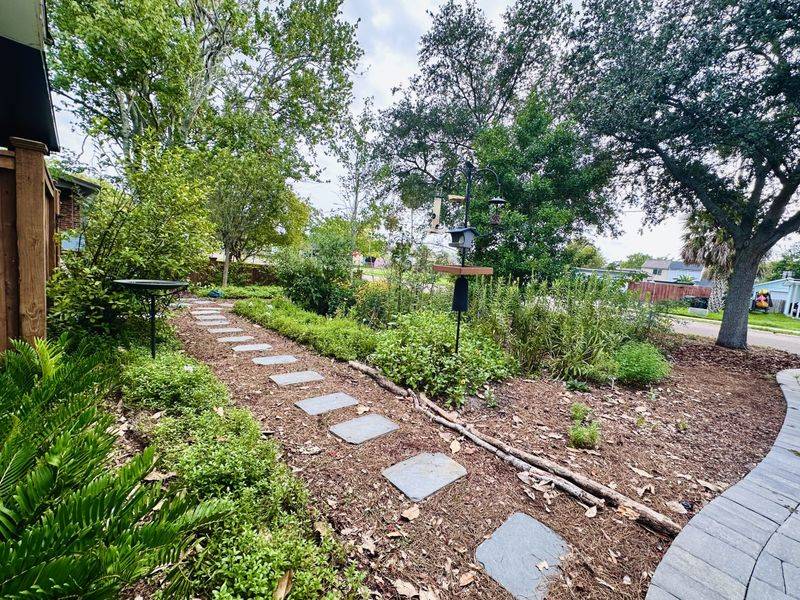
Start with layers. UF/IFAS’s wildlife landscaping guidance recommends vegetation at varied heights, so birds have more places to hide and feed.
Low plants, mid-height shrubs, and a few taller trees can work together even in a small yard.
Next, match plants to the actual site. Sandy soil, salt spray, shade, and wet spots all change what will thrive.
Plants that suit your conditions grow better and need fewer fixes, which is good for you and for the birds.
Go easy with pesticides. UF/IFAS’s Florida-Friendly Landscaping steps advise against routine or indiscriminate spraying and note that insects are food for birds and other wildlife.
Since catbirds eat insects and spiders, a heavily sprayed hedge can lose part of its value.
American beautyberry is one plant you might add. UF/IFAS’s beautyberry fact sheet lists it as popular with birds generally.
That is not the same as saying catbirds prefer it. Regular shearing removes flowers and developing fruit, so thin the branches instead if you want berries.
Beautyberry also has poor salt tolerance, so it is not a good pick for every coastal site. Check how much salt spray your yard gets before planting.
A mix of site-suited plants is a safer bet than relying on any single shrub.
Treat the mew and the hedge as clues
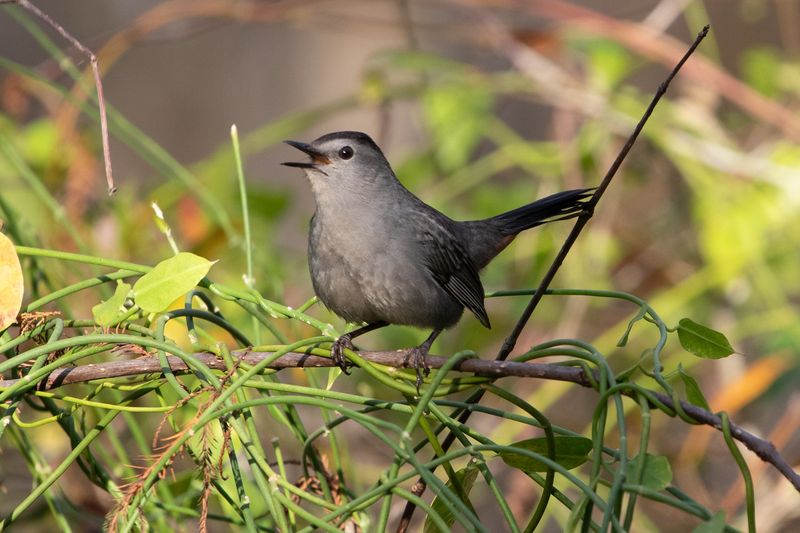
A mew, a gray body, and a black cap together point to a likely catbird, as Cornell’s sound guide suggests. The hedge adds another clue, since catbirds favor dense cover, but it does not prove why the bird came or what it ate.
Your next step is simple. Watch the hedge for a few mornings, jot down what you see, and add site-suited plants using UF/IFAS landscape guidance.
Some mysteries are best solved slowly, one listen at a time.