
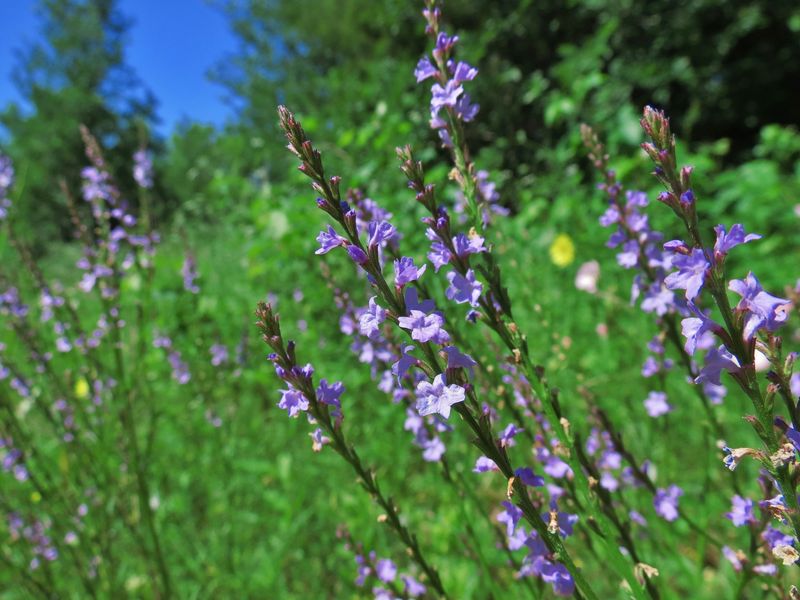
Every spring, Central Texas homeowners yank a small purple-flowering plant out of their lawns without a second thought, assuming it has no business being there. That instinct might occasionally be wrong.
A native wildflower called Texas vervain turns up uninvited in sunny yards across the region, and if that purple plant is the real thing, it can quietly feed pollinators and birds with almost no help from you. Before you reach for the trowel, though, the smart move is figuring out exactly what you have.
Could that purple lawn plant be Texas vervain?
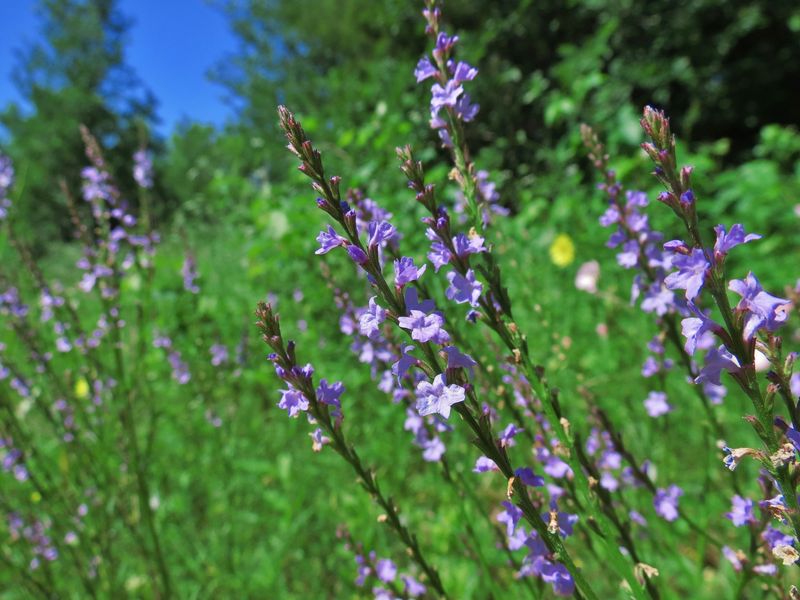
Spotting a purple-flowering plant in your lawn and assuming it is a desirable native is a reasonable guess, but it is not a safe one. Several unrelated plants bloom purple in Central Texas yards every spring, and they carry very different management implications.
The first job is identification, not preservation.
Texas vervain, known scientifically as Verbena halei, is one plausible candidate. The U.S.
Fish and Wildlife Service recognizes it as a Texas native with small blue-to-purple flowers, and Houston Audubon lists it as drought-tolerant, pollinator-friendly, and suitable for a range of Texas soils. Those are real qualities worth knowing about, but they apply only after you have confirmed the species.
The problem is that flower color alone cannot tell you what you have. Texas A&M AggieTurf documents multiple broadleaf species that show up in Texas lawns each season, and not all purple-flowering volunteers are natives worth keeping.
One that deserves particular caution is Brazilian vervain, a nonnative plant from South America that the Native Plant Society of Texas identifies as potentially invasive and capable of displacing native species.
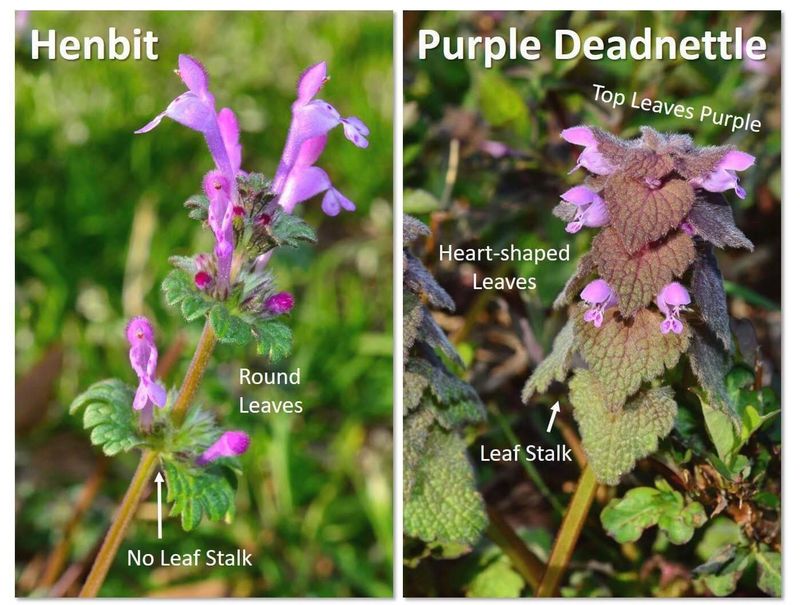
Henbit and purple deadnettle are two more common cool-season lawn weeds that bloom purple in early spring and have nothing to do with Texas vervain. Prairie nymph and prairie verbena also produce purple flowers and can look similar at a glance.
None of them are interchangeable. The governing rule for any purple volunteer in your yard is straightforward: identify first, then decide whether to preserve, manage, or remove.
Check the leaves, stems, and flower spikes before you decide
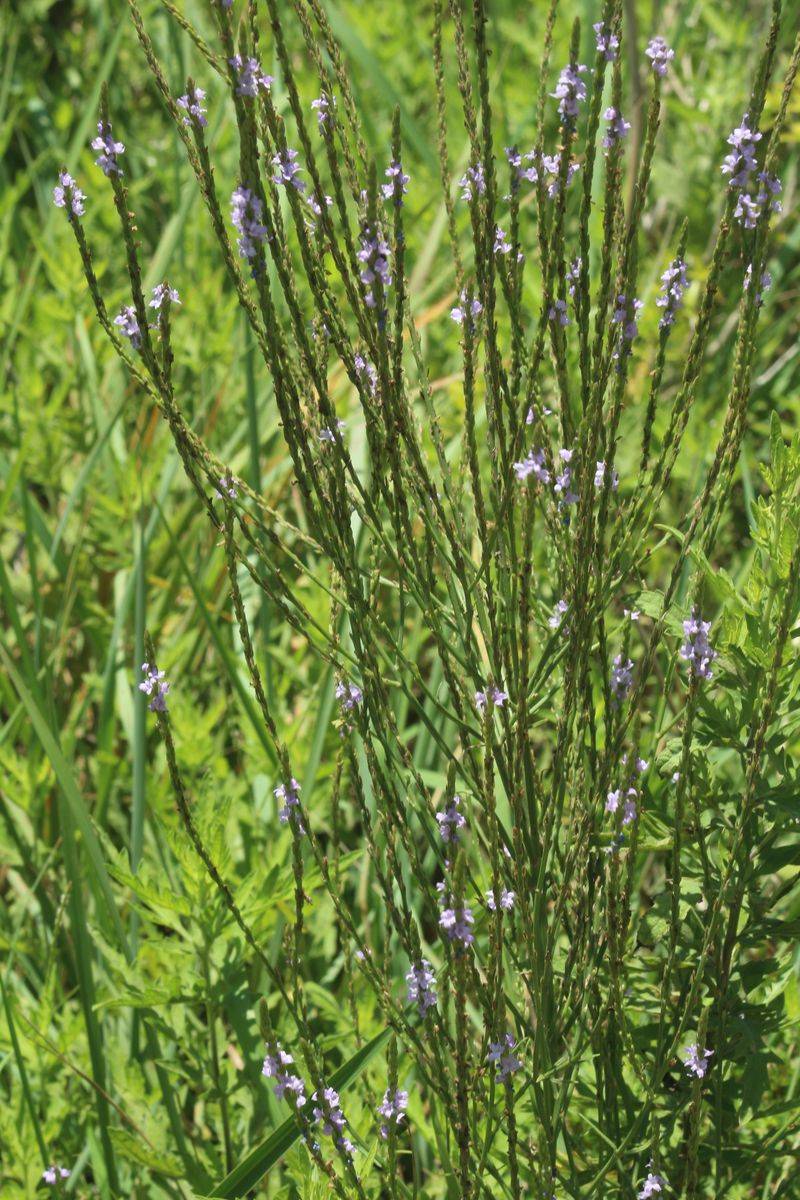
Flower color is only the starting point. Confirming Texas vervain requires a closer look at the whole plant, from the base to the tips of the flower spikes, and a few minutes with a good photograph before you pull it or leave it alone.
According to Texas Parks and Wildlife, Texas vervain is an erect plant that typically stands 6 to 18 inches tall and grows from a woody base. The stems branch outward and carry leaves that are noticeably toothed or deeply incised, particularly toward the middle of the plant.
The flowers themselves are small and tubular, blue-purple in color, and arranged along slender spike-like structures rather than clustered in a single showy head.
That upright, somewhat wiry silhouette is one of the clearest visual clues. A plant lying flat against the ground or spreading in a mat is less likely to be Texas vervain.
The woody base is another useful detail: this is a perennial, not a soft annual that melts away after one season.
Bloom timing is worth understanding, too. Houston Audubon records flowering from March through June, while Texas Parks and Wildlife notes a broader spring-through-fall window.
Both ranges are plausible depending on location, rainfall, and local conditions, so do not expect a single fixed calendar to apply in every Central Texas yard. Weather, mowing history, and soil moisture all influence when and how well the plant flowers in any given season.
Before making a decision, photograph the entire plant: the base, the stem texture, a leaf from the middle of the plant showing its edge detail, the flower spike from the side, and the surrounding lawn context. A clear photo gives you something to compare against a reputable plant database such as the Lady Bird Johnson Wildflower Center’s plant finder, or to share with a county extension agent or a local Native Plant Society of Texas chapter for a second opinion.
Do not skip this step just because the flowers look right.
A confirmed Texas vervain can offer modest wildlife value
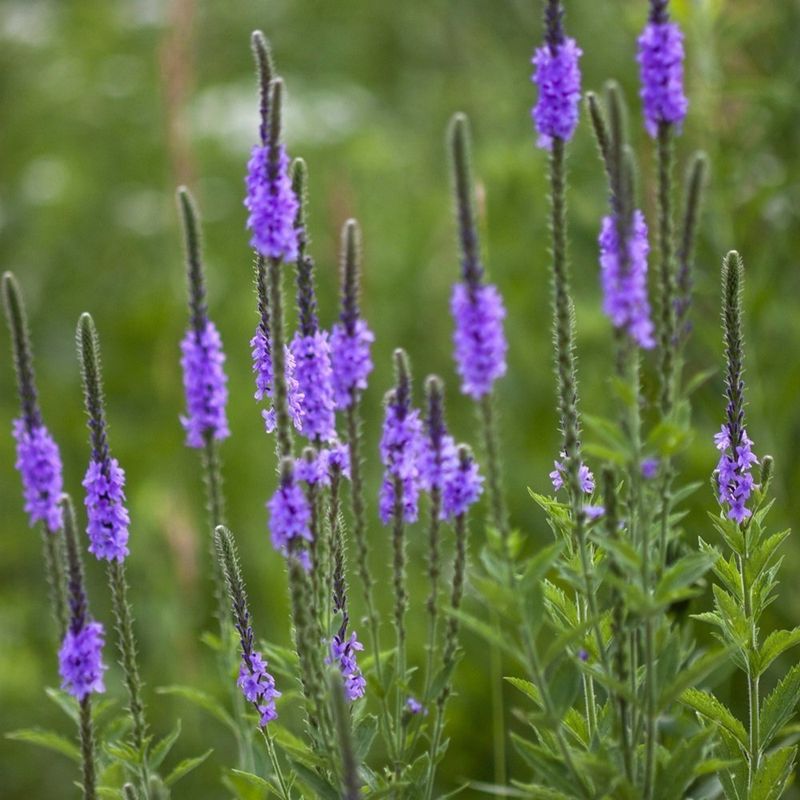
Once you have confirmed the species, the plant’s practical value becomes worth considering. Texas vervain is native to Texas, adapted to the region’s soils, and capable of providing real, if modest, benefits to wildlife without requiring much from you in return.
Houston Audubon describes the plant as drought-tolerant, suited to full sun, and compatible with loam, clay, and sandy soils. It attracts pollinators and butterflies as a nectar source, and its seeds are eaten by a number of bird species.
These are genuine contributions to a yard’s wildlife activity, not marketing claims.
Monarch butterflies are one pollinator associated with Texas vervain, though the connection is specific. A Texas Department of Transportation pollinator-habitat report lists Texas vervain among monarch-preferred native nectar plants, with a mostly spring and some fall bloom pattern for Central and West Texas.
That makes it a useful nectar stop during migration, not a caterpillar host plant. Milkweed fills that role; Texas vervain does not.
Regional adaptation also connects to lower maintenance demands. Texas A&M AgriLife Extension notes that native plants are generally well adapted to their regions and often require less maintenance and water than ornamental choices that are not suited to local conditions.
That principle applies to Texas vervain in a general sense, but it is not a promise. An established plant may need little supplemental watering in a typical season, but extreme drought, newly established growth, or poor siting can still affect its flowering and survival.
The broader landscape context also matters. Texas Parks and Wildlife’s vegetation documentation places native forbs like Texas vervain within the ecological fabric of Texas prairie landscapes.
A single volunteer patch in your yard will not recreate that system, and no one claim of pollinator support should be overstated. What a confirmed Texas vervain can honestly offer is free, naturally occurring nectar and seed value in a plant that belongs here.
Leave a small patch only where it fits your yard
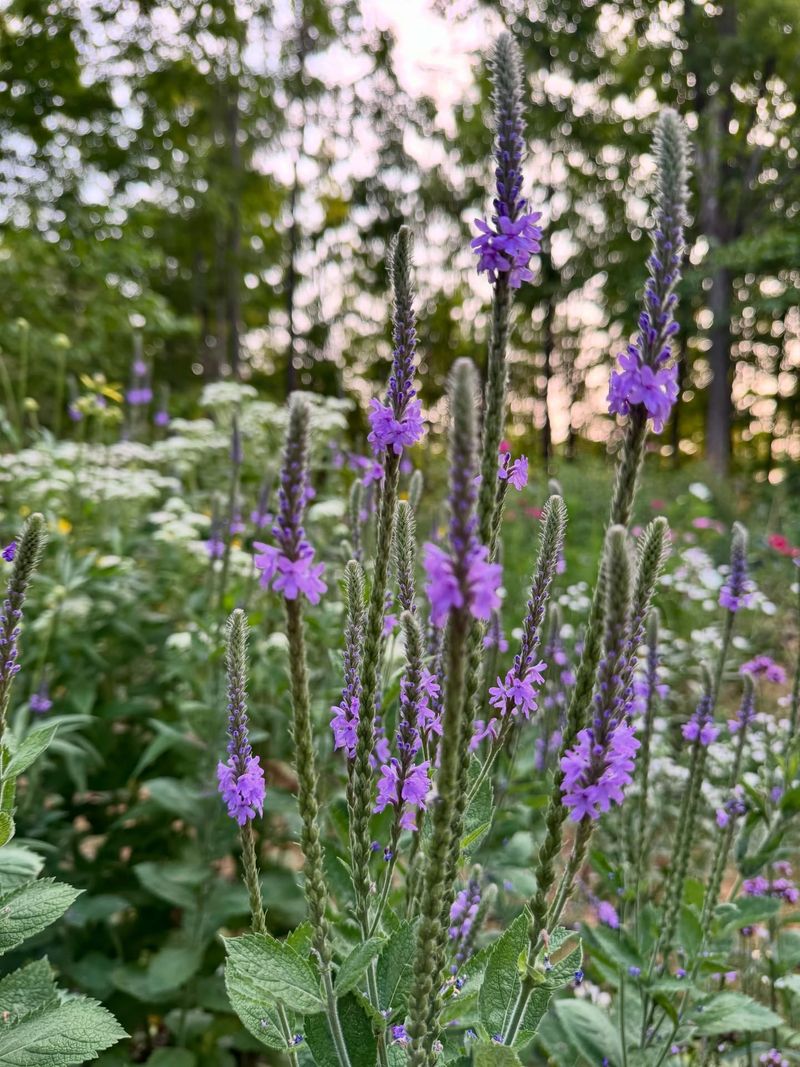
Confirming that a plant is Texas vervain does not automatically mean you are obligated to keep it. The decision depends on where it is growing and what that space needs to do for your household.
A sunny, low-traffic area along a fence line, a bed edge, or an unmowed corner is a reasonable place to leave a small patch. Houston Audubon describes the plant as suited to full sun and tolerant of the clay and sandy loam soils common across Central Texas, which means a neglected sunny strip can be a genuinely suitable home for it.
At 6 to 18 inches tall, it has an informal, slightly open appearance that works in naturalistic settings but can look out of place in tightly maintained turf.
Several yard situations call for a different choice. Play areas used by children or pets are not the right spot for an unmanaged volunteer plant whose identity you confirmed only recently.
Narrow walkways where the plant would brush against people or block sightlines are similarly poor candidates. Drainage structures and low spots where water moves should stay clear of informal plantings that could catch debris or impede flow.
HOA-governed properties add another layer of consideration. Many community rules require uniform turf or prohibit informal plantings in front yards, and a confirmed native plant does not automatically exempt you from those requirements.
Check your community guidelines before deciding to let a volunteer grow in a visible location.
Texas A&M AgriLife Extension and Texas Parks and Wildlife both recognize native forbs as ecologically appropriate for Texas landscapes, but appropriate does not mean universally suitable. Keeping Texas vervain is a reasonable option in the right spot.
Removing it in the wrong one is equally reasonable.
Observe first, then manage the boundaries you want
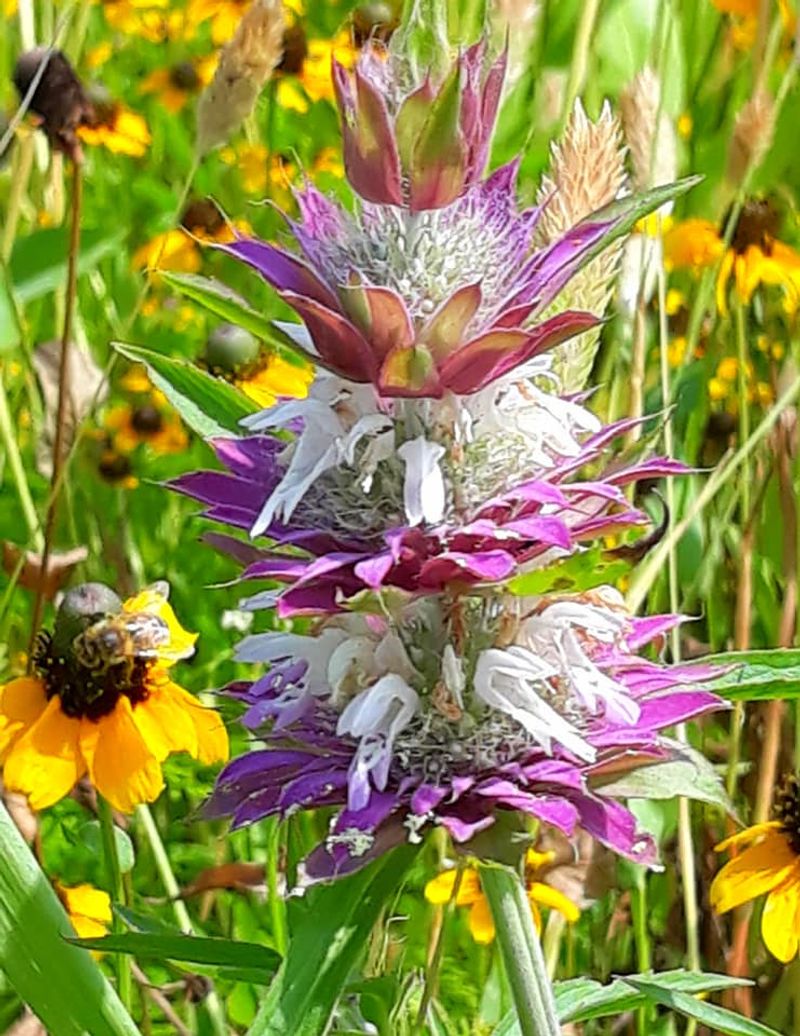
After confirming the species and deciding on a location, the next step is practical management rather than a hands-off approach. Texas vervain is a perennial that can self-seed, so paying attention to how it spreads in your specific yard will help you stay ahead of any boundary issues.
One straightforward option is to mow around a confirmed plant temporarily when you want to watch it flower and observe which pollinators visit. This is not a documented management protocol for the species, just a sensible way to gather real-world information about whether the plant is performing as expected in your yard before committing to a longer-term plan.
If spread becomes a concern, removing selected spent flower stalks before seeds fully disperse can help limit how far the plant travels. Mowing the area after the main flowering period wraps up is another practical option.
Houston Audubon confirms the plant’s perennial status and wildlife value, but no source establishes a precise mowing schedule for Texas vervain in home lawns, so treat these as adaptable options rather than a fixed routine.
Herbicide decisions require the most caution of any management step. Texas A&M AggieTurf emphasizes that accurate weed identification matters because herbicides differ in the species they control and can injure desirable plants or turf when applied without that knowledge.
Applying a broadleaf herbicide to an unidentified purple plant risks harming a confirmed native or missing an actual invasive.
For homeowners who want a conventional, well-maintained lawn, the primary strategy is dense, healthy turf. Texas A&M AgriLife’s bermudagrass management guidance supports proper turf selection and maintenance as the main defense against weed pressure, with any herbicide applications following product label directions, including turf-specific instructions and environmental restrictions.
That approach applies whether the volunteer plant turns out to be a native worth keeping or something better removed.
Purple lookalikes can require a different decision
Knowing that Texas vervain exists does not make every purple lawn plant a Texas vervain. Several species share enough visual overlap to cause real confusion, and at least one of them is a nonnative plant that warrants removal rather than protection.
Prairie verbena, also called Dakota mock vervain (Glandularia bipinnatifida), is a legitimate Texas native and a real pollinator plant, but it is a different species with a generally lower, more spreading growth habit and more finely dissected leaves than Texas vervain. Keeping prairie verbena in a suitable location is a reasonable choice, but it should be identified on its own terms rather than treated as a substitute for Texas vervain.
Prairie nymph (Herbertia lahue) is a small native Texas bulb that produces a bright lavender flower and has linear, grass-like leaves. Texas A&M AggieTurf notes that prairie nymph can be mistaken for grass and is not typically considered a weed, which makes it another plant worth recognizing correctly before acting on it.
Henbit and purple deadnettle are cool-season broadleaf weeds that appear in lawns during late winter and early spring. Texas A&M AggieTurf’s turfgrass weed resources document both as common lawn weeds.
Their purple flowers in March do not make them Texas vervain, and they do not carry the same wildlife value.
Brazilian vervain (Verbena brasiliensis) is the most important lookalike to understand. The Native Plant Society of Texas identifies it as a nonnative species from South America that can grow up to six feet tall, produces small purple flowers, and is capable of displacing native plants.
Its height is a useful diagnostic clue, but younger plants may not yet show that scale. A Texas Parks and Wildlife vegetation inventory documents Texas vervain and related native species in managed Texas habitats, which underscores why distinguishing natives from introduced lookalikes matters in practice.
When the identification is genuinely uncertain, the right move is to photograph the plant and consult a reputable resource. The Lady Bird Johnson Wildflower Center plant database, your county’s Texas A&M AgriLife Extension office, a local Native Plant Society of Texas chapter, or a qualified botanist can all help you reach a confident answer before you make a permanent decision.
Make the choice after identification, not before
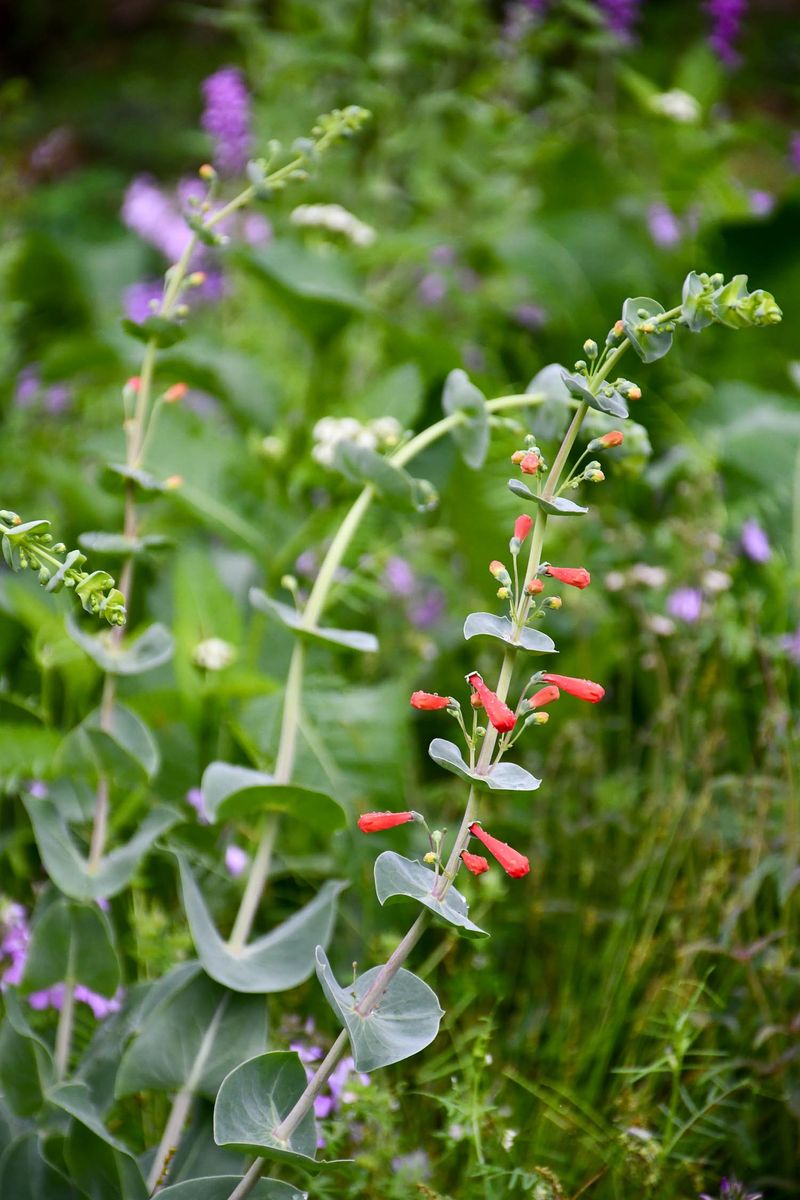
Every decision about a purple volunteer in your lawn becomes more reliable once you know what you are actually looking at. Photograph the whole plant, compare it against a trusted source, and ask for help if the identification is not clear.
That step costs almost nothing and prevents the two most common mistakes: pulling a native plant reflexively or protecting a nonnative one out of misplaced enthusiasm.
A confirmed Texas vervain in a sunny, low-traffic spot is worth keeping if the location suits your yard and your household. The U.S.
Fish and Wildlife Service and Houston Audubon both recognize it as a Texas native with real pollinator and bird value. If the location conflicts with play space, turf goals, walkway access, or HOA rules, removing it is a perfectly reasonable call.
Native status does not make a plant mandatory.
Managing spread, mowing after flowering, or removing the plant entirely are all legitimate options depending on your yard’s needs. What the Native Plant Society of Texas makes clear about invasive lookalikes applies equally to the broader decision: acting on accurate information protects both your yard and the native plants around it.
Texas vervain is free, naturally occurring color that requires no purchase and often little routine care once established. Whether you keep it or not, knowing what it is turns a reflexive pull into a considered choice.