
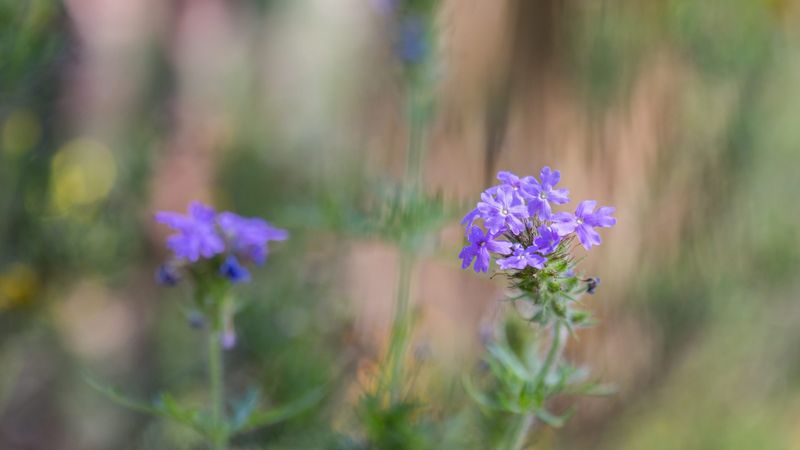
Every spring, Central Texas homeowners yank purple-flowering plants from their lawns without a second thought, assuming they are weeds that do not belong. Some of those plants really are short-lived weeds, but others are native wildflowers that can feed butterflies and bees when left in the right spot.
Before you pull the next one, take thirty seconds to look at its leaves, stems, and flower shape, because color alone will not tell you what you are dealing with or what to do next.
Purple flowers are a clue, not an identification
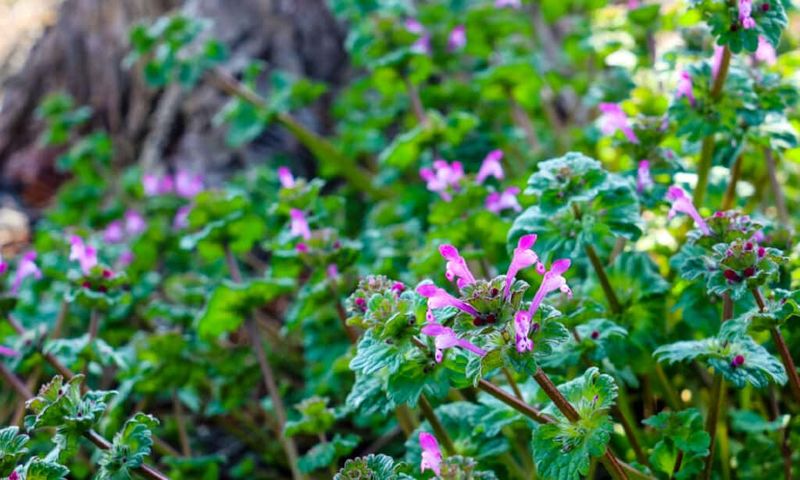
Color is a starting point, not a verdict. Several completely unrelated plants pop up in Central Texas lawns each year wearing nearly identical shades of purple or lavender, and treating them all the same way is how gardeners accidentally remove something worth keeping or accidentally preserve something worth pulling.
Before reaching for a trowel or a sprayer, crouch down and run through a short checklist. Look at the growth habit first: is the plant upright and branching, or does it spread low along the ground?
Check the leaves next, noting their shape, edge texture, and whether they clasp the stem or grow on a separate stalk. Feel the stem, because a square cross-section narrows the possibilities considerably.
Then examine the flower more carefully, paying attention to whether the petals form a tube or open flat, and note the time of year the plant is blooming.
Site conditions add another layer of useful information. A plant thriving in deep shade under a live oak is unlikely to be the same species showing up in a sunny, dry strip along the driveway.
Soil moisture, foot traffic, and sun exposure all influence which plants establish in a given spot.
Austin’s Watershed Protection weed guide lists several cool-season annual broadleaf weeds that produce purple flowers in Central Texas lawns, while the city’s native plant resources separately document purple-flowering natives with very different ecological roles. Those two categories overlap in color and season but not in biology or management.
Getting the identification right first is the only way to make a confident decision about what stays and what goes.
Compare the main purple lawn plants
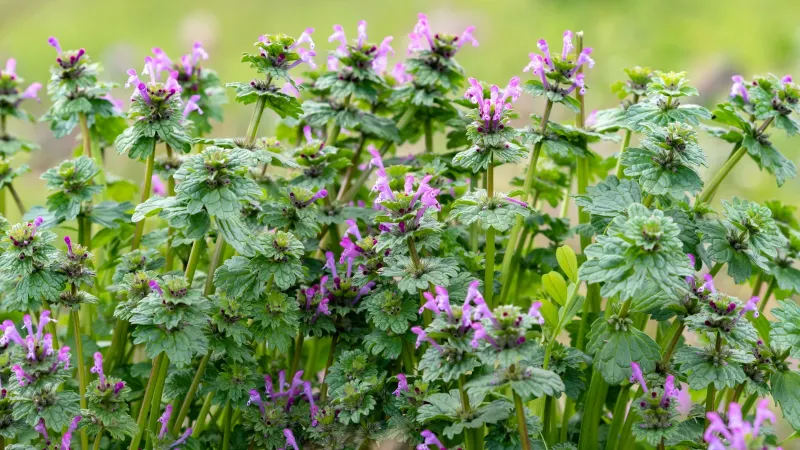
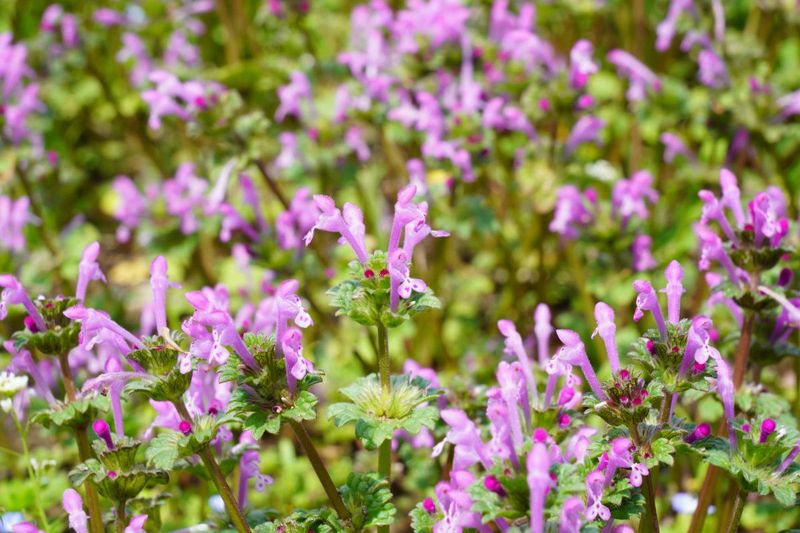
Henbit (Lamium amplexicaule) is the plant most Central Texas homeowners encounter first each year. It germinates in fall, grows through late winter, and produces pale-purple tubular flowers clustered near the top of upright stems by early spring.
The stems are distinctly square in cross-section, and the rounded, deeply serrated leaves clasp directly around the stem with no separate leaf stalk. Austin’s weed fact sheet classifies it as a cool-season annual, meaning it completes its entire life cycle in a matter of weeks and dies as temperatures rise in late spring.
Native violets (Viola missourensis) look quite different. They grow in a low rosette with heart-shaped or rounded leaves on long individual stalks, and the flowers rise separately above the foliage on slender stems.
Violets prefer shadier, moister spots, which is why they often appear under trees or along the north side of a structure. They reseed readily, so a small patch can expand over several seasons without any help.
Snakeherb (Dyschoriste linearis) is a low-growing Texas native with narrow lance-shaped leaves and small purple flowers that appear mainly in late spring and summer, with additional flushes after rain events. It tends to hug the ground more closely than henbit and blooms much later in the season, making the timing alone a useful clue.
Carolina wild petunia (Ruellia caroliniensis) is a perennial with tubular purple, lavender, or bluish flowers and oval to lance-shaped leaves on visible petioles. NC State Extension’s profile of Ruellia caroliniensis notes that it is commonly found in lawns and can easily be mistaken for a weed, with flowering that can stretch from spring through fall.
Knowing these four profiles by sight is the practical foundation for every decision that follows.
Do not confuse native wild petunia with Mexican petunia
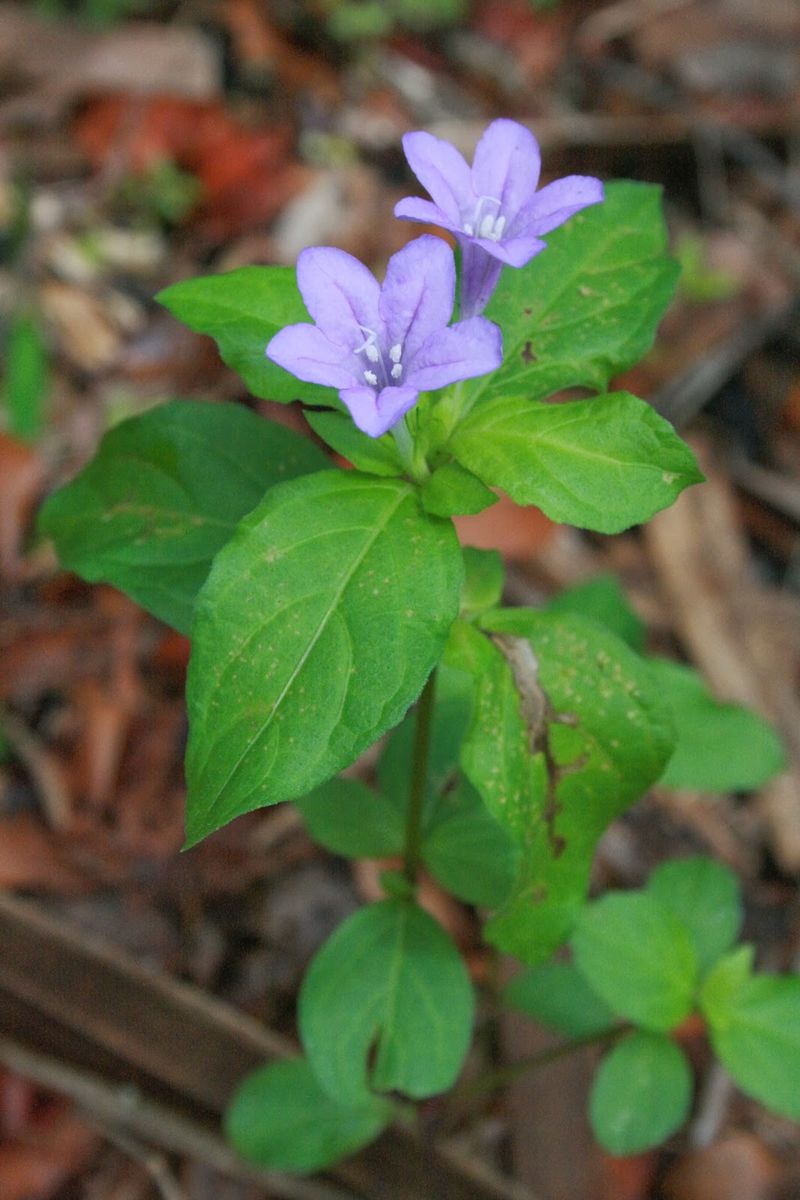
One of the most consequential mix-ups in a Central Texas garden involves two plants that share a common name and similar-looking purple flowers: Carolina wild petunia and Mexican petunia. They are not the same plant, and treating them interchangeably can cause real problems.
Carolina wild petunia (Ruellia caroliniensis) is a native perennial documented across the southeastern United States, including Texas. Its flowers are relatively modest in size, and the plant spreads at a measured pace.
Mexican petunia is a different species entirely, introduced from Mexico, and Texas Invasives identifies it as introduced and invasive in parts of Texas, spreading aggressively through lateral roots that allow it to colonize areas well beyond where it was first planted. The Texas Invasives database lists this plant under the name Ruellia caerulea; the dossier used for this article does not confirm whether Ruellia simplex is an accepted name for the same plant or a separate synonym, so those two names should not be treated as interchangeable without additional verification.
Mexican petunia produces larger, showier flowers and is commonly sold at nurseries under names like “Texas petunia” or simply “purple petunia,” which adds to the confusion. A plant marketed with a Texas-sounding name is not automatically a Texas native.
The practical takeaway is straightforward: do not preserve or redistribute an unidentified Ruellia just because it has purple flowers or because a neighbor calls it a native. If you cannot confirm the species through leaf shape, stem structure, root system, and a reliable regional source, treat it as unidentified and research further before deciding what to do.
Planting or spreading Mexican petunia introduces a documented invasive into the landscape, regardless of how attractive it looks in bloom.
A confirmed native may fit a low-traffic area
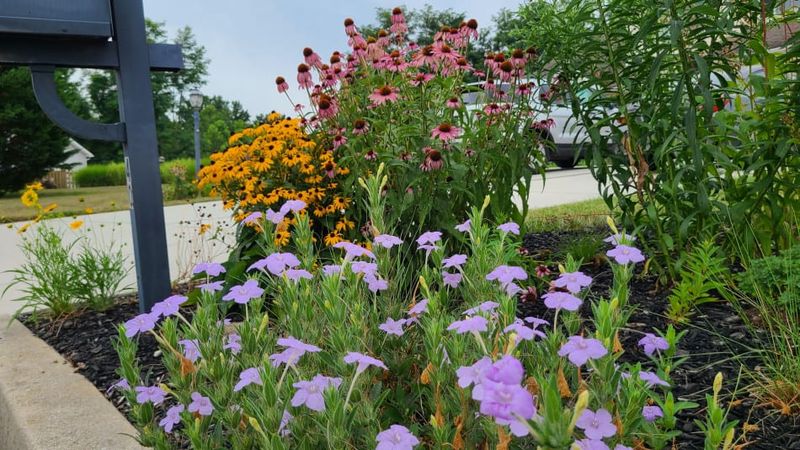
Getting the identification right pays off in a concrete way: once you know a plant is a confirmed native, you can make an informed choice about whether it earns a spot in your yard. That decision still depends on where the plant is growing and whether its appearance and spread fit the household.
Austin’s native and adapted landscape plant guide lists violets and snakeherb as Texas natives that attract butterflies, noting that violets reseed readily and that snakeherb blooms through late spring and summer with additional flowering after rain. These are not broad promises of ecosystem transformation; they are species-specific observations that a confirmed planting may provide floral resources for particular pollinators in your yard.
Carolina wild petunia adds another option for sunny or partly shaded spots. The University of Georgia Extension demonstration garden plant list documents wild petunia as attracting butterflies and bees, a finding consistent with its long bloom window from spring through fall.
Again, this is a qualified benefit tied to a correctly identified species, not a guarantee that any purple lawn plant will become a pollinator magnet.
Austin Parks and Recreation’s wildlife habitat guidance recommends using native plants to provide food and cover and reducing unnecessary pesticide use in wildlife-friendly areas. A low-traffic corner, a shaded bed edge, or a strip along a fence line may be a realistic and tidy place to let a confirmed native establish, without compromising the rest of the lawn’s appearance or function.
Manage a small patch instead of abandoning the lawn
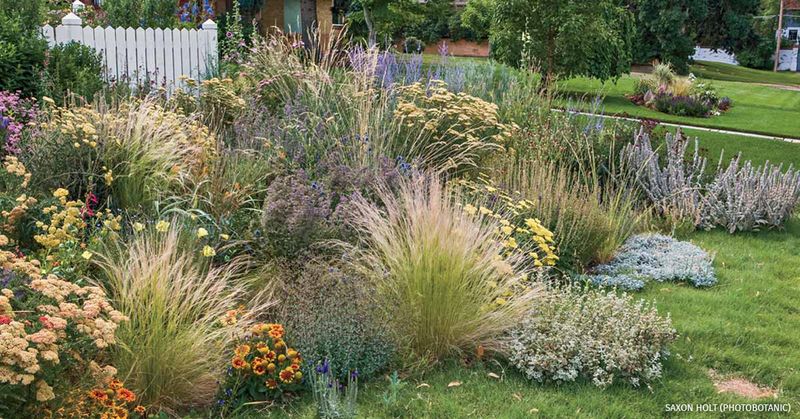
Leaving a native plant in place does not mean surrendering the entire lawn. A more practical approach is to define a small, specific area where a confirmed native can flower and set seed while the surrounding turf stays mowed and functional.
Austin Parks and Recreation’s wildflower meadow guidance is direct on this point: meadow areas are not maintenance-free. They require ongoing attention, including control of aggressive weeds that would otherwise crowd out the native plants you are trying to encourage.
A small defined patch is far easier to manage than a lawn-wide experiment, and it keeps the rest of the yard available for foot traffic, play, and normal mowing.
Marking the boundary with a simple edging strip, a row of stones, or even a change in mowing height helps communicate that the patch is intentional rather than neglected. Neighbors and household members are more likely to respect a defined area than an unmarked zone of unmowed grass.
Persistence in a lawn setting also has limits worth understanding. Carolina wild petunia can survive in lawns, but the NC State Extension profile does not claim it tolerates frequent close mowing or heavy foot traffic without consequences.
A plant that reappears after occasional mowing may still thin out or disappear under a weekly close-cut schedule or a path that gets daily use. Matching the plant to the right micro-location within the yard, specifically a low-traffic edge or corner, gives it the best realistic chance while keeping the wildlife-friendly intent of the planting intact.
Pull or spray according to the species
Removal strategy depends entirely on what the plant actually is. Treating every purple-flowering lawn plant the same way leads to either unnecessary chemical use on a harmless annual or incomplete removal of a plant with underground structures that will simply regrow.
For confirmed henbit, hand-pulling is the most straightforward option. Austin’s weed guide recommends hand-pulling henbit and notes that it is a shallow-rooted annual, making removal relatively clean when the soil is moist.
Timing matters: pulling before the plant sets seed prevents the next generation from establishing. If henbit has already finished blooming, the plants may die naturally within weeks as temperatures climb, so intervention at that stage is less urgent.
Texas A&M AgriLife Extension guidance confirms that annual broadleaf weeds are generally easier to control while plants are small and before flowering. Waiting until a plant is fully mature and in bloom reduces the effectiveness of both mechanical and chemical control.
Plants with crowns, rhizomes, or lateral root systems require a different approach. Pulling the visible top growth without removing the underground structure often results in regrowth.
Mexican petunia’s lateral roots are a documented example of this pattern, which is one more reason to identify the plant before deciding how to remove it.
Chemical control should be a last resort, not a first response. University of Georgia Extension turf guidance advises against applying insecticides when flowering weeds or clover are in bloom because pollinators may be actively foraging on those flowers.
Austin’s weed guide similarly recommends herbicides only as a last resort and favors targeted spot treatment over broadcast applications, which reduces drift, ornamental plant injury, and unnecessary pollinator exposure.
Identify first, then decide what stays
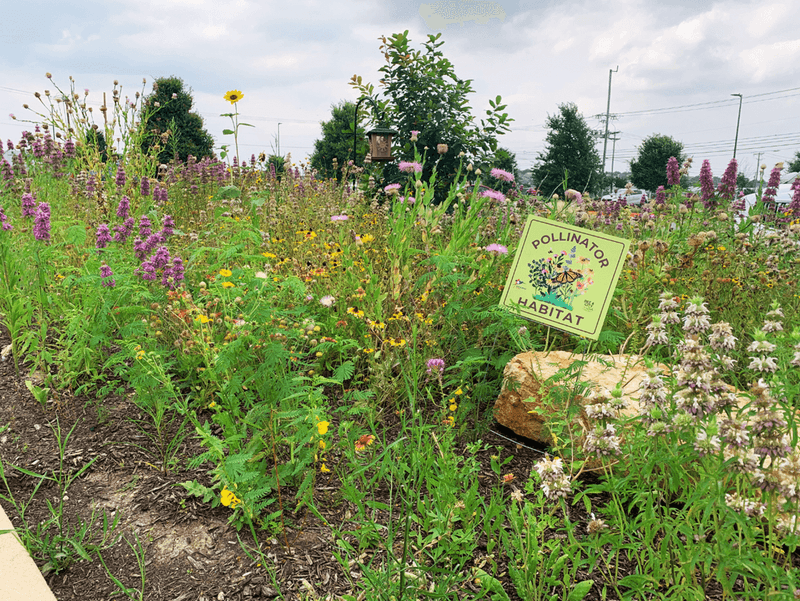
A purple flower in a Central Texas lawn is a prompt to look more carefully, not an automatic signal to pull or to preserve. The decision that follows should rest on a confirmed identification, not on color alone.
Confirmed native violets, snakeherb, or Carolina wild petunia may earn a spot in a low-traffic area where their appearance and spread fit the yard. Henbit, a short-lived cool-season annual, can be hand-pulled before seed set or left to complete its brief life cycle without chemical intervention.
Mexican petunia, documented as introduced and invasive in parts of Texas, should be removed rather than preserved, and should never be planted or redistributed based on a casual assumption that purple flowers mean native.
Responsible lawn care in this situation means replacing the reflex of pulling everything with the habit of identifying first. Austin’s wildlife habitat guidance frames this well: reducing unnecessary pesticide use and choosing native plants for food and cover are decisions that require knowing what is actually growing in the yard.
A lawn managed with that kind of attention tends to be easier to maintain over time, not harder. The best tool in a Central Texas gardener’s kit is not a sprayer or a trowel – it is a willingness to kneel down and look closely before acting.