
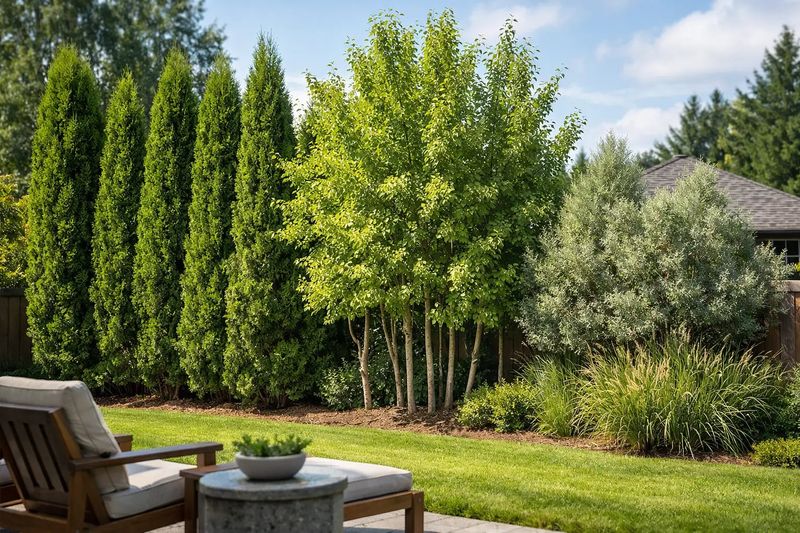
Summer sun can turn a nice patio into a hot, unusable spot by early afternoon. The trick most North Carolina homeowners learn the hard way is that some shade trees grow fast but send hungry roots straight into your foundation and pipes.
The good news is that plenty of trees give you quick cover without cracking concrete or lifting your walkway. Here are seven yard-friendly choices that thrive across the Piedmont, coastal plain, and mountains while keeping your home and your outdoor living space safe.
1. Red Maple
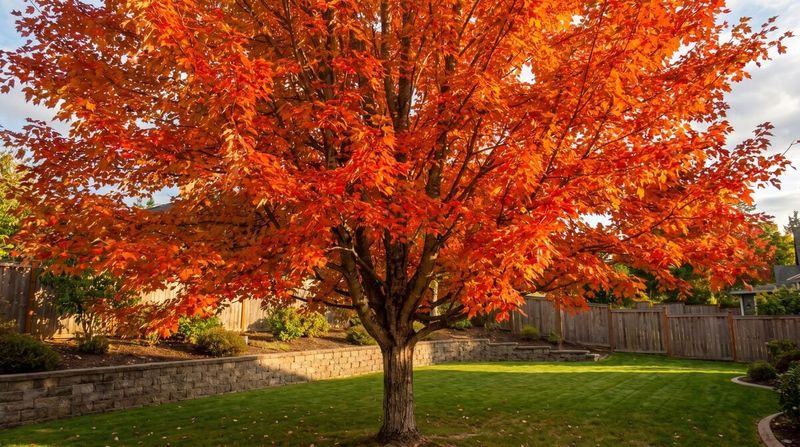
Ask any Piedmont homeowner for a reliable shade tree and the red maple usually tops the list. Native to North Carolina, it grows fast, often putting on two feet or more each year while staying friendly toward nearby structures.
Its roots tend to spread wide and stay closer to the surface, so planting it about 15 to 20 feet from the patio keeps the crown overhead without pushing at your foundation. Come October, the fiery red canopy turns your yard into the kind of scene neighbors slow down to admire.
Beyond looks, red maples pull in songbirds and give early-season pollinators a nectar source before most flowers wake up. That makes it a solid pick for anyone wanting shade that also feeds local wildlife.
Give it steady moisture the first two years, and it will reward you with decades of dependable cover.
2. River Birch
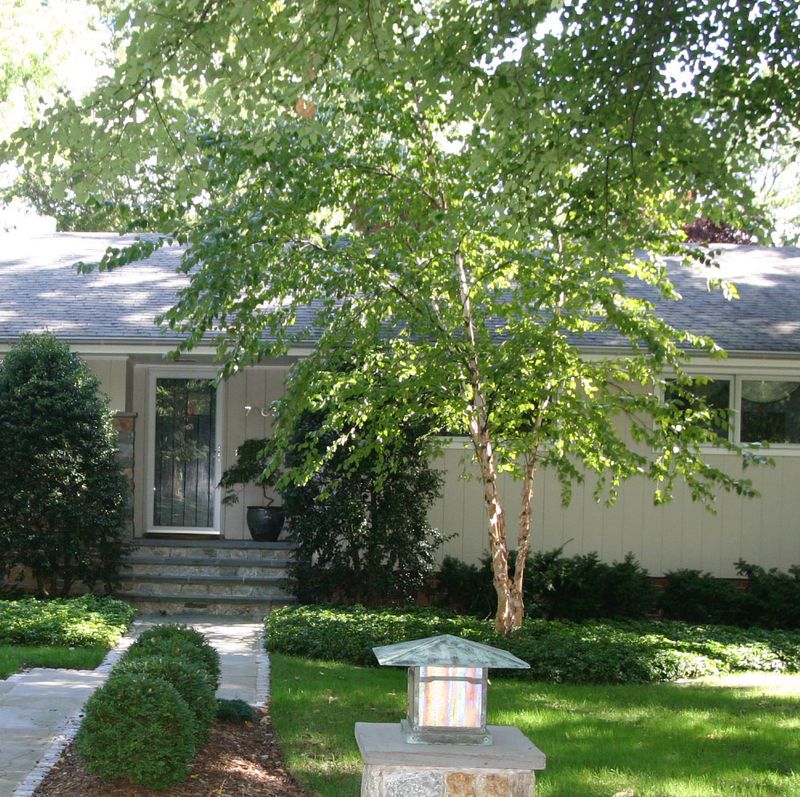
If your yard holds water after a heavy storm, the river birch is practically begging to move in. This NC native shrugs off soggy soil that would rot other trees, and it grows quickly, roughly one and a half to two feet a year.
The peeling, cinnamon-colored bark gives it four-season interest, so even bare winter branches look like something out of a nature magazine. Because its roots chase surface moisture rather than diving deep and destructive, it plays nicely with patios when set back a reasonable distance.
River birch also happens to resist the bronze birch borer that plagues its northern cousins, meaning less worry and less spraying. Birds love the tiny seeds, and the airy canopy filters light into a soft, dappled shade that never feels like a heavy blanket over your outdoor space.
3. Tulip Poplar
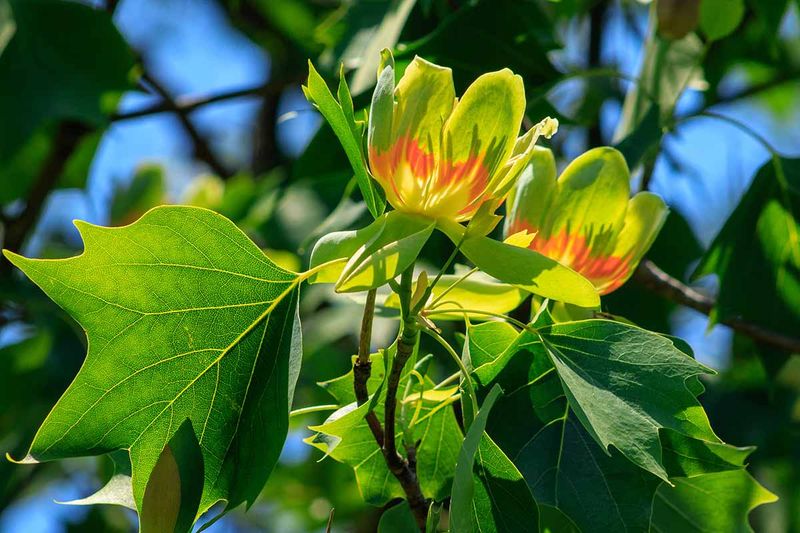
Fun fact: the tulip poplar is North Carolina’s own native giant, and it is one of the fastest-growing hardwoods in the whole Southeast. Some years it can shoot up three feet, giving impatient homeowners real shade in just a handful of seasons.
In late spring it produces greenish-orange blooms shaped like tulips, sitting high in the canopy where hummingbirds and bees go to work. The trade-off for that speed is size, so this one belongs toward the back of a larger lot rather than crowded against the house.
Plant it 25 to 30 feet from any hardscape and its tall, straight trunk will lift the canopy well above your patio. You get towering shade, a wildlife magnet, and a tree that feels distinctly Carolinian all in one.
4. Willow Oak
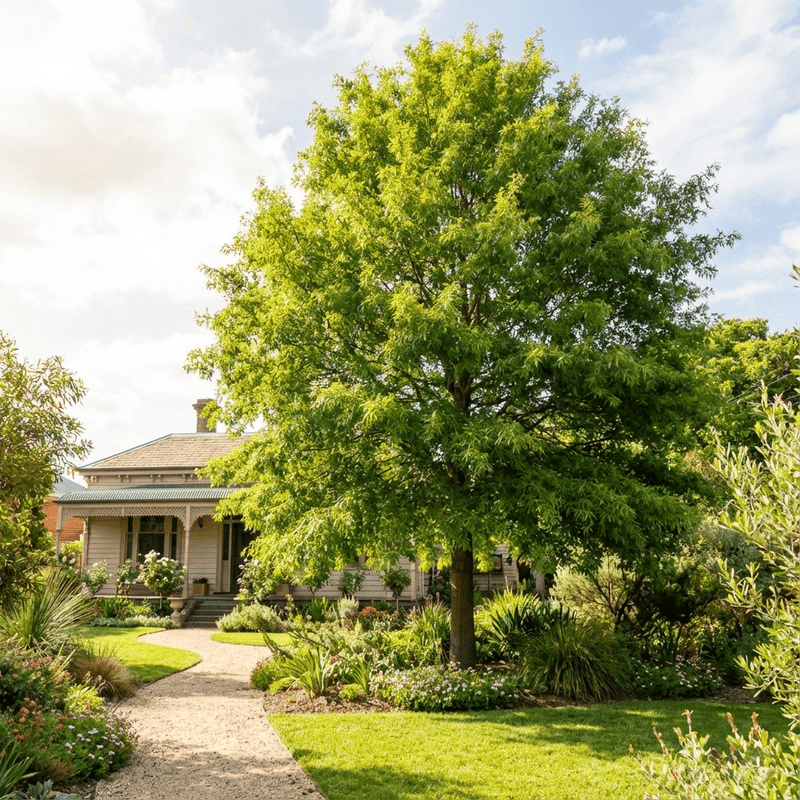
Do not let the skinny, willow-like leaves fool you. This oak is a legitimate shade heavyweight, and it grows faster than most people expect from an oak, often two feet a year once established.
Willow oaks develop a graceful, rounded crown that throws generous shade, and their fine leaves break down quickly instead of leaving you with soggy piles to rake. That tidy habit is a big reason they line so many older neighborhood streets across the Piedmont.
The acorns become a fall buffet for squirrels, deer, and woodpeckers, tying your patio shade to the wider food web in the yard. Because it wants room to stretch, give it a spot at least 20 feet out where its deep-anchoring roots stay well clear of your foundation footings.
5. American Hornbeam
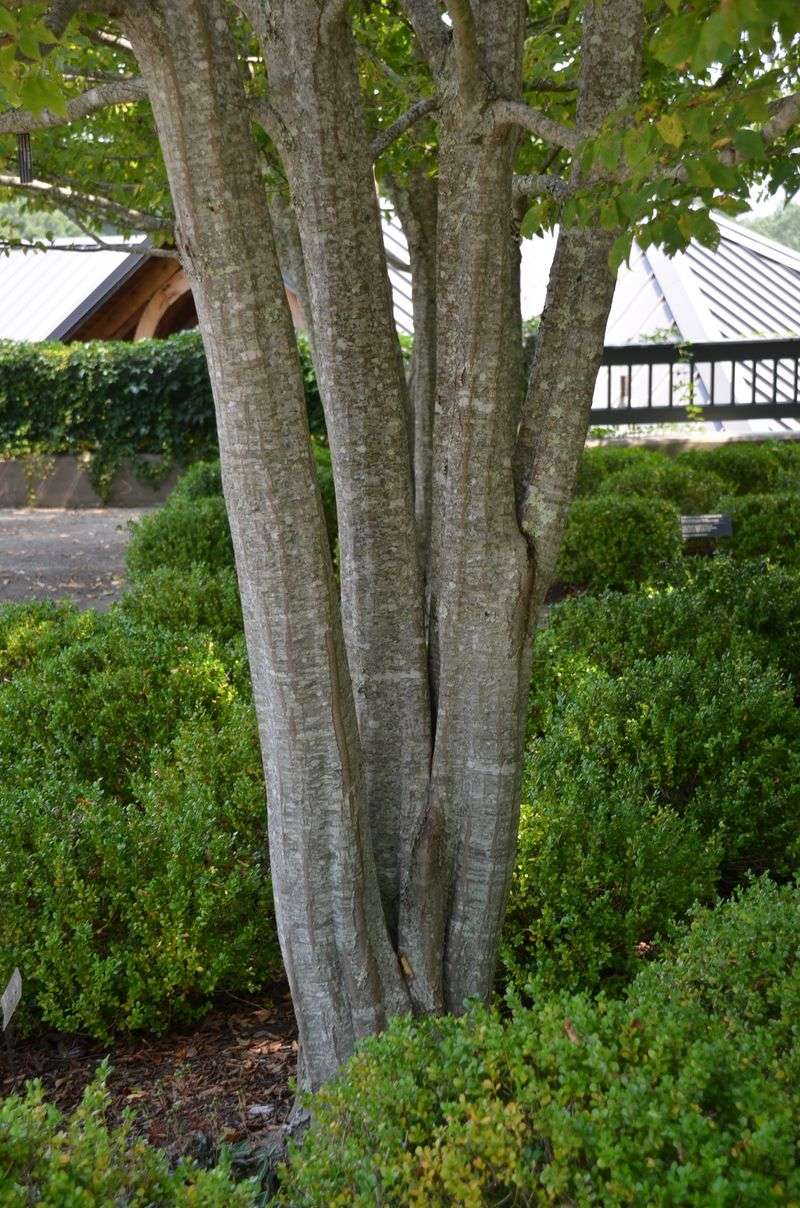
For the homeowner with a smaller lot, the American hornbeam is a quiet hero. Nicknamed musclewood for its rippling, gray bark, this native understory tree tops out around 20 to 30 feet, so it fits tight spaces without ever threatening the house.
Its root system is compact and well-behaved, which makes it one of the safest choices to tuck near a patio, walkway, or even a corner of the home. The dense summer canopy blocks harsh afternoon sun, then glows orange and red before the leaves drop.
Songbirds nest in its low, sturdy branches, and the seeds feed finches and cardinals through winter. Slower than the giants on this list but faster than most small ornamentals, it hits that sweet spot for anyone who wants cozy shade without a big-tree gamble.
6. Southern Sugar Maple
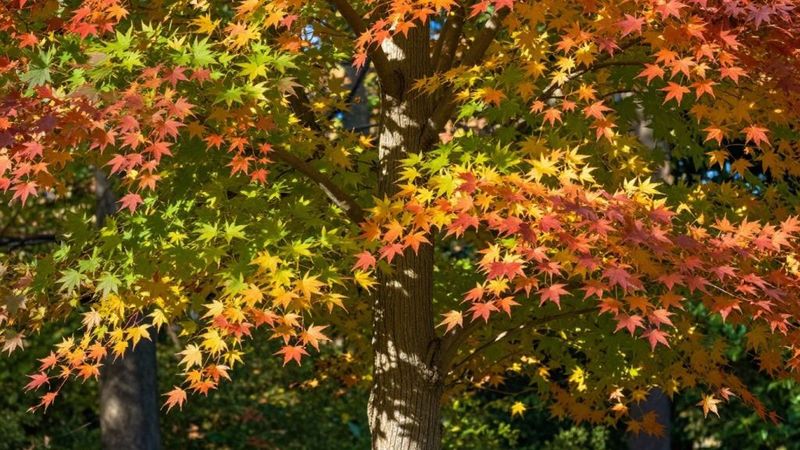
Northern sugar maples struggle in Carolina heat, but the Southern sugar maple was built for it. Adapted to warmer, drier conditions, this native handles the long Piedmont summer far better than its famous relative while still delivering that classic maple fall color.
Growth is moderately fast, and the roots stay reasonably contained, so it makes a trustworthy neighbor for patios when planted with a little breathing room. The dense, rounded crown creates cool, deep shade exactly where you want to sip iced tea in August.
Wildlife appreciate it too, from seed-eating birds to the insects that feed nesting bluebirds in spring. If you love the idea of glowing gold and amber leaves in fall but need a tree that can actually take the Southern climate, this is your match.
7. Green Ash Alternative: Nuttall Oak
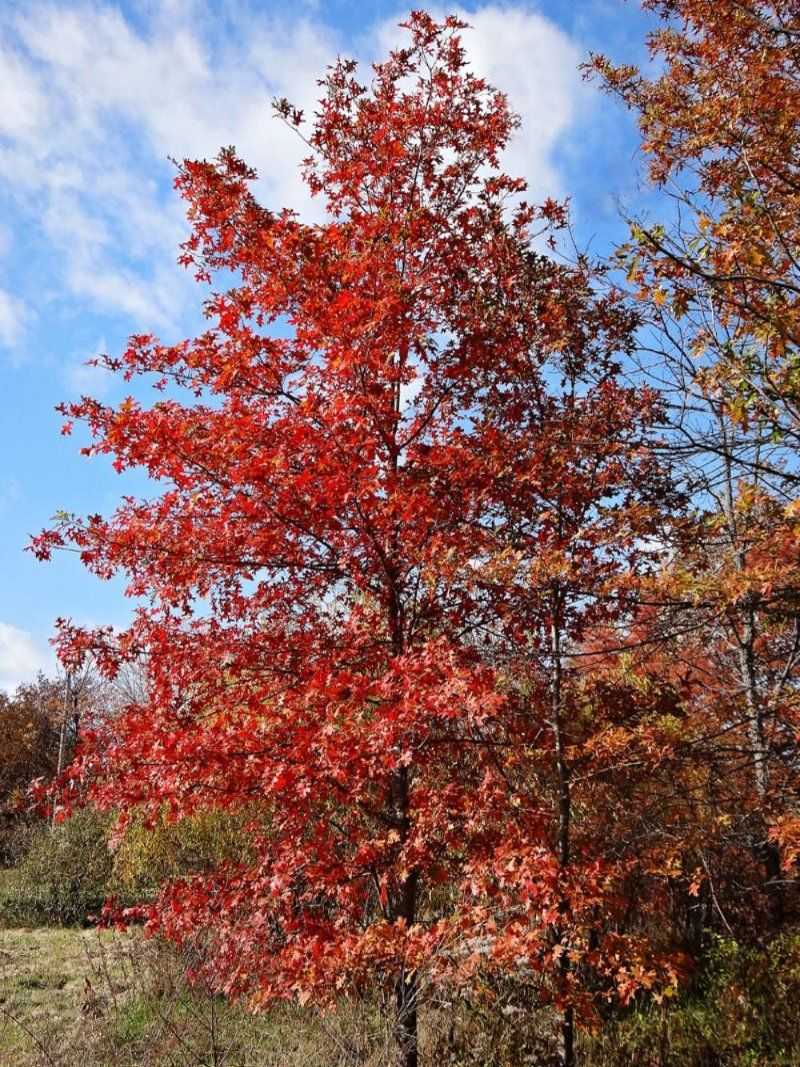
With emerald ash borer wiping out ash trees, savvy homeowners have swapped in the Nuttall oak, and it might be the best trade you make all year. This fast-growing oak can gain more than two feet annually, quickly closing the gap that a lost tree leaves behind.
Its glossy leaves flush deep red in autumn, and unlike some oaks, it starts dropping acorns young, which means quicker food for ducks, deer, and turkeys. Nuttall oak also tolerates wet clay soils common across parts of the coastal plain and Piedmont.
The strong central root system anchors deep rather than sprawling sideways, so it stays clear of slabs and pipes when given proper spacing. Plant it 20 or more feet from the patio and you will have a shade canopy, a wildlife feeder, and a borer-proof replacement all in one native tree.