
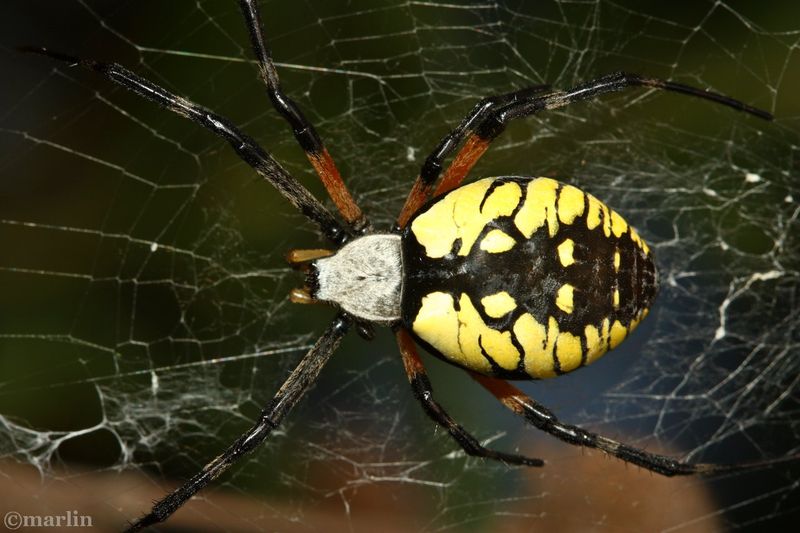
Walk through your Central Texas yard on a late-summer morning and you might come face to face with a large, striking spider hanging in the center of a wide, intricate web. Before you reach for a shoe or a can of spray, take a breath.
That spider is most likely the black-and-yellow garden spider, Argiope aurantia, and university extension sources generally describe it as not dangerous to people. Getting a closer look at the pattern on its body and the shape of its web can tell you a lot about what you are actually dealing with.
The yard visitor is most likely a black-and-yellow garden spider
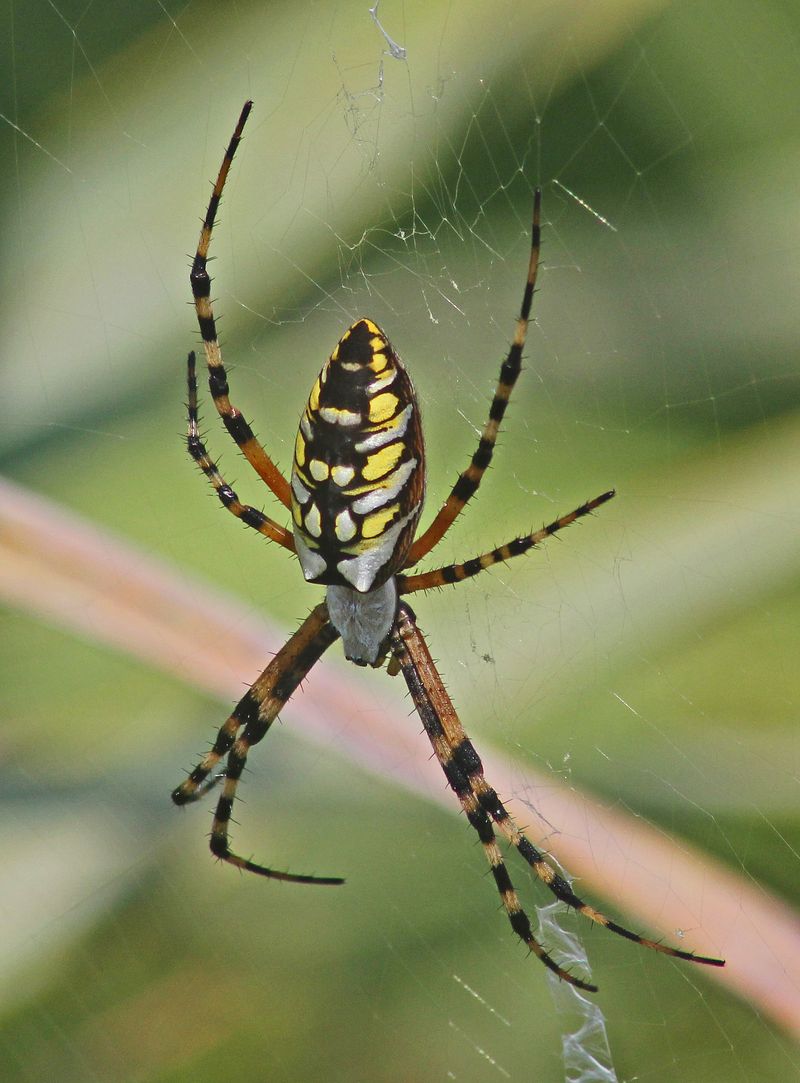
Late summer in Central Texas tends to bring a familiar surprise: a spider bigger than most homeowners expect, suspended in a broad, wheel-shaped web strung between fence posts, garden stakes, or tall grass near a walkway. That spider, if it has a boldly patterned black-and-yellow abdomen and sits head-down in the middle of a flat, circular orb web, is a strong candidate for Argiope aurantia, the black-and-yellow garden spider.
Texas A&M AgriLife Extension identifies this species as common in Texas and notes that female body length can exceed one inch.
The practical answer most Central Texas gardeners need comes quickly: if the spider matches that Argiope pattern, it is not one of the state’s medically important widow or recluse spiders, and extension sources generally classify it as not dangerous to people. That said, a headline description alone cannot pin down a species with certainty.
Other orb-weavers live in Texas, including the banded garden spider, Argiope trifasciata, and additional large web-builders that can look similar at a quick glance.
The timing of a September sighting fits a broader seasonal pattern. UF/IFAS Extension research on Argiope aurantia documents that adults become conspicuous later in the growing season and that egg sacs commonly appear in late summer or early fall.
The Illinois Department of Natural Resources lists late August through September as a typical window for this activity, though local climate and individual development can shift that timing in either direction.
A large orb web in your yard this time of year is worth a second look rather than an immediate reaction. Matching the spider’s actual features against a short checklist takes only a minute and gives you a far more reliable answer than the spider’s size alone.
BugGuide’s genus Argiope records show just how many similar-looking orb-weavers occur across the region, which is reason enough to confirm what you saw before deciding what to do about it.
Check the spider and web before deciding what you saw
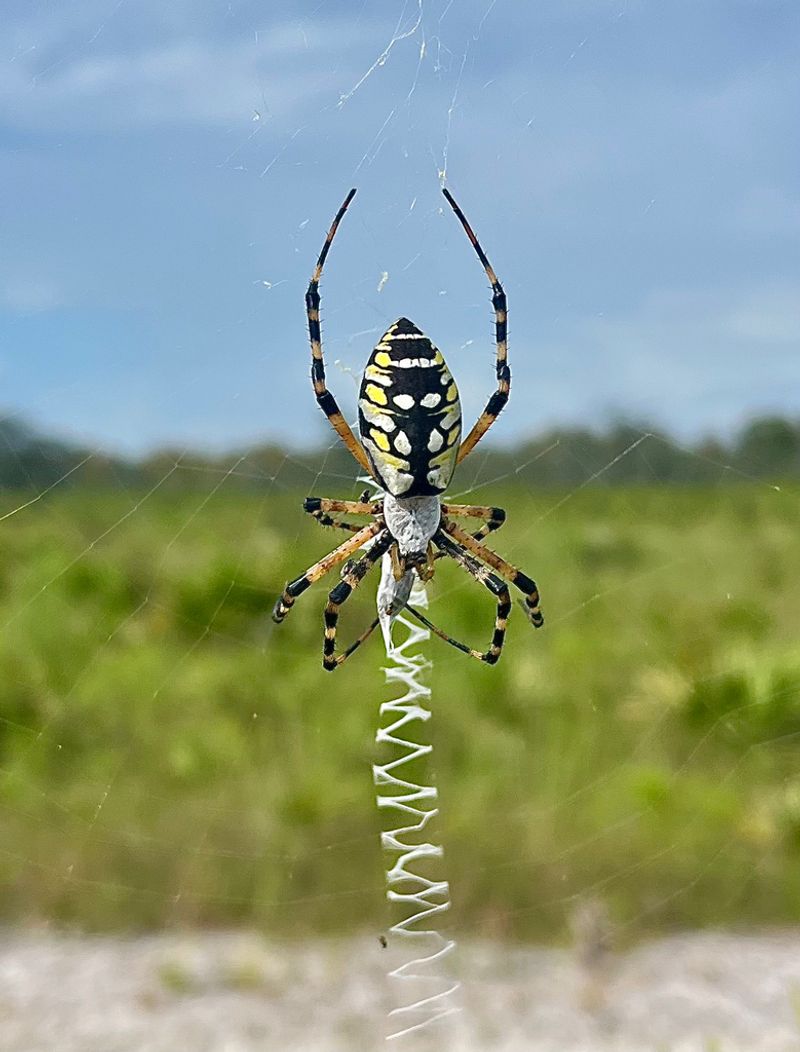
Female Argiope aurantia spiders carry a set of visual features that, taken together, make a reasonably confident field identification possible without catching or disturbing the animal. The abdomen is large and broadly oval, marked with a bold pattern of black and yellow.
The front body region, called the cephalothorax, appears silvery or pale rather than colored like the abdomen. The legs are mostly dark, and the spider typically hangs head-down at or near the center of its web.
A UF/IFAS introduction to common orb-weavers describes these features consistently across Argiope species found in the Southeast and Gulf region.
The web itself adds another layer of information. Garden spiders build flat, nearly circular orb webs that can span a foot or more across.
Many webs include a thick white zigzag band of silk running vertically through the center, commonly called the stabilimentum or writing pattern. Researchers have proposed several explanations for this structure, including predator defense, prey attraction, and reducing accidental damage from larger animals, but no single function has been settled by the available studies.
A 2024 review in Frontiers in Arachnid Science surveyed the competing hypotheses and found the question remains open. Describing the stabilimentum as a curiosity rather than a structure with one proven job is the honest position.
Males of the species are much smaller and far less conspicuous than females, which is why most homeowners notice only the female. Texas A&M AgriLife Extension confirms that the female’s body can exceed one inch, making her the visually dominant presence in the web.
One more caution: the banded garden spider, Argiope trifasciata, and other large orb-weavers can share similar habitats and build comparable webs. If the abdomen shows silvery banding rather than a clearly yellow-and-black pattern, or if the web lacks a central zigzag, the spider may belong to a different species.
A photo showing the abdomen pattern, web shape, and any silk decoration gives you the best chance of a correct identification.
Why the spider may become noticeable in late summer
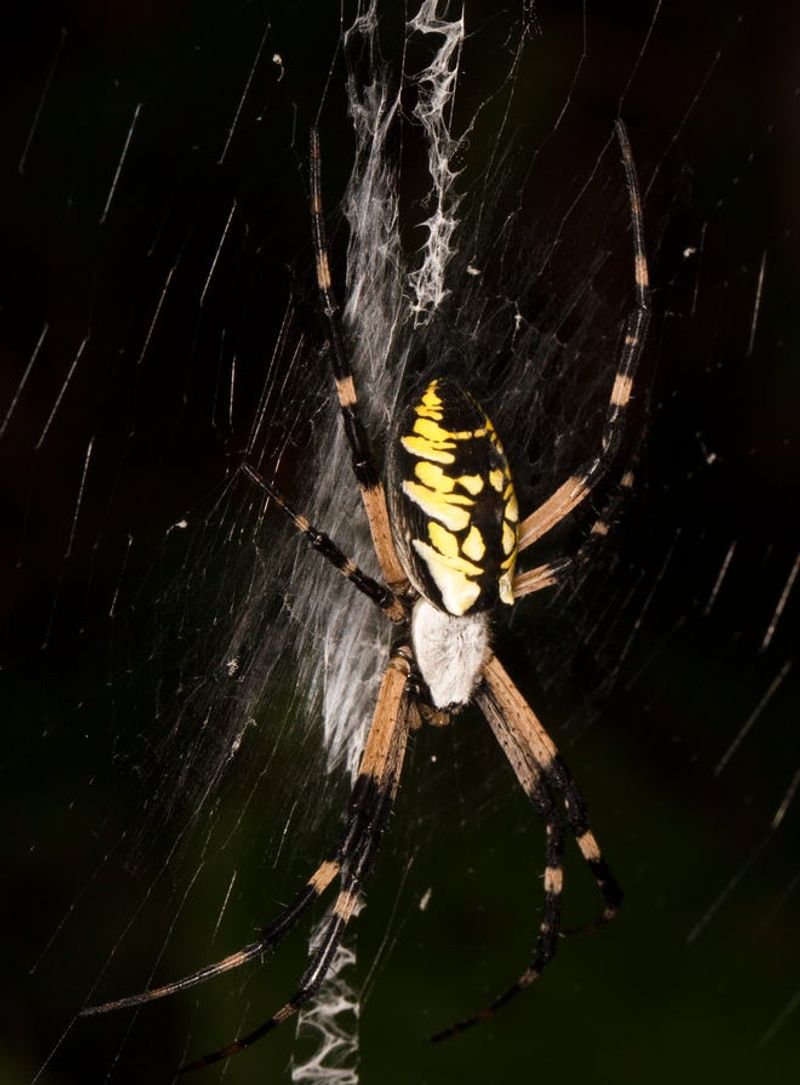
Garden spiders do not simply appear in late summer out of nowhere. Their life cycle begins much earlier in the year, when tiny spiderlings hatch from overwintered egg sacs and disperse in spring, often ballooning on silk threads to reach new locations.
Through spring and early summer, juveniles grow steadily while building progressively larger webs, but they tend to stay small enough that most people walk right past them without a second glance.
By late summer, females have reached their full adult size and their webs have grown to their most impressive dimensions. That combination of a large body and a wide, well-built orb web makes the spider far more visible than it was a few months earlier.
UF/IFAS Extension documentation on Argiope aurantia describes this pattern of juvenile dispersal in spring followed by conspicuous adults later in the growing season.
Egg sac production tends to follow mating, and it commonly occurs during this same late-summer to early-fall window. The Illinois Department of Natural Resources identifies late August through September as a typical period for egg sac construction, and Animal Diversity Web’s species account for Argiope aurantia supports the general late-summer to fall reproductive timeline.
A September sighting in Central Texas is consistent with that broader pattern, but it is not a guaranteed or universal schedule. Warmer temperatures in Texas can shift development earlier or later depending on the year, the specific location, and even the individual spider.
Seeing a large garden spider in August or October is equally plausible. The key takeaway is that late summer simply brings together the factors that make these spiders hard to miss: adult size, large webs, and reproductive activity all occurring at roughly the same time.
A correctly identified Argiope is generally not dangerous to people
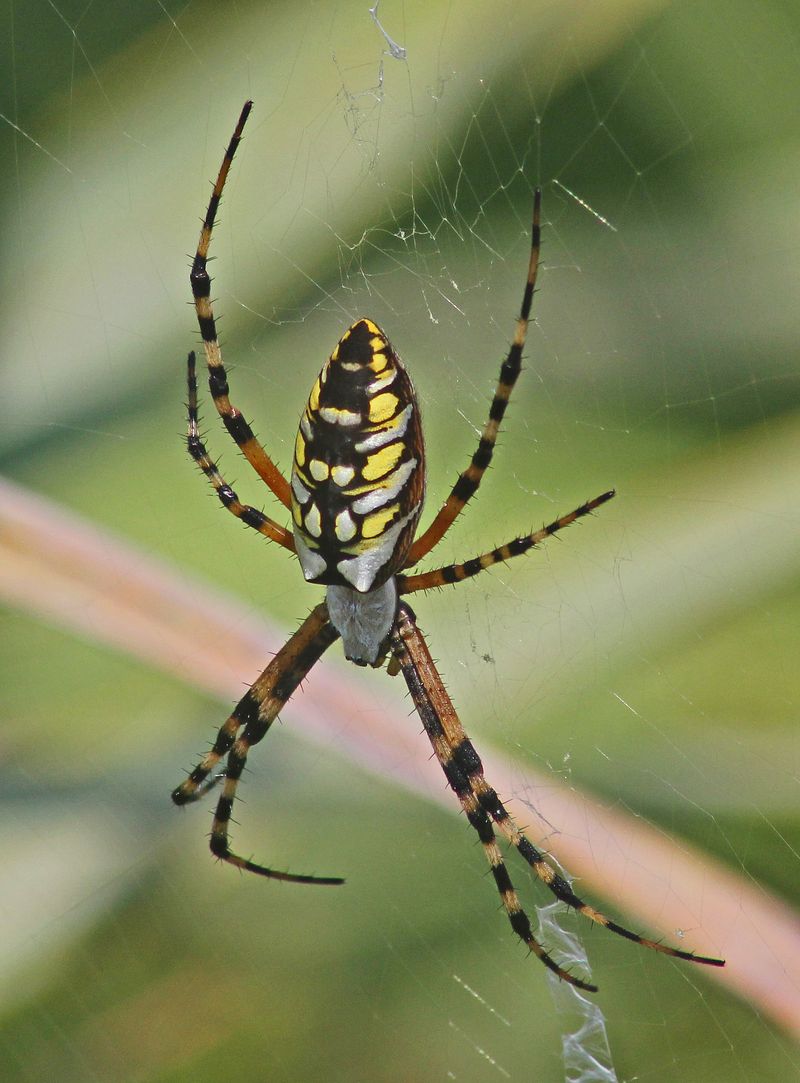
Knowing what the spider is matters as much as knowing it is there. University extension sources are consistent on this point: University of Minnesota Extension describes black-and-yellow Argiope as harmless to people and states that bites are extremely unlikely.
Texas A&M AgriLife Extension classifies orb-weavers broadly as harmless to people, while noting that large webs can be a nuisance in high-traffic areas.
That classification does not mean the spider is physically incapable of biting. Argiope has venom and fangs, which it uses to subdue the insects it catches.
A defensive bite is possible if someone handles, squeezes, traps, or swats the spider. The straightforward way to avoid that outcome is to give the spider space and not touch it, especially when working near the web.
Extension guidance is consistent: do not collect, squeeze, or trap the spider. Observe it from a comfortable distance.
Texas also has spiders of genuine medical concern, and the contrast in appearance and behavior is worth knowing. Widow spiders build irregular, tangled webs close to the ground or in sheltered spots such as wood piles, utility boxes, and the undersides of outdoor furniture.
They are not building flat, open orb webs across sunny fence lines. Recluse spiders are brown, relatively small, and tend to retreat into quiet, undisturbed spaces rather than hanging openly in the yard.
Texas A&M’s guide to venomous terrestrial animals distinguishes these species clearly from the orb-weaving garden spiders.
A large, brightly patterned spider sitting in the center of a flat circular orb web in an open, sunny location simply does not fit the profile of either the widow or the recluse. UF/IFAS Extension reinforces this by noting that venomous spiders of medical concern in the region occupy very different habitats and show very different physical features from the garden orb-weavers.
Correct identification is the foundation of any honest safety reassurance: the Argiope pattern, the flat orb web, and the open sunny location all point away from medically important species and toward a spider that gardeners can comfortably leave alone.
The spider can benefit the garden without controlling the whole yard
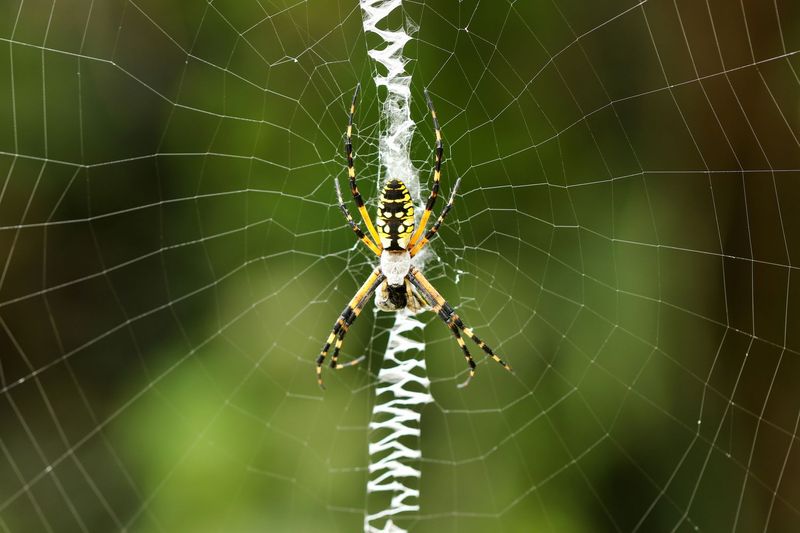
Garden spiders earn their name in a practical sense. Argiope aurantia builds its web in open, sunny spots where flying and jumping insects are active, and anything that blunders into the sticky spiral becomes a meal.
Texas A&M AgriLife Extension specifically notes that grasshopper-sized insects may end up in a garden spider’s web, which gives you a sense of the prey range. The spider is an opportunistic predator, not a targeted pest-control system, so what it catches depends on what is flying nearby.
Oklahoma State University Extension describes garden spiders as beneficial because they catch pest insects around homes and gardens. That framing is honest without being oversold.
One spider working one web covers a limited area, and it will catch whatever lands in the web rather than seeking out a particular pest. Expecting a single Argiope to eliminate mosquitoes or protect an entire vegetable bed from damage sets up a disappointment that the animal cannot deliver.
The more realistic view is that a garden spider contributes to a broader mix of insect-eating predators that includes birds, lizards, and other arthropods. Oklahoma State’s guidance on conserving beneficial arthropods makes the case that outdoor predators like spiders support overall yard health when they are allowed to stay rather than routinely eliminated.
Leaving a garden spider in a low-conflict location, such as along a fence line away from foot traffic, costs nothing and adds a predator to the yard’s natural system.
Move an inconvenient web without handling the spider
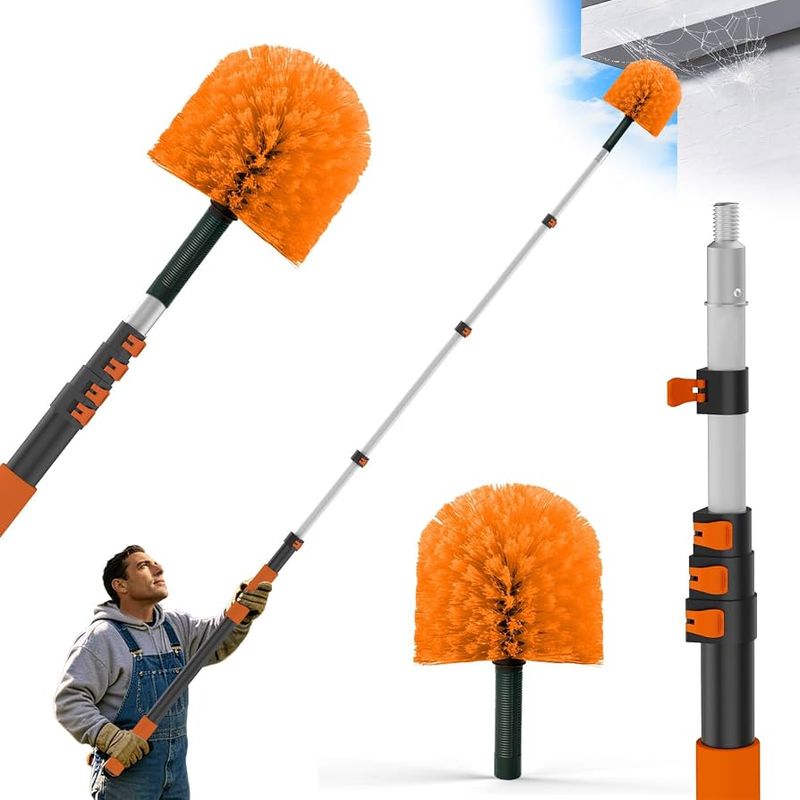
Not every web location is a good one for the people who share the yard. A web strung at face height across a frequently used garden path, a gate, or the gap between two porch columns is a reasonable candidate for removal, and removing it does not require touching the spider or reaching for a pesticide.
A broom, a vacuum, or a firm spray of water from a garden hose can clear the web without putting your hands anywhere near the spider. The spider will typically move off on its own when its web is disturbed.
University of Minnesota Extension recommends tolerating outdoor spiders when possible because they are beneficial predators, but also acknowledges that practical removal is sometimes the right call for webs in high-traffic areas.
Reaching for a broad-spectrum insecticide because one orb-weaver built a web in an inconvenient spot is a disproportionate response. Pesticide applications in the garden kill far more than their intended targets.
Beneficial insects, pollinators, and other predatory arthropods can all be affected. Oklahoma State Extension guidance on beneficial arthropods specifically cautions against unnecessary broad-spectrum pesticide use when the concern is a single outdoor spider that poses no medical threat.
Removing the web is not the same as destroying the spider. After web removal, the spider will often rebuild in a nearby location that may work better for everyone.
If the new spot is out of the way of foot traffic, leaving the animal there to continue hunting is the lower-effort and ecologically preferable outcome. The goal is a yard that works for both the people using it and the beneficial wildlife passing through it.
Judge a suspected bite by symptoms, not by assumption
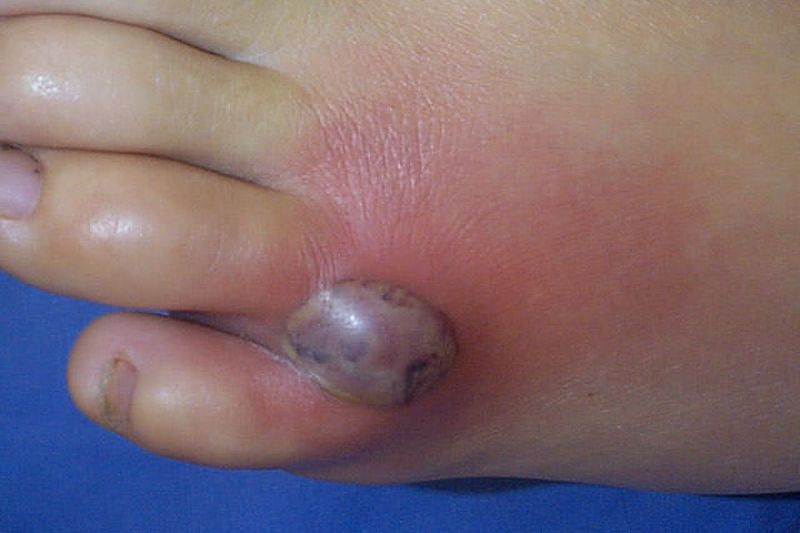
Unexplained red, swollen, or painful spots on the skin tend to get blamed on spiders, especially after someone has been working in the yard near a large web. That assumption is often wrong.
CDC Yellow Book guidance on envenomations notes that many alleged spider bites are actually skin infections or other conditions, particularly when no spider was observed making contact. A swollen red mark that appears after yard work could come from an insect sting, a plant irritant, contact dermatitis, or a bacterial skin infection.
CDC information on MRSA points out that staph skin infections are frequently mistaken for spider bites because they can produce a red, painful, swollen lesion that worsens over time. Assuming a skin lesion came from a spider without seeing the spider bite you is not a reliable basis for treatment decisions.
If you do suspect a spider made contact, basic first aid is straightforward. Wash the area with soap and water and apply a cold compress to reduce any swelling.
CDC/NIOSH guidance for outdoor workers on venomous spiders recommends seeking medical care if symptoms include severe pain, spreading redness, fever, difficulty breathing, or muscle cramps, or if the wound worsens or opens. Those are the signs that require professional evaluation, not a self-diagnosis based on what spider you recently walked past.
For a correctly identified Argiope that you gave adequate space, a bite is extremely unlikely to begin with. The practical routine is simple: match the visual features to confirm the spider, give it room to do its work, and move only the webs that genuinely interfere with daily use of the yard.
A spider that fits the Argiope pattern, hangs in an out-of-the-way orb web, and is left undisturbed is about as low-risk a yard visitor as Central Texas has to offer.