
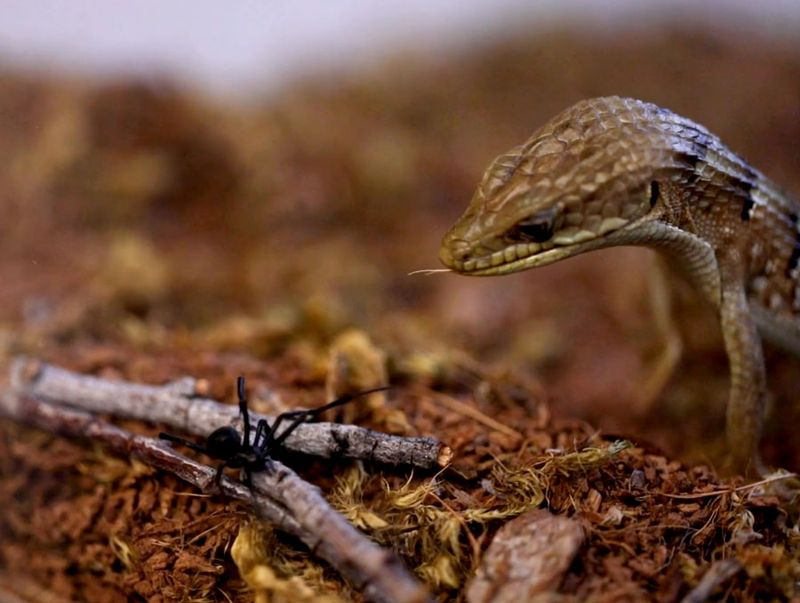
A scaly, quick-moving reptile slipping under your garden gate might look alarming, but it could be one of your yard’s most useful neighbors. Southern alligator lizards are found across many parts of California, and their diet includes some of the pests homeowners worry about most. Understanding what this animal actually does, and what it cannot do on its own, can help you make smarter choices about the wildlife sharing your outdoor space.
A southern alligator lizard may be a normal yard visitor
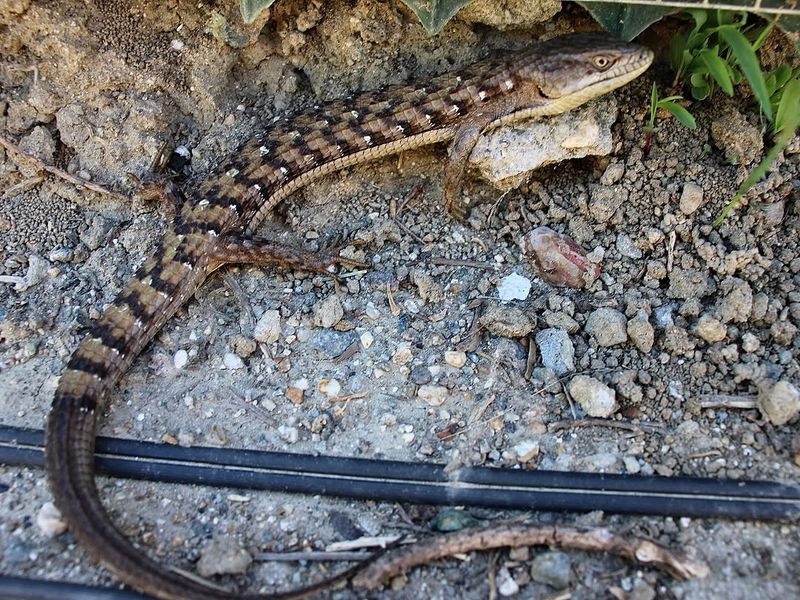
Spotting a lizard with rough, overlapping scales and a tail longer than its body is a good sign you are looking at an alligator lizard, but exactly which one takes a closer look. California is home to several species in the Elgaria genus, and a quick glance is rarely enough to confirm the species. A brief sighting from across the yard does not establish whether you have a southern alligator lizard, a northern alligator lizard, or another close relative.
The southern alligator lizard, Elgaria multicarinata, is the one most relevant to the pest-eating story told in this article. California Department of Fish and Wildlife species data describes this lizard as generally common in suitable habitats, including valley-foothill terrain, chaparral, open woodland, and grassland edges. That range covers a large portion of the state, though it does not mean southern alligator lizards are equally common in every California neighborhood, climate zone, or densely developed yard.
Where conditions are right, these lizards use rocks, logs, debris piles, dense low vegetation, and structural crevices as cover and basking spots. A yard with stone borders, wood chip mulch, or a south-facing fence can be perfectly adequate habitat. The animal is not necessarily lost or displaced when it appears near a house; in many cases it is exactly where it belongs.
UC Integrated Pest Management guidance on lizards notes that California lizards found in gardens generally cause no measurable harm to plants and can provide pest-control benefits. An alligator lizard in the yard is not automatically a problem that needs solving. Before reacting to one, the most useful first step is simply watching it for a moment to understand what it is doing.
Its menu includes more than garden pests
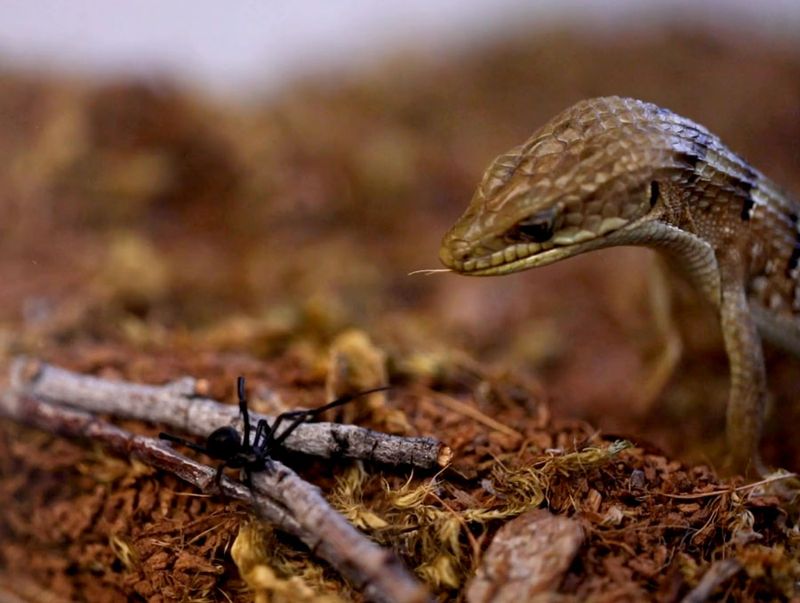
One of the most common misconceptions about alligator lizards is that they are picky hunters focused on a single target. The reality is much broader. Southern alligator lizards are generalist predators, meaning they eat whatever suitable prey they can catch rather than specializing in one species or pest type.
National Park Service documentation on the southern alligator lizard specifically lists insects and their larvae, spiders including black widows, centipedes, scorpions, sow bugs, snails, other lizards, and occasionally small vertebrates among documented or reported prey. That is a genuinely wide menu, and it reflects how this animal feeds opportunistically across the landscape rather than systematically targeting the pests a homeowner wants gone.
Snails appear on that list, which matters to many California gardeners dealing with brown garden snails on their vegetables and ornamentals. However, eating snails occasionally is not the same as controlling a snail population. UC IPM’s guidance on garden snails and slugs is clear that natural enemies of snails and slugs are often not effective enough on their own to provide satisfactory garden control. A lizard may eat a snail it encounters, but it will not systematically patrol your raised beds.
The same logic applies across the diet. Alligator lizards eat scorpions, centipedes, and sow bugs when they find them, which is a genuine ecological benefit. UC IPM confirms that garden lizards cause no measurable plant damage and recognizes their pest-control potential, but that potential is real without being predictable or quantified. Thinking of a southern alligator lizard as a helpful, active predator in your yard is accurate.
Thinking of it as a replacement for any other pest-management step is not supported by the evidence.
Black-widow predation is real but limited in what it proves
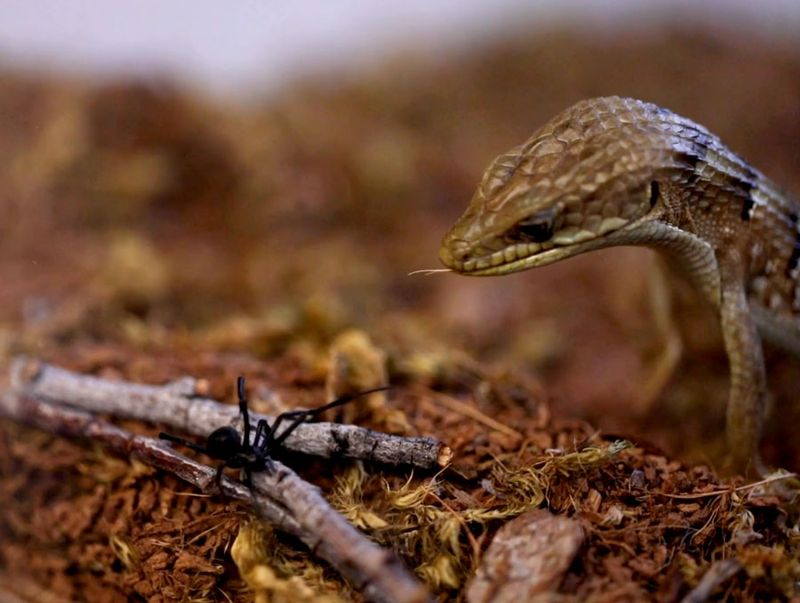
Few claims about alligator lizards get more attention than the idea that they eat black widows. Fortunately, this one is backed by real science, though the science is more specific than the headlines suggest.
Southern alligator lizards share habitat with western black widows across much of California, and researchers have documented the lizards consuming them. Beyond prey consumption, a peer-reviewed study on black-widow venom resistance in sympatric lizards found that southern alligator lizards showed comparatively limited tissue damage and impairment after venom exposure in laboratory tests. That is a meaningful biological finding. The accurate word is resistant, not immune.
The study measured venom effects under controlled conditions; it did not find that lizards are unaffected, and it did not test what happens outdoors over time.
What the study does not show is equally important for homeowners. There is no evidence from that research, or from any source reviewed for this article, that having a southern alligator lizard in your yard will measurably reduce the number of black widows around your house. The lizard is a generalist predator that may eat a black widow it encounters, as the NPS species page confirms. That is not the same as systematic spider suppression.
Another practical point: not every black-looking spider in a California yard or garage is a western black widow. UC IPM’s widow spider guidance notes that brown widows, false black widows, and other species are commonly mistaken for western black widows. Correct identification matters before deciding how to respond to any spider concern. A lizard’s documented appetite for black widows is a genuine ecological fact, but it is one piece of a larger picture, not a management strategy on its own.
Treating an outdoor lizard as a pest misses the evidence
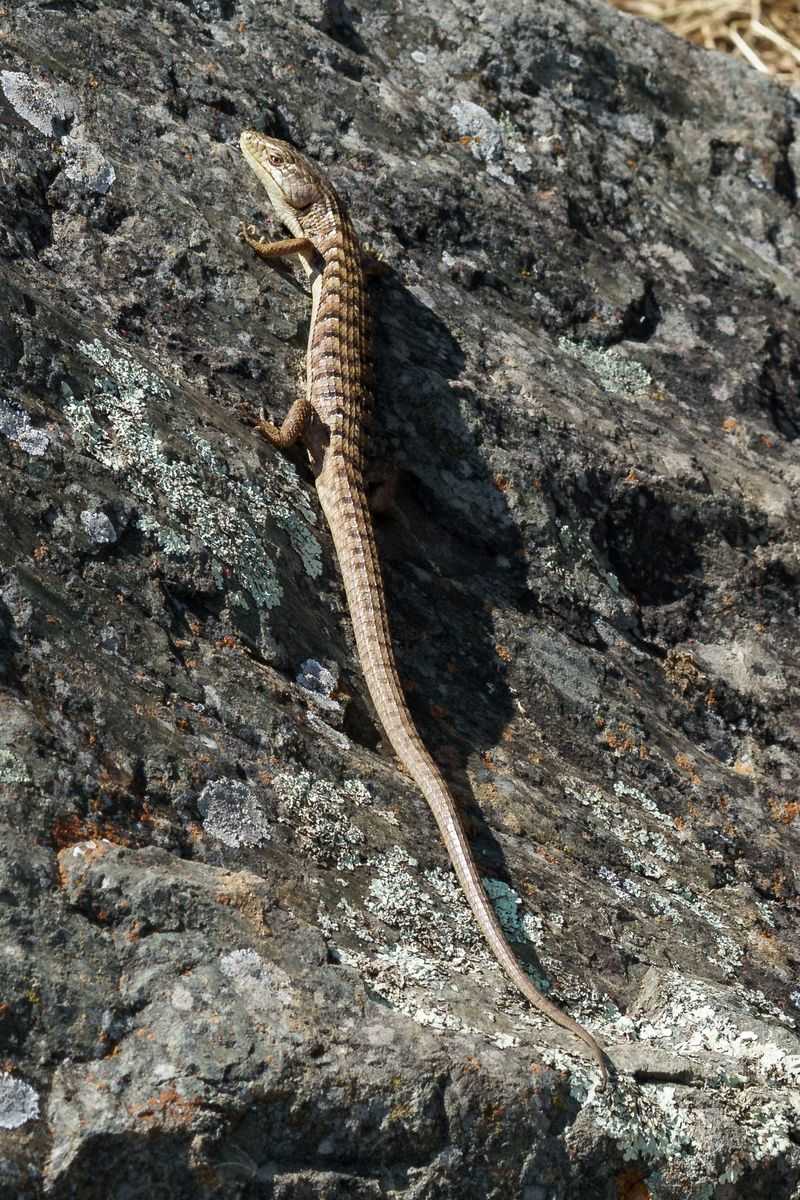
People sometimes react to an alligator lizard the same way they react to a snake or a large insect: with a startled attempt to shoo it away or move it somewhere else. That reaction is understandable, but it works against you when the animal in question is a harmless, beneficial predator doing exactly what it should be doing outdoors.
The evidence supports a clear practical default: if a southern alligator lizard is outside and not causing a specific problem, leave it alone. UC IPM recommends that garden lizards generally be left alone, and the reasoning is straightforward. The lizard is not damaging plants, it is not aggressive toward people who do not disturb it, and it is actively hunting the kinds of invertebrates most homeowners would rather not have in their yards.
Chasing, cornering, or picking up an alligator lizard casually carries real costs. Rough handling or pursuit can cause the lizard to shed its tail as an escape response, which is stressful for the animal and means losing a body part it will have to regrow. Alligator lizards also bite defensively when they feel threatened, and their grip can be surprisingly firm for a small reptile.
None of this means homeowners who have reacted to a lizard with alarm did something wrong. Encountering an unfamiliar reptile is startling, and not everyone has context for what they are seeing. The correction here is not blame but information: once you know what an alligator lizard is and what it contributes, the most evidence-supported response to one in the yard is to watch it for a moment and then walk away.
An indoor visitor can leave without a struggle
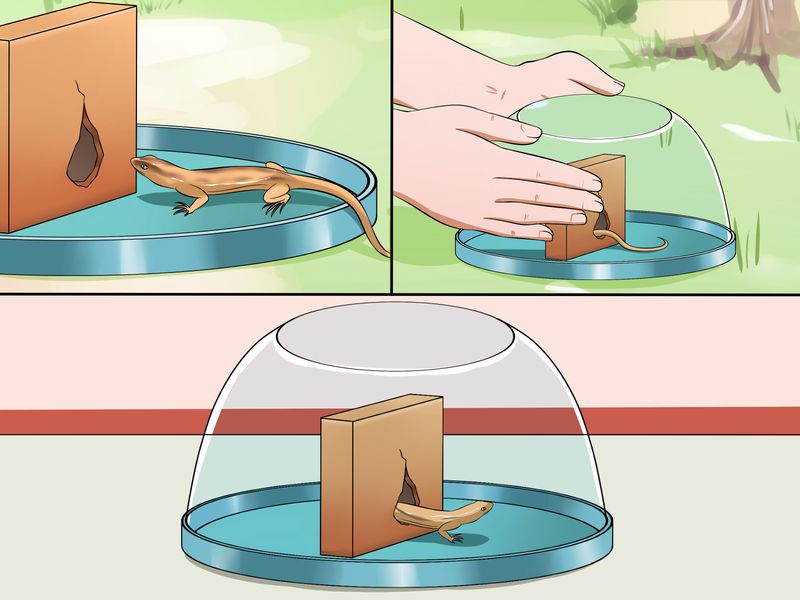
Finding an alligator lizard inside the house is a different situation from finding one in the garden, and it does call for action. The good news is that removing one safely takes less than five minutes and requires nothing more than a container, a piece of cardboard, and a pair of gloves.
UC IPM’s lizard removal guidance recommends placing a container, such as a large cup, bowl, or box, directly over the lizard to contain it. Then slide a stiff piece of cardboard underneath the container to create a floor, hold the cardboard firmly against the container’s rim, and carry the whole assembly outside. Set it down gently on the ground away from the door and lift the container. The lizard will move off on its own.
Wearing a glove for this task is a reasonable precaution. Alligator lizards bite defensively, and while the bite is not venomous or medically dangerous for most people, it can be a firm, clamping grip that comes as an unpleasant surprise. A light gardening glove gives you enough protection to stay calm and handle the container steadily.
Do not grab the lizard directly, and never pick it up by the tail. A startled alligator lizard can drop its tail as an escape reflex, which is harmful to the animal even though the tail will eventually regrow.
Once the lizard is outside, take a few minutes to figure out how it got in. UC IPM advises sealing any openings roughly one-quarter inch and larger, paying particular attention to the gaps beneath exterior doors, spaces around pipes and conduit, vent screens, window frames, and service entrances. A lizard inside once usually means there is an opening it will find again, and sealing those gaps also reduces the entry points for insects and other pests.
Manage black-widow habitat separately
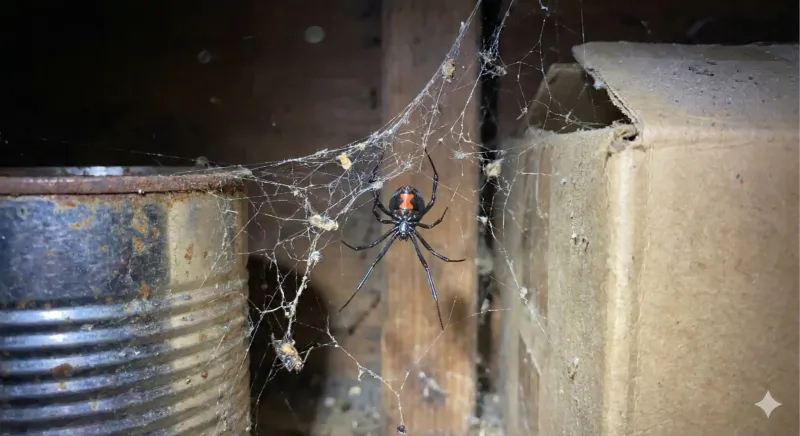
An alligator lizard in the yard may eat a black widow it encounters, but that possibility is not a reason to leave dangerous spider webs or egg sacs in place. Black widows can deliver a medically significant bite, and the risk is highest in exactly the kinds of places people tend to forget about until they reach in without looking.
UC IPM’s guidance on widow spiders identifies clutter, cracks, crevices, woodpiles, and sheltered areas around structures as the spaces where widow spiders are most likely to establish. Garages, storage sheds, under outdoor furniture, and inside stacked pots or equipment are all common sites. The recommendation is to reduce those sheltered conditions through sanitation: sweep or vacuum webs and egg sacs in buildings and storage areas, and use a flashlight before reaching into any sheltered space where a spider could be hiding.
That kind of regular, direct management is what actually lowers your exposure to black-widow bites. A lizard hunting in the garden may reduce the overall invertebrate population in a general way, but it cannot be counted on to clear the corner of your garage or the gap behind a garden shed. Those spaces require your attention.
The same principle applies to snails. UC IPM notes that natural enemies alone are rarely enough to keep brown garden snail numbers at a level most gardeners find acceptable. Hand-picking, copper barriers, and targeted baiting remain the practical tools for snail management. A lizard that eats a snail is a welcome bonus, not a replacement for those steps.
Welcoming alligator lizards and managing spider habitat are not competing choices. Both can happen at the same time, and neither undermines the other. Letting the lizard continue its natural hunting outdoors while you handle the high-risk indoor and structural spider zones is a practical combination that uses the best of both approaches.
Wildlife-friendly landscaping must still meet fire rules
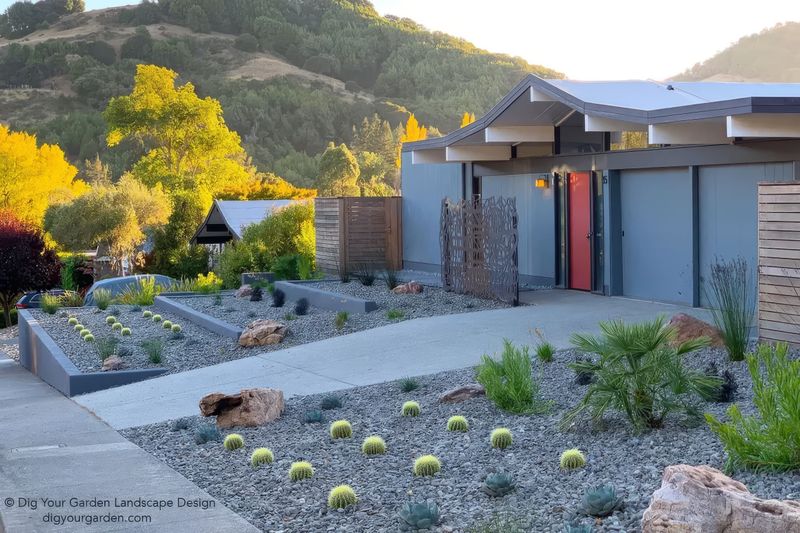
Rocks, low-growing native plants, and ground-level crevices can all support southern alligator lizards in a yard. Those features are genuinely compatible with a California garden, but the way they are arranged matters enormously depending on where you live.
CDFW species data confirms that southern alligator lizards use rocks, logs, debris, and dense vegetation as cover. None of those materials should be placed or retained against or immediately beside a structure in a fire-prone area. Combustible cover near a home creates ember-catching conditions that can accelerate fire spread, and no wildlife benefit outweighs that risk.
CAL FIRE’s defensible space guidance focuses on the first five feet around a structure as the zone where ember-resistant conditions matter most. That means non-combustible ground cover such as gravel or decomposed granite rather than dry mulch, wood chips, or leaf litter directly against the foundation. Combustible materials, including stacked wood, stored equipment, and dense low vegetation, should be removed or relocated out of that zone.
Beyond the immediate five-foot zone, California Board of Forestry defensible space zone requirements establish additional spacing and fuel-reduction standards for zones extending 30 feet and 100 feet from the structure, with local ordinances sometimes requiring stricter treatment. Before adding any landscape feature intended to attract wildlife, check your local fire district’s requirements. What is allowed on a coastal flat lot may not be permitted on a wildland-interface hillside.
Lizard-compatible landscaping in fire-prone California means using non-combustible rock borders, spaced native plantings with adequate clearance, and hardscape features that provide shelter without becoming fuel. A well-placed rock cluster or a low stone wall can serve as both lizard habitat and a fire-safe design element. The goal is finding features that work for both, not choosing between them.
Use tolerance with practical boundaries
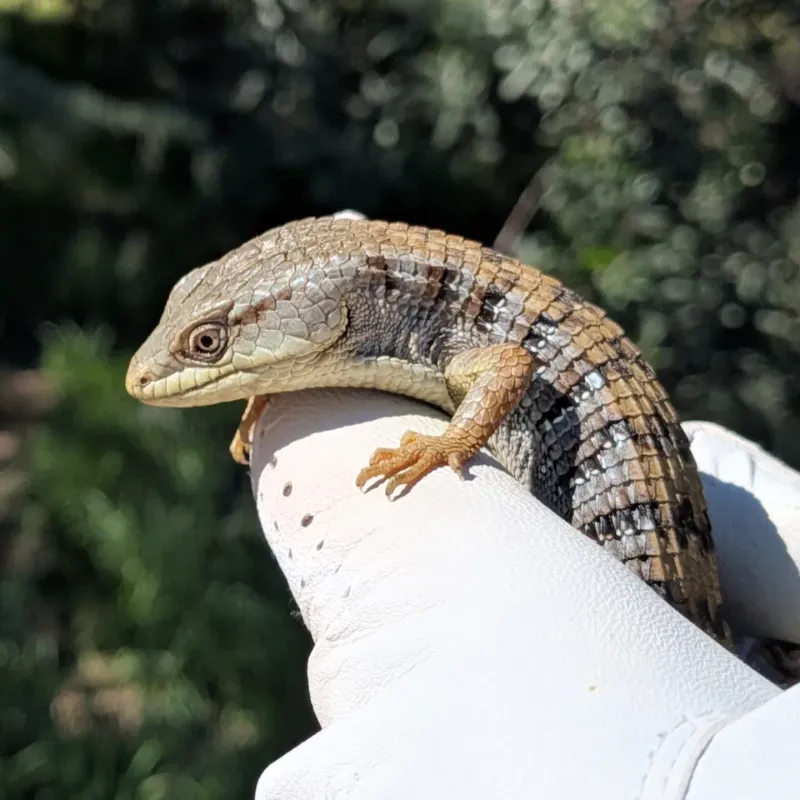
Southern alligator lizards earn their place in a California yard without requiring anything from you except a decision not to remove them. When one is outside and not creating a specific problem, the right call is to leave it alone. That single choice is the most useful thing most homeowners can do.
When a lizard does come inside, the container-and-cardboard method described earlier handles the situation cleanly and safely. After removing it, seal the entry point it used. UC IPM’s lizard guidance covers both removal and exclusion in practical detail. For spider concerns, UC IPM’s widow spider page gives homeowners a direct, sanitation-based approach that does not depend on any predator to do the work for you.
Before adding rocks, plants, or any other cover feature to attract or support lizards, confirm that the placement complies with your local defensible-space requirements. CAL FIRE’s defensible space resources are the starting point, but local fire districts may require stricter standards. And if you ever feel the need to collect, transport, keep, or relocate a native lizard, check current California Department of Fish and Wildlife regulations first, because state rules govern those actions.
A southern alligator lizard that eats a black widow or a snail in your yard is doing something genuinely useful. That fact does not make it a pest-control service, but it does make it a neighbor worth keeping around.