
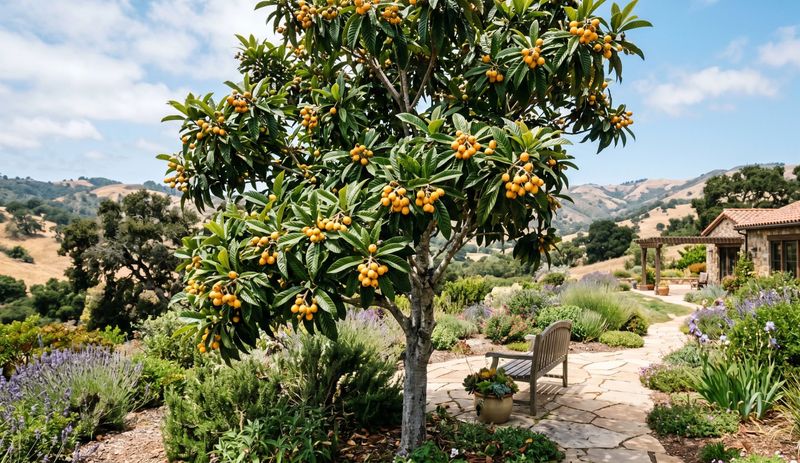
Somewhere in a California neighborhood, a loquat tree is dropping sweet spring fruit while the peach tree next door is still fighting its third round of leaf curl. Most homeowners never plant one because they have never seen it sold at a big-box nursery or heard a neighbor rave about it.
Eriobotrya japonica, the edible loquat, quietly earns its place in the yard through evergreen good looks, fragrant winter flowers, and spring fruit that arrives before almost anything else ripens. Whether it belongs in your yard depends on your site, your priorities, and a few honest tradeoffs worth understanding before you buy.
Why loquat belongs on a California backyard shortlist
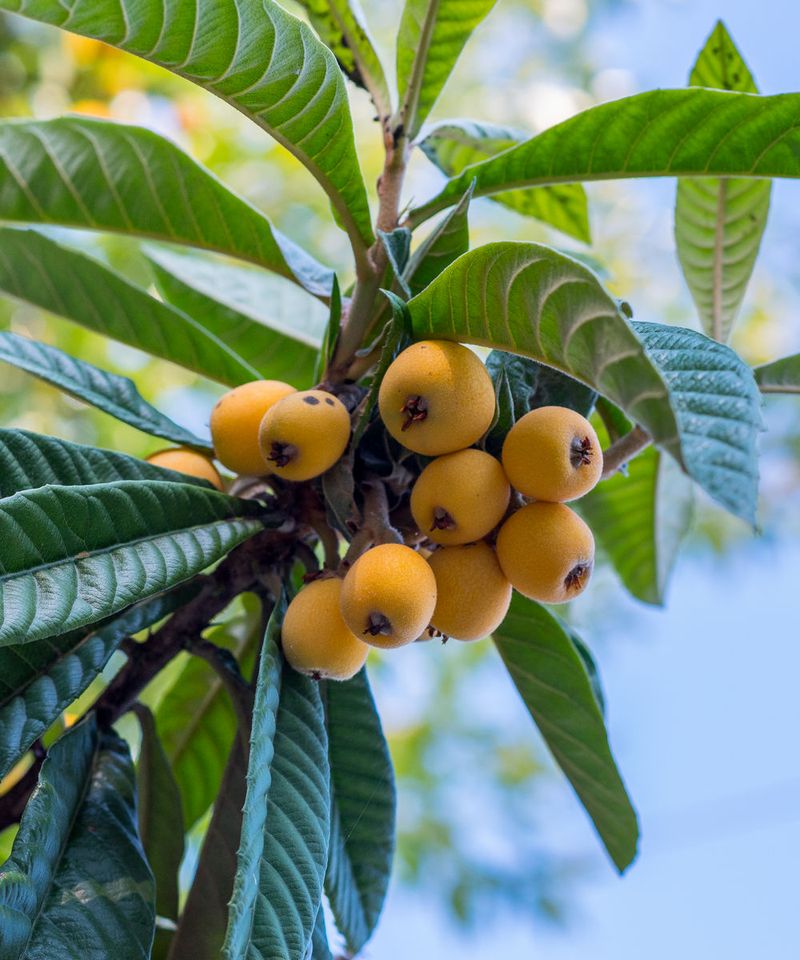
Eriobotrya japonica is the species behind the edible loquats you may have spotted hanging over a neighbor’s fence in spring, looking almost too ornamental to be a fruit tree. UC Agriculture and Natural Resources describes it as a small-to-medium tree suited to full sun or partial shade, with spring fruit and relatively few serious pests, a combination that is harder to find than it sounds.
The appeal is not that loquat universally outperforms citrus, peaches, or other popular choices. Reliable head-to-head comparisons between loquat and commonly planted backyard fruit trees simply do not exist.
What does exist is a specific bundle of traits that can make loquat the smarter fit for a particular homeowner and site.
That bundle includes year-round evergreen structure, large and deeply veined ornamental leaves, clusters of fragrant white flowers in fall or winter, edible fruit that ripens in spring before most other trees deliver, tolerance of partial shade, and relatively low routine pest pressure. According to UC IPM, the tree performs across a range of California landscape settings and brings both ornamental and food value to the yard at once.
The title framing this article is a curiosity-driven invitation, not a documented survey finding. Loquat is less common in commercial produce markets than citrus or stone fruit, and it tends to be underrepresented at large nurseries, so many homeowners simply never consider it.
Whether most gardeners literally walk past it is a matter of perspective, but the core question is real: could loquat be a better fit for your specific yard than the trees you were already planning to plant?
One evergreen tree can contribute across several seasons
Deciduous fruit trees leave a gap in the yard. For several months each year, a bare peach or plum offers little beyond structure, and the garden can feel empty.
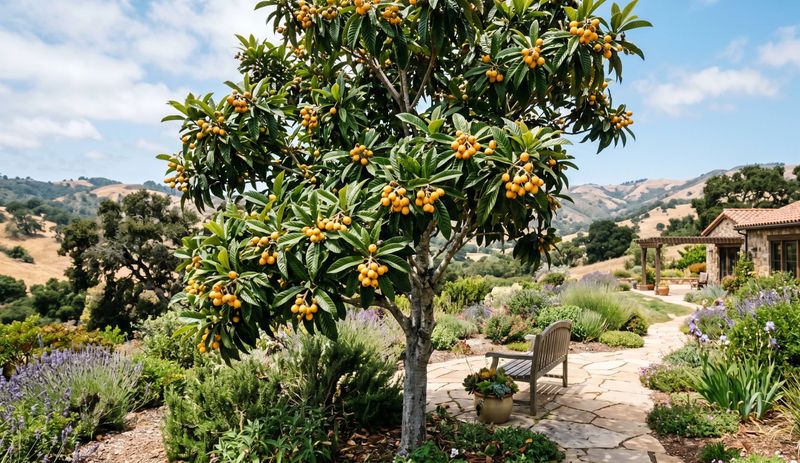
A loquat fills that space differently, holding its large, leathery, deeply veined leaves through every season so the yard always has a focal point.
The foliage alone earns its place. UC IPM notes that loquat is sometimes grown purely as an ornamental because the leaves are that distinctive.
New growth often emerges in a warm bronze or rust tone before maturing to deep green, giving the canopy a layered, textured quality that changes subtly through the year without ever going bare.
Fall and early winter bring fragrant white flower clusters at a time when most other fruit trees are dormant and the yard has little to offer pollinators. Those flowers eventually set fruit that ripens in spring, filling a harvest window that most California homeowners leave completely empty because their other trees do not produce until summer at the earliest.
According to the UC Master Gardener Program of Sonoma County, loquat fruit may ripen roughly 90 days after bloom, often from late May through July depending on climate and cultivar. That spring window matters for homeowners who want homegrown fruit but currently harvest nothing until their stone fruit or citrus comes in later in the season.
UC ANR guidance reinforces that this tree pulls double duty across the seasons in a way that few other edible trees match, making it worth serious consideration even for homeowners who already have a full backyard lineup.
The right site determines whether the tree becomes a success
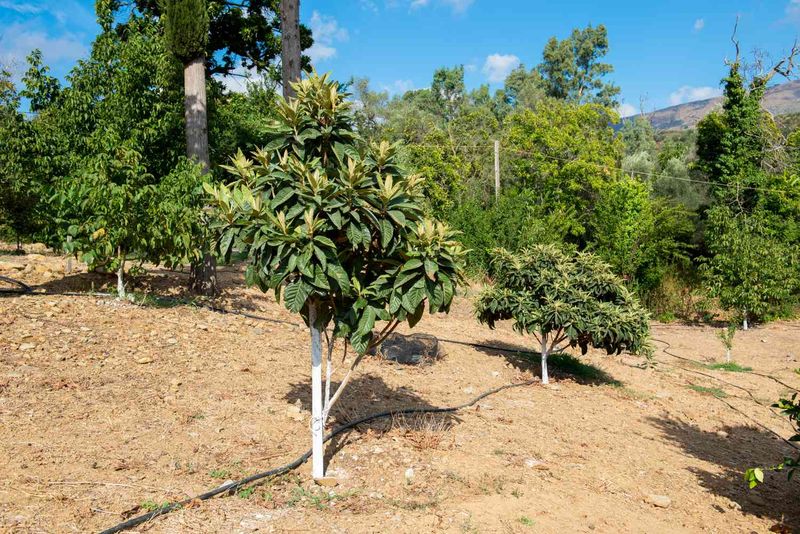
Before purchasing any loquat, walk your yard with a critical eye. The single biggest predictor of success is not the cultivar you choose or how often you fertilize; it is whether the planting spot matches what this tree actually needs.
Loquat performs best in well-drained soil with full sun, though UC IPM confirms it tolerates partial shade. What it does not tolerate is waterlogged ground.
Spots that stay soggy after rain, sit in a low-lying basin, or drain slowly are poor choices regardless of how appealing the location might seem otherwise. Good drainage is a baseline requirement, not an optional upgrade.
Climate is where things get more complicated for California gardeners. The tree itself is reasonably cold-hardy, but its flowers and young fruit are not.
University of Florida IFAS guidance indicates that flowers and fruit can be killed below about 27 degrees Fahrenheit even when the mature tree survives considerably colder temperatures. That distinction matters enormously: the tree may live through a hard freeze while losing every fruit on the branch.
Coastal California sites with mild winters and relatively stable temperatures are generally well-suited. Warm inland valleys can work when frost pockets are avoided.
Elevated sites, cold inland areas, and locations that regularly dip below 28 degrees Fahrenheit during the bloom window carry real risk of crop failure in some years, even if the tree itself looks healthy.
The UC Master Gardener Napa County column notes that loquat fruiting can be unreliable in cooler inland locations precisely because of this winter-bloom vulnerability. Choosing a spot with some wind protection and good sun exposure on the south or west side of a structure can reduce frost risk at the margins.
Size is the other site factor homeowners underestimate. Depending on cultivar, pruning frequency, and growing conditions, loquat can reach roughly 10 to 30 feet in height and width at maturity.
Sonoma County UC Master Gardeners advise checking mature dimensions before planting near structures, fences, utility lines, or other trees, because what looks like a compact young tree at the nursery can become a significant presence in the yard.
Winter flowers bring an early harvest and a real frost risk
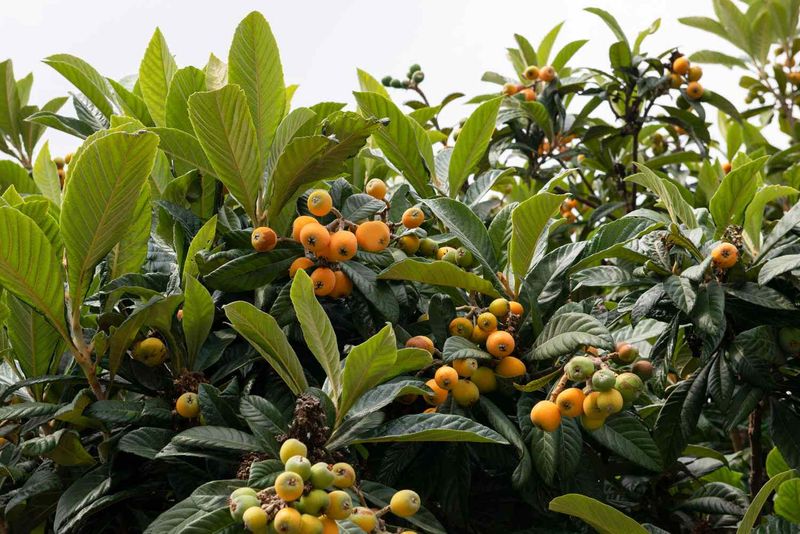
The production cycle of a loquat runs almost backward compared to most backyard fruit trees. Flowers open in fall or early winter, when most deciduous trees are bare and dormant.
That timing is part of the tree’s appeal and part of its vulnerability.
According to the UC Master Gardener Program of Sonoma County, fruit may ripen roughly 90 days after bloom, with harvest often falling between late May and July in that region. Climate and cultivar shift the schedule earlier or later, so a gardener in a warmer coastal location might pick fruit in April while someone in a cooler inland valley might wait until June or beyond.
One tree can generally produce fruit on its own. Loquats are considered self-compatible, meaning a single plant can set fruit without a pollination partner.
University of Florida IFAS notes, however, that cross-pollination from another cultivar, seedling, or selection can improve fruit set, fruit size, and overall production, so planting two trees when space allows is worth considering.
Self-fruitfulness does not guarantee a crop in any given year. A late frost that drops temperatures below 27 degrees Fahrenheit during bloom or while young fruit is forming can eliminate the harvest entirely, even when the tree itself comes through without damage.
University of Georgia Cooperative Extension similarly warns that freezes at or below that threshold can destroy flowers and developing fruit.
Heat, drought stress, poor light, cultivar differences, and insect or disease pressure can also reduce or eliminate fruiting in a given season. Homeowners in frost-prone locations should treat the loquat’s spring harvest as a pleasant bonus in good years rather than a reliable annual certainty, and should choose their planting site accordingly.
Choose a grafted cultivar when fruit quality matters
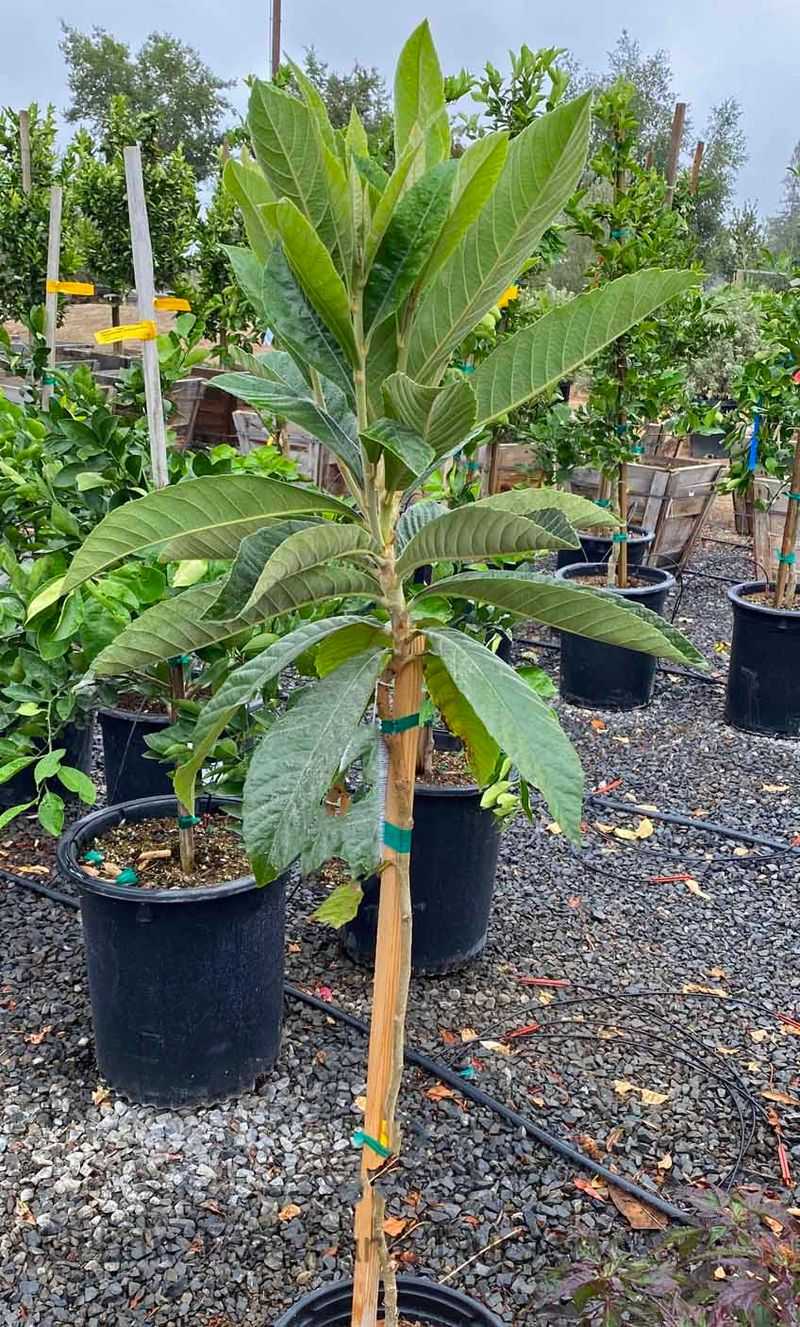
Picking up the cheapest loquat seedling at a plant sale is tempting, but it may be a decision you regret six years later when the tree finally fruits and the result is small, seedy, or bland. The gap between a named grafted cultivar and a random seedling can be significant.
According to UC Master Gardener Program of Sonoma County, named cultivars such as ‘Champagne,’ ‘Gold Nugget,’ and ‘MacBeth’ offer more consistent eating quality than seedlings. Grafted trees also begin bearing fruit much earlier than seedlings, which do not come true to type and may take six to eight years before they flower and fruit at all.
Seedling variability is not just about waiting longer. The fruit from a seed-grown tree can differ substantially from the parent plant in size, sweetness, texture, and seed-to-flesh ratio.
If eating quality is why you are planting the tree, a grafted cultivar from a reputable nursery is the more reliable investment. University of Florida IFAS provides additional cultivar information and notes that vegetatively propagated trees can begin bearing considerably earlier than seedlings.
For homeowners with limited space, a loquat does not have to be planted in open ground and left to reach its full potential size. UC IPM notes that loquat can be grown in a large container, trained against a fence or trellis, or maintained as a smaller patio tree through regular pruning.
Container growing does not eliminate the tree’s basic needs. A containerized loquat requires closer attention to watering because the restricted root zone dries out faster than in-ground soil, and the tree will be substantially smaller than a planted specimen.
Those tradeoffs may be worth it for a gardener with a patio rather than a yard, but they should be planned for rather than discovered after the tree is already stressed.
Give it real care instead of mistaking tolerance for neglect
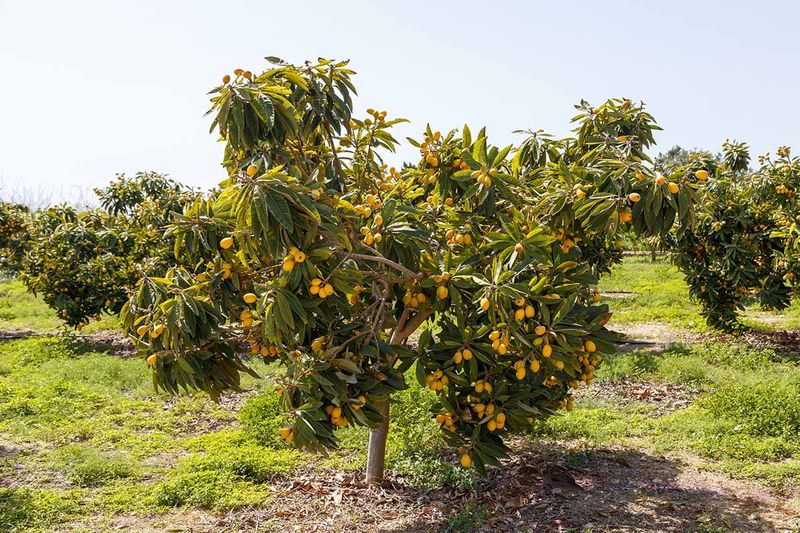
Loquat has earned a reputation as a tough, low-fuss tree, and that reputation is partly deserved. Established trees do handle periodic dry spells better than many fruit trees.
The trouble is when homeowners interpret that toughness as permission to stop paying attention.
New trees need consistent watering while they establish roots, typically through at least the first one to two dry seasons. UC ANR is clear that while established loquats show moderate drought tolerance, drought tolerance is not the same as zero irrigation.
Deep watering during California’s dry summers supports larger, better-tasting fruit and keeps the tree healthy enough to flower and set a good crop the following season.
The practical difference between a surviving tree and a productive one often comes down to water. A loquat that gets by on minimal irrigation may stay alive and look reasonably healthy while producing small, dry, or sparse fruit.
Sonoma County UC Master Gardeners note that deep irrigation supports heavier, higher-quality crops, which is the whole point of planting an edible tree in the first place.
Pruning matters too, and the timing is specific. Prune after harvest, generally in late summer or early autumn, to open up the canopy, improve light penetration and air circulation, and keep the tree at a manageable size.
Heavy fruit loads should be thinned or harvested promptly because excess fruit on a branch reduces individual fruit size and can stress or break limbs.
Harvest cues are straightforward once you know them. Ripe loquats are fully colored, usually yellow to orange, and feel soft-firm rather than hard.
UC IPM notes that ripe fruit softens quickly after picking, so plan to eat, refrigerate, or process loquats within a few days of harvest. They are not a fruit you can leave in a bowl on the counter for a week and expect to enjoy.
Plan for pests, disease, and the fruit’s large seeds
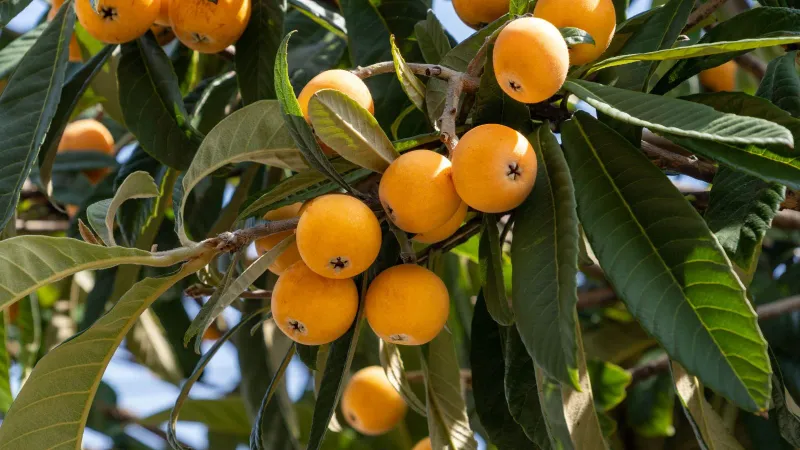
No fruit tree is completely trouble-free, and loquat is no exception. Knowing what to watch for lets you catch problems early rather than discovering them after a season’s crop is already damaged.
According to UC IPM, documented issues include spider mites, leaf spot, scab, salinity sensitivity, and various water-related disorders. None of these typically rise to the level of a crisis for a well-sited, reasonably maintained tree, but they do mean that loquat is not pest-free or disease-free in any absolute sense.
Fire blight is worth a separate mention. UC IPM notes that loquat can develop fire blight, a bacterial disease that causes branches to look scorched and die back, though it is less commonly and severely affected than highly susceptible trees like pear and quince.
Reducing the risk comes down to a few consistent habits: maintain good air circulation through annual pruning, avoid overhead irrigation during the bloom period because water droplets can spread the bacteria, and remove any visibly infected wood promptly using clean, sanitized cutting tools.
UC IPM fire blight guidance and the UC ANR April fireblight resource both emphasize sanitation and air circulation as the primary risk-reduction tools. These practices reduce the likelihood of infection but do not guarantee a disease-free tree, particularly in wet springs or dense plantings.
The seed safety issue is one that every loquat grower should understand clearly. Ripe loquat flesh is edible and enjoyable.
The seeds are a different matter. Japan’s Ministry of Agriculture, Forestry and Fisheries has warned that loquat seeds contain cyanogenic glycosides, and that consuming powdered or concentrated seed products can pose a cyanide risk.
The guidance from Japan’s food safety authorities is straightforward: eat the ripe flesh and discard the seeds. Do not grind, powder, or concentrate them.
On the practical side, loquats are not seedless. Each fruit typically contains one to several large seeds, so eating them requires a bit of prep.
Think of it less like popping grapes and more like eating a small plum, where you work around the pit. That is a minor inconvenience once you know to expect it, but it surprises people who assume the fruit is as easy to eat as a berry.
Choose loquat when its advantages match your yard
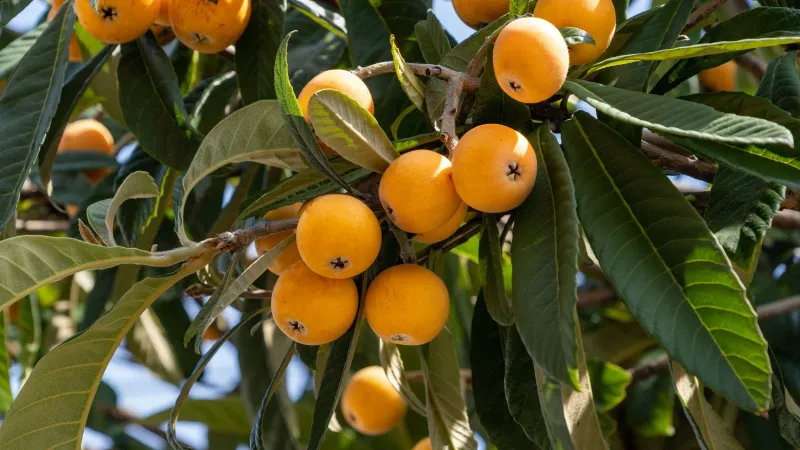
Loquat earns its spot in a California yard under a specific set of conditions, not as a universal replacement for every other fruit tree you might consider. The decision comes down to whether this tree’s particular combination of traits lines up with what you actually want from your yard.
According to UC ANR and UC Master Gardeners of Sonoma County, loquat suits homeowners who want year-round evergreen structure, edible spring fruit, moderate water needs after establishment, and a multipurpose tree in a warm, well-drained, relatively frost-protected site. If those priorities match your yard and your climate, loquat may well outperform trees you were already planning to plant, not because it is objectively superior, but because it fits better.
Before planting, confirm the mature size against your available space, choose a grafted named cultivar for more predictable fruit quality and earlier bearing, and plan a real irrigation schedule rather than counting on the tree’s drought tolerance to do all the work. University of Florida IFAS recommends considering spacing carefully relative to structures and other trees, since an unpruned loquat can become a substantial tree over time.
A homeowner who wants the earliest possible spring fruit, a tree that looks good in every month of the year, and a lower-maintenance pest routine than a peach or apple might find that loquat quietly delivers on all three. The tree that most people walk past in the nursery may be exactly the one their yard has been missing.