
Most California homeowners assume that a fruit tree worth growing needs plenty of water, but one Asian import quietly challenges that assumption in hot inland yards. Chinese jujube, also called Chinese date, handles dry summers better than most fruit trees you can plant today.
That drought toughness comes with a catch, though: surviving on little water is not the same as producing a basket of sweet, full-sized fruit. Understanding that difference is the key to getting real value from this tree.
Meet Chinese jujube, a low-water fruit-tree option
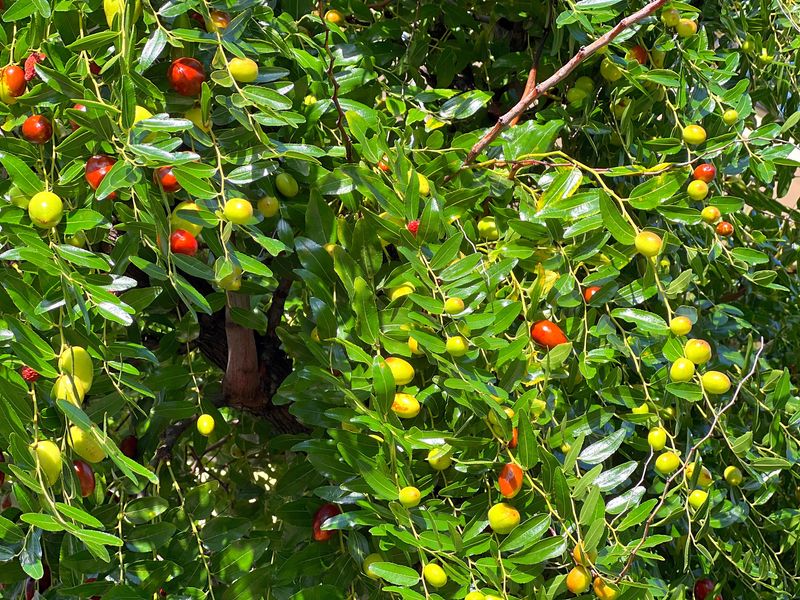
Chinese jujube, known botanically as Ziziphus jujuba and sometimes called Chinese date or red date, is a deciduous fruit tree originally from Asia. It drops its leaves in winter, leafs out late in spring, and produces edible fruit that can be eaten fresh or dried.
UC Agriculture and Natural Resources guidance identifies it as more drought-tolerant than most fruit trees, which makes it stand out in a state where water bills and water restrictions are a constant concern for home gardeners.
The practical appeal is real. An established jujube can endure periods of low supplemental water and still set some fruit, which is more than most backyard fruit trees can claim.
That said, the gap between “can survive” and “will give you a rewarding harvest” matters a great deal. UC ANR’s dedicated jujube profile makes clear that the tree is a productive fruiting plant, not simply a tough ornamental, and getting good fruit out of it year after year calls for informed management rather than pure neglect.
Think of drought tolerance as a safety net, not a growing strategy. The tree is forgiving when water runs short, but it rewards you with more abundant fruit and better eating quality when you give it strategic care.
That honest framing is the foundation of everything else in this article.
Hot inland sites give jujube its best chance
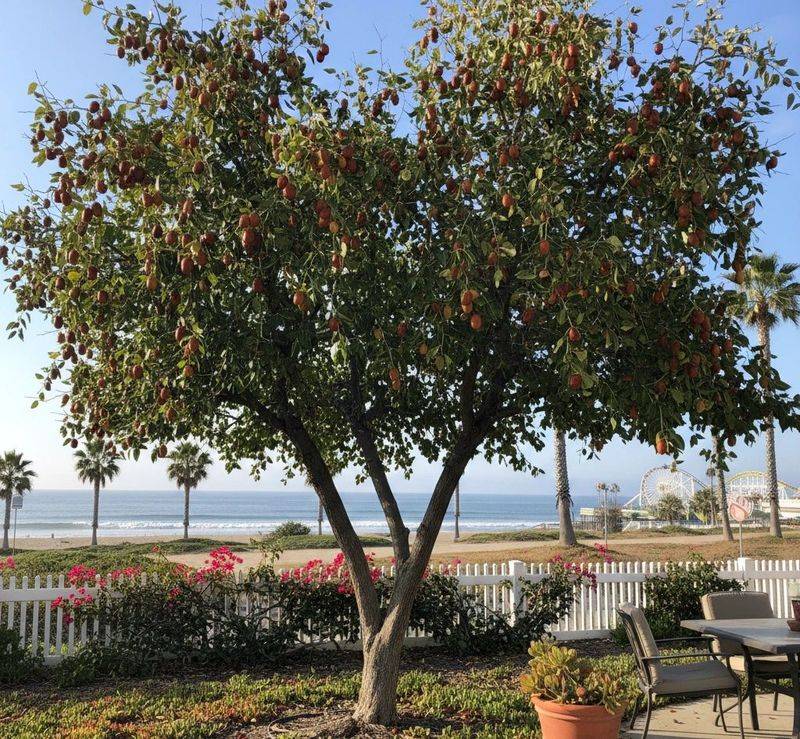
Jujube is not a tree for every California yard. The clearest evidence for strong performance points to hot inland valleys, the kind of locations where summer temperatures routinely climb above 95 degrees and the dry season stretches for months.
Long, hot summers are not just tolerable for this tree; they are genuinely necessary for fruit to develop its full sweetness and size.
Full sun is non-negotiable. A jujube planted in shade or even partial shade will struggle to produce well, regardless of how carefully you water it.
The tree also needs well-drained soil. UC guidance on fruit tree selection notes that jujube handles a range of soil types, including some with alkaline or mildly saline conditions, which is useful in parts of the Central Valley and other inland regions where soils can be challenging for other fruit trees.
What it will not forgive is standing water or consistently waterlogged ground, where root problems can develop even in an otherwise tough tree.
Winter chill requirements are low compared with stone fruits or apples, which is another advantage in warm inland California locations that struggle to satisfy the cold hours that other fruit trees need. Cooler coastal areas may support a jujube, but the available California evidence is strongest for inland and other long-summer climates.
University of Arizona Cooperative Extension guidance on Chinese jujube echoes this point, describing the tree as well suited to hot, arid regions while noting that performance can vary in cooler or more humid settings.
If your yard sits in the Sacramento Valley, the San Joaquin Valley, the Inland Empire, or a similar hot inland zone, jujube fits the climate profile well. Gardeners in marine-influenced areas should research local performance carefully before planting, since the tree’s strongest traits are tied to heat accumulation that coastal microclimates often cannot provide.
Drought survival is not the same as a quality harvest
Here is the distinction that matters most: a mature jujube can survive a dry California summer with minimal supplemental water and still produce some fruit. Survival and production are not the same thing, and production and quality are not the same thing either.
UC fruit tree guidance states plainly that regular irrigation produces more abundant and better-quality jujube fruit, which means deliberately skimping on water is not a growing strategy worth adopting.
Research on deficit irrigation in jujube offers a more nuanced picture. A published study on deficit irrigation and jujube fruit quality found that mild water reductions can sometimes concentrate sugars or improve certain quality measures under controlled commercial conditions.
The same research also shows that severe water deficit reduces fruit weight, lowers yield, slows color development, and harms overall quality. Those studies were conducted in research settings outside California, under careful monitoring, and they should not be read as a reason to deliberately stress your backyard tree.
The practical takeaway for a home gardener is straightforward. During flowering and fruit development, water stress can reduce the size of the crop and the quality of individual fruit.
During extreme heat events, even an established drought-tolerant tree can suffer if it goes too long without water. Arizona Cooperative Extension’s jujube guide draws the same line, noting that while the tree tolerates drought, regular irrigation is necessary for a quality crop.
Drought tolerance is genuinely useful when water is short or when you miss a watering cycle. It is not a license to ignore the tree’s water needs during the months that determine whether your harvest is worth picking.
Water the young tree until its roots catch up
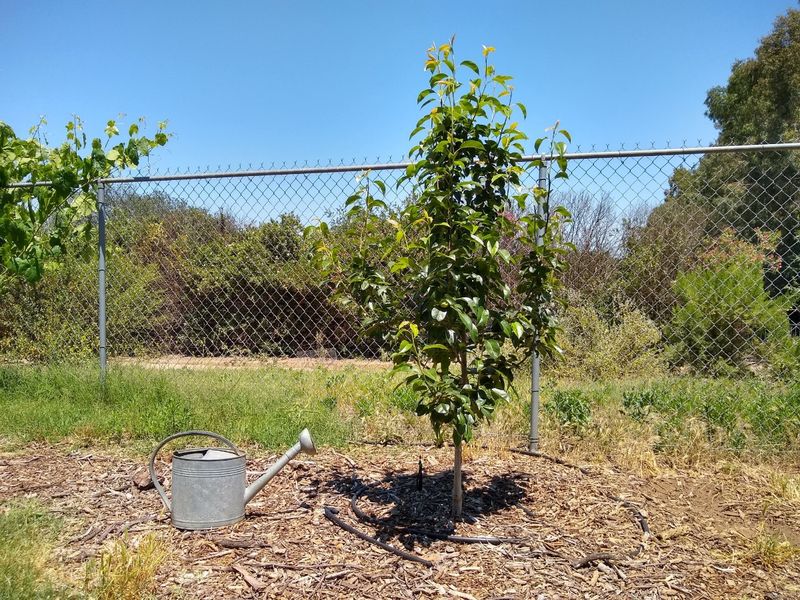
Drought tolerance is a characteristic of an established jujube, not a newly planted one. A young tree fresh from the nursery has a small, confined root system that cannot reach moisture stored deeper in the soil.
During a hot California summer, that limited root zone can dry out quickly, and the tree can decline or die before it ever gets a chance to show its famous toughness.
UC IPM guidance on watering fruit and nut trees is direct on this point: young trees are especially dependent on water during the first year, and newly planted trees may need frequent irrigation for up to two growing seasons while roots expand into the surrounding soil. The same guidance suggests that young fruit trees may need roughly 3 to 5 gallons of water per week as a general starting point, though actual needs vary by soil type, weather, tree size, and how quickly the root zone is expanding.
Treat that figure as a ballpark, not a fixed rule.
Deep, infrequent watering is more beneficial than frequent light sprinkling. Light surface watering encourages roots to stay shallow, which makes the tree more vulnerable to heat and drought later.
Watering deeply and allowing the soil to partially dry between irrigations encourages roots to grow downward and outward, building the foundation that will eventually allow the tree to handle dry periods more gracefully.
Give the trunk itself some breathing room. Keeping irrigation water away from the base of the trunk reduces the risk of crown rot and other moisture-related problems at the soil line.
A wide, shallow watering basin a few inches away from the trunk and extending out toward the drip line is a practical approach for getting water where young roots can actually reach it. Patience during establishment pays off in a more resilient tree for years afterward.
Choose the site and cultivar before you plant
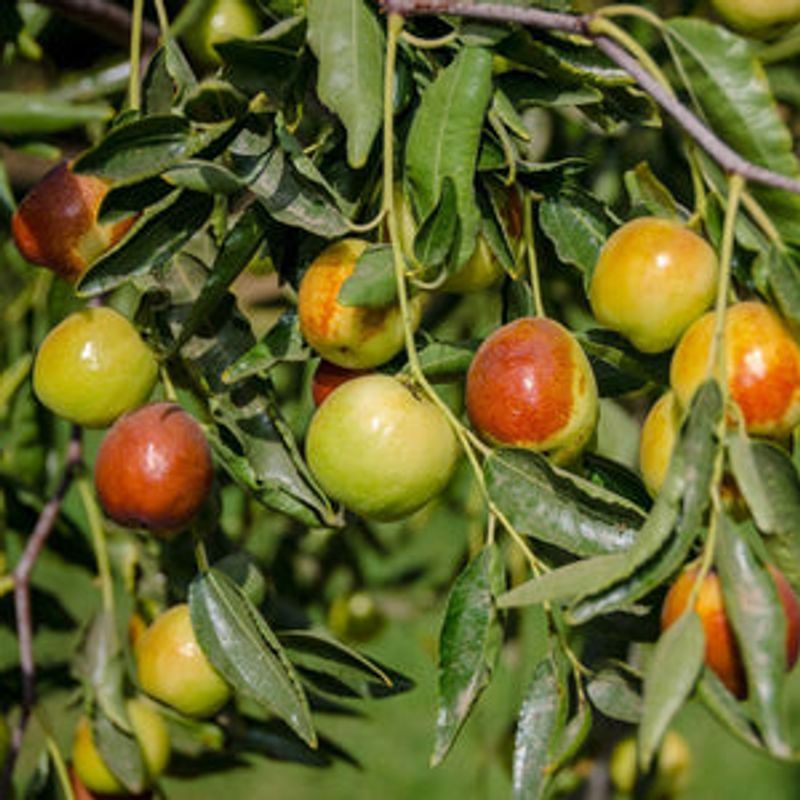
Picking the right spot and the right cultivar before you buy saves a lot of trouble later. Jujube trees vary more than most people expect in mature size, thorniness, fruit quality, and growth habit, and those differences are tied to the specific cultivar and rootstock rather than to the species as a whole.
On size alone, the range is wide. A UC Cooperative Extension blog on jujube in Solano County notes that mature trees can reach anywhere from roughly 16 to 39 feet depending on cultivar and rootstock, which is a meaningful difference when you are planning around a fence, a structure, or a neighbor’s sightline.
Home-garden observations often describe trees in the 12 to 16 foot range, but that is not a guarantee for every tree you buy. Ask your nursery about the expected mature size of the specific plant in front of you.
Common cultivar names you will encounter include ‘Li,’ ‘Lang,’ ‘Honey Jar,’ ‘Sherwood,’ ‘Sugar Cane,’ and ‘Chico.’ Arizona Cooperative Extension’s jujube guide describes ‘Li’ and ‘Lang’ as widely grown choices, while smaller-fruited varieties like ‘Honey Jar’ have developed a following for fresh eating. Fruit quality varies enough between cultivars that tasting fruit from a known tree before you commit to planting is worth doing when the opportunity exists.
A few other traits to verify for your specific cultivar: whether the tree has thorns (some cultivars do, which matters for placement near walkways or play areas), whether it is self-fertile or benefits from a second tree nearby, and whether the rootstock tends to produce suckers. UC ANR’s jujube profile notes that sucker production from roots can become a management task if not addressed regularly.
None of these issues is a dealbreaker, but knowing what to expect from your specific tree before it goes in the ground is always the smarter starting point.
Use deep, targeted irrigation as the tree matures
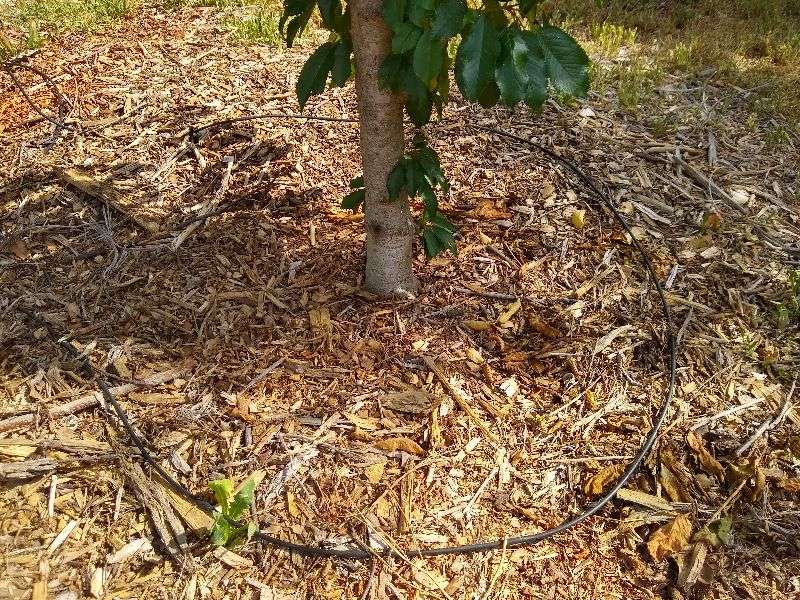
Once a jujube is well established, its water needs shift but do not disappear. The goal becomes deep, infrequent irrigation that refills the root zone without wasting water to evaporation or runoff.
How often that means watering depends on your soil, the current weather, the size of your tree’s canopy, and whether you are using drip, soaker hose, or overhead irrigation.
UC IPM guidance on fruit and nut tree irrigation recommends wetting the entire root zone deeply at each session and then allowing the soil to partially dry before watering again. Sandy soils drain faster and need more frequent attention; heavier clay soils hold moisture longer but can also stay waterlogged if overwatered.
Checking soil moisture a few inches down before running the irrigation is a more reliable guide than following a fixed calendar schedule.
Where you place the water matters as much as how much you apply. Roots on an established tree extend well beyond the trunk and often reach past the drip line of the canopy.
Placing emitters or soaker hose at and beyond the drip line, rather than tight against the trunk, puts water where active feeder roots can actually use it. As the canopy expands over the years, move or add emitters to keep pace with root growth.
Drip and soaker systems reduce surface evaporation compared with sprinklers, which is a meaningful advantage during a California summer. Even with an efficient system, the tree benefits from a drink during extended heat waves, throughout the flowering period, and across the weeks when fruit is sizing up.
Stopping irrigation entirely after establishment is not a reliable plan for a tree you want to harvest from consistently.
Harvest extends beyond a single picking day
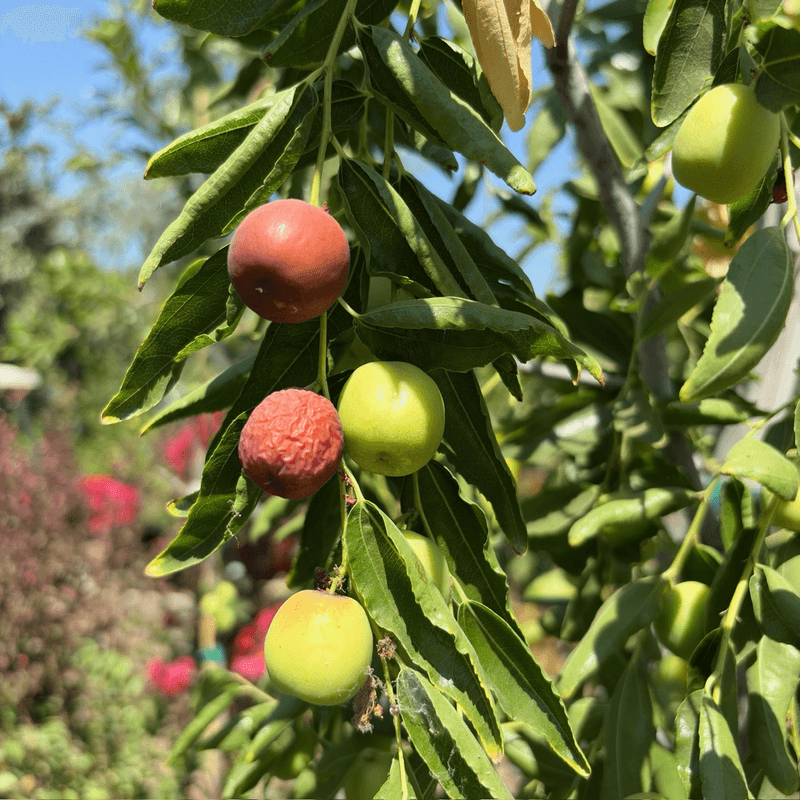
Jujube fruit does not ripen all at once, which is actually good news for a home gardener who does not want to process a hundred pounds of fruit in a single weekend. Ripening typically spreads over several weeks, allowing you to pick fruit in stages as it reaches the stage you prefer.
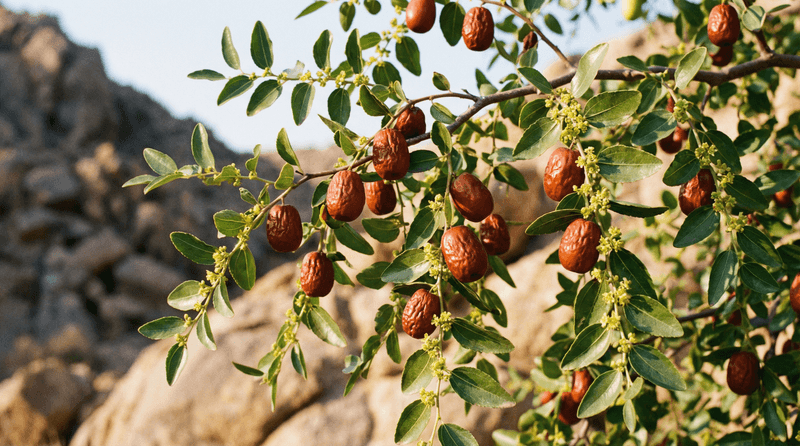
Arizona Cooperative Extension’s jujube guide describes two distinct eating stages: the reddish-brown, apple-crisp fresh stage that many people prefer for out-of-hand eating, and the fully dried, wrinkled stage that develops when fruit is left on the tree longer or dried after picking.
Beyond harvesting, the annual maintenance list is shorter than for most fruit trees but is not empty. Light structural pruning to manage height and encourage an open canopy is generally all the pruning the tree needs.
UC ANR’s jujube profile notes that some cultivars produce thorny branches, so pruning gloves are a practical investment. Sucker removal is an ongoing task for trees that produce them; left unchecked, root suckers can spread and create a thicket around the base of the tree.
On the pest and disease front, jujube is relatively quiet compared with many other fruit trees. Sources from both UC and Arizona Extension characterize it as having few serious pest or disease problems in the United States.
That relative ease does not mean the tree is immune to trouble. UC Master Gardener guidance on backyard fruit trees is a useful reminder that all fruit trees require year-round monitoring, even low-maintenance ones.
A quick look at the foliage and fruit a few times per season is enough to catch most issues before they become serious.
Keep drought-tolerant planting compatible with fire safety
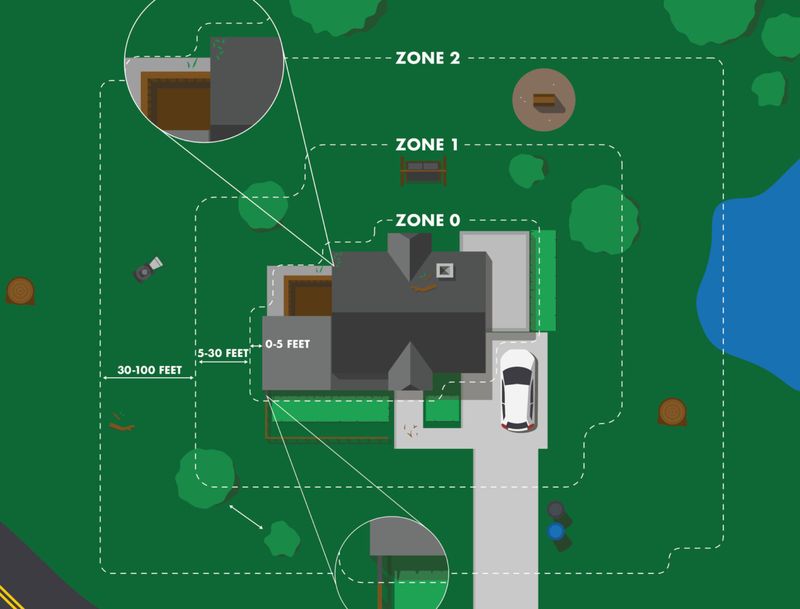
Drought tolerance and fire safety are not the same thing, and in California’s fire-prone communities, confusing the two can create real risk. A tree that uses less water is not automatically a safer tree in a wildfire.
What matters for fire safety is how the tree is placed, maintained, and integrated into the surrounding landscape.
California Board of Forestry and Fire Protection defensible-space guidance outlines zone requirements that apply to homes in or near fire-hazard severity zones, and those rules address vegetation spacing, clearance from structures, and the removal of dead or dry plant material. A jujube tree planted close to a fence, a deck, or another tree without adequate spacing can contribute to fire spread regardless of how drought-tolerant it is.
Lower-branch pruning is a straightforward step that reduces the ladder-fuel effect, where low branches allow ground fire to climb into the canopy. Removing dead leaves, fallen fruit, and dry twigs from beneath and around the tree also reduces the amount of combustible material near your home.
Jujube drops leaves in winter, and that leaf litter should be cleaned up rather than left to accumulate.
Local fire agencies sometimes set stricter standards than statewide minimums, so checking with your county or city fire department is worthwhile if your property sits in or near a wildland-urban interface area. Planting a water-wise fruit tree is a sound choice for a dry California yard, but that choice works best when it is paired with the spacing, pruning, and cleanup practices that defensible space requires.
The tree’s water efficiency is a benefit; its placement and maintenance are what determine whether it fits safely into a fire-aware yard.
Jujube rewards informed, limited care
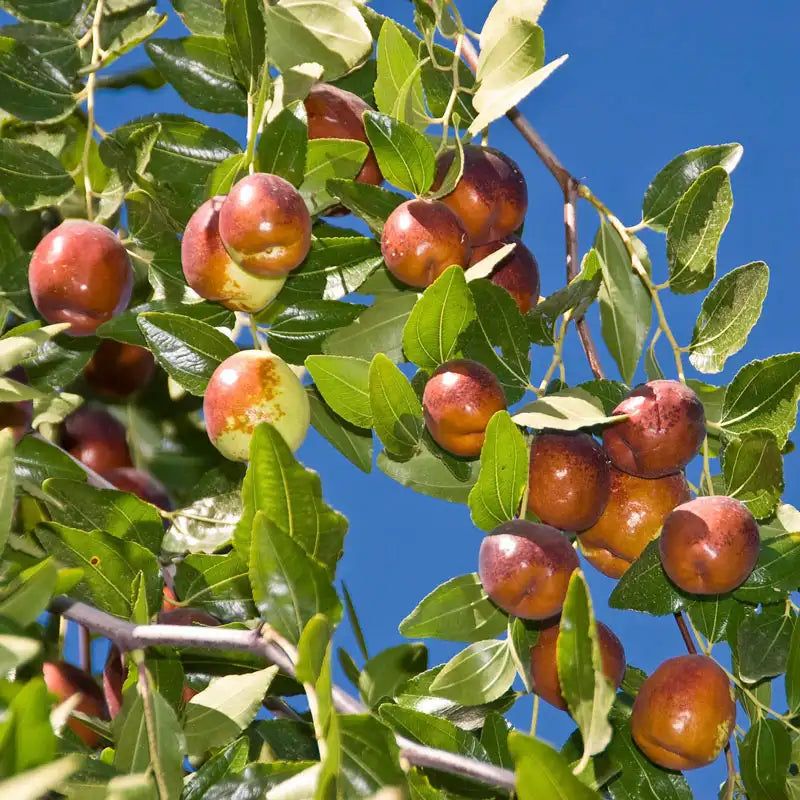
Chinese jujube earns its reputation as a lower-water fruit tree for hot California locations, but that reputation comes with honest conditions attached. UC Agriculture and Natural Resources supports calling it more drought-tolerant than most fruit trees, and that is a meaningful advantage in a state where water is expensive and restrictions are common.
What the evidence does not support is treating it as a no-water or no-attention plant.
The path to a worthwhile harvest follows a clear sequence. Establish the tree with regular irrigation during its first one to two growing seasons.
UC IPM guidance and UC Master Gardener advice on backyard fruit trees both reinforce that young trees are not drought-proof, and skipping establishment irrigation is the fastest way to lose a tree you paid good money for. Once roots are established, shift to deep, infrequent watering timed around heat events, flowering, and fruit development.
Choose a cultivar that fits your space, verify its thorniness and sucker habits, and pick a site with full sun and good drainage. Keep the area around the tree clear of dead material, prune lower branches if fire risk is a concern, and monitor for the occasional pest or disease issue.
None of that is burdensome, but none of it is optional either.
A jujube will outlast most of the fruit trees you could plant in a hot inland California yard, and it will do it on less water than nearly any of them. The honest version of that promise is still a very good deal.