
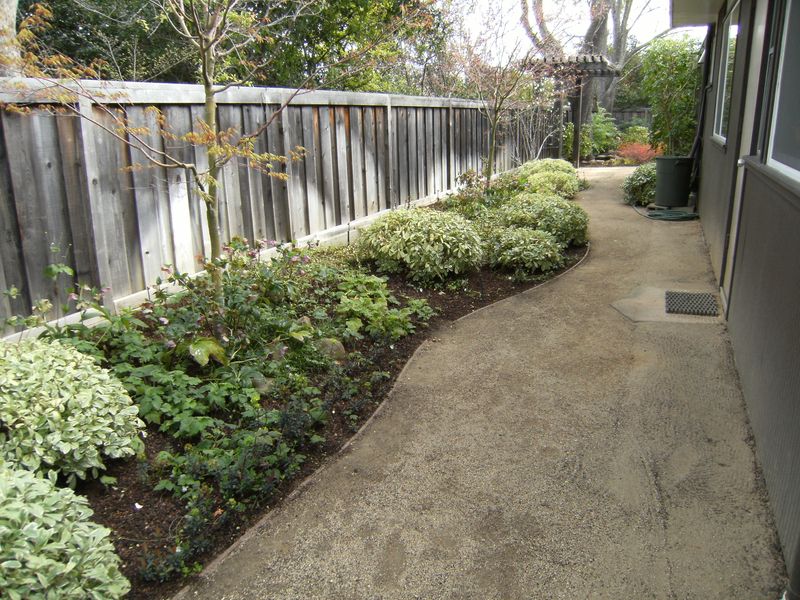
That narrow strip of grass beside your house probably looks tired, brown in summer and muddy in winter, with a racetrack worn down the middle by your dog. Watering it costs money, and in much of California it barely survives anyway.
The good news is that a handful of tough, water-wise groundcovers can take paw traffic, stay green with far less water, and even feed local bees. Here are seven that actually hold up when the dogs come running.
1. UC Verde Buffalograss
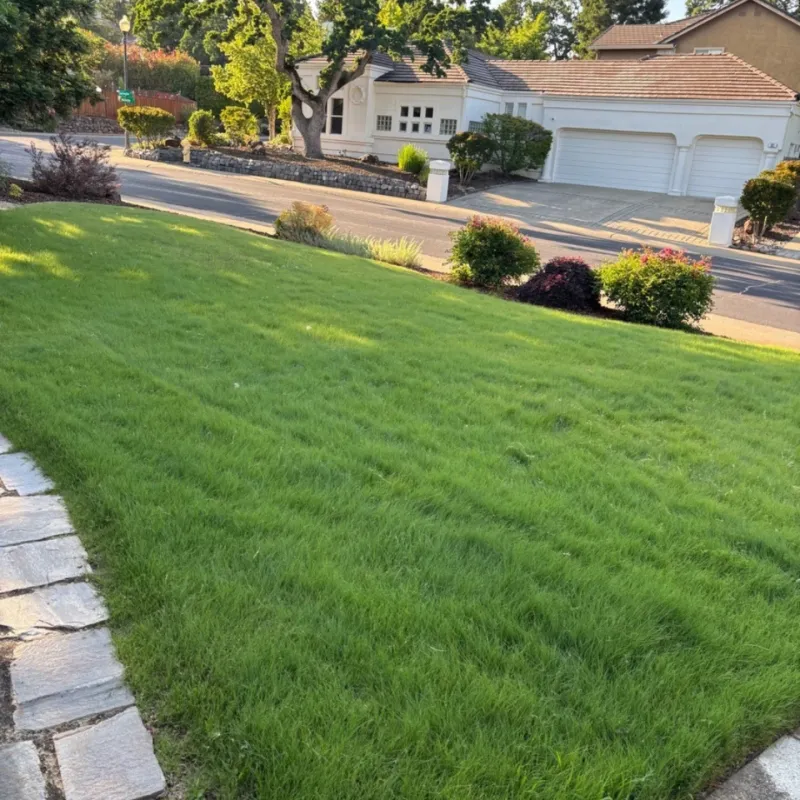
Picture a lawn that looks like turf, feels soft under bare feet, and asks for a fraction of the water. UC Verde was bred by University of California researchers for exactly this job, and it remains one of the closest swaps for a traditional lawn.
Because it spreads by runners, worn spots from dog laps tend to fill back in during the warm months. Once established, many gardeners report watering every two to three weeks in summer, though inland heat may push that up a bit.
One catch: it goes tan and dormant in winter, especially in cooler coastal areas. If you can live with a straw-colored rest period, it rewards you with low mowing and a yard that fits California water rules.
2. Dymondia
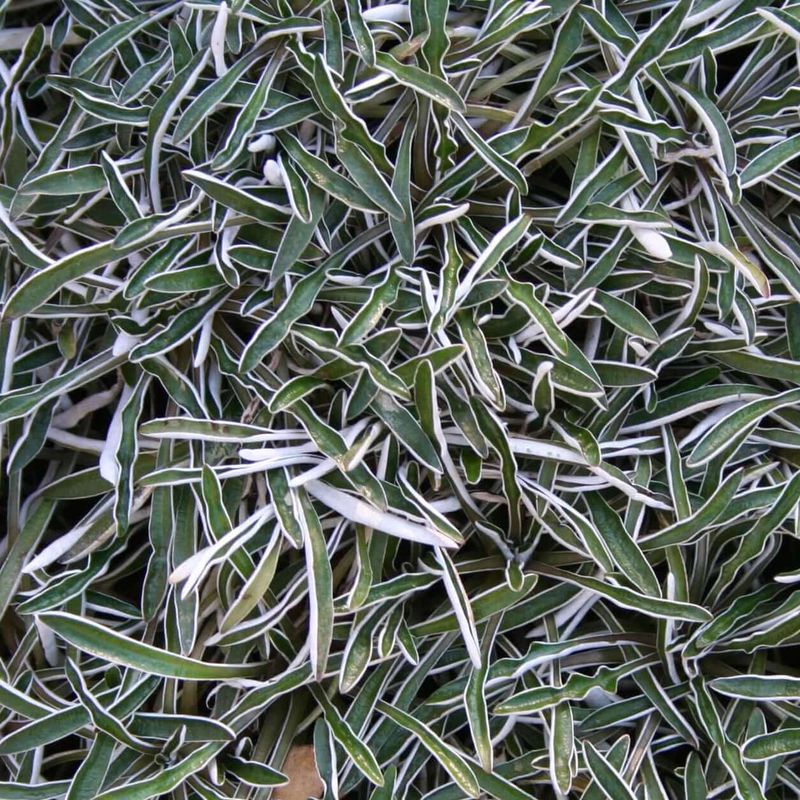
Silver-backed leaves pressed flat against the ground give Dymondia a tidy, almost carpet-like look. It hugs the soil so tightly that paws have little to snag or tear.
Gardeners in coastal and Southern California love it between stepping stones, where it knits a living grout line. It handles moderate foot and dog traffic well, though a dog that digs or spins in one spot every day can thin it out.
Plant plugs about 12 inches apart and keep them moist the first season. After that, deep watering every couple of weeks in summer is often enough near the coast.
3. Creeping Thyme
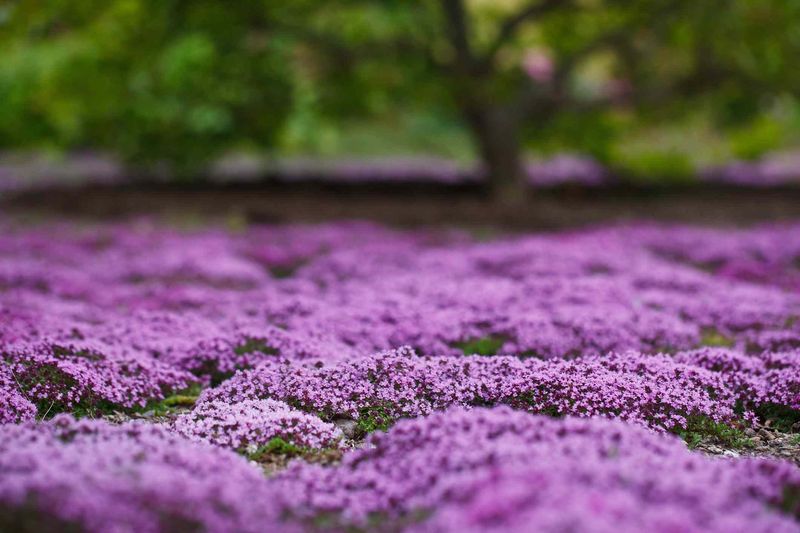
Brush past it and the whole side yard smells like a kitchen herb garden. Creeping thyme shares its Mediterranean roots with California’s climate, so dry summers feel like home to it.
Varieties like elfin and red creeping thyme form low mats that bounce back from occasional paw traffic. They work best along edges, around stepping stones, or in spots that see visits rather than daily sprints.
Spring flowers bring a buzz of bees, which is a nice bonus if you want a wildlife-friendly yard. Just skip heavy watering, since soggy soil is the quickest way to lose it.
4. Kurapia
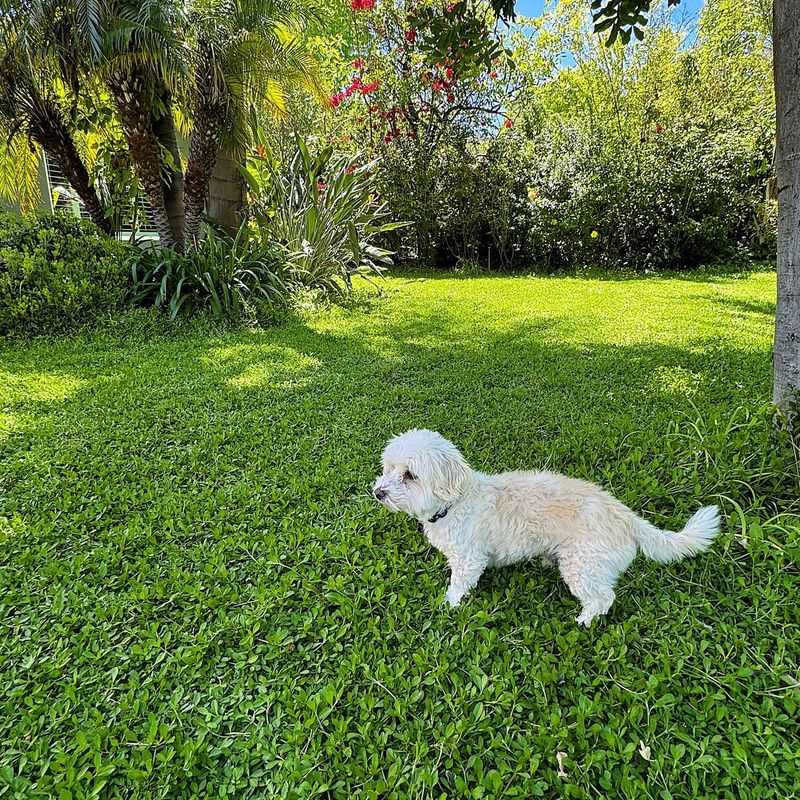
Kurapia is the workhorse of this list. Developed in Japan and now widely used across California, it was chosen for erosion control and lawn replacement, and it shows.
It grows fast, stays low, and roots deeply, which helps it shrug off dogs chasing each other along a fence line. Many homeowners report using noticeably less water than with turf once it fills in.
Small white flowers draw honeybees, so you may want to mow occasionally if your dogs snap at bugs. Because it is sterile, it is far less likely to escape into wild areas than some older groundcovers.
5. California Native Sedges
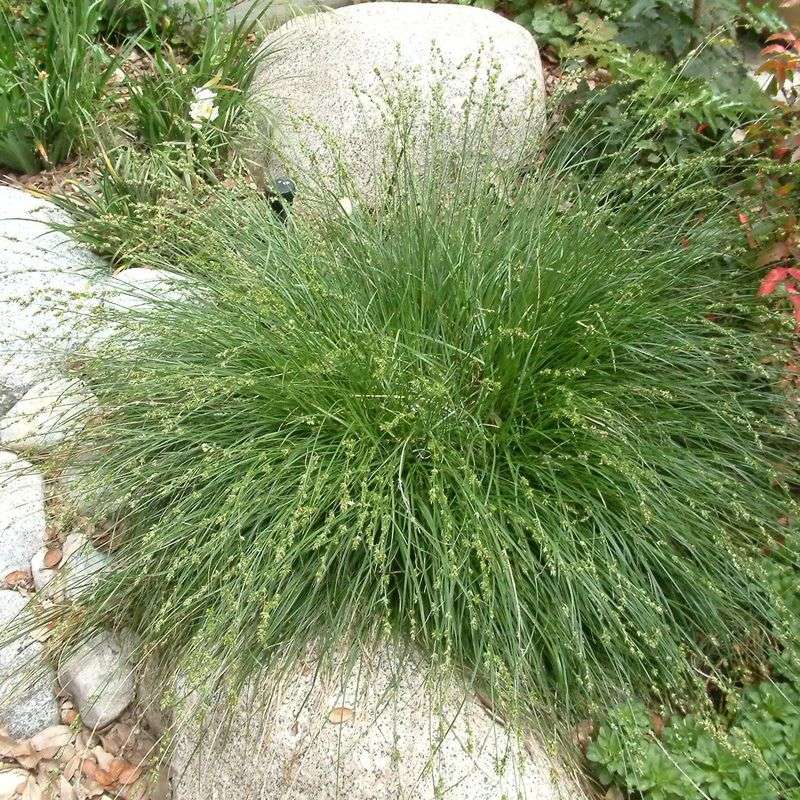
Want something truly native? Sedges such as dune sedge (Carex pansa) and Berkeley sedge make a soft, flowing meadow that local insects recognize.
Dune sedge spreads by underground rhizomes and can take moderate dog traffic, especially when left a bit shaggy. It also handles part shade, which is a big deal in side yards squeezed between houses and fences.
Mow it a few times a year or leave it loose for a wilder look. Native ground beetles and other small creatures often move in, giving your narrow strip a quiet job as habitat.
6. Yarrow Lawn
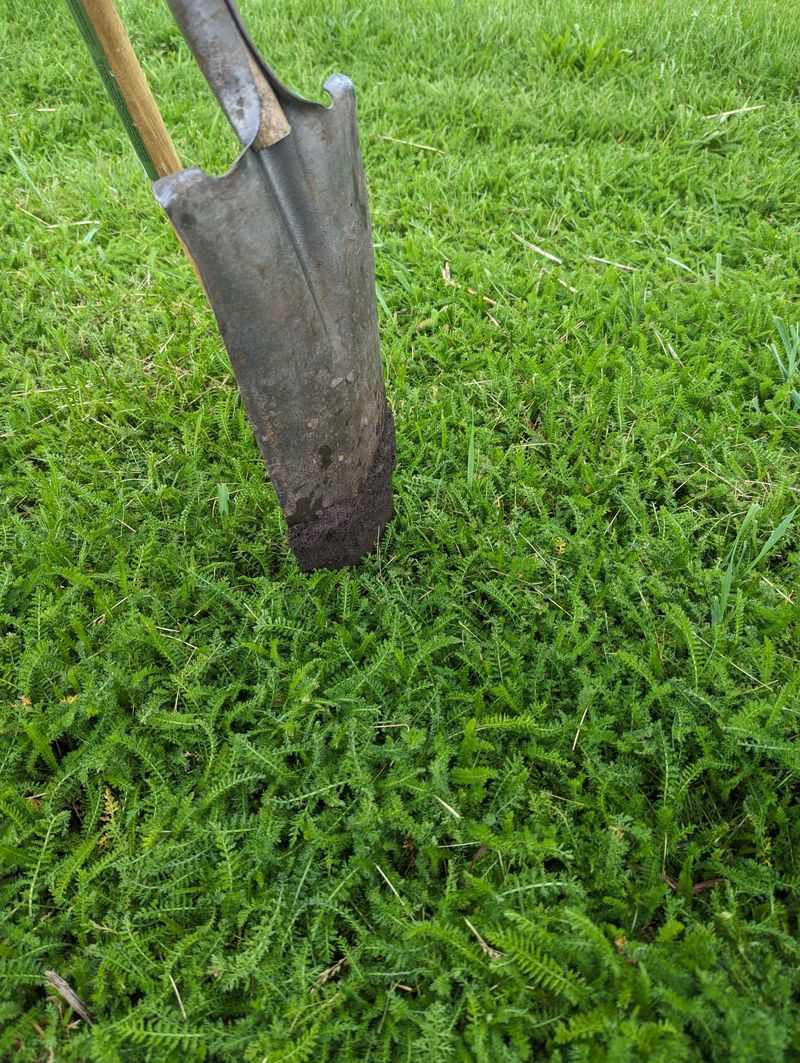
Old ranch homes in California sometimes had yarrow sneaking into the grass, and nobody minded. Common yarrow, a native, can be mowed into a ferny, fragrant lawn that stays green with modest water.
It roots readily and fills in worn patches, which makes it forgiving for dog runs. Mixing it with sedges or clover can toughen things up even more.
Let one edge bloom and you will likely see butterflies and native bees stop by. Water deeply every two to three weeks in summer, and less along the coast.
7. Decomposed Granite with Pocket Plantings
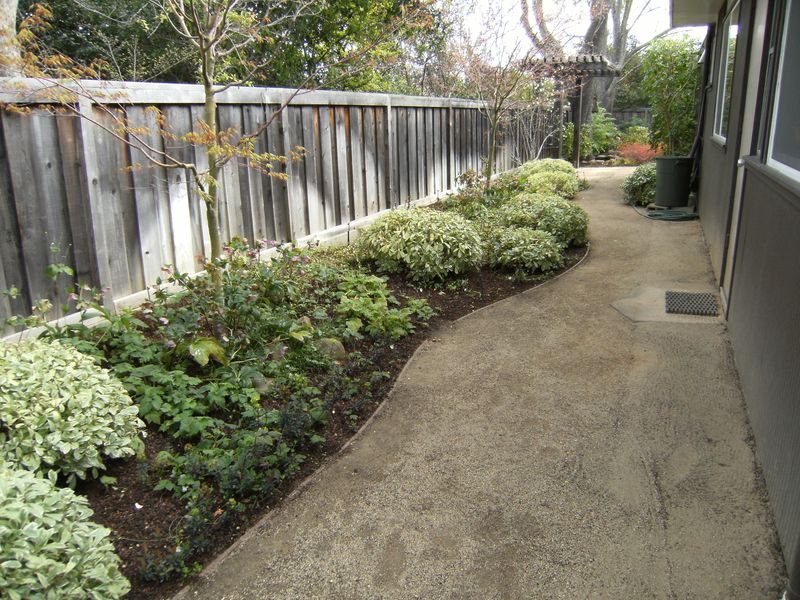
Sometimes the smartest groundcover is partly not a plant at all. If your dog has carved a permanent track, give it a decomposed granite path and plant the edges with any groundcover above.
DG drains well, stays cool-ish, and creates a clean, fire-wise strip near the house, which matters in hillside and wildland-edge neighborhoods. Check local defensible-space rules, since many recommend low, lean planting close to structures.
The combo lets the dog keep its route while plants thrive where paws rarely land. It is the easiest fix for side yards that simply see too much traffic for anything green.