
Keeping a green lawn alive through a long California summer can feel like pouring money straight into the sprinkler. The good news is you have better options that soak up full sun, shrug off drought, and barely ask for a drink once they settle in.
These low-growing groundcovers give you a soft, living carpet without the weekly watering or the guilt of wasting a precious resource. Here are seven tough performers that can turn your thirsty patch of grass into something beautiful and water-wise.
1. Creeping Thyme (Thymus serpyllum)
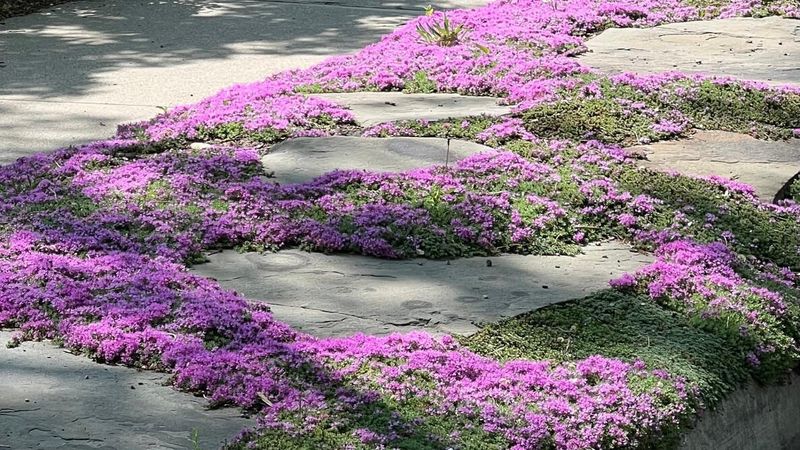
Step on a patch of creeping thyme and you get a gentle wave of fragrance instead of a muddy shoe. That crushable scent is one reason people tuck it between stepping stones and along walkways where a traditional lawn would struggle.
Once established, it forms a tight green mat that bursts into purple-pink bloom in late spring, drawing in bees and other pollinators. In California’s dry-summer climate it wants sharp drainage and all-day sun, and after the first year it gets by on rainfall plus the occasional deep soak during a heat wave.
It stays low, roughly two to three inches tall, so you never have to mow it. For homeowners who want a lawn feel in a small area they actually walk on, thyme delivers both softness and a scent that makes the trip worthwhile.
2. Yarrow (Achillea millefolium)
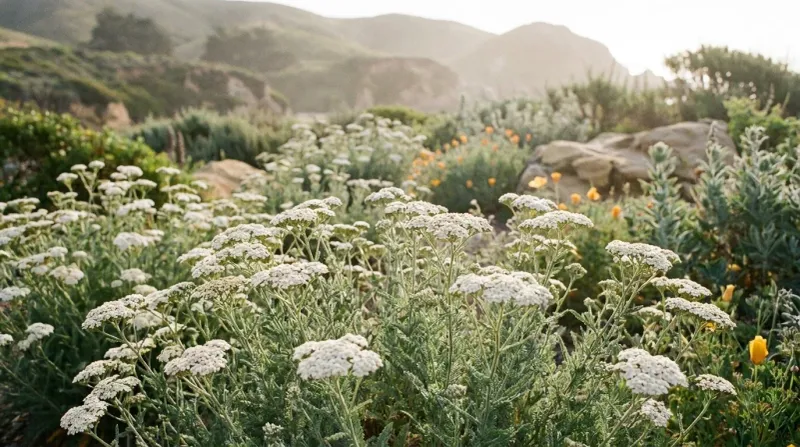
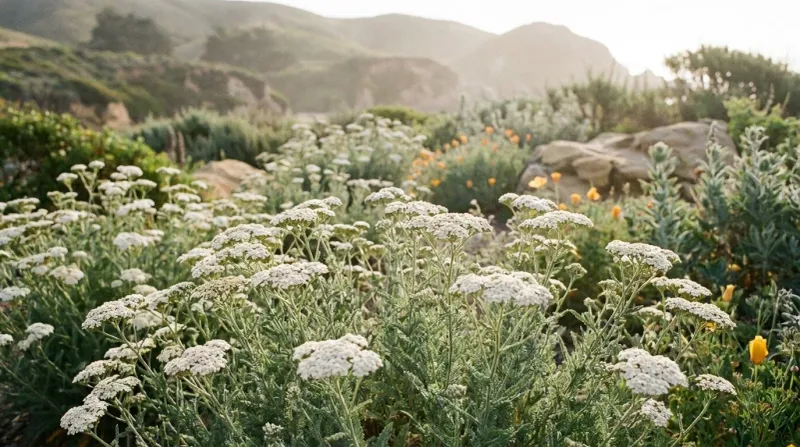
Yarrow has been surviving California hillsides long before anyone thought to install an irrigation system. The native form spreads into a feathery, fern-like carpet that you can mow a few times a year to keep short, or leave to send up its flat white flower clusters.
What sets it apart is its toughness in poor soil. It doesn’t need rich beds or steady feeding, and it happily colonizes ground where grass gives up.
Roots dig deep, which is exactly why it can coast through the dry season on almost no supplemental water.
Pollinators adore the blooms, and beneficial insects use it as a home base. If you want a lawn alternative that feels genuinely wild and Californian while still looking tidy, yarrow walks that line beautifully.
3. Kurapia (Lippia nodiflora hybrid)
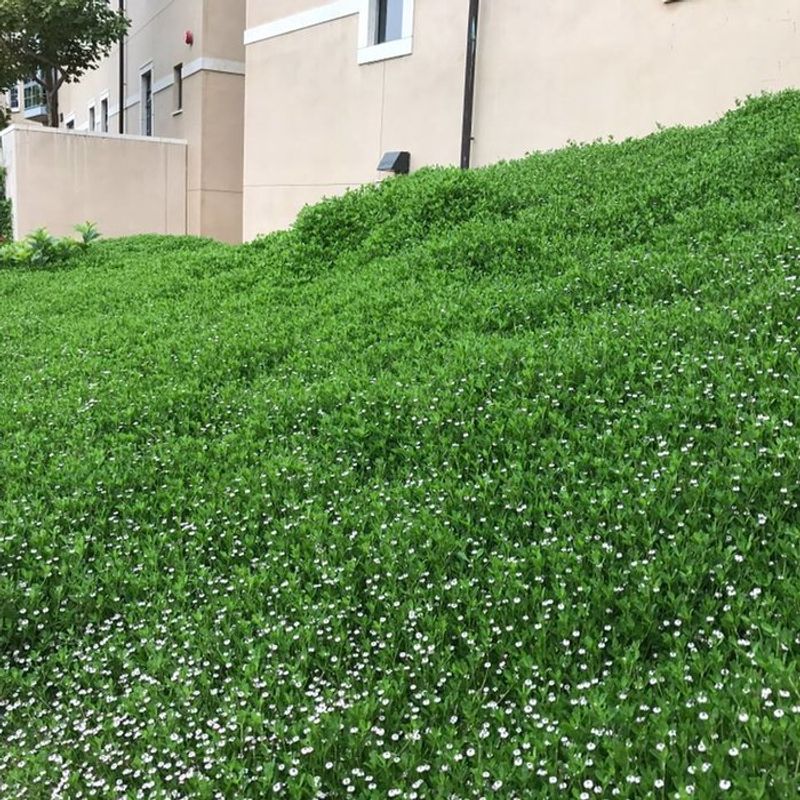
Ask a California water district about lawn replacements and Kurapia comes up fast. Bred as a sterile, non-invasive relative of frogfruit, it delivers that even, carpet-like look people miss when they rip out turf.
Its deep root system is the headline. Kurapia can reach several feet down, which lets it survive on a fraction of the water a fescue lawn demands once it’s rooted in, usually after that crucial first season of regular watering.
It handles foot traffic reasonably well, tolerates full inland-valley sun, and produces small white flowers that bees appreciate (you can mow them off if you prefer a plain green look). For homeowners chasing the closest thing to a real lawn without the real lawn’s thirst, this one is worth a serious look.
4. Woolly Thyme (Thymus pseudolanuginosus)
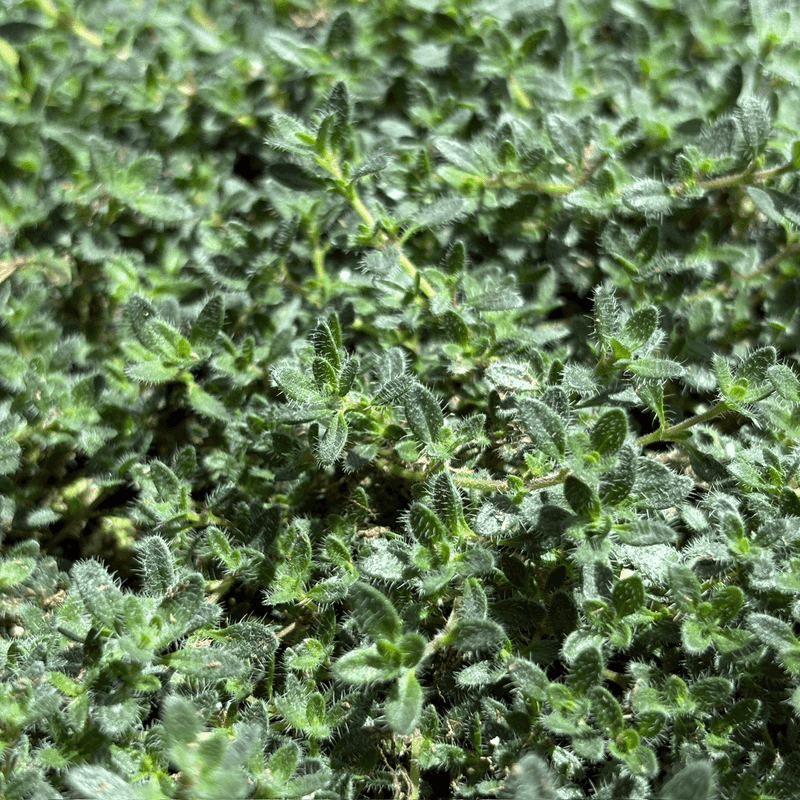
Run your hand over woolly thyme and it feels like brushing a soft gray-green blanket. The fuzzy, silvery foliage gives it a texture no ordinary lawn can match, and that fine hair helps it hold up under blazing sun.
Unlike its flowering cousin, woolly thyme stays especially flat and hugs the ground, filling gaps between pavers and softening rocky spots. It rarely climbs above two inches, so it reads as a smooth silver mat across a sunny bed.
Water is barely a concern after establishment. It prefers to dry out between drinks and can rot in soggy soil, making it a natural fit for California’s parched summers.
Pick this one when you want the color and texture to be the star, not just green fill.
5. Silver Carpet (Dymondia margaretae)
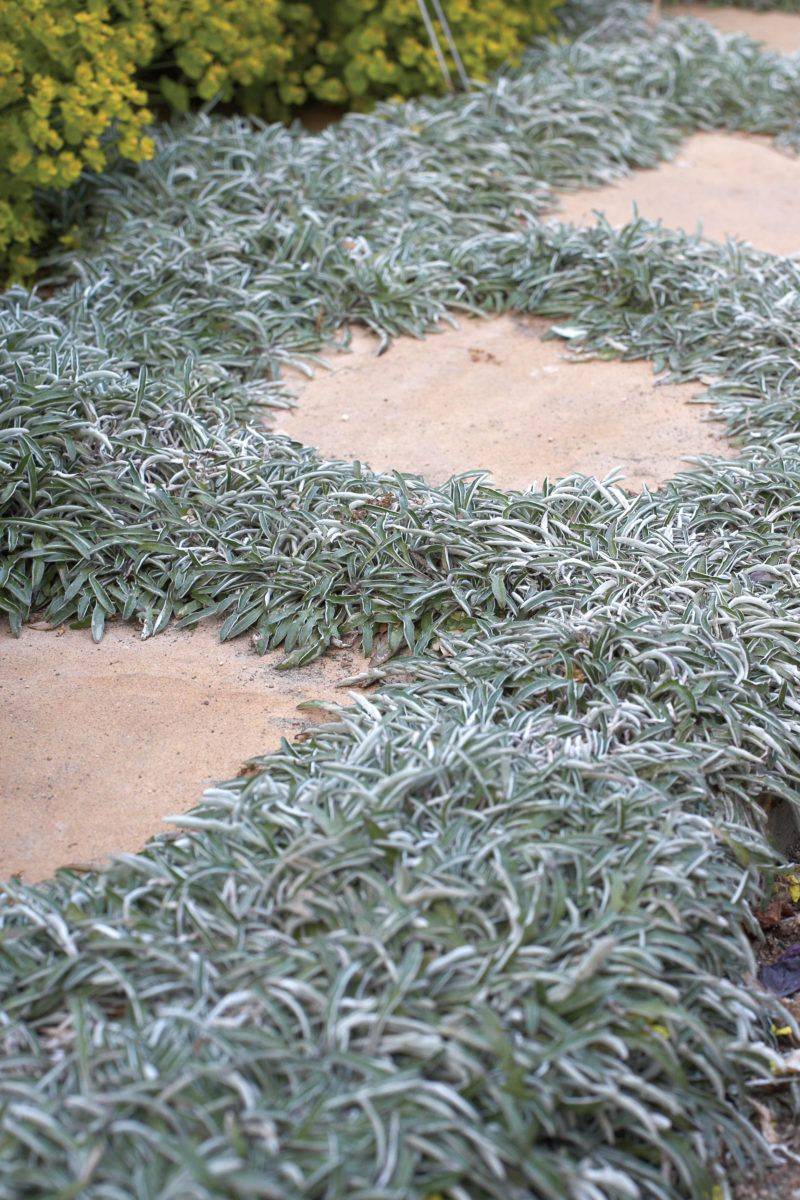
Few groundcovers earn the name “stepable” quite like Dymondia. It grows so flat and dense that it slips between flagstones and forms a living grout you can actually walk on without wincing.
The leaves show green on top and silvery-white underneath, so a breeze or a footstep flips up a shimmer of color. Small yellow daisy-like flowers appear in warm months as a bonus.
Coastal and inland California gardeners love it because it laughs at heat and drought once rooted, needing only occasional summer water. It spreads slowly, so give it time and good drainage.
For a low-traffic path or a tidy front-yard patch where you want zero mowing and a sculpted look, silver carpet is hard to beat.
6. Trailing Rosemary (Rosmarinus officinalis Prostratus)
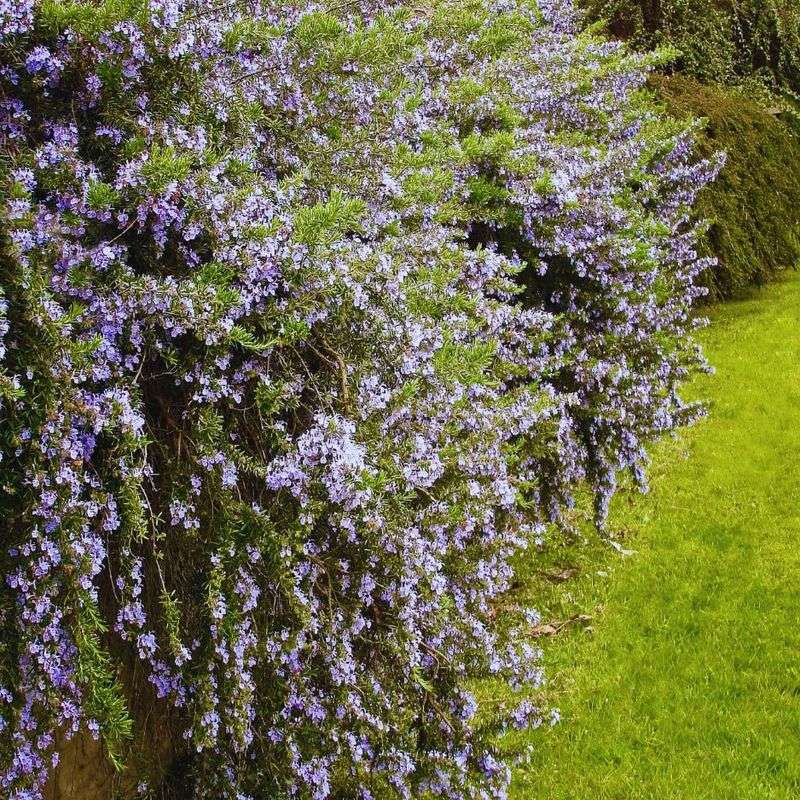
Here’s a lawn swap you can also cook with. Trailing rosemary spills across the ground and over slopes in a dense, needle-covered blanket, releasing that familiar kitchen scent whenever you brush past.
It thrives in exactly the conditions that punish turf: baking sun, lean soil, and long stretches with no rain. Once its roots take hold, it becomes nearly self-sufficient, which makes it a favorite for hillside and fire-conscious homeowners who want low, green coverage on tricky ground.
Come late winter and spring, it lights up with tiny blue flowers that bees flock to. It’s not a walk-on surface like thyme, but for covering a wide sunny slope or filling a bank where mowing is a nightmare, this fragrant sprawler earns its place.
7. California Lilac (Ceanothus ‘Yankee Point’)
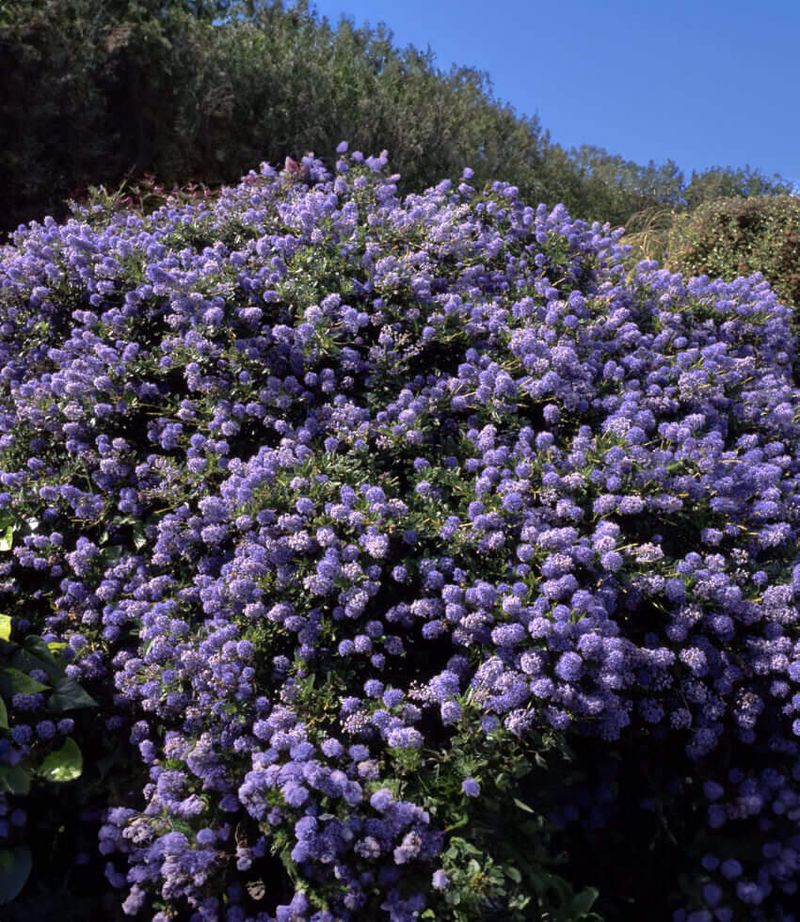
When people picture a native California hillside glowing blue in spring, they’re often picturing Ceanothus. The low, spreading forms like ‘Yankee Point’ bring that show right into the home landscape as a broad, glossy groundcover.
It stays fairly low and wide, mounding a couple of feet high while covering a lot of ground, so it fills big sunny areas where a lawn would guzzle water. The clouds of blue blooms are a magnet for native bees and butterflies.
Fun fact: some Ceanothus species fix nitrogen, quietly improving the soil around them. After it settles in, summer water can actually harm it, so this is a true set-it-and-mostly-forget-it choice.
Use it for scale and pollinator power on a large open slope or front-yard expanse.