
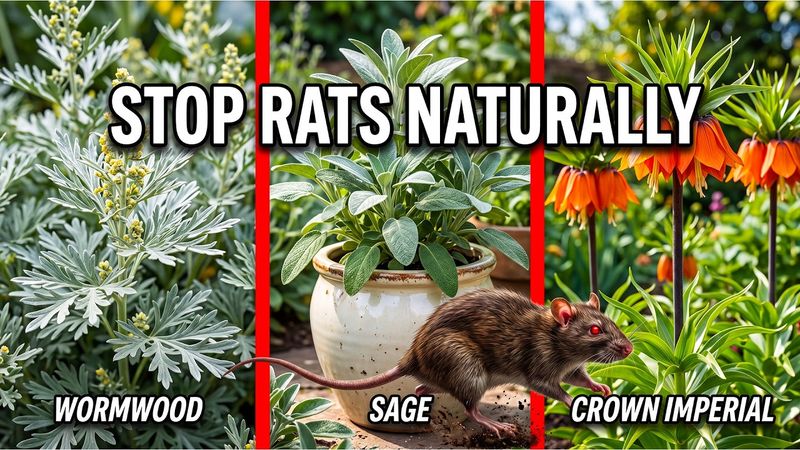
A silvery-leaved herb has been making the rounds online as a secret weapon against roof rats, and the idea is genuinely appealing: plant something beautiful and watch the rodents disappear. The plant most likely behind that claim is culinary sage, Salvia officinalis, and it really is a lovely, low-water choice for a California front border.
What the evidence does not support is the promise that rats will stay away from it. This article sorts out what sage can and cannot do, and gives you a stronger plan for both a good-looking border and a less rat-friendly yard.
The Claim Most Likely Refers to Culinary Sage
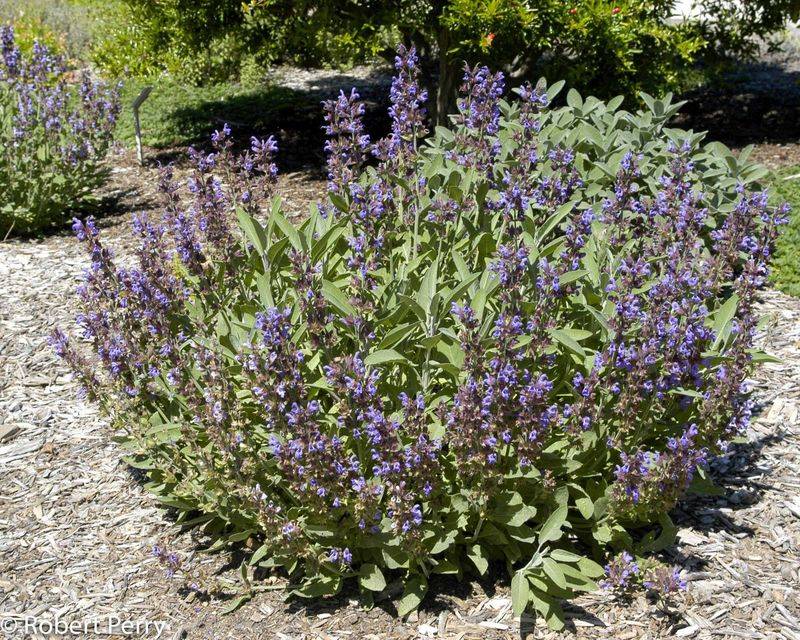
Culinary sage, known botanically as Salvia officinalis, is almost certainly the plant behind the viral claim. Its gray-green, slightly velvety leaves, compact woody stems, and spikes of lavender, white, or blue flowers make it one of the most recognizable herbs in any front border.
Crush a leaf and the scent is immediate and sharp, which is probably where the rat story starts.
Despite its common name and the “California herb” label that circulates online, culinary sage is not a California native. UC Master Gardeners of Marin trace it to the Mediterranean region, where it evolved in sunny, dry conditions very similar to California’s climate.
That Mediterranean origin is actually part of what makes it a sensible choice for a water-wise California border, but it does not make it a California plant by heritage.
Where the premise falls apart is the rat-repellent promise. UC Statewide IPM guidance on rats notes that while rats may show a brief aversion to some odors, no repellent has been shown to solve rat problems for more than a very short time, and no truly effective rat repellent is registered for use in California.
Ordinary sage plants growing uncut in a front border are a long way from producing any kind of reliable scent barrier.
Sage earns its place in a California front border on its own merits: attractive foliage, seasonal flowers, drought tolerance, and value to pollinators. Those are real, well-documented qualities.
The rat-repellent angle is not. Keeping that distinction clear from the start matters, because a homeowner who relies on sage to manage a roof-rat problem is likely to miss the steps that actually make a difference.
Why Sage Still Works in a California Front Border
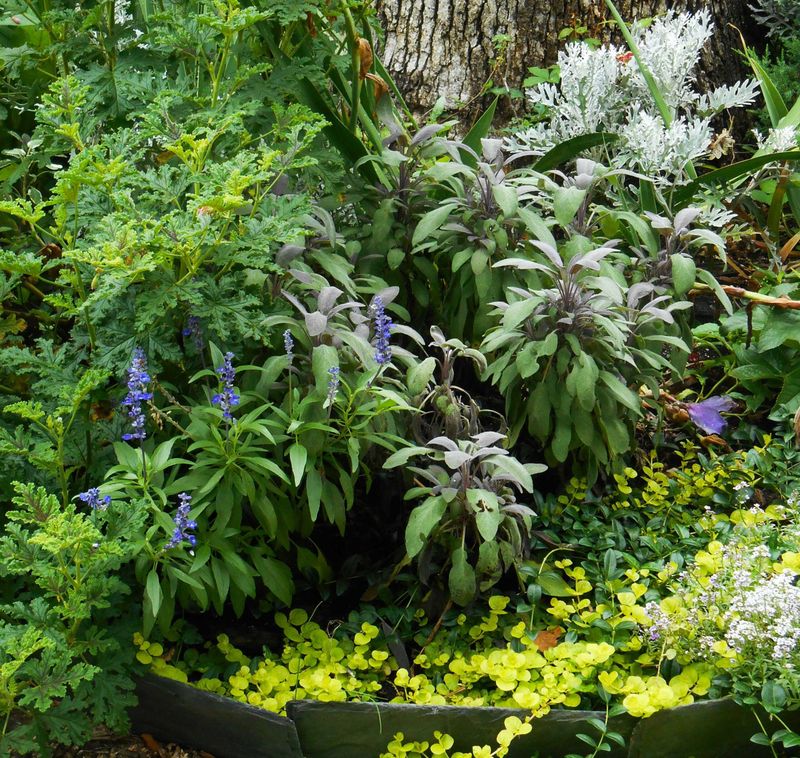
Even without a proven role in rat control, culinary sage brings a lot to a California front border. The foliage alone earns its spot: those soft, gray-green leaves catch morning light beautifully and hold their color through the dry season when many other plants look tired.
When the lavender or blue flower spikes appear in late spring, the plant earns a second look from passing neighbors and from bees, butterflies, and hummingbirds that visit regularly.
That pollinator draw is one of sage’s strongest selling points for California homeowners who want a yard that feels alive. UC Master Gardeners of Marin confirm that culinary sage attracts bees and other beneficial insects, making it a practical choice for gardeners who want to support pollinators without installing a complicated habitat garden.
A few plants tucked along a front walk or edging a bed can do meaningful work with very little fuss.
Growing conditions matter, and sage is not forgiving of wet feet. UC Master Gardeners of Santa Clara County emphasize full sun, good air circulation, and well-drained soil as the non-negotiable basics.
Overwatering is the most common way to lose a sage plant in California; once the soil stays soggy, root rot sets in quickly. Water deeply but only after the soil has dried, and the plant will reward you with years of reliable growth.
UC Master Gardeners of Sonoma County include culinary sage among low-water kitchen herbs well suited to California’s dry-summer climate. Once established, it handles summer drought with minimal supplemental irrigation, which makes it a genuinely water-wise choice rather than just a drought-tolerant label on a plant tag.
That quality matters year-round in California, where water restrictions and dry summers are a consistent reality rather than a seasonal inconvenience.
What the Evidence Does—and Does Not—Show About Sage and Rats

The headline promise – that rats simply will not go near sage – sounds satisfying, but testing it against the available evidence produces a much narrower result. UC Statewide IPM is direct on this point: rats may show a short-lived aversion to some odors, but no repellent has solved rat problems for more than a very short time, and California has no registered rat repellent that actually works reliably in the field.
That applies to commercial products as well as aromatic plants.
Some of the confusion probably comes from laboratory research on plant-derived compounds. A systematic review of plant secondary metabolites as rodent repellents found that essential oils, extracts, and terpenoid compounds can produce repellent effects in controlled laboratory settings.
The problem is that lab results – where a rat is exposed to a concentrated compound on a treated surface inside an enclosure – do not translate cleanly to an outdoor border where a plant is simply growing in the ground, releasing modest amounts of volatile compounds into open air.
Culinary sage contains camphor, thujone, and cineole, and gardening articles sometimes present these compounds as the mechanism behind the rat-repellent claim. What those articles skip is the gap between a compound identified in a laboratory study and an ordinary plant producing a reliable deterrent effect outdoors.
The same systematic review noted that success is inconsistent across laboratory, enclosure, and field settings – meaning even concentrated plant compounds do not always produce the expected result when conditions change.
Rats are also adaptable. When food, water, shelter, or access to a building is available nearby, an unfamiliar scent is unlikely to override those incentives.
A rat that is hungry or looking for a nesting site is not going to be reliably stopped by the smell of an herb growing a few feet away. The reviewed sources do not establish sage as an outdoor rat deterrent, and planting a sage border while leaving food sources and shelter in place is unlikely to change a rat problem in any meaningful way.
An Open Landscape Reduces Shelter Without Depending on Sage

Roof rats are excellent climbers and opportunistic nesters. They move through yards by using dense vegetation as cover: ivy mats, climbing hedges, thick ground covers, overgrown shrubs, and palm skirts all function as highways and hiding places.
The problem is not any single plant species but the structure that dense plantings create, specifically the sheltered, low-visibility zones close to buildings where rats can nest and move without exposure.
UC Statewide IPM recommends thinning dense plantings and, where feasible, maintaining roughly a two-foot gap between shrubs and building foundations. That gap removes the sheltered transition zone that rats use to move between landscape cover and a structure.
The benefit here is structural, not chemical: an open, well-maintained planting simply offers fewer places to hide and nest close to the house.
Southern California public agencies reinforce this point. The City of Moorpark identifies ivy, star jasmine, bamboo, palms, juniper, and pampas grass as common roof-rat harborage plants.
Ventura County’s guidance similarly points to dense ground covers and climbing plants near structures as primary contributors to rat activity. The consistent recommendation across these sources is to reduce sheltered habitat near buildings, not to replace one plant with another aromatic species.
A border planted with culinary sage, spaced openly and kept away from the foundation, fits the general principle of an open, maintainable landscape. That is a legitimate habitat-management benefit.
What the evidence does not show is that sage itself reduces roof-rat activity because of its scent or any other plant-specific property. The benefit, if any, comes from the open structure of the planting, and that same benefit would apply to many other low, well-spaced plants.
Sage earns its place in that border for its appearance and water-wise qualities, not for a rat-deterrent effect it has not been shown to produce.
How to Plant Culinary Sage Without Creating Dense Cover
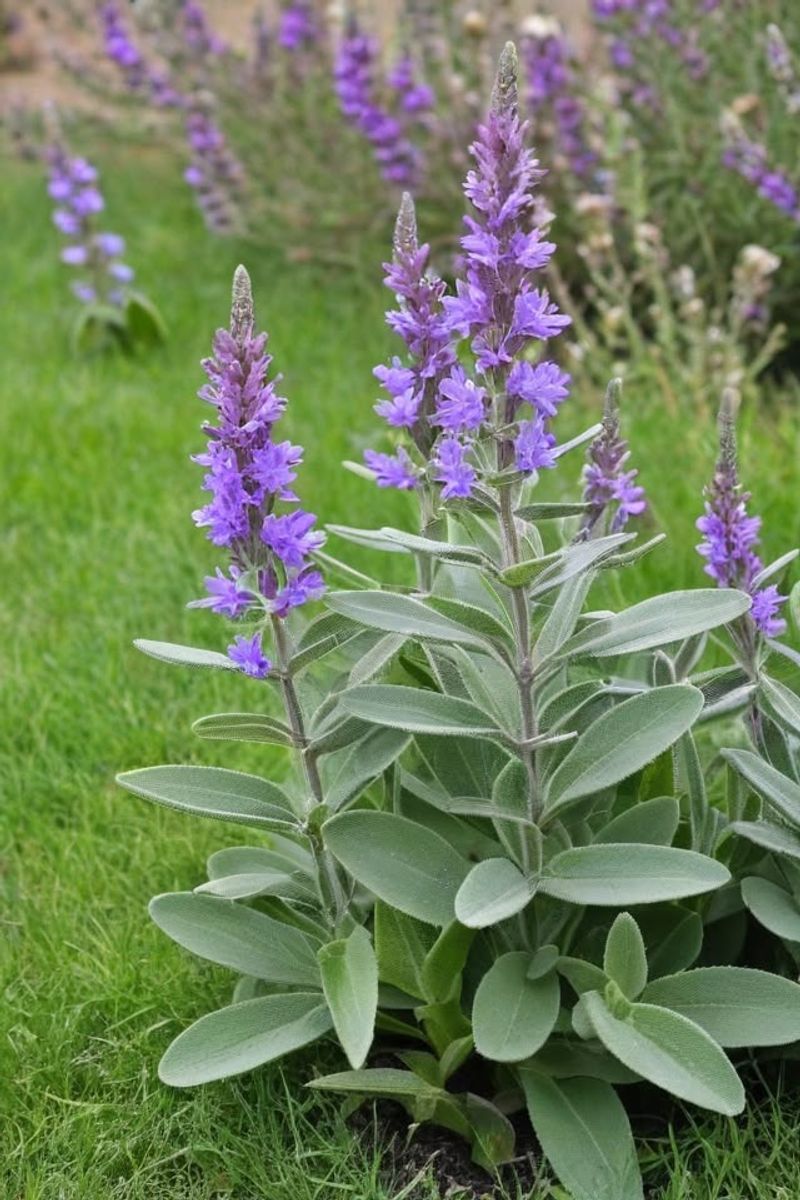
Choosing sage for its genuine qualities – good looks, drought tolerance, pollinator value – is a reasonable call for a California front border. Getting the planting right from the start means the plants stay healthy, look their best, and do not grow into the kind of dense, low mat that creates shelter near the house.
UC Master Gardeners of Marin recommend spacing culinary sage roughly 18 to 30 inches apart. That spacing gives each plant room to develop its natural mounding shape, allows air to move between plants, and keeps the border open enough that you can see clearly to the soil beneath.
Good airflow also reduces the humidity around the foliage and stems, which matters because sage in California is far more likely to struggle from overwatering and poor drainage than from drought.
UC Master Gardeners of Santa Clara County reinforce the basics: full sun is non-negotiable, and well-drained soil is equally important. If your front border sits in clay or holds moisture after rain, amend with coarse sand or plant in a raised bed or berm.
Water deeply after the soil has dried out rather than on a fixed schedule, and pull back on irrigation significantly once plants are established, typically after the first season.
Gardeners in the hottest inland valleys should consider afternoon shade as a buffer during peak summer heat, since intense reflected heat from driveways and walls can stress even drought-tolerant plants. Coastal locations generally have fewer heat concerns but may have more moisture in the air, which makes good air circulation even more important to prevent fungal problems at the base of the plant.
Spacing and airflow support visibility and easy maintenance across the whole border, but those qualities do not translate into a rat-deterrent effect. Open planting is a general habitat-management advantage, not a property unique to sage.
Plant it where the conditions are right and the foliage and flowers will do the rest of the work.
California Salvias Need Species-Level Identification
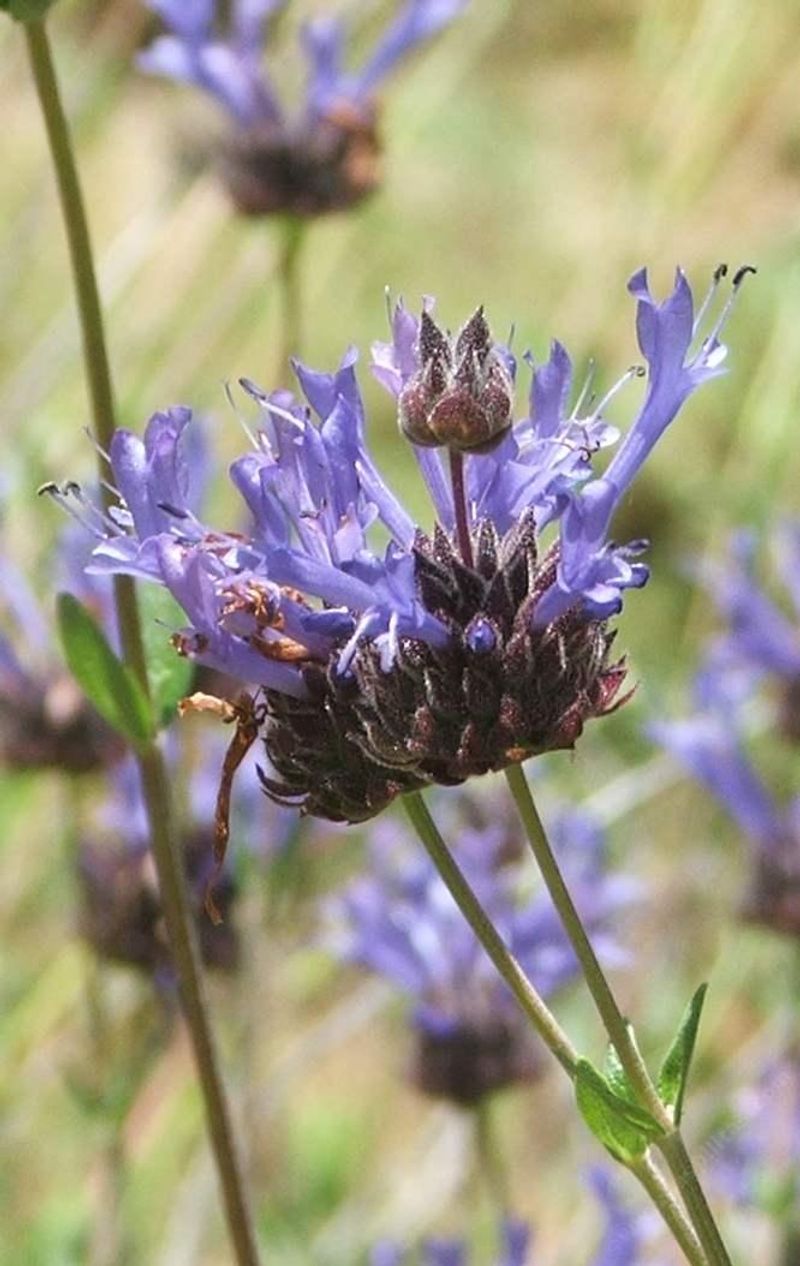
Walk into a California nursery looking for sage and you will find a lot of plants wearing that name. Culinary sage, Salvia officinalis, is one option.
Native and ornamental salvias are another category entirely, and treating them as interchangeable leads to purchasing mistakes, care problems, and disappointed plants.
UC Master Gardeners of Sonoma County list California native salvias including hummingbird sage (Salvia spathacea), white sage (Salvia apiana), and Cleveland sage (Salvia clevelandii), among others. These plants differ from culinary sage in nearly every practical way: some grow much larger, some have very different water requirements, and their growth habits range from low spreading mats to tall, open shrubs.
White sage, for example, is a significant landscape plant that can reach four to five feet tall and wide under the right conditions. Treating it as a kitchen-herb substitute for culinary sage would be a mistake in both directions.
Ornamental native salvias also vary widely in their wildlife relationships. Some are exceptional hummingbird plants; others support native bees more specifically.
Choosing a native salvia for a habitat-oriented border is a worthwhile goal, but the selection should be driven by species and site conditions, not by a general category label.
The rat-deterrent claim does not transfer from one salvia to another either. Culinary sage’s Mediterranean origin and its specific volatile compounds are the basis of whatever limited claim exists, and that claim is already unsupported for ordinary garden use.
Assuming a native salvia shares the same effect because it also smells strongly adds another layer of speculation on top of an already shaky premise. Buy by species name, match the plant to your soil and sun conditions, and let the plant’s actual qualities – not a borrowed claim – be the reason it earns a spot in your border.
Build a Rat-Reduction Plan Around Food, Shelter, and Access
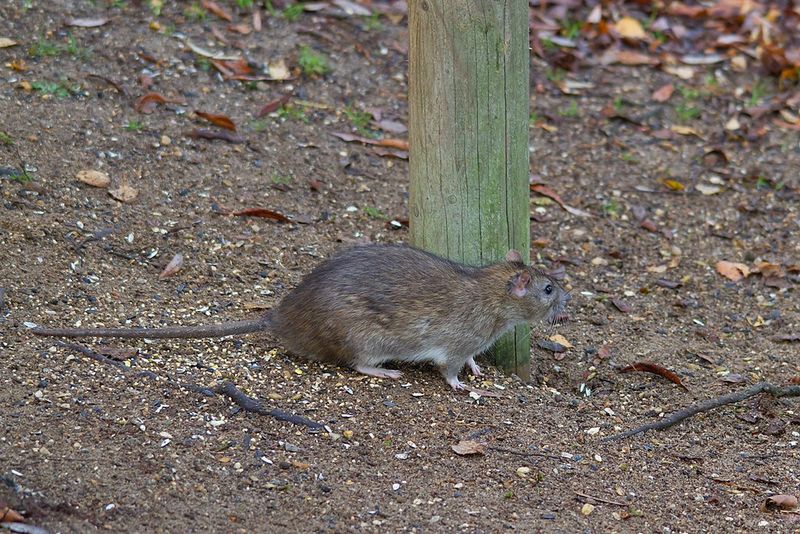
Signs of roof rats – droppings along fences, gnaw marks on fruit, rustling sounds in the attic at night – call for a response that goes well beyond what any aromatic plant can offer. California public-health and extension agencies agree on the framework: remove food sources, reduce shelter, cut off access to buildings, and use appropriately selected control methods when needed.
Food removal comes first because rats are there for a reason. Fallen citrus, avocados, and other fruit are major attractants across Southern California.
Pick up fallen fruit daily or use tree guards to slow access. Secure compost bins with tight-fitting lids, bring pet food inside at night, and store birdseed in sealed metal containers.
UC Statewide IPM and Los Angeles County Department of Public Health both identify unsecured food as the primary driver of roof-rat activity around homes.
Habitat reduction follows. Thin dense ground covers, remove brush and debris piles, and prune tree branches so they do not touch or overhang the roofline.
Roof rats routinely use branch-to-roof contact as their entry route. San Diego County guidance on rodent exclusion recommends keeping branches at least four feet away from the roof edge and trimming palms regularly to eliminate the skirt where rats nest.
Exclusion seals the path inside. Check the roofline, eaves, vents, and any utility entry point for gaps larger than a quarter inch.
Hardware cloth, sheet metal, and copper mesh are durable materials for sealing these openings. California Department of Food and Agriculture rat management resources and California Department of Fish and Wildlife guidance on rodents both emphasize that exclusion is a more durable solution than control methods alone, because traps and baits address individual animals while exclusion addresses the structural problem.
When control is necessary, use snap traps placed along walls and fence lines where rats travel. If rodenticides are considered, follow label instructions carefully and use tamper-resistant bait stations to reduce risk to pets, raptors, and other nontarget wildlife.
Smoke, gas cartridges, loose poison, and homemade repellents are not appropriate for residential use and should be avoided entirely.
Clean Rodent Evidence Safely and Keep Sage in Its Proper Role
Culinary sage belongs in a California front border when its foliage, flowers, low water use, and pollinator value match what you want from the space. Plant it in full sun, space it generously, keep it away from the foundation, and water it deeply but infrequently.
Those choices serve the plant well and fit the general principle of an open, maintainable landscape that does not create shelter close to the house.
What sage cannot do is substitute for the steps that actually reduce roof-rat activity. Food control, habitat reduction, exclusion, and appropriately selected traps address the real reasons rats are present.
UC Statewide IPM is consistent on this point: repellents, including aromatic plants, do not provide durable rat control. The stronger plan is built around removing incentives and blocking access, not around the scent of an herb.
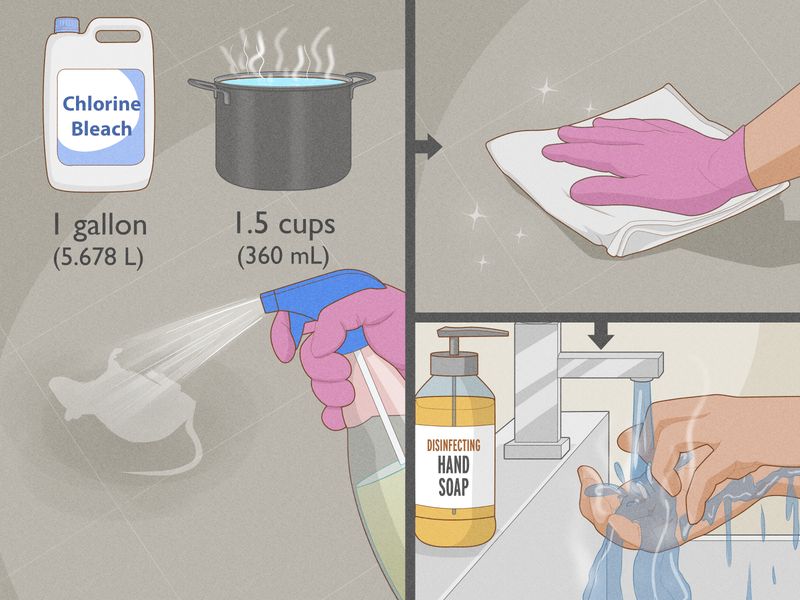
If you find droppings, nesting material, or other rodent evidence while cleaning up the yard or checking the garage, handle it carefully. CDC guidance on cleaning up after rodents is specific: wet the contaminated material thoroughly with a disinfectant solution, let it sit for several minutes, then wipe it up with paper towels and dispose of them in a sealed bag.
Never sweep or vacuum rodent droppings dry, because that can send particles into the air. Wear gloves throughout the process and wash hands thoroughly afterward.
Culinary sage is a genuinely useful plant that earns its place through appearance, adaptability, and ecological contribution. Its reputation as a rat deterrent, on the other hand, is a story the evidence simply does not tell.
A beautiful border and a rat-resistant yard are both achievable goals, and the good news is that the steps that work for one do not get in the way of the other.