

Mulch is one of the best things you can put in a California yard. It saves water, feeds the soil, and keeps weeds down through long dry summers.
But the way you place it and how deep you pile it can quietly turn a helpful habit into a problem, giving rats a hidden runway or making your yard a little more comfortable for ticks. Understanding exactly what creates that risk, and what does not, means you can keep mulching confidently while making a few targeted changes.
The mulch itself is not the whole pest problem
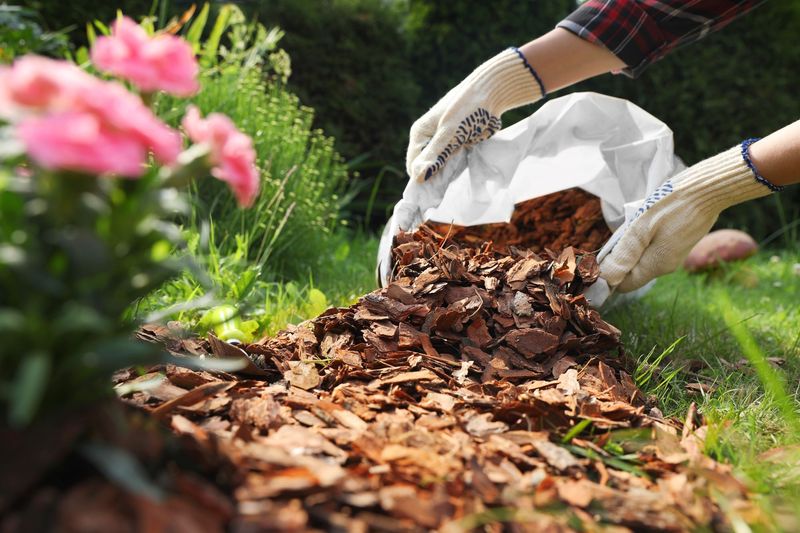
Spreading a fresh bag of bark or wood chips in your garden beds is not, by itself, an open invitation to rats or ticks. No single California mulch universally attracts both pests, and ordinary mulching done at a reasonable depth does not automatically draw either one to your home.
The concern becomes real when mulch is piled thick and continuous, placed directly against buildings or tree trunks, or combined with dense low vegetation, food sources, and accessible openings into the structure.
Rodents and ticks are also two separate problems shaped by different conditions, and treating them as one linked threat leads to corrections that do not quite fit either. UC IPM’s residential rat guidance points to thick ground cover, debris, dense vegetation, and food sources as the combination that makes a yard favorable to rats, not any particular mulch product on its own.
Tick exposure, meanwhile, is driven more by proximity to brush, woodland, tall grass, wildlife movement, humidity, and regional habitat than by what is spread in a tidy suburban bed.
Properly maintained mulch at a moderate depth actively supports your yard’s health. UC Master Gardeners recommend roughly 2 to 4 inches in landscape beds, a depth that conserves soil moisture and suppresses weeds without creating the hidden, layered cover that rodents prefer.
California’s dry climate makes that moisture conservation genuinely valuable, so the goal here is not to remove mulch but to place it more deliberately. The rest of this article treats rodent shelter and tick exposure as the separate questions they are, and offers specific corrections for each.
Why thick cover can make a yard easier for rodents to use
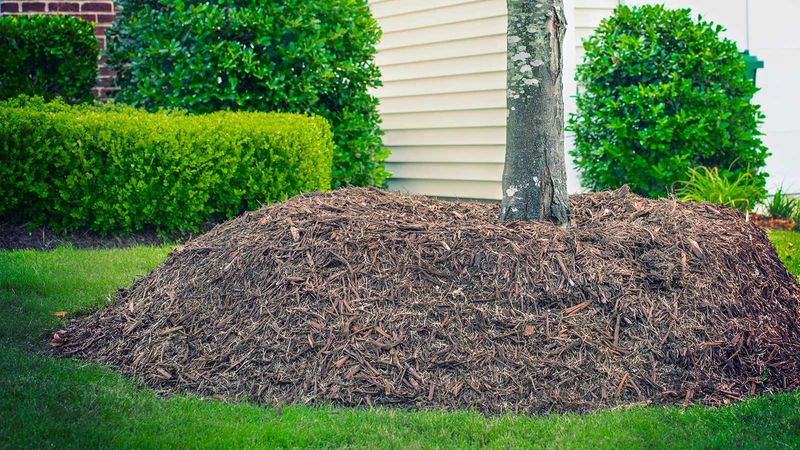
Roof rats are agile climbers, but they also spend time on the ground, and ground-level cover matters to them. UC IPM’s citrus and roof-rat guidance notes that roof rats may nest in thick ground mulch, debris piles, and shallow burrows, particularly in settings where dense low vegetation provides concealed travel routes.
That finding comes specifically from citrus orchard contexts, so it should not be read as a universal warning about every suburban mulch bed, but the underlying principle carries over: a thick, continuous layer of organic material at ground level gives small mammals a place to move, rest, and shelter without being easily seen.
Smaller rodents follow a similar pattern. UC IPM’s vole guidance identifies heavy mulch layers and dense ground cover as conditions that support vole activity, especially when the material is piled against trunks or left undisturbed for long periods.
Mice also benefit from the same type of cover. The common thread is not the mulch material itself but the depth, density, and placement, particularly when the mulched area connects directly to a structure or creates an unbroken hidden corridor along a fence or foundation.
Shelter alone does not guarantee that a rodent will reach your house. Penn State Extension’s tree-mulching guidance reinforces that mulch piled against trunks keeps bark wet and can promote decay, and that same concealed contact point can give rodents access to a tree or structure without being exposed.
Food availability, vegetation routes, and openings in the building all contribute to whether a rat actually moves inside. Mulch provides one piece of that picture, cover, but removing mulch without addressing food, dense plantings, and entry points leaves the other pieces in place.
The correction targets all of them together, starting with depth and placement.
Ticks follow habitat and hosts, not a simple mulch rule
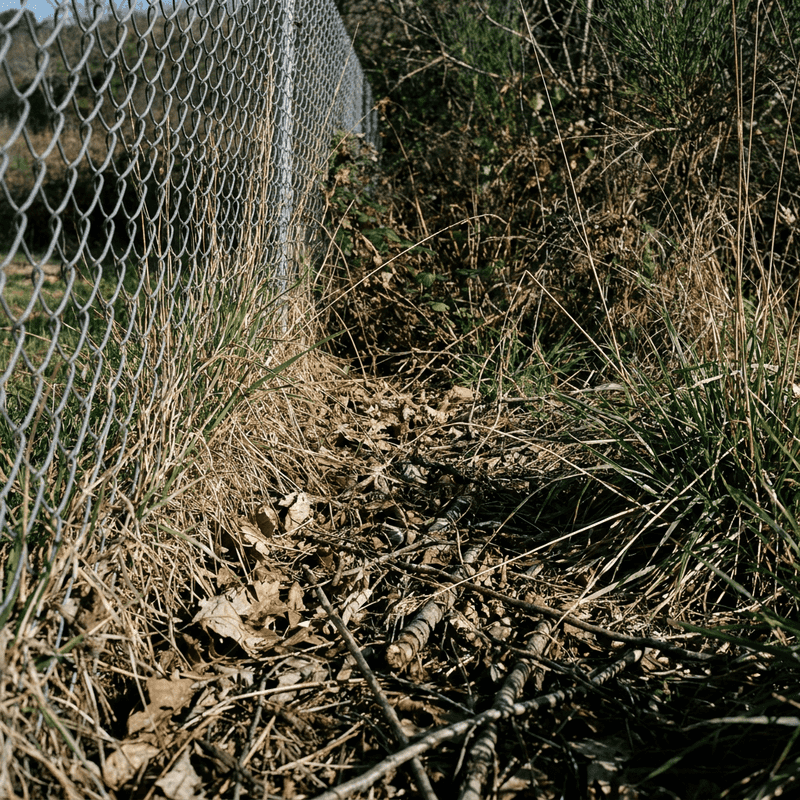
Wood mulch does not attract ticks the way food attracts a rat. California’s tick-exposure risk rises sharply at the edges of natural areas, where brush, chaparral, tall grass, logs, rocks, leaf litter, and wildlife movement overlap with places where people spend time.
CDPH’s tick-borne disease prevention guidance notes that backyard exposure is most relevant for residents living near forests, grasslands, and shrublands, particularly in northern coastal counties and the Sierra Nevada foothills. A well-maintained mulch bed in a tidy Los Angeles suburb carries a very different risk profile than a leaf-littered slope bordering chaparral in Marin County.
California also has multiple medically relevant tick species, including the western blacklegged tick, the Pacific Coast tick, and the American dog tick, each with different habitat preferences and disease associations. Applying the northeastern deer-tick model as a statewide California standard overstates risk in many areas and understates the regional variation that actually shapes exposure.
Humidity, wildlife hosts like deer and squirrels, and the density of surrounding natural habitat matter far more than whether a homeowner spread bark chips in a sunny front border.
Where a yard does border brush, woodland, or overgrown natural habitat, a maintained 3-foot border of gravel or wood chips between the lawn and that natural edge is one tool that CDPH recommends to help restrict tick movement. CDC guidance echoes this, pairing the barrier recommendation with regular mowing, leaf-litter removal, and clearing of tall grass.
However, a word of caution on expectations: a Journal of Medical Entomology study evaluating residential yard management measures found no detectable effect from mulch or gravel barriers, though only two properties in the study had such barriers, which limits what the result can actually tell us. The barrier is a risk-reduction step, not a guaranteed tick-proof boundary, and it is most logically applied at a lawn-to-natural-area transition, not scattered throughout every interior bed.
A well-placed mulch bed keeps its benefits without becoming a hiding strip
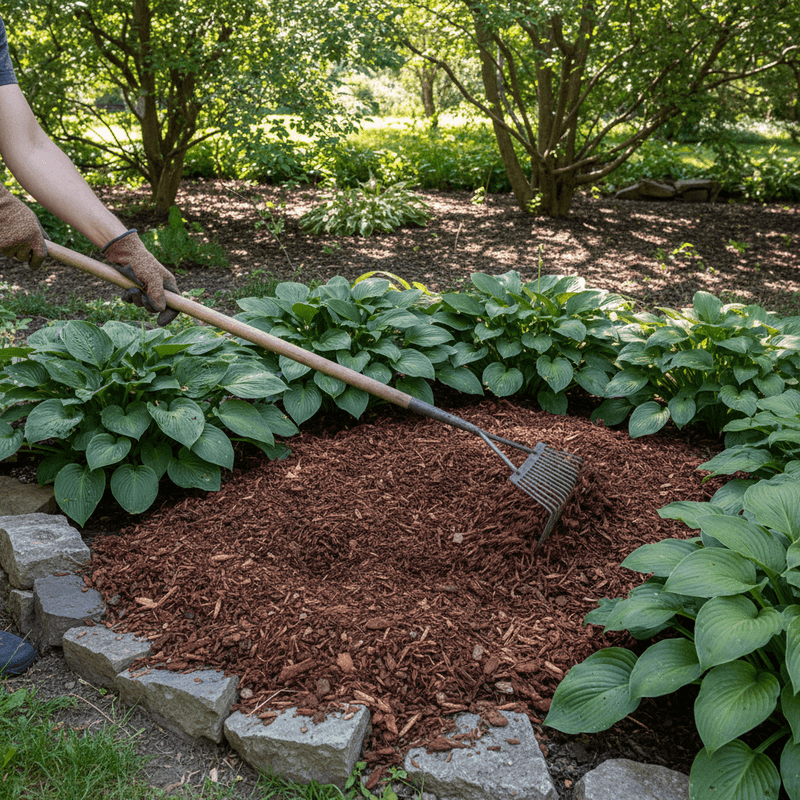
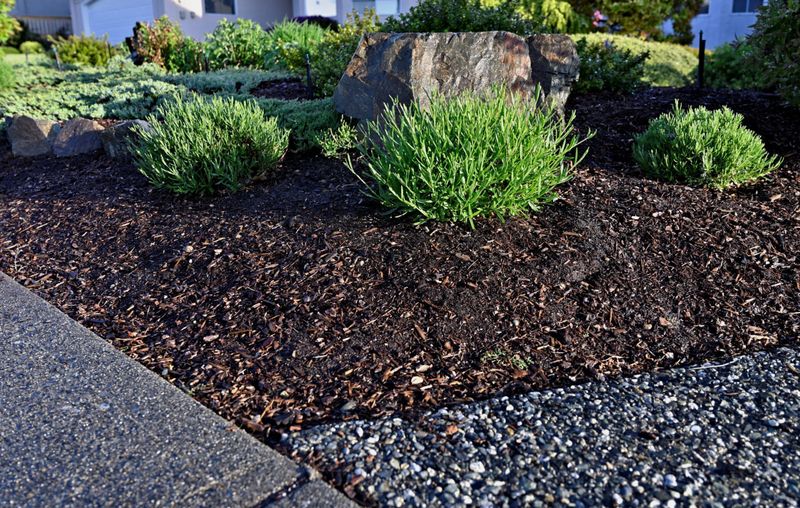
Getting mulch depth right is the single most practical correction most California yards need. UC Master Gardeners recommend 2 to 4 inches as the standard landscape depth, enough to retain moisture and suppress weeds without creating the dense, layered cover that shelters rodents.
More than about 4 inches starts to cause plant-health problems too: roots can suffocate, crowns stay wet, and the material compacts into a mat that sheds water rather than absorbing it. Staying in that 2-to-4-inch range is good for the plants and less useful to anything looking for a place to hide.
Placement matters as much as depth. Penn State Extension and Oregon State University Extension both caution against piling mulch directly against tree trunks and shrub stems.
When bark stays constantly damp from contact with mulch, it can begin to decay, and that softened zone also provides a concealed point where rodents can access the plant or structure without being visible. Keep mulch pulled back a few inches from any trunk or woody stem, and leave a clear gap between the mulch edge and your foundation.
UC IPM recommends keeping about 2 feet of open space between shrubs and buildings where feasible, and thinning dense low plantings that run continuously along the house. The goal is airflow, visibility, and interruption of any concealed travel corridor.
Penn State’s ornamental-planting guidance similarly notes that dense, crowded plantings close to structures create conditions that are harder to inspect and easier for small animals to exploit. None of this means removing mulch from your beds entirely.
A clearly defined, correctly deep, well-separated mulch bed still does everything mulch is supposed to do, while giving rodents far less to work with.
Sanitation and exclusion determine whether rodents reach the house
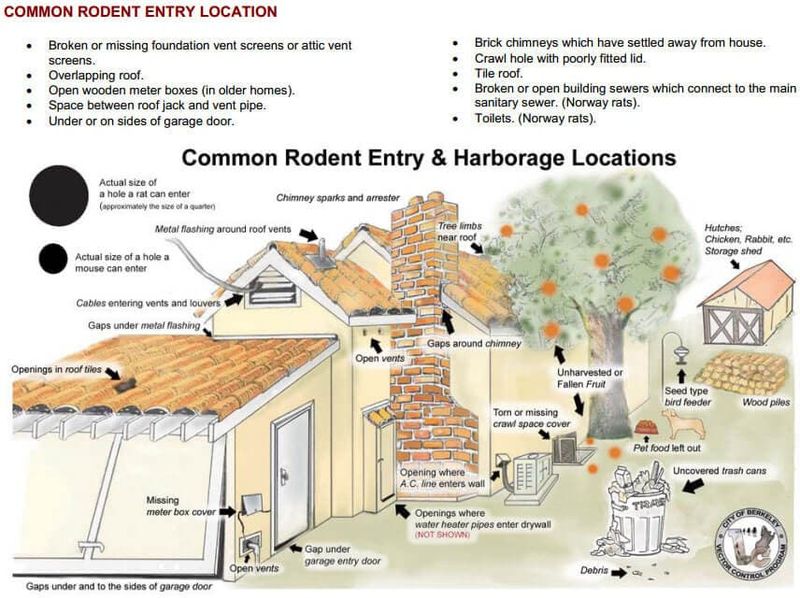
Mulch gets a lot of attention in rat conversations, but the conditions that actually sustain a rat problem usually have more to do with food and access than with ground cover. Fallen citrus, avocados, figs, and other fruit left on the ground are significant attractants in California yards.
Pet food left outside overnight, unsecured garbage bins, open compost piles, and spilled birdseed all contribute more directly to keeping rats fed and comfortable near your home than a layer of bark chips does. Clearing those food sources, or managing them consistently, removes one of the primary reasons rats stay in an area.
Debris piles, stacked wood, and accumulated garden clutter provide shelter that rivals any mulch bed. Woodpiles stored against the house, old pots stacked in corners, and bags of soil or fertilizer left open all create the kind of undisturbed, protected space that rats and mice look for.
Moving stored materials away from the structure and off the ground where possible reduces that shelter without touching the mulch at all.
Exclusion is where durable rat control actually happens. UC IPM identifies sealing entry points as the most lasting rat-control strategy, specifically any opening larger than one quarter of an inch around foundations, pipes, vents, utility penetrations, garage doors, and window screens.
Snap traps, placed correctly and kept out of reach of children and pets, are UC IPM’s preferred removal method once an active problem is confirmed, because they are effective, economical, and carry no secondary poisoning risk. If rodenticides are used, they must be applied strictly according to the product label and, in most outdoor situations, inside tamper-resistant bait stations, because they are toxic to pets, children, raptors, and other wildlife that may encounter a poisoned rodent.
Exclusion and sanitation together create the lasting correction; traps handle what is already present.
The first 5 feet may require a different material in fire-prone California
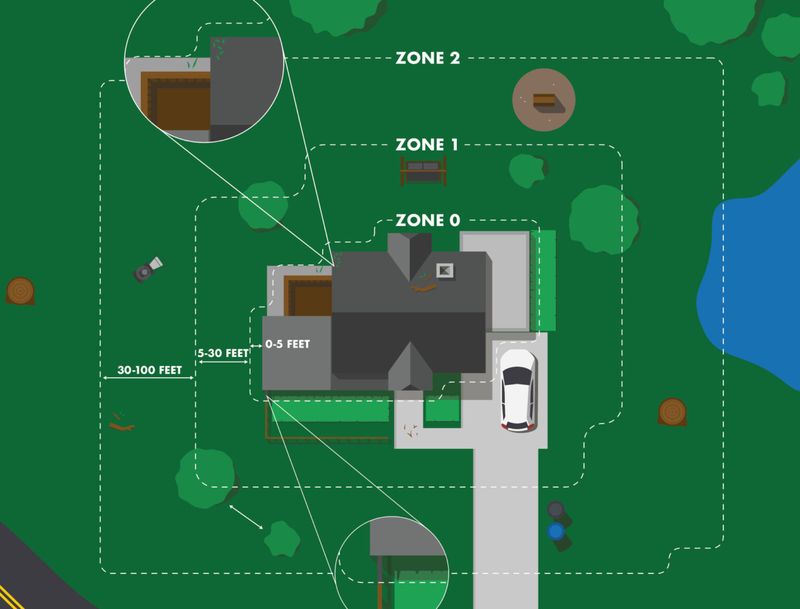
For homeowners in wildfire-prone parts of California, the mulch question near the foundation is not just about pests. Organic bark and wood chips are combustible, and embers landing in a mulch bed next to a structure can ignite the material and carry fire directly to the building.
CAL FIRE’s defensible-space guidance is specific: no combustible bark or mulch should be used within the first 5 feet around structures. That zone should instead use hardscape materials such as gravel, decomposed granite, pavers, or concrete, which do not carry a flame.
Local fire departments and fire protection districts may impose stricter requirements than the state minimum, so checking with your local agency before mulching near any structure in a fire-hazard area is a necessary step, not an optional one.
Gravel is the most common substitute people reach for, but it comes with its own trade-offs. EPA’s landscaping guidance notes that rock mulches can radiate heat and increase water loss in sunny areas, which is a real concern in California’s hot inland valleys and south-facing slopes.
Decomposed granite stays cooler than round river rock and drains well, while pavers and concrete can be designed to reflect rather than absorb heat. The right choice depends on your sun exposure, the plants growing in or near that zone, your irrigation setup, and what your local fire authority requires.
Beyond the first 5 feet, organic mulch remains appropriate in most California yards and continues to serve its water-conservation purpose. The correction is zone-specific: use noncombustible materials immediately beside the structure where fire risk is highest, transition to properly maintained organic mulch in the broader landscape beds where it helps soil and plants, and choose materials based on the actual conditions of each part of the yard rather than applying one rule everywhere.
Use the yard’s layout to make the correction
Three distinct zones in a California yard call for three different approaches, and matching the response to the zone is more useful than applying one rule across the whole property. For ordinary beds beside the house and around trunks, the correction is moderate mulch depth kept at 2 to 4 inches, pulled back from stems and the foundation, with shrubs thinned and spaced so no continuous hidden corridor runs along the structure.
UC IPM’s rat guidance and UC Master Gardener mulch recommendations together cover this zone well.
For lawn edges that border brush, woodland, or other natural habitat, the priority shifts to vegetation management and, where practical, a maintained 3-foot gravel or wood-chip border at the transition. CDPH recommends keeping that edge clear of leaf litter and tall grass, and placing patios, play equipment, and frequently used seating away from the natural-area boundary where tick-carrying wildlife move through.
For the first 5 feet around fire-exposed structures, CAL FIRE’s defensible-space rules settle the question: noncombustible hardscape only, with local requirements checked before any material is placed. The yard does not need to become a gravel lot or a bare-soil strip.
A cleaner, safer, water-wise California yard is still a mulched yard – it is just a mulched yard where depth, placement, and zone have been thought through once and adjusted where it actually counts.